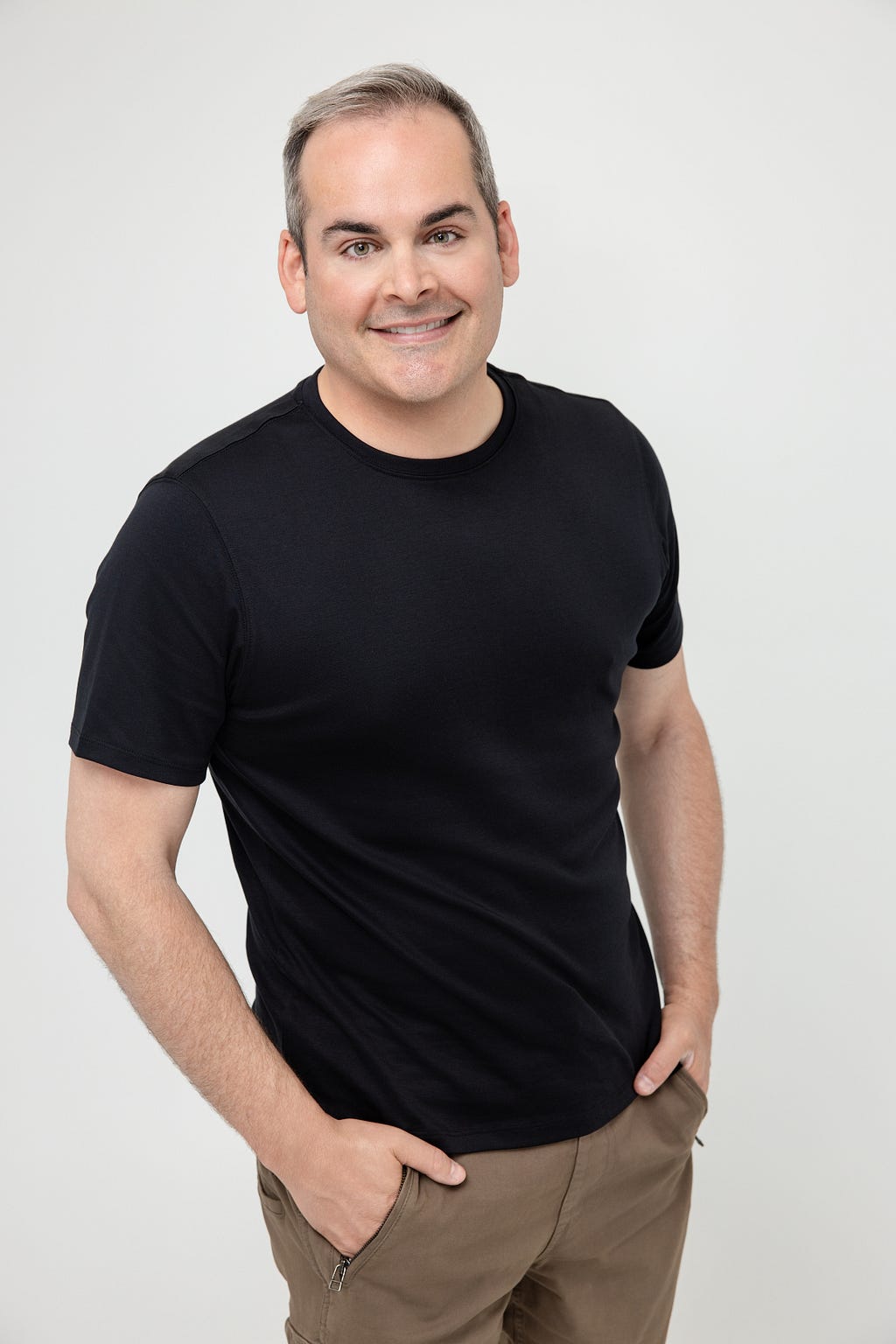
David Begnaud on Finding Purpose Beyond the Anchor Desk and Why ‘Doing Good’ Matters More Than Good News
…What I’ve learned as a storyteller is that the biggest impact I’ve had has come less through my own ideas and more through helping to awaken the ideas of the people I’m interviewing. At Do Good Crew, I’ve made it very clear that we are not positioning ourselves on top of a mountain. We are shining the spotlight on other people, and we glow in their ambient light. As my career continues to evolve, that has become a signature moment for me. I stand out and have more success the more I’m able to help other people find the best in themselves…
I had the pleasure of talking with David Begnaud, a man whose voice you likely recognize if you have spent any time watching the national news over the last decade. But stripped of the crisp suits and the polished glare of a television studio, Begnaud is simply a storyteller trying to find the pulse of a fractured country. Raised in Carencro, Louisiana, a small town deep in the heart of Cajun country, his path to the national stage was born out of a restless, almost uncontrollable energy. As a child, he navigated the rigid structures of Catholic school while managing the debilitating reality of Tourette’s syndrome. He was an altar boy with facial and vocal tics, a kid who disrupted classrooms not out of malice, but because his mind and body simply refused to sit still.
“I was a young boy who was very curious and very nosy,” he recalled, reflecting on those early days. “I was very driven to be at the front of the class because I had something to say and something to show.” His parents constantly urged him to slow down, both literally and figuratively. But that same restless energy, channeled and refined over time, eventually became his greatest asset. “I said I was a nosy kid; now I get paid for being nosy,” he noted. When he inquires into people’s lives today, it is no longer for a judgmental assessment, but rather to help them feel like they are having the best conversation of their lives.
That transition from a hyperactive Louisiana kid to a professional journalist happened remarkably fast. Begnaud became a teen reporter at his local CBS affiliate, soaking up the basics of the trade. By the time he was eighteen, fresh out of high school and not even a freshman in college, he was already anchoring the weekend news. He approached the job with a fierce intensity. Looking back, he views that ambitious teenager with a sense of grace. “I don’t look back with judgment or pity today, but I look back with a little bit of charm because I know how badly that younger version of me wanted it,” he said. “Today, I still want it just as badly, but I show up differently.”
The defining chapter of his career, the moment that fractured his professional mold and rebuilt it into something entirely new, arrived in the devastation of Hurricane Maria. Reporting from Puerto Rico, Begnaud became a relentless advocate for an island in crisis. He exhausted himself, demanding answers and raising hell about the delayed supplies and the treatment of American citizens. The coverage sent his career into the stratosphere, but the personal toll was heavy. “I sleep very well at night knowing I gave my all. I gave so much that it burnt me to a crisp,” he admitted. The experience forced a profound internal shift. It was the catalyst that made him, in his own words, a “better, kinder, softer, more thoughtful, sincere, and authentic person on camera.”
It was also the spark that pushed him away from the endless cycle of negative news. The ultimate redirection, however, came disguised as a career setback. When Begnaud was passed over for the main anchor job on the CBS morning show, it forced him to confront what he actually wanted out of his life. “The perspective it gave me was that, had I gotten that job, I would have been chained to an anchor desk,” he explained. “The idea of sitting at a desk five days a week just makes me want to scream. Furthermore, I was not put on this earth to read introductions to stories.”
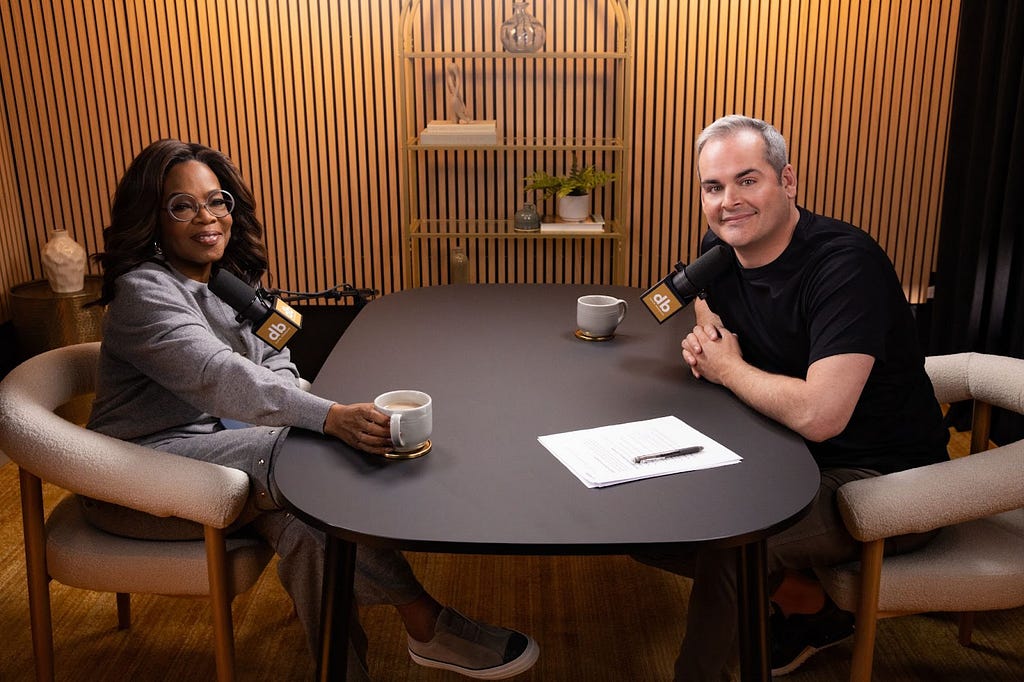
Instead of retreating, he leaned into his desire to remain tactile — to shake hands, hug people, and stay in the field. This realization birthed Do Good Crew, a media company he now runs while maintaining his role as a lead national correspondent for CBS. The venture is built on a specific distinction: it is not just about passive good news, but about active participation. Through a newsletter, live events, and a podcast called “The Person Who Believed in Me,” the project highlights everyday heroes while giving audiences concrete ways to help them. Guests on his podcast range from Oprah Winfrey to 2 Chainz, but the celebrity is always secondary. The real star of every conversation is the ordinary person who supported them before they found fame.
Begnaud is deeply aware of the media landscape he operates in, one where rage and drama reliably drive clicks. Yet, he believes there is a way to hack the same algorithm that amplifies hate and use it to amplify heart. He is entirely uninterested in the performative aspects of modern fame, actively rejecting the idea of posting glamorous photos or shouting for attention. Instead, his focus has narrowed down to the raw, quiet moments of human connection. He is captivated by stories of an eighty-year-old woman finding a community to clean her house for free, or a woman donating a kidney to her ex-husband’s new wife.
“At the end of the day, people are wrapped up in being busy,” Begnaud said, capturing the core of his current mission. “My dream is to constantly disrupt people’s lives with little injections of ‘wow’” He is not trying to preach or force a moral perfection onto his audience. He recognizes that real change doesn’t happen by arguing political points or trying to score a win against someone on the other side of the aisle. “I famously have big fans whom I disagree with completely on politics, but I never talk to them about it because it’s irrelevant,” he noted. “I talk to them about things that remind us of our shared humanity.”
That grace extends inward, too. When asked what he wishes he knew at the start of his journey, his advice was remarkably gentle: don’t take yourself so seriously, and be nice to your younger self, because that kid was just doing the best they knew how at the time. After years spent chasing the hardest stories on the planet, David Begnaud just wants to offer a little more peace, reminding us all of the good that still exists in an increasingly noisy world.
Yitzi: David Begnaud, it’s an honor to meet you. Before we dive in deep, our readers would love to learn about your personal origin story. Can you share with us a story of your childhood and how you grew up, and particularly the seeds for all the amazing work that has come since then?
David: My childhood began in Carencro, Louisiana, a tiny town in the heart of Cajun country. I was a young boy who was very curious and very nosy. I went to Catholic school, was an altar boy, and was very driven to be at the front of the class because I had something to say and something to show. I’ve had Tourette’s since I was a child, and it was incredibly debilitating in the sense that I couldn’t control it and had a hard time focusing. I would have facial and vocal tics, which made it difficult for me to sit still and turned me into a disruption in the classroom. I was this adorable, precocious child who never slowed down and never stopped. My parents were always trying to get me to settle down — in the literal, but also the figurative sense, saying, “Slow down, son.”
That same restless energy is what has served me very well in life. With the help of maturity and age, I have learned to slow down. I believe what I’m doing now is actually a manifestation of what I was truly put on this earth to do, which is to be a storyteller. I said I was a nosy kid; now I get paid for being nosy. When I inquire into people’s lives today, it’s not for a judgmental assessment. It’s really from a standpoint of wanting to help the person feel as though it was the best interview or conversation they’ve ever had. Early in my life, I wanted to ask the smartest and biggest questions. Now, it’s really about seeing something light up in the person. To the extent that I can help do that, it is very fulfilling, and that’s where I am right now.
Yitzi: It’s an amazing answer. And you’re an amazing storyteller. Talking of stories, can you share with us how you became a journalist? Tell us the story of your first breaks.
David: I was a teen reporter. There was a program at the local television station where I grew up where I was able to learn the basics under the tutelage of the main anchor at the CBS affiliate in my hometown. I fell in love with it. There were other teen reporters selected for this program when we were seniors in high school. It was treated as a community service project at the TV station, but I took it very seriously, as I did most things in life. I was a very serious young man. I don’t look back with judgment or pity today, but I look back with a little bit of charm because I know how badly that younger version of me wanted it. Today, I still want it just as badly, but I show up differently.
The beautiful and grateful part about age is that it brings invaluable perspective and acts as a self-regulator. That has been very healthy for me. The teen reporter program catapulted me into a part-time reporter position at the age of 18, right out of high school. I was anchoring the news before I even started my freshman year of college. I would anchor the news on the weekend and then go to college during the week. That is how it all started for me.
Yitzi: I’m sure this is probably difficult to single out, but can you share with our readers one or two stories that stand out in your mind from your professional career as a broadcast journalist?
David: More than anything else, it is the story of Hurricane Maria in Puerto Rico. It stands out because of what it meant for my professional career — it sent it through the stratosphere — but also because of what it meant for my personal life. It made me a better, kinder, softer, more thoughtful, sincere, and authentic person on camera. It was also the impetus behind my transition from covering negative news to covering good news. That is far and above anything else because of how much it did for me, and how much I was able to do for the people of Puerto Rico. I sleep very well at night knowing I gave my all. I gave so much that it burnt me to a crisp. In typical fashion for me, there was no regulation in it. The beautiful part about the regulation aspect now is that I listened to what I was feeling, thinking, and hearing within myself, and I used that to pivot to what I do now. That is where I regulated.
Yitzi: There’s a saying that sometimes our mistakes can be our greatest teachers. Do you have a story about a humorous mistake you made when you were first starting as a TV journalist, and the lesson you took away from it?
David: I can’t think of one off the top of my head. However, one of the things I look back on — which I’m trying to do better with now — is that by taking things so seriously, I didn’t allow time to laugh or have fun. There is a healthy component to laughing and having fun in the middle of a successful operation. The benefit of where I am today is that I no longer take myself as seriously. I allow for moments of levity that contribute to making me a better storyteller and a better colleague.
Yitzi: There’s another saying that a ‘no’ is not a rejection but a redirection or protection. Do you have a story where you received a ‘no’ to an opportunity, but it ended up leading to an unexpected success or blessing?
David: Yes. I’ve had a lot of no’s in my life, but I always look at a ‘no’ as a ‘not now.’ One of the most recent big ones for me was when I was up for the main anchor job on the morning show at CBS, and I didn’t get it. I was then promoted to lead national correspondent. The perspective it gave me was that, had I gotten that job, I would have been chained to an anchor desk. The idea of sitting at a desk five days a week just makes me want to scream. Furthermore, I was not put on this earth to read introductions to stories. I was put on this earth to go out, be with people, feel the experience, and provide an assessment of how it is. I am not meant to tell stories from a desk. I am a tactile person; I want to shake a hand, hug somebody, and cheer them on.
Not getting that main job set me on the path to where we are today with Do Good Crew. The cool thing is, I’ve been able to build this business while maintaining my professional connection with CBS. I didn’t want to walk away from that job; I love what I do there, I built a community, and we have a great thing going. But what I’m doing with Do Good Crew builds on that. At CBS, I tell the stories, but I don’t help effect change. At Do Good Crew, we want to do exactly that.
At the heart of the company, we have a newsletter, a podcast, and live events. The newsletter is where the community comes together to read largely unknown stories about everyday people doing extraordinary things. If I had to describe the newsletter in a phrase, it would be “celebrating local heroes.” We also include calls to action in the newsletter, which enable you to get involved. I don’t just want to tell you the story of a local hero. For example, in this week’s newsletter, I shared a story from a man who gave his deceased mother’s wedding dress to a group that makes gowns — called “little cocoons” — for babies who die at birth. He felt wonderful about donating the gown to an organization whose seamstress repurposed it to bury a child. But beyond telling the story, I wanted to know how we could support them. My team set it up so you can click a button, and we provide eight similar organizations around America that you can financially support, donate garments to, or call upon if, God forbid, you ever need them.
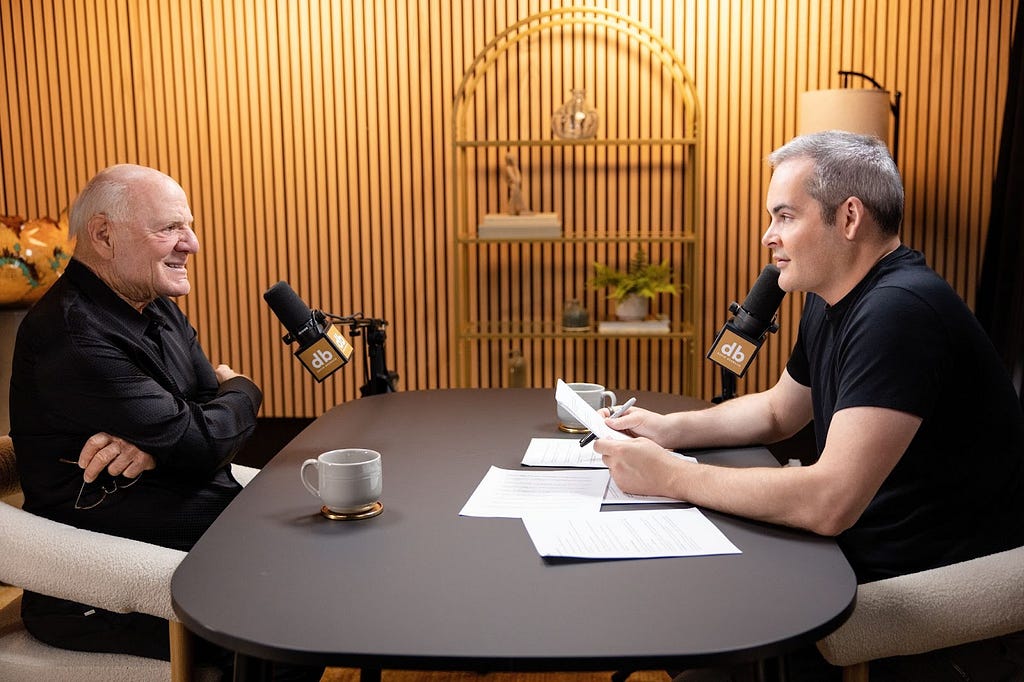
Then, the Person Who Believed in Me podcast is essentially a love letter to the people who believed in us. It’s my attempt to spur people to think about who believed in them before they were successful. Every guest on the podcast is a big name, but the star of every episode is the everyday person who believed in them before they were famous. Our first guest was Oprah Winfrey, our second was hip-hop icon 2 Chainz, and our third is the man who changed Hollywood, Barry Diller. We also have Melissa Etheridge, Charlie Puth, and Nick Cannon. We feature famous people of all stripes, but they come on to discuss the person who believed in them first.
Finally, the live events will be an opportunity for people to come together and celebrate local heroes. My vision is a two-hour period on a Saturday where you bring a brother, sister, friend, or child to sit with you and witness the extraordinary good happening in your community that you might otherwise not know about.
Yitzi: Please tell our readers a bit about Do Good Crew, this new media venture you’ve created and tell us why they should tune in and subscribe.
David: The reason to tune in to Do Good Crew is that it is not a passive thing; it’s an active thing. Almost everybody I meet will invariably say we need more good news. Do Good Crew delivers on that, but it goes a step beyond through our activations. When you read the newsletter, there are calls to action that enable you to get involved. You don’t have to, but you can. When you listen to the podcast, there’s a prompt for you to reach out to the person who believed in you to say thank you, or to consider how you can be that person for someone else. Again, you don’t have to, but you can.
The live events enable you to put your heart and effort where your mouth is. I’m tired of people saying we need more good news. If you want more good news, come out to a live event, stand on your feet, clap, celebrate, and listen. At these live events, I sit in conversation with local heroes and introduce them to the audience. We have activations through our partners where you can actually do something, like write a letter to a child at St. Jude dealing with cancer, or send a birthday card to a World War II veteran who has no family to celebrate with. We also offer an exclusive edition of the newsletter just for event attendees. You go home with a takeaway that highlights what you saw at the event, along with a call to action allowing you to get involved.
Yitzi: David. How do you address the cliché that a headline is usually “man bites dog” instead of “dog bites man”? Meaning, part of the reason it’s hard to build a business model around good news is because people are more interested in dramatic things. How did you address that?
David: I think that’s true, but there is a way to tap into the same algorithm that amplifies rage and hate to amplify heart and good instead. I don’t have to prove that social media is filled with good videos that make people click and cry; that is proof enough. What helps us stand out is that we’re not building a business strictly on good news; we’re building a business on doing good. That is a key differentiator. Good news feels passive, whereas doing good is active.
From the newsletter, you can do good. From the podcast, there is a do-good component. For instance, I took the inspiration from the podcast and created a story for my CBS segment, which airs every Monday morning. We took a microphone out to The Grove in Los Angeles — one of the biggest malls here — with a sign that said, “Who believed in you?” A 60-year-old tennis coach walked up, got very emotional, and started to cry while talking about his high school art teacher, Bruce Greff, who believed in him in a way that made him feel seen. We did a beautiful story on that. Through all the work at Do Good Crew, there is an active component, which makes it different.
From a strictly business standpoint, you get paid for views, and there are millions of views on good news stories every day. Before social media, editors chose what went on the news, and there was rarely good news. Now, social media enables people to decide what they want to see. Your algorithm populates based on what you click on. I have a lot of good news in my feed because that’s what I want to see, and a lot of other people do too.
Yitzi: Okay, this is our signature question, the centerpiece of our interview. David, you’ve been blessed with a lot of success, and you must have learned a lot from your experiences. Looking back to when you first started as a journalist, can you share the five things you’ve learned over your career that would have been really nice to know when you first started?
David:
- First, don’t take yourself so seriously.
- Second, success will happen, so you don’t have to spend all your energy so fast.
- Third, the business will change in ways you cannot see coming.
- Fourth, who you are now will not reflect who you are in 20 years.
- And fifth, don’t be so hard on that younger self. We all still carry that younger self, and even today, that younger self needs nurturing. I often have conversations with myself to validate that younger kid. The launch of this company has shown me videos that take me back, so be nice to your younger self, because your younger self was doing the best they knew how at the time.
Yitzi: This is our final aspirational question. David, because of your great work and the platform you’ve built, it’s not an exaggeration to say you’re a person of enormous influence. If you could spread an idea or inspire a movement that would bring the most amount of good to the most amount of people, what would that be? You never know how far your idea can spread.
David: I don’t have a good answer for that. I really don’t know. But here’s what I’d say to that: what I’ve learned as a storyteller is that the biggest impact I’ve had has come less through my own ideas and more through helping to awaken the ideas of the people I’m interviewing. At Do Good Crew, I’ve made it very clear that we are not positioning ourselves on top of a mountain. We are shining the spotlight on other people, and we glow in their ambient light. As my career continues to evolve, that has become a signature moment for me. I stand out and have more success the more I’m able to help other people find the best in themselves.
The best way for me to bring in a loyal listener or viewer is not through glamour shots or silly videos trying to be funny. It’s by finding a local hero and making them feel like being featured was one of the best things that ever happened to them. Think about it: my career in Puerto Rico took off through the stratosphere because I exhausted myself trying to report the injustice of how Puerto Ricans were being treated like second-class citizens. Supplies weren’t arriving fast enough, and I made it my business to raise hell and high water to try and change that. I have no interest in shouting, “Look at me,” posting body shots by the pool, or showing off a glamorous life.
I’m obsessed with stories like the 80-year-old woman who posted on Nextdoor needing someone to clean her house, saying she only had $100. People flooded the comments offering to help, and most said they would do it for free. I’m obsessed with that. I’m obsessed with the story in the Dallas Metroplex of a woman who needed a kidney and received one from her ex-husband’s new wife. They hated each other, yet the new wife gave the ex-wife the gift of life. I am obsessed with those stories. At the end of the day, people are wrapped up in being busy. My dream is to constantly disrupt people’s lives with little injections of “wow”. That is what I love to do. I’m not trying to make people more pious or perfect. I just want to make you a little more thoughtful and bring you a little more peace. That’s how I believe we change hearts and minds. We don’t do it by arguing a political point and trying to score a win. I famously have big fans whom I disagree with completely on politics, but I never talk to them about it because it’s irrelevant. I talk to them about things that remind us of our shared humanity.
Yitzi: David, how can our readers subscribe and tune in? How can they support your new work?
David: They can visit Thedogoodcrew.com. You can sign up for the newsletter, which we release every Tuesday. You can listen to the podcast, with new episodes dropping every Monday. And you can come to a live event as we start hosting them across America.
Yitzi: David, it’s been a delight and an honor to meet you, and I wish you continued success.
David: Likewise. I’m wishing you much luck in the work you do. I can tell it is littered with good intentions, and I’m cheering you on.
Yitzi: Thank you. Thanks so much. That means a lot to me.
David Begnaud on Finding Purpose Beyond the Anchor Desk and Why ‘Doing Good’ Matters More Than Good… was originally published in Authority Magazine on Medium, where people are continuing the conversation by highlighting and responding to this story.