
Instacart’s Ahsaas Bajaj On Five Things You Need To Create A Highly Successful Career In The AI Industry
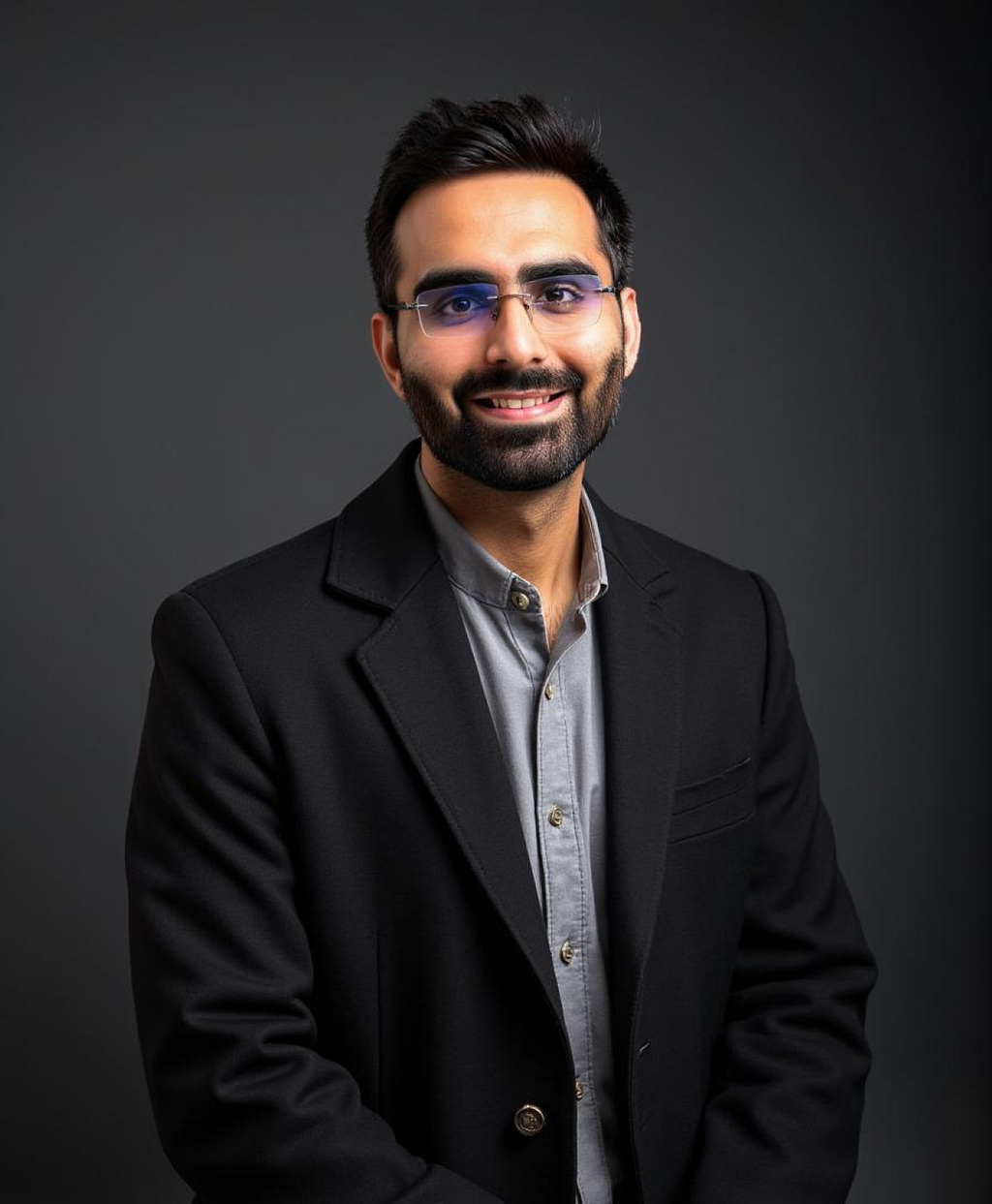
…Understand when not to apply AI. AI is not the solution to every problem. There are trade-offs including cost, latency, and privacy. Sometimes simpler solutions are more efficient and scalable. It’s important to recognize when AI adds value and when it doesn’t…
I had the pleasure of talking with Ahsaas Bajaj. Ahsaas grew up in Delhi, India, a city known for its dense population, fast pace, and intense academic competition. Like many students in the country, he came of age in an education system where admission to top engineering schools is fiercely contested. “There are millions of students who want to go to the top engineering institutes,” Bajaj recalled in our interview. “I was one of the fortunate ones to grab one of those opportunities.”
He completed his undergraduate studies in electronics and communications engineering in Delhi. Although his formal degree was not in computer science, his curiosity about programming began to grow during those years. Bajaj spent time working on competitive coding challenges, solving algorithmic problems that required finding the most time- and memory-efficient solutions under strict time limits. Those exercises, he said, helped him discover the intellectual appeal of computer science.
“I was always interested in programming and coding,” he said. The process of working through algorithmic puzzles introduced him to the problem-solving mindset that would later shape his career in machine learning.
During his undergraduate studies, Bajaj began collaborating with professors on research projects. One of the earliest projects he worked on involved text summarization, a problem that sits at the intersection of linguistics and computer science. The goal was to develop systems that could condense long documents into concise summaries or bullet points while preserving key insights.
“The idea was how you can take a series of text from multiple pages and summarize it into a few bullet points or a one-pager from a large chunk of text,” Bajaj explained. The project sparked a deeper interest in natural language processing, the field of computer science focused on enabling machines to interpret and generate human language.
The experience left a lasting impression. Bajaj became intrigued by the possibility of building systems that could mimic certain aspects of human reasoning. While such systems do not replicate human understanding perfectly, they can approximate tasks that once required specialized expertise. “It really started my journey and made me curious about the capabilities of ML systems,” he said, referring to machine learning.
After completing his undergraduate degree, Bajaj moved to Bangalore to work at Samsung Research, the technology company’s major research and development hub in India. The city is often called the Silicon Valley of India and has become a center for software development and technology startups.
At Samsung, Bajaj was a founding member of the on-device AI team, building the unified search engine that shipped on the Galaxy S10 and subsequent flagship devices, handling millions of queries per day and serving hundreds of millions of consumers worldwide. The work exposed him to large-scale product development and the challenges of deploying machine learning models in consumer devices. He published four peer-reviewed papers from this research.
The team focused on information retrieval, a field related to natural language processing but oriented toward search systems. The task involves interpreting user intent and ranking results that best match what a person is looking for. The work required balancing technical modeling with practical product considerations.
“That experience got me deeply interested in information retrieval,” Bajaj said. It also reinforced his interest in the machine learning techniques that power modern search systems.
The experience in industry eventually led him to pursue graduate studies in the United States. Bajaj enrolled in the master’s program at the University of Massachusetts Amherst, an institution known for research in information retrieval, machine learning, and natural language processing.
During his time at UMass Amherst, he worked on projects involving transformer-based language models, including early experimentation with GPT-2, and published research at ACL and EMNLP — the field’s top natural language processing conferences. He also collaborated with Goldman Sachs to build NLP tools for their financial analysts. At the time, transformer architectures were still emerging in the research community and had not yet reached widespread public attention.
“The attention paper had just come out a couple years earlier when I was doing my master’s,” Bajaj said, referring to the research that introduced transformer models. Working with those systems gave him an early look at technologies that would later become central to the generative AI boom.
After completing graduate school, Bajaj briefly joined Walmart Labs, the technology arm of Walmart, where he worked on search and personalization systems related to online retail and grocery services. The role provided further experience applying machine learning to large-scale consumer platforms.
Not long afterward, he moved to Instacart, the grocery delivery company, drawn by what he described as a product-focused culture and a strong emphasis on solving customer problems. “With every project we pick up, we ask how it solves a customer problem,” he said.
Bajaj joined Instacart as a machine learning engineer and over time advanced to become a Machine Learning Tech Lead. He now oversees systems that recommend product substitutions when items in a grocery order are unavailable.
The task may sound simple, but it involves complex modeling. Before this work, the industry standard relied on catalog-level similarity — suggesting products that looked alike on paper. Bajaj reframed the problem as one of predicting customer intent: rather than asking which product resembles the missing one, the system asks what the customer actually needs, drawing on past purchase patterns, individual preferences, and real-time contextual signals.
“If we can’t give you what you originally intended to buy, we at least offer a plausible alternative that still fulfills your need for the day,” Bajaj said.
The model serves two audiences simultaneously: customers placing orders and the Instacart shoppers who pick items inside stores. When an item is marked out of stock, the system helps guide the shopper toward replacements that are likely to meet the customer’s expectations.
At the company level, these systems contribute to what Instacart refers to as the ‘perfect order fill rate’ — measuring how often every item a customer requested was found or successfully replaced. That metric improved year-over-year by five percentage points in 2025. The replacement model that Bajaj oversees processes over 300 million recommendations annually with a 95% or higher customer satisfaction rate, and its performance plays a central role in driving that improvement.
In recent years, Bajaj has also followed the rapid rise of generative AI. While public attention has focused on chatbots and image generators, he notes that many critical systems across industries still rely on traditional machine learning techniques such as forecasting models, recommendation systems, and statistical prediction.
“People interact with them daily without realizing they are AI,” he said.
He believes the field is now shifting from a focus on building tools to deciding how best to use them. With modern AI systems increasingly capable of assisting with coding and technical tasks, engineers may spend more time thinking about strategy and product design.
“The bigger question now is what problems we should be solving,” Bajaj said. “How does a solution fit into the product roadmap? How does it solve a business problem?”
For newcomers hoping to enter the field, Bajaj often emphasizes the importance of strong technical foundations. Understanding the mechanics behind machine learning models, he said, helps practitioners avoid treating AI systems as black boxes.
He also stresses that AI is not always the right tool. Engineers must consider trade-offs such as cost, speed, and privacy, and sometimes simpler solutions are more effective.
Beyond technical knowledge, Bajaj highlights the value of staying informed about new developments and building connections within the research and engineering community. In a field that evolves quickly, he said, networks and shared knowledge can help practitioners stay focused on what matters most.
Bajaj is an IEEE Senior Member, a Forbes Technology Council contributor, and holds four patents in ML-driven personalization and product substitution. His peer-reviewed research, published at ACL and EMNLP — the field’s top natural language processing conferences — has been cited over 125 times.
As artificial intelligence continues to reshape industries from retail to healthcare, Bajaj remains focused on the practical side of the technology: building systems that quietly improve everyday experiences, often without users realizing the complexity behind them.
Yitzi: Ahsaas, it’s so nice to meet you. Before we dive in and talk about your work, our readers would love to learn about your personal origin story. Can you share the story of your childhood, how you grew up, and the seeds for all the amazing things you’ve accomplished since then?
Ahsaas: Thank you for having me. It’s a pleasure talking to someone from Authority Magazine. Going back to my childhood, I was born and raised in India. I’m from the capital of the country, Delhi. I went to my undergrad school in Delhi. It’s a highly competitive space aspiring to be an engineer in India because there are millions of students who want to go to the top engineering institutes, and I was one of the fortunate ones to grab one of those opportunities. I did my undergrad, and coincidentally it was not in computer science. I studied electronics and communications. That’s my theoretical background from undergrad, but I was always interested in programming and coding. I worked on competitive challenges, trying to solve algorithmic problems and find the most time-efficient and space-efficient solutions to toy problems under time constraints of a few minutes. That’s where I started to get excited about computer science as a field.
I worked on a few research problems with my undergrad professors. The very first big project I worked on in my life was text summarization. The idea was how you can take a series of text from multiple pages and summarize it into a few bullet points or a one-pager from a large chunk of text. That project got me super excited about NLP (Natural Language Processing), and other machine learning-oriented domains within computer science. It really started my journey and made me curious about the capabilities of ML systems, learning parameters, and how you can try to mimic aspects of human intellect. Not perfectly, but still give it a shot. For example, how an analyst would summarize something or how a domain expert would pick the best insights from a large document. This was around 2015 or 2016, and it was my first project in natural language processing.
Later on I found my first job at Samsung Research in Bangalore, which is called the Silicon Valley of India. I spent a couple of years there as a founding member of the on-device AI team, shipping the unified search engine for Samsung Galaxy users starting with the Galaxy S10. These phones handled millions of queries a day under really tight hardware constraints. Everything had to run on the device itself, no server calls, because of privacy. That experience got me deeply interested in information retrieval and in the challenge of making ML work under real-world constraints.
That motivated me to apply for my master’s program in the US. I was very fortunate to get into UMass Amherst, which is one of the top institutes in the country for information retrieval, NLP, and machine learning in general. The journey continued from there. I actually worked on GPT-2 for one of my projects at UMass Amherst and published papers at ACL and EMNLP, the top conferences in NLP. I also got the chance to collaborate with Goldman Sachs, building NLP tools for their analysts — which was a great experience applying research to real financial industry problems. This was before transformers became widely popular. The attention paper had just come out a couple years earlier when I was doing my master’s. I was one of the early practitioners, among many others of course, and it was exciting to see the power of GPT and transformer architectures long before they came out of the lab and into mainstream applications.
Yitzi: Tell us the story of how you started working at Instacart.
Ahsaas: The story goes back a bit. Before Instacart, I was at Walmart Labs. I was working in a similar space involving grocery, e-commerce, and merchandise problems, specifically on the search and personalization team. It was a relatively short stint right after grad school.
What made me excited about Instacart was how product-driven the company is and how curious and motivated the teams are about solving real customer pain points. With every project we pick up, we ask how it solves a customer problem. What is the outcome we are trying to achieve using machine learning and AI as a toolkit? There is a strong obsession with the problems we are solving and how they help customers in their day-to-day shopping journeys.
I’ve now been at Instacart for about four years and currently work as a Machine Learning Lead. I started as a ML engineer and gradually grew through the ranks. I love my work day in and day out. I oversee the product substitutions model at Instacart. Whenever a grocery item or product is not in stock, Instacart recommends an alternative you could buy instead.
This ML system supports both Instacart customers placing orders and Instacart shoppers who go to stores and pick items on behalf of customers. If a shopper marks something as not found, we guide them toward the best alternative that will keep the customer satisfied. It’s a highly nuanced problem. The traditional approach in the industry was essentially catalog matching — find a product that looks similar on paper. What we built is fundamentally different. We’re predicting customer intent. It’s not just about what product resembles the one that’s missing, it’s about understanding what this specific customer actually needs based on their preferences, past orders, and other context. If we can’t give you what you originally intended to buy, we at least offer a plausible alternative that still fulfills your need for the day.
Our CEO and the company often report progress on these models in our quarterly shareholder letters. We track the perfect order fill rate — whether every item a customer requested was found or successfully replaced — and that metric improved year-over-year by five percentage points in 2025. The replacement system I oversee processes over 300 million recommendations annually with over 95% customer satisfaction, and its quality plays a pivotal role in driving that improvement.
Yitzi: At a company like Instacart, do you use the APIs of popular AI companies like Anthropic or OpenAI, or do you build your own proprietary AI?
Ahsaas: It’s a mix of both. It depends on the problem we’re trying to solve. Like any other major company, we do use out-of-the-box models, but we also perform a lot of fine-tuning on top of them to adapt them to the exact problems we have.
Yitzi: Can you explain the difference between machine learning and AI? People often use them interchangeably, but I understand there’s an important distinction.
Ahsaas: Everyone has their own perspective, but generally AI is the broader umbrella and machine learning is a subset of AI. Machine learning focuses on predictive modeling where we learn patterns from historical data. You take historical data, define modeling parameters, and try to predict outcomes. For example, given past customer interactions, can you predict their future interactions?
This statistical modeling space includes forecasting, supervised learning, unsupervised learning, and reinforcement learning. All of these fall under machine learning, which itself falls under the broader umbrella of AI.
Now we also have generative AI, which is different from traditional machine learning but still part of AI. Recently, many people equate AI with generative AI because of its popularity. But AI includes many other areas such as recommendation systems, forecasting models, and statistical models.
The field has been around for decades, going back to the 1970s with early AI research. It accelerated when neural networks became prominent, and later with the introduction of transformer models, which led to the current wave of generative AI.
Traditional machine learning systems have been running in production for decades. People interact with them daily without realizing they are AI. What has captured everyone’s attention now is generative AI, where systems can generate text, images, and videos. That capability is pretty remarkable.
Yitzi: Would you say that machine learning was used to create generative AI, such as during training on large datasets?
Ahsaas: Absolutely. Everything we learned while building machine learning models and neural networks contributed to the development of transformer models. Instead of simply predicting outputs from inputs, transformers predict the next token based on context. You give the model a sequence of text and its objective is to predict the next token.
It builds on innovations like neural networks and backpropagation but applies them to a task focused on generation. The model predicts sequences of tokens given a context. The potential this unlocks is huge. You can write poetry, essays, personal statements, or interact with systems conversationally.
If not for traditional machine learning research, generative AI would have been very difficult to achieve.
Yitzi: You explained that really well. Thank you. Can you share three things that most excite you about the AI industry right now?
Ahsaas: There are many things. One big shift is that the focus is moving from how to build things to what to build. AI has become powerful enough to code almost like a junior or senior engineer. In the past, when we ran into issues while training models, we would go to Stack Overflow or other Q&A forums to debug problems. Those days are largely behind us.
AI has sped up execution dramatically. The bigger question now is what problems we should be solving. How does a solution fit into the product roadmap? How does it solve a business problem?
AI allows practitioners like me to take a more strategic view instead of spending all our time unblocking technical issues. In some ways everyone can think like a leader now. Even early-career engineers can think strategically because they can delegate implementation tasks to AI agents that function almost like individual contributors.
Another area that excites me is the growing importance of clear writing. Documentation has always been both an art and a science. Writing clear ERDs, PRDs, and technical documents helps teams align around ideas. Now prompt engineering and context engineering reinforce the importance of writing clearly. A small change in a prompt can dramatically change the quality of AI output. Being able to clearly express your expectations and context is extremely valuable.
Those are a couple of major shifts that I find exciting.
Yitzi: On the other side, what concerns you about the current state of the AI industry?
Ahsaas: My perspective comes more from the practitioner side than the policy side. From an industry standpoint, many business-critical systems still run on traditional machine learning. These predictive models and statistical systems have been carefully tuned over many years to solve real business problems.
With the rapid rise of generative AI, it’s not always obvious how these production-critical systems can migrate to entirely new architectures built around generative models. That creates a gap between what research is focusing on and what production systems currently rely on.
For new startups building products from scratch, it’s easier to adopt the latest research and Gen AI architectures. But established systems in industries like banking, healthcare, or e-commerce have years of infrastructure built around traditional ML approaches. The challenge is figuring out how to transition those systems smoothly so they can benefit from generative AI without disrupting the reliability they already provide.
Yitzi: This is our signature question. You’ve been very successful in the AI industry. For someone just starting out, can you share four or five things they need to build a successful career in AI?
Ahsaas:
- First, get a strong formal education in the field. There are many online courses and resources, but understanding the deeper mechanics of how these systems work will help in the long run. Don’t treat AI as a black box. Learn how neural networks work, how backpropagation works, and the mathematical foundations such as linear algebra and computer science theory.
- Second, understand when not to apply AI. AI is not the solution to every problem. There are trade-offs including cost, latency, and privacy. Sometimes simpler solutions are more efficient and scalable. It’s important to recognize when AI adds value and when it doesn’t.
- Third, stay plugged into what’s happening in the AI industry. Things move extremely quickly. New models and research papers appear constantly. I try to curate my LinkedIn and Twitter feeds so I follow the right researchers and companies. That way I learn about new developments as soon as they appear instead of always playing catch-up.
- Fourth, networking is extremely important. Attending in-person events, meeting people, and participating in communities can accelerate your learning. The AI ecosystem produces an overwhelming amount of information, and being in the right circles helps you filter out the noise and focus on what matters.
These are a few of the practices I personally follow to stay current and grow in the field.
Yitzi: It’s been such a delight meeting you. This has been an amazing interview. I hope to be in touch.
Ahsaas: Thank you so much. Thank you, Yitzi. The pleasure is mine. Have an amazing day, my friend.
Interviewee’s Note: The views and insights shared here are my own and do not represent those of my employer
Instacart’s Ahsaas Bajaj On Five Things You Need To Create A Highly Successful Career In The AI… was originally published in Authority Magazine on Medium, where people are continuing the conversation by highlighting and responding to this story.