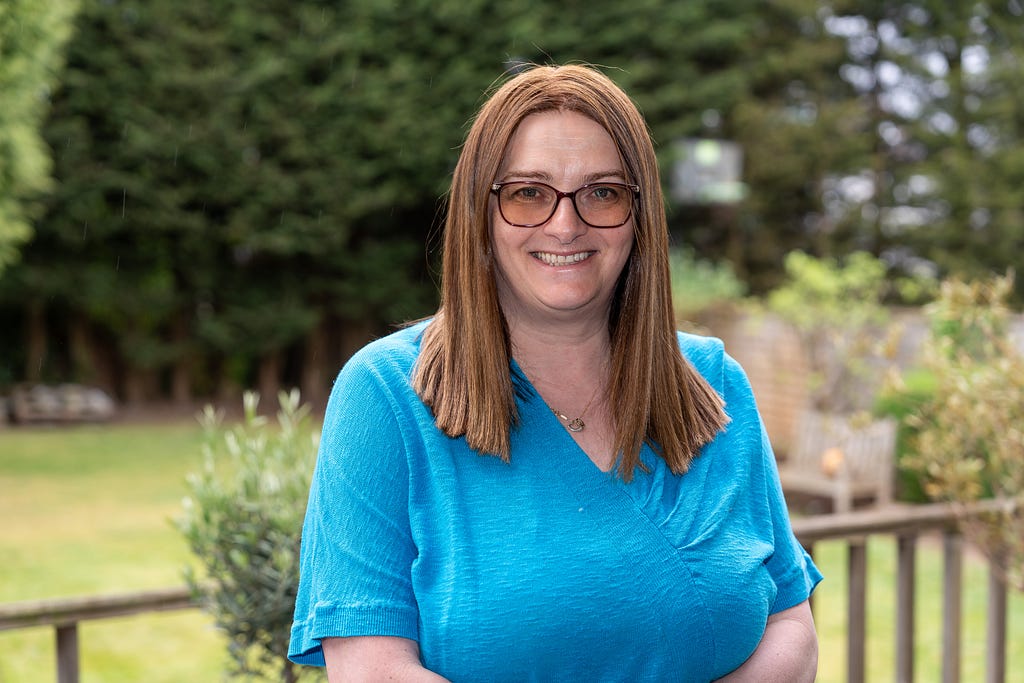
Claudia Sheena Of Claudia Sheena Accountancy Services Ltd On 5 Things You Need To Succeed In The Modern World Of Finance & Fintech
What matters most to me is the relationship side of the work. I have always believed that good advice comes from really understanding the person behind the business, not just the numbers.
As a part of this series, we had the pleasure to interview Claudia Sheena.
Claudia Sheena FCA is the founder of Claudia Sheena Accountancy Services Ltd, a boutique accountancy and advisory firm that helps ambitious business owners understand their numbers, avoid expensive financial mistakes and grow with confidence. A Fellow Chartered Accountant with over 30 years’ experience, Claudia specialises in supporting early-stage and growing businesses by providing proactive advice and an outsourced finance function that goes far beyond year-end accounts and tax returns. Passionate about making finance accessible, Claudia is known for explaining complex financial matters in plain English, helping business owners make confident decisions about growth, profitability, hiring and cash flow. Her advice has helped clients save substantial amounts of tax, including over £1 million for one client through proactive tax planning. She believes accountants should be trusted advisers, not just compliance providers, and embraces technology and artificial intelligence to improve efficiency while creating more time for meaningful conversations with clients. A regular speaker at business networking events and webinars, Claudia enjoys sharing practical financial advice that empowers entrepreneurs to build stronger businesses. Outside work, she is married and a proud mum of two adult children. She enjoys sailing, skiing, travelling and crocheting, and firmly believes it’s never too late to step outside your comfort zone and build something you’re proud of.
Thank you so much for joining us in this interview series! I know that you are a very busy person. Our readers would love to “get to know you” a bit better. Can you tell us a bit about your ‘backstory’ and how you got started?
I qualified as a Chartered Accountant in 1995 and have spent over 30 years working in accountancy practices. I started my career in a medium-sized firm before moving into a large City practice, and later into smaller firms where I could focus more on building close, long-term relationships with clients. Over time, I realised that what I enjoyed most was working closely with business owners and helping them understand and improve their businesses.
That realisation eventually led me to start my own practice. I initially built my practice alongside my employed role. In my 50s, I made the decision to go full-time into my own business (it was now or never!), which was a big step outside my comfort zone but also one of the most rewarding decisions I have made.
Since then my practice has grown into a boutique accountancy and advisory firm supporting ambitious business owners. We focus on providing proactive timely advice, helping clients understand their numbers, avoid costly mistakes, and make confident decisions as they grow. Alongside compliance work, we also act as an outsourced finance function for many clients, giving them the financial clarity and support they need without the cost of an in-house team.
What matters most to me is the relationship side of the work. I have always believed that good advice comes from really understanding the person behind the business, not just the numbers. That approach has shaped both my career and the way I run my firm today.
Can you share a story about the funniest mistake you made when you were first starting? Can you tell us what lessons or ‘take aways’ you learned from that?
As a trainee accountant, one of my first jobs was carrying out stocktakes. I confidently arrived expecting a fairly ordinary retail client, only to discover it was an “Adult” shop. I spent the day trying to keep a straight face while counting products I’d never imagined would form part of my accountancy career. It certainly wasn’t covered in my accountancy training!
Perhaps my biggest mistake was assuming accountancy was going to be boring! More than 30 years later, that day is still fresh in my memory.
Are you working on any exciting new projects now? How do you think that will help people?
One of my biggest priorities at the moment is working on my business rather than spending all my time in it. I now realise that having technical expertise alone isn’t enough. You also need to understand sales, marketing and how to consistently attract the right clients.
I have been investing a lot of time in learning about building email lists, creating automated sales funnels, appearing on podcasts and webinars, and developing educational content that helps business owners before they ever become clients.
This has had an unexpected benefit. Many of my clients work in the marketing and advertising sector, so by learning more about modern marketing myself, I have a much better understanding of the challenges they face every day.
It also means I better understand the commercial challenges they face every day, which helps me give more relevant advice.
I like to add as much value as possible, so if I can share practical, easy-to-understand guidance through articles, podcasts, webinars and online resources, I can help far more people than I ever could through one-to-one meetings alone. Ultimately, I want proactive financial advice to reach business owners before small issues become expensive mistakes.
Thank you for that. Let’s now shift to the central focus of our discussion. Extensive research suggests that “purpose driven businesses” are more successful in many areas. When your company started what was its WHY, its purpose?
When I started my practice, my purpose is not just to simply to prepare accounts or tax returns. It is to build the kind of accountancy firm I would want if I were running a business myself.
I had spent years thinking about starting my own business but never quite had the confidence to take the leap. Eventually I realised there would never be a perfect time. I didn’t want to look back one day and regret not trying, so I decided to go for it. If there’s one thing I’ve learnt, it’s that it’s never too late to start something new.
Professionally, I wanted to challenge the stereotype of the “once-a-year accountant” — the one who appears after the year-end, prepares the accounts, and then tells the client at the last minute how much tax they owe. By that stage, it’s too late to change anything.
Instead, I am building a practice that provides proactive, real-time advice. My clients know they can get hold of me, that they will receive a prompt response, and have regular conversations throughout the year.
I want to help growing businesses understand what their numbers are really telling them: whether they can afford to hire, whether they have enough cash to invest, and what decisions will help them grow sustainably.
I am not just an accountant. I want to be their financial partner — the person they speak to before making important business decisions, not afterwards when it’s too late.
Do you have a “number one principle” that guides you through the ups and downs of running a business?
My number one principle is that growth only happens outside your comfort zone.
Starting my own business taught me that every stage of growth requires you to do something you have never done before. Whether it is putting yourself out there to network, speaking on podcasts, learning marketing, hiring your first employee or increasing your prices, there is always a moment where you question yourself.
Like many business owners, I have experienced imposter syndrome and wondered whether I was good enough. I’ve learnt that those feelings are completely normal and that they don’t disappear overnight; however, they must not stop you from taking the next step.
There will always be ups and downs, setbacks and successes when running a business. When things feel difficult, I remind myself that every challenge is temporary. The difficult periods will not last forever, and often these are the moments that teach you the most and prepare you for the next stage of growth.
Every time you step outside your comfort zone, you prove to yourself that you are capable of more than you thought. Looking back, every opportunity that has helped me grow personally or professionally started with doing something that initially felt uncomfortable.
You need to get comfortable being uncomfortable.
If a fellow business leader would ask you for advice about whether to bootstrap or to look for VC capital, how would you help them weigh the pros and cons of that decision?
As an accountant, I have worked with businesses that have been self-funded, and others that have successfully raised external investment.
There is no a single right answer; it depends on the ambitions of the founder and the type of business they are building.
Bootstrapping can mean slower growth, as limited by the cash your business generates. This can make it harder to invest in people, technology or marketing.
On the other hand, if you bring in venture capital or external investors, you are usually giving away equity and, with that, a degree of control. You are no longer making decisions solely for yourself — you also have investors to answer to, which can add pressure and complexity.
My advice would be to be very clear about why you are raising money. Is it genuinely going to accelerate growth, or are you trying to solve problems that could be addressed in other ways? Understanding your cash flow, your growth plans and your long-term goals should come before deciding how to finance them.
One area where I would strongly encourage founders to seek professional advice, is over the tax side of raising investment. I have seen businesses try to save money by handling these aspects themselves, only to discover later that they have made costly mistakes. Unfortunately, it is almost always more expensive to fix those mistakes than it would have been to get the right advice from the outset. Good advice should not be looked at as a cost, but as an investment in getting it right the first time.
What measure do you use to determine the value of a company? What advice would you give to other leaders about how to get an optimal evaluation of their business?
There isn’t a single way to value a business.
The right valuation method depends on the type of business, the industry, who the valuation is for and the reason for the valuation.
For example, a valuation for HMRC may differ from one prepared for external investors because they are being undertaken for different purposes.
A technology start-up might be valued on its future potential, even before it is generating any income, whereas a property company is often valued based on the assets it owns. Established, profitable trading businesses are commonly valued using a multiple of profits, adjusted for other factors, such as recurring income, growth prospects, the strength of the management team and customer concentration.
Ultimately, a business is only worth what someone is prepared to pay for it — a valuation on paper is one thing; the market determines its true value.
For business owners looking to maximise the value of their company — build a business that can thrive without you. A profitable business with strong systems, documented processes and a capable team is far more attractive to buyers than one where everything depends on the founder. If the owner has to be involved in every decision and every customer relationship, the business is much harder to sell and this will affect the valuation.
The best time to think about your exit strategy is as early as possible, not when the company is about to be sold. By putting the right systems, people and financial controls in place early, you will build a stronger business today and a more valuable one for the future.
What would you advise to a founder who initially went through years of successive growth, but has now reached a standstill. From your experience do you have any general advice about how to boost growth and “restart their engines”?
Most of my clients are growing businesses rather than large, mature companies, and one thing I’ve noticed is that growth often slows when founders become consumed by running the business instead of growing it.
In the early days, founders do whatever it takes to win a new customer. They network, ask for referrals, follow up every lead and constantly look for opportunities. As the business grows, they are understandably pulled into managing staff, dealing with operations and serving existing clients. Before they know it, the activities that generated growth in the first place have slipped down the priority list.
My advice is to go back to basics. Think about what worked when you first started. Are you still networking? Are you still asking for referrals? Are you still speaking to potential customers? Often, the answer is not to create a new marketing strategy, but to return to the activities that built the business in the first place.
If you have delegated sales or marketing, you should not assume your role in winning business is over. No one understands your vision, your values, your customers or has your passion quite like you do. Delegating is essential if you want to build a business that can thrive without you, but founders should remain visible and involved in business development. The challenge is finding the right balance.
Quieter periods are also an opportunity to step back and look at their business with fresh eyes. If your marketing suddenly doubled the number of enquiries next month, could your business cope? Do you have the right systems, processes and financial information to support that growth? Sometimes a plateau is the perfect opportunity to strengthen the foundations before the next phase of growth begins.
What are the most common finance mistakes you have seen other businesses make? What should one keep in mind to avoid that?
Most of my clients are early-stage, growing businesses, and the encouraging thing is that the most common finance mistakes can easily be fixed.
One of the biggest mistakes I see is business owners treating the money in their business bank account as if it were their own. Learning to separate business money from personal money is one of the most important habits a founder can develop.
Once cash has come into the business, it does not mean it is available to spend. Some of it will belong to HMRC in the form of VAT or corporation tax, some will be needed to pay suppliers and staff, and some should remain in the business to fund future growth.
Another common mistake is relying solely on the bank balance to judge how the business is performing. Your bank balance does not tell you whether or not you are making a profit, whether individual products or services are profitable, or whether you can afford to hire your next employee or invest in growth. That is where regular management information becomes invaluable.
I also see many founders not looking at their figures often enough, or even leaving it until the year end. It is often too late to make meaningful changes then. Reviewing your numbers throughout the year allows you to spot issues early, improve profitability and make informed decisions while there is still time to influence the outcome.

Ok, here is the main question of our discussion. Based on your experience and success, what are the five most important things one should know in order to succeed in the modern finance industry? Please share a story or an example for each.
1. Embrace technology rather than fear it
When I qualified as a Chartered Accountant over 30 years ago, everything was paper based. Clients would arrive carrying shoe boxes crammed full of crumpled receipts, bank statements and invoices. Sometimes the paperwork had clearly been sitting in the boot of a car or at the back of a cupboard for months. It certainly wasn’t unusual for it to arrive looking, and occasionally smelling, as though it had seen better days!
Today, cloud accounting, automation and artificial intelligence have transformed the profession.
Rather than seeing technology as something to fear, I’ve chosen to embrace it. One advantage of running a smaller practice is that I can continually evaluate new AI and fintech tools as they become available. I don’t adopt technology simply because it’s new. I test it, see whether it genuinely improves efficiency or enhances the client experience, and only keep the tools that add real value.
Technology now automates many of the routine administrative tasks that used to consume hours of our time. That gives my team more time to understand our clients’ businesses, interpret their numbers and have meaningful conversations about their future plans.
I use AI every single day and genuinely couldn’t imagine running my practice without it now. It helps me research complex issues, draft communications, analyse information and generate ideas, making me far more productive than I could ever be on my own. Yet I also believe I’ve only scratched the surface of what AI can do. New tools and capabilities are emerging all the time, and I’m excited to keep learning, experimenting and discovering new ways to improve both the way we work and the service we provide to our clients.
For me, technology should never replace professional judgement or relationships. It should free professionals to do more of the work that only humans can do: listening, asking the right questions, challenging assumptions and helping clients make better business decisions.
2. Commit to continuous learning
As a Chartered Accountant, keeping my technical knowledge up to date is not optional. Tax legislation, accounting standards and technology are constantly changing, so continuing professional development is an essential part of my job.
What I genuinely enjoy, though, is developing the skills that help me become a better business owner and adviser.
Starting my own practice in my 50s pushed me well outside my comfort zone. Overnight, I found myself learning sales, marketing, networking, leadership and business strategy, areas I’d never really needed to develop while working for someone else. More recently, I even attended a presentation skills course because I wanted to become a more engaging speaker for client events, webinars and networking. I don’t think learning ever stops, regardless of how long you’ve been in business.
The more I’ve developed those skills, the more I’ve realised they also make me a better accountant and more relevant to my clients. I now understand what it is like to invest in marketing without knowing whether it will pay off, recruit staff, build a team and make decisions that carry both financial and emotional risk, because I’m doing those things too.
Technical knowledge is essential, but so is understanding what it’s really like to run a business. The combination of the two allows me to give advice that is practical as well as technically correct.
3. Use data to drive better business decisions
Financial data should do much more than tell you what happened last month. It should help you decide what to do next.
I recently met with the owner of a fast-growing business who felt she had lost visibility as the company expanded. She knew the business was growing, but she could not clearly see which areas were the most profitable, whether she could afford to recruit or where she should focus her investment.
We discussed introducing monthly management accounts, separating the income streams and modelling different scenarios before making important decisions. Instead of relying on instinct, she would be able to see the financial impact of hiring additional staff, investing in marketing or expanding into new markets before committing to those decisions.
By the end of our meeting, she told me she felt excited because, for the first time, she had confidence in what was happening financially and could see a clear path for growing the business.
That conversation reinforced something I strongly believe. Good financial information is not about producing reports for the sake of it. It is about giving business owners clarity and confidence so they can make better decisions.
4. Stay agile and embrace change
Business never stands still, and neither should we.
Since launching my own practice full time, I have continually adapted both my business model and the services I offer. The profession has changed enormously over the last few years, driven by technology, changing client expectations and the increasing pace of business.
Historically, many accountants focused primarily on preparing annual accounts and tax returns. Those services remain important, but I have found that business owners increasingly want someone who understands their business throughout the year, not just at year-end.
As a result, I have evolved my practice from providing traditional compliance services to becoming an outsourced finance function for many of my clients. Alongside accounts and tax, we provide regular management information, cash flow forecasting and strategic support so clients can make informed decisions as their businesses grow.
Being willing to adapt has allowed my business to grow, but more importantly, it has enabled me to deliver far greater value to the businesses I work with.
5. Build trusted relationships that technology can never replace
As artificial intelligence becomes part of everyday business, I believe human relationships become even more important.
My clients come to me because they are looking for more than someone who prepares accounts once a year. They want an adviser who understands their business, takes an interest in their goals and is available when important decisions need to be made.
I have always believed that the best advice comes from understanding the person behind the numbers. That means taking the time to learn how a business operates, what challenges the owner is facing and what success looks like for them. Only then can I give advice that is relevant to their situation.
Technology helps my team work more efficiently and respond more quickly, but it cannot replace the conversations that build trust over time.
The most rewarding part of my job is not filing a tax return or producing a set of accounts. It is receiving a phone call from a client with good news.
One call that really stands out was from a client who had been working towards securing a visa to move abroad. We had spent time helping him grow his business and reach the financial milestones needed as part of his application. When he called to tell me his visa had been approved, I genuinely shared in his excitement.
Moments like that remind me that accountancy is about far more than numbers. It is about helping people achieve their goals, whether growing a business, buying a property, planning for retirement or starting a new chapter in another country. Being part of those journeys is, without doubt, the most rewarding part of what I do.
Which tips would you recommend to your colleagues in your industry to help them to thrive and not “burn out”?
One of the biggest lessons I have learned is that you cannot do everything yourself.
When I first started my practice, I was the accountant, administrator, marketer, salesperson, IT support and business owner, which is just not sustainable.
Over the last couple of years, I have built a fantastic team around me. I realised that growing the business didn’t mean doing more myself. Delegating work has allowed everyone to focus on what they do best. Instead of spending every day chasing deadlines, I can focus on building relationships, supporting clients and developing the practice.
I would also encourage accountants to embrace technology rather than fear it. Automation and AI have removed many repetitive administrative tasks that consumed our time, allowing us to focus on higher-value work.
Finally, remember why you became an accountant. Whilst it is easy to become consumed by deadlines and compliance, the real reward comes from helping clients achieve their business and personal goals. Those conversations, whether it may be hearing that a client has grown their business, secured funding or achieved a personal ambition, are what make the profession so fulfilling.
You are a person of great influence. If you could start a movement that would bring the most amount of good to the most amount of people, what would that be? You never know what your idea can trigger. 🙂
Too many entrepreneurs are brilliant at what they do but lack the confidence to understand the financial side of their business. They often wait until something has gone wrong before seeking advice because they assume accounting is too complicated or too expensive.
I would love to change that mindset. Every business owner should understand the key numbers in their business and feel confident making financial decisions, even before they can afford ongoing professional support.
That’s one of the reasons I have recently invested in learning how to create memberships and online courses. I am currently working on building a programme designed to help new business owners understand their numbers, make better financial decisions and avoid expensive mistakes in those early years. It will not replace an accountant, but it will help people build the financial confidence they need until they are ready to invest in more comprehensive advice.
If I can help business owners understand their numbers before they make expensive mistakes, I know I have made a difference. Watch this space!
How can our readers further follow your work online?
https://www.linkedin.com/in/cs-as/
https://www.instagram.com/creative_studio_accountants/
https://www.facebook.com/claudia.sheena/
This was very inspiring. Thank you so much for joining us!
Claudia Sheena Of Claudia Sheena Accountancy Services Ltd On 5 Things You Need To Succeed In The… was originally published in Authority Magazine on Medium, where people are continuing the conversation by highlighting and responding to this story.