Daniel Roebuck on ‘The Hail Mary,’ Working With Andy Griffith and Why Redemption Stories Still Matter
I’ve given thought to this. The simple truth is, much like how Jordan Peterson reduced it to 12 rules starting with “clean your room,” this is how we can all make the world better: Look behind yourself to make sure no one else is trying to get out of the same door you are. If you can teach your kids that, the moment you realize they understand it, you know they are going to be okay in life.
Three things come out of that. The first component is empathy — knowing you shouldn’t close the door on someone. The second is compassion, because the person behind you may require you to open the door for them. The last and most important thing is that it reminds you that you are a cog on a wheel. If you don’t help the people behind you the way you were helped — like how Andy Griffith pulled me forward, and how I’ve pulled other people through that door — you’re missing the point. Our destiny is simply a doorway; you have to go through it, and you have to help others through it too. So that’s it: look behind yourself.
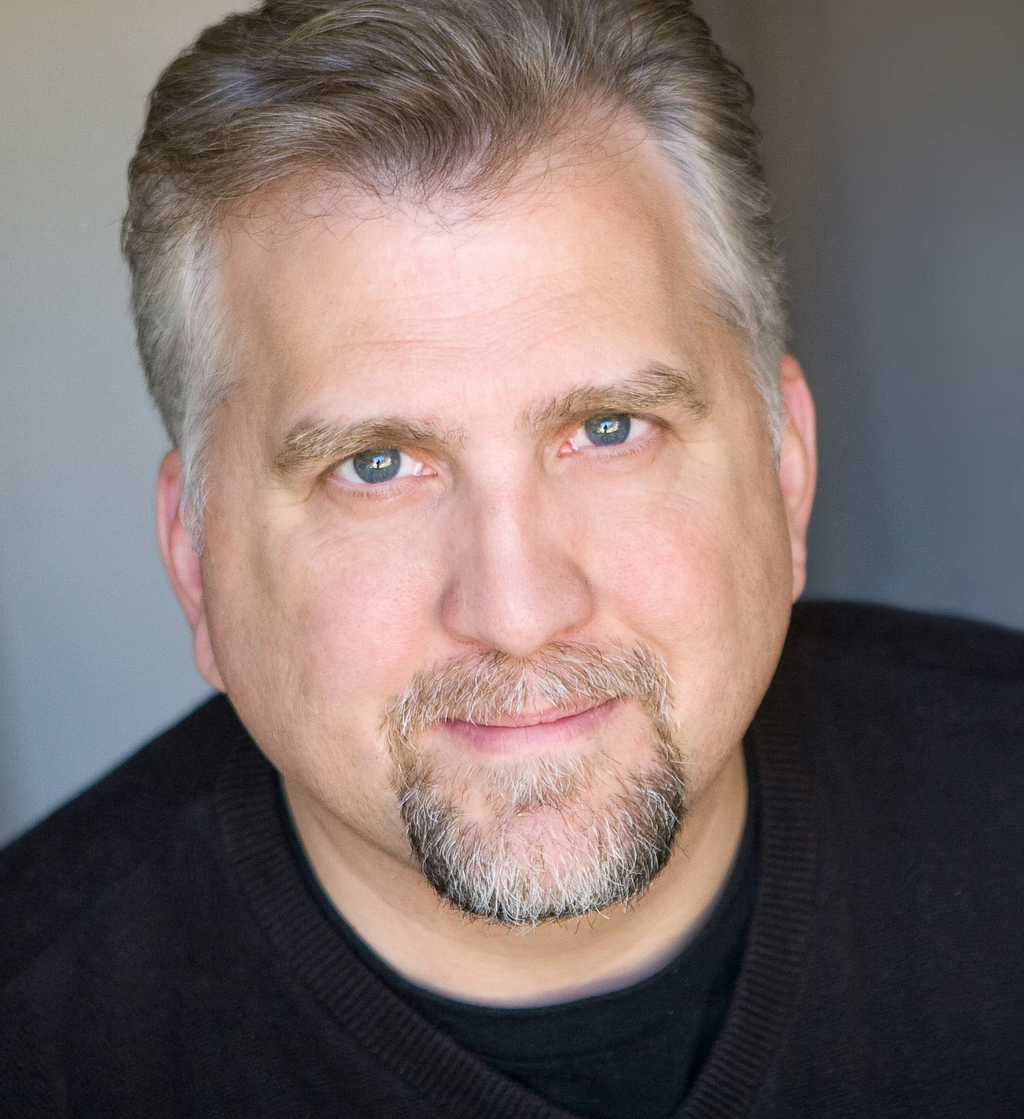
I had the pleasure of talking with Daniel Roebuck. If you own a television or have stepped foot inside a movie theater in the last four decades, you have seen his face. With around 300 credits to his name, Roebuck is the definition of a working actor. He is the kind of guy who can seamlessly transition from the muddy, rain-soaked island of Lost to the daytime courtroom of Matlock, and then straight into the neon-drenched, macabre universe of a Rob Zombie horror film. But beneath the extensive Hollywood resume, he remains a guy who is firmly rooted in the blue-collar soil of his hometown.
“I grew up in Bethlehem, Pennsylvania,” Roebuck explains. “Great working-class parents, terrific people, and I’m blessed to still have them on the earth.” His sharp sense of humor seems directly inherited from that upbringing, particularly his dynamic with his dad. “My father and I have always had a passive-aggressive relationship, but now it’s just aggressive. He just yells at me. It gives him great joy to yell at me; I don’t know why, I thought I was doing okay.” Roebuck attended St. Anne’s Catholic school, where he quickly realized his personal origin story was a little different. While the other kids were named after biblical figures or saints, his mother admitted he was named after a baby on a daytime soap opera. “Now that I’ve said it twice in a row, I wonder if that’s where I got the idea that I should be on TV,” he reflects.
That urge to perform started incredibly early. Before he could even read or write, he was drawing pictures to create plays for his first-grade teacher, Sister Kathleen. By the time he was twelve, he joined a local circus based out of Easton, Pennsylvania. They hired him as a clown simply because he proved he could walk into walls and fall down. Combining his love for showbiz and horror movies, he eventually developed a stage persona called “The Count,” a vampire clown complete with painted-on sideburns and theatrical red makeup.
For Roebuck, life and Hollywood have a funny way of traveling in a perfect circle. As a kid, his mother took him to meet the famous impressionist Rich Little at the Valley Forge Music Fair. The young Roebuck told Little he wanted to be an impressionist, too. Fast forward to age thirty, and Roebuck was cast as Jay Leno in The Late Shift, starring right alongside his old hero, Rich Little, who played Johnny Carson. “Eighteen years later, I was doing impressions in a big Hollywood movie with the guy who was my mentor in impressions,” he says. “You cannot tell me that God did not have a hand in that.”
Similar lightning struck with television icon Andy Griffith. After starring in a Los Angeles stage production of No Time for Sergeants — playing the exact role Griffith had originated on Broadway — Roebuck landed a minor guest spot on Matlock. He awkwardly introduced himself to the legend on set. The very next day, the director pulled Roebuck aside to say, “I don’t know what happened, but the old man wants you as a series regular on this show.” Decades later, shock-rocker and director Rob Zombie called him with another surreal offer: the chance to play Grandpa Munster in The Munsters. “If you’re punking me, this would be the meanest thing anyone has ever done,” Roebuck told him. Zombie assured him it was a real offer, but noted the script simply referred to the character as “The Count.” Roebuck still had his twelve-year-old vampire clown business card bearing that exact same name.
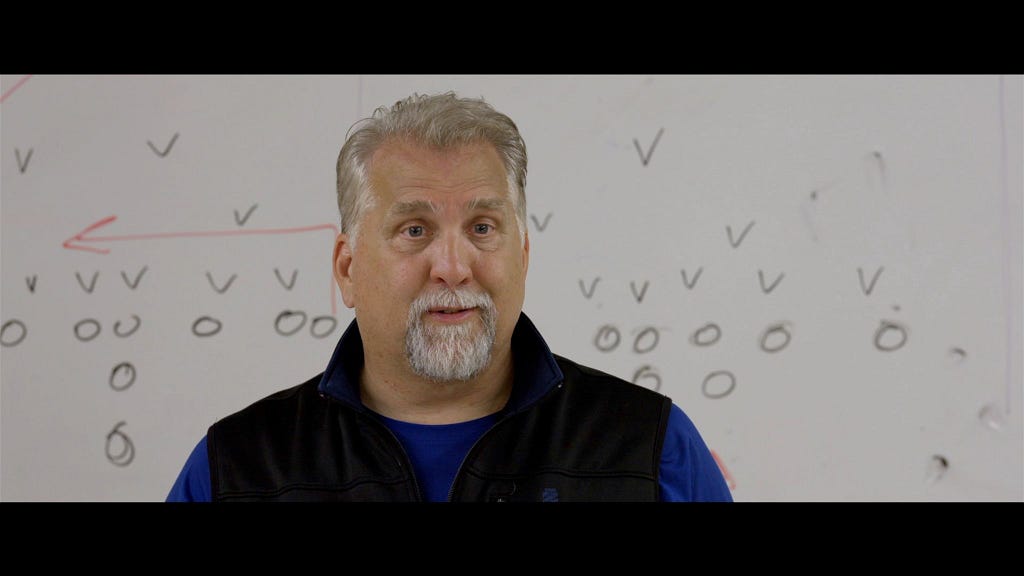
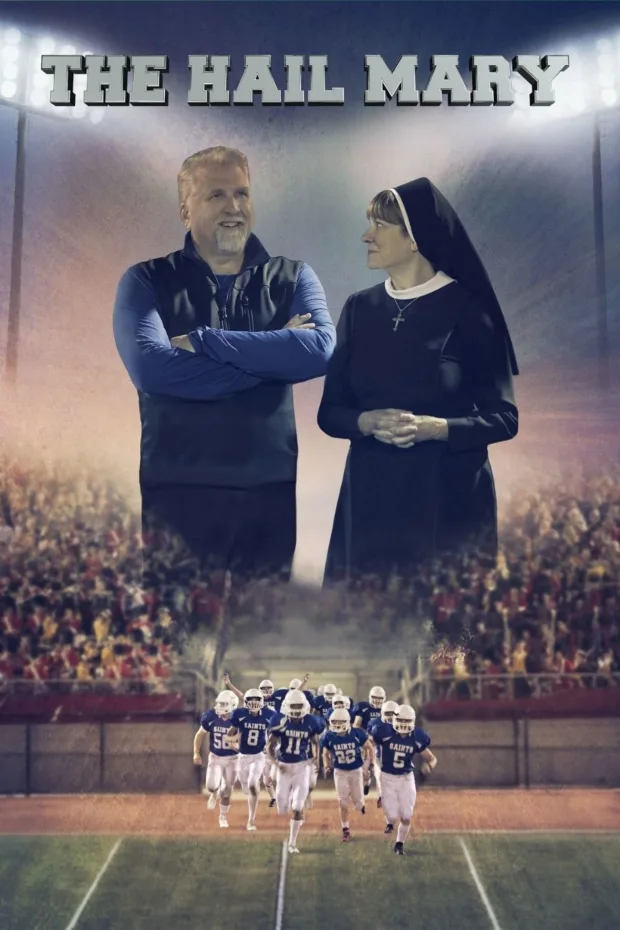
Today, Roebuck is pouring his lifetime of cinematic experience into the world of independent filmmaking. His latest feature, The Hail Mary, which he wrote, directed, and stars in, was filmed right back where he started in the Lehigh Valley. It is a comedy-drama about a broken man who finds an unlikely second chance by reluctantly coaching a Catholic school football team. He is quick to point out that the movie relies on humor and heart, rather than preaching. “I can tell you there is nothing that turns off a person of no faith more than a heavy-handed religious message,” he notes. “I always say I don’t want to preach to the choir; they’re already in church. I want to preach to the people driving past the church on Sunday morning on their way to the beach.”
The reality of making independent films is rarely glamorous. Roebuck and his family run their non-profit production company, A Channel of Peace, on pure passion. “I’ve taken no salary to write, produce, direct, or star in it,” he admits. “We pay everybody else, but nobody named Roebuck has been paid on these movies yet.”
Beyond the cameras, his advice for surviving the ride is surprisingly grounded. He insists that true professionals always hang up their clothes at the end of a shoot to show respect to the wardrobe department. Above all else, he believes in the simple act of looking out for the next person in line. “Look behind yourself to make sure no one else is trying to get out of the same door you are,” Roebuck says. “If you don’t help the people behind you the way you were helped… you’re missing the point. Our destiny is simply a doorway; you have to go through it, and you have to help others through it too.”
Yitzi: Daniel Roebuck, it’s so delightful to meet you. Before we dive in deep, our readers would love to learn about Daniel Roebuck’s personal origin story. Can you share the story of your childhood, how you grew up, and the seeds for all the amazing work that has come since then?
Daniel: It’s interesting, I never thought of it as an origin story; it is such a showbiz term. I grew up in Bethlehem, Pennsylvania. Great working-class parents, terrific people, and I’m blessed to still have them on the earth. My father and I have always had a passive-aggressive relationship, but now it’s just aggressive. He just yells at me. It gives him great joy to yell at me; I don’t know why, I thought I was doing okay. Born in Bethlehem, I had a unique childhood and knew early on that I was going to be on TV. I talked about being on TV. I don’t know where I got the idea. We were saying earlier, I was in St. Anne’s Catholic school, and we had to tell everyone who we were named after. Every kid was named after this saint or that guy in the Bible. I thought I was named after Daniel in the lion’s den, but my mom said, “No, there was a little baby in a soap opera named Daniel, and that’s why I named you Daniel.” Now that I’ve said it twice in a row, I wonder if that’s where I got the idea that I should be on TV, because that thought probably originated around the same time.
I started writing plays even before I could write, Yitzi. I said to Sister Kathleen in first grade, “I wrote a play.” She didn’t say, “Dan, I know you’re not smart enough to know this, but you don’t know how to read or write, so obviously you’re not Neil Simon.” My idea of writing a play was drawing pictures, and we actually did my play. From six years old on, I was performing, and not just like a kid doing little shows for their parents. I’m just realizing I’m the worst guy to have your kids perform for. When my kids did shows, I’d say, “You’re not hitting that joke well, you gotta set it up a little better if you think it’s gonna be funny.” I tried to teach them to be better showmen.
Then, Yitzi, would you believe I joined a circus when I was 12? There was a local circus that originated in Easton, Pennsylvania. It didn’t have a menagerie or animals, but we toured New York, New Jersey, and Pennsylvania, performing in high school auditoriums. I was a clown, and then a magician. Then I saw a movie starring James Whitmore as Harry Truman, Give ’em Hell, Harry!, and I decided that’s what I wanted to be — an actor. I think it was God’s hand training me the whole time.
I did impressions for magic shows for a while, doing Paul Lynde and Peter Lorre. My mom took me to meet Rich Little when he was performing in Devon, Pennsylvania at the Valley Forge Music Fair. We met him after the show, and I talked about wanting to be an impressionist. He said, “Well, that’s great.” I was probably 12 or 13 then. When I was 30, I played Jay Leno in The Late Shift, and Rich Little played Johnny Carson. Eighteen years later, I was doing impressions in a big Hollywood movie with the guy who was my mentor in impressions. You cannot tell me that God did not have a hand in that. You couldn’t convince me in a million years. Once I discovered I wanted to be an actor, I did 40 plays in about six or seven years, and then I moved to Hollywood. That was it. My path was so clear. I think all of our paths are clear; we just obfuscate our future by piling on unnecessary hurdles. Life is filled with so many hurdles, why do we have to add our own?
Yitzi: You probably have some incredible stories from the different parts of your career, and I’m sure this is hard to single out. But can you share with our readers one or two stories that stand out in your mind from your professional career?
Daniel: These stories require the idea that life travels in a circle. When I was a kid, I loved horror movies and makeup. I always made myself up, so I end up in a lot of movies where I wear makeup. I also loved comedy, so I loved The Munsters. Your readers can’t see this, but I have collections all around me of wax figures, toys, and artwork. I’ve done eight movies for Rob Zombie. I never ask about the size of the part; I just go work for him for a few days because he’s a great, talented, and nice man.
Imagine one day I’m driving, and Rob Zombie calls me: “Dan, I wanted to talk about if you want to be in a movie.” I said, “Sure, I’ll be in a movie.” He asked, “Do you want to play Grandpa Munster?” I told him, “If you’re punking me, this would be the meanest thing anyone has ever done.” I had done the movie Disorganized Crime with Fred Gwynne, so I knew Fred, and I was friendly with Al Lewis, who played Grandpa Munster. I had even met Butch Patrick, who played Eddie. Suddenly, I had an offer to be part of that story. It was a great culmination of everything.
Earlier I mentioned being a clown in the circus. They hired me to be a clown, but I didn’t have a specific character; I just proved I could walk into walls and fall down. When I finally developed a character, combining my love for horror movies, I became a vampire clown. If I showed you pictures, you’d think it was ridiculous. But if you compare pictures of me as that clown to me as Grandpa Munster, my eyebrows are the same, my painted-on sideburns are the same, and I even had a cut in my clown red makeup to emulate a bat right where Grandpa’s mustache is. At the end of our conversation, Rob said, “I’m going to send you the script, I hope you like it. Just know that you’re not Grandpa Munster because there’s no Eddie in this movie. In the script, you’re The Count.” Well, my character in the circus and for my magic shows was “The Count.” I still have my business card from when I was 12 years old, and it says “The Count.”
I’ve always seen God’s hand in my trajectory. Like everybody, I loved Andy Griffith. He’s an American icon, and I watched his show as a kid. Later, I did a play in LA called No Time for Sergeants. Andy Griffith had originally done it as a TV special, then on Broadway, and later as a movie. I got cast on Matlock at the end of its first season. They brought Andy Griffith to the set for our one scene together, and I was dumbstruck. I couldn’t even talk to him. Finally, I sputtered out, “I just did No Time for Sergeants.” He said, “Wait a minute, I know about that because you invited us to that. Who’d you play?” I told him, “Will Stockdale.” He replied, “Will Stockdale, that’s the part I played on Broadway, in the movie, and on TV.” Then he told everyone around us that we both played Will Stockdale. We did our scene, and the next day the director said, “I don’t know what happened, but the old man wants you as a series regular on this show.” That one interaction, based on a challenging role where the character breaks the fourth wall to lead the audience through the story, led to three years on Matlock. You just have to go with the Godly flow, and it takes you where you need to be.
Yitzi: You’re an amazing storyteller, Daniel. So let’s jump to the centerpiece of our interview. Please tell us about this new film. Tell us why, in your unbiased opinion, our readers have to watch it.
Daniel: The Hail Mary is a movie that everybody will understand because it’s about redemption. Unless you’re a sociopath, you know you’ve let yourself down, as well as others and God — whatever Godly belief system you have. You’ve let down your children, your wives, your husbands, whomever. This is a movie about a guy who has let himself fall so far that he feels he’s unfixable. The Hail Mary in the title isn’t about the last play of the game, which is interesting; it’s about this guy’s last chance for redemption before he’s completely lost.
I think it’s a very powerful story. It’s set in the world of Catholic school, which is the world I grew up in, and it celebrates the religious sisters whom I wanted to honor because they were so good to me. But Yitzi, it’s important that people hear this: it doesn’t matter if you’re Catholic or Jewish. You’re going to understand the elements. Isn’t that true of any great movie? I was singing Fiddler on the Roof earlier. That’s one of the greatest books of a Broadway show ever written because it’s not just about being Jewish; it’s about keeping your family together. We all understand that. It’s one of my favorites, and a great Norman Jewison movie, too. He went from that to Jesus Christ Superstar, so I always thought Jewison was really working his way into heaven through any door he could find.
The other thing about the movies I make, Yitzi, is that they are comedies and entertainments. I can tell you there is nothing that turns off a person of no faith more than a heavy-handed religious message. It turns people off; they don’t want to see a “religious movie.” But if you have a movie that’s funny and entertaining, anybody can watch it. My favorite review of this movie is on IMDb. Somebody wrote, “I am an atheist who hates football, I had no business watching this movie, and I loved it.” I always say I don’t want to preach to the choir; they’re already in church or at shul. I want to preach to the people driving past the church on Sunday morning on their way to the beach. I want them to think, “That movie was so funny, and that lady in the black nun suit was saying religious things that are actually adaptable to our daily lives.” That’s my idea of a great story.
Yitzi: Daniel, you’ve been blessed with a lot of success now, and you must have learned a lot from your experiences. Looking back all the way to the beginning when you first started down this path, can you share five things that you’ve learned over the years that would have been nice to know in the beginning?
Daniel: Can I speak from my heart? In no particular order, the first thing I would love for people to know is that everything is fleeting. You should really be planning your next life, especially when it comes to fame.
Another thing to remember is that if you don’t want people to lie to you, you have to lie less to everyone else. When you play fast and loose with honesty or reality, you can’t be surprised when others lie to you. In Hollywood, they always lie to you.
To offer something more positive, the people who will truly support you forever are the ones who tell you when things aren’t up to your potential. They’ll remind you that you can aim higher.
Also, it’s really in the love of my family that I find the most joy. That ties back to fame being fleeting; having your house in order is extremely important.
Lastly, as an entertainer, you should always hang up your clothes at the end of the day. That is how you show respect to the wardrobe department. Even on Lost, when we were in the mud and rain and they gave us a bag to just throw our dirty clothes into, I still hung the clothes up and tied the bag around them to show respect. I wish I had more groundbreaking ideas for you, Yitzi, but I apologize, that’s all I have.
Yitzi: This is our final aspirational question. Daniel, because of your amazing work and the platform that you’ve built, it’s not an exaggeration to say that you’re a person of enormous influence. If you could spread an idea or inspire a movement that would bring the most amount of good to the most amount of people, what would that be? You never know what your idea can spread.
Daniel: I’ve given thought to this. The simple truth is, much like how Jordan Peterson reduced it to 12 rules starting with “clean your room,” this is how we can all make the world better: Look behind yourself to make sure no one else is trying to get out of the same door you are. If you can teach your kids that, the moment you realize they understand it, you know they are going to be okay in life.
Three things come out of that. The first component is empathy — knowing you shouldn’t close the door on someone. The second is compassion, because the person behind you may require you to open the door for them. The last and most important thing is that it reminds you that you are a cog on a wheel. If you don’t help the people behind you the way you were helped — like how Andy Griffith pulled me forward, and how I’ve pulled other people through that door — you’re missing the point. Our destiny is simply a doorway; you have to go through it, and you have to help others through it too. So that’s it: look behind yourself.
Yitzi: Amazing. Daniel, how can our readers watch the film?
Daniel: Thank you. The movie is currently playing on Angel, a platform for faith-based movies. It is up for pre-order on Apple TV, and very soon it will be available on Amazon to rent or purchase. If anyone wants more information, they can go to achannelofpeace.org. It is a legitimate not-for-profit. For better or worse, with a movie like The Hail Mary, I’ve taken no salary to write, produce, direct, or star in it. We pay everybody else, but nobody named Roebuck has been paid on these movies yet. I think that forced my daughter into marriage just so she could legally change her name and get paid! I don’t know if that’s something we’ll always do, but we built the company on the idea of getting the first movie or two out so we can keep making them. If people want to help us make faith-based family movies, I assure you it doesn’t matter what faith you are; you can trust that the movies will have a Godly point of view for moving forward in life.
Yitzi: Daniel, it’s truly been a pleasure to meet you. I wish you continued success, good health, and blessings. I hope we can do this again next year.
Daniel Roebuck on ‘The Hail Mary,’ Working With Andy Griffith and Why Redemption Stories Still… was originally published in Authority Magazine on Medium, where people are continuing the conversation by highlighting and responding to this story.