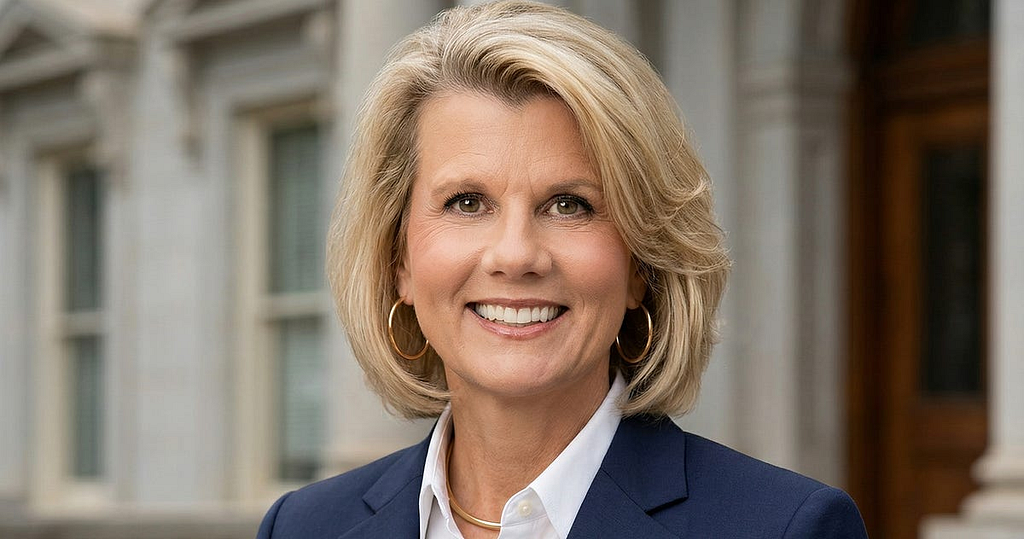
Dawn Landry Of Authentizity On The Future of Corporate Sales, AI Adoption, and Relationship Intelligence
…Where I am right now, Yitzi, is studying the past, so that way we don’t make the same mistakes again, especially related to women. The movement that I would love, and in particular where I am right now, is focused on historical women fiction where they’re mapping out stories, because there’s not a lot written about the great women behind the men. Women such as Abigail Adams (John’s wife), Eliza Hamilton (Alexander’s wife), Clementine Churchill (Winston’s wife), etc. Quite honestly and very unfortunately, a lot of the men, like in the case of Albert Einstein, took credit from his first wife, Mileva Marić, who was also an accomplished scientist and massively important in history. These are all amazing women, yet there has been little written about them until recently. There are these great authors right now who are focused on telling the stories of these women. We have to learn those stories, and we can’t repeat history. We just can’t go back. That’s my number one, and I’ll preach it to anyone that wants to talk about it…
I had the pleasure of talking with Dawn F. Landry. Long before she was a two-time bestselling author and an award-winning business executive navigating the high-stakes world of Houston commercial real estate, she was just a kid in 1970s South Louisiana, learning the art of the hustle outside a local courthouse. The foundation of her 33-year career in corporate growth started far away from any boardroom. It began with her grandmother, a local volunteer for the Veterans Women’s Auxiliary (the VFW). Every Memorial Day and Veterans Day, young Dawn would be scooped up from school to sell artificial poppies. “I was so young, and I was highly competitive because I wanted to raise the most money and rack up as much as we possibly could by the end of the day,” she remembers. That early drive forged an enduring interest in the people sitting across the table. She quickly learned how to customize their experience, realizing early on that she would spend her entire life selling.
That same fierce independence fueled her teenage years and early twenties. She balanced heavy workloads during her freshman year of college, worked as a local radio station DJ, taught dance to kids, and paid her dues in retail. Armed with a public relations degree, she entered the ad agency business in Lafayette, Louisiana. She describes that era with blunt clarity: “I basically ate what I killed.” At just 28 years old, she spearheaded a grassroots campaign for a Vatican cardinal visiting the Diocese of Acadiana. She prepped local media, orchestrated the publicity for a six-day tour, and ultimately wrote and produced a half-hour television documentary that aired on the two major local network affiliates. Success, she discovered, requires massive teamwork and a willingness to roll up your sleeves to accomplish just about anything.
When she relocated to Houston twenty-five years ago, Landry entered the belly of the beast. Working in economic development, her product literally became the city itself as she pitched Houston to corporations considering a relocation. She spent over fifteen years in corporate real estate, weathering brutal market cycles that would break less resilient professionals. She arrived in the city during the fallout of Enron, then survived the 2008 financial collapse, the 2014 OPEC oil price shifts, and the 2020 pandemic. Adversity sharpened her instincts. “Going through those challenging times and adversities has taught me to be slightly skeptical and to always think about what we are going to do next and how we will shift if necessary,” she explains. She advises clients to prepare for transitions long before desperation sets in, noting that waiting is simply a fatal error in business.
In 2017, a corporate layoff pushed her into full-time entrepreneurship, and Authentizity, LLC was born. Her consultancy focuses on relationship intelligence, empowering technical-minded professionals like architects, engineers, and commercial general contractors who often view business development with deep suspicion. Many of these experts went to school for technical roles and consider sales to be slimy. Landry strips away that stigma. She teaches them that sales is merely persuading a decision in your favor. “Clients don’t buy companies; they buy the people delivering the services,” she says.
Landry knows that true connection requires radical self-awareness and active listening. Even a seasoned veteran makes mistakes. She candidly recalls a recent pitch to a critical, highly analytical executive where she tried to connect by spitballing about market knowledge and mutual acquaintances. “At one point in the conversation, his eyes glazed over,” she admits. Realizing she was losing the room, she instantly shifted tactics, cutting the small talk to deliver hard facts and actionable items. She won the contract by recognizing what the person across the table actually needed. To Landry, this is the core of listening intelligence. You must figure out if the person you are talking to values data, big-picture concepts, or personal connections, and adapt accordingly.
The human element remains her true north, especially in a landscape rapidly shifting toward artificial intelligence. While she acknowledges that tools like AI are completely reshaping the next decade of business, she remains a staunch defender of genuine human connection. Using AI to research an industry and/or company before a meeting is smart, but asking a machine to forge a relationship is a trap. “The wrong way is having it write all your emails without customizing them, because people are getting very smart about AI right now and can spot it quickly,” she warns. For Landry, the difference between an AI-generated document and a human-written one is the heart. No algorithm can replace the authentic, shared experiences that build trust.
Her own life has required tremendous heart. Her 2020 memoir, ARMORED, mapped out her grueling personal experience navigating her husband’s life-threatening illnesses, including stage four cancer and a major stroke. Through personal tragedy and professional turbulence, Landry has remained relentlessly focused on the stories and struggles of others. When asked about the legacy she hopes to leave, her focus turns entirely to history. She hopes to inspire a movement dedicated to mapping out the stories of the forgotten historical women who stood behind the founding fathers. Just like in her business philosophy, Dawn Landry remains dedicated to uncovering the vital, human stories that too often go unnoticed.
Yitzi: Dawn Landry, such a delight to talk to you. Before we dive in deep and talk about your work and your perspectives on AI, our readers would love to learn about your personal origin story. Can you share with us a story of your childhood, how you grew up, and particularly the seeds of the genesis for all the amazing work that has come since then?
Dawn: Thank you, Yitzi. It’s great being here today. What a great question; I have to really think about that. I grew up in South Louisiana in the 70s. Thinking about what I do now and how I was impacted as a child, I realize I’ve sold something every day for my entire career. A lot of times I’m selling myself, but most of the time I am selling services. For example, at one point, I was working in economic development and selling Houston. Houston was my product; I marketed the city to companies considering relocating or retaining their businesses in the Houston market.
But I think back to those early days in Louisiana. My grandmother was a volunteer, and that had a really big impact on me. She volunteered with the Veterans Women’s Auxiliary in the small town where I grew up. Every year, from the time I was probably about seven years old, she would scoop me up out of school on Memorial Day and Veterans Day, and we would go to the courthouse to sell poppies for the veterans. They were these little artificial flowers that veterans would make, and all the proceeds went to veterans’ charities. I think about it now, and that was the very first sales job I ever had. I was so young, and I was highly competitive because I wanted to raise the most money and rack up as much as we possibly could by the end of the day. I’ve carried that drive, that interest in people, and that ability to see people on the other side of the table. It taught me how to customize the experience they have from a sales and service standpoint. It all comes back to way back then in the 1970s in South Louisiana.
Yitzi: You probably have some amazing ones from the different parts of your illustrious career. Maybe this is hard to single out, but could you share with our readers one or two stories that stand out in your mind from your professional life?
Dawn: One that stands out amazingly happened while I was still in Louisiana. I have a public relations degree, and I spent the first part of my career in the ad agency business in Lafayette, Louisiana. I basically ate what I killed. I was responsible for going out into the community to sell the work, and then I would bring it in-house. Some of the work involved advertising and branding, and we had digital graphics people handling that, but a lot of it was public relations work.
One of the projects we sold was to the Diocese of Acadiana. We had a cardinal coming from the Vatican, and the whole concept was to show that Catholicism was alive and well in South Louisiana during that time. At the young age of 28, I was responsible for this grassroots campaign. I went to all the local TV stations and newspapers, prepping the media to get him as much publicity as possible. He came, had a six-day tour in our area of Louisiana, and then he left. Afterward, I wrote and produced a half-hour TV documentary that aired on the ABC and CBS affiliates. I think back to that time and realize I was using a lot of the skills I have today, but in their rawest form. It showed that success requires a lot of teamwork, but it also proves that if you roll up your sleeves, you can accomplish just about anything. It remains one of the proudest projects I’ve ever worked on in my career.
Yitzi: There is a saying that sometimes our mistakes can be our greatest teachers. Do you have a story about a humorous mistake you made at the beginning of your career and the lesson you took away from it?
Dawn: I don’t even have to go back to the beginning of my career; this just happened last year, Yitzi. As much as we lean into trying to understand our clients and staying present in the conversation, even 33 years later, I still make mistakes. Last October, I was interviewing with a subcontractor to coach four executives on their team. We knew a lot of the same people and firms here in Houston, but we didn’t know one another. I was super excited, got in there, and started spitballing with him about our commonalities in market knowledge and connections. At one point in the conversation, his eyes glazed over.
Thankfully, I spotted it right when it happened and immediately realized I was losing him. I started to backtrack and really zoned in. In retrospect, I identified that — if you are familiar with DiSC — his profile was an SC. He was a steady, highly critical thinker. I cut to the chase, gave him some actionable items, discussed next steps, and ended the conversation quickly. I walked out of there thinking there was no way I won the project. I felt I had talked myself out of the sale. Fortunately, two weeks later, their head of HR contacted me to say they had chosen me, which was a real surprise. In hindsight, while working with his team, I advise his people to pay close attention and be mindful of what he needs. There is sometimes friction with his executives because they overcommunicate, while he just wants to know the who, what, when, where, why, and how. We can all learn. I am quite far into my career to admit a major blunder like that, but it just happens.
Yitzi: There is another saying that the greatest university is adversity. What has hardship taught you that success never could?
Dawn: We talked a little bit before we started recording about how market cycles can be strange. I am sitting here in Houston, Texas, the oil capital of the country, and sometimes the world. We follow the bouncing ball regarding the economy. If you stick around long enough, you see that market cycles occur every six or seven years. When I came to Houston 25 years ago, the city was dealing with the aftermath of Enron. In 2008, it was the financial crisis. In 2014, OPEC was adjusting oil prices, which heavily affected Houston’s built environment and construction projects. Then we hit 2020, and I don’t have to tell you about the impacts of the pandemic. Now, we are sitting here again with a big question mark about what to do next.
As a small business owner and solopreneur, I like to give myself a sense of comfort. Whenever I get nervous that the pipeline isn’t as full as I want it to be, I give myself the same pep talk I give my clients. The adversity we experienced during those past challenges actually helped us sharpen our skills and make our businesses ready. It allows us to anticipate market shifts and transition our business into a market that makes sense before it gets too late. The worst thing to do is wait. For example, in April 2020, people suddenly saw what was happening and decided to transition into the healthcare market. I received calls from potential clients wanting to do this, and I had to remind them that they had no experience in healthcare. It was way too late at that point to try and shift. I try not to use the word “pivot” because it is overused, but transitioning into another market requires preparation. Going through those challenging times and adversities has taught me to be slightly skeptical and to always think about what we are going to do next and how we will shift if necessary.
Yitzi: Could you please tell us about the exciting new projects and initiatives you are working on right now? We would love to hear all about them, so please feel free to be as elaborate as you would like.
Dawn: Sure. Sometimes we need an outside perspective to tell us what is working and what isn’t. I have 250 videos on YouTube and release a vlog post every week. I hired a consultant who told me that despite having all this content, my brand representation was confusing. I hired this consultant to help me articulate exactly what I do. With a lot of work, we encapsulated it into one framework focused entirely on relationship intelligence. To answer your question, Yitzi, this is what I am bringing to the market right now. It is a new, authentic way of framing my service offerings.
Everything I do revolves around relationships and relationship intelligence. First, we must have self-awareness and self-intelligence. I always say that self-awareness is only one piece of the puzzle; we also need empathy and curiosity for the person on the other side of the table, which is interpersonal intelligence. We must have client intelligence, recognizing that we need to individualize the experience to make a real connection and establish credibility, reliability, and trust. Most people lead with credibility and reliability, but the reality is that without a relationship, clients cannot trust or respect us.
Another component is organizational intelligence. Selling is as much about internal selling as it is external. It matters how you deliver your work with colleagues, partners, and allies. Do they know and trust you? Or do they think you are only out for yourself? Do you gaslight them and take credit for everything, or do you celebrate everyone’s success?
The last piece is growth intelligence, which involves looking ahead. There used to be a time for the 10- or 15-year business plan, but I honestly think that is a complete waste of time, energy, and money. Who knows what will happen in another 10 years? AI is dramatically changing everything. If we have a solid plan for the next three to five years, that will guide us to what comes next. I don’t know about you, but I did not have a pandemic on my bingo card. I could not have anticipated many of the events of the last 10 years, including the rapid effects of AI.
Yitzi: So your business is that you are a consultant? Is that right?
Dawn: Yes, I am a consultant. I come from the economic development and construction industries. I spent a good chunk of time working in commercial real estate, economic development, and construction in Houston. With a background in public relations, I utilized those skills throughout my career. I started my own consulting firm over nine and a half years ago. Fundamentally, at the heart of everything is understanding relationships: the relationship we have with ourselves, the interpersonal relationships we build with clients, and the dynamics within an organization. If we are selling anything, internal selling is just as important as external selling. Finally, it involves understanding where we are heading from a growth standpoint.
The previously mentioned consultant that I hired also helped me to explain exactly what I do because I have several different service lines. I am an executive coach, a business development coach, and I run a business development training program for technical professionals like architects, engineers, and commercial contractors. These are often people who went to school for technical roles and do not want to be involved in sales. However, the reality is that clients want to work with people, not firms. Helping these professionals articulate their value and getting them comfortable doing so is a core part of what I do. If you are not connecting with someone, it is okay; those just aren’t your people, and you need to go find your audience. Depending on who we are, we attract different clients. If you are an analytical, engineering-minded person, there are clients who love data, statistics, and concrete proof. The same applies to people who love to entertain and be entertained. It is really about digging in and individualizing the client’s experience.
One topic a lot of my clients are discussing is the impact of AI on business development. They wonder if robots are going to replace us in sales at some point. The reality is no. People want to do business with people. Just as companies hire the individuals doing the work rather than faceless firms, the same concept applies to AI. AI is a tool to get to know our clients better. If we aren’t using AI to research before contacting or meeting someone, we are missing the boat in a major way.
Yitzi: Let’s talk a little more about AI. Everyone is trying to leverage AI to improve their business, sales, and leads. Can you share the right way to use AI to improve sales, as well as the wrong way?
Dawn: I will tell you the wrong way first, Yitzi. The wrong way is having it write all your emails without customizing them, because people are getting very smart about AI right now and can spot it quickly. I have written articles for Authority Magazine quite a bit, and I don’t use AI to write because I simply enjoy writing; I have written two books, and it is something I have enjoyed doing for a long time. I love seeing that your spreadsheets now indicate that if something was AI-generated, they kick it back to ask the author to revise it. That is excellent because nobody wants to read something that lacks heart. The difference between an AI-written document and a human-written one is the heart.
This transitions into how to use AI effectively. The right way is using it for anything that enhances the human experience with clients. In business development, AI should give you time back, allowing you to spend more time with your clients. Whether it is researching a client or their industry before a meeting to ensure you are well-informed — while always verifying that the information is accurate — AI helps you go further, faster. If I need to articulate something, I can use Claude, or I can create a graphic immediately without hiring a whole team and waiting a month. That is leveraging AI in a great way.
But is AI going to write all my website copy? No, because it lacks the heart and the specific knowledge of my audience that comes from real experience. I consult heavily with architects, engineers, and commercial general contractors. For architects and engineers specifically, they leverage AI as a preliminary quality check — similar to a spell check in a Word document. It checks for basic constructability, but an expert eye is still required to go in and confirm the details based on real-world experience. They have to assess, “I’ve built this type of project or building before; here is what I can leverage from my experience.” Human experience and connection will always be necessary.
Yitzi: Are there particular tools that you like, especially AI tools aside from ChatGPT, Claude, and Gemini? Are there specific niche tools that you recommend?
Dawn: I have gotten into Gamma lately. Normally, I use my own branded materials, but Gamma has been helping me create very interesting presentations in a new way. I am also leveraging Claude, and it is taking things to a new level. I am very excited about it.
However, I am still skeptical. I have been exploring AI for the last three or four years. A good friend of mine is an early adopter, and she pulled me in almost kicking and screaming. She insisted I research it, and I am so glad she did. She is far more proficient with AI than I am. I test AI products and concepts because I want to remain relevant. However, I am still very leery about letting an AI agent access all my personal information and data. I guess that is where my age is showing, Yitzi.
Yitzi: Okay. This is our signature question. You are an expert in many things, and part of your expertise is teaching people how to sell. Can you share five things you need to be highly effective at sales?
Dawn: Number one, two, three, four, and five is listening. I always say that what I do is not rocket science. It is strategy and follow-up, strategy and follow-up, strategy and follow-up. But layered fundamentally on top of that is the ability to listen. You must throttle back and truly listen as both a problem finder and a problem solver. Most people go in with the assumption, “I have done this before, I know your type of client and service, let me tell you what to do.” In reality, a lot of my clients already know what they want done; they just want to brainstorm the idea and find someone to implement it. It is also about vetting their concept to ensure it is right for them by sitting down and understanding their needs.
I was certified in a coaching platform last year called Listening Intelligence (LQ™) . Unlike CliftonStrengths® or DiSC, which are personality and behavioral assessments, Listening Intelligence focuses on a cognitive habit. We can actually change the way we listen. There are four different listening preferences. First, there are the Connective listeners. They listen for the impact on people — their family, community, department, or company. You know they are Connective listeners because they lean in, and their body language and eye contact show deep engagement.
Second are the Reflective listeners. They try to ground themselves by asking, “What does this mean to me? Where have I done it before? How will I leverage this in my organization?” Their body language often seems detached. They might look away, and you might think they aren’t listening, but once they connect how they will use the information, they are right back in the conversation.
The third type is the Analyticals. They listen for data, facts, and proof. They want to know where you have done this before and ask for references and statistics. If you don’t provide that data and feed the Analytical first, they will tune out of the conversation entirely.
Fourth are the Conceptuals. These are the big thinkers and innovators. They listen for new concepts and don’t want anything stale or stagnant; they want forward-looking relevance. They are usually the highly animated people at the whiteboard.
In the example I gave earlier about my October meeting, I am a massively Conceptual listener. I was being conceptual until I realized I was losing the sale because I was talking to a Reflective Analytical. Once I adjusted my approach and fed his analytical needs, he re-engaged. That is really all sales is.
Dan Pink wrote a book called To Sell Is Human many years ago. I love the book and use it as a reference in Authentizity’s BD Dynamics™ business development training program. Dan points out that anyone can sell. It is not the extreme extrovert, who does all the talking, nor the extreme introvert. It is the ambivert who can throttle back. Many engineers make excellent salespeople because they are natural problem solvers who forge deep, long-lasting connections with clients.
However, Dan also notes that most people attach a stigma to the word “sales.” Technical professionals often say, “I went to architecture or engineering school; I don’t want any part of this dog and pony show. Sales is slimy.” We have to transition them away from the idea that sales is slimy and help them realize anyone can sell. If you convince someone to marry you, that is sales. If you convince your kid to eat their peas for dinner, that is sales. Sales is simply persuading a decision in your favor. If we remove the stigma — I often tell trainees to call it “fun time with friends” if they want — they can simply own the responsibility and cultivate their relationships. Again, clients don’t buy companies; they buy the people delivering the services.
Yitzi: I noticed a lot of people are using LinkedIn to sell things. People will send cold messages to me, and I almost never respond because it feels like spam. My attitude is that if I wanted something, I would reach out to them. If they are good, I likely would have heard of them. If that is true, how can anyone do sales? How can anyone do cold outreach or send a cold email? How can someone effectively reach out in a way that bypasses my objection — that if I wanted you, I would reach out to you?
Dawn: I want to caveat this by saying I only sell services and people. I do not do transactional sales; I am not going to sell you an ink pen and disappear forever. It is a warmer sale, not cold calling. I did cold calling right out of school in the early 90s, and I hated it. Most salespeople I know hate cold calling. I couldn’t agree with you more, Yitzi. I barely even check LinkedIn Messenger anymore. Five to ten years ago, LinkedIn was wonderful, and it still is, but the Messenger feature has become entirely diluted. People do things on LinkedIn Messenger that we would never do in person. It is like making a connection at a networking event and immediately getting in someone’s face, asking, “Do you want to buy from me? How about now? How about now?” It is terrible. I don’t know why LinkedIn hasn’t solved that problem, but they haven’t asked me.
However, I still leverage LinkedIn more than any other social media platform because that is where my audience is. The way I leverage it is very soft and consistent. When I first started my business nine and a half years ago, I released a blog post every week. Seven years ago, a wonderful marketing friend suggested I try vlogging. I told her I didn’t like myself on camera and thought it would be terrible. It was terrible in the beginning, but I did it anyway to stretch myself. Now, I release a vlog post once a week. It goes out to an email subscription list of 3,000 contacts and is also posted on LinkedIn. It creates a soft brand awareness that consistently demonstrates my credibility and industry knowledge, which has ultimately brought me many sales.
The advice I give is to figure out where your audience is and what they respond to. They definitely will not respond to harassment on LinkedIn. As for cold emails, I agree with you — they don’t work. However, there are still effective strategies for actual phone calls, assuming you have a good reason to call and solid follow-up. It comes down to identifying your lead magnets and meeting your audience where they are. My friend who is an AI early adopter has also seen great results with geofencing. She geofences around major conferences for her clients, which is a fantastic addition to their marketing mix.
Yitzi: Could you talk more about geofencing?
Dawn: Great question. I only know a little bit about it, so I will do my best to explain. Basically, geofencing uses software to set up a geographic perimeter. It then targets the people physically present at a specific conference, marketing to them through LinkedIn ads, direct emails, Facebook, or a mix of platforms. I don’t fully understand the technical software aspect of it — I could let you interview her if you’d like — but it specifically targets conference attendees in a highly technical way.
Yitzi: It sounds like meeting and networking with people in person is a much more effective approach than sending a cold email or LinkedIn message. Even with geofencing, it is fundamentally leveraging the desire to meet in real life. Aside from conferences, what are other good places to meet prospects?
Dawn: For B2B, I highly recommend conferences and networking events — anything that helps build a network. The approach depends on whether you are targeting a large corporation or a smaller mom-and-pop shop. Selling local services like insurance is slightly different, but navigating larger organizations requires strategic thinking. Everyone focuses on succession planning from a leadership standpoint, but many organizations fall short on succession planning for business development. What happens when your top rainmakers retire and take their contacts with them? Have you created relationships at all levels — a zipper effect between your emerging leaders and the client’s team? If a key contact wins the lottery and never comes back to work, and they were your only point of entry into a massive client account, you have to start all over again. That is why business development succession planning is critical.
There are various strategies for getting inside an organization, but if you are starting fresh, you must build the largest network possible. If you don’t have a network, you have nothing. It doesn’t matter if I am representing my own company or working as a full-time employee elsewhere; I might as well have the company logo tattooed on my forehead. I am a brand ambassador, and my actions in the community reflect the organization.
Business development is much more than just taking clients out for drinks. People think having a large expense account is business development, but that is simply entertainment. True business development means going deep, serving as a valuable resource, and becoming a trusted advisor. Your clients should feel comfortable coming to you for anything, whether it is related to your services, a restaurant recommendation, or finding a good dentist. Clients test us on the small things before they trust us with big projects. So again, it comes down to strategy and follow-up. If we fail to follow up on the small things, they will not give us the big opportunities.
Yitzi: This is our final aspirational question that we ask in all of our interviews, and I’m sure you’ve answered it before. But Dawn, because of your amazing work on the platform that you’ve built, you’re honestly a person of enormous influence. If you could spread an idea or inspire a movement that would bring the most amount of good to the most amount of people, what would that be? Because you never know how far your idea can spread.
Dawn: Where I am right now, Yitzi, is studying the past, so that way we don’t make the same mistakes again, especially related to women. The movement that I would love, and in particular where I am right now, is focused on historical women fiction where they’re mapping out stories, because there’s not a lot written about the great women behind the men. Women such as Abigail Adams (John’s wife), Eliza Hamilton (Alexander’s wife), Clementine Churchill (Winston’s wife), etc. Quite honestly and very unfortunately, a lot of the men, like in the case of Albert Einstein, took credit from his first wife, Mileva Marić, who was also an accomplished scientist and massively important in history. These are all amazing women, yet there has been little written about them until recently. There are these great authors right now who are focused on telling the stories of these women. We have to learn those stories, and we can’t repeat history. We just can’t go back. That’s my number one, and I’ll preach it to anyone that wants to talk about it.
Yitzi: Amazing. I could talk to you for a much longer time, but I want to be respectful of your time. Dawn, thank you so much for your time. I wish you continued success, good health, and blessings. I hope we can do this again soon. Thank you for everything, and thank you for being such a good friend.
Dawn: Thank you.
Dawn Landry Of Authentizity On The Future of Corporate Sales, AI Adoption, and Relationship… was originally published in Authority Magazine on Medium, where people are continuing the conversation by highlighting and responding to this story.