‘Days of Our Lives’ Alum Mark Hapka on Choosing a Soap Over ‘Spider-Man’ and Why he’s Rejecting AI for Practical Effects
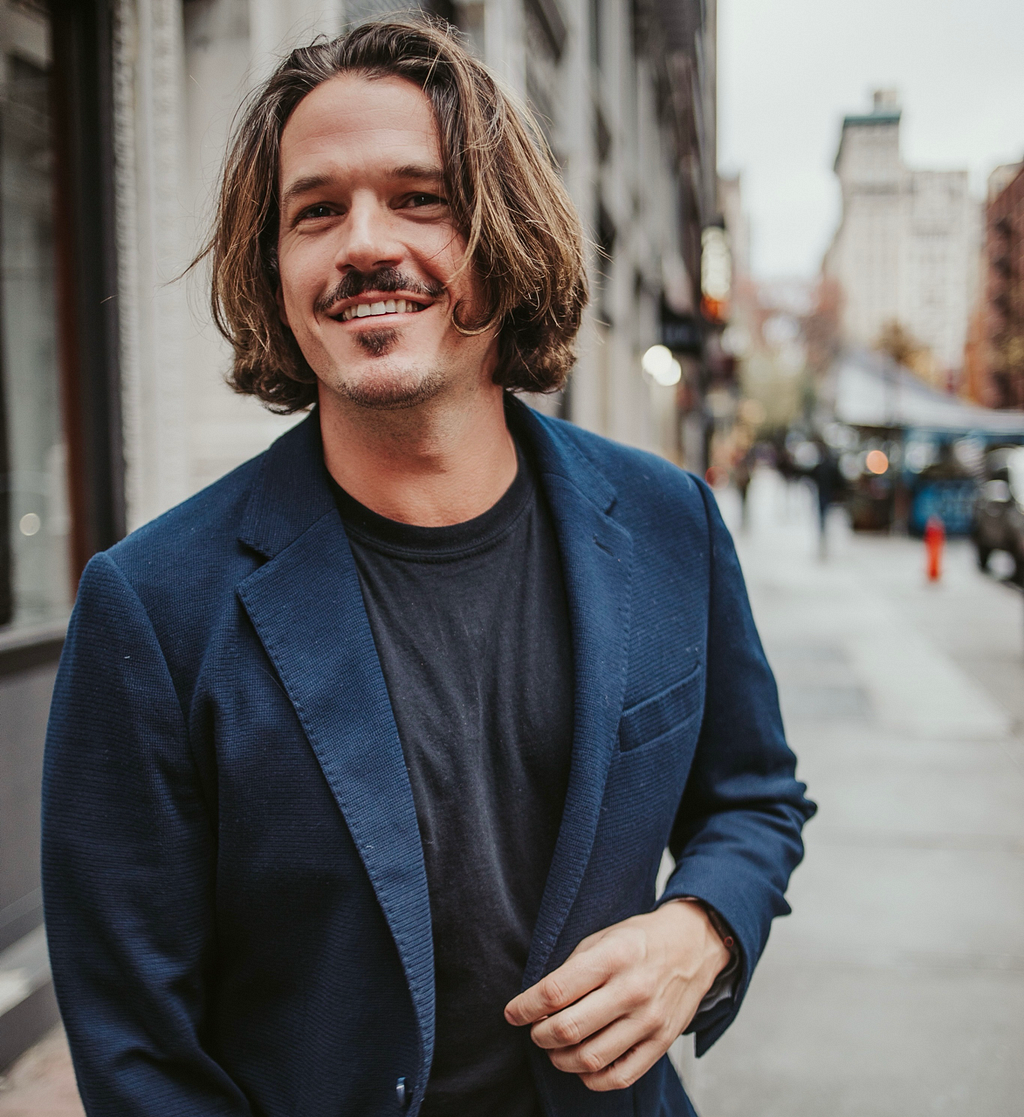
…If I could share one idea to help change the world, it would be that the work is internal, not outward. If you want to change the world, stop trying to change everyone else. Change yourself and lead by example. I believe that is the most direct and foundational way to address many of the issues we face. Instead of covering symptoms the way cough medicine masks a cough, we need to get to the root of the problem, which is ourselves. If we all did that, we might actually have a chance at achieving the kind of utopian world we imagine…
I had the pleasure of talking with Mark Hapka. He comes from a small town in Upstate New York, born in Buffalo and raised in Rome, right outside of Syracuse. It was there, in a sixth-grade production of Aladdin, that the acting bug first bit him. Under the guidance of his teacher and mentor, the late Mr. Lanzi, Hapka found a sanctuary in the arts. “He was an amazing human who really set the stage, pun intended, for the arts for all of us children,” Hapka recalled. That early spark carried him through community theater and high school musicals, eventually leading to a brief detour into music education in Syracuse. But the gravitational pull of Hollywood was ultimately too strong to ignore.
Like countless dreamers before him, Hapka packed his life into a U-Haul, hooked it up to his 1998 Nissan Maxima, and drove across the country to a city he had never even visited. His arrival in Los Angeles was less than glamorous. Assuming downtown was the heart of the action, he moved into a hotel there, only to quickly realize how spread out the city truly is. His introduction to the industry was equally humble. “I think the first thing I ever did was work as an extra in a Japanese music video I found on Craigslist,” he said. That random gig led to a friendship that pointed him toward Playhouse West, an acting school where he finally found his footing and a sense of community.
Hollywood is built on rejection, a reality Hapka learned to navigate early on. “For every ‘yes,’ there are a thousand ‘nos,’” he explained. But he also learned that a “no” is often just a necessary redirection. One of his most defining moments came when he was testing for television pilots and reading for the infamous Broadway production of Spider-Man: Turn Off the Dark. He flew to New York, read with visionary director Julie Taymor, and even worked on music with Bono. It was the ultimate dream, but the production process completely stalled. Forced to make a choice, Hapka pivoted to a role on the soap opera Days of Our Lives just as a massive Screen Actors Guild strike was looming. Because the soap operated under a different union contract, he was able to keep working and pay his rent. “The redirection was very generous to me in that moment,” he noted, especially considering the actor who ultimately took the Spider-Man role suffered a severe back injury during the notoriously dangerous production.
Despite his early wins, including his first major television booking opposite Jennifer Love Hewitt on Ghost Whisperer, the constant hustle took a personal toll. In his rush to succeed, Hapka admits he made sacrifices he now deeply regrets. “Early on, I missed a lot of amazing family moments,” he confessed. He skipped family gatherings and precious time with his grandparents, all for the sake of auditions. “Early on, for a brief stretch, I held myself back by focusing too much on booking jobs instead of actually living life, which is what ultimately makes you a well-rounded actor.” He now advises younger artists to realize that “acting is to stop acting,” citing the famous Sanford Meisner philosophy of living truthfully in imaginary circumstances. “I would have saved myself a lot of cringy performances if I had just focused on listening rather than feeling the need to be ‘on’ constantly,” he admitted.
That well-roundedness is now evident in the physical and emotional lengths he goes to for his craft. For an early independent film where he played a man dying of terminal brain cancer, Hapka fasted for forty-five days and lost fifty pounds. In 23 Blast, he took on the daunting task of portraying Travis Freeman, a real-life football player who went completely blind in his youth. Today, he is juggling his acting career with the grueling demands of producing and directing. His recent projects include the psychological thriller Bight, which he produced, starred in, edited, and created original music for, and the ensemble film Premarital, where he produced, cast, and played Alan, a man caught in a chaotic Midwestern family clash over his religious beliefs before his upcoming wedding to their daughter. Hapka describes Alan as a man who is “honest to a fault, for better or worse,” noting that it is the character he shares the most overlap with personally. He also recently appeared in Code 3, a film highlighting the intense reality of first responders, hoping viewers “gain a new respect for those who show up and sacrifice their own boundaries and dignity to help others.” On top of these, he is deep into writing, producing, and directing a large-scale sci-fi fantasy project tied to an album concept titled Metanoia. For this, he is insisting on using practical effects and real artists rather than relying on artificial intelligence, aiming to create “something in the spirit of Guillermo del Toro.” All of these projects were created under his studio banner, White Room.
Through all the changing landscapes of the entertainment industry, Hapka has managed to stay incredibly grounded. He prioritizes getting a solid eight hours of sleep, maintaining a cruelty-free diet, and spending his hard-earned money on experiences and people rather than material things. He has learned to relax, to stop trying to constantly perform, and to simply be present. When asked about the kind of impact he hopes to leave on the world, his answer is remarkably introspective for an industry built entirely on looking outward. “ If I could spread one idea to help change the world, it’s that the work is internal, not outward,” he shared. “If you want to change the world, stop trying to change everyone else. Change yourself and lead by example.” For a kid from Upstate New York who drove his Nissan Maxima into the great unknown, that internal compass seems to be pointing him exactly where he needs to be.
Yitzi: Mark Hapka, it is so nice to meet you. Before we dive deep and talk about your work, our readers would love to learn about your personal origin story. Can you share the story of your childhood, how you grew up, and the seeds for all the amazing work that has come since then?
Mark: Hey, great to meet you as well. Thanks for having me, Yitzi. What a great question. How long do you have? (laughs) I love the way you put that, origin story.
I come from upstate New York. I was born in Buffalo, and around fifth grade, I moved to Rome, a small town outside Syracuse. That’s where I got my first taste of acting and fell in love with it during my sixth grade play, Aladdin. I worked with my teacher and mentor, Mr. Lanzi, rest in peace. He was an amazing human who really set the stage, pun intended, for the arts for all of us kids. He genuinely nurtured anyone who had an interest.
It started there, then carried into community theater at Rome Community Theater and the Rome Capital Theater. From there, I moved into junior high and high school at Rome Free Academy, directing one-act plays, acting on stage, doing musicals, and just loving every bit of it.
I had a brief detour into music education, which I studied in Syracuse. That really reinforced my love for music, which carries into all of my films. I see scores and songs as an emotional journal for a narrative, so I am very hands-on when it comes to the music in my work.
From there, I made the move to Los Angeles. I have the classic story. I had never been there, but I knew I wanted to pursue acting, so I packed up a U-Haul, hooked it up to my 1998 Nissan Maxima, kissed my Nanny goodbye, and drove across the country. I moved into a hotel downtown, thinking it was the central location of Los Angeles. It is not. (laughs)
I just kept learning the city, getting around, and getting involved in as many projects as I could.
I think the first thing I ever did was work as an extra in a Japanese music video I found on Craigslist. That led to meeting someone who is still a friend to this day, Zhubin Rahbar. He told me about an amazing acting school he attended. I was on the verge of going to another one, so I joined him that weekend for his school’s film festival. I met a lot of great people, fell in love with the program, and ended up enrolling there at Playhouse West.
Around that time, I moved out of the hotel and found an apartment near the school. I wanted to get an agent, so I enrolled in an actor showcase, which was a way to perform scenes in front of agents and managers. A couple of great opportunities came out of that, and I signed with my first agent.
I got my first audition and booked it. It was for a TV show called Ghost Whisperer with Jennifer Love Hewitt. In my head, I thought, ‘Wow, this is easy. You come to LA, get an agent, book a big TV show, and have a career.’ I was quickly humbled by the realization that it was a bit of beginner’s luck and that, in reality, it takes constant work.
From there, I had some right place, right time moments, met great people, and kept creating. Since then, I have worked across network television and feature films, with stretches of unemployment and bartender shifts woven in between.
Along the way, I fell into producing because I was such a hands-on actor and wanted to make sure the projects I was part of reached their potential. Since then, I have been consistently creating feature films, shorts, music videos, and hybrids. I love the process. And here I am today with you, excited to talk about the work I have been doing.
Yitzi: I am sure you have a lot of incredible stories from all the different projects you have been working on, and it must be hard to single them out. Can you share with our readers one or two stories that stand out most in your mind from your professional life?
Mark: One of the stories that stands out most is my first real ‘actor’s dream’ experience when I got to LA. Usually, it takes years of trial and error before you see any real traction, but I booked a job on my very first audition, which put me on the Universal lot surrounded by major players.
There I was, fresh off my cross country move, working opposite Jennifer Love Hewitt, who I had a huge crush on growing up, getting to know the executive producers, and shooting my first scene in the town square used in the Back to the Future films and so many other movies. That whole experience really stands out.
I was Taft-Hartley’d on that project, which is essentially the golden ticket for an actor to join SAG, skipping the usual qualification process. I was able to join almost immediately just by booking that job.
Having that full-on, magical Hollywood actor experience, which I know is rare and something I feel very lucky to have had, is a story that still stands out to this day and really got the ball rolling for me.
Yitzi: There is a saying that a “no” is not rejection, but redirection. Do you have a story where you received a “no” to an opportunity, but it led to an even better opportunity, success, or blessing?
Mark: I think it happens every time. This industry is filled with rejection. For every ‘yes,’ there are a thousand ‘no’s. The goal is to learn how to stay in a state of acceptance, stay grounded, and trust that you are being redirected to where you belong.
I remember pilot season. I do not know if people even remember what that was like, since we do not really have it anymore, but it was when we were doing in-person auditions, sometimes several a day. I was very lucky to be out there getting those opportunities. I was up for one show, testing for another, and in the mix for a few pilots. At the same time, I was reading for a Broadway show.
I got very close on Spider-Man: Turn Off the Dark. I traveled to New York City, read with Julie Taymor, and worked musically with Bono. It was a dream come true. But the process kept getting delayed. They narrowed it down to just a few people, but it dragged on, and eventually I felt like something had to give.
Right before a Screen Actors Guild strike, I had an opportunity with Days of Our Lives. At the time, AFTRA and SAG were still separate, and the show was under AFTRA, which meant I could continue working during the strike. I chose to take it, and it ended up being a massive blessing. Maintaining an apartment in LA as an actor without steady work is tough.
Ultimately, the actor who booked the Spider-Man role after I stepped away ended up breaking his back. That redirection was incredibly generous to me. It led me to a show I loved being part of, gave me steady work for years, and brought me an amazing fan base that is still with me today. I have a lot of gratitude for that.
Yitzi: There is a related idea that sometimes our mistakes can be our greatest teachers. Do you have a story from when you first started about a humorous mistake you made and the lesson you took away from it?
Mark: Let’s just start by saying I made all the mistakes. I still make them today. Early on, I missed a lot of meaningful family moments. I passed on time with my grandmother, who has since passed, my grandfather, and other family events because I did not want to miss auditions. I skipped these gatherings because I had callbacks.
The real mistake was thinking there was no time. In your early twenties, that is a bit of a false pressure. You feel like you are up against the clock to find success quickly.
For a brief stretch, I held myself back by focusing more on booking jobs than on actually living life, which is what ultimately makes you a well-rounded actor.
Since then, I have made up for it with a lot of travel and by setting stronger “life” boundaries.
Yitzi: What has been the most challenging project or role you have taken on so far, and why?
Mark: There have been many, for different reasons. As an actor, I did a film called 23 Blast where I played Travis Freeman, a real-life person who lost his sight at a young age. He lost his love for football, but ultimately found his way back to it. It is a really beautiful and inspiring story. The challenge was selling the idea of blindness on camera, especially on an indie film with very few takes, limited rehearsal time, and a lot of technical constraints.
Another early project had me playing a man dying of terminal brain cancer. We shot in sequence, so I fasted for 45 days during filming and lost about 50 pounds. It was a huge accomplishment, but incredibly challenging. You learn a lot about yourself when you are that depleted.
Now, the challenges are different. I am balancing producing my own films while still focusing on acting, and that never really gets easier. Managing different personalities on set can be tough. You work with people at all levels of experience, and while that can create friction, it also teaches you a lot about producing and problem-solving.
There are always challenges, but I think that is why people are drawn to this industry. There is a real love for problem-solving, and the feeling of overcoming obstacles to deliver a finished project is incredibly rewarding.
Yitzi: Let us now talk about your work. Mark, please tell us about all the exciting new projects you are working on. We would love to hear more about your latest series.
Mark: A lot of the work I have put into features over the last half-decade is finally coming to fruition. It has been a busy couple of months, and I feel very lucky to have two feature films releasing in the first half of this year.
One is called Bight, which came out a couple of months ago. I produced, starred in, edited, and even created original music for it, really wearing all the hats of indie filmmaking. The other is Premarital, which just finished its theatrical run at select AMC Theatres and Laemmle Theatres locations nationwide. It had a really fun and successful run and is heading to digital next month.
I am also about seventy percent through a project I wrote and am directing that is tied to an album concept I produced titled Metanoia. It is probably the biggest and most difficult thing I have taken on so far. It feels like several feature films combined, mainly because of budget limitations and the technical demands. It leans heavily into sci-fi and fantasy, using practical effects alongside digital VFX.
I am collaborating with incredibly talented artists across the board. I am very intentional about working with real people and not relying on AI. My goal is to build something in the spirit of Guillermo del Toro, where craftsmanship and human artistry are at the center of the process.
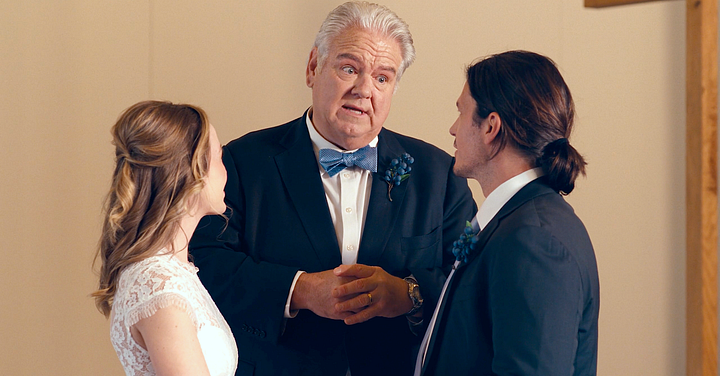
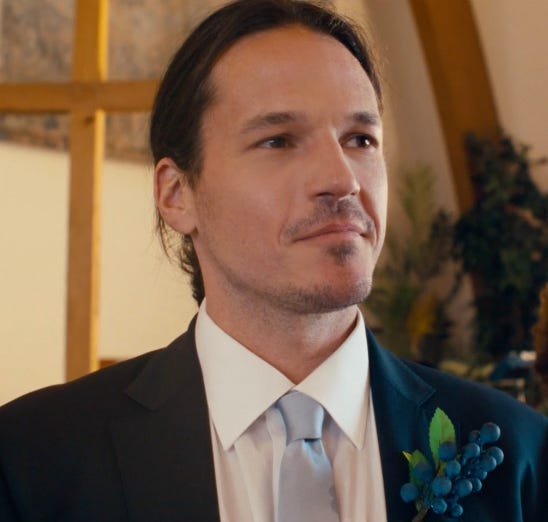
Yitzi: Tell us a bit more about Premarital. How would you compare and contrast your personal character, Mark, with Alan, the character you play in the film? How are you similar, and how are you different?
Mark: Alan is an interesting one. Even with our differences, he is probably the character I overlap with the most, which made him easier to step into. He is a man of principle and honest to a fault, for better or worse. The people in my life know exactly what that means.
The truth is not always easy to hear, but is necessary to communicate and navigate through. I expect the same from the people around me, just like Alan does.
At his core, he is someone who values integrity, honesty, and his word. He really just wants people to get along, be kind, and accept each other where they are.”
Yitzi: That is amazing. You are in Code 3, a film that I really enjoyed and loved. Tell us what you hope the takeaways are. What messages can society take from it?
Mark: From Code 3, I hope people take away that the situations our EMS and first responders go through are as wild as that movie, and sometimes wilder. I hope they gain a new respect for those who show up and sacrifice their own boundaries and dignity to help others.
Yitzi: In real life, is Rainn Wilson at all like Dwight Schrute? (Laughs)
Mark: No, I do not think so. My brief encounter with Rainn was kind and pleasant. He knows what he needs and where he wants to be. Rainn has totally evolved as a human since his days on The Office. Fun fact: I used to live in a house in the Valley that was used as Pam and Jim’s house on The Office. I was behind that front door while they were filming those scenes, so I was present for them.
Yitzi: That is amazing.
Mark: “It was fun in the early days. Having Steve Carell, John Krasinski, Will Ferrell, and Mindy Kaling sitting on my couch and wandering through my living room was a trip.”
Yitzi: That is great. This is our signature question. Mark, you have been blessed with a lot of success, and you must have learned a lot from your experiences. Looking back to when you first started acting, can you share five things you have learned over the years that would have been nice to know when you first started working in the entertainment industry?
Mark: I wish I had learned right off the bat that acting is to stop acting. It is about living truthfully in imaginary circumstances, which is the foundation of studying Sanford Meisner. I wish I had known to relax, be present with my scene partners, and use dialogue as a tool rather than the driving force. I would have saved myself a lot of cringy performances if I had just focused on listening rather than feeling the need to be “on” constantly.
Second, I wish I knew that there are no real rules in this industry. It can feel like there are, but once you understand them, breaking them is what leads to more genuine expression. Audition the way you want to show the role, and make films with the camera and the people you have without worrying about perceived limitations.
Third, remove the fear of failure as quickly as you can. The faster you fail, the faster you grow.
Fourth, be mindful when working with friends on high-stakes projects. It can either strengthen the relationship or strain it, so be intentional about who you collaborate with.
Finally, get everything in writing early. You cannot always assume people have your best interests at heart. Protect yourself while staying open and genuine. Do not become overly skeptical, but stay aware.
And take it easy on yourself. Forgive yourself. Remember that in every moment, you are just beginning. You are exactly where you are supposed to be.
Yitzi: On a personal level, can you share some of the self-care routines you do to help your body, mind, and heart thrive?
Mark: To be honest, I can share what has worked for me in the past, but I want to start with a disclaimer. You are not always going to be at your best. When life gets busy or distracting, routines fall away, and you have to find your way back. Be patient with yourself. Be kind to yourself.
In the past, having some form of exercise routine has kept me at the top of my game. It does not have to be an hour and a half in the gym every day. Just moving your body and getting your blood flowing makes your mental health and workload much easier to manage.
I have also learned that sleep is probably the most important factor, even more than working out. Try to get a solid seven to eight hours. Some form of reflection, whether that is journaling, meditation, prayer, or just walking in nature, helps you find a calm, grounded state.
Eating as clean and healthy as possible is also important. I lean toward a cruelty-free, organic, and balanced approach. And while creatives often need isolation to recharge, it is just as important to stay connected. Go out, create with others, and laugh as much as you can.
Any money you have, spend it on experiences and people rather than things.
Yitzi: This is our final aspirational question. Mark, because of your amazing work and the platform you have built, it is not an exaggeration to say you are a person of enormous influence. If you could spread an idea or inspire a movement that would bring the most amount of good to the most amount of people, what would that be? You never know what your idea can spread.
Mark: My goodness, you are pumping me up and making me feel like much more of a badass than I actually am.
If I could share one idea to help change the world, it would be that the work is internal, not outward. If you want to change the world, stop trying to change everyone else. Change yourself and lead by example.
I believe that is the most direct and foundational way to address many of the issues we face. Instead of covering symptoms the way cough medicine masks a cough, we need to get to the root of the problem, which is ourselves.
If we all did that, we might actually have a chance at achieving the kind of utopian world we imagine.
Yitzi: Mark, how can our readers continue to follow your work? How can they watch your films or projects? How can they support you in any way?
Mark: I am pretty terrible at social media, but I am trying to get better. I do post about my projects on Instagram, so you can find me there at @markhapka.
If you are looking for something feel-good and family-friendly, check out Premarital. It will be hitting digital platforms soon. If you are more drawn to the darker side of human nature and exploring boundaries and relationships, check out Bight. It is currently available on Apple TV and Amazon Prime Video, and will be available on Blu-ray, DVD, and heading to other platforms shortly.
You can also just search my name or check IMDb, which is usually how I find other people’s work as well.
Yitzi: Mark, it has been a true pleasure to meet you. I wish you continued success and good health, and I hope we can do this again next year.
Mark: Yitzi, I will always chat with you. I appreciate you, your energy, your calmness, and your positivity; it is infectious. Keep doing what you are doing. Thank you.
Yitzi: I really appreciate it. Thank you so much, Mark. Have an amazing day.
Mark: You as well.
‘Days of Our Lives’ Alum Mark Hapka on Choosing a Soap Over ‘Spider-Man’ and Why he’s Rejecting AI… was originally published in Authority Magazine on Medium, where people are continuing the conversation by highlighting and responding to this story.