
Disney Vet Saul Blinkoff Talks ‘Tarzan,’ Calling the Head of Disney and Why a “Life of Meaning” Beats a “Life of Happiness”
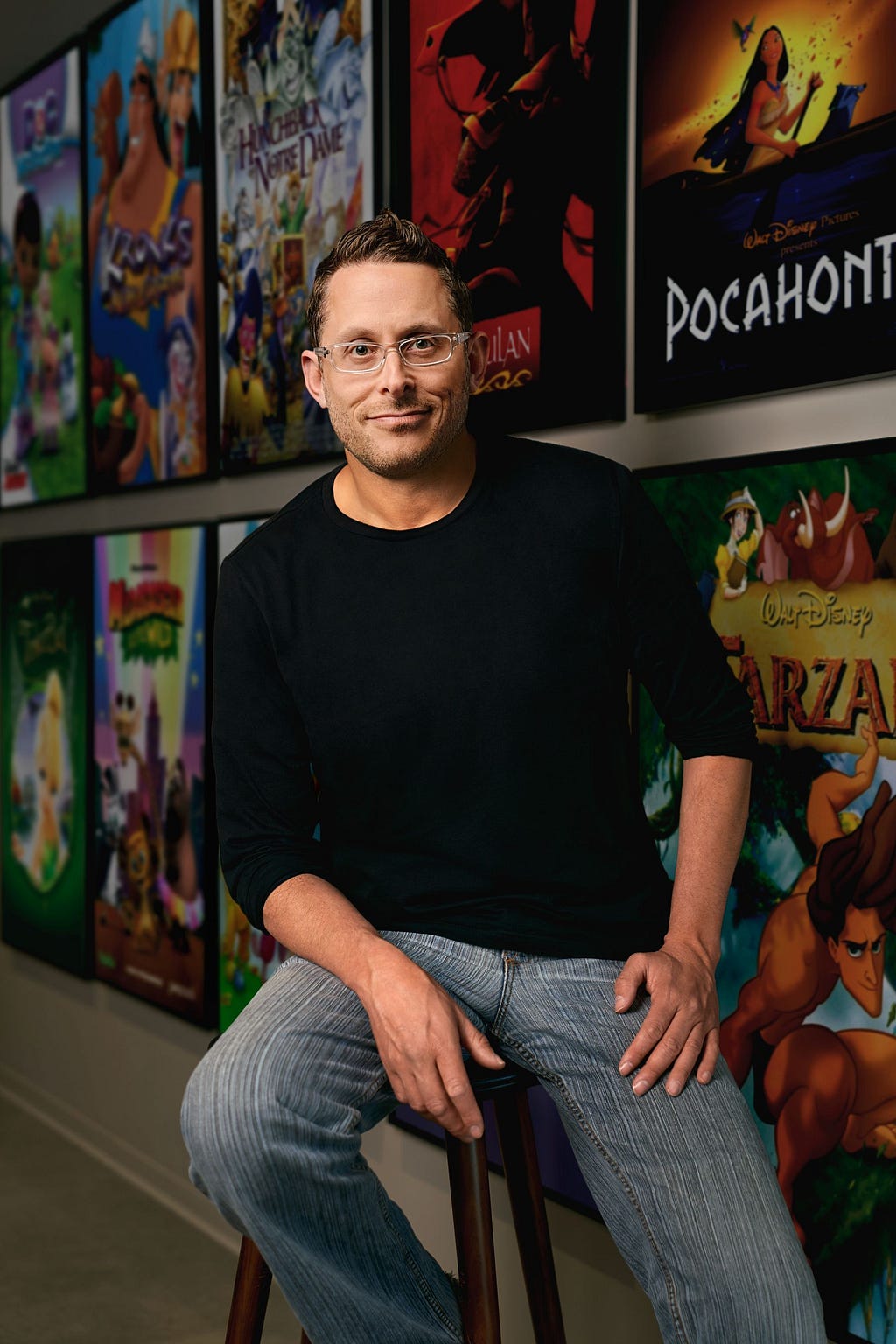
“She noticed that while she liked the drawings, none of the people had hands… I admitted, ‘Because drawing hands is difficult.’ She said, ‘Oh, it’s hard to draw hands? Okay. Here is what you are going to do. Every night before you go to bed, you are going to draw your hand from a different position.’ That is exactly what I did. Over the next six months, I got really good at drawing hands. She taught me one of the most valuable lessons in life: Have a singular mindset to turn your weakness into your strength.”
I had the pleasure of talking with Saul Blinkoff, a man whose fingerprints are all over the animated subconscious of the millennial generation. From Pocahontas to Mulan, Blinkoff has animated the characters that defined a decade of Disney magic. But talking to him, you quickly realize that his story isn’t about the glamour of the red carpet or the nostalgia of the Disney Renaissance. It is a gritty, blue-collar story about the friction between talent and tenacity, and the specific kind of pain required to turn a dream into a cel-shaded reality.
Blinkoff grew up in New York, a self-described “invisible” middle child of divorce. He didn’t find his voice in sports or academics, but in the solitary act of creation. “My favorite pastime was drawing,” Blinkoff recalls. “I lived in my imagination a lot.”
His trajectory changed in a darkened theater in 1981. It wasn’t a cartoon that sparked the flame, but Spielberg’s E.T.. “That is the movie that made me want to be a filmmaker,” he says. He saw himself in the protagonist, Elliot — another child of divorce finding strength in the extraordinary. “Where I felt at times, invisible growing up, I felt empowered by watching this strong character.”
However, the road to Hollywood wasn’t a straight shot. It was a winding path paved with insecurity. As a teenager, a random comment from a stranger about Hollywood being filled with “weirdos” spooked him enough to quit filmmaking entirely. “I gave up on my dream right there because one person told me I would end up a weirdo,” Blinkoff admits with a laugh. “Today I am in Hollywood, and my four kids would tell you their dad is a weirdo. So much for that.”
He pivoted to drawing, training under a private art teacher who forced him to confront his artistic deficiencies. When he avoided drawing hands because they were difficult, she made him draw his own hand every night for six months. It was a lesson in “turning weakness into strength” that would define his career.
The pivot back to film happened when he saw Disney’s The Little Mermaid. He saw the fusion of his two loves: filmmaking and drawing. But wanting to be a Disney animator and becoming one are two very different things. He enrolled in the Columbus College of Art and Design, where he was immediately humbled. “I was one of the worst artists in the school,” he says bluntly. “But nobody sat in that audience with a fire like I had.”
Blinkoff’s college years were defined by a brutal work ethic. He vividly describes a freezing day at the Columbus Zoo, where he and his best friend, Andy, stood in the bitter cold drawing elephants while their classmates watched from inside a warm Wendy’s. “I knew at that moment that I would get into Disney one day because I wasn’t afraid of the cold,” Blinkoff says. “It is easy to dream big, but not easy to work big.”
Despite the effort, the rejection letters piled up. His friend Andy got the internship; Blinkoff did not. The crushing weight of failure nearly broke him. “I gave up,” he says. “If I didn’t try, I didn’t fail.” But a viewing of the film Rudy — the true story of an underdog football player — dragged him back into the fight. He called Disney, demanding to know why he failed. The answer was technical: he lacked perspective in his drawings.
He was also told to add “Effects” to his portfolio — animating elements like rain, fire, and smoke. He rebuilt his entire portfolio in two weeks. “I saw time as an opportunity to grow,” he explains. That final push cracked the door open. He landed the internship and eventually worked on Pocahontas, The Hunchback of Notre Dame, and Tarzan, later directing Winnie the Pooh: Springtime with Roo and Kronk’s New Groove.
Today, Blinkoff has shifted gears from solely animating to keynote speaking and coaching, driven by a philosophy that prioritizes substance over comfort. He is wary of the modern obsession with happiness. “The goal of life isn’t to be happy,” he asserts. “The goal of life has to be something much sweeter than a life of happiness, and that is a life of meaning.”
He likens this journey to The Lion King. Much like Simba, who wastes years in the “Hakuna Matata” paradise of no worries, Blinkoff believes we are often asleep to our potential until we wake up to our responsibilities. “Wisdom is the most valuable thing we will ever have,” he says. “The more I understand the world around me, the more I will understand my place in the world.”
Saul Blinkoff may have started as the kid who felt invisible, but he ended up drawing the characters that the whole world watches. His story suggests that the magic of animation isn’t in the ink and paint, but in the sheer will to keep drawing when your hands are freezing and the rejection letters are in the mail.
Yitzi: Saul Blinkoff, it is such a delight to meet you again. Before we dive in deep, our readers would love to learn about Saul Blinkoff’s personal origin story. Can you share with us a story of your childhood, how you grew up, and the seeds for all the amazing things that have come since then?
Saul: I grew up — well, who said I grew up? I got older. I grew up in New York. I am one of three kids; I have a twin sister and a brother who is a year and a half older. My parents were divorced when I was quite young. My mom remarried when I was eight. Before New York, I was in Northeast Philadelphia. Then, we moved to New York when my mom remarried in 1980.
My favorite pastime was drawing. I loved drawing. Snoopy was my favorite character to draw. My brother was into sports, but my thing was drawing. I just wanted to be an artist and create things. I also lived in my imagination a lot; I made treehouses and go-karts and was always creating.
It was when I was eleven years old that I went to the movies and saw the movie that changed my life. Do you know what movie it was?
Yitzi: The Lion King?
Saul: No, I was eleven. This was 1981. The Lion King came out around 1995. I saw this movie…
Yitzi: E.T.?
Saul: There you go. I saw the movie E.T., and that is what really started everything for me. That is the movie that made me want to be a filmmaker. The reason is that the main character is a middle child, as I was. His parents were divorced, as my parents were. That movie, which is Spielberg’s masterpiece, tells the story of Elliot, who basically becomes a hero and has a lot of strength. He is the smart one in the movie. Even his older brother has to take leadership from Elliot, and his mother is oblivious. Where I felt at times, invisible growing up, I felt empowered by watching this strong character.
It also felt like that movie showed me a place where all the emotions I was feeling as a child of divorce — a middle child and someone who felt invisible in his family — were validated. It made me feel seen, and it made me want to be a movie director. Since this was before the internet, I went to the library and got books on cameras, lenses, and storyboarding. I found out that Steven Spielberg made movies on the weekends with his sisters and people in his neighborhood. So, I got a video camera, gathered my older brother, sister, and kids in the neighborhood, and made murder movies, monster movies, and kidnap movies. I found out everything I could about filmmaking.
By high school, I was set on my career. Somebody came up to me once and asked, “What are you going to do when you get out of high school?” I said, “Well, I’m going to be a filmmaker.” They said, “Nah, you don’t want to do that. If you want to do that, you’re going to have to move out to Hollywood. Hollywood is filled with strange weirdos.” They looked at me and said, “You don’t want to end up a weirdo.” I said, “No, I don’t.”
I gave up on my dream right there because one person told me I would end up a weirdo. One of the things I like to say when I speak is that, even though I gave up on that dream, today I am in Hollywood, and my four kids would tell you their dad is a weirdo. So much for that. But looking back, it is amazing to me how I allowed others to impact the trajectory of the goal I had for my life.
So often when we are young, we are impressionable. Those of us lucky enough to get clarity on a goal, a vision, or who we want to become, often allow others to impact us negatively and change us from that trajectory. If there is one message I share as a speaker — whether to high schools, universities, or Fortune 500 CEOs — it is this: Don’t ever let anyone define how you feel about yourself.
That is one thing we tell our children. You have seven children. I am sure there have been times when someone made one of your kids feel a certain way, and you said, “Who cares what they say about you? Don’t you know what I see in you?” True?
While we tell that to our children, do we really subscribe to and live that as adults? Or do we just talk about it? Adults go on vacation, go out to eat, take pictures, and post them on social media. Then they wait. I just posted pictures of my trip to Hawaii or the cheesecake I ate, and I am waiting for the likes to come in. Maybe I don’t get enough likes, so I start to feel bad. I want to ask that person, “Did you enjoy the cheesecake or not?” No matter how many likes you get, that should never equate to how you experienced what you did. Translation: Don’t allow others to define how we feel about ourselves.
At that point, I didn’t know that message. I was a normal teen, and I allowed them to change my mind. I gave up on my dream right there. Instead of being a filmmaker, my parents asked, “What do you want to do?” I said, “Well, I’ll go back to art and drawing.” I am very lucky to have very supportive parents. They hired a private art teacher to come to my home to teach me to draw from life. She was amazing. She would take out a bowl of fruit and have me draw with pastels, pencils, and oil paints.
I will never forget the first day. She said, “Saul, drawing is about seeing. It is not copying what something looks like; it is developing your eye to look at the world a certain way.” She told me to go to cafes and restaurants and draw people from life. So, I did that.
I gathered all these drawings and showed them to her. She noticed that while she liked the drawings, none of the people had hands. She asked, “Did the people at the restaurant not have hands?” I said, “Yeah, they had hands.” She asked, “Why didn’t you draw them?” I admitted, “Because drawing hands is difficult.” She said, “Oh, it’s hard to draw hands? Okay. Here is what you are going to do. Every night before you go to bed, you are going to draw your hand from a different position.”
That is exactly what I did. Over the next six months, I got really good at drawing hands. She taught me one of the most valuable lessons in life: Have a singular mindset to turn your weakness into your strength.
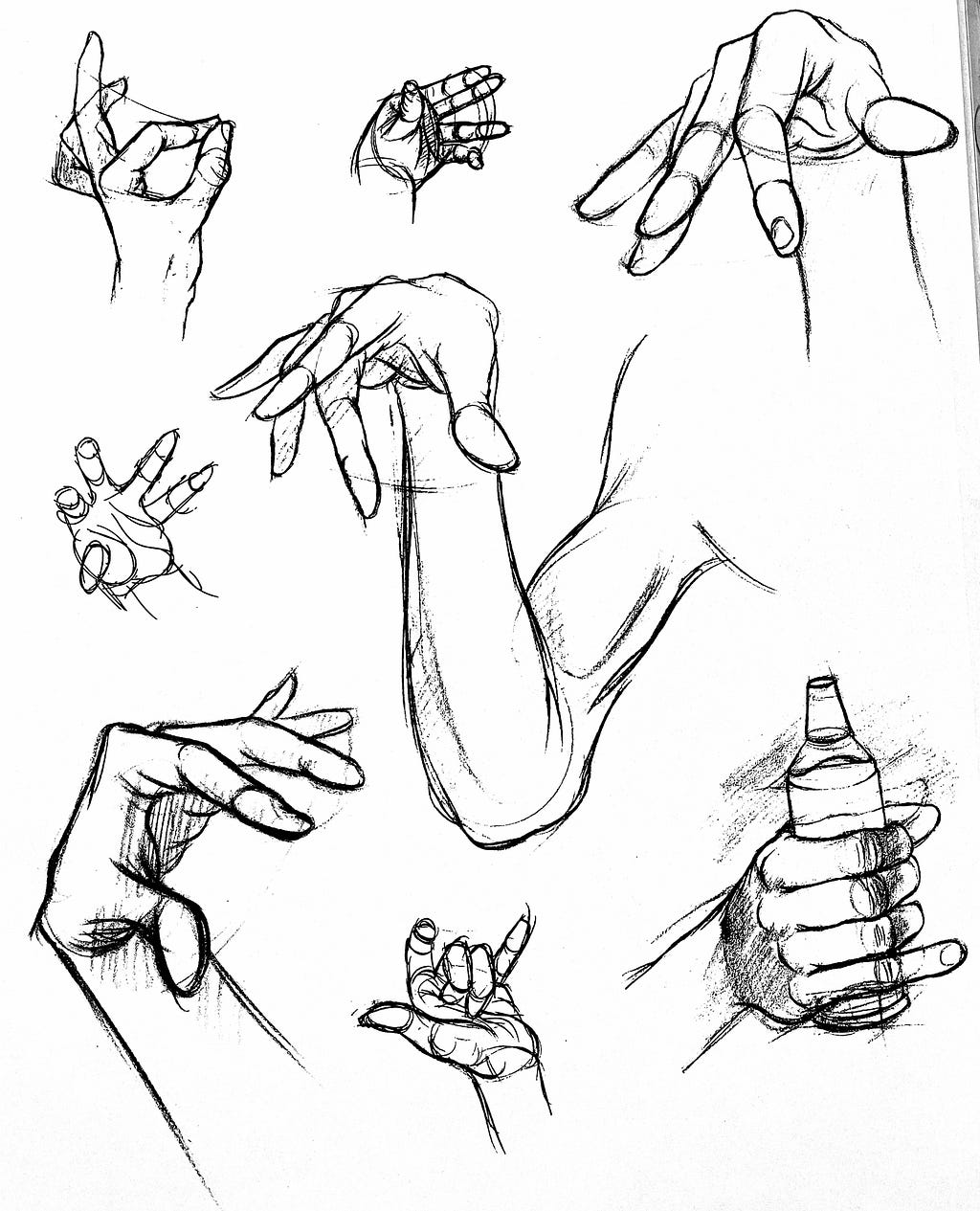
The truth is, most people don’t like to live in the space of things they don’t do well. We want to put our best foot forward and be reminded of the things we excel at. The things we don’t do well make us feel uncomfortable.
Michael Jordan is a hero of mine. I grew up in the 90s, so I know who the best basketball player to ever live is. Sorry, it is not LeBron. If anyone reading this article thinks it is LeBron, I would tell them to stop reading because we probably won’t get along. There is a true story about Michael Jordan. In his first year in the NBA, they already had Air Jordan sneakers named after him, and his posters were all over the world. A sportswriter from Sports Illustrated came up to him and said, “Michael, you’re a scoring machine, but you have no defensive game.”
Jordan could have told the guy to get out of his face. Instead, Jordan heard one thing: “Something I am doing is giving that guy the perception that I don’t have a defensive game. I guess I better work harder on defense.” And he did. Two years later, he was named Defensive Player of the Year. The reason is that he had that singular mindset to turn his weakness into his strength.
One of the things I share with people, and remind myself of, is that if we ever have one person highlight our flaws or weaknesses, we should hug them. Our weaknesses are nothing less than the answer key to growing.
By the way, that is the purpose of marriage. Jewish wisdom — or ancient wisdom, or the Bible — tells us, “It is not good for man to be alone. So I will create for him a helpmate that goes against him.” That is the secret to every relationship: marriage, friendship, business. You want to grow in life? You have a fire to accomplish something? You can’t do it alone. You need someone. The prerequisite to bring someone on is that they have to help you by challenging you. That is what my art teacher gave me by pointing out my weakness with drawing hands.
So, I was going to be an artist. That was my goal. Then I saw another movie that changed my life: The Little Mermaid, the original Disney classic. It was a powerful experience. I was mesmerized by the animation, especially the character of Ariel, designed by legendary Disney animator Glen Keane.
There was one scene where she is singing in the opening of the film. She wants to understand the world around her because she is a mermaid. She wants to understand why people walk on land and understand fire. She sings the lyric, “What’s a fire and why does it… what’s the word? Burn.” When she says the word “burn,” the acting Glen Keane put into the character is specific: she takes her arms, puts them around her chest, closes her eyes, arches her back, and says the word “burn.”

I’ll send you an image of Glen’s drawing that you can print. This story is not about a character that wants to understand fire up on the surface. If it was, we wouldn’t relate to it. We have to relate to the main character, and none of us can relate to a teenage girl living under the sea who wants to understand fire because we know what fire is. However, because she puts her hands over her chest and closes her eyes, the fire she really wants to understand is inside her.
I remind myself and others that the search for wisdom is this: the more I understand the world around me, the more I will understand my place in the world. Wisdom is the most valuable thing we will ever have — more valuable than money. Wisdom isn’t memorizing dates or knowing when an artist painted a specific piece. Wisdom is understanding human nature.
When I saw The Little Mermaid, I knew that was what I wanted to do. It combined my two passions: filmmaking and drawing. Put them together, and you get animation. Plus, I found out Disney had a studio in Orlando, Florida, so I wouldn’t have to go to LA.
I was a junior in high school, and I knew my dream was to become a Disney animator. I just had one problem: I had no idea how to do it. But I had the most supportive mom in history. My mom took just me from New York to Disney World so she could ask the Disney cast members how her son could become an animator.
It was actually very embarrassing. We were getting on the “It’s a Small World” boat ride, and my mom said to the attendant, “By the way, my son wants to be a Disney animator.” The lady replied, “Ma’am, this is a boat ride. We don’t hire animators here.”
We went on the boat, came back, and the lady said, “Look, if you want your son to work at Disney, he has to go to the Disney Casting Building.” It was four minutes away. Can you imagine how beautiful a Disney office building looks? It was incredible. The doorknobs looked like the talking ones from Alice in Wonderland; they were made of brass. We walked in, and there were gold statues of Disney characters like Dumbo and Pinocchio. Then, there was a ramp you walked up. On the ceiling, Peter Pan and Wendy were painted flying off to Neverland. I thought, “Wow, that’s where I want to live. Neverland.”

I went for the interview, and the woman asked, “Can I help you?” I said, “My name is Saul, and my dream is to be an animator at Disney.” She said, “We don’t hire those here. We hire people who work the rides — people that hit the buttons that make the teacups spin.” I said, “That’s not my dream.”
She walked out of the room, came back two minutes later, and handed me a piece of paper that became the most valuable piece of paper I have ever held, other than my wedding ketubah. It was a list of eight art schools from which Disney recruits their artists. She said, “If you want to be a Disney animator, you need to go to one of these schools.”
Some people are lucky enough to have clarity on what they want to accomplish, but they don’t know how. You go to a restaurant and taste a beautiful dessert, like crème brûlée or tiramisu. You can make it at home if you have the recipe. If you don’t have the recipe, it won’t happen. Whatever goal we have in life, we need to be clear not just on the destination, but on how to get there. To me, it was an equation: Saul + go to one of these schools = dream.
I chose the Columbus College of Art and Design in Ohio. The artwork on the walls was a hundred times better than anything I could do. I felt very intimidated. But I thought, “If these students are that much better than me, then if I go to a school like this, I’ll get better.”
I remember walking through the dorm the first week. I walked into a guy’s room, and he had Mickey Mouse slippers, a bedspread, a telephone, a clock, and a lunchbox. It was like Disney World in a room. He wasn’t there, but I looked through his sketchbooks. He had hundreds of drawings of hands, but they weren’t drawn as well as mine because he had an anatomical problem: his hands only had four fingers. They were white Mickey Mouse gloves. He was obsessed with drawing Mickey Mouse. I felt intimidated because I never drew cartoon characters like that.
A week later, a Disney representative named Bill Matthews came to our school. He was one of the original animators on Sleeping Beauty. He stood on stage, looked out at over 500 students, and said, “Before I tell you how to get into Disney, let me see a show of hands. How many of you want to be Disney animators?” Every hand went up.
He said, “Just so you know, out of the 500 of you, maybe four will ever get there. That is how competitive it is.” I remember thinking one thing: “I wonder who the other three are going to be.”
In life, we either believe deep down that we can accomplish something, or we don’t. I was one of the worst artists in the school, but nobody sat in that audience with a fire like I had. Just like The Little Mermaid, the fire was inside.
He said if you want to get into Disney, you need the internship. No internship, no Disney. To get the internship, you need hundreds of drawings of humans and animals drawn from life — no cartoon characters, no Mickey Mouse. That gave me clarity: I was going to become a great artist at drawing people and animals from life.
The first week of school, I went to play basketball. There was a guy sitting on the curb drawing us. I asked, “What are you doing?” He said, “I’m drawing you guys playing basketball.” I asked, “What class is this for?” He said, “It’s not for a class. I want to get better.”
His name was Andy, and he became my best friend. Becoming friends with someone like that made me a much better artist because who we choose to be friends with affects who we become.
Sophomore year arrived. I got my portfolio together, sent it to Disney, and waited. A couple of weeks later, I got a letter on Disney stationery. It said, “Saul, thanks for sending your portfolio, but you didn’t make it.” I got rejected.
I put that rejection letter up over my desk. Another year went by. Andy and I drew nonstop. One day, we went to the Columbus Zoo on a freezing, bitter-cold day to draw animals. There were about 15 students. We went into the Wendy’s at the zoo to get hot drinks. After a few minutes, Andy and I sharpened our pencils and went out to draw elephants. We did tons of drawings in the freezing cold.
Afterward, on the bus, I asked one of the other guys, “Hey, we never saw you at the elephants. What were you drawing?” He said, “Well, none of us ever left the Wendy’s cafe.” I asked, “Why not?” He said, “Because it’s too cold outside.”
Those were the best words I ever heard. I knew at that moment that I would get into Disney one day because I wasn’t afraid of the cold. Even though that guy was wearing a Mickey Mouse sweatshirt and probably dreamed of working at Disney, it is easy to dream big, but not easy to work big.
If you watch a documentary about anyone who inspires you, you will see they all have something in common: they went through pain. If we have the correct mindset and expect that something will be painful, we are able to deal with it. Whether in professional life or relationships, success requires exertion. Anyone who tells you raising seven children or even one teenager is easy isn’t doing a good job. To be successful at anything, we must exert ourselves to the fullest.
My son once asked me, “Dad, I want to be on the track team. Do you think it would be easy?” I said, “Well, for you, you’re pretty athletic. It could be easy. Of course, it depends on how good you want to be at it. You want to be average at track? It’ll be easy. Do you want to be great? It’s going to be hard. Do you have the clarity that you want to be the greatest human on the planet to ever run track? Then it will be the most difficult thing you ever go through. You will have to bleed and you will have to sweat. How great do you want to be at it?”
That is the question we have to ask ourselves. How great do we want to be? Not just in our careers, but how great do we want to be at life? The magic is that once I have the expectation that something is going to be very difficult, I realize — and am motivated by the idea — that I don’t have to go through pain at all. I get to grow through pain. And you want to underline grow.
Once I had that mindset, I thought, “This is for me. I’m going to get in.” Andy, my best friend, sent his portfolio in, and I sent mine in.
I don’t speak about this part of him often, but Andy was an incredible human being. At that time in my life, drawing to me was about learning anatomy and drawing what I saw, just as my art teacher taught me. But Andy brought a different level to my work because he taught me a word that I had heard before but never really incorporated into my life: Inspiration.
He used to talk like that. He would say, “This inspires me.” Every time we got another project, he would say, “I’m inspired.” I thought, “What does that mean?” I saw him be passionate about his projects, his work, and all aspects of life. It had a big impact on me putting not just my head into my work, but my heart. It really affected me, not just in those years but for the rest of my life — even as a father and a husband. To be inspired by the role of being a husband. To be inspired by the role of being a father.
So, Andy and I sent our portfolios in and waited. A couple of months went by, and I got a call one day. It was Andy. I was home in New York visiting my family.
I asked, “What’s up, buddy?”
He said, “You’re not going to believe this.”
I asked, “What am I not going to believe?”
He said, “I just got a call from Disney.”
I said, “Yeah, and? What happened?”
He said, “I got the internship.”
I shouted, “That’s amazing! You got it! Incredible!”
He asked, “But they didn’t call you yet? Did they?”
I said, “No, but they could be trying to call me right now. I gotta hang up.” (We didn’t have call waiting back then.)
I hung up the phone and started pacing back and forth in my dining room. My mom came in at that moment.
“What happened?”
“Mom, Andy got in.”
“Oh, but they didn’t call you?”
“No.”
We paced back and forth together. It was very difficult to wait. I picked up the phone to check for a dial tone. Why hadn’t they called? Finally, I did something that was quite courageous, or maybe even stupid. I couldn’t stand waiting, so I picked up the phone and dialed the head of Disney myself.
Who does that? Well, I did. As I always say to my kids and the people I speak to: If there is something you really want in life, you will do anything to get it. If you are writing that sentence, you should underline “really” and “anything.”
I told you about my love affair with Michael Jordan. Growing up in New York, I would go to Madison Square Garden with my brother. Before a Knicks game — I must have been 14 or 15 — Michael Jordan was warming up on the court, wearing those breakaway sweatpants. We got there a half-hour early. I said to my older brother Jay, “Jay, I’m gonna go walk out there and meet Michael Jordan.”
My brother said, “You’re not going anywhere.”
Before he could finish that sentence, I walked out onto the court, looked up to Mr. Jordan, and said, “Hi, Mr. Jordan.”
He looked down at me and said, “Yo, how you doing?”
Very inspiring. Then he shook my hand — which I still have never washed.
The reason I walked out on that court is that when there is something you want in your life, you’ll do anything to get it. So, I picked up the phone and dialed the head of Disney. I got this guy on the phone.
I said, “Hi, my name is Saul Blinkoff. I want to find out about the internship.”
He said, “Saul, I have your name on a list.”
I asked, “Really? And?”
He said, “Yeah. You didn’t make it.”
I said, “What?”
He repeated, “Yeah, you didn’t make it.”
I asked, “What about Andy?”
He said, “Yeah, he made it. You didn’t.”
I hung up the phone. It was a bittersweet moment. Sweet because I was very happy for my best friend, but bitter because I was devastated. Andy got in on his first try. This was my second time, and I got rejected. My dream was shattered. Andy was going off to Disney World — the happiest place on Earth. Literally the Garden of Eden. I was going back to Ohio in the winter: bitter cold, gray skies, freezing. It felt like the most depressing place on Earth.
I got back to school and walked the halls. People came up to me saying, “Blinkoff! What are you doing here? Oh… where’s Andy? Oh, he got in. You didn’t get in.”
I became known as the guy who was friends with the guy who got into Disney. People saw me as a failure; I saw it in their faces. I felt like a loser. Then I realized that the more people saw me as a failure, the more I saw myself as a failure.
I came up with a brilliant way to take that feeling of failure away. If there is anything your readers should remember from this article, it is this: If you ever fail at something and want to take that feeling away, do what I did. The feeling goes away with the snap of a finger.
You know what I did? I gave up.
I gave up. Instead of being the person who really wants something but doesn’t get it, I took away the thing I really wanted. If I didn’t try, I didn’t fail. I gave up on my dream because reality set in. Reality was that Andy was awesome, and I was average.
All of us wake up every day with a “shoulder angel” whispering in our ear: “Today is the day you’re going to get to the gym. Today is the day you’re going to grow your business. Today is the day you’re going to meet your soulmate. Today is the day you’re going to change the world.”
But then there is the other voice — the “shoulder devil” screaming at us: “Who do you think you are? You think that’s for you? That’s not for you. That’s for people like Andy. That’s for talented people. You are destined for a life of mediocrity. You’re going to be average.” Usually, that is the voice we end up listening to. That is where I was. So, I gave up on Disney. That was it.
A week later, a friend called me up. “Saul, I got tickets to see a movie. Do you want to go?”
I said, “I’m not in the mood.”
He said, “But they’re free.”
I said, “Okay, I’ll go.”
I went to a third movie that changed my life. It is a true story about a guy who wants to play football at Notre Dame, but he isn’t athletic. Do you know what movie it is?
Yitzi: Rudy.
Saul: There it is. Rudy. A wonderful movie to show your family, by the way.
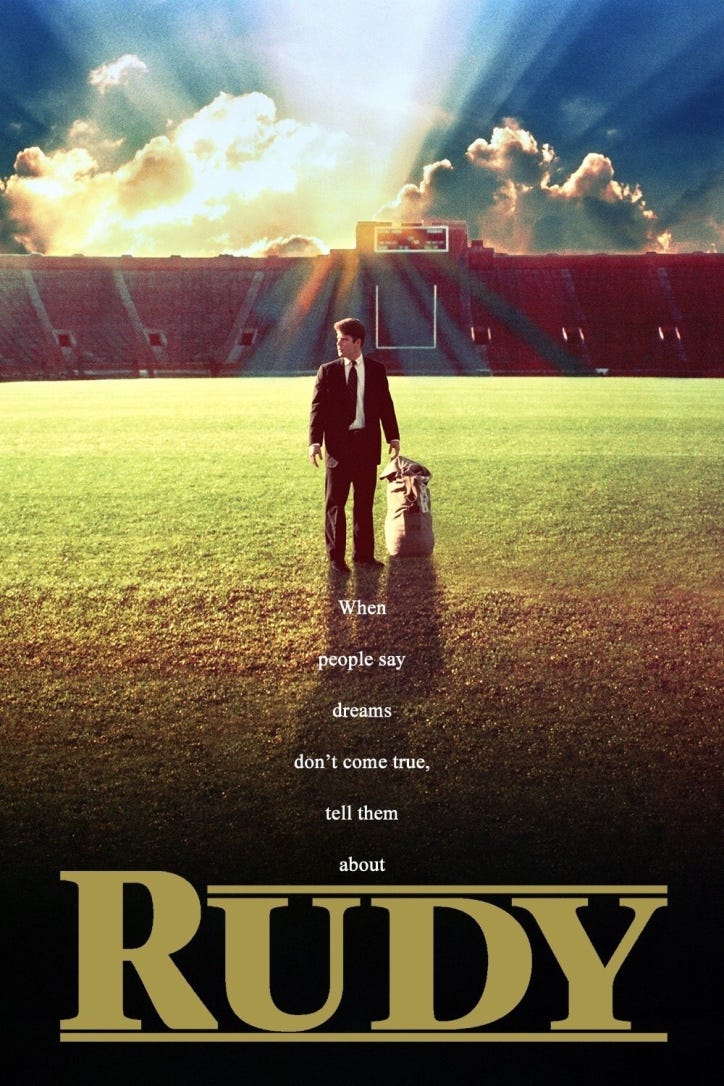
This movie is the true story of Rudy Ruettiger, who had a dream to play football at Notre Dame. If you were friends with the real Rudy and he told you his dream, you would have told him, “Dude, I love you, but get a new dream.” But Rudy was like, “Yeah, well, we’ll just see about that.”
He tried to get into Notre Dame. Rejected. Second time? Rejected. Third time? Rejected. But the fourth time? If you look at the movie poster, it says: “When people say dreams don’t come true, tell them about Rudy.” He gets in.
Tears were streaming down my face in the theater because I thought: “If an unathletic guy like that could get into Notre Dame with an insane amount of hard work, then an untalented artist like me could get into Disney with an insane amount of hard work.” I vowed never to give up again.
I called up Disney the next day and got the same guy on the phone.
“Hi, this is Saul.”
He said, “I told you, you didn’t make it.”
I said, “Yeah, but let me ask you a question. How close was I?”
He asked, “What do you mean?”
I said, “Well, how many did you hire for the internship?”
He said, “We picked 17 from over 3,800 portfolios. You made it to number 20.”
What? I had only missed it by three? Do you know how many times in our lives we feel we are miles away from a goal, but we are actually so close and just need to push a little bit more?
I asked him the billion-dollar question: “Why did I not get in?” If we find out why we failed, that is the answer key to growing.
If we stop and think about failure for a moment, we should translate it into a different word: Learning. I am not failing; I am learning. The only way to learn is to try something and see what doesn’t work in order to know what does work. Thomas Edison had a great quote when people pointed out he failed to make the light bulb 900,000 times. He said, “No, no. I learned 900,000 ways not to make a light bulb.” The mistake many of us make is identifying ourselves as failures. It’s not the action; it’s “I am a failure.”
The guy at Disney said, “Here is what you need in your work: You need more perspective in your drawing. Don’t just draw humans and animals from where your eyes are. Stand on a stool and look down, or go down and look up. Give us a dynamic perspective.”
That was the answer key. So, I went back and worked on another portfolio.
A year later, Bill Matthews — the same guy who gave the speech on stage and was an animator on Sleeping Beauty — came to our school. He interviewed the top students to see whose portfolios he wanted to send to Florida for the next round of review. It was alphabetical, so I was first.
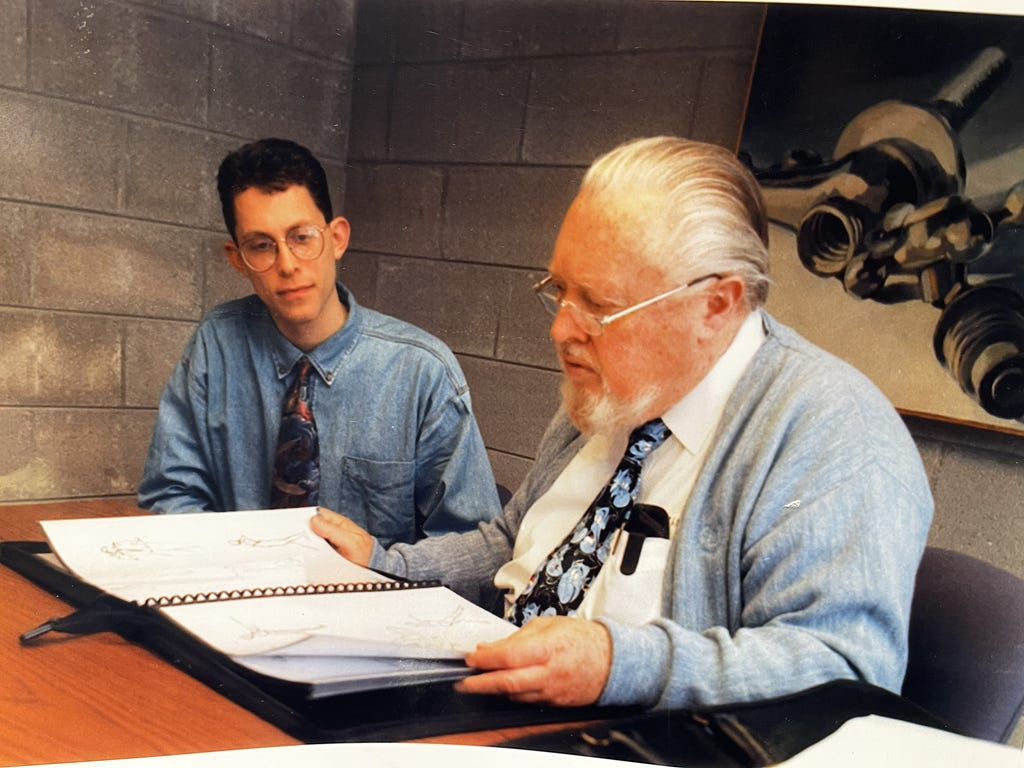
I will never forget that day, sitting at the table as he looked through pages filled with my sweat, tears, and every dream I ever had. At the end, he looked at me and said, “I like your work, and I would like to send it to the next round of review.”
It was exactly what I wanted to hear. I handed him my portfolio, but as he pulled it, I didn’t let go. I yanked it back and asked, “Let me ask you a question. Where are you going after this school?”
He said, “I’m going to another school and then another school.”
I asked, “So when do you actually need it in Florida?”
He said, “Not for two more weeks.”
I said, “Why?”
He looked confused.
I said, “Because any drawing I do tomorrow will be better than any drawing in this book. If I have two more weeks, I can do better work.”
So often in life, we allow others to set the bar for accomplishment. Remember, all I wanted to hear him say was, “I like your portfolio.” That is exactly what he said, but it wasn’t enough for me. I set a different bar because I was investing every day in becoming better. If there was a competition in two weeks, I didn’t want my portfolio sitting there. In two weeks, I could do better work!
I asked him, “Do you have any advice on anything I could do better?”
He said, “Well, I told you I like your work.”
I said, “Yeah, I know, but I’m not perfect.”
Even when we succeed, we can still find an answer key to growing if we set our own expectations. Don’t let others define the bar for excellence. Maybe you are reading this and think, “My life is good.” Don’t you want it to be great? Maybe you think, “My life is great.” Don’t you want it to be awesome? Every part of our lives should be awesome. Maybe you are killing it at work, but how is your marriage? “It’s good.” Maybe it’s time to make it great. We have to set our own bars.
So, Bill told me, “You should put ‘Effects’ in your portfolio.”
Effects — spelled FX or E-F-F-E-C-T-S — are things like rain, fire, water, or smoke in a movie. There is a division of animators called Effects Animators. I had no dream of becoming an Effects Animator, but when Bill Matthews gives you an idea, boom — answer key to growing.
I went back to my dorm room, put the portfolio he saw under my bed, and asked, “What if this doesn’t exist? Can I create a new portfolio in two weeks?” That is exactly what I did. I saw time as an opportunity to grow. I created a whole new portfolio with Effects drawings, sent it to Disney, and waited.
A couple of months later, something miraculous happened. I got a call that I got the internship.
“When you wish upon a star…”
It was amazing. I remember calling my parents. My mom could hear it in my voice. She asked, “Did you do it?”
I said, “No mom, we did it. You supported me. But this winter, you can stay in New York because I’m going to the happiest place on Earth.”
I went to Florida and joined the internship with some of the best artists from around the world.
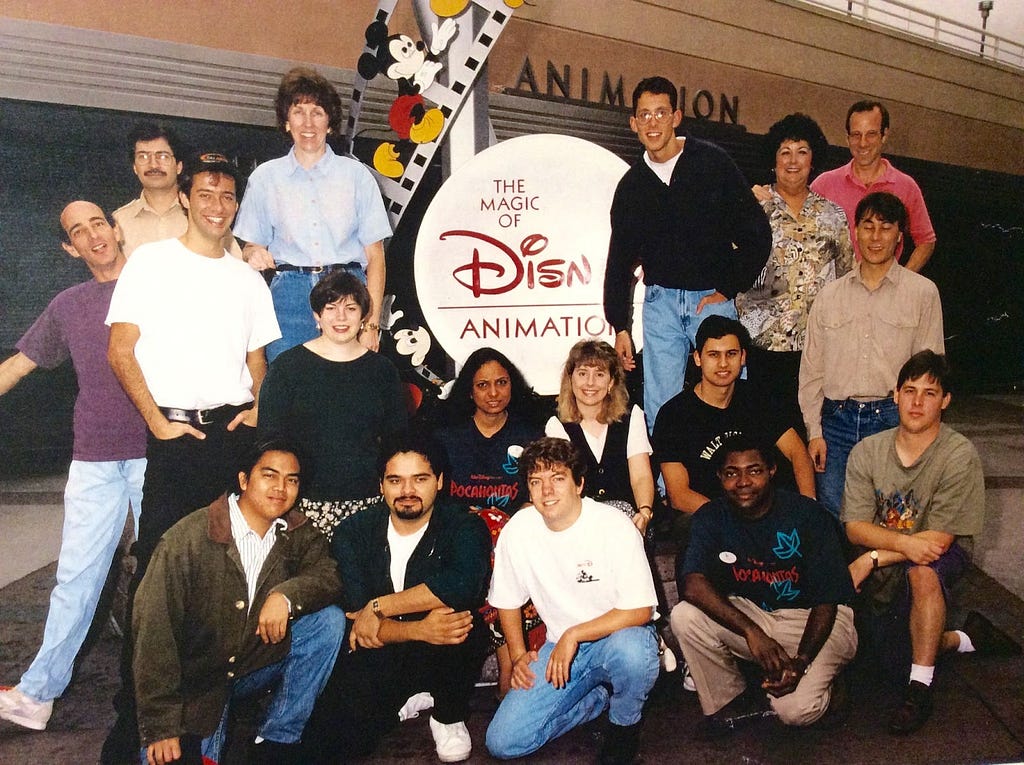
Those of you reading this might think this is a story about a talented artist who got his dream of working at Disney. That is not the story. This is a story about one of the worst artists in his school who got his dream of working at Disney — because nobody wakes up great at anything.
We found out that we were going to work on a movie. We were going to be the first interns to work on a movie. So, I ended up working on the film Pocahontas. It was the first Disney movie I worked on, and I ended up being one of the people who drew her in the movie. It was an incredible experience.
After that, I worked on The Hunchback of Notre Dame. Then, I worked on Mulan for about three or four years. I was an animator on the character Shang, the main guy in that movie. Then I ended up working on Tarzan.
That started my career as an animator. Eventually, I became a director at Disney. My directorial debut for Disney was a Winnie the Pooh movie called Winnie the Pooh: Springtime with Roo. After that, I directed the sequel to The Emperor’s New Groove, which is called Kronk’s New Groove.
After that, I became a father and started my entrée into preschool television, where I was a director on the hit show Doc McStuffins for Disney. Since then, I’ve worked at Netflix. I could give you a list of all the shows I’ve worked on, but I’d say one of the highlights of my career was being a supervising producer on the DreamWorks show Madagascar: A Little Wild, which was an award-winning show.
Since then, I have worked on lots of animation for lots of studios. But during that time, I also started to share my story and travel the world speaking. As soon as I got into Disney, I wanted to start helping others get into Disney. I remember even on my internship, before I got hired full-time, I would sit in the lobby at night looking at portfolios of students. I soon found that one of my greatest pleasures is helping others achieve what they thought was impossible.
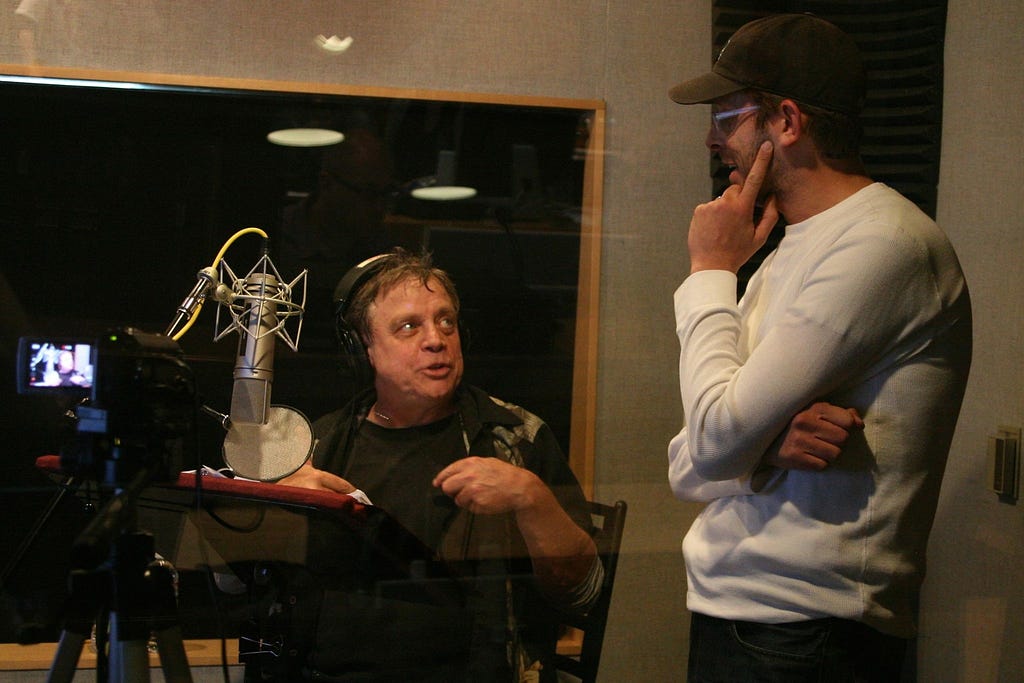
One of the things I tell people is this: Just because something is improbable — underline improbable — doesn’t mean it’s not possible.
I told you the story of what I went through. But what you are not really hearing in the story — or you are hearing only a little bit of — is the emotion. You hear the action: “He did this drawing, he went to the zoo, he called them up.” But you aren’t hearing the pain of it.
In the movie Rudy, there is a scene after he gets rejected the second time where he is sitting in his dorm room, clutched onto a pillow, crying. That is what it felt like.
But at the same time, if I went back to myself now and saw myself getting rejected the second time, do you know what I would tell myself? What do you think I would tell myself?
Yitzi: Maybe something you said earlier… either “How much further are you? Now you’re almost there.” Or, you mentioned jokingly that you should give up.
Saul: Right. Here is what I would tell myself. I would go back and say, “Saul, grow up. So you didn’t get into Disney. There are worse tragedies.”
You see, I was so focused on that part of my life — on what I wanted to do to make myself happy. Truthfully, as I reflect on my career now, I realize that the goal of life should not be to be happy.
Some of you are going to read this article and think, “What is he saying? The goal is to be sad?” Hold on a second. The goal of life can’t be to wake up and say, “What can I do to make myself happy?” Because what makes you happy may not be what is good for you.
I have been married for 25 years. I have four kids. The responsibility of taking care of a family is difficult. You know what would make me happy? Leaving my wife, leaving my kids, moving to a new state, and starting over again because it is so much less responsibility. But is that the goal of life? To be happy? You know what would make me happy? Getting all this money so I could buy the biggest house for myself, a sports car, and a pool because I love to swim. But what about people around the world who are in pain?
The goal of life isn’t to be happy. The goal of life has to be something much sweeter than a life of happiness, and that is a life of meaning. There is only one way to get a life of meaning, and we see it best in the hit Disney movie The Lion King.

One of the things I do as a keynote speaker is share life wisdom from film. In The Lion King, the story is about Simba, who wants to be King. When he is young, he says to his father Mufasa (played by James Earl Jones), “I want to be King.” He sings the song “I Just Can’t Wait to Be King.” Simba thinks being a King means you can do whatever you want. His father says, “Simba, there’s more to being a King than getting your way all the time.” Simba asks, “There’s more? What could be better?”
Then something happens to Dad. It is a Disney movie, so they have to kill off a parent. Dad dies. Spoiler alert.
Then Simba goes and lives in “Hakuna Matata” world. What does Hakuna Matata mean? Do you remember, Yitzi?
Yitzi: No worries.
Saul: No worries. And do you know who wants a life of no worries? All of us. But if you want a life of no worries, don’t get married. If you want a life of no worries, don’t have children. Because life is filled with worry.
Simba goes off and lives in Hakuna Matata world. He hangs out with Pumbaa and Timon, sleeps in a hammock, and hangs out in a jacuzzi. It is beautiful. It’s lush. There are waterfalls and flowers. It is really like the Garden of Eden — everywhere we want to go on vacation.
At the end of the movie, somebody shows up and finds him there. It is Nala, the lioness he grew up with. She sees him after all these years, and they sing “Can You Feel the Love Tonight.” They are falling in love. The sun is setting. It is beautiful.
After they roll around in the grass, she decides to speak to him. She says, “Simba, it’s good to see you, but you got to come back with me.”
He says, “Hakuna Matata. Look where I live. Why would I leave here? I’m not going anywhere.”
She says, “Maybe I didn’t make myself clear. Scar, your uncle, has taken over the Pride Lands. If you don’t come back with me, everyone is going to die. And you are responsible.”
You know what he says? “Hakuna Matata. I’m staying right here.”
She sings a lyric: “Why won’t he be the king I know he is? The king I see inside?” She asks, “When are you going to grow up?”
He says, “Whoa, whoa, you’re beginning to sound like my dad.”
She replies, “At least one of us does.” And she leaves him.
You know what she is? A helpmate that goes against him. You can see the Bible beautifully played out in The Lion King. She is helping him by challenging him. Before she leaves, she sees the potential in him that he doesn’t even see in himself.
We need to surround ourselves with people that see our potential even when we don’t. She is really talking to all of us. It is almost as if the Creator of the world is shaking us and saying to every single one of His creations: “Why won’t we be the king or queen we are meant to be? When are we finally going to elevate our lives to change the world?”
He is left alone. Rafiki the baboon comes over and hits him on the head with a stick. Simba looks up to the clouds and sees the reincarnation of his father. His father looks down and says in that deep James Earl Jones voice: “Simba. Remember who you are.”
You know what that means? You are a king. What are you doing? Did you forget? You don’t remember who you are? You’re a king and you’re living like this? Remember who you are.
His message is to all of us. We need to remember who we are.
Simba is transformed. He goes back, defeats Scar, and The Lion King becomes the biggest animated movie in history (B.F. — Before Frozen). It didn’t become the biggest movie because we love lions. It is because that movie gave all of us a taste of what true life really is. The meaning of life is to wake up with a singular mindset to take responsibility for the world.
How do we take responsibility? Look at the word: “Response-ability.” It is the ability to respond. Every single person in the world is completely unique. No two people have ever been or will ever be the same. That means, factually, every single one of us has a different ability. The question is, do we respond?
There is nothing more energizing or motivating than waking up and saying, “How can I take my passions, my interests, and my abilities and use them to impact humanity?”
If you want to change the world, change one person. The first person you want to change is yourself. How do I grow as a human being? Only when I grow as a human being can I start to impact others to grow because, through the pleasure of giving to others, I taste the best pleasure myself.
That changed everything for me. Now, as a storyteller — whether I’m making animated films, speaking on stages around the world, or acting as a father or husband — my goal is always the same: How can I grow and impact one more person along my journey of life?
That is why my podcast is called Life of Awesome. Because I think every aspect of life should be awesome. In my very first podcast episode, I interviewed the real Rudy Ruettiger. I got to tell him how his story impacted my life. Now, I hope my story will impact others.
Yitzi: Thank you so much for the amazing conversation and amazing stories. I wish you only continued success and blessings!.
Saul: Thank you, brother. All the best.
Disney Vet Saul Blinkoff Talks ‘Tarzan,’ Calling the Head of Disney and Why a “Life of Meaning”… was originally published in Authority Magazine on Medium, where people are continuing the conversation by highlighting and responding to this story.