Dondraico Johnson on Choreographing ‘Zombies 4,’ Mentorship in Hollywood and the Lesson Janet Jackson Taught Him
“The competitiveness in me kicked in. My friends said, ‘You think you can learn it? You should get up and try.’ I was like, ‘Don’t challenge me like that.’ So I got up and signed in — last one on the list. There were hundreds of dancers, at least 300, out in a parking lot in Atlanta… Left Eye and Chuck kept me as an alternate because I was 17… From there, I started taking dance classes to improve my skills. When Left Eye’s first group, Blaque, came out… I went on tour with them… That’s how I got introduced to the industry.”
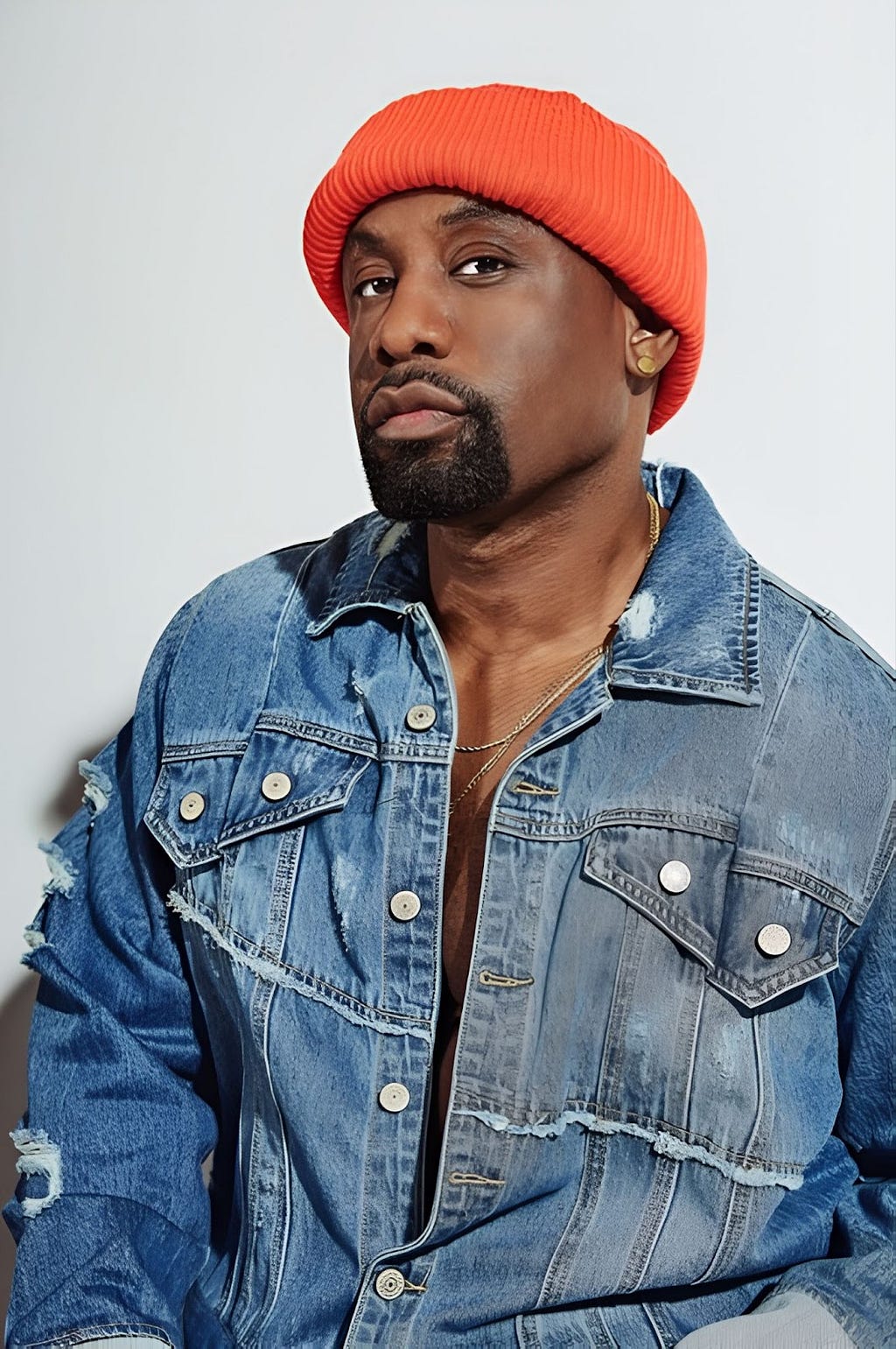
I had the pleasure of talking with Dondraico “Draico” Johnson. Dondraico, an Emmy-nominated choreographer, actor, and creative director, has built a dynamic career at the intersection of performance, storytelling, and mentorship in the entertainment industry. With credits spanning global concert tours, blockbuster films, and major television projects, Johnson has quietly shaped the movement and spirit of some of pop culture’s most iconic moments.
Raised in the small rural town of Fort Lawn, South Carolina, Johnson describes his upbringing as “country” — a place of open land, deer sightings, and family-centered values. Despite a childhood filled with sports like football and baseball, his early gravitation toward musicals and dance videos hinted at a creative path that would eventually steer him away from athletics and toward entertainment.
That path began to materialize unexpectedly when Johnson, then a student at Morris Brown College in Atlanta, accompanied friends to an audition organized by Lisa “Left Eye” Lopes of TLC. With no formal training, but armed with natural rhythm and a competitive spirit, Johnson entered the audition on a whim and caught the attention of choreographer Chuck Maldonado, who would become a long-term collaborator and friend. Though too young for the adult squad, Johnson was kept on as an alternate — marking the beginning of his professional journey in dance.
Johnson’s early career was defined by rapid transitions and high-stakes opportunities. Among his first major breaks was touring with the pop group Blaque, followed by performances with Destiny’s Child, including the music video for “Bootylicious.” Simultaneously, he pursued auditions with other major artists, landing a career-defining role as a dancer in Janet Jackson’s Super Bowl halftime show. That job, he says, was not only a highlight but a lesson in artistic generosity — Jackson’s attention to her dancers’ personalities and well-being left a lasting impression.
His trajectory continued upward with appearances in films such as From Justin to Kelly, Step Up All In, Dirty Grandpa, and Ghostbusters (2016), as well as contributions to television projects including The Conjuring 2, Haunted Mansion, and Genisus: Aretha, for which he received an Emmy nomination. Beyond performance, Johnson expanded into choreography and creative direction, collaborating with artists such as Madonna, Britney Spears, Michael Jackson, Jennifer Lopez, and Miley Cyrus.
His ability to move seamlessly between performance and leadership roles has allowed Johnson to navigate the shifting terrain of entertainment. As his résumé grew, so did his interest in mentoring others — a value shaped by his relationship with longtime friend and mentor Jamal Sims. Their early collaborations evolved into creative partnerships, with Sims introducing Johnson to work behind the scenes on film and television sets. That mentorship, Johnson says, was crucial in helping him make the leap from performer to storyteller.
Johnson’s more recent work as choreographer and creative director on Disney’s Zombies franchise marks a new phase in his career, blending youth-oriented spectacle with thematic depth. Brought onto the project during Zombies 3, he returned to lead choreography for Zombies 4: Dawn of the Vampires, which premiered in July 2025. For this installment, Johnson was integral in shaping not only the physical movement but also the emotional resonance of the film’s themes — particularly the story’s focus on unity, identity, and cultural difference. Through choreography, he developed unique movement languages for each monster faction in the film, drawing from regional and stylistic dance influences to reflect deeper narrative tensions and eventual cohesion.
Despite his high-profile collaborations, Johnson maintains a grounded perspective on success, informed by personal challenges, including two bouts with Bell’s Palsy, which he attributes to stress. Those experiences have led him to prioritize self-care and balance, which he practices through wellness routines, time with family, and emotional boundaries within a demanding industry. His upbringing, he notes, continues to serve as an emotional anchor — especially the memory and values of his late mother, whose guidance remains central to how he carries himself personally and professionally.
In addition to his work in dance and film, Johnson is expanding into directing and television development, with several projects currently in production. He has also begun exploring fashion as another medium for creative expression. Across disciplines, his commitment to authenticity, inclusivity, and cultural nuance remains a defining trait.
As a Black man in Hollywood, Johnson is intentional about creating spaces where others — particularly dancers and young creatives of color — feel seen and supported. Whether offering guidance to performers hoping to transition into new roles or building choreography that honors diverse influences, he views mentorship not as an obligation but as a continuation of the support he once received.
Looking ahead, Johnson envisions a future where storytelling becomes even more central to his work — narratives not just told through dance or camera lenses, but through full creative authorship. “If I can leave someone with joy, with a sense of being seen and heard,” he has said, “then I’ve done my job.”
He remains active on social media platforms including Instagram, TikTok, and YouTube, and is currently developing a central online hub to house his many ongoing projects. Whether working on screen, behind the scenes, or guiding the next generation, Dondraico Johnson continues to redefine what it means to lead creatively in today’s entertainment landscape.
Yitzi: Dondraico, it’s an honor to meet you. Before we dive in deep, our readers would love to learn about Dondraico Johnson’s personal origin story. Can you share with us the story of your childhood and how you grew up?
Dondraico: I’m a Southern boy. I grew up in a small town called Fort Lawn, South Carolina. Very small population — so small we had one stoplight in the whole town. I’m the true definition of a country boy. I grew up in a setting similar to the movie The Notebook — green grass, rabbits, deer, lots of land. My family’s home sits on a couple of acres.
I grew up playing sports — football, baseball, track. I didn’t start dancing or getting into entertainment right away. I always could dance, but it was mostly mimicking what I saw on TV. I was the boy who loved musicals, who was always into that kind of thing. So, I grew up in a small town doing what small-town boys do: playing sports. I come from a mother and father who loved me, a family who supported me.
I graduated high school at 17 and moved to Atlanta, Georgia. I went to Morris Brown College, an HBCU, which I love. My life changed there. One day I was hanging out with some friends who were going to audition for Left Eye from TLC. She had started a production company and was looking to form a group of dancers for her artists.
Keep in mind, growing up in South Carolina, we didn’t have performing arts schools. I just played sports. I went to the audition with my friends to support them. I wasn’t planning to try out, but I was such a TLC fan, I had to go. Once I got there, I saw the choreographer — Chuck Maldonado, who’s now one of my best friends — and he was teaching this combo. I looked around and thought, “I think I can learn this.”
The competitiveness in me kicked in. My friends said, “You think you can learn it? You should get up and try.” I was like, “Don’t challenge me like that.” So I got up and signed in — last one on the list. There were hundreds of dancers, at least 300, out in a parking lot in Atlanta.
I got up, learned the routine, and went in with my group of friends. If you know anything about dance auditions, you’re split into groups that rotate in and out. Some get cut, some stay. The first group went in, and three of my friends got cut. I went in with the last group. When I came out, my friends thought I was done too. They said, “We got your bags, you ready to go?” I told them, “I didn’t get cut. I’m still in.” They were shocked.
Then we had another round. The other three friends went in, and they got cut too. I went in again. When I came out, they said, “We all got cut, let’s go.” I told them, “You guys can leave me, I’ll catch a taxi or something back to school. I didn’t get cut.”
Left Eye and Chuck kept me as an alternate because I was 17. She had two dance squads — one high school-aged, one adult — and I was in between. I was in college, but not old enough for the adult squad. So they kept me in the middle.
From there, I started taking dance classes to improve my skills. When Left Eye’s first group, Blaque, came out — they had the song “Bring It All to Me” and “808” with JC Chasez from *NSYNC — I went on tour with them because I was the same age as the lead singer.
That’s when everything changed. That’s how I got introduced to the industry — through Chuck Maldonado and Lisa “Left Eye” Lopes.
Yitzi: You probably have some other amazing stories from the different projects you’ve been on. Can you share with our readers one or two stories that most stand out in your mind from your professional life?
Dondraico: Oh my God, I’m such a talker — I could talk you to death. I’ve got a couple of stories. One story that comes to mind is when I was dancing… I’ve always been a TLC fanatic, a Janet Jackson fanatic, Madonna — all of them.
So, funny story: I remember auditioning for Bootylicious, one of the first music videos I did with Destiny’s Child when I got to LA. At the same time, I was also supposed to do some live shows with Beyoncé overseas. During that process, Janet Jackson announced auditions for the Super Bowl.
The day before we were supposed to leave for Europe with Beyoncé, I went to Janet’s audition. There was no way I was going to miss a Janet Jackson audition. It wasn’t even an option. The audition ended up being the longest of my life — at least 12 or 13 hours. I was exhausted but determined.
I auditioned, then immediately flew to Europe and did the European Music Awards with Beyoncé. Meanwhile, they were still in the process of selecting dancers for Janet’s Super Bowl performance. It was a slow process — two people got calls one day, four the next. Everybody was getting called, but I didn’t hear anything. I was devastated.
I flew to Atlanta to hang out with friends, sitting there eating Krispy Kreme doughnuts like, “Well, I didn’t book it. Guess I don’t need this body anymore.” Literally an hour later, my agent called and said, “They’re putting you on hold for Janet Jackson.”
I immediately hit the gym to run those doughnuts off because I knew — it’s the Super Bowl, I have to look amazing. I ended up booking the job. And it was one of the most incredible experiences of my life.
Janet, as an artist, really took the time to get to know us. During our fittings, it was just her, the stylist, and the dancer. She sat with us, talked with us, learned who we were. It wasn’t rushed. She got to know the personalities of every dancer she hired. I had never seen an artist do that before. It was a really special process and a huge moment for me.
That’s one. Another one would probably be working with Madonna, which I did with my best friend Jamal. There’s nothing better than working a job that doesn’t feel like a job because you’re doing it with your friends.
We worked on the Sticky & Sweet Tour together. It was hilarious — we laughed, we created, we were pushed to the limit. Actually, we had just wrapped Hannah Montana: The Movie and flew straight to New York to jump into rehearsals with Madonna.
That’s the nature of this life. As an entertainer, choreographer, and creative director, one day you’re doing one thing and the next day your whole mindset has to shift to something completely different. New job, new tone, new energy, new creative direction.
That’s what I love about this field. It keeps me on my toes. I appreciate it so much and wouldn’t trade it for anything.
Yitzi: It’s been said that sometimes our mistakes can be our greatest teachers. Do you have a story about a funny mistake that you made when you were first starting and the lesson that you learned from it?
Dondraico: Oh my God, I’ve had a lot of mistakes, and they’ve all taught me some good lessons, okay?
One that stands out… ooh, I’ve got a good one. So, you know, I still like to hang out — everybody who knows me knows that. I love to have a good time, and I believe in bringing joy to people. I really believe that if you’re having fun doing something, it doesn’t even feel like work.
But — you can’t have too much fun.
So, this one time in Miami, when I was just starting out, I was dancing on my first movie. I had just moved to LA, and I was about 21. My dear friend Travis Payne was choreographing the film From Justin to Kelly, which was a project from American Idol. That might be out of some people’s age range now, but it was a movie with Justin Guarini and Kelly Clarkson.
We flew to Miami to rehearse, and I had just turned 21, on South Beach, no less. We were literally rehearsing on South Beach. During our lunch break, all the dancers were hanging out, turning up, having a good time. And I was right there with them, probably having a little too much fun.
So, we came back from lunch, and the choreography involved all these lifts and turns. I was so exhausted from being out there partying during lunch. I went to Travis and said, “I can’t lift this girl right now. I can’t be tossing her around — we’re going to fall, because I’m exhausted.”
He looked at me and said, “Oh, boo.”
And that was it. Lesson learned. The moral of the story is, yes, have fun — but always in moderation, especially when you’re on a job.
Yitzi: We love hearing stories where somebody who’s a bit further ahead creates an opportunity for someone and that ends up changing their life or career. Do you have a story like that?
Dondraico: Oh, absolutely. Someone had to do that for me, and I believe in paying that forward.
For example, my best friend Jamal Sims. I first met Jamal on my very first video with the group Blaque when I was about 18. I didn’t know him at the time. He and his partner were choreographing the video. I did that shoot, and from then on I always admired his work. He lived in LA, and I was still in Atlanta. When I eventually moved to LA, I would hit him up, like, “Hey, if anything comes up, I just moved here, let me know.” He was always cool.
One day he called me with an opportunity. He said, “It’s quick. I’ll have to teach you the choreography at the airport.” And that’s exactly what we did — he taught me the routine in the airport. We flew out, did the show that same day, and flew back.
From there, we built a bond and over time became best friends. I kept dancing for different artists and he continued doing choreography, but at one point I hit this transition in my career. I’m the type of person who sets goals, and once I achieve them, I rarely want to repeat them. I don’t believe in staying stagnant. If you’re repeating the same jobs, you’re not growing.
At that time, I had performed the same song for an artist on four different award shows, with two different choreographers. Same routine. I realized, “Okay, I need to evolve. I need to do something else.” I was starting to think seriously about acting, and Jamal was moving into directing.
One day he called me and said, “Why don’t you come assist me on these movies? Since you’re getting into acting and I’m moving into directing, we could tag team these projects.”
At first, I was in my feelings about it. I told him, “Friend, I don’t know if I can do that. I’m not really the ‘go get coffee’ kind of assistant.” He laughed and said, “Boy, I’m not asking you to get coffee. We’re going to make up these dance steps and make some magic happen.” I was like, “Oh, bet. Let’s do it.”
From that moment on, Jamal took me under his wing. He taught me how to read scripts, how to work on set. Because doing TV and film is completely different from working with artists. Two totally different worlds. He showed me how tone shifts, how to read one-liners, how to break down scenes. He trained me, literally.
Eventually, he had so much work coming in that he started saying, “Dondraico, you take this job, I’ll take this one.” Before I even realized it, he had built me up to a point where I was flying solo, doing my own thing, and he had moved on to mentoring someone else. He gave me my wings. He set me up for success.
To this day, I still call him when I have questions or need creative advice. He’s not only one of my mentors but also one of my best friends — and still one of the most creative people I know.
Because I know what that kind of mentorship feels like, I always make sure to give that same energy to the people coming up under me. Jamal and I both come from dance backgrounds. We’ve been through the auditions, the tough rehearsals, so we know how to treat dancers.
It’s different when you’re working with a choreographer who’s been a dancer. Some choreographers never danced; they just got good at making up steps and hired dancers. And the treatment can be very different.
Now that I’m doing my thing and I’ve built some success, I make it a point to give opportunities to people who are eager and really want it. I make sure their experience is the best it can be. I want to be like Jamal was to me. I want to bring people in, teach them, give them the tools they need. And when they hit trial and error, I want them to feel like they can ask for help.
I believe in that cycle. I do it all the time with my dancers, because every dancer hits a point where they want to grow beyond dancing. And I always want to be there for them — because as a choreographer, I’m only as good as my dancers make the work look.

Yitzi: So, Dondraico, you have so much impressive work. Please tell us about the exciting projects you’re working on now, or anything you’ve recently released. We’d love to hear all about it.
Dondraico: Oh yeah, I just released a movie, Zombies 4, which I’m super excited about. It’s doing really well on Disney. If you haven’t seen it yet, please go check it out — it’s amazing. Zombies: Rise of the Vampires is a big musical with an incredible cast.
We’ve got the OGs from the franchise — Milo, Meg, Chandler, Kylee — all returning. I actually got introduced to the franchise on Zombies 3, which I also worked on, but Zombies 4 just came out and it’s been such a ride.
This time, we’ve also got some amazing newcomers. I call them my little nieces and nephews because I treat them like family. They’re Malachi, Freya, Julian, MK, and Sway. They are absolute all-stars in this new chapter, and I’m so proud of them. The response has been wild — it’s blowing up on TikTok and all over social media.
On top of that, just yesterday I directed my second music video, which I’m really excited about. It’s going to be amazing.
I’m also developing a few TV shows and movies of my own. I’ve hit that point in my career where I really want to lean into storytelling. If you can’t tell, I love storytelling. I’ve had a lot of creative ideas I’ve been holding onto, waiting for the right moment to share them with the world. Right now, I’m working on putting the right teams together and getting the right deals in place to move those projects forward.
And I’m also getting into fashion. I’ve got some fashion projects in the works, so that’s another exciting area I’m exploring.
There’s a lot going on, and I’m really grateful for all of it.
Yitzi: As you know, the Zombies franchise is extremely popular and has a cult following. What do you think it is that captured people’s attention about the series?
Dondraico: Oh, you know, it already had a strong following. Zombies 1, 2, and 3 had a built-in fan base. I realized that when I came in on the third one. That was my introduction to the franchise. I was brought in by Suzanne Farwell, an amazing producer, and the director Paul Hoen, who also directed Zombies 4.
When we shot Zombies 3, it was during the pandemic, so there wasn’t a lot of promo that could be done. But with Zombies 4, I think what really captured people’s attention is the music and the choreography. The story was already strong, but the energy we brought to the movement and the music really took it to another level.
Honestly, I feel like this is one of my best bodies of work on a single project. The cast and dancers were incredible. I always have to shout out my dancers and the cast, because without them, it wouldn’t have come together the way it did.
There was so much love, connection, and teamwork from this group. And I think that comes through on screen — you can feel it.
In Zombies 4, we introduced new entities — the Daywalkers and the Vampires. I trained them in a way that gave each group its own identity. The core of the story is about unity. It’s about the idea that we all come from different places, different backgrounds, but when we come together, we can do so much more.
Sometimes that means breaking old traditions. A lot of people grow up with beliefs or systems passed down from generation to generation, but they don’t always evolve with the times. And it often takes the younger generation to come together, to question those traditions, and create change.
That’s what this movie does. The Daywalkers and Vampires come from different traditions that kept them apart, but the new generation is trying to unite and build something better for everyone.
When I choreographed the movement for these two groups, I thought of it like regional dance styles. Like, you could be from New York, Chicago, Baltimore, Atlanta, or the Carolinas. We can all do the same dance step, but how we do it might look a little different based on where we’re from.
So I gave the Daywalkers and the Vampires their own style. They were doing the same choreography, but with different textures. The Daywalkers get their power from the sun and control fire. The Vampires control wind. That was reflected in their movement — the same steps, but different energies.
When they came together and faced off, they saw they were doing the same thing with small differences. And when they finally united in the finale, it made for a beautiful piece of art.
I’m super excited and super proud of Zombies 4.
Yitzi: This is our signature question, the centerpiece of our interview. You’ve been blessed with a lot of success. Looking back to when you first started, can you share five things that you’ve learned now that you wish you knew when you first started in this industry?
Dondraico: Oh my God. Okay. Five things I’ve learned now that I wish I knew when I first started.
- One thing is, everything’s not going to go as planned. It’s just not. You can plan all day, but there are going to be curveballs. But if you keep going, the reward on the other side is greater. You can’t give up. There are going to be a lot of curveballs that come your way. That’s one.
- Two is, I’ve learned that this industry isn’t always friendly or kind. I come from a strong family built on a solid foundation, and when you enter a place like Los Angeles — where everybody’s trying to be a star and get what they can out of you — you have to have your own strong foundation. You need a sense of morals you stick to, because if you fall for things that aren’t right, it’ll be your downfall. You have to stand on your own two feet, even if it means standing alone, because you know it’s right.
- The third thing — I heard this quote from the amazing actress Jennifer Lewis — she said, “The elevator to success is broken. We all have to take the stairs.” And by taking the stairs, you’re going to see people who get there before you, but it doesn’t matter. Their journey is theirs. You have to stick to your own journey. When you do that, you’ll get there. You don’t need to worry about the noise around you. There’s no quick way to this. Everybody has to take the stairs. Some people just take them faster.
- Four, be true to who you are. If you’re from the other side of the tracks, be true to that. If you’re from a suburban area, be true to that. It’s okay. We’re all different. There’s nothing wrong with that. Sometimes people get so caught up in trying to be something they’re not, or trying to impress people they don’t need to impress, that they lose sight of themselves. Sometimes it’s okay to take a step back. Take a week, catch a train, ride your bike on Venice Beach, do something out of the ordinary to find your center again and come back to who you are. I truly believe in that. I have no problem getting on my bike just to get some fresh air and clarity, to appreciate what’s out there.
- My fifth thing is to enjoy life. Sometimes in entertainment, we get so caught up in, “What’s the next job? What’s next?” And before you know it, 10 years have gone by and all you’ve done is chase the next gig. You haven’t traveled, you haven’t seen the world, you haven’t tried new food or met people from different walks of life because you’ve been so locked into that one pursuit. You can’t forget to enjoy life. I learned that fairly quickly, but I wish I’d learned it even sooner. So those are my five things.
Yitzi: Can you share with our readers the self-care routines that you use to help your body, mind, and heart to thrive?
Dondraico: Oh my God. I am probably one of the most cosmetic African-American boys you will ever meet in your life. I’m cosmetic. Let me tell you, I believe in taking care of yourself. You only have one body, one mind, and one soul, and no one can take care of that but you.
I am Mr. Body Scrub, Face Scrub, Manicure, Pedicure type of guy. I’m that guy. I’m a spa boy for sure when it comes to maintenance and taking care of this beautiful brown skin. I make sure I take care of it, no question.
For my mind, I really pride myself on not stressing. Stress, to me, is the number one killer. No matter what happens, I might get upset for a second, but I’ve learned to let it go. What taught me that was going through Bell’s Palsy twice. I’m not sure if the readers know what that is, but it’s basically when one side of your face completely stops working. It’s like a stroke on one side of your face.
The doctor asked me a bunch of questions — I’m not a woman, so it’s not hormonal. I’m not pregnant. I don’t do drugs. No one hit me in the face. The only thing left was stress. Both times I had it, I was stressed. After realizing that was the cause, I absolutely refuse to stress about anything. All my friends will tell you, “He’s not going to stress.” I’m not. I’ll go for a walk, get in my car and listen to the radio — whatever it takes. I take care of my mind, and I take care of my heart just as much.
I’m a family boy. Nothing gives me more joy than talking to my sister, my dad, my grandmother, my nieces and nephews, or people I knew before I got into this business. Because in this business, people might like you, but the love you get from your family is undeniable.
I come from a big family — aunts, uncles, grandparents, nieces, nephews. At the end of the day, I can always go home. They shower me with so much love. Before I became this Dondraico, I was always just “big-head Dondraico” to them. That kind of love is irreplaceable. You can’t put a price tag on it.
I make sure I take care of my heart, and those people know how to take care of my heart too. They know when something’s off. They’ll say, “Something’s not right, you need to come home.” My grandmother will say it. My dad will drive all the way to Los Angeles from South Carolina to pick me up if he thinks something’s wrong. I’m a grown man, and my daddy still calls me his baby. That’s the kind of love I have at home. So my heart will always be covered.
Yitzi: This is our final question, our aspirational question. Dondraico, because of your amazing work and the platform that you’ve built, you’re a person of enormous influence. If you could spread an idea or inspire a movement that would bring the most amount of good to the most amount of people, what would that be?
Dondraico: Ooh, that’s a good question. I’m someone who wears my heart on my sleeve and my shoulders, and I believe in this deeply. I lost my mother years ago to cancer, and she always told me, “Dondraico, no matter what happens, you always have to make sure that when people enter your space or your presence — if they’ve got an attitude, if they’ve got a chip on their shoulder — just give them a little grace for that, because you never know what someone went through or what happened to them two seconds before they entered your presence.”
You never know what caused that, so you give them a little grace. If I could travel the world and just spread love and joy and have a good time… not everyone has been as privileged as I’ve been to travel the world doing entertainment. If I could go out and teach people, help people, build things, share love — sometimes you just need a hug.
That’s it. Sometimes people just need a hug to know that someone’s there, that somebody cares. If I can leave that mark on people, then I feel like my job is done. I’m an affectionate person, that’s just who I am. I love making people happy. My friends will tell you, if you’re sad, I’m going to sit with you. We’ll stay up all night if we have to, but we’re going to fix it. I’m not going to let you be sad all day.
My mother used to say, “I’m going to give you one day to be sad about this, and then we’re not going to be sad about it anymore. We’re going to fix it, okay? Go in that bathroom, look at yourself in the mirror, cry about it, and when you come out, we’re done crying. We’re going to have a good day.”
To this day, that’s something that’s stayed with me, and it’s how I operate. If I could spread love and travel the world dancing, entertaining, trying new foods, doing cool things with people who just want to enjoy life — then I’m fulfilled. As long as my last impression on someone is love and joy, and they felt heard, felt seen, and felt cared for, then I’ve done my part. Because not everyone feels seen or heard. And I always want people to feel seen and heard when they’re in my presence.
Yitzi: Dondraico, how can our readers continue to follow your work? How could they watch this latest movie? How can they support you in any possible way?
Dondraico: Oh my God, you can follow me on Instagram @Dondraico or TikTok @Dondraico. My YouTube channel is also Dondraico, I think. I’m in the process of building a website too, because there are so many parts of who I am that are kind of spread out. So I’m building a world where people can always keep up and stay connected with what I’ve got going on. That’s going to be up pretty soon.
And make sure you check out Zombies on Disney Channel and Disney Plus. It’s everywhere. Such an amazing project — definitely go check it out.
Yitzi: Dondraico, I wish you continued success, with health and blessings, and I hope we can do this again next year.
Dondraico: Oh my God, yes. I love to talk. I love having real discussions — I’m so into that. We have to sit down and talk and laugh. I’ve got more stories — funny ones too — if we’ve got more time next time.
Dondraico Johnson on Choreographing ‘Zombies 4,’ Mentorship in Hollywood and the Lesson Janet… was originally published in Authority Magazine on Medium, where people are continuing the conversation by highlighting and responding to this story.