Filmmakers Making A Social Impact: Why & How Filmmaker Tenille Bentley Is Helping To Change Our World
The circumstance is bigger than you. I learnt this lesson a long time ago, and it’s a wonderfully humble approach to our service to the world. When we realise that what we do, our offering to the world, is bigger than ourselves, we step away from self-gratification and into self-forgetting…and it’s in this place we find ourselves. When we serve humanity, we step into humility and an awareness that this circumstance is bigger than us.
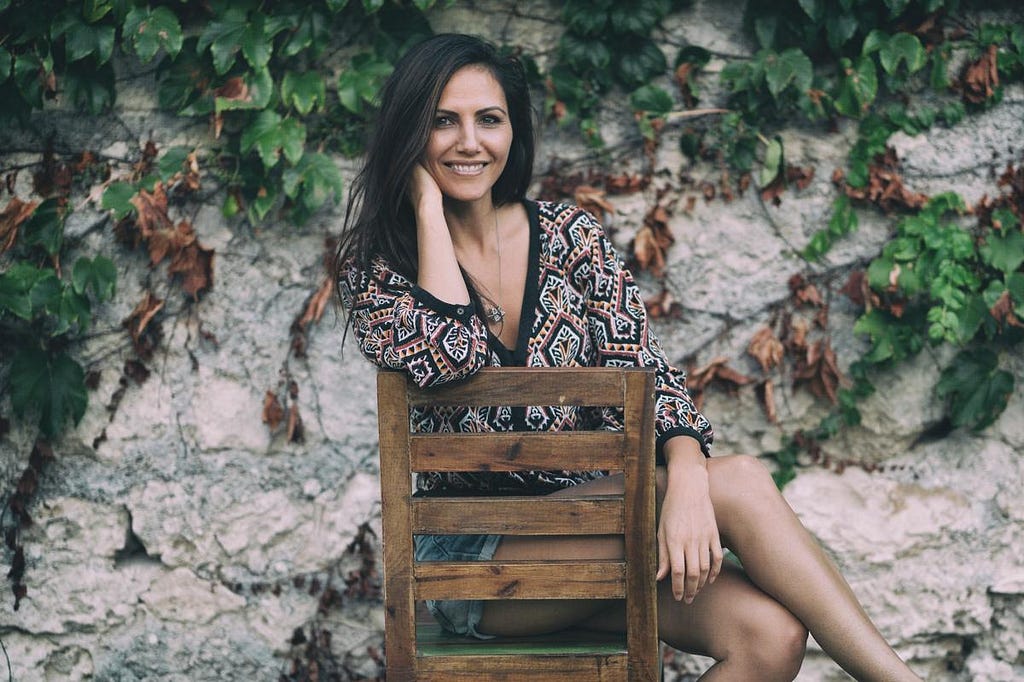
As a part of our series about “Filmmakers Making A Social Impact” I had the pleasure of interviewing Tenille Bentley.
Tenille Bentley is a globally recognized, multi-award-winning entrepreneur and sound therapy specialist whose work explores the therapeutic power of sound. She is the co-creator of the feature documentary Does Sound Heal and founder of a symphony orchestra that collaborates with scientists to study sound’s effects on wellbeing and mental health. Her work has earned 15 international awards and is featured in therapeutic clinics and global exhibitions, including Nuit Blanche Paris and the Tel Aviv Museum of Art.
Thank you so much for doing this interview with us! Before we dive in, our readers would love to get to know you a bit. Can you share your “backstory” that brought you to this career?
I never intended to become an executive producer or a sound therapy practitioner. My journey began in the corporate world, building a multimillion-dollar tech company by my early 30s and founding a global charitable initiative that reached over 40,000 children across five countries. Yet beneath the surface of strategic plans and boardroom agendas, there was a quiet rhythm pulling me toward something deeper.
Raised in a musical family, sound was always my sanctuary. At the height of professional success, I found myself burnt out, physically present but spiritually distant. That’s when I returned to sound, not as entertainment, but as medicine. I immersed myself in ancient instruments, exploring their profound effects on the nervous system, emotional regulation, and cellular memory. This path led to the creation of the En Coda Orchestra, one of the world’s first orchestras tuned to 432Hz, built not to perform, but to transform.
The idea for Does Sound Heal took shape before the orchestra’s first public performance. It grew out of more than a decade of inner work, scientific exploration, and then ultimately a creative collaboration with filmmakers Dom Giorgi and Joe Branco. We asked one timeless question: Does Sound Heal. Through this question, a movement began.
It has been said that our mistakes can be our greatest teachers. Can you share a story about the funniest mistake you made when you were first starting? Can you tell us what lesson you learned from that?
When we first began filming the En Coda Orchestra, the world was on the cusp of uncertainty, right at the dawn of the COVID-19 pandemic. We had everything meticulously set: nearly 200 people lined up to attend, 14 string players poised with bows in hand, a conductor ready to lead, and three sound therapy artists prepared to weave the frequencies. A six-person film crew was positioned to capture it all.
And then, just 30 minutes before the performance, lockdown was suddenly announced.
In a surreal twist, we had to proceed with the entire orchestra and audience wearing masks. So here we were, preparing to film a sound therapy performance intended to bring calm and emotional release, while standing in the middle of a global pandemic, masked and somewhat rattled.
The irony wasn’t lost on us. We were inviting people into deep rest while the world was gripped by collective tension. But that, in the end, became part of the story. The footage captured more than a performance; it became a piece of history and a quiet reminder that healing can find us even in chaos.
Who are some of the most interesting people you have interacted with? What was that like? Do you have any stories?
One that stays with me is my time with Uncle Noel Nannup, an Indigenous Elder in Western Australia. After an En Coda sound immersion, he looked at me and said, “You need to teach this to the world. This is your medicine.” That moment changed a lot for me. I’ve also had the honour of collaborating with neuroscientists like Professor Alan Harvey and Dr. Jon Prince, whose deep knowledge of the brain adds weight to the work we’re doing where music, emotion, and science meet.
Outside of the filming and sound therapy in my career, I have been fortunate to share one-on-one time with Richard Branson, Oprah, and Deepak Chopra.
Which people in history inspire you the most? Why?
I’ve always been drawn to those who moved between worlds, the ones who danced at the edge of science and soul. Nikola Tesla, Albert Einstein, Viktor Frankl, Alan Watts, Rumi… each of them followed an inner compass, a wisdom that couldn’t always be measured, yet it moved mountains.
They trusted something unseen and still managed to translate it into impact. Their work wasn’t just intellectual; it was spiritual, poetic, disruptive, and often ahead of its time. That kind of courage and devotion speaks deeply to me. It reminds me that true change often comes from those willing to walk between the visible and the invisible… and to trust what they feel before it’s fully understood.
Let’s now shift to the main focus of our interview, how are you using your success to bring goodness to the world?
Does Sound Heal is more than just a documentary; it’s an offering. Asking whether sound heals led us to discover a powerful connection between story, science, and spirit. Neuroscientists like Dr. Alan Harvey and Dr. Jon Prince helped us uncover insights into how sound frequencies are being studied for their effects on conditions like Parkinson’s, Alzheimer’s, anxiety, PTSD, and trauma recovery. The film is creating ripples, opening up a new conversation about sound as a genuine form of therapy.
Can you share with us the meaningful or exciting social impact causes you are working on right now?
Alongside the film, this vision lives on through my other project, the En Coda Orchestra. Our live performances, tuned to 432Hz, encourage stillness, emotional release, and nervous system balance. This work touches the deepest parts of the human spirit, gently re-tuning us in those quiet, still moments. We’ve seen people release emotions in just moments of viewing the film or seeing a live show, and those who were suddenly overcome by feelings they couldn’t quite put into words. These are immersive and layered experiences designed to move the body and heart.
Many of us have ideas, dreams, and passions, but never manifest it. But you did. Was there an “Aha Moment” that made you decide that you were actually going to step up and take action for this cause? What was that final trigger?
Yes, and it actually came before a single note of the En Coda Orchestra was ever played.
The idea for Does Sound Heal started as a quiet but persistent question I’d carried for years: What is the measurable impact of sound and frequency? Working closely in frequency-based therapy, I’d seen powerful transformations- people letting go of trauma, reconnecting with their emotions, and finding moments of stillness in a hectic world that barely offers it.
When I met Joe Branco of Spincue Audio and later Dom Giorgi of Side B Films, the question began to take shape as a documentary, and soon grew into a global exploration. Originally, En Coda was meant to be just the focus of the first episode, serving as an anchor for a larger documentary project. But the bigger question — how sound and frequency affect us in medicine and therapy reached far beyond En Coda. We quickly realized we needed to document this journey and shine a light on both the ancient wisdom and emerging science of sound.
Can you tell us a story about a particular individual who was impacted or helped by your cause?
Across the years, we’ve received a wide spectrum of feedback from individuals and clinicians engaging with our work. In clinical contexts, several psychotherapists have integrated elements of our frequency-based sound sessions into trauma-informed care, reporting that this modality has elicited the highest patient engagement they’ve seen, with a consistent uptake and reported improvements across anxiety, PTSD, and emotional dysregulation. While anecdotal, these reports are both consistent and compelling.
At our concerts, which are therapeutically composed in 432Hz, attendees have frequently shared spontaneous outcomes, ranging from chronic pain relief to deep emotional processing. We’ve had participants describe significant nervous system regulation, unprompted emotional release, and in some cases, restorative sleep after decades of insomnia. One individual shared that, after years of living with post-traumatic stress, they finally felt safe in their body again. While we are careful not to make clinical claims, these repeated reports have driven our interest in building structured research collaborations to begin quantifying the physiological and psychological impacts of these experiences. This community feedback has laid the foundation for what may become a measurable therapeutic intervention in the future.
Are there three things that individuals, society or the government can do to support you in this effort?
- Attend and share or host a Does Sound Heal screening — join the conversation.
- Bring the En Coda Orchestra experience to your city, wellness centre, or festival.
- Partner with Does Sound Heal so we can continue developing our next episodes.
What are your “5 things I wish someone told me when I first started” and why? Please share a story or example for each.
1 . The deepest insights come not in noise, but in quiet observation. One year, I took up the practice of cultivating silence, and the power of this taught me just how important observation is. When we are silent, we can pick up so much more than when we are absorbed in the noise.
2 . Let your art and your science walk together, even when data hasn’t caught up yet. I intuitively know sound heals, but many times I think our culture becomes fixed on needing data. I still love science, but I also know the importance of intuition and the things that we can’t necessarily quantify yet. It’s a merging that needs to happen to find the superpower of art and science when they come together instead of working in separation.
3 Integrity is your compass. Whilst I have always been an integral person, I believe that I can cultivate it more every day, I have been in positions in my career where the temptation for something bigger could mean I had to compromise on my integrity, in my early years in business I did this, but learnt very quickly that we reap what we sow. I always hold integrity as my highest value and as such have walked away from multi-million dollar opportunities. I want to be proud of my contributions to the world and know that I always walk in the path of integrity.
4 . Sound can hold memory. Let it speak. When I first started my career, I was a musician. At 24, I went into building businesses, never thinking I would return to music. But sound holds memory; it will find us if it is meant to, and share with us its medicine. My life took a 360, from a high corporate career to sound therapy. It was unexpected, but sound found me again and completely transformed my life in the most profound ways, and I found myself doing the work I am doing today.
5 . The circumstance is bigger than you. I learnt this lesson a long time ago, and it’s a wonderfully humble approach to our service to the world. When we realise that what we do, our offering to the world, is bigger than ourselves, we step away from self-gratification and into self-forgetting…and it’s in this place we find ourselves. When we serve humanity, we step into humility and an awareness that this circumstance is bigger than us.
If you could tell other young people one thing about why they should consider making a positive impact on our environment or society, like you, what would you tell them?
Don’t just chase visibility- cultivate presence. The most profound impact comes from those who listen deeply, speak with integrity, and act from awareness- not just of themselves, but of the world around them. Trust your inner compass, not the noise of the crowd. Let silence shape your voice, let humility guide your power, and remember: the truest art is born in the quiet spaces where intuition meets purpose. Start there. That’s where real change begins.
We are very blessed that many other Social Impact Heroes read this column. Is there a person in the world, or in the US, whom you would like to collaborate with, and why? He or she might see this. 🙂
Dr. Gabor Maté. His work on trauma, nervous system healing, and authenticity aligns with the science and spirit of sound therapy. I believe we could open even more hearts and doors together.
Can you please give us your favorite “Life Lesson Quote”? Can you share how that was relevant to you in your life?
“Don’t die with your music still in you.” — Wayne Dyer
This isn’t just a metaphor to me, it’s a calling. And it’s one I live by every day.
How can our readers follow you online?
Website: www.tenillebentley.com
Instagram: @tenillebentley
Film: www.doessoundheal.com
This was great, thank you so much for sharing your story and doing this with us. We wish you continued success!
Filmmakers Making A Social Impact: Why & How Filmmaker Tenille Bentley Is Helping To Change Our… was originally published in Authority Magazine on Medium, where people are continuing the conversation by highlighting and responding to this story.