
“Once you start digging into the data around foster care, you realize how massive the issue is… Our vision became: what can we do to create a model that helps keep families together? We started exploring the concept of building a village… The model includes a professional parent… Our aim is to create an environment where the adults are there just to be parents.”
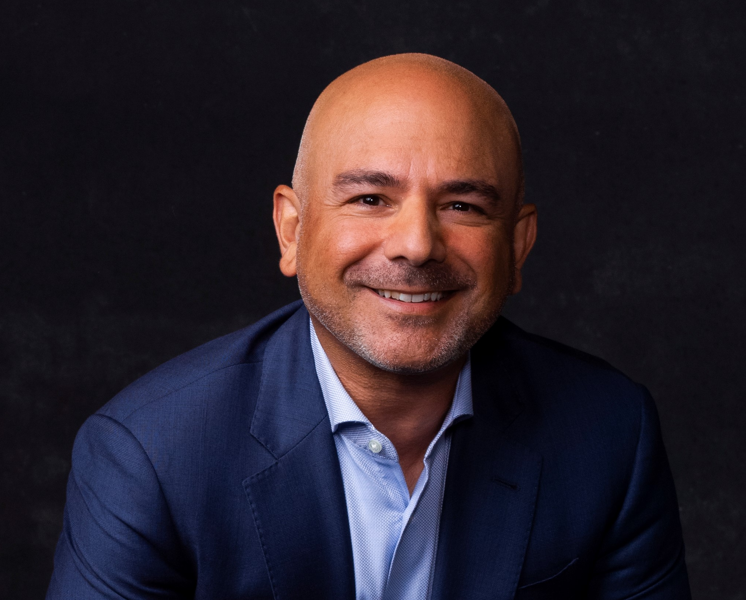
I had the pleasure of talking with Dr. Eric Esrailian. Dr.Esrailian’s professional path weaves through medicine, education, filmmaking, and philanthropy, but at its core is a simple through-line: an insistence on using every available platform to improve human lives. A gastroenterologist by training and a storyteller by instinct, Esrailian’s career stretches from the hospital wards of UCLA to the red carpets of film premieres, from policy meetings in Sacramento to humanitarian ceremonies in Yerevan.
Born in the Midwest and raised in California, Esrailian is the great-grandchild of Armenian Genocide survivors and the son of immigrants. His early childhood included a brief, disorienting stint in Iran during the late 1970s, followed by a return to the United States during the revolution. The family eventually settled in the San Francisco Bay Area, where Esrailian’s fascination with science and medicine took root.
He attended the University of California, Berkeley, studying integrative biology and English. While preparing for medical school, he also pursued literature and creative writing — an early sign of the duality that would come to define his later work. He earned his MD from Loma Linda University, completed a residency in internal medicine at the University of Southern California, and later arrived at UCLA for his gastroenterology fellowship and a Master’s in Public Health. He went on to complete the Executive Program at the UCLA Anderson School of Management, a decision that positioned him to bridge clinical care to institutional strategy to his current roles as an investor and entrepreneur.
Now based at UCLA, Esrailian is the Lincy Foundation Chair in Clinical Gastroenterology and serves as Chief of the Vatche and Tamar Manoukian Division of Digestive Diseases. His administrative roles include directing the Melvin and Bren Simon Digestive Diseases Center and co-chairing the university’s Second Century Council. Colleagues describe him as someone able to toggle between granular patient care and big-picture institutional planning — often within a single day. He’s also a key driver behind the California Institute for Immunology and Immunotherapy, a new research hub housed in the repurposed Westside Pavilion, designed to accelerate breakthroughs in diseases connected to the immune system.
While his formal titles center around medicine, Esrailian’s network spans industries. He sits on the boards of the XPRIZE Foundation, the Clooney Foundation for Justice, the Motion Picture & Television Fund, and he serves as the vice chair of both the Academy Museum of Motion Pictures and the Hammer Museum. His long-standing connection to the Armenian community, and his focus on human rights, permeates much of his work beyond the clinical realm.
That crossover is most visible in his role as a producer. In 2016, Esrailian helped bring to life “The Promise,” a historical drama focused on the Armenian Genocide. Starring Oscar Isaac and Christian Bale, the film was among the first major Hollywood attempts to depict the genocide on screen. The project was followed by “Intent to Destroy,” a companion documentary that earned an Emmy nomination, and later Aurora’s Sunrise, an animated documentary about Aurora Mardiganian, an Armenian Genocide survivor and early Hollywood actress. Esrailian also served as a producer on “Francesco,” a documentary portrait of Pope Francis, and co-founded SOMM TV, a streaming platform focused on wine and food culture.
Thanks to the generosity and direction of his mentor Kirk Kerkorian, proceeds from “The Promise” enabled Esrailian to establish the Promise Institute for Human Rights at UCLA Law and The Promise Armenian Institute, both aimed at addressing global justice and Armenian studies, respectively. During the 2020 Nagorno-Karabakh conflict, he coordinated public awareness campaigns and medical relief efforts. His advocacy has brought him into collaboration with figures ranging from Cher to Pope Francis, who awarded him the Benemerenti Medal in 2021.
Among the more recent undertakings is “Together California,” a social-impact initiative developed with his partner and close friend, actor Christian Bale. Focused on reforming foster care in Los Angeles County, the project is building a village in Palmdale for children and youth in the foster system, with a design that emphasizes sibling unity, transitional housing, and therapeutic support. The village includes 12 homes and a community center, and represents a pivot toward long-term systemic intervention. The concept was modeled on a successful program in Illinois and tailored for LA’s sprawling, often overwhelmed foster system.
The idea originated in conversation — like many of Esrailian’s ventures — between collaborators who saw an unmet need and believed they could address it. That formula has proven durable, from medicine to film to social services. The initiative’s public launch coincides with growing interest in community-based alternatives to institutional care, a topic Esrailian has increasingly spoken about in philanthropic circles.
In 2024, Esrailian also joined the next phase of the Aurora Humanitarian Initiative as a co-founder. The program, originally launched in 2016, honors individuals who risk their lives to help others and was named after the same Aurora Mardiganian. Esrailian’s involvement reflects his ongoing interest in elevating narratives of survival and resilience — often shaped by his own family’s history. The most recent Aurora Prize ceremony was held at Ellis Island, where Esrailian was also recognized with the Ellis Island Medal of Honor in 2025 for his contributions to medicine, education, culture, and humanitarian work.
His biography, while difficult to summarize neatly, reveals a consistent logic. Each role, each title, each project is underwritten by a belief in cross-disciplinary collaboration and the power of long-term thinking. Whether he is navigating healthcare bureaucracy, producing historical documentaries, or building homes for foster youth, Esrailian appears drawn to large systems in need of reform, and to stories that have been too long ignored.
“I try to be a lifelong learner,” he has said, describing his approach to work and mentorship. Those who know him well tend to echo that sentiment, noting that his curiosity is less performative than strategic. The scale of his influence may shift depending on the room — from medical lecture halls to city council chambers — but the ambition rarely does. His aim is not simply to be present, but to leave something changed in his wake.
Yitzi: Dr. Eric Esrailian, it’s an honor to meet you. Before we dive in deep, our readers would love to learn about Dr. Esrailian’s personal origin story. Can you share with us the story of your childhood, how you grew up, and then the seeds for all that came afterwards?
Dr. Esrailian: Thank you again for having me. I’ve been very fortunate in my life. I’m the great-grandchild of Armenian Genocide survivors. My parents were immigrants to this country, and I feel very fortunate to be where I am today and for all the opportunities that have been given to me.
I grew up in the San Francisco Bay Area. I was born in the Midwest, and we actually left the country and moved to Iran because my father was a student. We ultimately came back in a pretty chaotic situation, around the time of the revolution. The Bay Area became a great home for me.
I always loved medicine and science, and I had a dream of becoming a doctor. I studied biology and English at Berkeley. I always wanted to use both sides of my brain, so English was an outlet for creative writing and studying literature. I ended up minoring in English and majoring in biology. I was geared toward going to medical school, and it was very exciting to pursue that path. I went to medical school at Loma Linda because I loved the opportunity to study and serve in a faithful and supportive environment.
At Loma Linda and in medical school, I learned how to take care of one person at a time. But at Berkeley, I was first introduced to the concept of public health. I was a teaching assistant for a public health class, and it really got me thinking about populations and what we can do for communities. That laid the foundation for me to try to do something beyond what was just around me.
I think that’s maybe where the delusions of grandeur started when I was younger. I had an amazing opportunity to train at UCLA and also to get a Master’s in Public Health there. I completed a one-year business school program at the Anderson School of Management called the Executive Program.
At that point, I was already enjoying what I was doing and was somewhat in an administrative role. I didn’t necessarily need to take more classes since I had already done my master’s, but I tried to piece together learning opportunities that I thought would help me be more successful in whatever goals I pursued. UCLA really provided that for me. I’m a product of the University of California system, which has been an economic engine for the state and, honestly, for me personally. It’s been an amazing ride.
That’s the origin — that’s how I started and how I ended up in medicine. Even though I’m more administrative now, of course, for many aspects of the whole campus with leaders at different levels, I’m still focused on healthcare daily. I’m working to help the university expand our capacity to help more people. Our Second Century Council also brings together many of the institution’s supporters and advocates to help the Chancellor and administration in various ways.
We’ve started a number of different initiatives. One of the biggest, and I think most transformational, is something called the California Institute for Immunology and Immunotherapy.
When I was younger, there was an iconic mall in Los Angeles called the Westside Pavilion. It was a place where you shopped and bought movie tickets. We had an opportunity, along with my partners and co-founders, to do something transformational — not just for UCLA but for the state of California and, hopefully, the world.
With support from the state, we helped UCLA acquire that property. It’s now called the UCLA Research Park. It’s no longer a shopping mall. Within it, we’ll house the California Institute for Immunology and Immunotherapy, a medical research organization affiliated with UCLA but independent.
The goal is to stimulate entrepreneurship and innovation that will hopefully lead to cures for diseases related to the immune system. Almost every disease now has some connection to the immune system, so this work has broad implications.
Anyway, that’s the origin story — and a bit of the present as well.
Yitzi: That’s really incredible. You probably have some amazing stories from your really incredible work and storied career. Can you share with our readers one or two stories that stand out in your mind from your professional life and accomplishments?
Dr. Esrailian: I think I’ve had, honestly, some incredible people help me along the way. One thing I recall at Berkeley — this might be something your readers would be interested in — is that at one point, an advisor kind of discouraged me from being pre-med. They basically said, “Well, everyone’s pre-med.” I can understand now, in hindsight, when you’re dealing with tens of thousands of students and I’m just 17 years old walking in, they handed me a piece of paper and said, “You should take these classes if you’re interested in medicine.”
But it wasn’t exactly a motivational speech. It was really the opposite of what I try to do for young people now. That doesn’t mean you shouldn’t be realistic with people, but you shouldn’t take away their hope at a young age. That conversation actually motivated me quite a bit. I walked out of that room thinking, “Well, I’m going to do this.”
That moment was important to me. Even though I’m sure that advisor never thought twice about it afterward, it stuck with me all these years. I’ve had incredible mentors, partners, and advisors over the years. It’s really been remarkable. I don’t know if you remember the Woody Allen movie Zelig or even Forrest Gump, but I feel like I’ve just been everywhere and with everyone. I’ve been very fortunate to have people take an interest in me, mentor me, and partner with me.
Some notable and legendary names would be Kirk Kerkorian, who was Armenian; Vatche Manoukian; Mike Milken — Mike’s not Armenian, but he did go to Berkeley — and others. There are so many that I hesitate to name them all because I don’t want to leave anyone out, but they’ve all had a transformational impact on my life.
They took an interest in me at a young age and really guided me, spent time with me, created opportunities, and built partnerships. I’m so grateful for them. What I try to do with everyone is constantly learn. Maybe it’s because I was trained as a physician, but I really believe in being a lifelong learner. We clearly know less than what we think we know, so I’m always trying to learn.
Whenever I’m around people with more experience or knowledge in any discipline, I’m always absorbing what I can. I actually enjoy meeting people. I’m never bored because I’m always trying to learn something, and that mindset has helped me a lot. Even though some of these people are very prominent business figures, it’s not just limited to that kind of powerhouse entrepreneur. I try to learn from people in my day-to-day life as well.
Yitzi: You have so many accomplishments and you’ve done such amazing work. Please share with our readers the exciting new initiatives you’re working on. I know you mentioned the immunology research center, but tell us more.
Dr. Esrailian: Sure. I’d love to tell you about “Together California.” “Together California” is a model for the care and life of foster youth in LA County. I was very fortunate to learn about the situation of foster youth from my friend, Christian Bale, who’s also my co-founder of the initiative.
Christian and I worked on a film together called The Promise, which was about the Armenian Genocide. We spent a lot of time together, not just on the project, but we became close friends during and after its development.
He’s a remarkable person with a loving family. Having lived in LA for a long time and being part of the entertainment community, I’m aware of some of the stereotypes and clichés that exist — but Christian is the opposite. He’s completely sincere, a family man, deeply committed. He talked to me about how I’ve been involved with so many different organizations, causes, and projects, and how I help move them from the idea stage to full implementation and success.
We started talking about doing something together. He mentioned he had always wanted to help foster children because he’d read that LA County has the largest population of foster youth in the United States. I didn’t know that either. We imagined doing something that would allow siblings to live together, too, because roughly 75% of siblings get separated during the foster care process, which is a shocking number.
Once you start digging into the data around foster care, you realize how massive the issue is. There are tens of thousands of foster children in LA County, and they’re much more likely to become homeless. LA has been struggling with homelessness for years, just like many other communities in the U.S.
Our vision became: what can we do to create a model that helps keep families together? We started exploring the concept of building a village. There are other models like this around the country and the world, but not in Los Angeles or California. So we came up with the idea for “Together California.” We hired an amazing partner and executive director, Tim McCormick, who’s been working in this field for many years and successfully helped develop a similar village concepts in Illinois, around Chicago.
Based on that model, we started this journey, which took several years, to identify potential partners and locations in Los Angeles. We had multiple meetings with the Department of Children and Family Services and various county supervisors.
This is just how strange my life is — when I was a kid, the first time I came to the UCLA campus, I was visiting with family friends who said, “We’re going to run this 5K/10K.” The name of the race was the Zev Yaroslavsky 5K/10K. Zev Yaroslavsky is a very prominent figure in LA County and city politics. He ended up being the husband of a friend of mine. When I was on the Medical Board of California, the president of the board was Barbara Yaroslavsky. I asked her one day, “Have you ever heard of Zev Yaroslavsky?” She said, “Yeah, that’s my husband.” I told her the story about the race and the t-shirt, and I realized he had become a major figure in LA politics. I just didn’t know who he was at the time. Over the years, Zev and I became friends.
So when Christian and I were meeting with people from the city and county, it was difficult to make real progress on a plan — where could we buy land? Could we purchase an existing building? Eventually, I said, “Let me sit down with Zev.” He knows everyone in LA and how to get things done. Zev told me to meet with County Supervisor Kathryn Barger.
We did, and even though we faced some delays due to the pandemic — like with the immunology institute — everything was on ice for a couple of years. Even the most meaningful projects just stalled.
But Supervisor Barger was extremely enthusiastic. She represents a community in LA County with a large number of foster youth. She talked to us about the Antelope Valley and suggested we look into Palmdale. We met with city representatives, secured support from both the city and the county, and bought the land. We’ve also received support from friends and the broader community, and now we’re under construction.
We have a live feed on the “Together California” website where people can follow the progress. The community is very excited. The goal is to build 12 homes on a little more than four and a half acres. Each home will be licensed for six children. There will be two studio apartments for either temporary housing for birth parents or transitional housing for youth aging out of foster care. We’re also building a community center that will house our offices, child welfare specialists, behavioral staff, and programs for the entire community.
The model includes a professional parent. One of the challenges for foster youth is that foster parents, while very well-meaning, often have many responsibilities, including multiple jobs. Our aim is to create an environment where the adults are there just to be parents. Many of them have raised their own children and still love the idea of parenting and supporting kids.
This model really works. In other communities, we’ve seen high graduation rates, kids going to college, getting jobs, and often reuniting with their birth families.
Anyway, sorry for the long story, but that’s where we are.
Yitzi: So inspiring. This is our aspirational question. Dr. Esrailian, because of all your amazing work, the platform you’ve built, and all these incredible projects, you’re a person of enormous influence. If you could spread an idea or inspire a movement that would bring the most good to the most people, what would that be?
Dr. Esrailian: Wow, that’s a great question. I’ll tell you about another organization and how I think about this. I have a dear friend and partner named Noubar Afeyan. Noubar is a biotech entrepreneur and a real legend in that community. He’s like on the Mount Rushmore of biotech entrepreneurs. He also happens to be Armenian and an immigrant. He and two other friends created an organization many years ago called the Aurora Humanitarian Initiative.
One of the other friends was Vartan Gregorian, a very prominent figure in academia and philanthropy. He sadly passed away a few years ago. He had been the president of Brown University, president of the New York Public Library, and CEO of the Carnegie Corporation when he died. The third founder is Ruben Vardanyan, a businessman and generous philanthropist who has unfortunately been wrongfully imprisoned in Baku, Azerbaijan, because he tried to help Armenians in the ethnic enclave of Artsakh, also known as Nagorno-Karabakh.
They started the organization in 2016 in honor of a woman named Aurora Mardiganian, a survivor of the Armenian Genocide. I also produced an animated film/documentary about her called Aurora’s Sunrise. I’m sorry for the long answer, but I’m going to land the plane.
Aurora is a prize awarded to a humanitarian who’s doing meaningful work in their community, often at great personal risk. They named the prize after Aurora, and I was honored to be at the first ceremony in 2016. We actually showed a sneak preview of The Promise — nobody had seen it at that point — and we did that in Yerevan, Armenia.
Marguerite Barankitse was the recipient of the first Aurora Prize for helping so many children in Africa. She’s from Burundi and saved the lives of so many orphans. The goal of the initiative was to promote humanitarianism. I was honored to be asked to join as a kind of co-founder of the next phase of the Aurora Prize.
The concept — and real credit to Noubar for this — is about spreading humanitarianism around the world. We import and export a lot of things — products, ideas, even inspiration. But the concept of being a humanitarian isn’t just a vague or spiritual ideal. It’s something anyone can do. They can do it in their community, on their street, in their country, or for the world.
If more people looked to other humanitarians, became inspired, and wanted to do something bigger than themselves, I truly believe the world would be a better place. So, in terms of your question, that’s what I would hope to do. The inspiration for that really comes from the concept we’ve promoted through the Aurora Initiative, which goes back to Aurora Mardiganian and her story as a survivor of genocide. And for me, it all comes full circle with my own family’s story.
Yitzi: How can our readers continue to follow your work? How can they support or get involved in any way?
Dr. Esrailian: First of all, thank you. For “Together California,” we have a site that’s continuously updated. They can also follow us on social media. We have our own accounts, and the organizations do as well. Three big ones that are in motion now are “Together California,” California Institute for Immunology and Immunotherapy, and the Aurora Prize.
This year, the Aurora Prize ceremony will be held at Ellis Island. We’re honoring Mike Milken, David Rubenstein, and some other really notable people who have done a lot of good for the world. I really appreciate your time and enthusiasm.
Yitzi: I love it. I’d love to stay in touch and cover any other initiatives you’re working on.
From “The Promise” to Public Health: Dr. Eric Esrailian on Why Stories (and Systems) Matter was originally published in Authority Magazine on Medium, where people are continuing the conversation by highlighting and responding to this story.