From ‘The View’ to Caregiving: Debbie Matenopoulos Reflects on Barbara Walters, Family, and Finding Purpose Beyond Fame
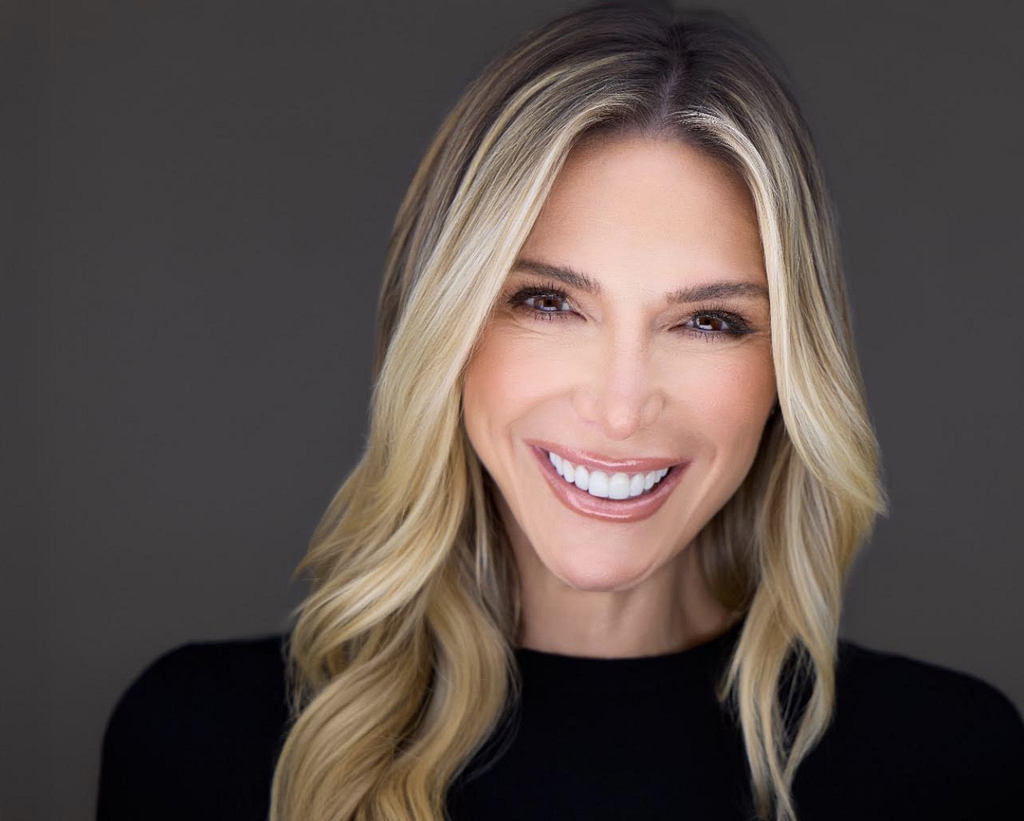
…I came back to LA and told everyone, “I have to leave. I have to go home and take care of my dad.” The show was still on the air, The Daily 10, and another awards show was coming up, but I couldn’t do it. I got so much pushback from my agents, managers, even my bosses at E! They told me I was ruining my career, that no one would ever hire me again. And I said, “I don’t care. Don’t hire me. Because at the end of the day, I’d rather say I missed a show than that I missed time with my dad.”…
I had the pleasure of talking with Debbie Matenopoulos. Debbie‘s story doesn’t start on a red carpet swarming with paparazzi. It starts in a small house in Richmond, Virginia, thick with the smell of roasting lamb and the sound of Greek spoken in loud, loving bursts. For Debbie Matenopoulos, the first of her family born on American soil, this was the whole world. “Everything was about family,” she says, her voice still carrying the warmth of those memories. “Everything was about food and laughter — everything revolved around food, laughter, and love.” This foundation, a close-knit immigrant upbringing, became the “backbone of everything I’ve done.” While other kids in the neighborhood drifted through their days, they often ended up at the Matenopoulos house, drawn to the life force thrumming within its walls.
But Virginia, for all its love, was boring. Its state motto, “Virginia is for lovers,” was, for a restless teenager, a punchline. “There was nothing else to do!” she laughs. “I wanted to be in the mix, to be in New York City.” At just 17, a self-described “precocious, little punky girl,” she hatched a plan. An internship at MTV was her golden ticket out. She sold it to her parents with the dramatic flair of a seasoned performer: “If you don’t let me go do this internship, I’ll never get a job.” They gave her their blessing, unknowingly setting in motion a career that would defy all odds.
New York was a whirlwind. Matenopoulos was juggling classes at NYU and the chaotic energy of MTV, a world away from Richmond. It was here that a simple act of showing up changed her life forever. Exhausted from work and studying for exams, she nearly bailed on a friend’s going-away party. But her roommate insisted. “Just come for an hour,” she pleaded. At the party, a conversation with a casting director led to an impossible invitation: an audition for a new show being produced by Barbara Walters. “First of all, why would Barbara Walters want anything to do with me?” Matenopoulos recalls thinking. “I had pink hair at the time because MTV had dyed it pink for a show.”
Looking like a punk rock kid who’d taken a wrong turn, she walked into the stuffy, corporate halls of ABC. She sat down with producers, and then with Walters herself. She was just herself — a Greek kid from NYU working at MTV. Against all odds, she got the job. She became one of the original five co-hosts of The View.
Sitting beside journalism titans like Walters, Meredith Vieira, and Joy Behar, Matenopoulos felt like she’d “won the lottery.” She compensated for her perceived lack of experience by over-preparing, studying her notecards like she was cramming for final exams. One day, just seconds before they went live, Barbara Walters walked up to her, grabbed her cards, and ripped them in half. “No cards for you today, baby,” Walters declared, as the crew froze around them. “You don’t need cards. You’re better without them. Just listen. The most important thing I can ever teach you is to listen.” Terrified, Matenopoulos walked onto the set with nothing but Walters’ advice. “And it turned out to be the best interview I ever did,” she says.
Her career soared. She went from The View to E!, Entertainment Tonight, and a host of other shows. She was at the top of her game, living the life she had dreamed of back in her quiet Virginia town. And then, a phone call shattered it all. She was on the red carpet at the Vanity Fair Oscar party, trying to interview Robert De Niro, when her mother delivered the news: her father had been diagnosed with ALS. “They told us to make arrangements,” she remembers.
The glamorous world she inhabited suddenly felt hollow. Her father, the man she describes as a “force of life,” was fading. She saw his speech begin to slur, his leg begin to drag. The vibrant man who was the “mayor of wherever we went” was becoming a prisoner in his own body. The decision was immediate and non-negotiable. She walked away from it all. Her agents and managers were horrified. “They told me I was ruining my career, that no one would ever hire me again,” she says. Her response was unwavering. “I don’t care. Don’t hire me. Because at the end of the day, I’d rather say I missed a show than that I missed time with my dad.”
For nearly three years, she lived back in her childhood home, becoming her father’s full-time caregiver. It was a brutal, beautiful, and profound experience. It was, she says, a “bittersweet circle of life, caring for the person who gave you life.” The memory that sticks with her most happened in the car, on the way to a physical therapy session she knew was futile. A radio commercial for Fiji came on. “I said, ‘We should go there someday,’” she recalls, keeping up her cheerful facade. Her father, using every ounce of strength he had left, corrected her. “Not someday,” he said. “Today. Look at me. Look what happened to me… Tomorrow is not a promise.”
That moment became her new compass. It’s a lesson she now shares with the world, channeling her experience into advocacy. She has partnered with Nomo Smart Care, a camera-free, app-based technology that helps families monitor their loved ones remotely. It’s the kind of tool she wishes she’d had, something that could have given her a sliver of peace of mind during those difficult years. It’s a way of honoring her father’s memory by helping others navigate the lonely, exhausting, and love-filled journey of caregiving. Debbie Matenopoulos may have left the limelight, but in doing so, she found a story more powerful and resonant than any she ever covered on television.
Yitzi: It is so delightful to meet you Debbie. Before we dive in, our readers would love to learn about your personal origin story. Can you share with us a story from your childhood, how you grew up and the seeds for all the amazing things that have come since then?
Debbie: I was born in Richmond, Virginia, to an immigrant family. I’m the first person in my entire family to be born in the United States. I’m of Greek heritage, and I didn’t speak English until I went to elementary school. We only spoke Greek at home. My culture and heritage were very strong in my household, and still are. Everything was about family. Everything was about food and laughter, everything revolved around food, laughter, and love, and that close-knit feeling, if that’s even a word. Greece is a small country, only about 11 million people, so when my family came here, it was really important to keep our roots and make sure we all stuck together. That sense of family has carried me through most of my life. It’s probably been the backbone of everything I’ve done and has allowed me to thrive and flourish in a world that can be difficult, and only gets more difficult as you get older.
Having a strong family bond and values made me different from a lot of the kids I grew up with. Not all of them had that kind of closeness. Most of the kids in the neighborhood ended up at my house because there was always food, always love, and always something happening. That’s how I grew up in Virginia.
I left very early and went to New York. I went to NYU when I was just 17 and started working at MTV as an intern. That’s how I convinced my parents to let me go to New York. I’d already started college at Virginia Commonwealth University. I started very young, at 17, and after one semester, I thought, I love Virginia, but as a young person, it can be really boring. Our motto was “Virginia is for lovers” because there was nothing else to do! It was so boring when you were a kid, and I wanted to be in the mix, to be in New York City.
So I applied for an internship at MTV, and also to places like David Letterman and Larry King. I got a call back from MTV and they invited me to New York for an interview. I thought I’d won the lottery. My poor immigrant parents didn’t really know any better, so I told them, “If you don’t let me go do this internship, I’ll never get a job.” I was this precocious 17-year-old, a little punky girl. Looking back, I must’ve been a nightmare! But my parents said, “Of course, Debbie. We don’t want you to not get a job.” So they gave me their blessing.
I moved to New York and started interning at MTV. After that semester, they asked me to stay. They said, “You’re really great, we’d love to have you here.” But I knew I had to go home and finish college. My parents would’ve freaked out if I didn’t, education was the most important thing to them, like it is for so many immigrant families. They’d say, “You will get an education, something we couldn’t have in Greece.”
So I told my boss, Dave Sirulnick, that I had to go back. And he completely changed my life. He said, “Listen, I went to NYU. I’ll call the dean and we’ll transfer your credits.” I was shocked. He actually called Dean Kyle at NYU, and they transferred my credits. I couldn’t believe it. I lost a few, but my parents agreed, NYU was an amazing opportunity. I took out a mountain of loans, went to NYU, and eventually paid them all back, thanks to ending up on The View.
I studied journalism at NYU, all thanks to Dave Sirulnick, who was my boss in the news department at MTV. He was incredible. And now, hearing that they’re getting rid of MTV, it just makes me want to cry.
Yitzi: Debbie, you’re an amazing storyteller. I’m sure you know it, and I’m sure all your viewers know it too. You probably have some incredible stories from your career. I know this is going to be a hard question, but can you share one or two stories that stand out in your mind?
Debbie: Oh my gosh, there are so many. How much time do you have? We could dedicate an entire season of shows to the stories I have. People always tell me I should write a book, and I think, if I did, I’d probably never work again, because there are some things that should stay just as they were in the moment. What happens in entertainment stays in entertainment.
Maybe I’ll share a story or two that could be helpful to anyone who’s second-guessing what they’re doing with their life, or who’s thinking, “I have this pipe dream, but I shouldn’t go for it.” Get that thought out of your head immediately. I was an immigrant girl from Richmond, Virginia, with no connections in this business. There was zero nepotism. Honestly, I probably had a better shot at winning the lottery. Especially back then, it was so hard to break in. Now, anyone can put something up on YouTube, Instagram, or TikTok and suddenly be a star. But back then, it didn’t work that way. There were agents, managers, and gatekeepers. Unless you knew someone, or someone who knew someone, you weren’t getting in. It wasn’t what you knew, it was who you knew.
So, never give up on a dream. If you can see it and imagine it, you can do it. And that ties into how I met Barbara Walters and got The View.
If you ever feel like you don’t want to go somewhere, just remember, 90% of success is showing up. I was working at MTV and going to NYU at the same time. I was exhausted, just trying to keep my head above water. A friend of mine, who wanted to be a weatherman, got a job out in Idaho. He was having a going-away party uptown. My roommate, who also worked at MTV, said, “You have to come. Brad’s leaving town.” I told her, “I love Brad, but we can take him to dinner another night. I have exams tomorrow morning, and I’m working late tonight.” She said, “Just come for an hour.” So I finally said, “Fine.”
We go uptown to this party, and I’m exhausted. I start chatting with this guy who happens to be a casting director. He asks if I can come the next day to Barwall Productions, Barbara Walters’ production company inside the ABC building on 66th Street. I said, “Wait, what? You want me to meet Barbara Walters?” He said, “Yes, we’re casting a new show, and we’d love to meet you.”
First of all, why would Barbara Walters want anything to do with me? I had pink hair at the time because MTV had dyed it pink for a show called House of Style. They used to throw us on TV all the time because they didn’t want to pay anyone, so they’d say, “Put one of the staffers on camera.” So there I was, pink hair and all. I thought, “Yeah, right, I’m going to meet Barbara Walters like this.”
I finished chatting with the guy and told him I had to go because I had school in the morning. I left my roommate there and went home. The next morning, I got up, ran to school for my exams, and then headed to MTV. As soon as I walked in, my roommate said, “Where have you been? They’ve been calling for you all day!” I said, “What are you talking about?” She said, “Those people you met last night, they’re waiting for you!”
I couldn’t believe it. I hadn’t even showered. I was wearing a mini skirt and knee-high boots. But I went anyway. I walked through the ABC building, and it was so different from MTV. Everyone there was in suits, and I must’ve looked ridiculous, this kid with pink hair walking through their halls.
I sat down with the executive producer, Bill Geddie, before Barbara came in. We had a great conversation. I just talked about who I was, my background, my story. Then Barbara came in, chatted with me for about ten minutes, and said, “We’d love to have you come back for an audition.”
At that point, I was already over the moon. I thought, I don’t even care if I get it, I just met Barbara Walters! But I went back for the audition, and I ended up getting the job. The first group you saw sitting at The View table, Barbara, Star, Meredith, Joy, and me, was the first group out of about 800 people who auditioned over the next two days. There were also tons of taped submissions, so thousands in total.
If there’s one lesson I’d share, it’s this: if you don’t want to do something, go anyway. Just show up. You never know what it’s going to lead to. I certainly didn’t. I was just going to say goodbye to a friend, and it changed my entire life.
I’ll tell you some advice that Barbara gave me. She was incredible. She had an amazing life herself, but one of the funny things she used to say was, “Baby, if you’re not ten minutes early, you’re late.” She was tough as nails, but truly incredible to learn from. No education at NYU journalism could have ever given me what she gave me in just a week of sitting there with her. There will never be another one like her. There will be imitators, but there will never be another Barbara Walters. That time has kind of passed. She had so much integrity in what she did, and I feel like journalism has changed a lot since then.
One show that stands out was when Billy Bob Thornton was on with me. We’re still friends because of that day. I used to study, when I say study, I mean study like I was cramming for an exam. I was just out of college and wanted to know everything perfectly because there I was, sitting next to arguably the best female journalist in history. Then there was Star, a former prosecuting attorney; Joy Behar, quick as can be and hilarious, a stand-up comic who could shred you in seconds; and Meredith, this storied journalist who had worked for CBS News for years, super smart and lovely. And then there was me, this Greek kid from NYU working at MTV. I felt like I’d won the lottery sitting next to these people. How did this happen? So, I wanted to be as prepared as possible. I would study and study, but in doing that, I never allowed myself to truly be in the moment. Barbara saw that.
When we did the audition, during her interview with me, all I was doing was being in the moment because I couldn’t afford to fail. I was just being myself. One day before the show, I was in the green room, reading my cards over and over. Barbara came up, grabbed my cards, and ripped them in half, ten seconds before the show started. Everyone around me froze. Billy Bob Thornton was standing there, too, watching. She threw the cards on the ground and said, “No cards for you today, baby.” I just stared at her. She said, “You don’t need cards. You’re better without them. Just listen. The most important thing I can ever teach you is to listen. The best interviews come from listening, not from looking for your next question. You have no idea where that interview is going to go, and you might end up with a better one than you ever imagined from your preparation.”
And of course, she was right. There’s a reason she was Barbara Walters. I walked out on that set terrified, shaking, looking at 250 people in the audience. It was a live show, no safety net. I thought, if it goes off the rails, it goes. There’s nothing I can do. I had no preparation now, just what was in my head and the instruction to listen. And it turned out to be the best interview I ever did.
From that day on, I realized it’s important to be prepared and know what you want to ask, but not so prepared that it sounds scripted. Nothing real in life works that way. You’ll never connect with anyone if you’re just a robot. She taught me some incredible life lessons and incredible lessons in journalism. She was an amazing woman.
Yitzi: Please tell us the story behind why you left the limelight.
Debbie: Oh, okay. Well, like I said, I started very young, at about 21 years old. I went from MTV to The View at ABC, then moved out to Los Angeles, where I worked for the TV Guide Channel, which came from the TV Guide magazine. After that, I went to Fox and did a show there, then to Entertainment Tonight and Insider. Oh gosh, I almost forgot my years at E! I was at E! Networks for 10 years, and by the way, they’re canceling that too. It’s like every show I was on, they’re getting rid of, they’re trying to wipe away my history.
When my dad got the diagnosis, I was in LA, just finishing up the Oscars. I was actually on the red carpet at the Vanity Fair after-party when my mom called to tell me. She said, “They’ve diagnosed your father with ALS. They told us to make arrangements.” I was standing there, trying to interview Robert De Niro, and I thought, “Why did I answer this call?” My mind was somewhere else entirely. Later, when I saw those interviews, I didn’t even remember doing them.
That’s when I realized I had to get back to Virginia. I’d been gone since I was 17, and I didn’t have much time left with my dad. About a week later, my mom called again and said, “Your dad fell. He’s in the ICU. Can you come?” I got on a plane right away. Seeing how much he had declined since my last visit was heartbreaking. I hadn’t seen it day to day, so I didn’t realize how bad it had gotten.
I talked to the doctors, and having a journalism background, I questioned everything. I’m every doctor’s nightmare but every patient’s advocate. Anyone who’s sick wants me in their corner because I don’t just accept what I’m told. I want facts, stats, and options. The truth is, our medical system isn’t set up for doctors to be advocates, they’re overworked and understaffed. You need someone who can speak up for you. So, after E!, I went to Entertainment Tonight and Insider, and then I was the host of a show called Home and Family for 10 years. While I was at E!, my father, who lived in Richmond, Virginia, started to get ill. I was in California, and every time I talked to him, I noticed his speech was slurring. When I went home, I saw he was dragging his leg a little and slowing down. He wasn’t old enough for that kind of decline. I’d tell my siblings, “Something’s wrong with Dad,” and they’d say, “No, he’s just getting older.” But I knew something was wrong. When you’re not there every day, you can sometimes see things others can’t.
I’d take him to doctors, and he’d insist he was fine. Eventually, they realized he had neurological issues. They thought maybe Parkinson’s, maybe MS, maybe even a stroke. They did all the brain scans, but it wasn’t a stroke. By process of elimination, they diagnosed him with ALS, Lou Gehrig’s disease. It’s the most hateful disease I’ve ever seen. You become a prisoner in your own body. Your brain stays intact, but you slowly lose all movement until it reaches your lungs, and eventually, you suffocate.
Unless you choose to have a trach, like Stephen Hawking did, there’s not much that can be done. Technology has advanced so much since then, though. We even had a computer that could read where he looked on the screen and speak for him. It was incredible.
My mom and dad are immigrants, and my mom still has a thick accent, so I knew I’d have to take the lead. My brother works for a pharmaceutical company, my sister’s in the legal department of a bank, and they both had families and jobs they couldn’t leave. I didn’t. So it fell to me, and I gladly took it on.
I came back to LA and told everyone, “I have to leave. I have to go home and take care of my dad.” The show was still on the air, The Daily 10, and another awards show was coming up, but I couldn’t do it. I got so much pushback from my agents, managers, even my bosses at E! They told me I was ruining my career, that no one would ever hire me again. And I said, “I don’t care. Don’t hire me. Because at the end of the day, I’d rather say I missed a show than that I missed time with my dad.”
To me, that was what mattered. Family was everything growing up. We were very middle class, maybe lower middle class, but I never felt that way. There was so much love and joy. I thought I was rich. Looking back, our house was tiny, but it was full of warmth.
I wanted to give back some of that love to my dad in his final years. He and my mom had supported my dreams, and I wouldn’t have achieved what I did without them. So I left, despite the warnings. And honestly, it was the best decision I ever made. I will never regret it.
I lived with my parents in Virginia for nearly three years, caring for my dad with my mom. I didn’t want him in a home, so we kept him at home. I took him to physical therapy and brought doctors in. He got progressively weaker, then needed a wheelchair, and eventually became completely immobile. It was very hard, but I was there until the end.
At the time, I didn’t even think of myself as a caregiver. You’re just doing what any loving daughter or son would do. Only afterward do you realize that’s what you were, a caregiver.
I took on that role gladly. I would have done it for another ten years if it meant keeping him alive. Unfortunately, that wasn’t possible. There have been some advancements for ALS since then, especially with stem cells, and I’m hopeful that someday they’ll be able to repair nerve function. That’s really what shuts down with ALS.
That’s how I became a caregiver. I was 35 at the time, and though it was incredibly tough, it was also beautiful in a way. It’s this bittersweet circle of life, caring for the person who gave you life.
Yitzi: It’s so profound. Your parents, especially your father, are so blessed to have you as a daughter. They’re so lucky.
Debbie: It’s tough, but the truth is, if we’re fortunate enough to live long enough, we’re all going to be there. We’re all going to find ourselves in that caregiving position. And if you can accept it and embrace it the way I did, and see it as a gift, I really felt like I’d been given a gift, that I was able to be there for him. I thought, gosh, this is so hard, but it’s also a gift from God and the universe saying, “You get to be here with this human at the end of his life.” It’s so beautiful. Oh, thank you. I didn’t think I was going to bawl like this. It’s like you’re doing a Barbara Walters interview, you’re making me cry now.
Yitzi: Do you have a most poignant or favorite story from those last three years? Do you have a memory, story, or anecdote that sticks with you?
Debbie: This is going to get me crying again. One day, he was getting progressively sicker. It was so hard to watch because my dad was this force of life. He would walk into a room and everybody loved him, men, women, children, animals. He was like the Pied Piper. It was crazy. He had this energy; he could come in and not say a word, and people would just gravitate to him. It was so funny. We used to call him the mayor of wherever we went. I’d be like, “Where’s Dad?” “Oh, he’s over there talking to some random person.” Always. I said to my mom, “I don’t know how you’re married to him. Everywhere we go, there’s someone he’s chatting with.”
To see anybody you love decline so quickly is tough. But seeing someone so full of life, someone you can’t imagine not being that person, is even harder because of their energy and presence. Every day he was getting sicker. He stopped being able to lift his arms. At least before that, he could lift his hands even when he couldn’t use his feet. One day he said to me, “I wish I could do something. I wish I had a bouzouki.” So I went and got him that Greek instrument, the bouzouki, because I thought, if he can’t move, at least he can play. He tried to teach himself, but eventually, he couldn’t even lift it anymore.
When you start seeing that, it breaks you. I would play backgammon with him, and when he couldn’t even move the chips, I stayed stoic. I’d say, “Dad, I don’t care what they say. Just because these are statistics doesn’t mean you’re not going to be on the other side of them. So what if it’s 5% of people who come out of this? Maybe you’re that 5%. I believe you are.” I never showed him my distress or sadness, even though deep down I knew the chances were slim and that he was probably going to lose his life sooner rather than later.
I wouldn’t let doctors come in and say anything negative. I’d say, “You can talk to me outside. You’re not going to come in here and tell him how bad his life is or how much worse it’s going to get. That’s not being a good doctor. If you’re telling me he’s going to die, then you’re going to let him die in a place where he still has hope.” Some of them I just wouldn’t let in at all. I’d say, “Bye, we need a new one.”
Eventually, with ALS, the speech stops. They have to use the computer. He was starting to talk super slowly. Just getting a sentence out would take five minutes, and you’d have to figure out what he was saying because his tongue wasn’t working well. I had gotten very good at understanding him because I was with him all day.
One day I was taking him to physical therapy. I knew it wouldn’t help anymore, but it was part of our routine, and I wanted him to keep having hope. I’d have to hoist him out of bed, put him in the wheelchair, then in the car, and take him out again. We were driving, and on the radio, this commercial came on: “Come to Fiji.” It was this beautiful ad, so enticing. I said, “You know, I’d love to go there someday.” I was still the cheerleader, smiley, upbeat, never letting him see me cry. I said, “We should go there someday.”
In the car, with nowhere to hide, he took every bit of effort he had and said, “Not someday. Today.” I said, “Dad, what do you mean today? I’m taking you to physical therapy. What do you mean not someday, today? I can’t go today.” He repeated it: “Not someday. Today. Look at me. Look what happened to me. Never would I have thought this would happen to me. Not someday. Today. Tomorrow is not a promise.”
I sat there in the car, looking out the window, trying to keep it together. That was probably the most profound moment I had with my father. He was right, you have to live every single day like tomorrow isn’t promised. We all say that we should, and when tragedy strikes, we say we’ll change our lives. We do it for a week or a month, maybe two, and then we fall back into our routines. But for me, that moment keeps me grounded. Every time I lose perspective, I think of that and remind myself: none of this stuff matters. It’s just what we use to fill our time while we’re here. The things that really matter are often the ones we put at the bottom of the list.
Yitzi: Did you make it to Fiji?
Debbie: Not yet. I know, but I have to. That’s a great question. See, there’s your listening, there’s your follow-up. I haven’t gone yet, but I need to. And when I do, it’ll probably be the most cathartic moment of my life. I know he’ll be there with me, and I know he’ll be smiling down.

Yitzi: It’s so amazing. Can you tell us about this partnership with Nomo Smart Care?
Debbie: How Nomo Smart Care could have helped me back then would have been immeasurable. For starters, if I had had the technology and an app like Nomo Smart Care at that time, I would have known that things were changing in my dad’s life. I wouldn’t have had to ask my sisters and brothers, “Why is Dad acting like this? Why has he slowed down? Why is this happening?” Nomo could have let me know what wasn’t happening. Some technologies let you know what is happening, but this one also tells you what isn’t.
Nomo is a new AI driven technology that allows you to make sure your loved ones are okay from afar. They have little tags and satellite plugs that go into the wall, they kind of look like those little air fresheners, they’re so discreet. They’re motion and movement sensors. These small tags go on doors, drawers and even the refrigerator so you know if your loved one has opened the refrigerator to eat and then you have these satellites that plug into outlets in your hallways and rooms like your bedroom and it can see if they’ve gotten out of bed. It all connects to a hub that speaks to an app on your phone, and you can create a care circle. For instance, mine includes me, my brother, and my sister. We’re alerted when our mother does certain things. I’ve now put the system in my mom’s house. I told myself, “I’m not going down that road again.”
My mom asked, “What are you putting everywhere?” But now, if she doesn’t answer the phone, all I have to do is open the app and check. I can see, “Okay, Mom opened the refrigerator 30 minutes ago. Mom got out of bed at 8:30.” If she usually gets up at 8:00 and it’s now 10:00 with no movement, I can see that and check in. The technology learns your loved one’s habits and routines and alerts you if something seems off.
It’s amazing. You can also set up reminders. For example, if a loved one is living with a long-term illness like Alzheimer’s or dementia and needs to take medication, you can set up a reminder for them and the hub will speak to them at whatever time you set it for, and it’s your voice “hey mom, don’t forget to take your medication”. It’s really so cool. Nomo will alert them when it’s time to take their pill. You can even put a sensor on the pillbox so you know if they’ve picked it up or maybe taken too many.
When I first found out about this company, I thought, “This is a game changer for caregivers who don’t even know they’re caregivers.” You often don’t realize you’re a caregiver until you stop caregiving. This technology gives autonomy to aging adults since there aren’t cameras everywhere, which many don’t like. It lets them maintain their independence while giving loved ones peace of mind. The sensors are super discreet. My mom forgets they’re there. When I was home recently, I saw them all over and laughed. I checked the app and said, “Yep, it’s working.”
Before, when I couldn’t reach my mom, I would panic, calling my sister and brother asking, “Where’s Mom?” Now, I can just check the app and know she’s okay. If I’d had something like this back then, I could have caught things earlier, done research sooner, and felt safer leaving the house. I was afraid to leave my dad alone for even a short time. That’s something caregivers really struggle with, the guilt of leaving, even for 30 minutes. I used to think, “What if something happens while I’m gone, I’ll never forgive myself.” So we’d work in shifts, taking turns around the clock. If I’d had Nomo, I could have gone to the market or run errands without feeling panicked or rushing home.
I truly believe this is the future of caregiving and for caring for aging family members or loved ones with long-term illnesses or even kids and adults that are neurodivergent. The founder created this after his father had a stroke. Nobody knew, and he sadly lost him. The first five hours after a stroke are critical. If this technology had been in the house, he would have known. The system can alert your care circle, but it can also contact emergency services directly so someone can respond quickly.
This isn’t just for older or sick people. It can help those on the autism spectrum, people who can live independently but still need some level of monitoring. It gives them autonomy, while parents or caregivers can check that everything is okay. Knowing what’s not happening can be just as important as knowing what is. For example, you can tell if they haven’t eaten because the refrigerator wasn’t opened, or if they missed their medication because the pillbox wasn’t moved.
It can also help young mothers who have nannies but don’t want cameras in their homes. These motion sensors can show if the nanny has fed the child or followed routines. Even though it was originally created for older adults, it’s now useful for so many different groups.
There’s also something called the “Sandwich Generation.” It’s people like me and most of my friends, those who are raising young children while also caring for aging parents. You’re sandwiched between two caregiving roles, responsible for both a child and a parent. It’s exhausting and emotionally demanding. Something like Nomo is a real game changer for people in that position.
Yitzi: I could talk to you for hours. I really would like to, but I want to be respectful of your time. By the way, you really should write a book. You have such an amazing story. Really, such an amazing story. You have a gift for sharing it in a way that’s impactful. It’s a rare gift, and you’ve been blessed with it. With that comes responsibility.
Debbie: Thank you so much. I appreciate that. I always feel like I’m not a gatekeeper at all. There’s room for everybody at the table. There’s room at the top of the mountain, and people take different paths to get there. There’s no one specific way. But if I can tell you how I did it, and I promise you, if I did it, you can do it. I had zero connections to anything. I think the most important part, truly, when I look back, and not everybody gets this shot, but for me, it was because I looked at my immigrant family and thought, if you could do this, then no matter what I accomplish, it’ll never even touch what you did. You came to America and didn’t even speak English. You taught yourselves English, went to night school, and put three kids through college. All I did was talk some stuff on TV. Having a strong sense of self because of who my family was, how they made sure I knew where I came from, and that I was loved, that made all the difference.
Yitzi: I’m excited to share this interview. This is going to be amazing.
Debbie: Thank you so much. You’ve been great. You’re amazing. You’re really easy to talk to. I’m sure everybody tells you that.
Yitzi: Thank you so much, Debbie. It means a lot coming from you.
Debbie: It was really lovely speaking with you, and we’ll speak again.
Yitzi: I look forward to it. Thank you so much, Debbie.
From ‘The View’ to Caregiving: Debbie Matenopoulos Reflects on Barbara Walters, Family, and Finding… was originally published in Authority Magazine on Medium, where people are continuing the conversation by highlighting and responding to this story.