…Be more human. AP Style says to use last names after first mention, What is this, the army? but who actually talks like that? Referring to people by their first names is conversational, warm, and humanizing. If we want audiences to trust us in an age of AI, we have to be less like robots and instead just more human…
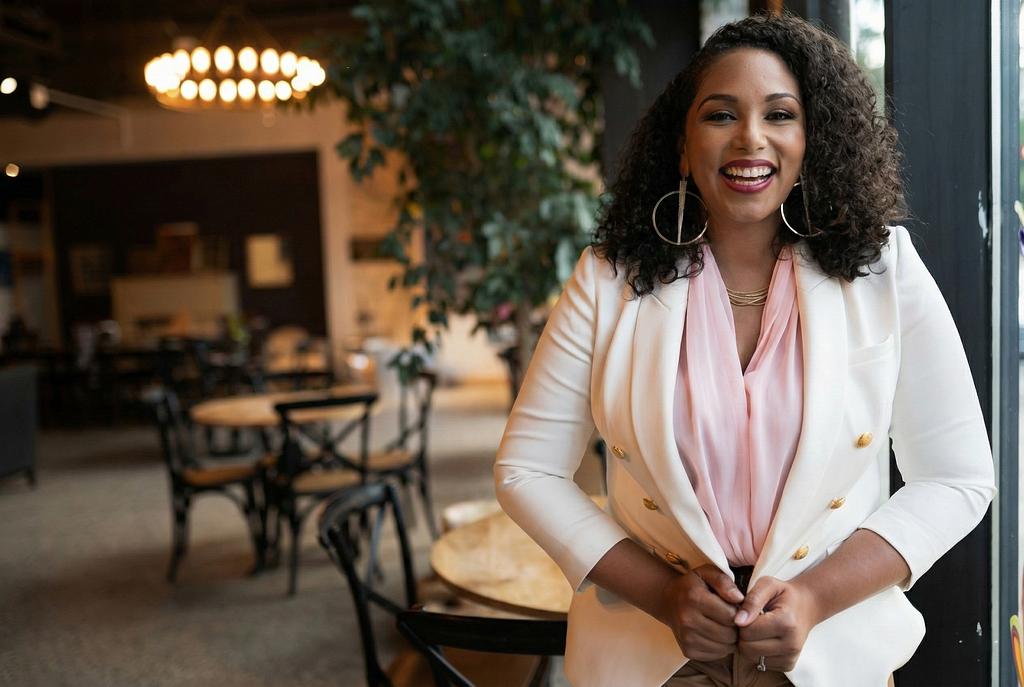
As a part of our series about “the 5 steps we can take to win back trust in journalism” we had the distinct pleasure of interviewing Georgia Fort. Georgia is a national thought leader, independent journalist, and entrepreneur redefining how news is told — and who gets to tell it. Her work bridges frontline reporting with executive-level strategy to rebuild media infrastructure from the ground up.
She was one of only two journalists in the courtroom when Derek Chauvin was sentenced, bringing critical coverage to a historic moment. A three-time Emmy Award-winning news producer and journalist, Georgia has earned recognition for her commitment to truth and equity in storytelling.
As a visionary media founder, she is building a network for independent journalism, empowering diverse voices and transforming the future of news.
Thank you so much for joining us. Before we dive in, our readers would love to ‘get to know you’ a bit better. Can you share with us the “backstory” about how you got started in your career?
I always tell people that the question, “What do you want to be when you grow up?” is asked in kindergarten classrooms across the country, and no one ever says “independent journalist,” including me. My path into journalism was completely happenstance.
I started in radio, both nonprofit and commercial, and eventually transitioned into TV reporting and anchoring. During my last job in mainstream media, I wasn’t given maternity leave, which left me searching for a new position. In Minnesota, where I’m from, that proved challenging.
After the murder of George Floyd, I saw how much coverage was missing context, leaving people out, and getting critical details wrong. That was the moment I decided to start reporting independently. That decision led me to become one of only two journalists inside the courtroom during Derek Chauvin’s sentencing. That experience changed the trajectory of my career and confirmed my calling.
Do you have a favorite book that made a deep impact on your life? Can you share a story?
One of my favorite books is The Rose That Grew From Concrete by Tupac Shakur. The poem the book is named after has had a profound impact on my life. It symbolizes how beauty can bloom from the hardest places and how greatness can rise out of desolation.
As someone who faced significant adversity growing up, I found hope in that metaphor. It taught me that where you start doesn’t define where you’ll end up, and that your circumstances don’t have to determine your destiny. Tupac captured that truth with such raw poetry.
Can you share the most interesting story that occurred to you in the course of your career?
One of the most meaningful experiences of my career was being in the courtroom for Derek Chauvin’s sentencing. It wasn’t just about witnessing a historic moment. It was about representing independent Black media in a space where our presence is often missing.
Sitting there, I felt the weight of history and the responsibility of narrative justice. It reminded me why I do this work: to make sure our stories are told fully, accurately, and with humanity.
Can you share the most humorous mistake you made when you first started, and what you learned from it?
One Fourth of July, I was assigned a story about fireworks safety. To make the story more engaging, I decided to light a sparkler on camera during my live shot. The only problem was that I don’t smoke and didn’t own a lighter. So, I borrowed one but didn’t test it beforehand.
When it came time to go live, the lighter wouldn’t work. For a full minute and a half, I kept trying to spark it while delivering my lines. You could hear the clicks on air the entire time. When I tossed it back to the anchor, who was a brand-new graduate filling in that day, he cracked a joke, and we both burst out laughing live on TV.
Looking back, I can’t help but laugh. That moment taught me two lessons: always test your equipment, and never take yourself too seriously.
What are some of the most interesting or exciting projects you’re working on now?
Right now, we’re launching an immersive multimedia storytelling project called The Freedom Series, which explores how freedom is being defined, challenged, and reclaimed in America today. It’s urgent, timely, and an invitation for newsrooms to broaden their lens beyond crisis to include context and humanity.
On a local level, we’re designing a permanent home for Power 104.7 FM, the radio station we own on the East Side of Saint Paul. It’s more than a studio. It’s an investment in community infrastructure. We’re showing what it looks like for media outlets to truly be embedded in, accountable to, and giving back to the communities they serve.
What advice would you give to your colleagues in the industry to thrive and not burn out?
Take time off regularly. It’s okay to miss a story. It’s not okay to neglect yourself. In journalism, self-sacrifice is often glorified, but it’s not a requirement for excellence. The work will always be there, but your peace, your health, and your family are irreplaceable.

Ok, thank you for that. Let’s now shift to the main parts of our interview. According to this Gallup poll, only 36% of Americans trust the mass media. This is disheartening. As an insider, are there 5 things that editors and newsrooms can do to increase the levels of trust? Can you give some examples?
1. Be in relationship. Don’t parachute into communities only during moments of crisis to extract pain. That’s not journalism; that’s exploitation. Think of it like dating. If someone only calls when they need something, would you trust them? Examine your top stories this year. How many highlight joy or resilience in those same communities?
2. Practice consent. In independent journalism, consent is standard practice. Asking permission to record, film, or photograph someone before doing it gives people autonomy and dignity, especially during moments of trauma. Legally you might not need it, but ethically, it’s essential.
3. Offer a preview before publishing. Imagine a world where sources could review stories for factual accuracy before publication. I’m not saying relinquish editorial control. I’m saying that giving people a chance to flag inaccuracies could dramatically reduce misinformation and strengthen relationships.
4. Create a process for narrative justice. When coverage gets something wrong, especially in cases of wrongful conviction or misrepresentation, newsrooms need a way to reconcile that publicly. Accountability builds credibility.
5. Be more human. AP Style says to use last names after first mention, What is this, the army? but who actually talks like that? Referring to people by their first names is conversational, warm, and humanizing. If we want audiences to trust us in an age of AI, we have to be less like robots and instead just more human.
What can ordinary news consumers do to identify disinformation and help prevent its spread?
Check for the same story on at least three credible sites. Go directly to the social media pages of people quoted in the story to see what they’re saying firsthand. And most importantly, slow down. Don’t share until you’re sure.
What are five things you wish someone told you when you first started, and why?
1. It’s okay to make mistakes. I entered an industry full of people projecting perfection. When I made mistakes, I was hard on myself, and others were too. But mistakes are part of growth. Learn, evolve, and keep going.
2. Don’t find your validation in your work. Know who you are beyond the newsroom. When your identity is rooted in purpose and not position, you can withstand industry turbulence.
3. Don’t be afraid to ask for more money. Early in my career, I worked in small markets earning barely above the poverty line, often sharing apartments with coworkers. Meanwhile, stations made millions on political ads. Your employer may not volunteer to pay you fairly, but they can if you ask.
4. Take time for yourself. I spent years using vacation days for side work or professional development. I missed holidays and family moments chasing airtime. Looking back, I wish I’d made rest and family time sacred.
5. Dream bigger. My mom always told me I could do anything I set my mind to, but for years, I limited my dreams to what felt financially possible. Going independent showed me that the ceiling was imaginary. I just needed to imagine higher.
You are a person of enormous influence. If you could start a movement that would bring the most amount of good to the most amount of people, what would that be? You never know what your idea can trigger. 🙂
If I could start a movement, it would be one to end hatred. That might sound idealistic, but I believe hatred is the root of racism, class wars, homophobia, and so much violence. Without hatred, policy and governance could finally be guided by what is right, just, and humane. It’s the kind of movement that could heal our nation and the world.
How can readers follow you on social media?
You can find me on all platforms at @byGeorgiaFort, or visit GeorgiaFort.com
Thank you so much for your time you spent on this. We greatly appreciate it, and wish you continued success!
Georgia Fort On 5 Steps We Can Take to Win Back Trust in Journalism was originally published in Authority Magazine on Medium, where people are continuing the conversation by highlighting and responding to this story.