How Lily Bi Is Leading AACSB International and Reimagining Higher Education for a Future-Ready Generation
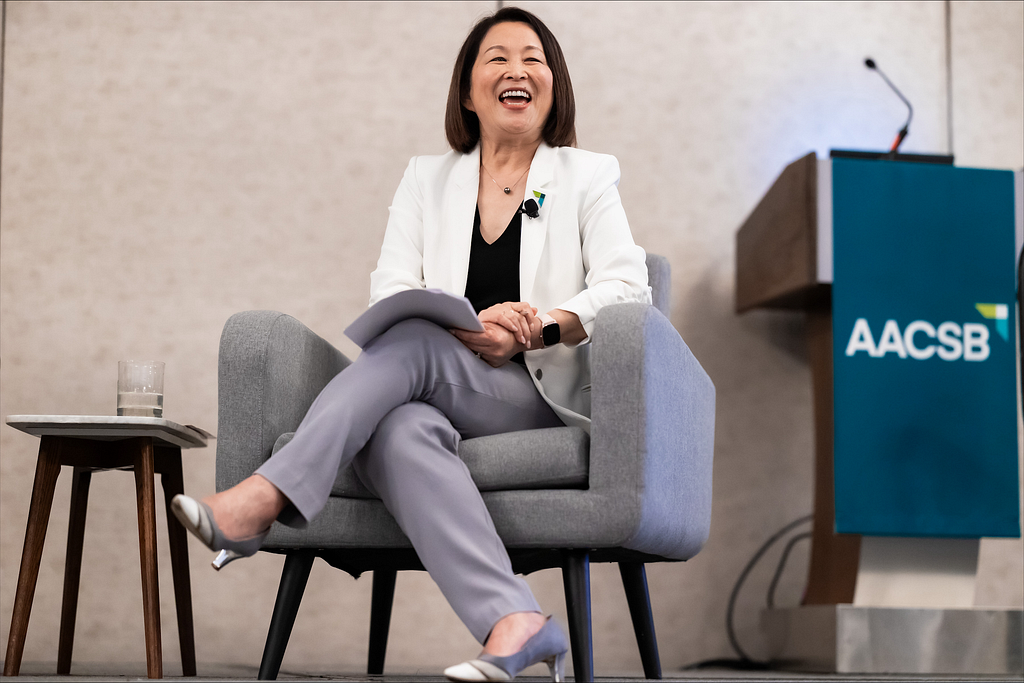
…I believe college education is one of the best tools we have to prepare the younger generation to enter the job market. In addition to equipping students with the knowledge and skills needed to step into the workforce, AACSB-accredited schools aim to develop young adults with creative thinking, adaptability, and the lifelong learning skills necessary to navigate changing career landscapes so they can be future ready…
As part of our interview series about 5 Things That Federal, State & Local Governments Can Do To Help Improve The Education System, I had the pleasure to interview Lily Bi.
With a career spanning multiple continents, Lily Bi is passionate that college education is one of the best tools for preparing young people to enter the workforce. As the CEO and President of AACSB International, the foremost global accrediting body for business schools, she supports a network of over 1,000 accredited institutions, 553 of which are based in the US. Her insights have featured in publications such as Forbes, the Financial Times, Poets&Quants, and more.
Can you share the most interesting story that happened to you since you started your career? Can you tell us what lesson you learned from that?
A decade ago, I decided to leave my job in the US and pursue a new opportunity in Japan. I embarked on a journey that shaped my career, involving an interview with Kirin Holdings, a prestigious and traditional Japanese company with a history spanning over a hundred years. I flew to Tokyo and went through a couple of interviews. The head of HR posed a seemingly simple question: would I prioritize the company of friends or the quality of food when going out for dinner? Food! My instinctive preference for food elicited laughter and an acknowledgment from the interviewer. Kirin is a beverage and food company. I was a perfect match for their culture — a culture that values good food and authenticity. This moment of genuine exchange not only set a relaxed tone for the rest of the interview, but I also got the job offer. It proved the power of authenticity — being true to who you are rather than upholding the ideal of a perfect person — and I’ve carried that principle throughout my career.
Are you working on any exciting new projects now? How do you think that will help people?
I’ve been working on many projects over the past ten months in my new role as President and CEO of AACSB. One of the biggest is my work with our Board of Directors to establish a new vision and strategic plan for AACSB. To get to this point, I went on an international learning journey where I took eight different “CEO Learning Tours” and spoke with over 100 deans individually to learn how AACSB can continue to work collaboratively with them. As a result, we have established our three-year strategic plan, approved by the board. The new plan will greatly enhance not only AACSB as an organization but the 1,800+ member schools we serve globally. We believe the new plan will enhance AACSB’s value to members, define new ways of delivering more benefits from our services, and support our efforts to be the voice of business education, globally.
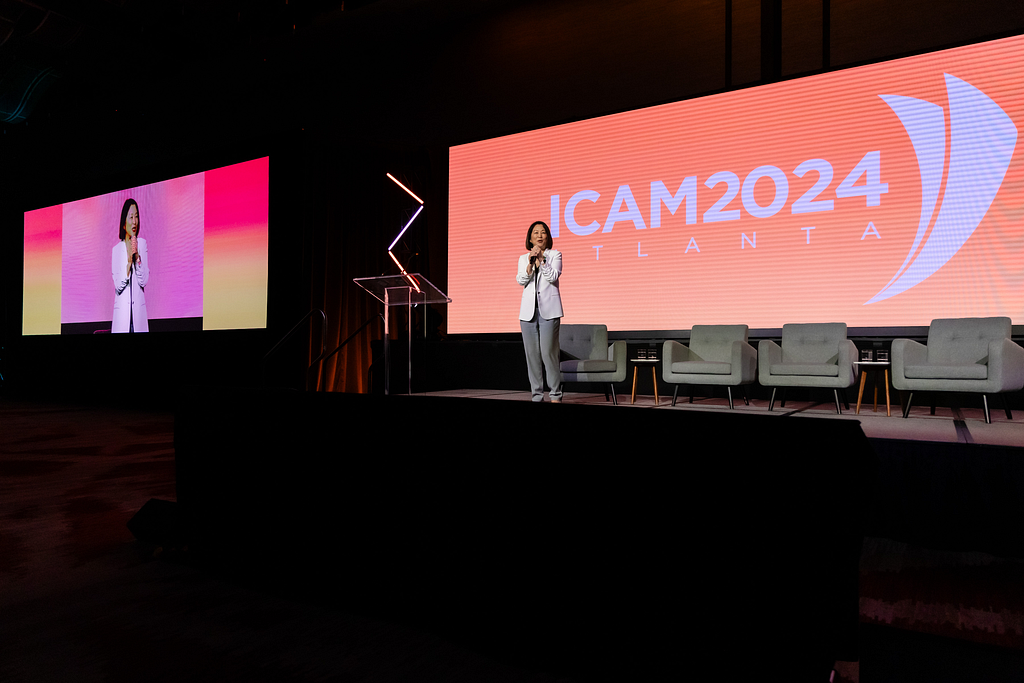
Can you briefly share with our readers why you are an authority in the education field?
AACSB, recognized as the foremost authority in business education, has been the largest and longest-standing association dedicated to advancing business schools for over a century. I have over 30 years of experience in strategy setting, global growth and development, and technology innovation. I’ve worked for and with corporations and nonprofit associations across the globe. My role is to ensure that AACSB continues to adapt to the new era and enhance its impact globally.
Ok, thank you for that. Let’s now jump to the main focus of our interview. From your point of view, how would you rate the results of the US education system?
Overall, the U.S. education system excels in many areas, such as fostering creativity, critical thinking, and innovation. It has made significant contributions to society. Higher education in the U.S. is at a crossroads, with many challenges and opportunities in the upcoming years. The demographics of higher education learners are changing. The population of 18-year-olds entering colleges and universities is shrinking, which is naturally causing a decline in enrollments. One view is that higher education is not as valuable as it once was. I strongly disagree with that view. Education goes beyond skill training and knowledge transfer, it means rising up and enlightenment. I believe college has a systemic benefit; it helps young adults open their minds and grow into successful members of society, as they become the next best versions of themselves during that time.
Can you identify the 5 key areas of the US education system that should be prioritized for improvement? Can you explain why those are so critical?
· Here are five emerging trends we’re seeing among business schools that other schools should take note of:
· Interdisciplinary-Expand beyond the confines of multidisciplinary education and research in business schools; create intersections with other disciplines like science, engineering, humanities, and more.
· Interconnected-Maintain a strong connection with businesses and society to ensure relevance and impact; bridge existing gaps to foster current, relevant learning, responsible research, and effective practices.
· Internationalized-Source students internationally; promote
global exchanges between schools and
faculties. Enrich the learning experience
through enhanced cultural understanding and foster meaningful research collaborations.
· Intergenerational-Expand beyond traditional student demographics. Attract lifelong learners from various generations and provide a flexible, dynamic learning experience.
·Integrated- Leverage technology in curriculum, research, and pedagogy; empower learners with emerging tools like AI.
Do you think it is the role of our educational system to prepare young people to enter the job market and labor force? If so, what can be done to better prepare young people for their future careers?
I believe college education is one of the best tools we have to prepare the younger generation to enter the job market. In addition to equipping students with the knowledge and skills needed to step into the workforce, AACSB-accredited schools aim to develop young adults with creative thinking, adaptability, and the lifelong learning skills necessary to navigate changing career landscapes so they can be future ready.
Many skill-specific credentials and certificates are offered for quick learning. While those have benefits like learning that knowledge or skill very quickly, and sometimes can be lower cost, they are not a replacement for a college education. In the concept of “known knowns, known unknowns, and unknown unknowns,” college education goes beyond teaching known unknowns — we know we lack knowledge in particular areas. Unknown unknowns — things we do not know that we do not know, are unexpected and unpredictable, and we can’t prepare students for those. College education has and should do more in teaching more reasoning and thinking so students gain the ability to ask the right questions, identify and solve future problems, or even apply the learning to a new career. Additionally, college offers a big network, not only through the faculty and staff you engage with, but also through interactions with peers. Your whole being is transformed during that time, as you learn what the right social behavior should be, how to think and speak on your own, and how to be a good human for the benefit of society. It’s a transformational time.
This is the central question of our interview. Based on your research and expertise, can you please suggest “5 Things That Federal, State & Local Governments Can Do To Help Improve The Educational System?” Can you please share a story or example for each?
Higher education institutions are fundamentally designed to serve society by educating individuals, generating knowledge, and fostering social progress. Federal, state, and local governments have offered much more support, especially in the financial area in recent years. However, what they currently offer is simply not enough. Higher education institutions need the government’s support, which can be broken down into four categories:
· Provide More Funding-Higher education institutions need significant financial support from the government to upgrade facilities and support cutting-edge research projects. For example, the federal government could increase grants to universities for developing research centers that foster innovation. This would not only enhance the quality of education but also keep institutions competitive on a global scale.
· Expand Access to Financial Aid-Making higher education more accessible can be achieved through increased financial aid. It can significantly impact enrollment and completion rates. This can involve expanding scholarship programs, reducing interest rates on student loans, or offering more grants to low-income students.
· Promote Lifelong Learning-In the technological era, the workforce needs to reskill and upskill from what they learned 20 years ago. Many countries and governments are ahead of the U.S. in this area; they have promoted, encouraged, and funded lifelong learning opportunities. For example, the Singapore government launched initiatives aimed at encouraging older professionals, managers, executives, and technicians to retrain and adapt to changes in the job market. They provide opportunities for those aged 40 and above to gain new skills relevant to key growth sectors.
· Encourage Academic Agility-Many have said academic institutions need to keep up with the speed of changes in business and society. Governments can play a significant role in fostering academic agility. Governments can implement policies that encourage or require educational institutions to update curricula and adopt new teaching methods. This might include setting standards that prompt regular curriculum reviews or offering incentives for institutions that innovate.
Can you please give us your favorite “Life Lesson Quote”? Can you share how that was relevant to you in your life?
There’s a quote on the wall of my doctor’s office that has really resonated with me lately. It says, “Exercise benefits your body, stillness benefits your mind.” I believe it was adapted from Sakyong Mipham as part of his book on meditation. There is so much chaos and negativity in the world, and it can be hard to focus. Stillness becomes essential for all of us to stay true to ourselves and focus on the most important thing we set to do. There is a way to be powerful without being forceful.
We are blessed that some of the biggest names in Business, VC funding, Sports, and Entertainment read this column. Is there a person in the world, or in the US, with whom you would love to have a private breakfast or lunch, and why? He or she might just see this if we tag them!
I would love to have coffee with Jensen Huang, the creator of the most powerful GPU chips in the world. Jensen founded NVIDIA, and its technology drives the advancement of AI today. As a first-generation American immigrant, he went through numerous challenges but still was able to create his own success. He took the time to build a great team in addition to an important product, and now, no one can compete. I appreciate his determination that you must give “your all” in everything you do. Jensen has steered NVIDIA through various industry shifts, from video games to GPU computing and AI. If I had a chance to have lunch with him, I would ask him how he continues to be adaptive in the ever-changing technological world. I would welcome his wisdom as I lead AACSB, an organization with a hundred-year legacy, to adapt and thrive in the new era.
How Lily Bi Is Leading AACSB International and Reimagining Higher Education for a Future-Ready… was originally published in Authority Magazine Europe on Medium, where people are continuing the conversation by highlighting and responding to this story.