Impactful Communication: Gwen Mdinaradze of EdBridge On 5 Essential Techniques for Becoming an Effective Communicator

Stories create meaning. Data informs, but stories transform. They allow people to see themselves in the message and remember it long after the conversation ends. I don’t sell products or position EdBridge as a training vendor. We change lives through education. Through the learning leaders who partner with us, we give entire organizations the opportunity to grow in ways that align with how people actually learn. Stories help people understand that learning is not an expense — it’s an investment in human potential and future capability.
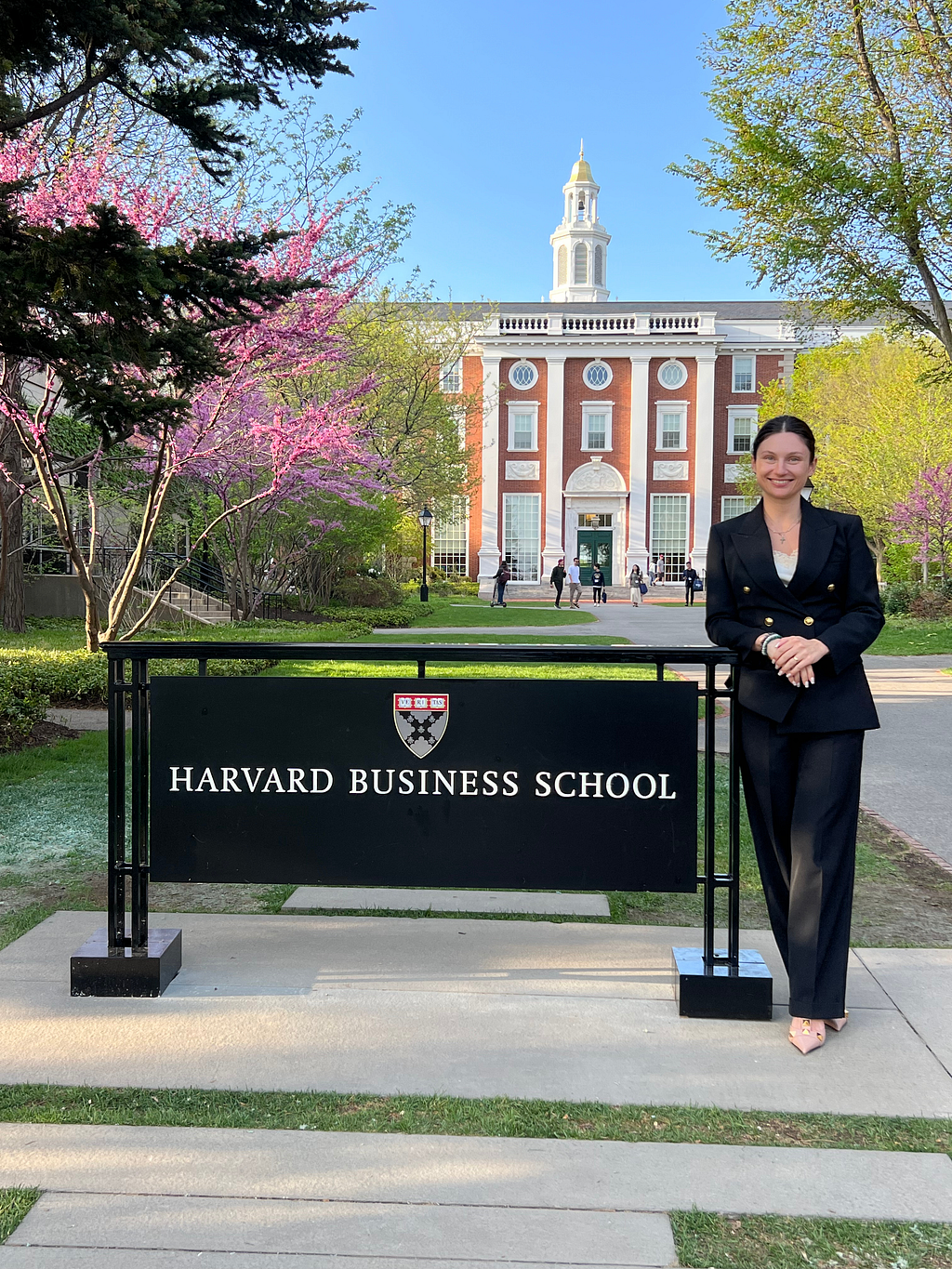
As a part of our series about “5 Essential Techniques for Becoming an Effective Communicator”, we had the pleasure of interviewing Gwen Mdinaradze, the Founder and CEO of EdBridge, a learning consultancy that designs enterprise learning ecosystems to close leadership gaps, strengthen culture, and translate learning outcomes directly into organizational growth, performance, and measurable ROI. A Harvard alumna and doctoral student at the University of Pennsylvania, Gwen blends behavioural science with executive pragmatism to reimagine how organizations learn, grow, and prepare for the future of work. Through her work, she is redefining learning not as training events, but as systems that change careers, organizations, and lives.
Thank you so much for joining us in this interview series. Before we dive into our discussion about communication, our readers would love to “get to know you” a bit better. Can you share with us the backstory about what brought you to your specific career path?
My career path was shaped less by a single decision and more by a series of lived experiences. I immigrated to Canada, struggled to find opportunity, and quickly realized that education was the one lever that consistently changed outcomes. I saw how access to the right learning, at the right moment, could accelerate careers, restore confidence, and open doors that seemed permanently closed. Over time, I recognized that my work needed to evolve beyond one-time keynote engagements into a clear life purpose. That realization led me into organizational leadership and learning — not because I wanted to work in “training,” but because I wanted to design systems that help people grow in real, tangible ways. EdBridge was born from that belief: that learning, when architected intentionally, can become a strategic force for both human and business progress. A pivotal moment in that journey was completing my first online course at Harvard Business School Online. It fundamentally changed how I approached entrepreneurship and how I led my firm. It sharpened my thinking around strategy, execution, and scale, and made me realize the power of structured, research-informed learning. That experience led me to pursue my master’s degree at Harvard, and later my doctorate at the University of Pennsylvania, where my research now focuses on learning ecosystems and how learning translates into sustained organizational performance. When people underestimate the power of online education, I often point to my own experience- online and hybrid learning changed my life and have been transformational for me as an entrepreneur, an immigrant, and a mother of three children.
Can you share the most interesting story that happened to you since you started your career?
One of the most meaningful experiences in my career has been mentoring aspiring founders who want to enter the consulting or speaking space. Many come in believing success is about branding or visibility. What they actually need is clarity of purpose, intellectual rigour, and the courage to build credibility over time. Watching individuals move from uncertainty to confidence, from ideas to impact, has been incredibly rewarding. Equally powerful are the moments when organizational learning translates into personal transformation. I’ve seen employees step into leadership for the first time, regain belief in themselves, or discover career paths they didn’t know were possible — simply because the learning system we built finally worked for how they learn. Those moments remind me that my work isn’t about programs or frameworks; it’s about changing lives through education, at scale.
You are a successful business leader. Which three character traits do you think were most instrumental to your success? Can you please share a story or example for each?
The first trait is perseverance. I never stopped trying, even when doors were closed repeatedly. Early in my career, I heard “no” far more than “yes,” but each rejection became data rather than a verdict. That mindset allowed me to keep refining my approach instead of abandoning my ambition. The second is intellectual humility. I have always been willing to learn from academics, practitioners, clients, and my failures. This openness helped me bridge the gap between theory and practice and build credibility across very different audiences. I feel the greatest fulfillment in rooms where I am the least experienced or least educated, because those environments push me to grow professionally. As an entrepreneur, I’ve been fortunate to experiment constantly at EdBridge. Every failure becomes a learning experience, and that continuous learning is what allows us to grow and remain distinctive in the learning space. The third is purpose-driven leadership. Every major decision I’ve made has been anchored in impact and life-time purpose, not ego. When your work is rooted in service — helping others grow, perform, and thrive — it creates resilience during difficult moments and clarity during periods of growth.
Ok, thank you for that. Let’s now jump to the primary focus of our interview. Let’s begin with a basic definition so that we are all on the same page. How would you define an “Effective Communicator?” What are the characteristics of an effective communicator?
An effective communicator creates understanding, not just information. I try to apply many of the principles I learned from Dale Carnegie’s work, which I highly recommend to anyone looking to strengthen their communication skills. Being a good listener is the foundation of effective communication. Strong communicators listen carefully, adapt to the situation, ask the right questions to better understand the viewpoint, and speak with clarity and purpose. They stay focused on their audience, remain emotionally aware, and communicate with clear outcomes in mind. Communication is successful only when it helps people think differently, feel differently, or take action.
How can one tailor their communication style to different audiences or situations?
It starts with empathy and context. You need to understand what your audience cares about, what pressures they face, and what decisions they need to make. A boardroom conversation requires a different cadence, vocabulary, and evidence base than a team meeting or a classroom. Tailoring communication is not about diluting your message; it’s about translating it into a language your audience can actually understand and apply to their work or learning environments the next day.
Can you provide an example of a time when you had to adapt your communication style to reach a particular audience successfully?
When working with senior executives, I focus on clear outcomes, business impact, and decision trade-offs, while still grounding the conversation in real examples from EdBridge clients as case studies. With employees or emerging leaders, I spend more time connecting the message to their day-to-day work and challenges. Every learning experience we design is grounded in confidential qualitative and quantitative data collected through assessments. These insights shape the way we communicate, ensuring that each learning ecosystem is tailored to the organization’s specific needs, context, and challenges, rather than relying on generic models or one-size-fits-all solutions.
How do you handle difficult or sensitive conversations while maintaining open and effective communication?
I approach sensitive conversations with honesty, compassion, and structure. I name the issue clearly, acknowledge emotions without amplifying them, and keep the focus on shared goals. Psychological safety doesn’t mean avoiding discomfort; it means creating enough trust that discomfort leads to growth rather than defensiveness. EdBridge has over 100 team members, and it is crucial for me as a leader to foster psychological safety and a positive workplace culture. Every employee knows that if a mistake is made, it is treated as a learning opportunity, and no one will be judged or humiliated.
In your experience, how does storytelling play a role in impactful speaking? Why do you think stories are effective in communication?
Stories create meaning. Data informs, but stories transform. They allow people to see themselves in the message and remember it long after the conversation ends. I don’t sell products or position EdBridge as a training vendor. We change lives through education. Through the learning leaders who partner with us, we give entire organizations the opportunity to grow in ways that align with how people actually learn. Stories help people understand that learning is not an expense — it’s an investment in human potential and future capability.
Here is the main question of our interview. What are your “5 Essential Techniques for Becoming an Effective Communicator”? If you can, please share a story or an example for each.
1. Start with intention.
Be clear and know exactly what you want your audience to walk away thinking, feeling, or doing. Every message should serve that purpose and connect to their day-to-day work or lived experience.
2. Lead with listening.
The best communicators listen before they speak. Taking time to understand the audience, their challenges, and their priorities makes the message more relevant and builds trust.
3. Translate complexity into clarity.
Much of my work involves complex systems, data, and research. My responsibility is to turn that complexity into clear, practical insights that people can actually use in their work.
4. Connect logic to emotion.
Facts and logic are important, but people act when they also feel understood and motivated. Effective communication balances clear reasoning with an understanding of human experience.
5. Close the loop.
Strong communication ends with alignment. This means confirming understanding, clarifying next steps, assigning ownership, or creating space for reflection so the message leads to action.
How do you integrate non-verbal cues into your communication? Can you provide an example of its importance?
I pay close attention to non-verbal cues because they often carry more weight than the words themselves. How we stand, the eye contact, where we place our hands, how quickly we speak, and whether we allow silence all shape how a message is received. If those signals don’t match the words, people sense it immediately. In practice, this means being very intentional about my presence, especially in high-stakes settings. I slow my pace, maintain steady eye contact, and use pauses instead of filling every moment with words. A pause can signal confidence, give people time to process, and show that I’m comfortable with the message I’m delivering. I’ve seen this matter most in executive conversations and boardroom discussions. When leaders rush, fidget, or avoid eye contact, even strong ideas can lose credibility. When they slow down, sit grounded, and allow silence, their message carries more authority. Non-verbal communication isn’t about performance — it’s about alignment. When your body language supports your words, people trust what you’re saying and are more likely to act on it.
How has digital communication changed the way you convey your messages? Are there any specific challenges or advantages you’ve encountered?
Digital communication has increased reach but reduced nuance. The advantage is scale and accessibility. The challenge is maintaining depth, tone, and trust. I’ve learned to be more deliberate with structure, clarity, and follow-up to ensure messages are not just seen, but understood.
Public speaking is a common fear. What techniques or strategies do you recommend to manage and overcome stage fright?
I have the privilege of working with world-class public speakers, consultants, and Ivy League educators, and one insight stands out: confidence comes from preparation and purpose, not from being perfect. Focus on helping the audience rather than on how you are performing. When your attention shifts to the value you are providing, fear becomes easier to manage. Practice speaking out loud as many times as possible in front of the mirror. Record yourself speaking, then re-watch to fix errors. Be very clear on how you open and close, and remember that audiences want you to do well.
What additional resources do you recommend for individuals looking to improve communication skills?
I recommend learning from strong communicators across different fields, including business leaders, educators, and public speakers. Watching how they structure their messages, handle questions, and adjust to their audience can be very instructive. Seeking honest feedback from trusted colleagues, friends, or mentors is also important, as it helps identify blind spots and areas for improvement. In addition, investing in learning grounded in psychology and behavioral science can deepen understanding of how people process information and make decisions. Most importantly, communication improves through regular practice and reflection over time, not through quick fixes or shortcuts. There are many, but two people I consistently learn from are Michelle and Barack Obama. I closely observe their public speaking because they communicate with clarity, authenticity, and respect for their audience. Their ability to balance confidence with humility and substance with simplicity has strongly influenced how I think about effective communication.
You are a person of great influence. If you could start a movement that would bring the most amount of good to the most amount of people, what would that be? You never know what your idea can trigger. 🙂
My biggest dream is to build an educational center in Georgia for children from kindergarten through high school. A place where learning is personalized, practical, and humane. Students would explore entrepreneurship, technology, STEM, coding, languages, arts, critical thinking, and life skills — learning through simulations, case studies, peer groups, and hands-on projects. This would be a hub where children learn in ways that work best for them, not a one-size-fits-all model. The center would also provide healthy meals and snacks so students can focus on learning without worrying about basic needs. Education should unlock possibilities, not reinforce inequality.
How can our readers further follow you online?
Readers can find me on LinkedIn, visit edbridge.ca, or reach out directly at gwen@edbridge.ca. I always make time to connect with aspiring and experienced leaders alike, whether it’s to exchange ideas, explore collaboration, or support their growth. Meaningful conversations are where real impact begins.
Thank you so much for the time you spent doing this interview. This was very inspiring!
Impactful Communication: Gwen Mdinaradze of EdBridge On 5 Essential Techniques for Becoming an… was originally published in Authority Magazine on Medium, where people are continuing the conversation by highlighting and responding to this story.