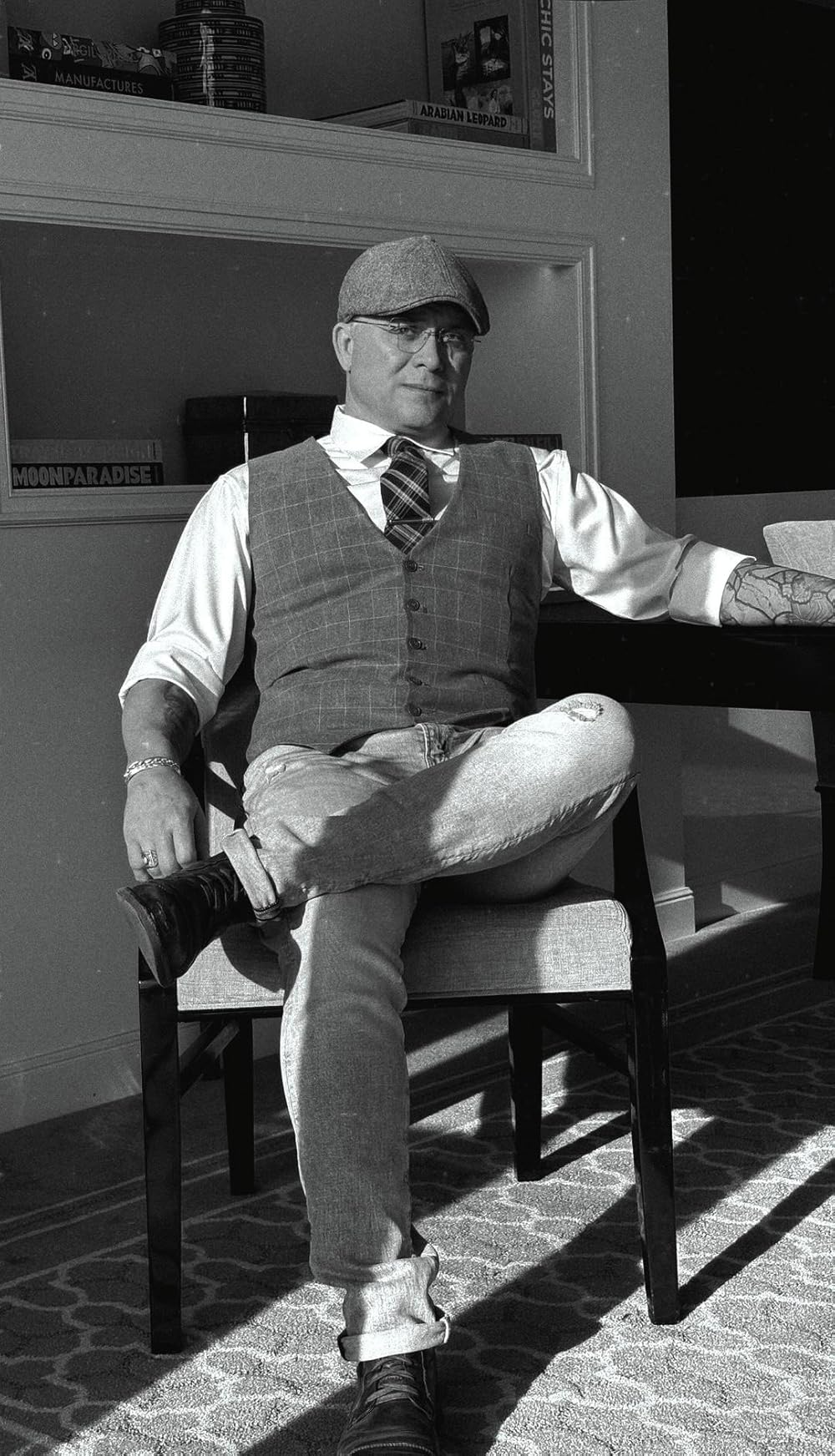
Indie Maverick Justin Hunt on Bypassing Hollywood Gatekeepers, Touring With Metallica and Why AI Will Never Have a Soul
“I don’t think a collective conglomerate of a billion people’s data is nearly as powerful as the lived experience of a singular person.”
I had the pleasure of talking with Justin Hunt. Long before Justin was trading phone calls with rock stars and Hollywood actors, Hunt was a kid bouncing around the backstretches of American racetracks. His upbringing belonged to a nomadic existence dictated by the seasons of quarterhorse racing. Both of his parents are in the horse racing Hall of Fame, with his father working as a jockey and his mother as a trainer. This meant life was a constant blur of changing scenery. Hunt went to six different schools during the first grade alone. Growing up on the move taught him to watch human behavior closely. He calls it “a fantastic study of human nature,” a skill that would later serve him well behind a camera lens.
The transient lifestyle eventually slowed down when Hunt entered high school. Right after graduation, he was hired by the local newspaper as a reporter while attending college. That print gig morphed into an internship for the local NBC News affiliate, which led to anchoring the weekend news while still in school. After a year off to play college football, he was back in the newsroom. He found himself drawn to the raw mechanics of storytelling, though the corporate environment began to wear on him. Twenty-three years ago, he walked away from the network structure to launch his own production company. To keep the lights on, the company took on a heavy load of industrial and corporate clients, building a footprint that stretches from New Mexico to Boston and up to Alaska. But while corporate videos paid the bills, Hunt’s focus remained fixed on cinema.
Making the leap into independent filmmaking is notoriously brutal, but Hunt approached it with a reporter’s stubbornness. His first documentary, American Meth, tackled the devastating impact of addiction. As an unknown director with no prior film credits, he managed to land Hollywood star Val Kilmer to narrate the project. When people ask how a first-time filmmaker pulled off that kind of casting coup, Hunt shrugs. “I simply called and asked. That’s it,” he says. He bypassed agents and managers entirely, using old reporting skills to track down the actor directly. The gamble worked, teaching him an early lesson about what was possible when operating outside traditional gatekeepers.
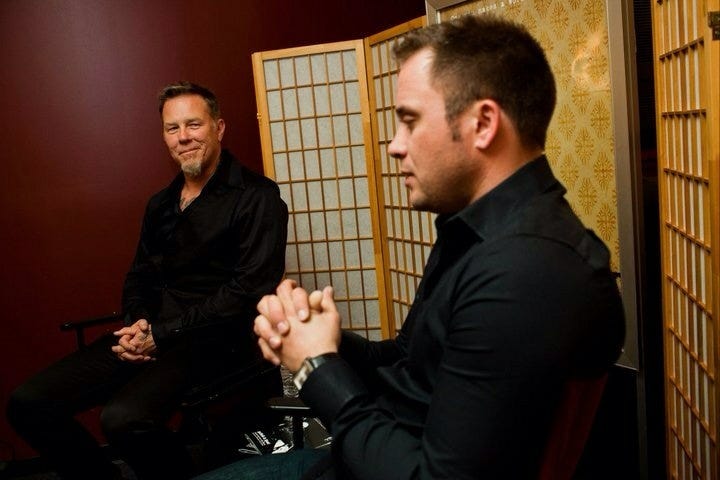
That same persistence shaped his next major project, Absent, a documentary exploring the cultural weight of disengaged fathers. The production hit a major roadblock when rock singer Sammy Hagar backed out of a scheduled interview just two days before filming. Hunt was disappointed, but the rejection opened an unexpected door. He managed to get Metallica frontman James Hetfield to appear in the film instead. Hetfield eventually narrated Hunt’s next documentary, and the two formed a lasting friendship. By 2018, Hunt found himself traveling on the road with the heavy metal icons. Reflecting on the journey from his small-town roots to stadium tours, Hunt notes, “When you think about a guy from a town of 3,500 people ending up on the road with Metallica 25 years later, it’s pretty wild.”
This refusal to accept defeat is central to Hunt’s operational philosophy. He describes himself as a “boat burner,” referencing the ancient military strategy of leaving no option for retreat. “If you want to take an island, you have to burn your boats,” he explains, noting that “no” and “impossible” are absent from his daily vocabulary. This mindset has kept him afloat through seven distributed feature films, operating largely outside the traditional Hollywood system. Currently, he is pushing forward with a new psychological drama screenplay titled Symbiosis, which has already picked up 19 festival laurels. Yet even with a proven track record, Hunt acknowledges that securing mainstream representation remains a frustrating game of “forceful advancement.”
In an era where technology is rapidly shifting how movies are made, Hunt holds a deeply skeptical view of artificial intelligence. He rejects the idea that software can replace the slow, painful process of human creativity. “When you can simply plug in a prompt in and let technology generate it for you, that isn’t craftsmanship,” he argues. For Hunt, true art requires real-world friction that data pools cannot replicate. He insists that data cannot replace actual human memories. “I don’t think a collective conglomerate of a billion people’s data is nearly as powerful as the lived experience of a singular person,” he says, pointing to his own history of interviewing serial killers, witnessing trauma as a reporter, and raising children alone as the primary fuel for his writing.
Looking at the broader landscape of modern filmmaking, Hunt remains critical of how the industry operates. He notes that when successful people reach the top, they rarely reach a hand down to help others up. He insists his own long-term goals are focused on lifting up emerging creators as he continues his climb through the independent ranks. For Hunt, survival in this business requires moving forward one foot at a time rather than searching for an easy path.
Yitzi: Justin Hunt, this is such a delight to meet you. Before we dive in and talk about your amazing work, readers would love to learn about Justin Hunt’s personal origin story. Can you share the story of your childhood, how you grew up, and the seeds and genesis for all the amazing work that has come since then?
Justin: I had a very unique, nomadic upbringing. My family was in horse racing — both of my parents are actually in the Hall of Fame for it. My dad was a jockey and my mom was a trainer, so we moved all the time. I think I went to six different schools just in the first grade. It was a unique environment to grow up in, and you learn a lot of interesting life lessons very early on. It’s a fantastic study of human nature, I’ll tell you that.
Eventually, we settled down when I was in high school. I went from high school directly into journalism, writing for the newspaper right after graduation. Then I transitioned into television and worked for NBC News for about 10 years. I had a good career there; I really enjoyed the storytelling side of it, though I didn’t care for the corporate side.
After that, I started my company about 23 years ago. Since then, I’ve done a couple of thousand productions for corporate clients and seven feature films. So, I’ve been busy.
Yitzi: A couple of thousand — that’s unbelievable.
Justin: We have a lot of industrial clients. I feel it’s a testament to the quality of our work that we’ve retained many of those clients for over a decade, some for over 15 years. We’ve done a massive amount of work for them. Our footprint spans from here in New Mexico to Boston and all the way to Alaska. That’s how the bills get paid, but my true passion is narrative film. It started out in documentary, but my heart is definitely in narrative.
Yitzi: Please tell us about the exciting projects you’re working on now.
Justin: We just finished a docudrama for a client that falls under the category of a feature film. Right now, I’ve got a screenplay that has done incredibly well in competitions; I think we’ve collected 19 Laurels for it so far. I’m trying to stay out of the Hollywood vortex and do things on my own, which is more challenging but ultimately more rewarding.
As I get older, I want to lean into writing more, so I’m looking for avenues to pursue that. It’s a tricky game. You need a manager and a rep, which is easier said than done no matter how successful you are. You would think having seven distributed, successful films under your belt would make it a no-brainer, but it’s just not that easy.
It’s what you call forceful advancement. You just put one foot in front of the other and keep pushing because that’s how you get where you want to be. I’m focused on getting Symbiosis done, which is our current feature, alongside several other writing projects, all while continuing to push the corporate business. There’s no rest for the weary.
Yitzi: You probably have some incredible stories from your career and all the different projects you’ve been on. This might be hard to single out, but can you share two stories with our readers that stand out in your mind?
Justin: Absolutely. One was the first documentary I ever did, called American Meth, which was narrated by Val Kilmer. That was a massive eye-opener for me regarding what I was capable of achieving when I set my mind to it. I was an unknown filmmaker who had never made a movie before, yet I landed Val when he was near the height of his popularity. People always ask how I got Val Kilmer to narrate my film, and I love the answer: I simply called and asked. That’s it. I circumvented his management, used some old reporter skills to track him down, and asked. The very next day I got a call back saying, “Yep, no problem.” That unique experience not only allowed me to work with Val but showed me what was truly possible.
The other story involves Metallica. Growing up, I was a huge Metallica fan. Through some very unusual circumstances, I managed to get James Hetfield to appear in a documentary I made about absent fathers. Afterward, he agreed to narrate another documentary I did, and we became good friends. In 2018, I was actually asked to go on the road with them. When you think about a guy from a town of 3,500 people ending up on the road with Metallica 25 years later, it’s pretty wild. Those two experiences are deeply etched in my mind, and I wouldn’t trade them for anything.
Yitzi: Unbelievable. There’s a saying that “no” is not rejection, but redirection. Do you have a story like that, where receiving a “no” led to an even better opportunity or greater success?
Justin: It’s funny you ask that. For Absent, my documentary about disengaged fathers, I originally had Sammy Hagar lined up for an interview. About two days before I was scheduled to fly out, he backed out. At the time, I felt devastated. It felt like a total killer. But had he not backed out, and had I not stayed positive in my pursuit, I never would have crossed paths with James. With all due respect to Sammy — everyone loves Sammy — Metallica is massive.
I always believe that God has a plan. One of the maxims I live by is, “If you want to make God laugh, go ahead and announce your plans.” When one door closes, it doesn’t mean you are out of options; it just means a better option might be waiting for you.
I love your quote about “no” because I have a similar philosophy: I’m a boat burner. If you want to storm an island, you have to burn your boats. “No” and “impossible” are simply not in my vocabulary. You have to think that way to be successful in anything. If your gut and your heart tell you that this is what you should do, you must follow it regardless of the obstacles.
Yitzi: What’s been the most challenging project or role you’ve taken on so far, and why?
Justin: When you look at the stable of films that I have, I did a documentary on meth addiction, I did a documentary on absent fathers, and I did a documentary on pornography addiction. Those aren’t really date night movies, but they are stories that needed to be told. I think the biggest challenge was this latest project, which is a docudrama that we did on grooming and s*xual assault in schools. That started out as a commissioned job that was just supposed to be a series of educational videos, but it turned into a feature-length docudrama that won almost 30 film festivals around the world. But it was such a challenging topic. It’s a heavy topic. It’s a difficult topic. And when you’re talking to people from victims to families to convicted offenders, every one of those interviews over the years sticks with you in some way, and they chip away at you, and they temper you. That particular piece, what had to go into it, and some of the stories we had to hear were really rough. But for me, keeping my eye on what the outcome was going to do, the outcome of a project like that is going to have a massive impact on a lot of people over a long period of time. Ultimately, that’s what matters the most, and that made it worth it in the end.
Yitzi: Justin. Because of your amazing work, you’ve been blessed with a lot of success. Looking back to the beginning when you first started filmmaking and launched your career, you must have learned a lot over the years. Can you share five things you’ve learned that would be really helpful for somebody starting out today?
Justin:
- The first one that comes to mind is that authenticity will get you farther than anything else. Being an authentic person — caring about others, being honest, and being forthcoming — is probably the most valuable piece of advice I have given to people over the years.
- The second is what we discussed earlier: remove the word “no” from your vocabulary. If your heart and gut tell you something needs to be done, you have to pursue it without accepting “no” as an answer.
- The third goes back to that authenticity theme. When you are on a film set with a massive crew, you have to remember that everyone has value and everyone deserves respect. You must treat people well, whether it’s the lead actor in your film or the PA fetching chips and sodas. Creating a sense of shared ownership with your crew yields much better results than chest-thumping and egomania. At the end of the day, it’s a job, and everyone wants to feel like they are part of something important. As the leader, you are the one who either instills that inspiration or drains it from them.
- The fourth is inspired by an illustration I’ve kept for at least 30 years. It shows a tunnel with a man walking away from a massive horde of diamonds, missing them by just a thin sliver of dirt. It speaks loudly to me because one more swipe of the pick and he would have made it. Every time I want to give up — and there are plenty of times you want to — I think of that silly little cartoon. Sticking to your plan and remembering that the next swipe might be the one is vital.
- The final thing is that if you have an idea and it scares you, you’re on the right track. It’s very easy to take the road more traveled, but great art comes from people who face the things that terrify them. Starting out on my first film, having never made a movie, tackling meth addiction, and working with Val Kilmer left me absolutely scared to death. Facing that fear is where real art comes from. When you pull it off, you know you’ve made something truly special.
Yitzi: What’s your reaction to all the new AI filmmaking tools coming out today?
Justin: Oh man, you’re going to get me in trouble on this one. I am not a fan. It has taken me 30 years of experiencing far more failures than successes to get to this point in my writing. When you can simply plug a prompt in and let technology generate it for you, that isn’t craftsmanship. It’s neat what it can do, and it certainly has unique utilities, but it results in watered-down, diluted art. It isn’t the true form.
There’s a saying that you cannot be what you have not experienced. You become a great artist through real-world experience, failure, and success; AI just feels like taking the easy road. A lot of people are doing major things with it, and ironically, Val Kilmer was recently at the center of that conversation with a project his estate approved. It just feels odd to me.
I don’t think AI possesses the authenticity of a human being’s lived experiences, successes, and failures. Art connects to our soul because we can feel what another human poured into it.
Yitzi: It’s a profound point that we appreciate art when we feel the effort another soul put into it.
Justin: Exactly. That’s not to say AI doesn’t have its uses or can’t create amazing things, but it will never have a soul. As someone who has interviewed serial killers, stepped over dead bodies, lived alongside meth addicts, and raised children on my own, those raw experiences are what go onto the page. I don’t think a collective conglomerate of a billion people’s data is nearly as powerful as the lived experience of a singular person.
Yitzi: That’s very profound. I love that. Thank you.
Justin: Thank you. That’s truly how I feel.
Yitzi: This is our final aspirational question. Justin, because of your amazing work and the platform you’ve built, you are a person of enormous influence. If you could spread an idea or inspire a movement that would bring the most amount of good to the most amount of people, what would that be? You never know how far your idea might spread.
Justin: That’s a great question. I think I’ll fall back on how difficult this industry can be on the feature side, and how rigged it can feel sometimes. Especially lately, while trying to secure a manager for my writing, I see so many entities and individuals monetizing other people’s hopes and dreams.
If I could spread any message, it would be for all of us to remain authentic and to actively use our successes to lift others up. Lately, I’ve noticed that when people reach the top of the mountain, they look out and say, “Oh my gosh, this view is beautiful. Good luck finding your way up here.” They don’t reach a hand down to help you up; they just commentate on how gorgeous it is from their peak.
If more successful people turned around and said, “Let me give back by helping you get here,” it would change everything. Mark my words — and I hope we get to put this to the test — if I reach that peak, that is absolutely what I will do. I want to selflessly take what I’ve learned and help others achieve what I’ve achieved, rather than just focusing on how I can benefit myself. We need a hell of a lot more of that.
Yitzi: Justin, how can our readers watch your latest film and past work? How can they best support you?
Justin: They are all available across various streaming platforms. Our website, www.wwpfilms.com, is the best place to view our titles. From there, you can use a site like justwatch.com to see exactly where they are currently streaming. Watching those films and supporting independent cinema is a great way to help.
Alternatively, if you happen to have $750,000 lying around and want to finance my next film, you can do that too — we would become best friends incredibly fast!
Visiting our website to track down our titles is the ideal route. Beyond that, just reach out. Whether you’re curious about our corporate operations, interested in our feature films, or you’re a manager or rep looking to talk, I am about as accessible as they come.
Yitzi: Justin, it’s been an amazing meeting. I wish you continued success, good health, and blessings, and I hope we can do this again next year.
Justin: Me too, man, and thank you very much. These were fantastic questions, and I hope the answers provide value to others. You’re doing a good thing here, buddy. You should be proud of yourself.
Yitzi: I appreciate it, Justin. It means a lot coming from you. Thank you so much.
Justin: Thanks, buddy. Have a good day.
Indie Maverick Justin Hunt on Bypassing Hollywood Gatekeepers, Touring With Metallica and Why AI… was originally published in Authority Magazine on Medium, where people are continuing the conversation by highlighting and responding to this story.