
Journalist Kavitha Cardoza, 2026 American Mosaic Prize Winner, on Media Humility and Why “We Have Not Been Good at Covering Certain Populations”
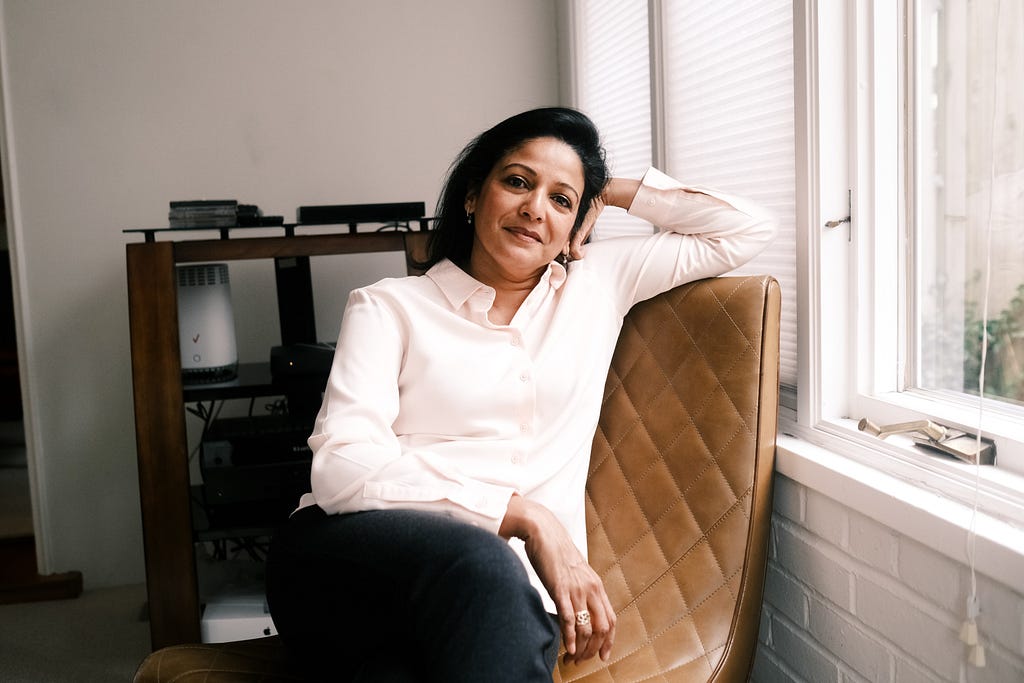
…I have a sign in my office, and I have always lived by this mantra: a society will be judged by how it treats its last, its least, and its littlest. I would love people to think through that lens. When something happens, I would love them to take a moment and see it through that lens. How does that action affect the least of us? In the end, awards are fantastic, but we will be judged as people and how we lived our lives…
I had the pleasure of talking with Kavitha Cardoza, a journalist who has spent her career proving that the quietest voices often have the most thunderous things to say.
In our media landscape obsessed with the loud, the powerful, and the immediate, Cardoza operates differently. She is a reporter who gravitates toward the edges of the map — rural towns, misunderstood communities, and the places where poverty is often sanitized out of view. She describes herself as “5′ nothing from India,” a woman who moves through the American landscape with the curiosity of an outsider and the tenacity of a beat cop.
Her journey to this point was geographical before it was professional. Born in England, raised in India, and eventually landing in the United States to study, Cardoza’s worldview is a patchwork of cultures. “I’ve definitely been influenced by different cultures, and I love traveling,” she told me. But it was her childhood nature — a trait that used to get her in trouble — that set her path. “I was very nosy as a child. I was always one of those kids to whom everyone said, ‘Don’t ask so many questions.’”
That nosiness turned out to be a superpower. Upon arriving in Illinois as a student, she noticed stains on the asphalt and asked a local what they were. The answer — “roadkill” — was a foreign concept to her. Instead of moving on, she turned it into a story, interviewing the man responsible for clearing the roads. It led to a moment that remains a defining metaphor for her life.
She found herself on the side of a highway with her subject — a 6’5″ African American man from the South. They seemed to have nothing in common. As traffic zoomed by at terrifying speeds, they needed to cross the road. “Without thinking, both of us just reached out, held hands, and ran across the highway,” she recalled. “We have such different experiences, beliefs, ideologies, and upbringings. Yet at the end of the day, that’s what we do: we hold on to the people next to us and try to make it across the road safely.”
This philosophy of connection drives her reporting, which often focuses on children caught in the gears of adult problems. She has covered undocumented children who hide under their desks at school, traumatized by memories of river crossings and violence. “These little bodies have seen and heard terrible tragedies,” she said, recounting stories of children who witnessed drowning or assault. She has also chronicled the lives of military families, where a seven-year-old boy told her that his father, returning with PTSD, was “no more” because the war had changed him so profoundly.
Cardoza’s work is heavy, often heartbreaking, but she approaches it with a clear-eyed empathy rather than sensationalism. She is drawn to the “last, the least, and the littlest” — a mantra she keeps on a sign in her office. This dedication was recently recognized with the 2026 American Mosaic Journalism Prize, a prestigious award for reporting on underrepresented groups. When she first got the call, she thought she was being pranked. “I was taken aback,” she admitted. But the recognition validated a career spent freelancing and fighting to tell stories that don’t always generate clicks but desperately need to be heard.
It hasn’t all been serious, though. Cardoza is the first to admit she has had to unlearn her own biases. She laughed while telling me about her assignment may years ago to cover the “Turkey Testicle Festival” in Illinois. Expecting a lighthearted food event, she arrived to find a biker rally full of men with tattoos and shaved heads. Terrified and clutching her microphone in a corner, she was ready to bolt. Then, a heavily tattooed man approached her — not to intimidate her, but to tell her he was a fan of public radio.
“He knew stories I had listened to,” she said. “I thought, ‘I will never again ever assume or have stereotypes of who people are or what they believe in.’”
Cardoza spoke candidly about the rejections that steered her life, including a failed application for an international reporting fellowship she desperately wanted. “I remember being crushed,” she said. But that “no” kept her in the United States, leading to a job in Washington D.C. with WAMU, the NPR affiliate. “Now I just pray that I have the ability to just say, whatever happens, it’s for a reason.”
Today, Cardoza serves as a bridge between worlds, explaining the complex realities of poverty and education to an audience that might otherwise look away. She isn’t afraid to spend months on a single story, like her deep dive into an Alabama superintendent fired despite his success with English Learners. She isn’t afraid to ask the simple questions that unlock complex truths.
In our world where trust in the media is fracturing, Cardoza offers a simple remedy: humility and transparency. She believes journalists need to own their past mistakes and show their work. “We have not been good at covering certain populations,” she noted. “We need to own that and be humble.”
For Cardoza, journalism isn’t merely a job but a way of witnessing the world. She challenges her readers — and perhaps herself — to look at every issue through the lens of the vulnerable. “A society will be judged by how it treats its last, its least, and its littlest,” she said. It is a high standard, but one she meets every time she turns on her recorder.
Yitzi: Kavitha, it’s so nice to meet you. Before we dive in deep, our readers would love to learn about your personal origin story. Can you share the story of your childhood, how you grew up, and the seeds for all the amazing journalistic work that has come since then?
Kavitha Cardoza: Thank you so much for the opportunity. Very briefly, Yitzi, I moved around because I was born in England; my dad was training over there. I spent several years there, and then my family decided to move back to India. I finished my schooling there up to my Master’s degree, and then I decided I wanted to study more. So, I came to the US. I’ve definitely been influenced by different cultures, and I love traveling. That’s me in a nutshell.
Yitzi: Amazing. Let’s get to the next chapter. Tell us the story of how you first became a journalist. Please feel free to elaborate.
Kavitha Cardoza: I was very nosy as a child. I was always one of those kids to whom everyone said, “Don’t ask so many questions.” Suddenly, here was this career where you ask questions, and people even say, “Oh, that’s a great question!” I also feel, Yitzi, being an immigrant influenced me. I came here as a student, got a job, and stayed to work. This felt like a wonderful way of learning more about the cultures in America. If there was something unusual, I could ask, “Why do you do that?” I remember when I was a student in Illinois, I was driving and noticed these stains on the road. I asked someone what that was, and they said, “Oh, that’s roadkill.” In India, I had never heard of this so I did a whole story where I interviewed the person whose job it was to pick up roadkill. Everyday is a wonderful opportunity to ask questions, learn more about people’s lives, and gain a window into American culture.
Yitzi: You probably have been to so many amazing places and covered so many amazing topics. I know this will be hard to boil down, but can you share one or two stories that stand out most in your mind from your professional career?
Kavitha Cardoza: I’ve definitely been to a lot of places. I’m always attracted to the smaller places that a lot of reporters don’t like to go to. When I’ve been on assignments to rural Alabama or poor urban areas, I love it because I’ve always been attracted to quiet, behind-the-scenes stories rather than ribbon-cutting stories.
One formative story was the roadkill story because I got my first job through it. Here was someone who was 6’5″, African American, and from the South. We seemingly had nothing in common. I’m 5′ nothing from India, a woman from the city, and he had grown up in a rural area. I got down with him when he was picking up some of the roadkill, and we had to cross the road. When you’re outside your car on the highway, you don’t realize how fast the cars are zooming by. Suddenly, we were defenseless and had to get to the other side. Without thinking, both of us just reached out, held hands, and ran across the highway. I thought later that was such a metaphor for life. We have such different experiences, beliefs, ideologies, and upbringings. Yet at the end of the day, that’s what we do: we hold on to the people next to us and try to make it across the road safely. That had a profound influence on me and how I see the gift of people’s stories. People have the ability to share profound truths with you if you’re open and willing to listen.
I try to take major issues in the news and look at it through children’s eyes. For example, during President Trump’s first year, I did a long series on undocumented children. When the Iraq and Afghanistan wars were going on, I focused on children of military families. It’s a way to tell the story of how big world events play out in their lives.
With children who are undocumented, the Supreme Court affirmed they have a legal right to be educated in our public schools, so I focused on that. Whether you think it’s right or wrong, this is their legal right. I went into schools, and teachers would say at the slightest sounds, the children would hide under their desks. They have memories of seeing people drowning in the river while crossing. These little bodies have seen and heard terrible tragedies. One child said her father had to hold her above the water as she thought she was going to drown. Some have seen terrible things like rapes. It’s almost bearing witness to what is going on and how children are being affected.
When I worked on the documentary about military children, I focused on how service members were coming back with PTSD. I interviewed a seven-year-old boy who talked about how his dad was his hero but was “no more” because he started behaving differently. When big things happen in the world, sometimes we think children are not affected, but they really are.
One of my recent stories, which was five months in the making, was about a superintendent in Alabama who was doing a fantastic job educating English Learners. These children were mostly American citizens, but they didn’t speak English. He made marvelous progress with them. There was a lot written about how fantastic he was, and then I found out they were not renewing his contract. I thought to myself, I live in DC; if he was in DC, they would have made him Secretary of Education. Yet over there, they fired him. That was a deep dive for me to see what happened. I’m always attracted to people who are powerless. We used to say in journalism “voice of the voiceless,” but now we don’t say that because we believe everyone has a voice; journalists just amplify those voices.
Yitzi: There’s a saying that “No” is not rejection, but redirection. Do you have a story like that where you got a “no” to an opportunity, but that led to an unexpected opportunity or blessing?
Kavitha Cardoza: Oh my God, so many. I feel like that’s the story of my life. When I was younger, I would fight against it and ask God, “Why aren’t you giving me what I want?” I would fight with God. Then I slowly realized that something better had happened. Now I just pray that I have the ability to just say, whatever happens, it’s for a reason.
I remember a professional setback when I really wanted this international reporting fellowship. I was in Springfield, Illinois, and I always thought I would be a foreign correspondent. I thought I would go back to India or other countries to report. I didn’t think I would be a local and national reporter in the US. I wanted this fellowship because it would have allowed me to travel. I worked so hard on my application, and I didn’t get it. I remember being crushed. Now when you think about it, it was such a small thing, but I remember how crushed I was. Two months later, a job opportunity opened up in Washington DC in public radio. I applied and got it. If I had gotten the fellowship, I wouldn’t have even been in the US to apply. My life might have gone in a whole different direction. I feel so lucky that it worked out wonderfully, even though at the time it felt like the end of the world.
Yitzi: There’s another saying that sometimes our mistakes can be our greatest teachers. Do you have a story about a humorous mistake you made when you were first starting and the lesson you took away from that?
Kavitha Cardoza: I remember going to cover an event in Illinois once called the Turkey Testicle Festival. I thought it was going to be a laugh, a lighthearted feature. I went up there, and it was a biker festival. I didn’t realize that. I had never seen a biker or a Harley Davidson. There were all these men with shaved heads and tattoos. I was terrified. I had read a famous book by a reporter who goes undercover with a biker gang, and that’s all I could think about. I was standing in the corner with my microphone, too scared to talk to anyone.
A guy with tattoos all over came up to me and asked, “Are you with public radio?” I said yes, and he said, “Oh my gosh, I listen all the time.” In that moment, I realized I had such a stereotype of bikers. He knew stories I had listened to and was interested in how things worked in public radio. He kindly took me around and introduced me to other people. I met the loveliest people and had such a fun evening. I thought, “I will never again assume or have stereotypes of who people are or what they believe in.” I try to take people as they come. That story turned out to be my first feature on national NPR. I have such fond memories of that afternoon. To think I was standing scared in the corner, ready to leave because I had these preconceived notions.
Yitzi: What’s been the most challenging project or role you’ve taken on so far and why?
Kavitha Cardoza: I think the most challenging project was the piece on the Alabama superintendent last year. It took a very long time. I didn’t know what the story was going to be. It was piecing it together bit by bit, looking through years of statistics to calculate those numbers. It was gaining people’s trust because I was only there for a week, and people weren’t sure if they should talk to me. I saw the mayor’s truck downtown — after he had ignored my calls and emails — and just walked up to him with my tape recorder. Basically, he told me to get lost. It took a long time to uncover the story. I poured my heart and soul into it.
Stories with children are really difficult because you want to honor their stories. Regular people might not understand how journalism works, so you want to explain what that means to them. There’s a tension in journalism where getting a good story might mean extracting information people don’t want to share. With children, you have to be so careful and ethical. The Alabama story took a lot out of me. When it aired, I never thought it would get the attention it got, but it blew up. It was a long piece, more than 6,000 words, and it showed the power of storytelling. Whatever people say about journalism, there’s still a need for it. The prize was validating because it showed people really care about underserved populations. Listeners or readers would call in and ask to donate or volunteer. It’s wonderful that people’s hearts are so open.
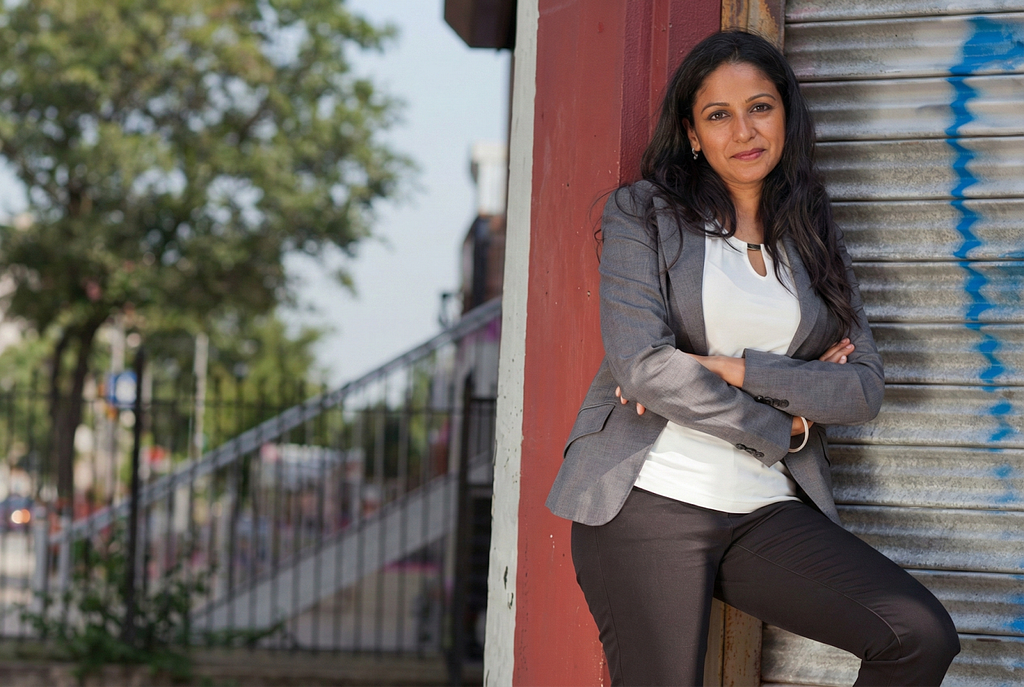
Yitzi: You mentioned the 2026 American Mosaic Journalism Prize. We’d love to learn more. Please tell us how you found out about it and what it means.
Kavitha Cardoza: Jorge, the communications person, messaged me and asked to chat. I’m often asked to be on a panel or judge, so I thought it was that. We set up a Zoom call, and at the end, he asked, “Have you heard about the Mosaic Prize? Well, you’ve won this award.” I was taken aback and asked if I was getting pranked. He laughed and said, “No, but I have seen that reaction many times.”
It is so special to me because it’s for both freelance work and underserved populations. It felt like a Venn diagram of where I fit. Freelancing is really hard. They tell you to have a mix of corporate clients for the money and then do journalism, but I’ve never been able to do that. I love the stories on ignored populations. I had wonderful organizations I worked with, like palabra, the Hechinger Report, and NPR.
The focus on underserved populations was validating. Especially in DC, everyone is attracted to power, but I’m interested in the people who are forgotten. Some of that might be my upbringing in India. In India, when you are poor, it’s very obvious. When I came to the US, I felt poverty was sanitized. Office cleaners come overnight, so you never see them, others wear uniforms. I also think in America, there’s a narrative of pulling yourself up by your bootstraps. That’s very hard now if you don’t have a lot. I did a documentary on adult literacy, and teachers said students wouldn’t come because they didn’t have a dollar or two for gas, money for books, or electricity to wash their clothes. I hope to uncover these hidden barriers so when people see someone struggling, their first thought isn’t, “You should work harder,” but “There might be barriers preventing this person from living the life they could.” I have heard from people in India, England, and America — my high school teachers, college professors. It’s amazing to see the power of this award.
Yitzi: So beautiful. This is our signature question, the centerpiece of our interview. Kavitha, you’ve been blessed with a lot of success in journalism, and you’ve been recognized for that. Based on your experience and your success, can you share five things you need to create a highly successful career as a journalist?
Kavitha Cardoza:
- One is, you have to be curious. You have to always wonder, “Why is it something the way it is?” Some people are intimidated by asking questions, believing it shows they aren’t smart. Journalists don’t care about that; there’s no such thing as a stupid question. Just ask.
- Second, there are stories everywhere. Some people think if you don’t live in a big city or have access to celebrities or important people, you can’t find stories. Keep your eyes open.
- Third, do as many internships as possible. Journalism is an art and a skill. You need real-life practical experience. Go to your local newspaper, television station, or public radio station and ask to help. They are often strapped for resources and grateful for help. I did a lot of internships and was willing to do anything, from carrying equipment to doing research. Journalists are usually generous with their time because someone once taught them, and they pay it forward.
- Fourth, read. Read as much as you can because that helps you be a good writer and organize your thoughts. Public libraries are my happy place. In India, we don’t have public libraries like that, so I really appreciate them here.
- Fifth, don’t be afraid to make mistakes. With social media, we are shown a perfect view of the world, but it’s not perfect. It’s messy and complicated. When I was a young reporter covering poverty, I wanted a straight line from A to B to C. Poverty is complicated. I’ve learned to embrace the messiness and challenges because that is life.
Yitzi: You alluded to this before, but I saw a Gallup poll that about two-thirds of Americans don’t trust the news media. For you and I, this is disheartening. It really depends on what media you’re looking at, but from your perspective as an insider, what can be done to change those numbers to push the needle in a better direction?
Kavitha Cardoza: I feel like an outsider, but I think journalists need to understand their role in this. Historically, we have not been good at covering certain populations. It has been very one-sided. Now with social media, people can challenge the narrative. For many years, we acted like the arbiter of stories. We excluded many viewpoints and didn’t represent everyone. We need to own that and be humble. When you admit your mistakes, people are more willing to listen.
Second, we have to go the extra mile to uncover facts. We need to be more evidence-based and explain how we do our work.
Third, we need to share the faces behind the bylines and explain our reporting process. Why did we interview this person? Why did we choose this expert? There is a need for transparency.
On the other side, we need to know that this is not free. Journalism costs an enormous amount of money to produce, especially with new threats like AI. We need to value that and be willing to pay for it because the old model of subsidizing media through ads is not working anymore. You can’t expect high-quality journalism to be free.

Yitzi: This is our final aspirational question. Kavitha, because of your amazing work and the platform that you’ve built, it’s not an exaggeration to say that you’re a person of enormous influence. If you could spread an idea or inspire a movement that would bring the most amount of good to the most amount of people, what would that be? Because you never know what your idea can inspire.
Kavitha Cardoza: I have a sign in my office, and I have always lived by this mantra: a society will be judged by how it treats its last, its least, and its littlest. I would love people to think through that lens. When something happens, I would love them to take a moment and see it through that lens. How does that action affect the least of us? In the end, awards are fantastic, but we will be judged as people and how we lived our lives.
Yitzi: Kavitha, how can our readers continue to follow your work? How could they support your work in any possible way?
Kavitha Cardoza: Definitely subscribe to your local journalism outlet. When you see something you disagree with or a story idea that should be covered, write to the reporter. I’m a huge fan of getting feedback. Instead of saying, “This story was terrible,” write to the reporter and say, “I think you missed this really important point.” It’s easier to keep quiet, but putting yourself out there helps educate everyone. I hear people say, “I don’t read the news; it’s so negative.” I’m not encouraging doomscrolling, but please don’t give up. This is our world, and this is what’s happening in it. Be part of it.
Yitzi: Kavitha, wish you continued success and good health and blessings, and I hope we can do this again next year.
Kavitha Cardoza: Thank you very much. I really appreciate it.
Journalist Kavitha Cardoza, 2026 American Mosaic Prize Winner, on Media Humility and Why “We Have… was originally published in Authority Magazine on Medium, where people are continuing the conversation by highlighting and responding to this story.