Kathy Babylon on Building a Musical Legacy, Returning to the Stage with Her Son, and Why This Is Not a Drill Is Her Most Personal Work Yet
“It’s an original musical, an original story, and it’s based on a real event… There was a false missile alert in Hawaii, and Holly was actually there. She called her children to say goodbye. That moment changed her — and all of us. The music taps into those emotions. It’s not just a pop musical. It has so many layers. It’s about what really matters when you think the world might end.”
I had the pleasure of talking with Kathy Babylon. Kathy was born into a working-class symphony of studio charts, reel-to-reel tape, and harmony lines. The daughter of prolific Los Angeles session musicians — Sue Allen, a top-tier studio vocalist, and Bill Brown, a noted arranger and singer — she was raised in an environment where music wasn’t just culture, but currency. Her childhood memories are filled with spontaneous rehearsals around the family piano, where she learned to read music, harmonize, and interpret arrangements from an early age. By twelve, she had already stepped into the world her parents had long inhabited, landing her first professional job singing on a Burt Bacharach session.
From there, Babylon’s early career unfolded quietly but impressively in the undercurrent of popular culture. Alongside her parents, she sang on the Frank Sinatra Trilogy album, contributing to a body of work that included television themes, Disney soundtracks, and recordings with artists like Joe Sample and Nigel Olsson. The anonymity of session work suited her — present in the music, absent from the spotlight. That approach informed her vision of a creative life: engaged but grounded, artistically fulfilled without the tradeoff of personal disconnection.
In her late teens, Babylon met Holly Doubet at the Dick Grove School of Music in California. What began as a casual introduction arranged by Doubet’s mother, a faculty member, evolved into a creative partnership spanning over three decades. The pair toured as performers, wrote extensively across genres — pop, R&B, country — and eventually shifted toward songwriting full-time to accommodate their growing families. That pivot would prove foundational, laying the groundwork for their current stage collaboration.
Babylon married keyboardist Guy Babylon, an arranger and longtime member of Elton John’s band. Their home became a hybrid of domestic life and creative workspace. Guy’s studio was a hub not only for commercial projects but for their own experimental efforts. Their collaborations included radio jingles, demo sessions, and eventually contributions to Elton John’s Broadway endeavors. Guy worked on The Lion King and Aida, winning a Grammy for the latter’s cast album. Their creative life was shared until his sudden death in 2009 reshaped the family’s path.
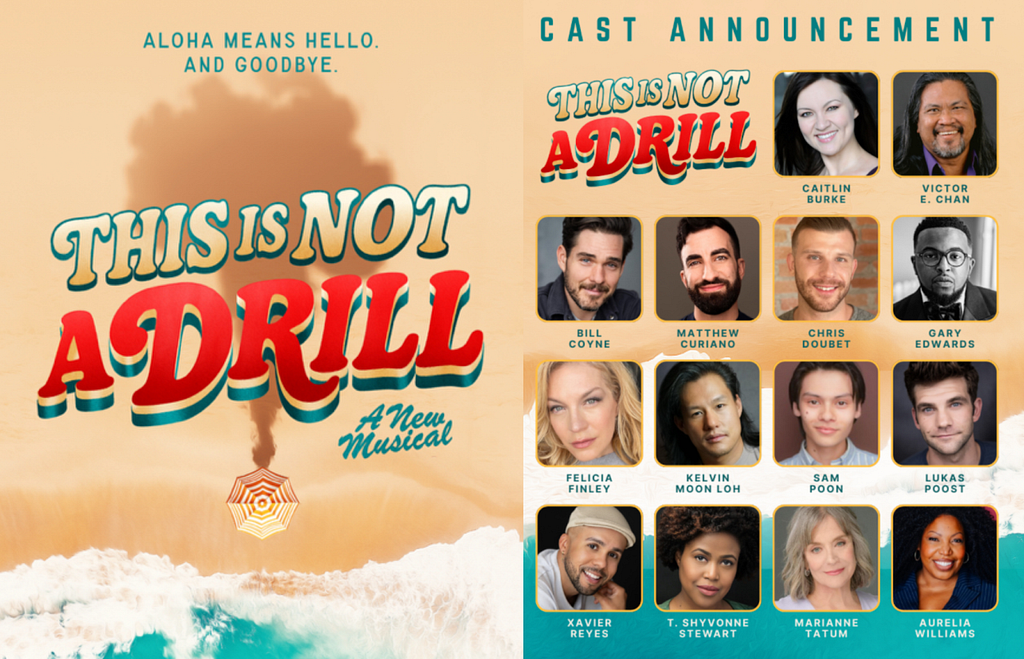
In recent years, Babylon has returned to large-scale creative work, this time as co-composer and lyricist of the new musical This Is Not a Drill, co-created with Doubet. The project, inspired by the 2018 false missile alert in Hawaii — a real incident Doubet experienced firsthand — was developed over several years and eventually gained the interest of Broadway veterans Paul Bogaev and Gabriel Barre. The show, which moves to Off-Broadway’s York Theatre in fall 2025, integrates a range of musical styles, from Beach Boys-era pop and hard rock to emotional ballads and Hawaiian motifs. Babylon’s contributions include songcraft and vocal arrangements, often alongside her son Ben, a composer and keyboardist in his own right.
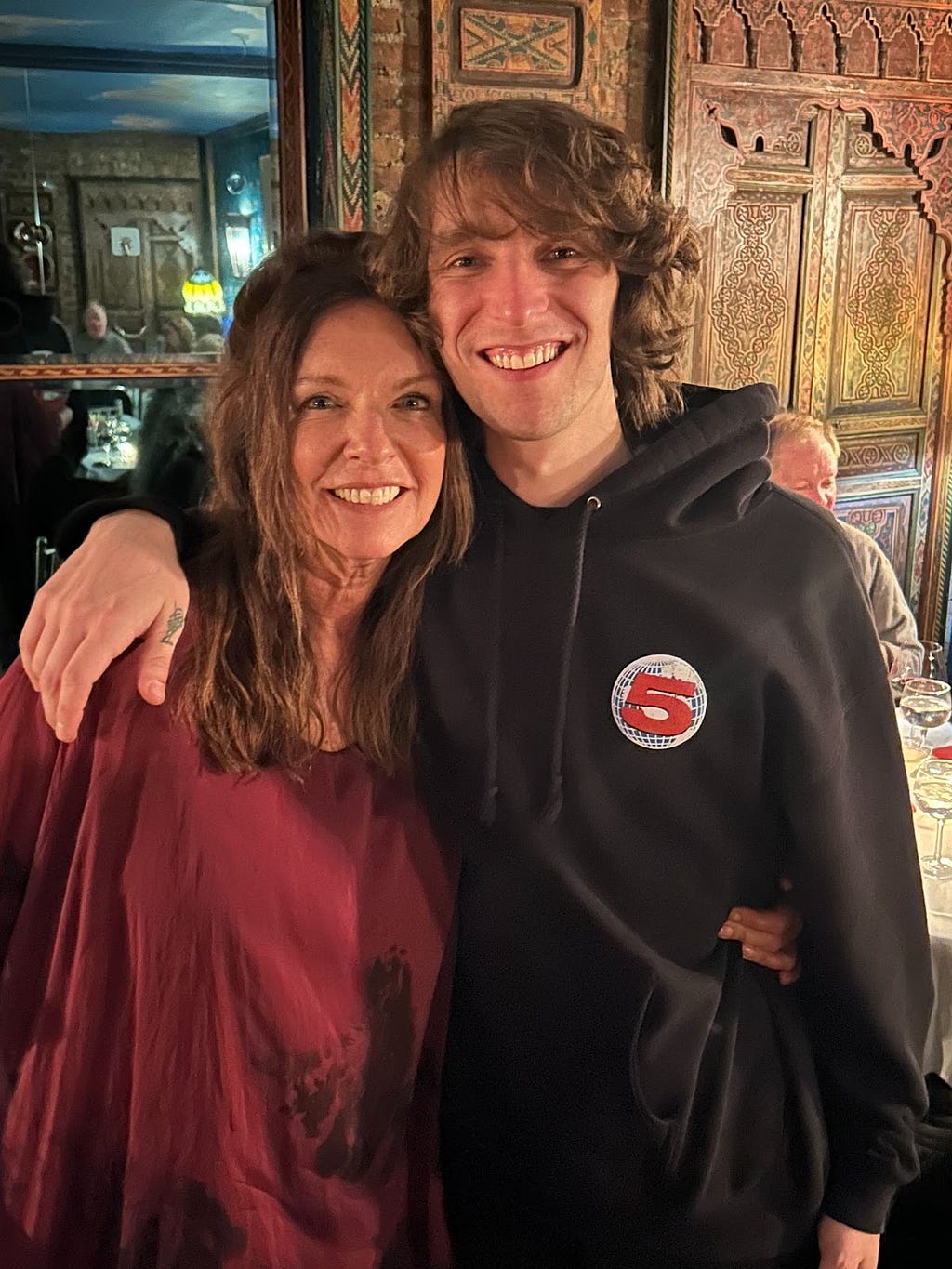
Ben’s involvement marks a continuation of the familial musical lineage that has defined Babylon’s life. She describes working with him as both emotional and exhilarating — a full-circle moment echoing the days when she sang alongside her own parents. Together, they created a sweeping overture for This Is Not a Drill in collaboration with Bogaev, who had last worked with Guy Babylon on Aida. The session, described by Kathy as “surreal and healing,” underscored the project’s deeply personal dimensions.
Babylon’s current artistic identity lives at the intersection of her two great influences: the control and intimacy of studio work, and the communal, emotive arc of live theater. While she still runs her Agoura Hills-based production company, Babylonia Studio — where her son produces for indie artists, scores films, and she records original songs — the musical has become her most consuming and ambitious effort to date. Critics attending early readings have pointed to songs like “This You Should Know” as evidence of her melodic clarity and emotional restraint, hallmarks of her years in the booth.
Throughout it all, Babylon has relied on a tight-knit circle of collaborators, chief among them Doubet, whose trust and intuition make creative risk possible. Their longstanding rapport, she says, is rooted in shared experience: years of touring, parenting, loss, and artistic reinvention. What began as casual co-writing sessions during the pandemic ultimately became a full musical score. Babylon pushed herself into unfamiliar genres, driven by the emotional demands of the story, and came out reinvigorated.
Despite decades in the business, Babylon resists the notion of retirement. She maintains a regular writing schedule, spends time with her grandchildren, and finds centering in music — whether it’s playing the piano or riding electric bikes into the California mountains. To young musicians, she offers simple advice: take every opportunity seriously, stay prepared, and be someone others can count on. Her own life stands as proof that those values, while quiet, carry across generations.
“I thought I was done,” she says. “But then this happened, and now I’m doing it all with my son. It’s beautiful. I feel like I’m back where I started, in a room with family, making music.”
Yitzi: Kathy Babylon, it’s an honor to meet you. Before we dive in, our readers would love to learn about your personal origin story. Can you share with them the story of your childhood, how you grew up, and the seeds for everything that came after?
Kathy: It’s an honor to meet you too. Yes, that’s a big question. I was brought up in a musical family. Both my mom and dad were studio singers, my mom being one of the top musical singers throughout her life. My dad was also an arranger. So from a very young age, we’d be gathered around the piano and my dad would say, “Kathy, sing this part. Sue”, that’s my mom, “sing that part. I’m going to sing this part. I want to hear what I wrote, I want to hear what it sounds like.”
So I was harmonizing, reading music, and doing all of that early on. They brought me into the business at a young age, I think I was around 12 when I started doing studio work. My first job was with Burt Bacharach, which was amazing. From there, it was just a lot of studio work. My mom, dad, and I were all on the Frank Sinatra Trilogy album together. We did lots of TV shows, movies, and so on. But it was always in the background, which was wonderful. In our house, they worked all the time, but nobody really knew them, so it kept our lives normal and filled with music. I grew up thinking, “That’s what I want, to do music like that, where you get to do what you love but still have a family and a grounded life.”
Holly and I met when I was 19. Holly’s the creator of the musical. We met at the Dick Grove School of Music out here in California, which was a fantastic music school. Her mom was actually my teacher and kept telling Holly, “There’s a girl in my class you have to meet.” Holly was like, “Okay, Mom,” but she finally came one day, we met, and became fast friends. We hit it off immediately and ended up doing a lot of studio singing together. We even went on the road, singing and dancing, doing opening act-type gigs in Vegas and other places.
Then, as we started having children, we shifted gears and began writing music so we could be home more. We wrote pop music, R&B, country, you name it. Eventually, we both got married and continued down that path.
Somewhere in there, I met my husband, Guy Babylon. He had a little studio, and Holly and I were doing demos there. Both of us worked with him, and then Guy and I hit it off, got married, and shortly after that, he started working with Elton John. He worked with Elton for over 20 years. Sadly, he passed away, but during that time, we built a beautiful life together. I already had my daughter Jessica when I met him, and he took her in as his own, which was so special. Then we had two more children, Ben and Max.
We started off doing demo work with Guy, and then when he got the job with Elton John, everything changed. It was a huge shift in our lives. During that time, Elton started writing musicals. Guy worked on The Lion King and then Aida, and he won a Grammy for the Aida cast album.
Fast forward to now, Holly decided to write a musical, something totally different from anything we’d done before. She brought me in and we started writing. It’s been the most fun and most rewarding musical work I’ve ever done. Hearing the songs inside a story and feeling how the emotions tie into everything is just magnificent. It adds so much more depth and meaning to the music.
As we were developing the show, my son Ben worked on a lot of the demos. And they weren’t just simple demos, they were full-blown productions. We wanted people to hear the songs the way we envisioned them. For example, you heard “Cincinnati Boys,” and you can tell it’s a full production. We didn’t want there to be any doubt about what we were going for.
Years later, I decided to reach out to Paul Bogaev, who had worked with Guy on Aida. I sent him the music, and he loved it. He asked what we were doing, and I told him we were preparing for a reading in Dallas. He offered to come help, and he did. He also brought in Gabriel Barre, who became our director and has been fantastic.
After the reading, Paul said, “I love it. This is an orchestrator’s dream.” That completely blew me away. He wanted to be part of the show, and now he is. Later, we wanted an overture, and Paul came out to work with my son Ben, Guy’s son, on it. Paul hadn’t been back since working with Guy on Aida, so it was a very emotional and surreal experience. They ended up writing a beautiful overture together.
Another incredible moment happened recently during auditions in New York. I was watching remotely from California, and I saw a girl who looked familiar. I asked the casting agent, “Who is that? Should I know her?” And she said, “That’s Felicia Finley. She was in Aida.” I couldn’t believe it. It felt so connected, so full-circle. She’s now accepted the role of Jessica, who’s the lead character in the show.
There’s been so much support around us. Everything just feels so meant to be. It’s been incredible.
Yitzi: You probably have some amazing stories from your very storied career, all the different phases of it. Can you share one or two that really stand out in your mind from your professional life?
Kathy: Well, this, what I’m doing now, is the most meaningful, because I thought I was done. I figured I’d just support my son at this point. He’s an incredible keyboardist, musician, and producer, just like his dad. I had kind of stepped back and thought, “It’s his turn now. I’ll help him.”
And then this all happened, and now we’re doing it together. He’s working with me on this project, and I can’t even describe how that feels. It’s just a beautiful thing to be creating something like this with my son. I told him, “This is a once-in-a-lifetime thing. I get to work with you on something this big.”
As far as earlier in my career, working on the Frank Sinatra Trilogy album was a major moment. Everything was done live, Frank was there, the orchestra was there, and we were in another room singing with the orchestra in real time. It was all being recorded live. We’d do a couple of takes, and then they’d mix it. That was pretty amazing.
Another special memory was something we used to do called The Share Show, S-H-A-R-E. It was a benefit organized by the wives of stars to raise money, and we did it every year. A lot of big names would come in to perform, and through that, I got to sing with Lionel Richie, John Denver, Sammy Davis Jr., and others. It was just a really fun and meaningful experience.
But honestly, the most special thing throughout has been singing with my mom and dad. That’s why working with my son now means so much. I grew up singing with them and being a part of that world, and now to be doing the same with my own child, it’s just a wonderful way to live, doing music.
Yitzi: You’re really lucky you could make a career out of it.
Kathy: Yes, blessed. Absolutely. I was kind of raised just thinking, “Well, that’s what I’m going to do.” It was never a second thought because I was watching my parents do it. From a very early age, I knew I wanted to be a singer. I actually thought everyone knew what they wanted to do in life. So when people were heading off to college, I’d ask, “So, what are you going to do?” And they’d say, “I don’t know.” I was like, “Wait, you don’t know?” It genuinely surprised me, I just assumed everyone had that clarity.
So yes, I feel very lucky to have been able to do what I love. And to do it with my husband, too. We worked together in the studio a lot, writing songs. When I first met Guy, we were doing radio jingles and things like that. It’s really been music, music, music my whole life.
Yitzi: It’s been said that sometimes our mistakes can be our greatest teachers. Do you have a story about a funny mistake you made when you were first starting in music, starting your career, which I know began when you were very young, and the lesson you learned from it?
Kathy: Hmm. Well, I wouldn’t call it a funny mistake, but there’s definitely something I’ve learned and something I try to pass on to my son. When opportunities come your way, that’s your moment. You have to take it right then and there, because they don’t always come back around. When you’re young, you tend to think, “Oh, it’ll happen again.” But that’s not always how life works. The door opens, and you either walk through it or you don’t, but if you don’t, it might not open again. That’s the biggest lesson I’ve learned. Timing matters.
Yitzi: What has been the most challenging role or project you’ve taken on, and why?
Kathy: I’d say this, writing a musical, has been the most challenging. I’ve spent most of my life in studios doing studio work, and this is an entirely different world. That’s why we’ve surrounded ourselves with people who’ve done this before and really rely on their guidance.
Holly wrote the story, and together we wrote the songs, but once Gabriel Barre came in as director, he really helped us understand the structure of a musical. There’s an arc that has to happen, a specific way the story needs to unfold. He asked us to move songs around, and Holly had to rewrite parts of the book to build toward that arc, rather than giving everything away at the beginning. There’s just so much to learn.
We’ve gone through a lot of rewriting, which we’ve heard is totally normal with musicals right up until opening. So yes, this has definitely been the biggest learning curve of my career.
Yitzi: So let’s talk about this musical. Tell us more about it and why you think all our readers have to come see it.
Kathy: Well, first of all, it’s an original musical, an original story, and it’s based on a real event that happened in Hawaii. Some people have heard about it, some haven’t. There was a false missile alert in Hawaii, and Holly was actually there when it happened. I was going to ask if you’d like to have Holly join us, because she experienced it firsthand.
That morning, everyone in Hawaii got an alert on their phones saying there was an incoming missile, and that it wasn’t a drill. This was right after all the tension between Trump and Kim Jong Un, with them talking about whose button was bigger, so it felt real. Holly got the alert and immediately called her children to say goodbye and tell them she loved them. She told them she was going to try to find shelter, though she didn’t even know if there was such a thing in Hawaii.
When she came back from that experience, she just knew she had to write about it. She said she felt like she had PTSD from the whole thing. So we started writing the music together, and I think what’s really special is how diverse the music is. It’s not just one sound the whole way through.
There’s a Beach Boys-style song, which I sent you, and there are some rock songs too, like one sung by the “button guy,” who’s kind of a Jim Carrey-type, wild and crazy. Then there are these really beautiful ballads that will make you cry. The music taps into so many emotions we all relate to. We’ve also got some Hawaiian elements, and the moment the alert goes off in the show, it’s intense. The music takes you on a journey.
I’m really proud of it because it’s not just a pop musical from start to finish. It has so many layers. And the story is incredibly relatable. It’s about what happens to people when they go through a traumatic event like that, how it changes you, and how it makes you reassess what really matters in your life. We see how different characters’ lives are transformed by it. It’s emotional, it’s happy, it’s funny, it really has a little bit of everything.
Yitzi: What lesson do you think or hope society can take from the play?
Kathy: To not wait. Life, this is it. This is the life we get. This is not a drill. It can end at any time, which I experienced when I lost my husband. You don’t know how much time you have here, so live large, love hard, appreciate the people in your life. Don’t hold back. Do it now. I think that’s the message.
Yitzi: That’s great. What’s it been like working with your son Ben? Does it feel like you’re continuing a family tradition, since your parents were also in the industry?
Kathy: Yes, absolutely. Ben has really come into his own. He’s been working on documentaries and movies. Right now, he’s doing a documentary for Netflix. He’s found his groove in that. He used to have his own band, and he also produces artists in the studio. He just finished an entire album with a Latin artist.
So to have him excited and working with me on this music, and to give it the quality I was looking for, means a lot. I know I can depend on him. We just did a reading in New York. It’s fast and furious, you get three days, then you put it on. We thought we’d be able to use our recordings, but we couldn’t. Ben stepped up and said, “It’s gonna be okay. We’ll play it. It’s gonna be fantastic.”
It was him, our musical director David Madore, guitarist Jim Kimo West, and percussionist Doug Hinrichs. The four of them rehearsed for four hours and had the show down. Ben really helped me, especially when I was stressed about not being able to use the beautiful recordings we had. He reassured me it would be fine.
Now, moving forward, he’s going to be the assistant musical director with David Madore as the musical director, and Paul Bogaev will be our musical supervisor. The three of them will be handling the music arrangements. I just feel like I’m in such good hands. It makes me feel much more relaxed going into this. We’ve done the work, and there’s still so much to do, but as long as we’re taking the steps and moving forward, we’re okay.
Yitzi: Amazing. Your three-decade relationship with Holly is rare, I think. What do you think kept that creative relationship alive and thriving over time?
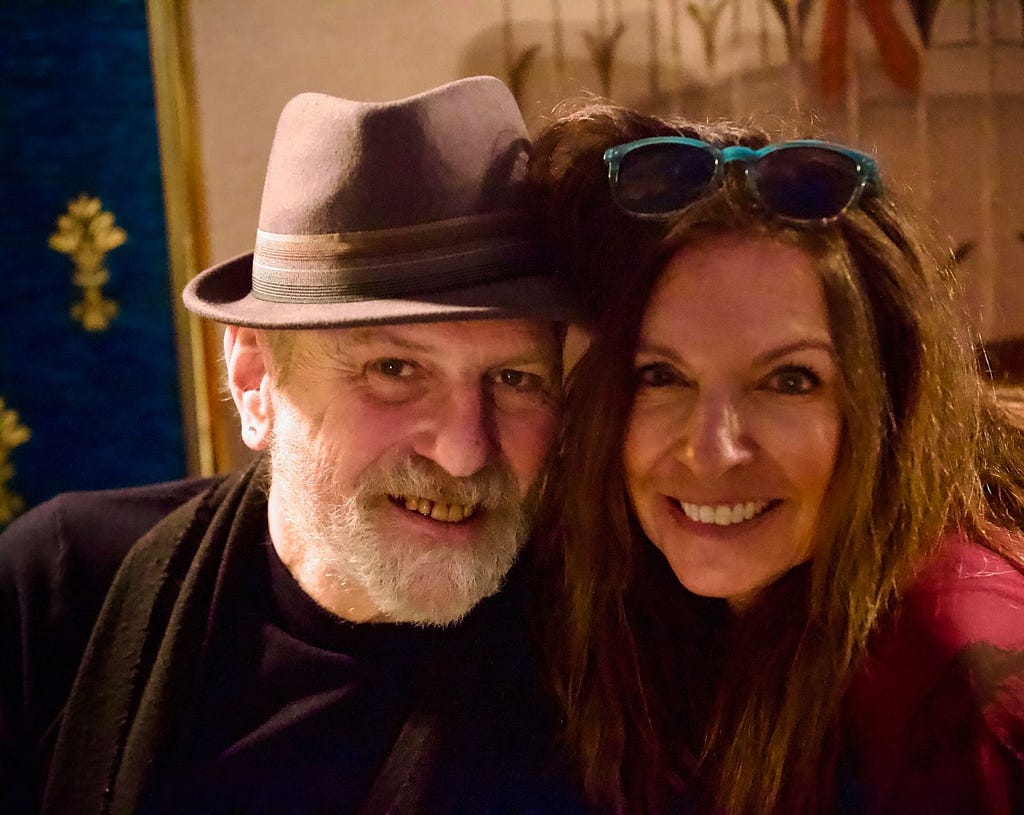
Kathy: Well, when we met, we started singing together, studio singing. Then we went on the road together, shared a room while touring, and we’ve just always gotten along so well. Over the years, we became songwriting partners too. She’s the one person I can completely open up to when I’m writing. I don’t edit myself. I just let the good, the bad, everything come out at once, knowing I can trust her to sift through it and say, “Oh, I really like that.”
She does the same. She’ll send me things, and I’ll say, “I love that line” or “That melody’s great,” and she’ll do the same with my stuff. We just trust each other. We’ve had our kids, gone through so much together, and now to be doing this… I had no idea I’d be writing a musical with her.
She brought me into it. I thought I was done. I really did. But she said, “I’m doing this and I really want to do it with you.” I said, “Well, maybe I could write a couple things with you.” Then the pandemic hit, and we just wrote and wrote like crazy. We ended up writing the whole thing. She also wrote a few songs with John Vester, and a couple on her own.
There’s a lot of music in the show, and I think that’s why there’s so much variety. I wrote in styles I’d never tried before because the emotion and the need to move the story forward pushed me into new territory. It’s been really rewarding.
Yitzi: Does the songwriting process feel different when you’re writing for pop music compared to writing for theater, or is it basically the same?
Kathy: No, it’s definitely different. We’ve written a lot of pop songs, and because we were singers back in the day, I think the melodies we come up with are ones that really connect with audiences. They’re the kinds of melodies we love to sing and that catch our ears.
That’s what I hope people take away from the show. And from what we’ve heard during the readings, people are saying, “Oh my God, the songs, I can’t get them out of my head. I love that one. That one should be on the radio.”
Some of the songs have a pop influence, some have R&B, there’s a little bit of everything. I think that comes from all the years we spent singing and writing together. It’s all baked in there. So, yeah.
Yitzi: You’ve been outspoken about the mental health toll and challenges that a freelance life in the music or entertainment industry can pose. How would you like the industry to better support its artists moving forward? What changes would you most like to see in how the industry supports them?
Kathy: Mm. I don’t know exactly how to answer that. I feel like we’ve been supported pretty well overall. But putting on musicals is incredibly expensive. I do wish there were more support in that area, because it’s like putting on a movie, it really is that costly.
We’re learning as we go. Honestly, we’re still trying to figure out who the major supporters even are in this space. But yeah, if there were some way to get these projects off the ground without the upfront financial burden, that would make a huge difference. Like, if there were a way to put it up first, and then once revenue starts coming in, everyone could start getting paid from that, almost like a reverse model.
But I don’t think that’s how it works, and that’s what I’m learning. Still, that’s how it goes. We’ll figure it out. Holly and I, she’s fearless, and we’re not afraid to take steps that haven’t been taken before. I think that’s helped us. Being a bit of an outsider coming into this world might’ve actually worked in our favor in getting this far.
Yitzi: So this is our signature question. You’ve been blessed with a lot of success. Looking back to when you first started, you must have learned a lot from your experiences. Can you share five things you think are essential to creating a successful career in the music industry?
Kathy: Well, I’d say when you’re starting out, take lessons and learn as much as you possibly can. You have to devote yourself fully. If you’re going to be in the music business, you have to be all in. There can’t be a plan B. Always show up on time. Always respond to people right away. I try to think about what I tell my son, professionalism is really important. Be someone people can count on if they’re going to work with you. And always bring your absolute best to whatever you’re doing, whether it’s a demo or anything else, because you never know where it’s going to land.
I have an incredible story about my husband, Guy. He had a demo studio, and one time he ended up working with Davey Johnstone on a demo for someone. He could’ve easily said no, but he did it. He took everything that came his way. Davey, who’s the guitarist for Elton John, remembered him. They did the session, said goodbye, and a year later, Davey called him and said, “Hey, would you like to join the Elton John band?” You never know where an opportunity will come from. That’s why you always have to be at your best.
Yitzi: Can you share with our readers the self-care routines you use to help your body, mind, and heart thrive?
Kathy: If I’m feeling a little off, I go to the piano and play. That helps center me. I spend a lot of time with my family and my grandkids, I have three grandkids now. When Holly and I were writing, we had a schedule. We’d write two or three times a week and stick to it. Now we’ve kind of wrapped that up, so we’re doing other things.
I bike ride. We have electric bikes, and we love that because with electric bikes, you can get up into the mountains, away from everything, and be in nature. I love nature. Taking my grandkids to the park, where there’s a river and we throw rocks, that kind of stuff is great. I also spend quite a bit of time at the beach. So those are my go-tos.
Yitzi: Beautiful. This is our final aspirational question. Kathy, because of your amazing work and the platform you’ve built, you’re a person of enormous influence. If you could put out an idea or inspire a movement that would bring the most good to the most people, what would that be?
Kathy: Wow. I would just say you really have to follow your dreams in life. Try to enjoy the moments, because life is all moments, that’s all there is. So enjoy each one as much as you possibly can.
Yitzi: Kathy, how can our readers watch the musical? How can they support your work in any way?
Kathy: If they come to The York in New York City, the York Theatre, just look up This Is Not a Drill, The Musical at The York. It’ll come up, and when you click on our logo, it’ll take you to the tickets and all the information.
You can also buy tickets here: https://www.yorktheatre.org/this-is-not-a-drill
Previews start September 9, the official opening is September 18, and it runs through October 11. We’d love to fill those seats and spread the word.
We also have a website: thisisnotadrillthemusical.com (no spaces, it might try to insert one when you’re typing it). There’s a music page where you can see some of the performances from our readings. I really hope you come. The story is incredible, and I hope you love the music. I think you will.
Yitzi: You’re amazing, Kathy. It’s been so delightful meeting you.I wish you continued success, good health, and only good things. I hope we can do this again next year.
Kathy: Yeah, yeah, yeah. And I hope you’ll come to the show. Make a trip to New York, it’s going to be great.
Yitzi: I would absolutely love to.
Kathy Babylon on Building a Musical Legacy, Returning to the Stage with Her Son, and Why This Is… was originally published in Authority Magazine on Medium, where people are continuing the conversation by highlighting and responding to this story.