Paula Vasan on Investigative Journalism, Strategic Communications and Why Curiosity Still Leads the Way

People are everything. Be proactive in helping people and anticipating needs before there’s an ask. It builds lasting trust and opens doors you didn’t even know existed.
Every experience matters. Even projects or roles that feel small or frustrating shape who you are and what you can contribute.
Diverse experiences create depth. Trying different things, stretching yourself, and stepping outside your comfort zone makes you stronger, more adaptable, and better able to connect across perspectives.
The journey isn’t a straight line. Setbacks, redirections, and detours aren’t failures. They often become your greatest strength. Over time, successes and learning moments weave together in ways you can’t anticipate.
Stay curious and ask questions. Curiosity will take you further than you expect. Lean into opportunities, even when they feel uncertain, because those experiences are often the ones that shape your perspective the most.
I had the pleasure of talking with Paula Vasan. If you want to understand the exact frequency on which she operates, you only need to look back to the very beginning. Long before she was an Emmy-winning investigative journalist or a high-level communications strategist, she was just a 10-month-old in New York City with a remarkably telling first phrase. Pointing at a map on the wall, her first string of words was simply, “What’s that?” It is a fitting origin story for someone whose entire life has been built on interrogating the world around her. Curiosity, as she puts it, has guided her entire career.
That career didn’t start in a quiet, measured setting. It began in the chaotic epicenter of the global financial crisis. Vasan cut her teeth as a multimedia producer in New York City during the financial crisis, covering personal finance and business news for Yahoo! Finance. She quickly honed her ability to translate complex financial and technology topics into accessible stories while managing multiple projects simultaneously, a skill that would become a hallmark of her career. She began contributing to publications like The Atlantic, CNBC, and The Boston Globe. Across all of her work, her goal was singular: “I’ve always approached storytelling as a way to make sense of complicated topics and guide people toward solutions,” she says.
Her drive to chase the story eventually pulled her out of the New York metro area and into the heartland of American broadcast journalism. Armed with a journalism degree and a concentration in politics from the University of Maryland, she brought her investigative instincts to Louisville, Kentucky. At WHAS11, the ABC affiliate there, she covered monumental national stories, including the tragic death of Breonna Taylor, earning two regional Emmy Awards, a Citizen of the Year honor from the Kentucky Nurses Association for healthcare storytelling, and recognition from other local and national journalism organizations.
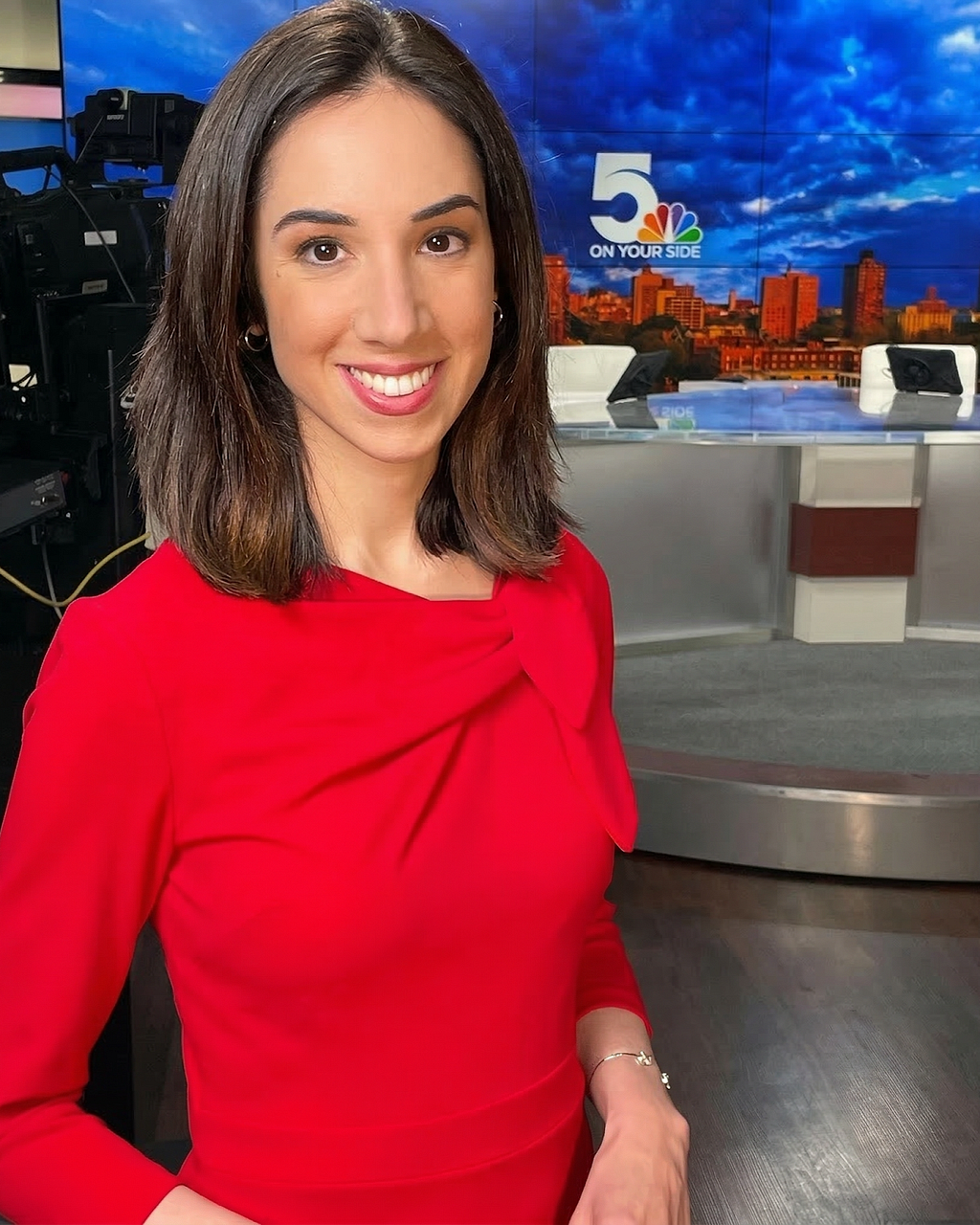
Later, her work took her to St. Louis, Missouri, where she became a Senior Investigative Reporter for KSDK 5 On Your Side, the NBC affiliate. It was in Missouri that Vasan’s particular brand of relentless, solution-oriented journalism truly shined. She spent months digging into the state’s massive delays in childcare subsidies, a bureaucratic nightmare leaving families and providers desperate. “I analyzed records, interviewed providers statewide, and pressed officials for answers,” she recalls. That coverage raised awareness and prompted real action. Her work earned two Mid-America Emmy awards in 2023, covering topics from seclusion rooms for students with disabilities to a family’s claim that their dog was euthanized without permission, investigations that brought attention to pressing community concerns. Along the way, she also covered sensitive stories in healthcare, education, and policy, developing a deep understanding of how to handle delicate topics with accuracy, empathy, and strategic judgment.
That persistence meant mastering the art of the interview as a journalist, even when doors were slammed in her face. Early in her career, she learned that rejection was usually just a detour. “For so many interviews I would do to get the full story, it would be a ‘no,’ but in my mind, it was, ‘Okay, no, not right now,’ and it turned into an exclusive later,” she says. By honoring her sources and obsessing over factual accuracy, she built a reputation of trust that granted her access others simply could not get. That tenacity often produced stories that drove policy changes, drew legislative attention, and led leaders to rethink priorities and approaches, from exposing discriminatory housing practices to uncovering systemic issues in the nursing home industry.
Eager to grow and take on new challenges, Vasan evolved in 2025 into strategic communications, executive strategy, media relations, and public engagement. She took on roles such as Director of Communications for TEDxStLouis and Communications and Economic Development Manager for the City of Wildwood, Missouri. In local government, she enhanced the city’s biannual Gazette, a community publication reaching tens of thousands of residents, introducing QR codes, clarifying messaging, and streamlining production to deliver the newsletter ahead of schedule. These projects highlighted her organizational and process skills, balancing short-, medium-, and long-term priorities while keeping both internal teams and external audiences informed and engaged. More recently, she was elected president-elect of the Public Relations Society of America’s New Jersey Chapter for 2026, leading initiatives to advance professional development and communications excellence.
For Vasan, it was never about abandoning her roots. It was about applying her skills where they could generate the most impact. “I realized I could help organizations take complex ideas and turn them into something people care about and can act on,” she notes. She intimately understands the daily grind of the journalists she now pitches to, recognizing that a misaligned press release is just noise in an already deafening digital world.
When she looks at the broader cultural landscape, Vasan sees a society drowning in information but starving for connection. She warns of the dangers of algorithm-driven media consumption that traps people in ideological echo chambers. “One of the things I’ve cherished about my career is actively fighting against that by seeking outside opinions,” she says. She urges people to lean into the discomfort of seeking perspectives outside their usual bubbles and push back against the doomscrolling habits that define our modern era.
Behind the accolades and strategic lifting, Vasan is grounded by life with her family. She’s a mother of two, a role she values above any professional title. To keep her mind sharp and heart full, she leans on a few simple, essential routines: running for an endorphin rush, devouring podcasts, exploring new foods with an adventurous palate, and relying heavily on a tight-knit circle of girlfriends to navigate the highs and lows.
Looking back at the winding road from a curious New York child to an Emmy-winning reporter and PR powerhouse, Vasan recognizes the beauty in the chaos. She believes every experience, even the seemingly insignificant ones, shapes who we are. “I encourage people entering their careers to realize the journey is not a straight line from A to B,” she reflects. “There are lots of detours along the way, and while we might not realize it at the time, those detours end up becoming your superpower.”
Yitzi: It’s so nice to meet you, Paula. Before we dive in deep and start, our readers would love to learn about your personal origin story. Can you share the story of your childhood, how you grew up, and the seeds for all the amazing work that has come since then?
Paula: It’s great to meet you! Wow, what a question. You know, my mom has always told me my very first string of words, before I could walk, was “What’s that?” pointing to a map on the wall. Curiosity has really guided my life. Curiosity made me notice details others missed, listen carefully, and stay persistent. Those traits have carried me through every role I’ve had, whether chasing a story as a journalist or helping organizations and their leaders communicate clearly in public relations.
One of my earliest jobs was contributing to the Inc. 5000 list, where I connected with more than 100 founders of some of the fastest-growing companies in the country. That taught me how to find the human moments behind big milestones, ask the right questions, and make complex business stories feel accessible and engaging. It gave me a first real look at entrepreneurial storytelling, and it shaped how I think about communications today: clarity and connection are everything.
I got my start as a journalist during the financial crisis, covering finance in New York City. I later moved into consumer-focused storytelling, contributing innovation, technology, and human-interest stories for publications like The Boston Globe, The Atlantic, CNBC, The Huffington Post, and CNET, turning challenging topics, whether emerging tech or cultural trends, into stories people can understand and act on.
I’m a native New Yorker, born and raised, though my TV career has taken me around the country, from New York City to Louisville, Kentucky, and then to St. Louis, Missouri. The gravitational pull of home brought me back to the New York City metro area, where I’m exploring new opportunities to keep learning and contributing. These days, I focus on strategic communications, media relations, and thought leadership, helping executives and organizations turn ideas and initiatives into clear stories that connect with their audiences. I also serve as president‑elect of the Public Relations Society of America’s New Jersey Chapter, leading efforts to advance professional development and communications excellence.
Through it all, impact and trust have guided me. Those have been my North Stars.
Yitzi: Sometimes mistakes can be our greatest teachers. Do you have a story about a humorous mistake you made when you were first starting out, and what did you learn from it?
Paula: Oh, absolutely. In my first TV role in New York City, reporting on the streets of the Bronx and Brooklyn, I did everything from camera work and video editing to writing and reporting myself, all on incredibly tight deadlines. Nothing like driving through Bronx and Brooklyn traffic and snowstorms on deadline to teach you how to handle pressure! That’s where I really learned how to think on my feet, stay calm under pressure, and juggle multiple projects at once. Those early challenges taught me resilience and adaptability, skills I still rely on today.
One of the more humorous lessons came when I moved to Louisville, Kentucky. I quickly realized that my fast, direct New York communication style didn’t always land the same way. I had to slow down and adjust my approach, partly because of regional communication differences and partly because the kind of in-depth storytelling I was doing required building trust and relationships over time.
I also learned very quickly that pronunciation matters. Saying “Louisville” the wrong way is a very fast way to lose credibility. After that, I became a stickler for phonetic pronunciations. Little moments like that taught me that context, listening, and patience are just as important as speed and efficiency.
Yitzi: I’m sure you have a lot of amazing stories from the different parts of your career and the places you’ve been. Can you share with our readers one or two stories that stand out most in your mind about your professional career?
Paula: Definitely. During my time as an investigative reporter, I spent months digging into Missouri’s childcare subsidy delays. Families and childcare providers were really struggling to survive while waiting for payments. I analyzed records, interviewed providers across the state, and pressed officials for answers. That coverage raised awareness and prompted real change. It reminded me that when journalism is at its best, it can change lives for the better.
When I moved into strategic communications, I carried the same principles over: telling stories that matter, connecting with audiences, and making ideas clear. As Director of Communications for TEDxStLouis, I launched a thought leadership series to keep speakers visible long after they left the iconic red circle on stage, highlighting their work, driving traffic to the website and social media, and boosting key metrics like ticket sales. One article I worked on focused on how a community leader and former TEDx speaker was working to rebuild St. Louis after an EF-3 tornado, while inspiring young people to get involved. The series taught me a lot about executive communications: making their expertise shine, highlighting their personality, and turning nuanced insights into timely stories people can relate to and get excited about.
Across all of my work, whether reporting on systemic issues or shaping thought leadership, my goal has always been to help audiences understand why they should care, while highlighting solutions and hope whenever possible.
Yitzi: There is an idea that “no” is not rejection, but redirection. Do you have a story about a “no” you received that led to an unexpected success, blessing, or better opportunity?
Paula: During my investigative TV reporting days, I came across a very sensitive story about a patient who had undergone surgery on the wrong part of her body. When I first reached out, I was met with a firm “no.” They were scared, protective, and understandably wary, with potential legal implications making them even more hesitant.
But I didn’t take it personally. I kept listening, building trust, and explaining that my goal was to tell the story accurately and respectfully. Over time, the family and other sources began to open up. Eventually, they agreed to share their experience, and the story ran in a way that honored their perspective while exposing a serious issue in healthcare.
It was a real lesson in persistence and empathy: a “no” often isn’t rejection. It’s a pause and a chance to rethink your approach. I’ve applied that mindset across my career. Earning people’s trust with patience and respect has been a skill I’ve really honed, and it continues to shape the way I approach both journalism and strategic communications today.
Yitzi: You’ve taken both sides of the journalistic apparatus. You’ve been a journalist, and now you also serve as a communications professional. Now that you’re in the role of a PR professional, do you think about your interactions with PR people while you were a journalist, and wish you had a different approach or acted differently toward them?
Paula: That’s a great question! Looking back, I don’t think I would have acted differently as a journalist, but being on the communications side has given me a new appreciation for how tricky access can be. Getting to the right person at the right time isn’t always easy. Journalists are juggling so many priorities, and when press releases or pitches aren’t a fit, it can create a disconnect. Seeing things from both sides has really opened my eyes.
For example, I recently did media relations work with a company called BrainTrust. They’re an incredible organization helping female-led businesses grow to $1 million in annual revenue and beyond, a milestone that opens doors. I developed a media and thought leadership strategy to amplify their work, connect their stories to broader economic and timely trends, and help the organization gain meaningful exposure. Understanding how journalists operate, how editorial meetings run, how fast deadlines come, and what stories resonate has given me a stronger perspective. It has also made me a more effective communicator and collaborator across both sides of the industry.
Yitzi: Is there a reason why you chose to join the communications side instead of doubling down and trying to advance your career in journalism? Is it because the journalism field is really struggling now, or is it another reason?
Paula: For me, it really comes down to using my skills in different ways, continuing to grow, and applying them where they can make the biggest impact. At the same time, I have so much respect for journalists and a deep love for the work they do. Making the move wasn’t about leaving journalism behind. It was about evolution.
I realized I could take the same investigative rigor, storytelling instincts, and strategic thinking I developed as a reporter and use them to help organizations clarify complexity, engage diverse audiences thoughtfully, and drive results. It was a choice rooted in a growth mindset: staying open, learning constantly, and embracing opportunities that push me to expand my skills. As the saying goes, “the only constant in life is change.”
Yitzi: As you know, media in general and particularly journalism is facing two massive headwinds. One, the business model has changed; journalism is no longer supported solely by advertisers, or it’s hard to maintain a strong business model based only on advertising. Number two, there’s a huge trust deficit and therefore a loss of their bread and butter, which is their readership. Those are two massive shifts that have occurred over the past 20 years. Is there any way to put the toothpaste back into the tube? Is there any way for journalism to have a sustainable, viable business model? And what can journalists do to regain trust and recapture their readership?
Paula: Those are huge questions, and they really get to the heart of what’s happening in journalism today. Trust has always been the foundation of the industry, and right now it’s under real pressure. Data from the Pew Research Center, a nonpartisan organization that tracks media and public opinion, shows Americans’ trust in news is still low. If outlets don’t prioritize accuracy and transparency, readers tune out fast.
As you pointed out, the business model has shifted dramatically. Advertising alone doesn’t cut it anymore, especially since most digital ad dollars go to big tech platforms. That’s why subscriptions, memberships, newsletters, podcasts, and community engagement have become essential tools. Outlets that connect authentically with their audiences and clearly show the value of their storytelling have the best shot at long-term sustainability.
Journalism is also vital to an engaged and informed society, so access to credible information shouldn’t be limited to those who can pay. Many organizations are finding a balance through a mix of free content, subscriptions, and community programs.
There’s no one-size-fits-all solution, but a combination of strong editorial standards, audience understanding, and creative business strategies gives journalism a chance to remain relevant and continue doing what it does best: helping people make sense of the world.
Yitzi: How about the other aspect of the business model? Do you have any ideas on what news outlets could do? So many are closing down because they just can’t cover their costs. What could be done to keep media and journalists in business?
Paula: That’s the million-dollar question. At its core, it comes down to quality. High journalistic standards, fact-checking, and ethical oversight all require resources, and investing in those departments is essential for credibility.
Sustainability is a bigger challenge. Outlets like The New York Times make money through subscriptions, advertising, and licensing, while also exploring other ways to connect with audiences, including events and podcasts. Importantly, they’ve reinvested a portion of that revenue back into journalism, supporting reporters, investigative projects, and reporting from around the world. Not every outlet has that kind of brand loyalty, but the key takeaway is to diversify revenue while keeping editorial integrity front and center.
Audiences today are also more fragmented than ever. People get information from countless platforms and creators, so outlets need to know their audience and build real connections with people who truly value what they do.
Trust and engagement go hand in hand. If readers sense inaccuracy or bias, they quickly tune out. Prioritizing transparency, clarity, and relevance is critical. There’s no magic formula, but the right mix of editorial rigor, audience connection, and smart business strategies can keep journalism impactful, sustainable, and able to serve its most important purpose of supporting a healthy democracy.
Yitzi: Let’s shift gears and talk a little bit about PR. Very basic question: why should a business invest in public relations in addition to advertising? Why is PR an important strategy for a business’s marketing budget?
Paula: There’s just so much noise right now, from social media to ads to all the content everyone is producing. Everyone’s competing for attention. I recently moderated a conversation on artificial intelligence for the Public Relations Society of America’s New Jersey chapter about how communications professionals can use new tools thoughtfully while still relying on good judgment. At its core, PR and strategic communications are about using that same judgment to craft messages that actually reach the right people, build credibility and reputation, and help organizations and their leaders move forward in a way that resonates and makes a positive impact. That’s really where PR stands apart from advertising. It’s about visibility, building trust, and long-term credibility, which strengthens the overall marketing strategy.
It’s not just about external messaging either. Internal communications matter a lot. For example, when I was chairing the Diversity, Equity, and Inclusion Task Force at a former newsroom, a colleague came to me with concerns about how some local media was covering the LGBTQ+ community. I organized a town hall, incorporated training into our speaker series for staff, and put together a best-practices guide that was shared across parent company newsrooms nationwide. We also worked on broader initiatives, including mental health resources for employees. That experience reinforced for me that listening to colleagues and strengthening internal communication builds understanding and ultimately shapes how an organization shows up externally.
PR is also critical in a crisis. You can’t wait until something happens to figure out how to respond. When I was a journalist covering public health outbreaks, delayed messaging from authorities often worsened panic. Having a clear, proactive communications plan prevents confusion and protects both the organization’s reputation and the people it serves.
Yitzi: This is our signature question, the centerpiece of our interview. Paula, you’ve been blessed with a lot of success, and you must have learned a lot from your experiences. Looking back to when you first started your career in public relations, can you share five things you’ve learned over the years that would have been nice to know in the beginning?
Paula: I love this question! Here’s what I’ve learned:
- People are everything. Be proactive in helping people and anticipating needs before there’s an ask. It builds lasting trust and opens doors you didn’t even know existed.
- Every experience matters. Even projects or roles that feel small or frustrating shape who you are and what you can contribute.
- Diverse experiences create depth. Trying different things, stretching yourself, and stepping outside your comfort zone makes you stronger, more adaptable, and better able to connect across perspectives.
- The journey isn’t a straight line. Setbacks, redirections, and detours aren’t failures. They often become your greatest strength. Over time, successes and learning moments weave together in ways you can’t anticipate.
- Stay curious and ask questions. Curiosity will take you further than you expect. Lean into opportunities, even when they feel uncertain, because those experiences are often the ones that shape your perspective the most.
Yitzi: That’s great, amazing. Let’s come towards the culmination of our interview. On a personal level, can you share some of the self-care routines that you do to help your body, mind, and heart to thrive?
Paula: I love running. It’s my go-to for an instant endorphin boost and a mental reset. Sometimes even just 20 minutes clears my head. I’ve run half marathons and signed up for plenty of other races, but mostly I run for fun. Another perk is a whole drawer full of my favorite running t-shirts that bring back memories of places I’ve been and people I’ve shared those moments with!
I also listen to podcasts constantly. They keep my mind curious and learning.
Connecting with my girlfriends is another routine I rely on. Your tribe lifts you up, inspires you, and reminds you what really matters. They also remind you to laugh and not take yourself too seriously.
And then there’s food. I love being adventurous, exploring new cuisines and tasting new flavors.
These simple things make a big difference in my day-to-day life.
Yitzi: This is our final aspirational question. Paula, because of your amazing work and the platform you’ve built, it’s not an exaggeration to say that you’re a person of enormous influence. If you could spread an idea or inspire a movement that would bring the most amount of good to the most amount of people, what would that be? You never know what your idea can spread.
Paula: Right now, social media is at a crisis point. People are consuming endless streams of algorithm-driven information, often reinforcing their own biases. One of the things I’ve valued most about my career is the chance to actively push back against that by intentionally seeking perspectives outside my own echo chamber and environment.
In a world overloaded with information, doomscrolling distorts how we see the world. What I hope to inspire is a movement of conscious media consumption: fight the algorithm, create boundaries for your attention, build habits that protect curiosity and critical thinking, and intentionally engage with voices and ideas you wouldn’t normally encounter.
It’s about seeking understanding, questioning what we consume, and making decisions grounded in diverse perspectives, not just the loudest or most sensational voices. Intentional engagement like this could change how we interact with information and, ultimately, help create a healthier, more informed society.
Yitzi: Paula, how can our readers continue to follow your work? How can they get in touch with you if they want to engage your services? How can our readers support you in any possible way?
Paula: A great way to connect is on LinkedIn. I share what I’m working on, thoughts on communications and media, and things I find timely, interesting, or worth knowing.
Yitzi: Amazing. Paula, it’s been so nice to get to know you. I look forward to continuing to work with you, and I wish you continued success, good health, and blessings.
Paula: Thank you so much, Yitzi, for this opportunity and for your time! It’s been a lot of fun.
Paula Vasan on Investigative Journalism, Strategic Communications and Why Curiosity Still Leads the… was originally published in Authority Magazine on Medium, where people are continuing the conversation by highlighting and responding to this story.