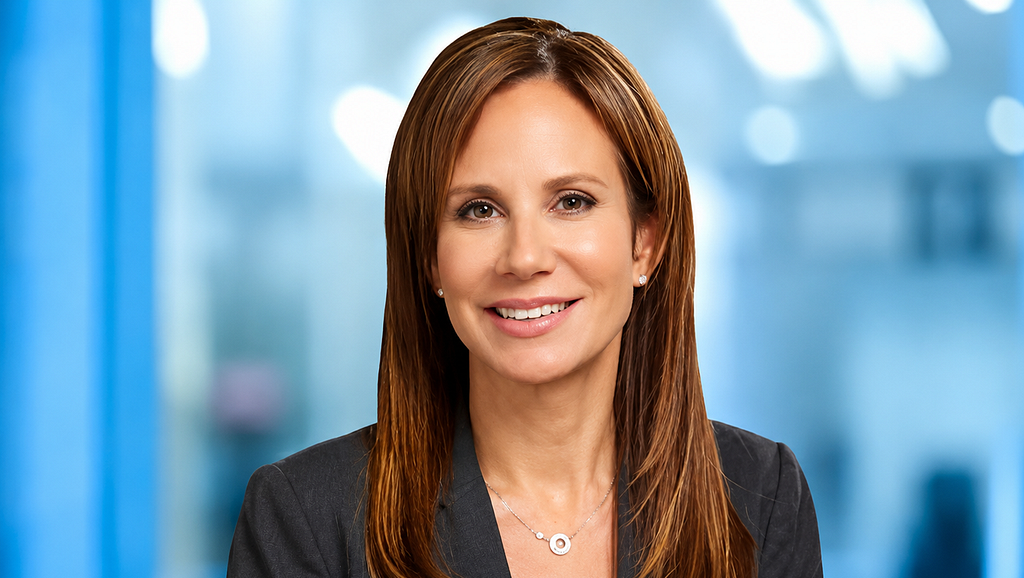
Put Your Own Concerns in a Box: Former Toyota HR Chief Kim Cerda on the Reality of High-Stakes Corporate Leadership
“You need to figure out how to put your own concerns in a box and focus on your responsibility to those people.”
I had the pleasure of talking with Kim Cerda. A month after becoming the head of human resources at Toyota Financial Services, Kim Cerda received the kind of assignment that exposes the difference between holding authority and knowing how to use it. Toyota had decided to move its headquarters from Southern California to Plano, Texas. Cerda would lead the people side of a transition that could alter the lives of thousands of employees, many of whom she had known for years.
The move affected her personally, too. But the company was not asking her to resolve her own uncertainty in public. It was asking her to guide everyone else through theirs.
“You need to figure out how to put your own concerns in a box and focus on your responsibility to those people,” she says.
That experience captures the tension at the center of Cerda’s career. Her work places her inside consequential corporate decisions, where leaders are expected to project confidence even when essential facts remain unsettled. Yet much of her credibility has come from resisting that performance. She believes employees can tolerate difficult news, delayed answers, and disruptive change. What they are less likely to tolerate is the suspicion that executives are managing appearances instead of telling the truth.
Cerda’s understanding of leadership began long before she entered corporate America. She is the second-generation descendant of a Mexican immigrant family. Her grandfather arrived from Mexico with one arm, picked fruit in California, and saved enough money to establish a settlement house where he obtained his own citizenship and helped other immigrants pursue theirs. He worked his way through college, became one of UCLA’s early Mexican American graduates, and later taught at Pasadena Community College.
Education became something close to a family occupation. Cerda’s father was a high school teacher. Her mother was a teacher and administrator. Her sister works for the University of California, Irvine. Cerda was the exception, at least on paper. She entered human resources, eventually rising into senior leadership at Toyota Financial Services before joining HudsonLake, a MikeWorldWide company, where she now serves as a managing director specializing in organizational change, culture, leadership, and employee engagement.
The connection between those worlds became clearer with time. The educators in Cerda’s family devoted themselves to recognizing potential and creating the conditions in which other people could develop. She has pursued much the same goal inside companies, although the classrooms have been replaced by executive meetings, employee programs, reorganizations, and large-scale transformations.
During Toyota’s relocation, Cerda and her colleagues had to communicate before they knew what the new headquarters would look like, which positions would move, or how roles might change as functions from California and Kentucky were consolidated in Texas. Employees wanted answers on the first day. Some answers would take two years.
The organization’s message was unusually direct: “We don’t know, and we’ll tell you when we don’t know, but we commit to giving you the answer as soon as we have it.”
There were tears when the relocation was announced. Cerda does not minimize them or convert the experience into a clean corporate success story. Instead, she points to execution. Toyota invested heavily in communication, employee outreach, and leader preparation. The company retained roughly two-thirds of the affected workforce, more than twice the industry benchmark Cerda cites for comparable relocations, while avoiding disruption to customers and dealers.
“How you do something matters as much as what you are doing,” she says.
Cerda carried that lesson into consulting. HudsonLake works with businesses, nonprofit organizations, healthcare systems, and other institutions confronting moments when strategy becomes inseparable from human behavior. Rather than arriving with a fixed playbook, Cerda’s team looks for the strengths already present inside an organization and builds from them. The method is less dramatic than imposing a fashionable management model, but it reflects her suspicion of solutions that look persuasive in a presentation and feel foreign to the people expected to live with them.
Her willingness to challenge convention surfaced earlier at Toyota, when she proposed a sponsorship program for women. The chief executive allowed her to proceed with a blunt condition: if it worked, everyone would celebrate; if it failed, the responsibility would be hers. Cerda accepted the risk, and the program succeeded. She remembers the episode not as proof that leaders should gamble on every cause, but as a lesson in choosing where to spend credibility.
“You can’t do it for everything,” she says. “But when you see an opportunity and believe in the potential impact, you have to decide what you are willing to stand up for.”
That question has become more complicated as companies reconsider diversity initiatives and race to introduce artificial intelligence into the workplace. Cerda is pragmatic about both. Political language may shift, but workforces remain diverse. Technology may create capacity, but it cannot supply trust, belonging, or human connection. Leaders still have to bring people with different experiences together and make them feel that their contributions matter.
Cerda’s argument is ultimately both moral and operational. Companies exist to produce results, she says, but people produce those results. Employees who feel valued, challenged, heard, and supported tend to contribute more fully. They may also carry some of that confidence beyond work, into their homes and communities.
It is a philosophy inherited from teachers and tested in corporate upheaval: believe in human potential, but do not treat people as abstractions. Tell them what is known. Admit what is not. Then show, through decisions rather than slogans, that they are worth the effort.
Yitzi: Kim, it’s so nice to meet you. Before we dive in and talk about your amazing work, our readers would love to learn about Kim Cerda’s personal origin story. Can you share with us a story of your childhood, how you grew up, and particularly the seeds and the genesis of all the amazing creativity that has come since then?
Kim Cerda: Thank you for that. I am a second-generation descendant of a Mexican immigrant family. That is an important part of my story because my grandfather came here from Mexico with one arm, picked fruit in the fields in California, and saved enough money to establish a settlement house. There, he not only obtained his own citizenship, but helped others immigrating from Mexico get theirs as well. He put himself through college picking fruit in the fields in California and became one of the first Mexican-American graduates from UCLA. He later became a professor and taught for many years at Pasadena Community College.
That is important because my dad was a high school teacher, my mom was a teacher and administrator, my sister works for the University of California, Irvine, and I was the only person in the family who didn’t go down the public education path. However, the thread that really impacted me and generated my professional focus was centered around the potential in people — finding and creating the conditions where people can be their best and make an impact.
While I did go into corporate America — specifically into HR — my path was focused on doing similar things: helping people grow, helping them find their passion, and helping them succeed. I can clearly see the impact of my upbringing on the path I chose, even if it may not seem obvious on the surface. There is a very strong connection there for me.
Yitzi: It’s amazing. You probably have some amazing stories from your successful career, and I’m sure this is difficult to single out, but can you share with our readers two stories that stand out in your mind from your career?
Kim Cerda: The first one occurred when I had just stepped into the head of HR role for Toyota Financial Services. I had been in the job for a month and was told that the company had made a decision to relocate our headquarters from Southern California to Plano, Texas. They put me in the lead position for all the people aspects of this transition.
There are many reasons that experience stands out, mostly because of how much I learned from it. This was a situation where I needed to lead an effort that was going to significantly impact the lives of thousands of people I cared about and had worked with for many years. It also impacted me personally. It was one of the fastest ways to learn the leadership lesson that, at the end of the day, you are showing up for the people you represent and who depend on you. You need to figure out how to put your own concerns in a box and focus on your responsibility to those people.
I mentor people and participate in different leadership forums, and you can see in someone’s leadership journey when they reach that realization that leadership isn’t about looking good, having all the answers, or holding a title. Those things aren’t what give you credibility and authority — it is how you show up and lead. I had to learn that immediately, and it was an early lesson in my first senior executive role that has served me ever since.
The second aspect was communicating this change to our workforce. Toyota had been in California for 50 years, and we had to communicate this transition when we did not have all the answers. We didn’t know what the new building was going to look like, how many jobs there would be, or how many roles were going to change due to consolidating finance, sales, and manufacturing — from Kentucky and California — into one headquarters. We needed to keep people engaged even though their lives were being impacted.
What I learned over those years is that if you show up for people in a way that is authentic to your company values, if you are transparent, over-communicate, and stay open to tough questions, people will stay with you. They want to feel respected, valued, and informed. Over the course of two years, it took time to get answers that people wanted on day one.
How you execute something matters immensely, even when the news is difficult. There were tears, and it was a tough day when we shared the news, but we stayed true to our values. We told people, “We don’t know, and we’ll tell you when we don’t know, but we commit to giving you the answer as soon as we have it.” Instead of corporate spin or telling people everything was fine, we acknowledged the impact, remained candid, and made a significant financial investment in our communications, outreach, and employee engagement.
When all was said and done, the industry benchmark for retention during a geographic relocation like this was under 30%. We had 66% of our people say yes to the move. We experienced zero disruption to our customers or dealers, and we successfully hit every operational milestone — despite the significant disruption to people’s lives. How you do something matters as much as what you are doing, and that experience proved it. That lesson informs how we advise our clients today when delivering major news; every cent of investment, time, and energy paid off.
The second story involves putting in place a first-of-its-kind sponsorship program for women inside the company. When I went to our CEO at the time, his message was, “I’m going to let you do this. If it works, we’ll all celebrate; if it doesn’t work, this is on you,” because it was considered controversial at the time. It turned out to be very successful.
That stands out in my mind because there are times you have to decide whether to put yourself on the line. You can’t do it for everything, but when you see an opportunity and believe in the potential impact, you have to decide what you are willing to stand up for. This experience has been hugely valuable when working with senior leaders and C-suite executives who are deciding where to put a stake in the ground and expend political capital.
Yitzi: Can you tell us a bit about what your business does and the work that you do?
Kim Cerda: We work with clients across for-profit, non-profit, large, and small organizations to help them succeed. We handle a variety of work, but our largest focus area is leadership, culture, employee engagement, and creating internal conditions where organizations can thrive.
We work on large-scale transformations, helping organizations communicate major changes and build environment where employees stay engaged and high-performing. That encompasses leadership, culture, and employee programs. We also handle executive positioning, talent acquisition, and labor challenges. The clearest way to capture it is helping organizations maximize their internal talent to achieve their goals.
What differentiates us is that we do not use a fixed playbook or off-the-shelf solutions. We evaluate organizations to identify existing strengths and tap into them to create successful outcomes. Every organization is unique, so it isn’t about making things look good on paper; it is about understanding who the organization is, leveraging their strengths, aligning around a common vision, and creating an experience authentic to their values.
Yitzi: Can you share a story of an individual or organization that your company helped?
Kim Cerda: Here is an example I love to share about an extraordinary regional pediatric healthcare system in Texas. They take care of children facing the most challenging illnesses and injuries — they are the place families go when they feel out of hope, and they save many lives. They also focus on taking care of the patient’s entire family as an essential component of care.
Caring for children in dire medical situations creates an extremely high-stress, high-stakes emotional environment for doctors, nurses, and support staff. The organization decided to make industry-leading investments in provider well-being, and we partnered with them to bring those support systems to life for every team member. We ensured everyone knew what was available and felt safe asking for help when needed.
For example, they created a physical Recharge Center inside the hospital where caregivers could get emotional support or use resources like massage chairs — a feature that was rare at the time. Our job was to ensure every employee knew about it and felt comfortable using it. We conducted activations, communication sessions, education, and leader preparation. It was meaningful work because we were supporting caregivers who make life-or-death differences for children and families every day.
Yitzi: Are you working on any new, exciting projects or developments now or in the near future? We’d love to hear about it.
Kim Cerda: The primary focus area for us right now, which impacts almost every client, centers on how leadership must evolve in today’s environment.
First, considering the shift in the DEIB space over recent years, companies and leaders have grappled with how to navigate and discuss these topics. What remains unchanged is that workplace diversity exists, and leaders must harness those differences for innovation, results, and collaboration. Leadership needs to evolve to maximize the strengths of a diverse workforce effectively without stepping away from the core work due to political noise.
Second, AI is transforming how people work. While it creates capacity and allows companies to accomplish more, it makes the human element inside organizations even more critical. AI cannot replace human connection. People spend most of their waking hours at work; when they feel valued, challenged, heard, and supported in their growth, they perform better and thrive in their personal lives. As technology changes the workplace, helping companies balance technological gains with human-centered leadership is central to our work across all clients.
Yitzi: Kim, you’ve been blessed with a lot of success, and you must have learned a lot from your experiences. Looking back to the beginning when you first started your career, can you share five things you’ve learned over the years that someone starting out today can really benefit from?
Kim Cerda:
- First, find the intersection where your passion and strengths meet, and build your career around what energizes you. People excel most in areas where they possess natural strengths. While you can work around non-strengths to get by, you won’t soar in those areas. Working in consulting or advisory roles requires continuous energy, which comes naturally when you pursue work you feel passionate about.
- Second, get comfortable operating in the white space as early as possible. Regardless of your career stage, value comes from identifying opportunities, offering fresh ideas, and improving processes where rules are not fully defined, rather than simply following instructions.
- Third, listen more than you talk. Leadership effectiveness relies on understanding needs and filling gaps. Leadership is about instilling belief and showing people a compelling future. The best way to meet people where they are is by listening to understand what they need before proposing solutions.
- Fourth, adopt a servant leadership mindset. Whether leading peers, clients, or a team, your role is to serve their outcomes and needs. Leadership is about supporting the growth and success of the people you lead.
- Fifth, avoid chasing the next title or role. Perform extraordinarily well in your current position, and opportunities will naturally follow. Let your performance and contributions earn your next step.
Yitzi: On a personal level, can you share the self-care routines you do to help your body, mind, and heart to thrive?
Kim Cerda: I live near the ocean, which serves as my spiritual grounding space. Standing by the ocean gives me perspective and reminds me that I am one person in a vast world, helping prevent feelings of overwhelm.
Second, I practice Bikram yoga about five days a week. Doing 90 minutes in 110-degree heat forces you to get out of your head, focus on breathing, and quiet the mind while providing a physical challenge.
Finally, I am a passionate fan of the Dodgers and Lakers. Watching sports with my son, engaging with the fan community, and staying connected to Los Angeles provides joy and a healthy mental escape.
Yitzi: Kim, because of your amazing work and the platform that you’ve built, you are a person of enormous influence. If you could spread an idea or inspire a movement that would bring the most amount of good to the most amount of people, what would that be?
Kim Cerda: Personally and professionally, my core philosophy is that while for-profit organizations exist to generate results, it is the people within those organizations who deliver those results.
If organizations elevate their focus beyond immediate productivity to ensure employees feel valued, challenged, and supported in their growth, it creates a positive ripple effect. People who feel valued at work carry that confidence into their homes, families, and communities. Investing in human-centered practices within companies ultimately creates broader positive social impact.
Yitzi: How can our readers continue to follow your work, get in touch, or engage your services?
Kim Cerda: Readers can find us through our website and on LinkedIn. We recently joined a larger organization following our acquisition by MWW in May, and we will ensure current contact links are included in the publication details.
Yitzi: Thank you so much for sharing your time and insights, Kim.
Kim Cerda: Thank you so much, I really appreciate the opportunity!
Yitzi: Pleasure, Kim. Have an amazing day.
Kim Cerda: Have a great rest of your day!
Put Your Own Concerns in a Box: Former Toyota HR Chief Kim Cerda on the Reality of High-Stakes… was originally published in Authority Magazine on Medium, where people are continuing the conversation by highlighting and responding to this story.