“No, you don’t have to have studied physics to work in quantum computing.” Sure, a lot of roles require deep knowledge of quantum mechanics — but many others don’t. I work with software engineers, product managers, and sales people who didn’t take a single quantum class in college. It all depends on the role.
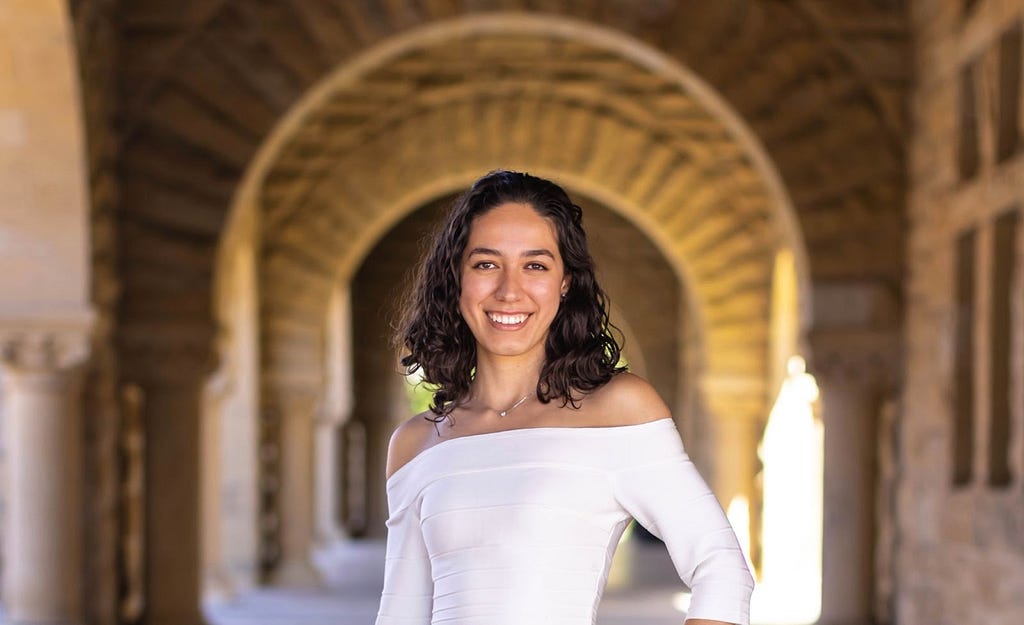
As a part of our series about “The Future Of The Quantum Computing Industry”, I had the pleasure of interviewing Maria Jose Lozano. Maria holds both bachelor’s and master’s degrees in Applied Physics from Stanford University, where she specialized in computational science and quantum engineering. She is a Quantum Hardware Engineer at IBM Quantum, leading efforts to optimize and benchmark superconducting processors. Her contributions to large-scale quantum benchmarking earned her an IBM Award for Outstanding Technical Achievement. Recently, her work has expanded to include quantum algorithms for chemistry simulations, with the broader goal of applying quantum computing to a wide range of real-world problems.
Thank you so much for doing this with us! Before we dig in, our readers would like to get to know you. Can you tell us a bit about how you grew up?
Thank you so much for having me — I’m really happy to be here!
Sure. I was born and raised in a loving family in Mexico City. As a kid, I had a mix of nerdy and sporty interests. I loved watching science documentaries with my dad — everything from space and physics to dinosaurs — and I got really into books about the universe. Like a lot of future physicists, I went through a big space phase. Outside of that, I tried three or four different team sports in school. Handball ended up being my favorite, even though it’s not that well known in the U.S. I liked how competitive it was — we all played to win — but there was also a great sense of fun and teamwork.
That mix of curiosity, discipline, and competitiveness really shaped me. It’s one of the main reasons why I’m excited to take on big challenges and jump into things I don’t know much about.
Is there a particular book that made a significant impact on you? Can you share a story or explain why it resonated with you so much?
One story that has had a big impact on me is “Story of Your Life” by Ted Chiang. Many people might be more familiar with its film adaptation, Arrival, but the original short story offers a deeply thought-provoking perspective on language, time, and human choice.
The story follows Dr. Louise Banks, a linguist tasked with developing a method to communicate with an alien species known as the heptapods. What fascinated me most is that the heptapods perceive time in a circular, non-linear way. Unlike humans, who tend to see time as a sequence of cause and effect, the heptapods experience the past and future simultaneously. Their worldview is rooted in a physics concept called the variational principle, which allows them to “see” the future — yet also accept that it cannot be changed.
This premise raises profound questions about free will. As Chiang writes, “If you know what’s going to happen, can you keep it from happening? Even when a story says that you can’t, the emotional impact arises from the feeling that you should be able to.” That idea — that even if the future is fixed, we still experience the emotional burden of making choices — is very interesting to think about.
Do you have a favorite “Life Lesson Quote”? Do you have a story about how that was relevant in your life or your work?
A quote that’s been repeated often in my family — especially by my mom — is: “If you don’t ask, you already have the no — but you might get a yes.” She and my dad would say it whenever my brother or I were doubting ourselves, and it’s something that left a lasting impression on me early on.
One moment where it really shaped my path was when I was applying to college. I was considering schools in Mexico and a few abroad, but I hesitated to apply to Stanford. My mom reminded me of that quote and encouraged me to aim high. She said, “The worst that can happen is things stay the same. But what if you do get in?” That shift in mindset pushed me to apply — and eventually led me to study physics there. That decision ended up opening doors I hadn’t even imagined at the time, including my career in quantum computing. If I hadn’t embraced that mentality, I might never have taken the leap.
Is there a particular story that inspired you to pursue a career in the quantum computing industry? We’d love to hear it.
I wouldn’t say there was a single defining moment, but more of a gradual evolution. I’d always been interested in physics — so much so that I used to say I’d study it just for fun, even if I never worked in anything related to it. My interest in computation came later, during college, thanks to Stanford’s most popular programming class: CS106A. It’s one of those classes everyone ends up taking — even art and history majors
That class opened the door to computer science for me, and from there I started exploring complexity theory and quantum algorithms. Over time, I realized how exciting and full of potential the field was. It combined my love of physics with a new curiosity for scientific computation — and I’ve been drawn to it ever since.
Can you share the most interesting story that happened to you since you began this fascinating career?
Earlier this year, my coworkers and I presented our work at the APS March Meeting, one of the largest physics conferences in the world. Our research focused on error mitigation techniques using stabilized noise in superconducting quantum processors. In simpler terms, we explored how to reduce errors in quantum chips by operating in environments where the noise is more stable.
Quantum computers are inherently noisy, and since we’re still in the pre–fault-tolerant era, we need clever ways to suppress that noise to get meaningful results. My part of the project focused on creating more stable conditions by calibrating qubits in ways that reduce fluctuations in performance.
What made the experience especially exciting was hearing researchers from other institutions talk about the same challenges — how noise limits their experiments, and how much they need automated calibration tools. It was one of those moments where you realize your work can actually help others in the field.
Can you share a story about the funniest mistake you made when you were first starting? Can you tell us what lesson you learned from that?
I’m not sure I’d call it funny — at the time, it definitely didn’t feel that way — but looking back, it’s a good reminder not to take myself so seriously. I tend to be hard on myself when I make mistakes, and early in my career, that was especially true.
One of my first real hands-on experiences in quantum hardware was helping wire up a quantum computer with over 150 qubits — one of the largest systems we had built at the time. It involved working on components inside a dilution refrigerator, which, if you’re not familiar, is a massive and extremely delicate system that cools qubits to near absolute zero. These fridges are worth millions and contain highly specialized parts made of materials like gold.
This happened within my first three months on the job. I was a little too heavy-handed and accidentally damaged a pin inside an expensive gold connector. There was no way to fix it — the entire piece had to be replaced. My mentors were very understanding and reminded me that everyone makes mistakes. But at the time, it felt huge.
None of us are able to achieve success without some help along the way. Is there a particular person who you are grateful towards who helped get you to where you are? Can you share a story about that?
Not a particular person, but rather a list of people who have been more than supportive. First, my parents — they noticed early on how much I loved science and always encouraged me to stay curious and ask questions. Then there’s my high school physics teacher, Herr Hubenthal, who made me realize that studying physics was a serious possibility, not just a passing interest. And finally, my college classmates and the career mentors I’ve worked with since. I’ve learned so much from them, and I’m constantly amazed by their work.
Are you working on any exciting new projects now? How do you think that will help people?
Yes! I’m currently working on a project that helps characterize errors and suggests ways to improve the fidelity of quantum circuits. This is especially important now, as we’re still in the noisy, pre–fault-tolerant era of quantum computing. Quantum computers are incredibly sensitive — they need to be constantly recalibrated and characterized to produce meaningful results. Without that, even well-designed circuits can yield unreliable outcomes.
My project creates a workflow that allows researchers to run their own characterization experiments before executing quantum circuits. The goal is to help them make the most of the hardware by improving result quality through smarter qubit selection.
We’ve already started using this approach in molecular simulations for quantum chemistry — specifically with sample-based quantum diagonalization — but we hope to generalize it to other areas as well. Ultimately, the idea is to make this technique more accessible and teach people how to apply it to their own work.

Ok super. Thank you for all that. Let’s now shift to the main focus of our interview. The quantum computing industry, as it is today, is such an exciting arena. What are the 3 things that most excite you about the quantum computing industry? Can you explain?
There’s a lot of excitement in quantum computing right now. It has the potential to become a truly powerful tool — one that can solve problems that are simply out of reach for classical computers. Here are the three areas that excite me the most:
First, algorithmic speedups. One of the most compelling promises of quantum computing is the potential for polynomial and exponential speedups. These could completely reshape fields like cryptography, materials science, and drug discovery by making currently intractable problems solvable. Shor’s algorithm for factoring large integers is a classic example. While exponential speedups are rare and hard to prove, many quantum algorithms already offer quadratic or polynomial speedups — and there’s active research into pushing those boundaries further. It’s exciting to think about how these advances will unfold.
Second, drug discovery. Quantum computing could have a major impact on how we design and test new medicines. By simulating molecular interactions more accurately than classical methods allow, we could significantly reduce the time and cost of drug development. Right now, researchers are using hybrid quantum-classical techniques like sample-based quantum diagonalization to study small molecules. It’s early days, but I’m optimistic about scaling these methods to simulate larger and more complex systems, with real-world medical applications.
Third, reaching the fault-tolerant era. Fault tolerance means quantum computers will be able to detect and correct their own errors, making them much more stable and reliable. Getting there will require overcoming big challenges — like improving scalability and reducing error rates — but once we do, quantum computers could become a general-purpose tool. Beyond chemistry and physics, they could be used to solve problems in finance (like risk profiling, portfolio optimization, or market prediction), and even enhance AI by handling larger, more complex data with greater speed.
What are the 3 things that concern you about the quantum computing industry? Can you explain? What can be done to address those concerns?
There are many challenges ahead, but here are three that I think are especially important.
First, scalability. To get to fault-tolerant quantum computing, we need to dramatically increase the number of qubits — not just to increase computational space but to build logical qubits. These are made by grouping many physical qubits together to behave like a single, more reliable qubit that can detect and correct errors as they happen. But scaling up to that level is tough. We’re limited by things like fabrication processes, wiring, chip design, cost, just to name a few. Today’s largest quantum chip, built by IBM Quantum, has around 1,100 qubits, but to reach fault tolerance, we’ll likely need millions. There’s still a long way to go, and a lot of room for innovation.
Second, error rates. Even if we have enough qubits, they also need to be stable enough. Qubits and gates have to operate below a certain error threshold — a point where error correction becomes effective. If the error rate is too high, the error correction techniques can actually make things worse. So, we need to keep pushing the boundaries of hardware performance to get those error rates low enough to support reliable computation.
Third, workforce development. Building a fault-tolerant quantum computer won’t be enough if researchers and professionals don’t know how to use it. We need to invest in education and training to ensure that people across academia and industry — particularly those outside traditional quantum backgrounds — can adopt quantum computing as a practical tool in their own fields. Much like the rise of AI, the goal is to make quantum accessible and usable by a broader scientific and engineering community.
As you know, there are not that many women in this industry. Can you advise what is needed to engage more women in the quantum computing industry?
I think this starts much earlier than people often assume — well before high school. The real challenge isn’t just getting more women interested in quantum computing or STEM in general; it’s making sure they stay. That means creating support systems and opportunities for women at every stage, especially in the early pipeline. Retention efforts matter just as much as recruitment, and the earlier we start, the better.
In 2022, I was a Global Quantum Computing Fellow with Womanium, a non-profit that partners with industry, government labs, and academia to create opportunities for women in STEM. Our summer program attracted thousands of participants from over 100 countries, and focused on giving women foundational training in quantum algorithms and hardware. Beyond technical education, we also built connections to real job opportunities through partnerships, so participants could see a clear path forward in the field. I think programs like these are key to building a more diverse and inclusive quantum workforce.
What are your “5 Things I Wish Someone Told Me When I First Started My Career In Quantum Computing” and why. (Please share a story or example for each.)
1. “Quantum computing is broader than you think.”
From algorithms and hardware to software, product, and even sales — there’s no one “quantum computing” job. It’s a highly interdisciplinary field, and it takes people from all kinds of technical backgrounds to move it forward.
2. “Stay patient.”
We’re building the first quantum computers in the world — how wild is that? It’s exciting, but it also takes time. Things don’t always move fast, and that’s okay. Don’t get discouraged by long timelines or unexpected setbacks.
3. “No, you don’t have to have studied physics to work in quantum computing.”
Sure, a lot of roles require deep knowledge of quantum mechanics — but many others don’t. I work with software engineers, product managers, and sales people who didn’t take a single quantum class in college. It all depends on the role.
4. “You can never take too many CS classes.”
My work draws heavily on physics, but none of it matters if I can’t turn it into code. Everyone I work with is a strong programmer — it’s just part of the job.
5. “The most common question you’ll get is: ‘What is quantum computing? — so be prepared to answer it.’”
I still don’t have a perfect answer. It’s hard to explain quantum computing without first explaining classical computing — and you’ll lose most people as soon as you start talking about classical bits. Now try going from that to quantum bits! Sometimes it’s better to shift the question and talk about what quantum computing can do instead — like simulating molecules or solving hard optimization problems — but that’s technically answering a different question.
You are a person of enormous influence. If you could inspire a movement that would bring the most amount of good to the most amount of people, what would that be? You never know what your idea can trigger. 🙂
Just be kind and non-judgmental. Everyone learns at a different pace, and everyone makes mistakes. I’ve really appreciated the people who were patient and tolerant with me — especially at the start of my career, when I needed it most. A welcoming and kind environment goes a long way in encouraging people to try new things and keep learning. I think that alone can make a big difference in people’s lives.
We are very blessed that prominent leaders read this column. Is there a person in the world, or in the US with whom you would love to have a private breakfast or lunch with, and why? He or she might just see this if we tag them 🙂
Katya Echeverria! She is the first Mexican-born woman to travel to space.
Quamputers: IBM’s Maria Jose Lozano On The Future Of Quantum Computing was originally published in Authority Magazine on Medium, where people are continuing the conversation by highlighting and responding to this story.