“The film touches on important questions without telling you what to think. It invites you to consider why immigrants are important in this country and how the relationship between humans and animals, like horses, has developed throughout the centuries. It makes you think about those concepts and how we want to move forward. The film achieves this without hitting you over the head, without having talking heads telling you what to think, and without relying on heavy music.”
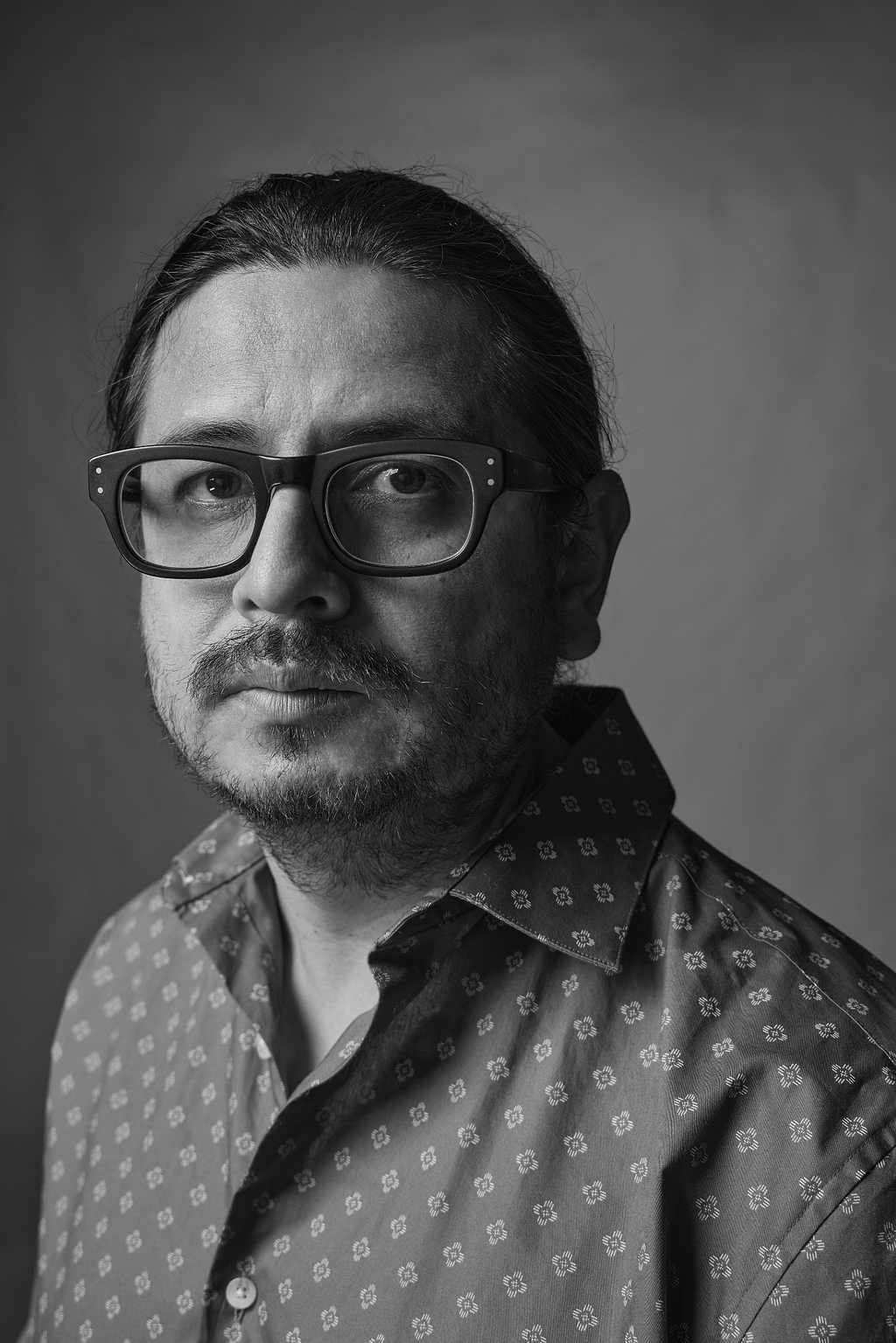
I had the pleasure of talking with Raúl O. Paz-Pastrana. For a man whose camera captures the heavy, hidden truths of the American working class, he carries himself with a remarkable lightness. He is a documentary filmmaker who doesn’t want to preach to you, yell at you with heavy-handed musical scores, or force-feed you a specific message. Instead, he simply opens a door to a world you probably didn’t know existed and trusts you enough to let you walk through it.
His journey to the director’s chair wasn’t paved with film school connections or Hollywood networking. It started in the rugged terrain of his own life. “I’m originally from Mexico,” he explains. “I migrated to the United States in the 90s, and I’ve been here since. I moved to the mountains of Colorado and then I moved to New York for a little bit.” He made the journey with his mother and two sisters, and while his career eventually pulled him to the bustling streets of New York in the 2000s, Colorado remains his true north. “Even though I’ve moved out, it seems that I always come back here,” he says.
The actual spark that ignited his filmmaking career didn’t happen in a cinema. It happened during the seven years he spent working and volunteering at the Pine Ridge Indian Reservation in South Dakota. He was there supporting anthropological work when a friend asked if he wanted to help film interviews with the local residents. Three hundred interviews later, a profound realization hit him. While most outsiders only parachuted in to make bleak movies about depression and alcoholism, he saw something entirely different. “What we saw was also a bright community that shared love and gave to each other through their giveaways and their sharing of work,” he recalls. They made a film about this informal economy called Rezonomics. Witnessing the raw power of that medium changed the trajectory of his life forever. He knew he had to be a filmmaker.
That path, however, is notoriously brutal. Documentary filmmaking is an exercise in extreme patience and constant pivot. Both of his feature films took five years to make. When asked about dealing with rejection, he embraces the chaos of the craft. “That is pretty much documentary making in a nutshell,” he admits. “When we got a ‘no’ for some grants, we secured other grants that helped us make the film in a different way.” He notes that losing subjects or funding sources forces you to focus on others, ultimately shaping the final cut.
Right now, the focus is squarely on his latest project, BACKSIDE: The Unseen Hands of Horse Racing, which premiered on Independent Lens and is now available to stream on the PBS App or PBS Documentaries YouTube Channel. The film strips away the mint juleps, the massive hats, and the high-society glamour of the Kentucky Derby to look at the immigrant grooms who actually keep the industry breathing. “You’re going to learn about the workers who take care of these million-dollar horses every day, seven days a week, year-round,” he says.
Instead of relying on talking heads to spoon-feed the audience a political stance, the film is intensely observational. It runs purely on the natural sounds of the stables and the dirt tracks. “I feel that sometimes, for people like me, when I’m told what to think using heavy music and talking heads, I shut down,” he explains. “This film invites you to engage in difficult conversations instead of dictating a message.”
The title itself is a nod to the physical reality of the track. The “front side” is where the wealthy place their bets, and the “backside” is where the workers live and toil. He chose the name because it honors how the people there actually speak. “It’s an invitation to give it its own meaning,” he says. “It’s about treating your audiences with respect.”
Treating the audience with respect also means creating art that isn’t trapped in the current news cycle. Even though his 2019 film Border South and his current work deal heavily with immigration, he deliberately avoids time-stamping his footage. He wants his movies to feel like opening a classic book from another era, offering a pure, unfiltered experience rather than an academic lesson.
But carrying the stories of marginalized communities takes a heavy toll. He is incredibly candid about the mental grind of his profession. “People who make documentary films are really bad at self-care. It’s horrible,” he confesses. “I would say BIPOC communities are even harder on themselves because our films represent our communities as well. We sometimes feel that we’re going to fail them if something goes wrong… We carry that weight, so we don’t give ourselves breaks.”
To survive the five-year marathons of making a movie, he has had to learn how to actively step away. When he hits a wall, he doesn’t just watch more movies; he turns to poetry and sci-fi. “I feel that reading is what fulfills me when I’m lost,” he says. Beyond the page, he grounds himself in the simple, quiet rhythms of real life by taking long-distance bike rides, walking his dog, and spending time with his wife and kid. “Identify those things,” he advises. “People might call them hobbies, but they are actually what keeps you centered when things get hard.”
By staying true to himself and remaining centered in the storm, he has managed to create a body of work that is as deeply human as the people he films. He isn’t just pointing a camera at the world; he is asking us to actually look at it.
Yitzi: Raúl, it’s such a delight to meet you. Before we dive deep and talk about your work, our readers would love to learn about your personal origin story. Can you share the story of your childhood, how you grew up, and the seeds for all the amazing work that has come since then?
Raúl: Yeah, I’m originally from Mexico. I migrated to the United States in the 90s, and I’ve been here since. I moved to the mountains of Colorado and then I moved to New York for a little bit. I migrated with my mom and two sisters, and we made Colorado our home back then. Even though I’ve moved out, it seems that I always come back here.
Yitzi: That’s great. What brought you to the film industry? What’s the story behind that?
Raúl: I was not expecting that question because I was more focused on BACKSIDE, but personally, what got me into the film industry was the time I worked in the Pine Ridge Indian Reservation for seven years in South Dakota. I was mostly volunteering to support anthropological work by CSU, but also several nonprofits, including Village Earth. A friend of mine who knew how to make films asked me if I wanted to work with them. Because we had been volunteering there for so many years, we actually got hired to do interviews of the residents of Pine Ridge. We did about 300. After that, we decided to make a movie about the informal economy. Most movies about Pine Ridge focus on alcoholism, suicides, or depression. What we saw was also a bright community that shared love and gave to each other through their giveaways and their sharing of work. We wanted to do a film about the informal economy, and it became Rezonomics. After seeing that film and the power of film, I realized I wanted to make films. That journey took me to New York, where I made my first film and started building my career in the 2000s.
Yitzi: There’s a saying that ‘no’ is not rejection, but redirection. Do you have a story like that where you got a ‘no’ to an opportunity, but that led to an unexpected blessing?
Raúl: That’s a good way to look at film. That is pretty much documentary making in a nutshell. For example, when we got a ‘no’ for some grants, we secured other grants that helped us make the film in a different way. Some people who were originally part of this film or other films decided not to participate later, and that forced me to focus on certain characters instead. That concept is completely true; I agree with it on different levels for different films.
Yitzi: Beautiful. Let’s talk about this film. Please tell our readers, from your unbiased opinion, why out of all the films out there, they have to watch this one.
Raúl: Unbiased opinion. Well, there are many reasons to see this film. First, it is a beautiful film. It was done with a lot of love and a lot of care. Even if you aren’t part of the racing industry, it will take you into a world that you wouldn’t expect to learn about. You’re going to learn about the workers who take care of these million-dollar horses every day, seven days a week, year-round. You’re going to be immersed in a world you were not expecting, and you’re going to have fun. I think the way it was made is very beautiful. Second, the film touches on important questions without telling you what to think. It invites you to consider why immigrants are important in this country and how the relationship between humans and animals, like horses, has developed throughout the centuries. It makes you think about those concepts and how we want to move forward. The film achieves this without hitting you over the head, without having talking heads telling you what to think, and without relying on heavy music. A lot of the film doesn’t use music at all; it relies purely on the natural sounds of the location. I feel that sometimes, for people like me, when I’m told what to think using heavy music and talking heads, I shut down. This film invites you to engage in difficult conversations instead of dictating a message. In that way, it’s more of an open invitation to come in without feeling the urge to shut down.
Yitzi: As you know, the Kentucky Derby is one of the most celebrated traditions and icons. What do you hope people will reconsider, or what else would you want people to think about the Kentucky Derby after they see the film?
Raúl: This was more of an invitation to see the Kentucky Derby in a different way. Usually, people only see the Derby from the front side. It’s an entire ecosystem. I could have made a movie ranging from the evangelicals outside greeting people, all the way to the people inside with their hats and fashion. But I wanted to share a different way people experience it — specifically, how the workers experience it on the backside. It’s a party back there too, and it’s fun. I shot it that way specifically as an invitation to experience the Kentucky Derby differently. We have the two minutes of glory, but you only see the workers looking at the camera. There is no heavy message on the Derby itself; it’s mostly just offering a different way to experience that massive tradition.
Yitzi: Now, the name itself, Backside, I think is a brilliant double entendre. What did you want to evoke with that name? What did you want to convey?
Raúl: Backside is interesting because that is what it’s actually called. It’s called the backside and the front side, so there is no going around it. If you know horse racing, you know what the backside is. There is also no proper translation for it in Spanish. Backside became a way for the film itself to give the word its meaning for those who do not know. For those who do know the industry, they understand right away. But if not, you’ll think a little bit and realize it’s about the back area where the workers are and the horses live, instead of the front where people bet. It’s an invitation to give it its own meaning. It is hard to explain to people who do not know the industry well. The easiest way is to say the workers are on the back and the people that bet are on the front. I wanted to honor how the people there express and describe that area. It just made sense. I try not to be intentionally difficult. My last film was Border South, and if you watch the film, you’ll understand why it’s named that. Those who know about immigration and migrant trails understand it right away. It’s about treating your audiences with respect. You’re going to learn what it is as it is.
Yitzi: Getting a film on PBS is a huge milestone and a breakthrough. What’s the process? How did you achieve that? What do you have to do to do that?
Raúl: I’ve worked with PBS before, mostly for hire. A lot of my shorts have aired on PBS, and my last feature was on PBS as well. Documentary filmmaking is very competitive, so I am very happy that Independent Lens and POV are releasing the film. They funded most of it. ITVS was one of our biggest funders, along with Latino Public Broadcasting. You start with that funding, which I think is even harder to get right now with all the cuts. We’re lucky we secured that funding, and it opened the door for a bigger chance to be broadcast the way it is right now. You achieve it by making a film, building connections from different projects, and having an appealing team. I feel that when they fund a film, it’s also a leap of faith for them because I’m sure many projects don’t get finished. It takes luck and hard work to get things rolling, and you hope they go your way. Luckily, this one happened to work out.
Yitzi: The issues of immigration and inequality are headline grabbers today. Do you think this film would be as relevant 20 years ago? In other words, do you think this is a timely film, or could it be as relevant at another time?
Raúl: I don’t entirely like answering that question because my last film, Border South, was about immigration, and I was hoping it wasn’t going to be relevant right now, but it is very relevant. Through its educational distribution over the last couple of years, it has had a lot of views and created many opportunities. I made that film in 2019. I was hoping it would be timely and stay in the past, but somehow it is still relevant. So, I have to say that I don’t know. I think the power of an observational film that is not time-stamped is that you can approach it in different ways. Hopefully, this new film isn’t as continuously relevant as Border South was in terms of its underlying issues. At the same time, it’s a testament to something that happened, and people can watch it in the future and see how things were. Hopefully, they will see how it was, and not how it currently is, because things will have gotten better. I hope people see it more as a cinematic experience in the future, rather than focusing purely on the immigration and working-class components, because ideally, we will have overcome those issues.
Yitzi: When you say it’s not time-stamped, does that mean it’s ambiguous as to when it is? Does that mean you don’t see modern cars, or does it mean something else?
Raúl: I simply don’t put a year on it. It’s a window into what is happening now in a way that you can still enjoy it in a different year. Sometimes, if you attach a specific year to a film, you give it an academic view and inadvertently guide the audience to think about it that way. Without a strict timeline, it’s more of an invitation to step into this world. Years from now, it remains more of an experience. I’ve done films where I clearly define the time, and when I do that, it is highly intentional regarding how I want the audience to think. In this one, I want the audience to experience it in a different way. I think that makes it timeless. It is like reading a book that was written in a different era; you are simply invited to go into its world. Observational cinema, specifically when done well, ages better in that regard. For example, there is a beautiful film about a racetrack in New York that Freeman directed in the 80s. When I see it now, obviously everything has changed, but I don’t care about the time because it’s a pure experience of that world from Freeman’s framing.
Yitzi: Okay, this is the centerpiece of our interview, our signature question. Raúl, you’ve been blessed with a lot of success now, and you must have learned a lot from your experiences. Looking back to when you first started filmmaking, can you share five things that you’ve learned over the years that would have been nice to know in the beginning?
Raúl: The real question becomes: if I had known them, would I have taken the same path? For instance, you think you’re going to make a feature film in a year or three, and then it becomes five or six. Both of my features took five years. I wonder, if I had known that at the beginning, would I have kept going? I don’t know if I would have wanted to know that then. The patience required to make these films is something you have to earn and learn through the experience of making them. I can share a few key takeaways, though. First, making a film is not easy. But if you put in the work and finish the film, you learn something from it, even if it’s not the exact film you conceptualized at the very beginning. You learn from it so that your next film is better. Every film you make gets better. The perfect film might never happen, and that’s okay, because the whole point of making a movie is that you keep learning, testing things, and experimenting. Be patient and just do them, because the next one will be better. Second, stay true to yourself. Just because chaos comes in doesn’t mean you have to change who you are or the things you’re making. Stay true to why you started doing this in the first place. When things get hard, always think about your original intent. If the answer has changed, then don’t do it anymore. If the answer just got lost, reminding yourself is a great way to get passionate again. Finally, read a lot. A lot of people say to watch movies, and I do watch a lot of movies, but I get much more out of reading. If there is a specific way you want to make a film, read about it. Read sci-fi, read poetry, read whatever you think is going to give that film its style. We don’t mention the reading part enough. I feel that reading is what fulfills me when I’m lost.
Yitzi: On a personal level, can you share some of the self-care routines that you do to help your body, mind, and heart to thrive?
Raúl: People who make documentary films are really bad at self-care. It’s horrible. A lot of us feel like we don’t deserve it because the film is taking a long time or isn’t finished. We’re really hard on ourselves. I would say BIPOC communities are even harder on themselves because our films represent our communities as well. We sometimes feel that we’re going to fail them if something goes wrong or if the film doesn’t turn out a certain way. We carry that weight, so we don’t give ourselves breaks. That is something we definitely need to work on. When I finally pass those mental hurdles and realize I deserve a break to heal myself, I do long-distance biking. I also have a dog, and walking her keeps me centered. My last dog actually helped keep me from smoking. I have a kid, and I love playing with them and going biking with my family. Finding time to read is a privilege nowadays, so I use it strictly as a way to take care of myself. You have to find those things that fulfill you, so when things get harder, you can go back to them. For me, it’s biking, reading, and being with my kid, my wife, and my dog. If I can’t bike, I walk. Identify those things. People might call them hobbies, but they are actually what keeps you centered when things get hard.
Yitzi: Raúl, how can our readers watch the film, explore your other work, and support your work in any possible way?
Raúl: You can watch the film starting today on PBS and Independent Lens. Keep supporting PBS and all the amazing films that are coming out. Afterward, the film will also live on Apple TV, Amazon Prime, and through PBS distribution. My website is Raúlpastfilms.com. I’m not really good at social media, but I’m doing my best right now because of this film and another one coming out. Just follow the links on the PBS app and PBS YouTube.
Yitzi: Raúl, it’s so nice to meet you. I wish you continued success, good health, and blessings, and I hope we can do this again next year.
Raúl: Thank you, Yitzi. Those were great questions. I appreciate you.
Yitzi: Thank you so much. It means a lot from you. Thank you so much. Have a good day.
Raúl: You too. Bye bye.
Raúl O. Paz-Pastrana on BACKSIDE, Immigrant Labor and Reframing the Kentucky Derby was originally published in Authority Magazine on Medium, where people are continuing the conversation by highlighting and responding to this story.