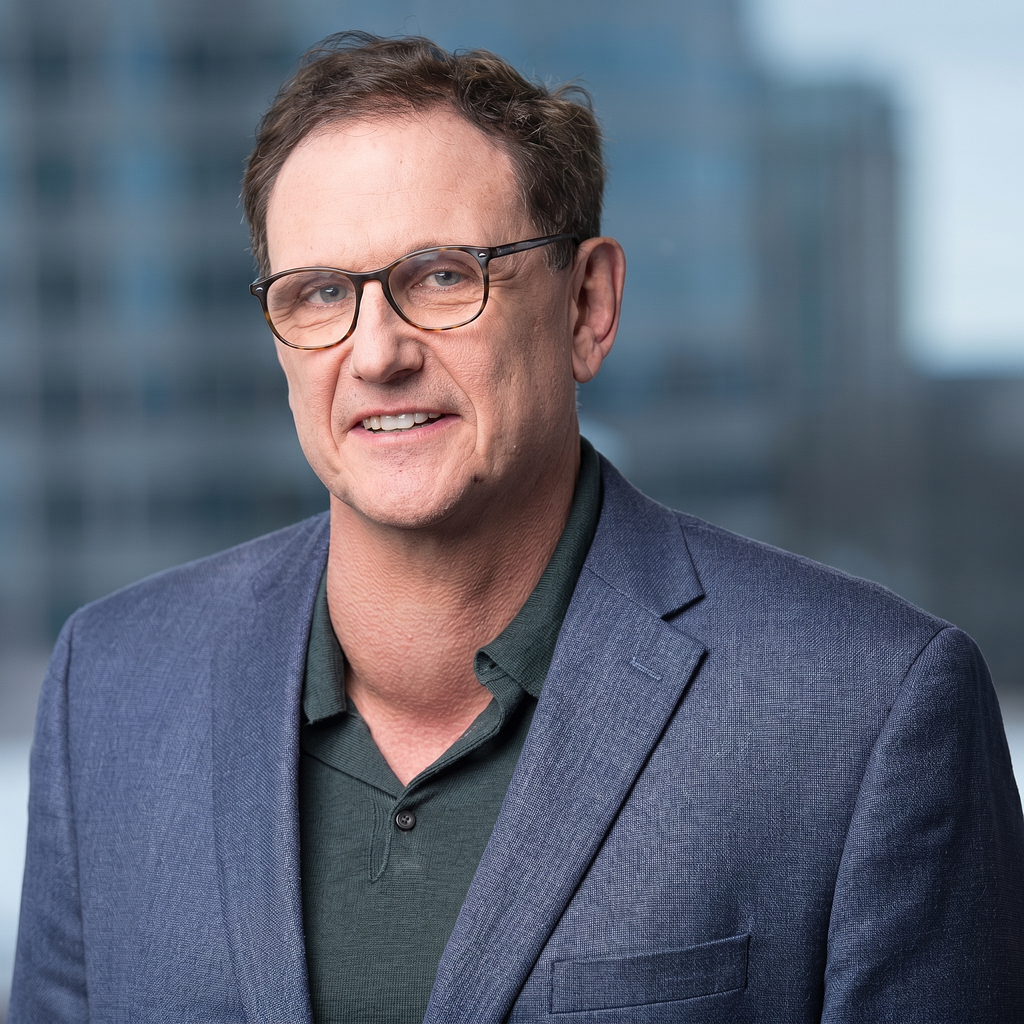
Ron Packard on Building a Global School Network, AI’s Impact and Why Competition Drives Better Education
…I have been a warrior for school choice, advocating for parents to have options for their children. That idea has spread, but it is nowhere near where it needs to be. Our children are our most important assets. As a parent, the most important thing I will ever do is raise my kids, and I think most parents feel the same way. Every child should be able to achieve whatever they want in life when they have access to a great education and are truly engaged in it. I want a world where that exists not just in the United States, but everywhere. Someone with the potential of Albert Einstein could be born in a remote area, and their talent should be allowed to flourish. Creating a world where children can access their aspirations is the movement I want to drive. School choice is a part of that, but not the entirety of it. The world is getting smaller, and I am excited that we get to work globally. I am particularly passionate about working in sub-Saharan Africa. Delivering a great education for $1,000 a child in a region with 100 million kids and a rapidly growing population is incredibly impactful. That is probably my biggest aspiration…
I had the pleasure of talking with Ron Packard. To understand how a man ends up running more than 190 schools across the globe, you have to trace his steps back to the assembly language of an Abrams tank. Long before Packard became the founder and CEO of Global School Management, a massive educational network serving over 60,000 students across the United States, Europe, the Middle East, and Africa, he was just a kid on Long Island staring up at fighter jets.
Born in New York City, Packard grew up in Bethpage with a father who designed radar systems for the F-14 Tomcat. “I vividly remember, when I was probably four years old, going with him to work and looking at this massive Grumman company,” Packard recalled. Seeing tens of thousands of people building complex machines for a company started by one man left a permanent mark. “That was probably my first thought of wanting to be an entrepreneur. I think that was really where it emanated from.”
When his family moved to Southern California, his father transitioned to designing night vision and fire control systems for military tanks. This paved the way for Packard’s very first job: working as a summer engineering student at Hughes Aircraft, programming the microprocessor for the Abrams tank turret.
From those highly technical beginnings, Packard’s trajectory took a sharp turn into high finance and global consulting. After graduating from UC Berkeley and earning an MBA from the University of Chicago, he cut his teeth as an analyst at Goldman Sachs and later at McKinsey & Company. He spent years globe-trotting, working on projects spanning biotech in Japan to forestry in South America. But the turning point came in Santiago, Chile, where a phone call ultimately changed the trajectory of his life.
The call was from controversial financier Mike Milken, looking for a partner in a new education investment venture with software billionaire Larry Ellison. Packard flew to Los Angeles and quickly found his true calling. “I became convinced that technology and a free marketplace would revolutionize and greatly improve education,” he said. “I believe in entrepreneurship, free markets, and that competition makes everybody better.”
This core philosophy became the engine for his entire career. He quickly developed a thesis that standard daycare could be transformed into early childhood education, launching what would become Knowledge Learning Corporation (KLC), the largest early childhood company in the world. He didn’t stop there. Anticipating the rise of the internet, Packard founded K12 Inc. while still running KLC. He recruited prominent political figures like Dr. William J. Bennett to build an online public school system from scratch, eventually growing K12 into a near-billion-dollar enterprise.
But by 2013, Packard was restless. He wanted the freedom to build physical schools and expand internationally without the restrictive red tape of a public company solely focused on virtual learning. He stepped down and formed Global School Management. His vision was ambitious: provide education for kids from birth through high school anywhere in the world, using flexible curricula delivered online, in person, or as a hybrid model.
Today, GSM’s portfolio of schools spans ~75 daycare centers, 85 brick-and-mortar charter schools, and 25 online schools and programs. His team authorizes high-performing government schools in the UK, and operates a number of international private schools including an elite IB school in Switzerland, and a massive hybrid school in the Middle East. Perhaps most notably, Packard took a failing school in Kampala, Uganda, and transformed it. “I wanted to see if I could successfully run a school for $1,000 per child,” he noted. “It turns out we can. That school was rated poor by the government when we purchased it, and it is now one of the highest-performing non-selective schools in the entire country.”
When asked about the decline of the American public education system, Packard does not mince words. He points to complex societal shifts, including the degradation of the family unit and a massive crisis in teacher retention. With modern families often having both parents working, he advocates for longer school days and highly structured, systematic instruction so teachers know exactly what to teach and how to measure it.
Yet, his ultimate solution comes back to his deep-seated belief in the free market. “LeBron James would not be the incredible basketball player he is if he didn’t have to compete,” Packard argued. “He could have stopped practicing in seventh grade and still beat me, but he had to play against Kobe Bryant, Kevin Durant, and other greats. Competition makes everybody better.”
Looking ahead, Packard is expanding his operations into Egypt and Qatar, while heavily investing in educational software powered by artificial intelligence. But ironically, as AI advances, Packard is pushing for a return to ancient methods. He is opening classical academies focused on the Socratic method, emphasizing logic, reasoning, and rhetoric. “Soon, most basic facts will be retrieved by asking ChatGPT, Claude, Gemini, or Grok,” he warned. “What truly matters now is teaching values and virtues, because AI is soulless. If an AI determined that eliminating humans would save the planet, it might execute that. We need people with values to guide us safely forward.”
For Packard, it all comes down to unlocking human potential, regardless of geography. He envisions a world where a child with the potential of Albert Einstein, born in a remote area, has the exact same opportunity to let their talent flourish. Whether through an online portal in Ohio or a physical classroom in Sub-Saharan Africa, his lifelong mission remains clear: giving every student the tools they need to achieve their aspirations.
Yitzi: Hello Ron, it’s so nice to meet you. Before we dive in and talk about your work, our readers would love to learn about your personal origin story. Can you share the story of your childhood, how you grew up, and the seeds and genesis for all the amazing work that has come since then?
Ron: I was actually born in New York City, believe it or not, and we lived on Long Island in Bethpage. My father was a radar designer for the F-14 Tomcat. I vividly remember, when I was probably four years old, going with him to work and looking at this massive Grumman company. It was Grumman Aerospace. I thought it was amazing that all this started from one guy. I thought it was the coolest thing ever that a man named Leroy Grumman started this company, and now tens of thousands of people were working for it, building these jets. That was probably my first thought of wanting to be an entrepreneur. I think that was really where it emanated from. Then we moved to Southern California because the F-14 went into testing at Point Mugu Naval Air Base. After about four years, they were supposed to go back, but my parents decided they liked Southern California. My dad switched from being an expert in radar systems to becoming the world’s expert in night vision systems and fire control systems on tanks. This led to my first job, which was programming the microprocessor for the Abrams tank in assembly language to control the turret. That was my very first real job, working as a summer engineering student at Hughes Aircraft. I worked for them every summer and during the school year, mostly doing computer programming.
When I was graduating, I went to Goldman Sachs. I had no idea what an investment bank was or what they did, but people said it was a good place, so I went to work there. I worked as an analyst, spent a year in the London office, a year in New York, and then went to the University of Chicago for business school while still working for Goldman Sachs. I really thought I would go back there, but I still had an inkling that I eventually wanted to start something, though I had no idea what. I ended up going to McKinsey. I had an amazing experience there, working all over the world. I worked in Portugal, Norway, and spent nine months in Japan, doing very interesting projects in biotech, banking, and semiconductors. I also did a project in forestry. The CEO called me and asked if I wanted to go down and run a forestry company for them in South America. At that point, I had just had my first child. I met my wife in business school, and we thought this was our only real chance to go abroad, as I wanted to raise my kids the way I was raised, with athletics and everything. So, we went to Santiago, Chile. I did that for two years and then got a call in my office one day from Mike Milken. They were looking for a partner in an education investment company that he and Larry Ellison had started. I flew to Los Angeles, interviewed with them, and became convinced that technology and a free marketplace would revolutionize and greatly improve education.
This is something I believe in for any industry: I believe in entrepreneurship, free markets, and that competition makes everybody better. I took the job to do equity investing in education companies. Five months in, after reading everything, I developed a thesis that we could change daycare into early childhood education. We did a tender offer and took a company called Children’s Discovery Center private. Three months into it, Mike suggested I become the CEO. That was my vision, so I started what is now known as KLC, which is the largest early childhood company in the world. I strongly believe that if kids could enter kindergarten more prepared, particularly children from disadvantaged or at-risk communities who lack vocabulary, we would be in a much better place. Getting them ready and competitive with suburban kids or kids from affluent families was the thesis, and it worked out really well. It was a huge success in every way. About a year into that, I had another idea. I started looking at charter schools and invested in a company called Charter Schools USA, which is now one of the largest charter school companies. With the internet coming of age and a large trend in homeschooling that started mostly religious but was becoming half non-religious, I realized we could create online public schools where kids would never go into a building. I started K12 Inc. while running the daycare company and recruited Bill Bennett to be the chairman. I had been involved in Empower America with Bill and Jack Kemp, so Bill signed on and had a strong vision of what a curriculum should be. We hired John Holdren, the author of the ‘What Your Third Grader Needs to Know’ books with the Core Knowledge Foundation, alongside E.D. Hirsch. For a while, I ran both companies. K12 required so much effort; we launched the first online school right before 9/11. I grew that company and ran it from 2000 to 2013.
However, I had one more venture in me. I wanted to create another company that would not be as restrictive as a public company solely focused on online education. I wanted to do brick-and-mortar schools. We had conducted pilot programs with technology in brick-and-mortar classrooms that yielded amazing results, and I wanted to expand internationally. This was difficult to achieve in a public company scenario. Some investors thought it was a great idea, but some board members did not. So, I offered a one-year transition period and then started my next venture. I formed Pansophic Learning which grew into Global School Management. The idea was to provide education from ages 0 to 18+ anywhere in the world, using British, American, or IB curricula, delivered online, blended, or in-person. Different kids need different learning environments. We launched with the backing of a private equity firm called Safanad, which had invested in my previous two companies and was closely aligned with us on our vision for impact. It has been an exciting journey. We have 75+ daycare centers and 85 brick-and-mortar charter schools. We have proven that we can turn around failing schools and make them good at scale, which I am not sure anyone else has truly accomplished. I also had the chance to return to online education after my non-compete with K12 expired.
We are now the third-largest online provider, building another K-12 footprint within Global School Management. Overseas, we sponsor seven government academies in Sussex, UK, through our Aurora Education Trust, and they are all high-performing. Very few private companies do that. We also have a high-performing IB school in Switzerland, which I bought out of K12, and a Middle East online hybrid school, which is the largest in the GCC. Furthermore, we bought a school in Kampala, Uganda. I believe sub-Saharan Africa is a place where we can help many people, and I wanted to see if I could successfully run a school for $1,000 per child. It turns out we can. That school was rated poor by the government when we purchased it, and it is now one of the highest-performing non-selective schoosl in the entire country. So, that is the journey. I have three kids, and my family and my work are pretty much my entire life. I play golf occasionally, but my priorities are my kids and my work.
Yitzi: That is an amazing story, and you are a wonderful storyteller, Ron. Thank you so much. Please tell us about any new and exciting initiatives you are working on now. What can we expect in the near future?
Ron: Right now, we are doing a couple of things. We are pushing into the GCC. When you look at the population growth, the demand for high-quality education, and their affinity for the private sector, it has created a wonderful opportunity. We are opening a large, very high-end British school in Cairo. Most people don’t realize Cairo has almost 30 million people. I am really excited about it because the very first school in the world was in Egypt around 2000 BC, and you can actually see records of it in hieroglyphics. I always thought it would be very cool to open a school in Egypt where it all began 4,000 years ago.
We are also opening another high-end school in Doha. Another exciting initiative is AMP/edu, a comprehensive school software and curriculum hub we created for our own needs that runs every type of school. It is a mixture of proprietary content and curriculum combined with best-of-breed systems; if someone already had a good product, we didn’t rebuild it. It powers all of our schools, both online and brick-and-mortar. This past year, we sold it for the first time to an external party. They were able to reduce their cost structure significantly, and early results show that student learning has increased substantially. The idea of selling this to third parties to help school districts and private schools become better and more efficient is very exciting to us. We continue to invest heavily in it so it improves every year, including adding many AI features this year.
Between the software, the Middle East expansion, and adding new states for our virtual schools, I am very enthusiastic. Expanding virtual schools state by state is a very laborious process. If you haven’t done it before, it feels almost impossible. I spend a lot of my time meeting with state boards, charter commissions, and school districts, hoping to eventually build a footprint that covers the entire country.
Yitzi: Based on your experience and knowledge of education reform, how do you think we can turn public schools around? What lessons can we learn from your success? We used to have the best public education system in the world, but it is not what it used to be.
Ron: It is not what it used to be, and there is a long answer as to why. The world around schools has changed dramatically, and the school model has not adapted fast enough. Families are under more pressure, students need more structure and support, and schools are facing real teacher recruitment and retention challenges. We can either complain about that reality, or we can adapt the school model to meet the world students, families, and teachers are living in now.
My belief is that we need more systematic instruction, stronger curriculum, better assessments, and clearer tools for measuring student mastery. We also need to make it easier for teachers to be effective. One of the things our AMP system does is provide every lesson for every day, along with assessments, so teachers know exactly what to teach and how to measure mastery. Theoretically, you or I could step into a classroom today and know what needs to be taught.
That does not replace great teaching. It supports it. Great teachers will always matter, but the system should not depend on every teacher reinventing the wheel every morning.
Second, the school day will eventually need to be longer. In 1950, 90% of kids had a parent at home; today, that number is less than 20%. The 3:00 PM to 6:00 PM window is often completely unsupervised. The more we can get kids into after-school programs — whether it is playing sports or sitting in a room to complete homework with help available — the better. Online platforms also allow us to provide more individualized tutoring at a lower cost. I don’t think there is a single silver bullet. You see some AI-driven schools where a child looks at a computer screen that ensures they don’t look away. For a highly motivated kid, that works, but all children learn differently, as you can see even with your own kids.
However, I believe the real solution is a combination of technology, proper evaluations, systems, and, most importantly, competition. LeBron James would not be the incredible basketball player he is if he didn’t have to compete. He could have stopped practicing in seventh grade and still beat me, but he had to play against Kobe Bryant, Kevin Durant, and other greats. Competition makes everybody better. I am not aware of any instance in human history where competition has done anything other than provide the consumer with a better product at a better price, and education is no different. One of the powerful aspects of charter schools is that school districts now have to compete for students, which improves the entire system, and the evidence supports this. In Ohio, we offer bilingual schools for English Language Learners, sports academies for athletic training, science schools, and art schools. We also have classical academies, which I am particularly excited about in the age of AI.
Soon, most basic facts will be retrieved by asking ChatGPT, Claude, Gemini, or Grok. What truly matters now is teaching values and virtues, because AI is soulless. If an AI determined that eliminating humans would save the planet, it might execute that. We need people with values to guide us safely forward.
Classical education also emphasizes logic and reasoning, which will be critical in an AI-driven world. The final component is rhetoric, or communication. The ability to communicate effectively will be essential for professional success. If we go back to the time of Socrates, the trivium consisted of grammar (foundational knowledge), dialectic (logic), and rhetoric (communication). We are opening online and brick-and-mortar classical schools that teach the Socratic method. Ultimately, we believe there is no single solution for everyone. Parents should have choices, whether they want a classical education, an arts education, or something else. The beautiful thing about the charter system is that these diverse options have sprung up. Competition will solve these problems if it is allowed to flourish.
Yitzi: That is an amazing answer. This brings us to our final aspirational question. Ron, because of your incredible work and the platform you have built, it is not an exaggeration to say that you are a person of enormous influence. If you could spread an idea or inspire a movement that would bring the most amount of good to the most amount of people, what would that be? You never know how far your idea can spread.
Ron: That is a really interesting question. I have been a warrior for school choice, advocating for parents to have options for their children. That idea has spread, but it is nowhere near where it needs to be. Our children are our most important assets. As a parent, the most important thing I will ever do is raise my kids, and I think most parents feel the same way. Every child should be able to achieve whatever they want in life when they have access to a great education and are truly engaged in it. I want a world where that exists not just in the United States, but everywhere. Someone with the potential of Albert Einstein could be born in a remote area, and their talent should be allowed to flourish. Creating a world where children can access their aspirations is the movement I want to drive. School choice is a part of that, but not the entirety of it. The world is getting smaller, and I am excited that we get to work globally. I am particularly passionate about working in sub-Saharan Africa. Delivering a great education for $1,000 a child in a region with 100 million kids and a rapidly growing population is incredibly impactful. That is probably my biggest aspiration.
Yitzi: That is a brilliant idea. I could talk to you for much longer, but I want to respect your time. Ron, it has been an honor to meet you. I wish you continued success, good health, and good luck with going public. That is very exciting.
Ron: Thank you. I wish you the best as well.
Ron Packard on Building a Global School Network, AI’s Impact and Why Competition Drives Better… was originally published in Authority Magazine on Medium, where people are continuing the conversation by highlighting and responding to this story.