WU Vienna’s Martina Huemann Discusses Project Leadership, Career Resilience and the Structural Shifts Needed for Women to Lead
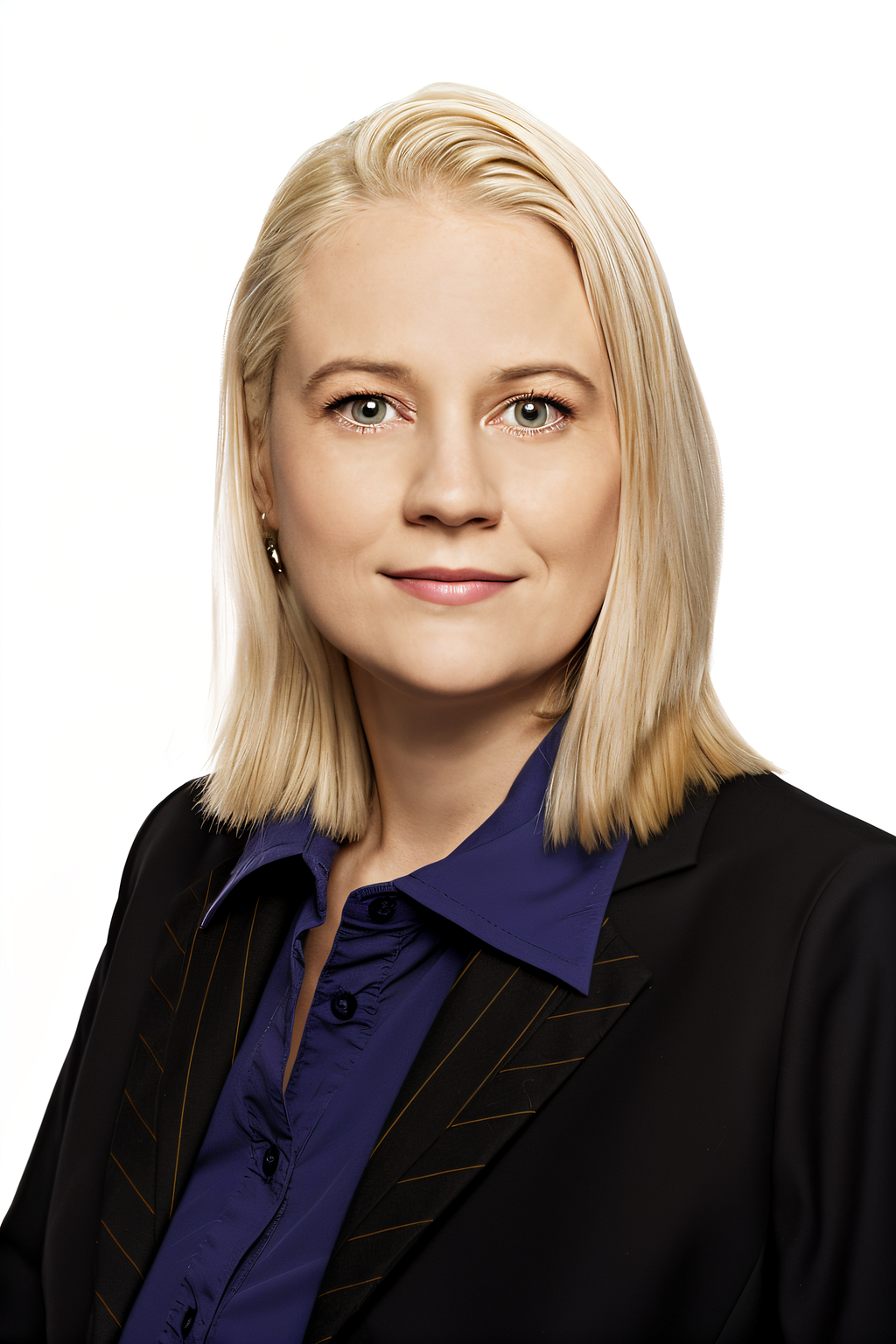
…Inclusive leadership training and culture change are necessary to break away from traditional, male-dominated leadership models. Women should be encouraged to lead without having to adopt a “male” style, and leadership training should highlight the strengths women bring to the table. I’ve seen organisations that revamped their training programs to focus on emotional intelligence and collaborative leadership. This approach helped one female manager I know feel more confident and authentic in her promotion to a top management role…
We had the pleasure of interviewing Martina Huemann. Martina is Professor at the WU Vienna University of Economics and Business where she heads the Project Management Group in the Department Strategy and Innovation and is the Academic Director of the Professional MBA Program: Project Management. She has published widely in the fields of Project Management and Human Resource Management. For her Research on Human Resource management in Project-oriented Organisations, she received the IPMA Research Award 2015.
Thank you so much for doing this with us! Before we dig in, our readers would like to get to know you a bit more. Can you tell us a bit about your “backstory”? What led you to this particular career path?
Born in Vienna, Austria, I am currently living between Vienna and London. While in Vienna, I am Academic Director of the Vienna Executive MBA: Strategic Project Management and lead the Project Management Group in the Institute of Strategic Management at WU Vienna. For 1.5 years, I have been a Full Professor of Project Leadership and Society at University College London, Bartlett School of Sustainable Construction.
I am Editor-in-Chief of the International Journal of Project Management, the leading journal in Project Research, and Founding Editor-in-Chief of Project Leadership and Society, and I hold several board positions in national and international associations.
I have two children, two boys, one born in 1997 and one born in 2005.
Can you share the most interesting story that happened to you since you began your career?
My career was probably not expected of me, as I was the first one in my family who made it to university. My parents came from a simple background; my mother was educated as a tailor but ran a small shop, and my father was a warehouse worker for a newspaper. While both did not have much formal education, they always gave me the feeling that I could achieve everything that I wanted.
I also did my studies at WU Vienna, and when I entered the building, I felt like I didn’t belong there — more like an alien. I had no role models in my family. However, I decided that I wanted to get more knowledge and a formal education. I studied Business Administration. During the weekends, Friday to Sunday night, I worked 20 hours-plus in an ice cream shop to contribute to financing my life.
I always had a drive for learning, getting to know something new, but also for visiting other countries and traveling. I am a quite curious person interested in understanding different subjects and contexts, meeting new people, and making a difference.
During my studies, I spent one semester in Prague and later one semester in Lund, Sweden. I was traveling and had the opportunity to engage in different projects. One of those was an EU-funded project bringing Didactics to Middle and Eastern European countries like Poland, the Czech Republic, and Slovakia. I was engaged there as a student evaluator. Looking back, this got me interested in universities, teachings, and projects, and how change can be organized through projects. This also set the ground for my interest to research and educate on how to manage projects.
When I finally finished my graduate studies, I got a position at a newly established small department at WU focused on Project Management. I supported the establishment of that university unit, its research, and education program. Finally, I received a position funded by the university and started my doctorate in Project Management. I got involved early internationally in the International Project Management Association, as I was taken there by my professor. That helped me immensely to build my network.
My first son was born shortly after I received my first university-financed position. This caused quite some turbulence. I was questioned by my work environment if family was now my priority and if leaving academia would be better for me. I took a quite short maternity leave and went back to keep my position and finish my doctorate.
My career was only possible with my partner and especially the support of my mother and the father of my partner, who helped a lot with the childcare. To make a university career in my context, I had to pursue a Habilitation, which set a further milestone in my career that opened the door for my professorship.
Can you share a pivotal moment in your career that significantly influenced your path to leadership?
As an early career researcher, I received a quite tempting invitation to apply for positions at another university abroad. But I decided not to go for it as I would have needed to take the whole family to a different country. It would have been very difficult for my partner to find a job, and I felt it was not appropriate to ask my partner and my family to start somewhere new just because of my career aspirations.
This is also the reason why I built my career at WU Vienna. While it was international and I have been engaged in international associations like the International Project Management Association or Project Management Institute, I maintained a stable main position at WU Vienna. However, now that my children are grown up, I did apply for a professorship at University College London and reduced my position at WU.
Ok, thank you for that. Let’s now jump to the primary focus of our interview. According to this report, only about 31.7% of top executive positions across industries are held by women. This reflects great historical progress, but it also shows that more work still has to be done to empower women. In your opinion and experience what is currently holding back women from leadership and management?
Many different issues. Most of them are structural.
Women are socialized with a set of desired behaviors expected from them.
Can you share a few reasons why more women should become leaders and managers?
Women and men are different, and this is good. People are different in their personalities and talents, and they bring different perspectives and contributions.
Studies show that women in boardrooms make a positive effect on company performance. The offer is to see women (and other minorities) rather as an asset and help to build structures to support them to provide contributions.
Can you please share “5 Things We Need To Increase Women’s Engagement in Leadership and Management?” If you can, please share an example or story for each.
First, targeted mentoring and coaching are essential. Women often face barriers to accessing high-quality mentorship, so structured programs help women identify their strengths, set clear goals, and navigate leadership challenges. I remember when my employer once said, “Try it for six months. If it doesn’t work, you can go back.” That kind of mentoring gave me a safe space to test my leadership skills without the fear of permanent failure, which really helped me move forward in my career.
Proactive networking is another important factor. Women need to actively create or join networks that connect them with senior leaders and like-minded peers. These networks provide access to important contacts and sponsorship opportunities.
Flexible working arrangements are also crucial. The challenge of balancing professional and family responsibilities often deters women from pursuing leadership roles. By adopting flexible hours, job-sharing, or part-time management positions, leadership roles can be made more accessible. In my own experience, I’ve seen the positive effects of companies offering more flexibility. In one example, a company revamped its policies to allow flexible scheduling, which allowed a talented leader to balance her childcare responsibilities with her role on the board. The result was improved team performance.
Inclusive leadership training and culture change are necessary to break away from traditional, male-dominated leadership models. Women should be encouraged to lead without having to adopt a “male” style, and leadership training should highlight the strengths women bring to the table. I’ve seen organizations that revamped their training programs to focus on emotional intelligence and collaborative leadership. This approach helped one female manager I know feel more confident and authentic in her promotion to a top management role.
Finally, objective recruitment and promotion processes are critical. Using methods like structured personality assessments and behavior-based interviews helps combat unconscious bias and ensures candidates are chosen based 1on merit.2
In your opinion, what systemic changes are needed to facilitate more equitable access for women to leadership roles?3
Companies must embrace 4legislation that promotes gender diversity, like the EU’s push for more women on boards. However, quotas alone aren’t enough — accountability is key to preventing tokenism.
Corporate cultures need to evolve to value leadership traits that women excel in, such as empathy and collaboration. Changing outdated success metrics to reflect these qualities is essential, and recruitment and promotion processes must also be free from bias, prioritizing merit over personal connections.
Work-life integration policies should be standard, not exceptions. Companies must normalize flexible work options for everyone, not just working mothers. Investing in female leadership development early on through mentorship, training, and networks like the WU Executive Academy’s Female Leaders Network ensures women have the resources to succeed in senior roles.
These systemic changes won’t happen overnight, but when companies and policymakers commit to action rather than discussion, real progress follows.
What strategies have you found most effective in mentoring and supporting other women to pursue leadership positions?
My main strategy is to empower young women to find their own ways and learn to trust in themselves. I am mentoring several women to help them in their academic careers. Very operationally, I help them to understand their strengths and especially help them to understand they are not required to deliver 110% all the time. This is a trap that I fell into during my career and which I could not continue, especially after I had my children.
A funny story to share was at one of the first panels I was invited to. I prepared so much and worked on my performance in every detail. I just wanted to be able to provide the perfect answers to all possible questions. Which is of course not possible. However, I did not stop preparing and did not sleep the night before the event. So, when I was sitting at the panel, I was very tired, very serious, and concentrated to get it all right. Without any smile, quite fact-oriented. I was knowledgeable, said the right things, but my message was not convincing. It was just one boring smart voice among many others. Additionally, when others were speaking, I was so tired that I simply fell asleep in front of 300 people. My sleep only took some seconds, and I still hope nobody saw it. However, that situation taught me an important lesson which I use to encourage women: not to over-prepare, take life a little easier, consider the package, how to deliver the message and not only what.
And yes, we women cannot have everything at the same time. Children and major career steps at the same time is (almost) not possible to pursue. But there is also the right time for everything. Not everything needs to happen by the age of 35.
A good personal example is my recent career step, the appointment as Professor at University College London. When I was invited to apply, my youngest child was finishing school; thus, it was a window of opportunity that had opened, but it is then also a decision if you want to get out of your comfort zone.
How would you advise a woman leader about how to navigate the challenges of being a woman in a leadership role within a male-dominated industry?
When I did my first formal education in Project Management, it was in 1996 and it was the Certificate Programme “International Project Management”, back then offered by the WU Vienna and the Technical University Vienna. There were 20 participants in class: 19 men and me. All of them had a technical background, mainly Engineering, Construction, and Information Technology, the typical industries in which Project Management was applied back then. My background was Business Administration (specialized in Marketing) and I was the only woman. I was again an obvious alien, especially as I was the only woman in the room, and I was young. In this situation, I asked myself whether I fit in. But I reframed my question into what I can bring to the table, what are my competencies and talents that I can contribute to add value. In this situation, it was my social competencies, my strength to observe, listen and ask questions — thus my talent to lead processes in groups — that added value. This is also my advice to women: know what you are good at, understand what added value you can bring to the table. Be authentic and play to your strengths.
How do you balance the demand for authoritative leadership with the stereotypical expectations of female behavior in professional settings?
Well, we use stereotypes like the hard man and the soft woman because that makes life easier for us. But the world is not black and white. If we look in more detail, I do not believe in authoritarian leadership. Hero leadership is not working, especially not with younger generations. Hierarchies have become flatter; people want to work flexibly, self-organized, and autonomy has become important. That is reflected in a modern leadership that is flatter, shared, distributed, and often puts purpose in the foreground.
A leader needs to be a reflective person who makes decisions timely and is accountable for them. Core competences are to navigate uncertainty, embrace change, give orientation to others, think strategically, and engage others to co-create the future of an organization. Today, leaders should be able to stand in the spotlight but also be able to share the spotlight with others.
How can our readers further follow your work online?
Easiest is to follow me on LinkedIn:
Professor Martina Huemann: https://www.linkedin.com/in/martinahuemann/?originalSubdomain=at
The Project Hub:
https://www.linkedin.com/company/projecthubucl/?viewAsMember=true
I’m especially interested in how we can co-create the future with projects.
Currently, I look into value creation by projects, careers of project professionals, and investigate what motivates (young) project professionals to work on projects.
Thank you for these fantastic insights. We greatly appreciate the time you spent on this.
WU Vienna’s Martina Huemann Discusses Project Leadership, Career Resilience and the Structural… was originally published in Authority Magazine Europe on Medium, where people are continuing the conversation by highlighting and responding to this story.