
“You’re at the Table for a Reason”: Nadine Jones on Values-Driven Leadership, Community Healing and the Power of Speaking Up
…Are you the kind of neighbor where, if someone knocks on your door and says, “I’m in the middle of a recipe, I’m short on sugar, can you give me a cup?”, you happily give it to them. You don’t care who they voted for, you don’t care about their race or religion. You’re just like, “Yeah, I got you. You need sugar. That’s all you need? You need eggs, too?” “No, just sugar.” That’s the only way we’re going to get through this, when your neighbor is a human being to you, someone you genuinely care about…
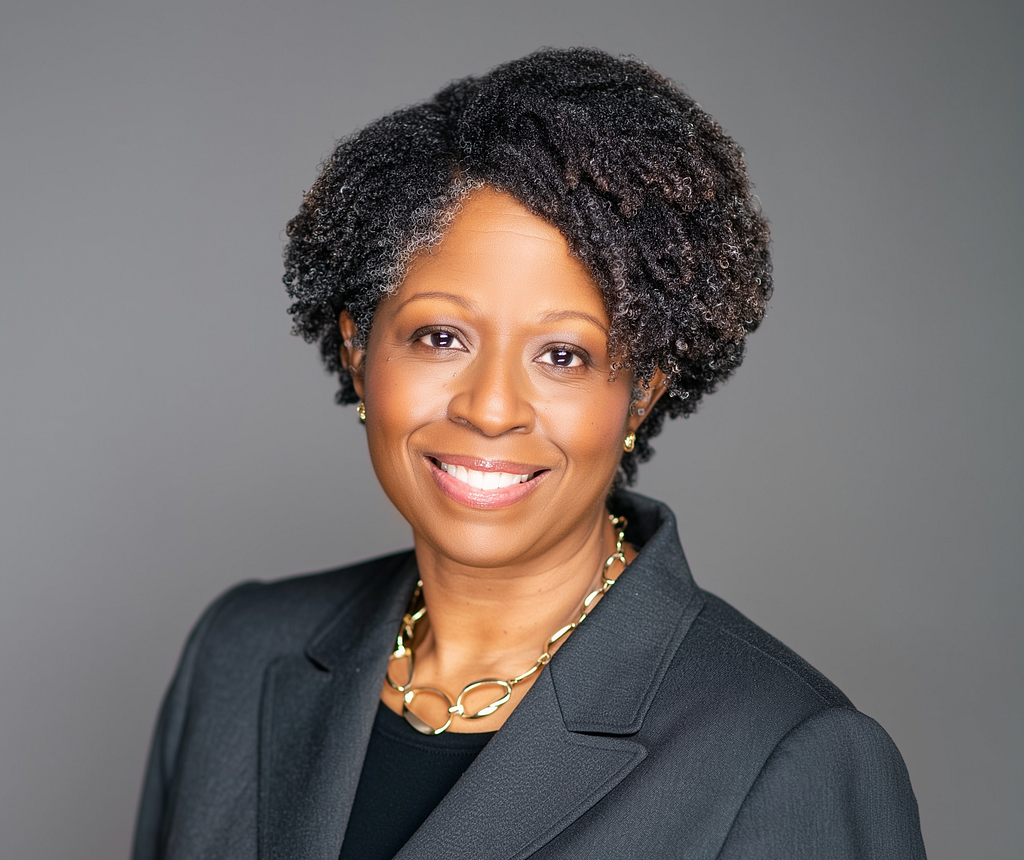
I had the pleasure of talking with Nadine Jones. In 2000, Nadine left Canada for Washington, D.C., not out of necessity, but out of ambition. “I wasn’t running from a terrible country; Canada is a beautiful place, but I’m still an immigrant,” she told me. She came to study at Howard University School of Law, beginning a path that would take her from antitrust litigation in the capital to the boardrooms of multinational corporations, and later to the launch of her own consulting firm.
Her story, in many ways, is a map of corporate America’s shifting landscape, where issues of compliance, equity, and leadership converge with the realities of race, gender, and motherhood.
After earning her law degree at Howard in 2003, Jones joined the Washington office of Arnold & Porter LLP. There, she represented Fortune 100 companies in multibillion-dollar mergers and defended clients in antitrust class actions. She also took on pro bono work, including one case that resulted in the reversal of a drug and firearm conviction before the Maryland Court of Appeals, the state’s highest court.
Her trajectory quickly moved beyond traditional litigation. In 2006, she served as counsel to the Antitrust Modernization Commission, a bipartisan body created by Congress to examine whether 19th- and 20th-century laws could keep pace with a 21st-century economy. Jones analyzed submissions on topics ranging from international competition policy to criminal antitrust enforcement, providing the commissioners with the groundwork for reform debates. The experience, she later recalled, “was a one-in-a-million shot,” one that gave her a seat at the table with some of the country’s leading antitrust experts.
Nine years in “big law” left her with valuable experience but an unsustainable pace. By the time she moved to Jersey City in 2012, Jones was a new mother and recently separated. She left behind the higher salary of private practice for the steadier rhythms of corporate life, joining Kuehne + Nagel, one of the world’s largest logistics firms. The decision, she admits, came with a significant pay cut. “It was a lifestyle choice,” she has said. “But it was the best decision I ever made.”
At Kuehne + Nagel, Jones built the company’s North American compliance program, overseeing teams responsible for trade controls, sanctions, and anti-bribery regulations. She later moved into the General Counsel’s office and ultimately became General Counsel and Senior Vice President. Her portfolio spanned employment law, M&A negotiations, regulatory disputes, and risk management. She also managed and mentored a team of attorneys, an aspect of leadership she describes as her “passion and joy.”
Her time in the C-suite also underscored the importance of speaking up, even in rooms where she was often the only woman, and sometimes the only Black person. “Everyone’s saying yes, and you’re the one saying, ‘Maybe we should slow down,’” she explained. “But that’s why you’re at the table. You’re there to bring a perspective others might not have.”
Jones’s career has never been confined to corporate offices. In 2020, against the backdrop of the killings of Ahmaud Arbery and George Floyd, she co-founded Advancing the Blue and Black Partnership with two fellow Howard Law alumni. The initiative sought to encourage trust between law enforcement and Black communities, starting from the premise that sustainable change required relationships as much as legislation.
“We were going to love you, and you were going to love our Black sons,” Jones said of the effort. Over time, her engagement with officers reshaped her own perspective. “Eventually, I evolved to the point where I didn’t just want to love you enough so you could police my son properly, I just loved you as a person. I wanted you to be well.”
Her public-facing work has included teaching antitrust compliance as an adjunct professor at Fordham University School of Law and contributing to discussions on equity and leadership in national forums. She has been recognized with the National Legal Aid & Defender Association’s Exemplar Award, and outlets including NPR, NBC, and Reuters have featured her commentary.
In 2025, Jones stepped away from corporate life to launch General Counsel Support Services, a boutique consultancy offering executive-level legal support to businesses facing overflow and regulatory complexity. The firm provides contract review, compliance training, and risk assessment services, which she frames as both practical and human-centered.
Her philosophy, shaped by years of navigating law and leadership, emphasizes adaptability and integrity. “Money will come,” she often tells younger professionals. “It follows talent, it follows curiosity, and it follows a willingness to take on new challenges.” She also stresses the importance of mentorship, noting that some of her most influential mentors have been white men who opened doors for her. “Be open to who wants you to succeed,” she advises.
Jones often speaks about resilience, but also about the limits of ambition without proper alignment. As she put it in our conversation, “You start to realize you need a mission or an objective you feel good about. You need to work with people who align with the kind of person you want to be, and avoid working with people you don’t want to become.”
Her outlook extends beyond corporate strategy into broader questions of American life. She argues that the country’s strength lies in pluralism and that diversity, geographic, cultural, racial, and otherwise, is not a liability but a source of innovation. “We’re not fighting over the same slice of pizza,” she said. “We’re building a bigger pizza. A whole new pizza.”
Jones does not see herself entering politics, though she acknowledges that her work has put her in spaces where dialogue across divides is essential. Her guiding principle, she says, is to “lean to love,” whether in boardrooms, classrooms, or neighborhoods.
Now based in Jersey City, she continues to balance consulting with nonprofit work, parenting her son, and caring for her extended family. As for the future, she remains open to possibilities. “This is uncharted territory for me,” she told me. “I’m not quite certain what comes next. Probably corporate again, but this time with some new learnings about what I need to thrive.”
Yitzi: Nadine Jones, it’s a delight to meet you. Before we dive in deeper, our readers would love to learn about your personal origin story and the seeds that have led to all the great things that have come since then.
Nadine: My personal origin story, okay. I’m actually an immigrant. I immigrated to the United States from Canada in 2000 to go to law school at Howard University in Washington, D.C. I wasn’t running from a terrible country; Canada is a beautiful place, but I’m still an immigrant.
After I graduated, I wanted to stay, and I still want to stay, although my Canadian friends and family can’t understand that. That could be something we’ll talk about. I attended Howard from 2000 to 2003, graduated with a law degree, and worked in big law in Washington, D.C. for nine years.
I moved to Jersey City to transition from the law firm world to a corporation. There, I built up their compliance program, then moved into the General Counsel’s office, and eventually became General Counsel of the organization.
I left corporate in January 2025 and am now in the consulting space. That’s the sanitized version; I’ve left out all the traumatic experiences in between, but I’m in a good place. It’s a new space for me, and I’m not quite sure what comes next. I’m now charting a path for whatever that may be. Probably corporate again, but this time with some new learnings about what I need to thrive.
Yitzi: You probably have some incredible stories from your successful career. Can you share with our readers one or two stories that stand out in your mind?
Nadine: Let me think. One that always comes to mind is that I took a significant pay cut when I left the law firm to move to Jersey City and work for a corporation. I did that because I had a new baby, was newly legally separated, and the world of law firm hours just didn’t work with having such a young child and being on my own. It was a lifestyle choice that resulted in a 30% reduction in salary. But it was the best decision I ever made.
Now, I’m not telling women or your readers to forgo salary, but what I’ve learned is that money follows. The money will come. It follows talent, curiosity, and a willingness to take on new challenges. There was a lot I wasn’t technically qualified to do when I took that job, but they saw something in my managerial skills that they needed, and I was quite good at that. I learned the rest. The money followed, the promotions followed.
So, be excited about what you’re doing. Be curious. Be willing to be uncomfortable and not know everything. You don’t need to be the most knowledgeable person in the room.
And if I could speak directly to your women readers, sometimes we don’t speak up unless we’re 100% certain of what we’re saying. But you don’t always have that luxury. You still have a lot to offer in terms of judgment and experience. And when you lack technical knowledge, just say, “I’ll get back to you on that,” or whatever version works for you. That has served me really well in the corporate world.
Another thing is speaking truth to power. That’s something I learned deeply at Howard. When you’re a student there, you’re surrounded by it. It’s like being a fish in water; you don’t even realize it’s unique. However, once I entered the legal world, I realized that speaking truth to power doesn’t come easily to most people.
In my experience, I’ve worked with leaders who may not like what I have to say, but they appreciate that I have something different to contribute. It’s not about disagreeing with everything or making grandstands. But if the team is heading in a direction and I can see it might be problematic down the road, when others can’t, I have to say something.
And that’s hard when you’re sometimes the only woman in the room, surrounded by very powerful people. Everyone’s saying yes, and you’re the one saying, “Maybe we should slow down.” But that’s why you’re at the table. You’re there to bring a perspective that others might not have. They may have blind spots you don’t, especially as a single working mom.
Some of my blind spots are things my male counterparts couldn’t even imagine. I used to tell them, “Look, I don’t have a wife at home,” so when you suggest doing something spontaneous like flying off for a meeting in some remote location, that’s going to be a problem for a lot of women. Not that they ever literally suggested the Himalayas, but you get the point.
So that’s the second thing: your experiences are valid, even if they’re different from the norm. Stand firm in that.
And finally, be open to who wants to mentor you. Be mentorable. Some of my best mentors have been white men, men who opened doors for me without me even asking. They just saw something in me.
One time, a senior partner, one of the biggest in our firm, stopped by my office unexpectedly. I was terrified of public speaking, and he just sat down and walked me through ways to overcome it. It was unnerving, being such a junior associate and having someone that senior show up like that. But that conversation opened a door I hadn’t been able to open myself.
There’ve been Black women, too, of course. But, surprisingly to many, some of my best mentors have been white men. So be open to who wants you to succeed. That support doesn’t always come from the same gender, race, religion, or background. Just be open to it.
Those are my top three.
Yitzi: Please tell us about any of the exciting new initiatives you’re working on now, or what we can hope to see from you in the future.
Nadine: I’m working with a relatively big nonprofit right now. I’m not at liberty to go into the details of the project, but suffice it to say, we’re laying down the path for the future. This isn’t a one-off project or a “let’s see how it goes” situation. We’re building the foundation to move the organization into the technological future and everything that comes with that.
I’ve done similar work on a smaller scale while in the corporate world, utilizing data and data analytics in a predictive manner. For example, identifying legal issues or data points that could potentially become significant, and then working to preempt them. I have experience using those tools in the corporate space, and now I’m applying those skills to something much larger in the nonprofit sector. I’m really excited about it, and I feel good about it.
That, in itself, is another evolution. When you’re younger and someone tells you the salary, you’re like, “You had me at hello. Where do I sign?” But as you mature, money is still important, it’s just not the only thing. You start to realize you need a mission or an objective you feel good about. You need to work with people who align with the kind of person you want to be, and avoid working with people you don’t want to become — two very different things.
You spend so much of your waking life with coworkers that you end up absorbing their culture and values. So, you must be intentional about who you’re working for and with. Know who you want to be and who you don’t want to be, and stand firm in that.
I believe you’ll get what’s rightly suited for you. Now, look, if you’re in a situation where you need to buy groceries and you’re down to your last pack of ramen noodles and your kids are hungry, you take what you can. I get that. But if you have any amount of privilege or breathing room, hold out for the opportunity that has the right people, the right mission, the right salary, of course, and the right title. I’m not saying don’t ask for the money. But at this stage of my life, those other factors are equally weighted. Maybe even more important than the money.
Yitzi: So, I read that you’re the cofounder of the initiative Advancing the Blue and Black Partnership. Can you tell us the story behind that?
Nadine: Yes, I would love to. Once upon a time, in 2020, the world was in chaos. (Laughs) But that’s the truth — that’s what happened. In February of 2020, we were fully in lockdown. We were working remotely, and the kids were home from school. My son was in fourth grade at the time, and that’s a degree of torture I’ll save for another day.
You couldn’t really escape the news, at least I couldn’t. I had the TV on, all that stuff. And then I saw something that happened in Georgia. A Black man was jogging in a rural part of Georgia, and he was shot, shot dead in the street, and just left there. To say that was jarring is an understatement. It was a shock to my system.
As a member of the Black community, we’re raised with parents teaching us how to navigate potentially dangerous racial encounters, primarily with the police. If you’re driving: be respectful, be calm, make sure your hands are always visible, and no sudden movements. If you’re in a mall, those types of things. But nobody ever… we didn’t foresee “jogging while Black.” And so, it sparked a degree of fear that just spiraled.
Not too long after that, it was George Floyd. Those two tragedies are what gave birth to the initiative Advancing the Blue and Black Partnership. It was myself and two other Howard Law alumni, Black women, mothers of Black boys, and I were frustrated by what we were hearing in the marketplace of ideas. Things like, “We need to revoke qualified immunity for the police,” or, “We need more accountability,” or, “We need to pass legislation.” All good things, but they weren’t going to help our Black sons today.
One of my cofounders had a son who would only ride his new bike on the driveway. That’s how fearful he was. He wouldn’t go into the neighborhood. We were living in the here and now. So, we decided, as the three cofounders, that the only way to achieve better relationships was to build better relationships with the police.
We were triggered. We’d had no positive interactions with law enforcement. We’re each attorneys, so thankfully, we had no serious encounters, no enforcement of the law, but we also hadn’t had any positive experiences. But we were going to do this anyway. And being professionals, we knew that we didn’t know anything about policing. We would have had to partner with law enforcement professionals to do this.
And doggone it, we were going to love you, and you were going to love our Black sons. That’s the mindset we went into it with. I will love you to the extent I need to in order for you to police my Black son as a human being, not as a perp waiting to happen, not a criminal in the making. That was really the thinking going into it.
We were going to develop programs to foster this relationship-building. And the amazing thing that happens when you engage with people and really start to see people, the caricature falls away. Yes, there are bad actors, but there are more good than bad. They might have seen me as nothing more than a Black Lives Matter, burn-it-all-down, defund-the-police type, which we never were. Their caricature of me fell away, and my caricature of them, what I thought about police officers, that also fell away. We started to engage human-to-human.
Eventually, I evolved to the point where I didn’t just want to love you enough so you could properly care for my son; I just loved you as a person. I wanted you to be well. I literally wanted you to be safe. I wanted you to be okay. And that was quite an evolution for me. It’s never left me. It’s influenced me deeply.
I’m very uncomfortable with a lot of “othering.” If I’m in a space where there’s a lot of “them,” “they do this,” “they’re like that”, sometimes even attributing a moral failure or evil to those who are different, I get very uncomfortable. And it’s only because I had to go through my own failure of viewing human beings as nothing more than police brutality, shields, and guns. That is not true. Not at all.
Sometimes we miss the boat. We miscommunicate. Maybe I, as a civilian, don’t understand what you’re saying. Maybe you, as law enforcement, don’t understand how I’m hearing it. But I’ve got to tell you, it was a beautiful experience. We built great connections, great friendships, even across political lines.
The Blue community tends to be more conservative. This was 2020, 2021. Things are much different now. Maybe things would play out differently today, but at the time, it didn’t matter at all. It was just another human being trying to do a good job.
I wouldn’t have traded that experience for the world. It was life-changing.
Yitzi: Can you tell us a bit about your work with Congress on anti-trusts?
Nadine: Oh, you really did some research! That was a congressional committee established under President Bush, also known as Bush 2.0. It was a bipartisan commission; I think there were 12 commissioners total. Six were selected by Republicans, six by Democrats, and one independent, or something close to that. However, if I recall correctly, the independent was leaning conservative.
The commission was called the Antitrust Modernization Commission. It was established to examine whether our antitrust laws were keeping pace with a modern society. The primary federal statute is the Sherman Act, which was enacted in 1890. So, it’s pretty old. A significant portion of antitrust law is not codified in statute. It’s based heavily on case law, case by case, judge by judge.
The question we were asking was: had new technologies, such as email, the internet, and e-commerce, outpaced the law? At the time, e-commerce was not yet a huge space, but it was emerging. There was a request for comments, and I was assigned specific subject areas. I believe I was involved in criminal antitrust enforcement, multilateral agreements with our European counterparts, and one other area that I can’t quite remember.
My job was to analyze the submissions, the pros and cons, and present them clearly to the commissioners. I wasn’t the decision-maker, but I had to provide enough insight for them to make an informed choice on whether specific rules needed to stay or go. It was a tremendous, one-of-a-kind experience.
Funny enough, it was a white man who encouraged me to apply. I’d never even heard of the commission. I’m still friends with him to this day. He said, “I think this would be good for you.” I was like, “Really? What is it?” And he told me I’d be exposed to some of the top antitrust professionals in the world, and that it was a very prestigious commission. He said, “Why don’t you just apply and see what happens?”
It was a cold application, just a resume. In today’s climate, no bot would’ve picked it up. They’d never have seen it. But back then, humans still reviewed resumes. I had a great interview with Andrew Heimert, who was the executive director at the time. What a transformational experience. That opportunity boosted my credentials exponentially.
And again, it was just someone who knew more than I did at the time, saying, “Hey, I think this could be good for you.” He saw something in me. It was a one-in-a-million shot, and I got it. I won the lottery that year, professionally speaking. It was a fantastic learning experience, and it gave me incredible exposure.
It just shows you can’t always chart your course perfectly. You have to be open. You might think you know how you’re going to get from A to Z, but sometimes the path meanders. You could be missing out on valuable experiences that help shape who you are.
A woman chaired the commission. That stood out to me because I hadn’t really seen that before. She was a Republican since Bush was in office and made the appointment. But what struck me was that she was persuadable. I hadn’t seen that before either, and I’ve never forgotten it. Now that I think about it, thank you for bringing it up; it could have informed why I was open to working with the police later. I went into that with one mindset, but I was open enough to be persuaded. And she was too, humble and open.
I always said, if I ever reached a position of prestige or power, I’d want to be more like her. I was just a third- or fourth-year associate at the time. Really a nobody. But she’d say, “Nadine, want to go out to lunch?” And I’d be thinking, doesn’t she know who she is and who I am? We’re not in the same league. However, she did that not just with me, but also with other junior counsel and staff members. Just incredibly humble.
She doesn’t know it, but I’ve always wanted to model myself after that form of power. And as a woman, she wasn’t afraid of confrontation. There were many alpha males on that commission, men at the top of their profession, and she was diminutive, small in stature. But she didn’t back down. If they got in her face, your readers can’t see this, but I’m leaning in close, she would meet them, forehead to forehead. And I remember thinking, okay, confrontation doesn’t have to be something you fear. Sometimes it’s necessary. As a leader, you have to be confrontational at times, and that’s okay. It doesn’t mean you’re not friendly or not polite.
So again, experiences shape who you want to become. And sometimes, they give you lessons you didn’t know you needed, but they help get you where you’re going. Her name is Deb Garza. She’s still living, and just by being who she was in that role, she left a permanent impression on me.
Yitzi: We’re going through a rough time in the U.S. right now, really, in the world. It’s easy to read the headlines and feel down. But please share with our readers a few reasons to be optimistic about the future in the United States over the next 10 years.
Nadine: The only way I see is to let me start from the beginning. I do believe we’ll get through this period. And the only way we’re going to get through it is through our neighbors. I mentioned this to someone else: Are you the kind of neighbor where, if someone knocks on your door and says, “I’m in the middle of a recipe, I’m short on sugar, can you give me a cup?”, you happily give it to them. You don’t care who they voted for, you don’t care about their race or religion. You’re just like, “Yeah, I got you. You need sugar. That’s all you need? You need eggs, too?” “No, just sugar.” That’s the only way we’re going to get through this, when your neighbor is a human being to you, someone you genuinely care about.
I live in a wonderful neighborhood. I’m a Christian Black woman with a son. My neighbors are a married gay couple. I think one’s an atheist and the other’s agnostic. I don’t know who’s who, but they don’t seem to be religious at all. I don’t even know if they vote or believe in voting. I would cut off my right arm for them. I love them. I don’t care what they believe or don’t believe. I don’t care that they have no children, and we can’t bond over the knucklehead things our kids do. It doesn’t matter. I love them. We talk, we laugh, and when we’re going through crises, we encourage each other. We feel safe enough to share.
I’ll ask them, “Do you mind if I pray for you?” and they never object. I pray for them when they’re going through a difficult time. And they always encourage me. They love my son. Now I have a dog, and they love my dog too.
So, it’s a long-winded way of saying it’s going to be boots on the ground that get us through. And if we’re unfortunate enough to live in communities where everyone looks like us or believes like us, that’s sad. Because now you don’t have the opportunity to stretch those muscles, to expand your “we.”
I don’t know how that’s going to come across in print, but I guess you’ll figure it out. You’ll know what I mean. You’ll make your “us and them” more narrow and your “we” more expansive.
If you work in a diverse corporate setting, you have the opportunity to do that. In some geographies, it’s very monolithic, and it’s harder to do that. But I believe that, in our hearts, we are decent people. This country is built on decent people. If I’m blue and I see my red neighbor needing a bottle of water, I’m going to give it to them. And I believe they’d do the same for me.
That’s how we’re going to break through all of this. It’s beyond chatter. It’s a roaring social media algorithm and podcast rooms I’ve never even heard of that half the country is mourning over. I’m like, “Where am I? I’ve never heard of some of these people.” No disrespect intended, it just didn’t penetrate my world.
Now, when Theo Huxtable died, I grieved as if it were my brother. Every Black person I knew felt the same way. We’re in an echo chamber, and it’s hard to penetrate each other’s worlds.
Of course, I now know who Charlie Kirk is. I’ve learned more about other types of podcasters, some of whom are even more right-leaning than he was. I’ve never listened to any of their shows, but I have a better understanding now than I did before he was, unfortunately, horrifically murdered the way he was.
From what I’ve since learned about him, I don’t think I’d be his audience. Let me just put it that way. And that’s okay. I don’t need to validate who you like, and you don’t need to validate who I like. However, I am coming to understand that there’s a whole swath of Americans who really felt connected to him, and I was not aware of that. Honestly, I had not heard of him before.
Yitzi: As you know, the term DEI has kind of disappeared from public discourse. But we also know that America was founded on the idea of pluralism. Everyone seems to agree with that idea. How do you think we can make pluralism popular again?
Nadine: Well, from a corporate standpoint, if corporations stand firm on what they know, they understand that diverse societies and diverse workplaces produce better outcomes. You can avoid groupthink, gain varying perspectives, and penetrate different markets more effectively than if your team is homogeneous. Corporations know they produce a better product with a diverse workforce. Those are just marketplace truths.
The issue is that perception is reality, and the meaning of DEI has been completely lost. It’s now seen as, “Every seat I take as a Black woman is one unreasonably taken from a white man.” There’s an underlying presumption that the only truly capable people are white, straight men. So when someone like me gets the job and someone else doesn’t, it’s perceived as if I’ve literally taken food out of their children’s mouths. That baseline needs to shift. There’s no longer a default assumption that the seat belongs to a white man. We’re all competing now. I love antitrust laws for that reason. We’re just going to compete.
The term “diversity, equity, and inclusion” has been twisted to mean that unqualified people are taking opportunities from qualified ones. That’s not what it means. What it means is that if we’re only hiring from Harvard, maybe we should also consider Howard. Perhaps we should start looking in other geographies. That’s one thing I’d love to see more of: diversity in geography and culture. Not everyone is out here sipping pumpkin goat milk lattes, you know?
It simply means we’ll look in unconventional places. It doesn’t mean we’re lowering standards. I may bring something unique to the table that an equally qualified white man doesn’t. Or vice versa.
When I left my company, I helped them find my replacement because I genuinely cared about my team. I couldn’t bear the idea of a tyrant being placed over them. So I said, “I’m going to find you the best replacement.” And the best replacement was a white man. I interviewed women; I didn’t interview many people of color, but I interviewed others, and this man was clearly the best. He was going to do right by my team. He had the emotional intelligence to navigate being a board member alongside a very strong CEO. He also had the cultural sensitivity to navigate an international environment.
Some board members even asked me, “Are you going to advocate for a woman so there’s another woman on the board?” I said, “Maybe. But I’m not putting a tyrant woman over my team. I love this team.” And while none of the women I interviewed were nightmares, this man was still the best. You must consider the merits and select the best person. Sometimes that might be a Black woman. Sometimes a transgender man. Sometimes a white, straight man. The field is open.
Now, this is my religious side speaking, but I believe we all have gifts and talents, each one of us uniquely designed. I wasn’t born with a defect. I’m not less smart than you, and you’re not smarter than me. Whatever gift I have, I have it. And what a blessing to live in a country where we have access to so much, people from all kinds of backgrounds, experiences, cultures, languages, and religions. Can you imagine the power if we could harness that?
We’re not fighting over the same slice of pizza. We’re building a bigger pizza. A whole new pizza. There are countries that envy our diversity. Truly envy it. So I don’t subscribe to a scarcity mindset. That’s the real difference in worldview here. I think we could create the next big thing, whatever it is, if we all put in together.
Now, everyone is using ChatGPT and all that, which I love, by the way. However, you do have to double-check it sometimes, as it’s not always accurate. But perhaps the next great innovation is already in the mind of someone we’re not considering. My son is on the spectrum, neurodivergent. Think about what the world looked like before.
I was decluttering recently and found my old iPod, the little skinny one. At the time, that was state-of-the-art. I remember thinking, “I can put all my songs on this one little thing!” Imagine what this country is capable of if we start thinking with an abundant mindset. Don’t worry about crumbs. We can build something better. We can include the brilliance of so many different people. I find that exciting.
But we also have to recognize that there are people who feel excluded from the global economy. And if I take a step back and look at it dispassionately, I’d say they’re right. Rural, undereducated communities, where is their path in this economy? I’m not saying this group makes up the entire MAGA base. There are certainly educated and wealthy people in that movement. But there’s a swath of folks who are being left behind. And as a society, what are we going to do about that?
Now, the Howard in me might say, “They’ve had every advantage for the past 500, 600 years. Don’t worry about them, worry about yourself.” And yes, you can be right. But then what? You’re still left with a group of people who feel, and in many cases are, being left behind.
I think we can walk and chew gum at the same time. I think there’s a way to be inclusive and still identify the hidden talent in communities that might never go to college. Maybe they’re not into pumpkin spice skim lattes with goat milk froth and a heart drawn in it. Maybe they never will be. But I guarantee there’s hidden talent there. And we owe it to ourselves, as a society, to find it.
Dr. King believed our destinies are interwoven. If I were God, maybe I would’ve designed it differently. But this is how it is, we’re interconnected. When I do well, you do well. When you don’t do well, at some point, that’s going to affect me and mine. So we’re in this together.
What are we going to do about the people who feel left behind? So who is being left behind? Once we stop being angry, once being “right” is no longer the only goal… And I believe in justice. I understand the anger. We never got the 40 acres or the mule. I get it. We started behind the starting line. I get all of that. And yes, you’re right to feel angry. But now what?
We need to be pragmatic. We need to find a way to capture the talent and gifts of all Americans. Everyone has a role to play. And I believe we’ll get back to that. At our core, this is a beautiful country — big heart. Around the world, people recognize that. You could be getting bullied on some random train in… I don’t know, Kazakhstan, and if there’s an American on that train, they’ll stand up for you. But I do love this country. I really do. I love the people.
Yitzi: This is our final aspirational question. Nadine, because of your great work and the platform you’ve built, you’re a person of enormous influence. If you could put out and spread an idea or inspire a movement that would bring the most good to the most people, what would that be?
Nadine: I know what it is, but it’s not a very pithy answer. It’s actually a way of thinking that I learned while working in the nonprofit sector, and it’s called polarity thinking. I would introduce it in schools as early as kindergarten. I did another talk where I said I’d have five-year-olds debate why PAW Patrol is better than Team Umizoomi. You know what I mean? Teach them to explore the value system behind why someone prefers PAW Patrol, and the value system behind someone who likes Team Umizoomi.
If you dig deep enough into competing poles, there’s a value set there that’s righteous. Even if it’s a tradition or something I personally don’t value, there’s still something underneath worth understanding. If we can go through this process and peel back all the gunk and the awful language we often use, we’ll find that, in many polarities, there’s something meaningful at the core.
I really think that if we had a venue or an opportunity to sit down and explore what drives someone’s value system, even when it feels so adverse, aggressive, or hostile, if you dig deep enough, there’s something they value that’s righteous. And then you go, “Oh, okay.” You might decide to build a society that’s 30% one value and 70% the other. There may be times when you invert that. Or maybe you land at 50/50. The world is fluid, life is liquid, and it’s not all or nothing. It’s not all blue to the exclusion of red, and it’s not all red to the exclusion of blue. There are worthwhile values on both sides, if we could just stop yelling, stop shooting each other, and stop hating each other.
That’s my wish. I don’t know how it would happen, but if I had a wand and a wish, that would be it.
Yitzi: Are you hoping to get into politics? Because you have an amazing, thoughtful way of looking at things.
Nadine: No, I am not. I am not a masochist. I’ve got a kid, I’ve got a dog, and I’ve got aging parents. No, I’m not. But you know what? This is uncharted territory for me, so who knows where I’ll be and what’s in store. That’s the truth. I’ll be open to it.
Yitzi: I love the fact that you talk about faith. Do you think faith has a role to play in healing some of the malaise going on in our country?
Nadine: Yes. I’m of the Christian faith. How can I best put this? There are some folks I honestly wouldn’t want to go near with a ten-foot pole. I think you’re a danger to me and my family.
I’ll give you an example, and I’m trusting you to write it in a way that doesn’t get me shot, okay? (Laughs) There was a post that President Trump made, where he said he’s just trying to get to heaven. Did you hear about that? He said he’s just trying to get to heaven. So then all this speculation started swirling, people wondering if he’s sick, talking about the makeup on his hands. And I’m like, look, the dude’s 80 years old. My mom’s 80. I get it. Give him a bit of a break. I struggle with acetaminophen myself, you know what I mean? So I get it.
But he said he’s trying to get to heaven. And part of me thought, I don’t think you’re gonna make it there. That was the human part of me, like, I don’t think you deserve to. Because of the pain you’ve caused me, people who look like me, and so many others.
And then my faith stopped me. It was like, yeah, but God loves him. And that gave me pause, more than a pause. I had to sit with that. If it would bring God joy to welcome Donald J. Trump into heaven, then I pray he makes it there. I really do. I hope he gets there because it would give the God that I love joy.
Whatever he needs to do, repent, whatever that looks like in my faith, or in other faiths, if that’s what it takes, then I pray he does it. And I can genuinely and honestly say that. I hope he makes it. I hope Charlie Kirk makes it. I do. I hope he made it there. I really do.
So yes, our faith can help navigate us through. And we can choose to lean toward love. Lean to love.
Yitzi: Someone told me this morning that the world is constantly on fire. But when I look outside, there are no fires. It made me realize how social media magnifies problems until it feels like everything is burning. In reality, our neighborhoods are fine, our neighbors are kind, and most of life is good. Do you think the real issue is that global problems are always in our face, making us forget how much good is right around us?
Nadine: There is a lot more good than not good. I do limit what I watch, especially on my reels. That could be a strategy. As much as I love the content creators, and oh my goodness, when they clap back at trolls, it’s delicious, I love it, as delicious as it is, Yitzi, I have to limit that. So, a lot of my reels feature dog videos, babies, and funny content. I’m in a hip-hop fitness class, and I’m terrible at it, so I look at reels to learn the dance moves, which horrifies my son when I try them.
I have to take deliberate steps to limit what I consume with my eyes and ears. That could be something we could all do. I did leave a church that had too much “othering.” Good people, solid people, just not the way I wanted to walk out my Christianity. I don’t want to demonize people who don’t think like me, and that’s what it started to feel like. I’m sure if they heard this or read this, they’d disagree, but I chose to distance myself. That’s not who I want to be.
It was getting more and more… holy war-ish. Not to be disrespectful, but that’s how it felt. So there are things we can choose. Every day, we’re choosing who we want to be and what kind of human being we want to be. Sometimes, I miss it; I’ll be honest with you. However, there are many days when I’m moving closer to the person I want to be. That’s what we need to do on an individual basis.
And then it cascades into how we engage with people, who we work with, who we live with, who we’re in the store with, in line with, on the subway, on the sidewalk. Maybe it cascades. And if enough of us did that, who knows what could happen. Who knows.
Yitzi: I think you’re in a unique position because you’ve already laid the groundwork in working with groups of different persuasions. I think you could really build a lot on that.
Nadine: Maybe. Maybe. I’m going to think about that. Yes, I will definitely think about that. It did provide me with that, and it is absolutely possible to love someone just because they’re a human being and you want them to prosper. You want them to be well. You care about their well-being. Absolutely. Okay, I’m going to think about that. I’m not making any promises, but I’ll think about it.
Yitzi: We’re expecting big things from you. Thank you. Nadine, it’s truly been a delight and a pleasure to get to know you. How can our readers continue to follow your work? How can they support you in any way?
Nadine: Sure, absolutely. You can find me on LinkedIn. Just look for Nadine Jones, I’m in Jersey City, or search for General Counsel Support Services, which is my consulting business. My website is gcsupportservice.com. For social media, you can find me on Facebook and Instagram, but LinkedIn is my favorite — and I do respond to messages.
Yitzi: It’s been a real pleasure to learn about you and your work. I wish you continued success, good health, and blessings, to your son as well, and your family, your parents.
Nadine: Thank you, Yitzi. Same to you.
“You’re at the Table for a Reason”: Nadine Jones on Values-Driven Leadership, Community Healing and… was originally published in Authority Magazine on Medium, where people are continuing the conversation by highlighting and responding to this story.