Jack Topalian on ‘Euphoria’, ‘Sugar’ and Turning a Late Start Into a Career With Rob Reiner and Denzel Washington
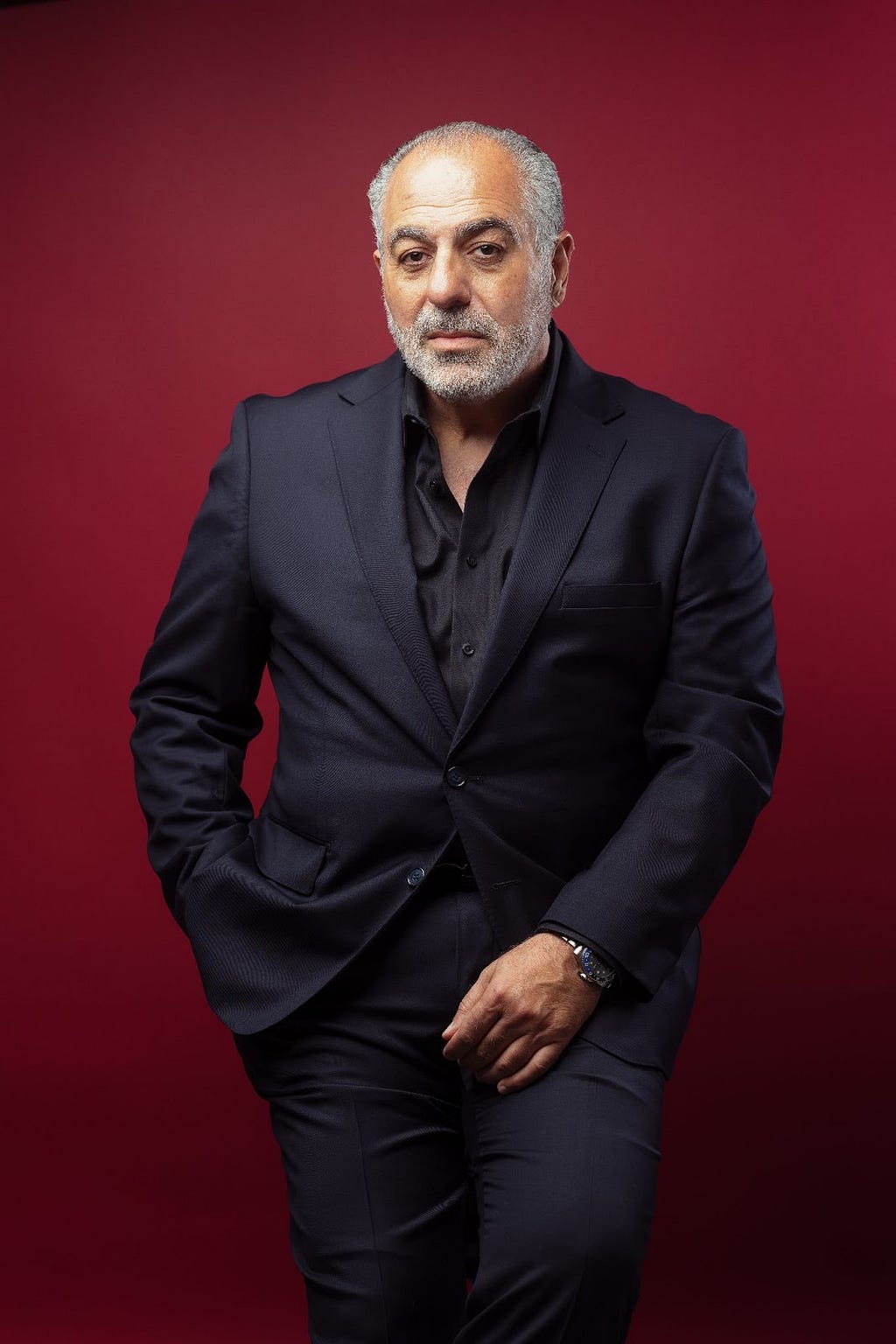
…Be kind to others and be accepting of others. I think that is the key. You don’t know what another person’s battles are or what they are going through. Just take the time to listen. I learned a powerful lesson on set while working with Denzel Washington. He is one of my icons, and I have watched every single film he has done. Watching him on set and seeing the way he listened to me in our scene was amazing. We need to do that as people in everyday life. When somebody says hello, say hello back. If somebody smiles, smile back. It doesn’t take much effort. If somebody has a question, take two seconds to listen. If you have an answer, share it. If you don’t, just say, “I’m sorry, I don’t know enough about it,” but at least acknowledge the individual and truly see them. I think we need to do more of that. If I could spread a movement, that would be my message…
I had the pleasure of talking with Jack Topalian. He did not arrive in Los Angeles with a fresh face, a stack of headshots, and a teenage dream of stardom. Instead, the man casting directors have dubbed the “man of many faces” spent his first four decades living a completely different life. He was a businessman in the San Francisco Bay Area, a husband, and a father of three. He enjoyed his single malt Scotch and spending time at his cigar club. Hollywood was never part of the master plan.
Topalian’s real origin story starts far from the California sun. He was born in Soviet Armenia and immigrated to the United States in the late 1970s. “It was a very difficult time, but my father could not live under communist rule, and he was always striving to get us out,” Topalian remembers. The family’s escape to America was made possible by his grandmother’s sisters, who had lived in the country since escaping the Armenian genocide in the 1920s. They provided the necessary visas, and the family eventually settled down in San Francisco.
For decades, Topalian lived a quiet, successful life outside the entertainment industry. The shift happened by total accident in his early forties. His two sons wanted to try acting, so he started taking them to monthly classes where casting directors would watch the kids perform their monologues. Waiting on the sidelines as a supportive parent, Topalian naturally drew the eye of the industry professionals. They would look at his rugged features and ask if he was in the business. “I would just say, ‘No, I’m not an actor,’” he recalls. They would push further, asking, “Are you sure we haven’t seen you in The Sopranos or something similar?”
After hearing this enough times, the seed was planted. But rather than just walking onto a set relying on a tough-guy look, Topalian decided to take the craft seriously. “I said to myself, ‘Listen, if there’s something there, I want to take it very seriously and get the proper training needed.’” He enrolled at Stanford Drama and the American Conservatory Theater in San Francisco. By 2010, he had relocated to Los Angeles, and by 2012, he was a working actor.
The transition was not without its brutal, humbling moments. Topalian is quick to share the reality of the audition room. Once, while reading for a role on a hit show in front of a room of twenty producers and writers, he completely froze. “I completely blanked out and said, ‘Shoot, I forgot,’” he admits. They let him try again, and he forgot the line a second time. On the third try, he botched the entire scene. “I stopped and said, ‘Listen, I apologize to everyone in this room because I’m usually better prepared than this. I’m sorry for taking up so much of your time. I appreciate the opportunity.” He walked out, convinced he had ruined his chances. Less than half an hour later, his agent called to say the producers loved him and wanted to cast him. The lesson was clear: a specific character presence often matters just as much as hitting every single word perfectly.
That presence soon put him in rooms with Hollywood heavyweights. When auditioning for the film Shock and Awe, director Rob Reiner bypassed the script entirely at first. Reiner simply wanted to know where Topalian came from. When Reiner asked if he watched television growing up, Topalian replied, “Obviously, yes. I was watching you because I watched All in the Family.” Topalian ultimately landed the role of real-life figure Ahmad Chalabi.
A similar twist of fate happened in a film starring Denzel Washington. Topalian read for a small part and walked out feeling mediocre about his performance. As he stood by the elevator, a casting associate ran out to pull him back in for a different, larger role. “I replied, ‘Great, but I’m not going to be off-book. Can you give me a few minutes?” They gave him the time, he nailed the read, and he ended up working one-on-one with Washington. Watching the legendary actor work left a lasting mark on him. “Watching him on set and seeing the way he listened to me in our scene was amazing,” he says. “We need to do that as people in everyday life.”
Now, Topalian is stepping into some of the biggest shows on television. He appears in the highly anticipated third season of HBO’s Euphoria and has a recurring role in season two of Apple TV+’s Sugar alongside Colin Farrell. Despite his age gap with the core audience of Euphoria, he deeply understands the show’s massive cultural impact. “I believe Euphoria spoke to the younger generation like no other show in the past,” he notes. “It was unfiltered, raw, and real. It was not sugar-coated.”
Topalian tackles his demanding schedule with a steady, grounded philosophy. He works out four to five times a week, walks miles to clear his head, and navigates the rich feasts of his Armenian culture. For an actor who found his calling late, he is remarkably at peace with the grueling nature of the business. His advice for surviving both Hollywood and life is simple. “Every ‘no’ gets you closer to a ‘yes’, and if it doesn’t challenge you, it doesn’t change you,” he says. “In life, we should be calmer, more forgiving, more accepting, and listen more.”
Yitzi: Jack, it’s such an honor to meet you. Before we dive in deep, our readers would love to learn about Jack Topalian’s personal origin story. Can you share the story of your childhood, how you grew up, and the seeds for all the amazing work that has come since then?
Jack: First of all, thank you, Yitzi. It’s very nice to meet you, and thanks for taking the time. I was actually born in Soviet Armenia. My family and I immigrated to the United States in the late 70s. It was a very difficult time, but my father could not live under communist rule, and he was always striving to get us out. We were fortunate enough to have family in the United States. My grandmother actually had two sisters who lived here. They had lived here since the Armenian genocide in the 20s. They gave us a visa to come to the United States in the late 70s. We settled in the city of San Francisco. That’s where one of my dad’s aunts lived. I grew up in the Bay Area, went into the world of business, got married, and had three beautiful children. Then, somehow in my early 40s, the acting bug came about, and I went into the film and television industry. I ended up relocating to Los Angeles, which is the hub, obviously, as we all know, and went to work. I’ve been in LA since 2010, and I started acting in film and television around 2012 or 2013.
Yitzi: Can you tell us the story of how you broke into the industry? As you know, it’s not easy. We’d love to hear about your first breaks and your first opportunities.
Jack: It happened in an interesting way. My children were actually involved; they wanted to do some acting, so I would take them to these acting classes. Once a month, casting directors would come and watch the kids perform their monologues to see what potential they had. As a parent, I was always there with my kids, my two boys specifically. A lot of the casting directors would look at me and say, “Are you in the business? Have we seen you in anything?” I would just say, “No, I’m not an actor.” They would ask, “Are you sure we haven’t seen you in The Sopranos or something similar?” and I would say, “No.” After hearing this enough times, I decided that maybe there was something to it. I decided to take it seriously and enrolled in acting school. This was actually happening while we lived in the Bay Area. I started going to Stanford Drama, and I also enrolled at the American Conservatory Theater in San Francisco. I said to myself, “Listen, if there’s something there, I want to take it very seriously and get the proper training needed.” That’s how it all came about, and things eventually evolved from there.
Yitzi: I’m sure this is not easy to single out, but you probably have some amazing stories from all the different projects you’ve been involved with. Can you share with our readers one or two stories that most stand out in your mind from your professional life?
Jack: Oh, wow. I’ve worked with so many amazing people through the years, but one that really stands out goes back about seven or eight years. I did a film called Shock and Awe. It starred Woody Harrelson, Jessica Biel, and James Marsden, and it was directed by Rob Reiner. After a couple of casting rounds, they said, “We’re having a producer session, and the producers want to have one last look at you.” I went in, and there was Rob Reiner, someone I had watched throughout the years. I was ready to go, and he said, “No, no, don’t worry about this. I want to get to know you.” I was a little taken aback because that had never happened to me. He asked about who I was, where I came from, and my family. I mentioned we came to the US in the 70s. He asked, “Did you watch any television?” I said, “Obviously, yes. I was watching you, because I watched All in the Family, along with The Jeffersons and other shows.” That was a pretty amazing experience. Then I did my audition, and he did the reading with me. As soon as I left, less than an hour later, my agents called me and said, “Rob loved you. He wants you to play the character Ahmad Chalabi, who was a real-life figure during the Iraq War.” The rest is history. I flew to New Orleans and got an opportunity to work with Rob Reiner, God rest his soul. He was an amazing human being. That is one of the stories that comes to mind.
Yitzi: There’s a saying that sometimes our mistakes can be our greatest teachers. Do you have a story about a humorous mistake that you made when you were first starting and the lesson you took away from it?
Jack: I remember this very distinctly. I was up for a role on the television show NCIS: Los Angeles. Once again, I went in for a producer session. I walked in, and all the producers, the director, the writers — about 20 people — were sitting in a room. I’m usually very prepared. I walked in, and there was a reader. They said, “Hey Jack, you will be reading with her.” We jumped into the scene, and at the very end, I had this particular line that I was supposed to say. I completely blanked out and said, “Shoot, I forgot.” One of the producers said, “No, don’t worry about it, let’s do it again.” I did it a second time, and Yitzi, the second time, I forgot it again. They were very accommodating and said, “Let’s do it one more time, Jack.” I did it a third time, and this time I completely botched the whole thing. I couldn’t even get halfway through it. I stopped and said, “Listen, I apologize to everyone in this room because I’m usually better prepared than this. I’m sorry for taking up so much of your time. I appreciate the opportunity.” Then, I walked out of the room. Less than a half-hour later, my agent called me and said, “I don’t know what you said in there, but they love you, and they want you.” I was actually baffled because I thought I had completely botched the audition. However, it taught me a lesson that it’s not always just about the particular lines. Obviously, they were looking for a specific character and presence, and I checked all those boxes. That was a good learning lesson for me, but I definitely still make sure to remember my lines when I go in for auditions.
Yitzi: There’s another saying that ‘no’ is not rejection but redirection. Do you have a story where you got a ‘no’ to an opportunity, but it led to an unexpected blessing, success, or opportunity?
Jack: Yes, I have another one of those. I did a film with the great Denzel Washington, written and directed by John Lee Hancock, and starring Jared Leto. I went in for a particular role. Denise Chamian was the casting director. They had prepared a part for me, so I went in and did my reading. They said, “Thank you,” and I walked out. I didn’t think I did that great. I was walking down the hallway and standing in front of the elevator when suddenly one of the casting associates came up and said, “Jack, would you mind coming back? Denise wants to see you again.” I said, “Sure, great.” I walked in, and Denise said, “There’s another part we would like for you to read.” I replied, “Great, but I’m not going to be off-book. Can you give me a few minutes?” They told me to take my time. I read for this other role, and they ended up casting me for it. It was a bigger part that involved working directly one-on-one with Denzel Washington.
Yitzi: Please tell us about the exciting new things you’re working on and what you’re doing right now. What’s coming up in the near future?
Jack: I’ve had a pretty busy 2025. Season three of Euphoria was a big chunk of that. Afterwards, I will be seen as a recurring cast member on season two of Sugar with Colin Farrell on Apple TV. I was actually working on both shows at the same time, going back and forth between very different characters. I also filmed a couple of feature films last year, and I believe one of them is going to be released later this year. I shot a short film as well, which I just got invited to a screening for, so I’m excited to see how that worked out. I have a few things coming up later this year. In the meanwhile, I’m busy acting and tackling whatever my agents send my way. They are always keeping me on my toes.
Yitzi: What would you say has been the most challenging project or role you’ve taken on so far, and why?
Jack: I guess the most challenging roles are when I have to speak a foreign language that I don’t know. I speak Armenian, I speak Russian, and obviously, I speak English fluently. I can do many different accents, but I remember one particular role where I had to learn Afghani. I played an Afghan warlord in a television series. It was a challenging time, but it was something I was up for. They had a dialect coach who worked with me. I studied hard and listened to a lot of different videos. It was a great experience. It was very challenging, but I was able to pull it off, and they didn’t cut me out of any of the scenes, which means I did okay. Those are the kinds of things that are usually challenging for me, but I’m always up for a challenge. I don’t shy away from anything. It’s how I’ve always been, and it’s something I teach my kids or anyone younger who asks for advice. Every ‘no’ gets you closer to a ‘yes’, and if it doesn’t challenge you, it doesn’t change you. That is how I approach life.
Yitzi: You’ve been in so many iconic projects. Now you’re in Euphoria, which is an extremely popular series. What do you think it is about Euphoria that captures people’s hearts and minds?
Jack: I believe Euphoria spoke to the younger generation like no other show in the past. When I was growing up, there was Beverly Hills, 90210 and similar shows, but I think Euphoria truly showed what young people go through in their everyday lives. It was unfiltered, raw, and real. It was not sugar-coated. I think that is one of the things the younger audience especially appreciated, and they gravitated towards it. Older audiences who are no longer in high school found it to be very organic, real, and shocking. When you go back and watch seasons one and two, some of it is heartbreaking, and some of it is incredibly powerful. Sam Levinson is an absolute genius. The way his mind works, the way he created these characters, and how involved he is day-to-day is amazing. He works with every single actor, writes every episode, and on top of that, he directs every single episode. I don’t know how he does it, but he is always looking for the reality of a situation. That was the most powerful aspect of Euphoria. I think season three is going to be even more powerful because it takes things to another level. It takes place five years later. We’ve seen these young people in their high school lives; now they are out in the real world. There are no more safety nets, and every action has a strong consequence. There is no turning back. As adults, they have to face the realities of life. We will see how it goes.
Yitzi: What would you say are the messages or takeaways society can take from the themes of Euphoria?
Jack: Really think through what you do in life, because it does come back to haunt you, and it does follow you. If you have it in you, always be generous. Be giving, be forgiving, be accepting of others. I think that’s the biggest challenge we have in society. These themes are powerful, and it’s something every person should try to live by. It’s the way I carry myself. You don’t know what the other person is going through. When you watch a show like Euphoria and you see the inner lives of these young people and the day-to-day struggles, it resonated with audiences. In life, we should be calmer, more forgiving, more accepting, and listen more. Be less judgmental, or not be judgmental at all. Those are some of the key factors to live by. Those are my philosophies, anyway.
Yitzi: Unbelievable. Jack, this is our signature question. You’ve been blessed with a lot of success, and you must have learned a lot from your experiences. Looking back to when you first started acting, can you share five things you’ve learned over the years that would have been nice to know when you first started?
Jack: Five things? My goodness, there are so many things. Always go in prepared for every situation. Never give just 70%; always go at 110%. Be prepared for adjustments or changes to occur. I’ve learned over the years that there are three films in every script: the one that’s written is not always the one being filmed, and the one that gets seen is always very different. You must be ready to adapt to the situation. Sometimes, it’s better that you don’t know the other actors and don’t have a chance to rehearse with them, because whatever comes out is very organic and real. Listen and learn from seasoned professionals, or even from younger actors who have been around, because they have a lot to add. Finally, always stay up to date on the latest films and educate yourself. I firmly believe in self-education. It’s very important to stay in the know and be as prepared as you possibly can be.
Yitzi: On a personal note, can you share some of the self-care and health routines that you practice to help your body, mind, and heart thrive?
Jack: Great question. I actually exercise about four to five times a week. I try to go to the gym to do various things like weightlifting and cardio. On the days I don’t go to the gym, I try to walk at least three to five miles, which I find very therapeutic. I do need to work on my eating habits a little bit. Culturally, Armenians love big feasts, so there is always a lot of food going around. I have to learn to make slightly better selections when it comes to my diet. Aside from that, I try to take time throughout the day whenever possible to find some peace and solace. It is important to explore your inner thoughts and clear your mind. And once in a while, getting a massage is always a good thing.
Yitzi: This is our aspirational question. Jack, because of your great work and the platform you’ve built, it’s not an exaggeration to say that you’re a person of enormous influence. If you could spread an idea or inspire a movement that would bring the most good to the most people, what would that be? You never know how far your idea can spread.
Jack: Be kind to others and be accepting of others. I think that is the key. You don’t know what another person’s battles are or what they are going through. Just take the time to listen. I learned a powerful lesson on set while working with Denzel Washington. He is one of my icons, and I have watched every single film he has done. Watching him on set and seeing the way he listened to me in our scene was amazing. We need to do that as people in everyday life. When somebody says hello, say hello back. If somebody smiles, smile back. It doesn’t take much effort. If somebody has a question, take two seconds to listen. If you have an answer, share it. If you don’t, just say, “I’m sorry, I don’t know enough about it,” but at least acknowledge the individual and truly see them. I think we need to do more of that. If I could spread a movement, that would be my message.
Yitzi: What you said really struck me. As a practitioner and an actor, is your experience of watching a movie or show distracting because you’re analyzing the technique? Is it more difficult to just absorb the story, or do you watch it like everyone else?
Jack: I try to watch it like everyone else. I always go into it as an audience member rather than watching it as a writer or an actor. I just let the story take me, and I let the way the actors portray the characters draw me in. I get very emotional watching certain projects. My wife and daughter always make fun of me, saying, “Okay Dad, we see the tears.” It deeply affects me when I see something on the screen that feels very real. I always try to watch as an audience member and just let the experience happen. If it affects me, great. If it doesn’t, I move on to something else.
Yitzi: Jack, how can our readers continue to follow your work? How can they watch Euphoria or any of your other shows? How can they best support your work?
Jack: Euphoria is on HBO and Max; I assume a lot of people have that. Sugar, the Colin Farrell show that I’m joining next, will be on Apple TV+. Your viewers can also follow me at Jack Topalian on Instagram. I try to post my latest shenanigans, whether it’s part of a project I’ve done, grabbing food at a restaurant, or going on vacation. I try to share parts of my life with the audience. Instagram is the best way for people to reach out and see what I’m doing. I appreciate every single person who reaches out, sends a little note, or leaves a heart on a picture when we post.
Yitzi: Jack, it’s such an honor to meet you. I wish you continued success, good health, and blessings. I hope we can do this again next year.
Jack: Yitzi, thank you so much. It was a pleasure meeting you. Thank you for taking the time. You had amazing questions and great energy. Even though I’m not there with you in person, I can sense it through the screen. Thank you again for taking the time. I look forward to reading this, and I hope to one day meet you in person to do this again.
Yitzi: So nice. Thank you so much, Jack. I appreciate you. Have an amazing evening.
Jack: Thank you. Have a blessed rest of your day. Take care.
Yitzi: You too. Bye.
Jack Topalian on ‘Euphoria’, ‘Sugar’ and Turning a Late Start Into a Career With Rob Reiner and… was originally published in Authority Magazine on Medium, where people are continuing the conversation by highlighting and responding to this story.