
Darin Toonder Of Obsession, on Dancing With Viola Davis, Walking Off Set for $40K, and Why Perfection Is a Sleeper Hold on Joy
“Perfection is like a sleeper hold on joy — if you lock it in and hold it long enough, the joy just passes out completely.”
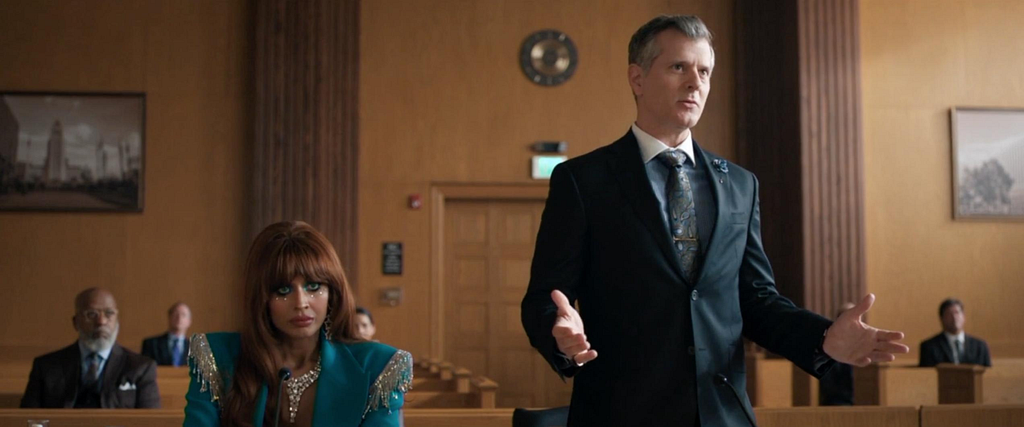
I had the pleasure of talking with Darin Toonder, a veteran actor who has spent over twenty years navigating the shifting waters of Hollywood. Born in Denver, his childhood was quickly split between Indianapolis and Allentown after his parents divorced. Growing up in the eighties, he lived in a world where fourth graders walked home for lunch from school entirely on their own. He would sprint home just to make it to his television set by noon to watch I Love Lucy and The Carol Burnett Show with his mother. “We were having a tough time in Indianapolis,” Toonder recalls, “but there was something about that hour with my mom that made me realize how much I enjoyed laughing. I call those ‘pockets of joy.’ That’s one of the things I try to create in life now, because life can be hard.” By high school, Toonder had moved to Allentown to live with his father. Though he was struggling with depression, humor became a lifeline. His high school friends and grandmother recognized his ability to make people laugh and encouraged him to pursue acting. Those suggestions stuck. Drawn by both comedy and the opportunity to study at Second City, Toonder set his sights on Chicago. When his high school guidance counselor introduced him to Columbia College Chicago, he found a theater program that felt within reach and took the leap. Right out of school, he landed a role in a Steppenwolf production directed by sitcom royalty James Burrows, sharing the stage with John Mahoney. Agents soon told him he was hot and needed to get to the West Coast.
Los Angeles tests an actor’s endurance, and Toonder has spent two decades collecting surreal on-set encounters that reveal the strange human dynamics behind major productions. While filming The First Lady, he worked alongside Oscar-winner Viola Davis, whom he remembers as the absolute personification of power and grace. Rather than interrupting her intense concentration, Toonder joked with her assistant about filming a sequel to an old-school MC Hammer music video. “I started singing, ‘Pumps in a bump, pumps in a bump…’” Toonder says. “Right then, this incredibly graceful, powerful, polished woman — who had been so still and present — clapped her hands and started twerking. I was laughing my head off.” It was a moment of pure, unscripted humanity that broke the ice completely.
Surviving in Hollywood also meant unlearning the toxic pressure of perfectionism. Toonder recalls a pivotal moment when a mentor confronted him about his fear of failure, demanding to know why he never allowed himself to make mistakes. “My chin started trembling as I tried to hold it back, feeling a massive lump in my throat to keep from crying,” he says. The mentor told him he needed to give himself permission to mess up. That single piece of advice transformed his approach to acting. Years later, while shooting the drama Dopesick, a showrunner praised his performance after a series of strong takes. On the very next take, Toonder fumbled his lines twice in a row. Instead of panicking, he laughed. “Because I allowed myself to make mistakes, I was totally fine,” he explains. “Five years prior, I would have gotten stuck in my head and possibly let it ruin my day.” He carried this lesson to Ozark, watching Jason Bateman handle errors with total calm, resetting scenes without a hint of ego.
The pressure is even more intense in daytime television, where second chances are rare. During his stint on General Hospital, Toonder quickly learned that shows are often built on a single take. Whatever happens on that first run is exactly what the country will see. “Perfection is like a sleeper hold on joy — if you lock it in and hold it long enough, the joy just passes out completely,” Toonder observes. Navigating the industry also forced him to establish strict boundaries. Early in his career, he refused to sign a commercial contract because the production team added an unauthorized exclusivity clause that breached their original agreement. Sitting in the makeup chair, he stood his ground and walked off the set. The production scrambled, eventually offering him forty thousand dollars to keep the clause. The next day on set was tense, but with only one final take left under a fading sun, Toonder delivered his monologue flawlessly. “That was the day I earned my wings and realized I belonged,” he says.
Toonder’s ultimate philosophy is rooted in a memory from when he was nine years old, watching E.T. with his father. His dad was an old-school, emotionally distant man who rarely showed vulnerability. Yet, during a heartbreaking scene, Toonder looked up and saw tears streaming down his father’s face. That moment gave him permission to feel deeply and revealed the true power of cinema. Today, when he teaches improvisation or coaches other actors, he pushes people to throw themselves into the arena. “Safety is where pain resides,” Toonder says. “In a lot of circumstances it’s almost always far more painful to play it safe than it is to take a leap of faith. Sitting on the sidelines eats at your soul.” For Toonder, the goal focuses on having the courage to actively create an experience rather than forcing a perfect outcome.
Darin, it’s such a delight to meet you. Before we dive in and talk about your amazing work, our readers would love to learn about your personal origin story. Can you share with us the story of your childhood, how you grew up, and particularly the seeds and the genesis of all the amazing work that has come since then?
Darin: I was born in Denver, reared by Andrea Monroe Toonder and Geoffrey Toonder. They got divorced when I was one year old, and by kindergarten, we moved to Indianapolis. My dad moved to Allentown, so I split my time between Indianapolis and Allentown.
In grade school during the ‘80s — I don’t know if any school lets you do this now — they allowed fourth, fifth, and sixth graders to walk home for lunch if they wanted to. I would walk to school and back by myself as early as second or third grade. It’s crazy when I think about it now, but that’s what you did back then. I would book it home because we got let out at around 11:50 for lunch, and I wanted to get back right at noon to watch I Love Lucy and The Carol Burnett Show with my mom, especially to see Tim Conway.
We were having a tough time in Indianapolis, but there was something about that hour with my mom that made me realize how much I enjoyed laughing. I call those “pockets of joy.” That’s one of the things I try to create in life now, because life cn be hard. If you can create that or be a part of creating it, that’s where my interest first started.
There was another huge show when I was in sixth grade called Moonlighting, starring Bruce Willis and Cybill Shepherd. That was the show that launched Bruce Willis and made him a star before Die Hard. Even in sixth grade, my mom made me go to bed at nine every school night. But everybody in school was talking about Moonlighting, so I convinced her one Tuesday night, saying, “Mom, can we please just watch this show?” We watched it, and she enjoyed it so much that it became the one school night I was allowed to stay up until 10 o’clock. That was another little pocket of joy she and I shared.
In high school, I moved to live with my father in Allentown for four years. I was using humor to deal with depression, putting on a mask. People started telling me I should go into acting or comedy, and my grandmother said the same thing. As a kid desperately wanting validation, hearing that made me say, “Yeah, that’s where we’re going. Let’s go do that.”
So, I went to Chicago, studied at Second City, and attended Columbia College Chicago. Usually, when people ask where I went to college and I say Columbia College, they think of New York, though it’s actually located in Chicago. When I was applying, I saw on the transcript that 562 freshmen applied and 562 freshmen were accepted. I thought, “That’s the school for me!” I wanted to be near Second City anyway, so I completed their training program alongside my college studies.
Right out of college, I did a show at Steppenwolf that James Burrows, the sitcom god, was directing, and John Mahoney from Frasier was in it. From there, I tested for a pilot in LA. My agents in Chicago told me, “You need to go out to L.A. You’re hot.” So I came out here, and I’ve been going at it for 20 years. That’s the quick version of my origin story — at least, I hope it was the quick version!
You’re an amazing storyteller, Darin. Speaking of stories, I’m sure you have some incredible ones from your successful career. It might be hard to single them out, but can you share two stories that really stand out in your mind?
Darin: One of my favorite stories happened when I was doing an episode of The First Lady with Viola Davis. When I got on set, she was the absolute personification of power and grace. I completely saw why she is such a massive star, but she was also very still, focused, and in her lane. I like joking around a lot on set, and while I engaged with her a little bit, she was deeply focused, so I decided to let her be.
Instead, I started joking around with her assistant, who was holding an umbrella for her because it was a hot day. We were shooting a party scene around a pool with a lot of people. This might be before your time, but MC Hammer once made a ridiculous video called “Pumps and a Bump,” where everyone is dancing around a pool and Hammer is in a banana hammock. Looking around our location, I joked to the assistant, “With this pool and all these people, we could make a ‘Pumps and a Bump 2.0’ video.”
I started singing, “Pumps in a bump, pumps in a bump…” Right then, this incredibly graceful, powerful, polished woman — who had been so still and present — clapped her hands and started twerking. I was laughing my head off and kept singing, and she just kept twerking! From that moment on, she and I were joking around and had a wonderful conversation. It was so amazing to see someone who held herself with such grace and power completely cut loose.. Who knew an MC Hammer song would break the ice like that? It was so much fun to watch.
Another huge moment occurred when I was talking to a mentor of mine. He looked at me and asked, “You don’t allow yourself to mess up, do you?” He actually used the F-word, but to be polite, let’s say “mess up.” I just stared at him in silence and he said, “No, you don’t, do you?” My chin started trembling as I tried to hold it back, feeling a massive lump in my throat to keep from crying. He said, “Yeah, man, I feel that. You’ve got to let yourself mess up.”
In that moment, I realized I had to start allowing myself to make mistakes — not only as a person, but especially on set. I’ve seen it so many times in acting classes or during film shoots: someone misses a line, gets caught up in their head, and they’re just gone. It’s incredibly hard to get them back. Allowing myself to mess up took so much pressure off me as an actor. Now, if I make a mistake, I can just acknowledge it and keep going.
A few years later, I was shooting Dopesick. After a bunch of takes, the showrunner came out and said, “Hey man, I just want to let you know you’re really killing this scene. You’ve absolutely got it.” I thanked him, and he repeated, “No, seriously, you are killing this.” On the very next take, sure enough, I messed up. I said, “Let me take that back,” and then I messed up again. I just burst out laughing. It was so hilarious to me because he had just given me all this praise, and immediately afterward, I messed up twice in a row. But because I allowed myself to make mistakes, I was totally fine. Five years prior, I would have gotten stuck in my head and it quite possibly would have ruined the rest of the day.
I even shot a project with an Oscar winner who got stuck on their lines a bunch of times and started beating themselves up. Between takes we had a wonderful conversation about giving yourself permission to mess up, which reminded them of something a mentor once told them. I kid you not, they didn’t miss a line for the rest of the shoot.
When I coach other actors, that’s one of the biggest pieces of advice I give them. When you’re on set and make a mistake, let yourself be okay with it. Because once you start beating yourself up or getting in your head, it’s a very hard place to navigate yourself out of. Plus, beating yourself up makes you look green and is a complete waste of time. When a professional actor messes up a line he either keeps going or says, “Let me take that back.” and does it again. For example, when I was on Ozark, I messed up a line, and Jason Bateman simply said, “Let me take that back for you.” He walked back, reset, and delivered his line again and we did the scene. It was fantastic and a quintessential example of how a veteran actor behaves. We acknowledged the mistake, moved forward and I didn’t waste any time beating myself up. That’s a wonderful philosophy for life, too. We are all so hard on ourselves when we mess up, but allowing yourself to be human makes everything much easier.
As you’re speaking, it strikes me that in most traditional work settings, if you make a mistake, you can easily just try again. But on a film set, you might mess up a take where ten other people delivered their lines perfectly, all while the production is paying by the minute. It must be incredibly stressful, so it probably takes a lot of courage to accept a mistake in that environment.
Darin: Exactly. When you make a mistake, you have 30 crew members staring at you, the camera is pointed right at your face, and everyone is waiting for you to do it again. It’s the last thing you want when you mess up — an audience! But you just have to let it go and keep going. It’s something you can’t escape in this business, so you have to learn how to navigate it. There was something a multi award winning actor once told me on set when we were having a conversation about this. “In this business you have to be willing to get egg on your face. If you aren’t, you shouldn’t be doing it. And the more successful you are, the bigger the egg will be.
Is that how it usually is? On most sets, do you really have about thirty crew members watching you?
Darin: It depends on the set but yes, there can be a lot of people. For instance, when I was on General Hospital, you frequently got only one take. That’s it. If you’ve ever given a speech, you know how that first run goes — you finish it and think, “Great, now that the ice is broken, let’s do it for real.” But on daytime television, they just say, “Great, moving on.” Unless there is a catastrophic mistake, whatever you shot airs.
Working on a soap opera really forced me to let go of perfectionism. Perfection is like a sleeper hold on joy — if you lock it in and hold it long enough, the joy just passes out completely. That experience helped me realize I had to be okay with whatever happened in that single take. I remember joking around with one of the leads on General Hospital, and she told me, “Darin, do you know how many times I drive home crying, realizing what the entire country is about to watch me do?” You just have to let it go and be at peace with it.
We were doing a scene once on General Hospital, and the crew asked us to run through it again so they could check a technical issue. I assumed they weren’t recording, so I just completely goofed off during my couple of lines. As soon as we finished, they said, “Great, we got it. Moving on.” I looked at the lead and asked, “Were they actually rolling on that?” She said, “I think so!” And just like that, my goofing off went out into the universe. It was a funny experience, but everyone on that show was wonderful, and it was a fantastic environment to learn to let go of perfection.
You are such a fantastic storyteller. This brings us to our signature question. Darin, you’ve been blessed with a lot of success and have undoubtedly learned a great deal throughout your career. Looking back to the very beginning when you first started acting, can you share five things you’ve learned over the years that you wish you had known starting out?
Darin: First, as I mentioned, give yourself permission to mess up.
Second, trust your gut and what you know is right for you. When I first moved to L.A., I was incredibly green. My success happened so quickly right out of college, and I ended up just doing whatever everyone else told me to do instead of following my instincts. Listen to your gut, or at least get a secondary opinion.
Third, don’t be afraid to say “no” and establish firm boundaries. Actors can be massive people-pleasers because many enter the profession seeking validation. Dustin Hoffman once beautifully described it when James Lipton asked him on Inside the Actors Studio “Why do you think people chose acting?” Dustin got up and leaned over Lipton’s desk and said “Look at me, look at me, look at me, look at me.” This desperation can be a major turnoff and can possibly keep you from standing up for yourself.
Saying “no” once actually made me $40,000. I was shooting an internet commercial campaign consisting of seven spots. My agent explicitly instructed me not to sign the contract if it included an exclusivity clause, which would prevent me from doing commercials for any competing products. When I got to the set, the contract still had that clause. A couple of days prior, my mentor had told me that to get ahead in life, you must know what you are willing to fight for. I had decided that I would always fight to protect an agreement. So, while sitting in the makeup chair with the cape still on, I refused to sign. I walked off the set into the neighborhood and called my agent.
The production team was scrambling and offering a bit more money, but my agent confirmed they were breaking our original agreement. I told her to tell them no. I was walking away from a significant payday, but I accepted the test. Shortly after, my agent called back. To keep the exclusivity for six months, they agreed to pay me $40,000. My agent told me she respected me immensely because so many actors refuse to set boundaries. Saying “no” allowed her to do her job and negotiate a better deal.
The next day on set felt incredibly tense with the clients. On top of this, they kept handing me last-minute rewrites of the opening monologue I was going to be shooting that day. We were rapidly losing daylight and twenty-five minutes before shooting a complex, single-take dolly shot, they handed me yet another version of the monologue. The assistant director was screaming that we only had time for three takes. On the first take, I nailed the lines, but the camera was out of focus. On the second take, I messed up. The director warned me that if we didn’t get the shot, the whole project was in jeopardy, and we only had one take left and said “No pressure.” I chuckled when he said that. I took a deep breath, accepted the circumstances and told myself, Darin, whatever happens, happens. And I will love you no matter what.” The director called “Action” and we shot the last take. I nail my lines. The director yelled to the camera man “Tell me you got that?!” The cameraman replied “We got it!” The whole set erupted. A few minutes later the client walked over to me and said, “You were worth the 40 grand.” That was the day I felt I earned my wings and realized I belonged.
Fourth, don’t be afraid to make bold choices and take a leap of faith.
Fifth, approach your career from a place of curiosity rather than obligation. The moment I think, “I have to do this,” or “I need to that” it can become overwhelming and creates tension in my body. But when I approach it with curiosity — thinking, “I wonder what would happen if I reached out to that director?” — everything opens up and becomes so much easier.
Because of your incredible work and the platform you’ve built, you have a voice of real influence. If you could spread an idea or inspire a movement that would bring the most amount of good to the most amount of people, what would it be?
Darin: You’re going to make me cry again! Speaking of crying, there is one other memory that fits into my origin story of why I wanted to get into movies. When I was about nine years old, I watched E.T. with my father. He was a very old-school, conservative man who rarely showed any vulnerability. There is a scene where E.T. and Elliot are on medical tables, and they are both dying. I was trying desperately to hold it together, so I looked up at my father for strength, hoping his composure would help me push my tears down and “be a man.” When I looked up, tears were streaming down his face. Seeing that gave me permission to cry. And so I did. As we left the theater, I realized the incredible power of film — that it could make a man like my father feel so deeply. I knew right then what a wonderful medium it would be to be a part of.
To answer your question about inspiring a movement, it would be to encourage people to take a leap of faith. It aligns with Brené Brown’s philosophy of stepping into the arena — having the courage and vulnerability to throw yourself out there. If people embraced that vulnerability, they would be much happier and more successful.
I always tell the students I teach that safety is where pain resides. It is almost always far more painful to play it safe than it is to take a leap of faith. Sitting on the sidelines can eat at your soul. It’s so much better to say, “Let’s take a leap of faith and find out!” Along with that, I would champion basic kindness, taking accountability for your actions, and being open to feedback. Go out and create an experience. Whether it turns out good or bad, at least you are actively creating something.
That’s beautiful. How can our readers continue to follow your work, watch your shows, and support you moving forward?
Darin: I am on Instagram, and I’m actively trying to get better at using it! People can follow me and reach out to me there.
Darin, it has truly been a blessing to meet you. I wish you continued success and good health. Thank you so much for your time; I’m very excited to share this article with our readers.
Darin: Me too, man. I’m looking forward to it. Take care, bye-bye.
Darin Toonder Of Obsession, on Dancing With Viola Davis, Walking Off Set for $40K, and Why… was originally published in Authority Magazine on Medium, where people are continuing the conversation by highlighting and responding to this story.