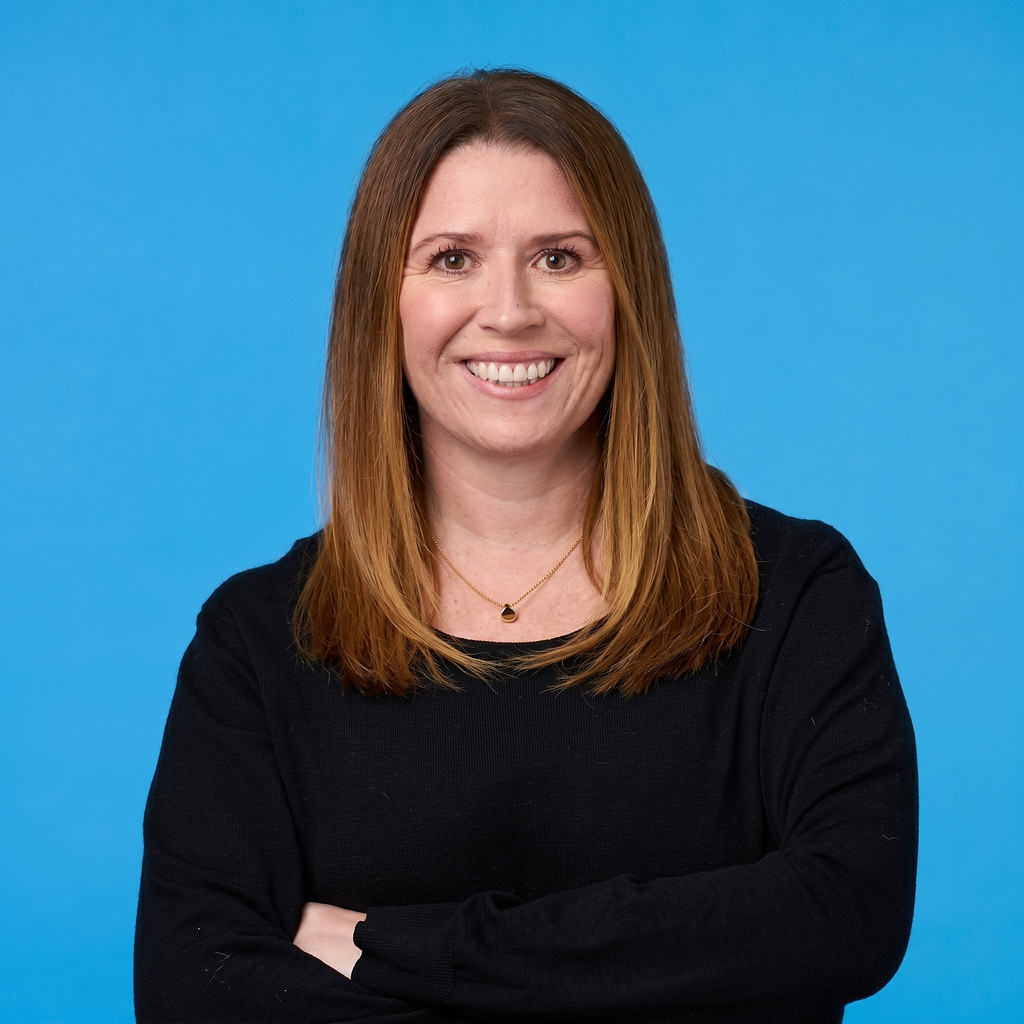
WildBrain Ad Chief Emma Witkowski on Harnessing Nostalgia, the Rise of the ‘Family CMO’ and Why Premium Kids’ Content Is Under Threat
“The stories they grow up with shape how they think, what their values are, and what they ultimately believe.”
I had the pleasure of talking with Emma Witkowski, a woman whose career trajectory is a narrative about grit, timing, and the strange ways a childhood spent in a Northern England pub can prepare you for the high-stakes world of global advertising. Long before she was navigating the digital corridors of companies like Meta and Apple, Witkowski was a thirteen-year-old in a tiny village, learning the messy, tactile reality of cellar management and barrel changing. Her parents had bought a pub, and in that environment, the line between home life and the family business vanished. By the time she was sixteen, she was essentially running the place from end to end.
That pub served as a makeshift classroom for the kind of education you can’t get in a lecture hall. It was there that she developed an early instinct for reading a room. A pub, after all, is a melting pot of backgrounds and temperaments. “You have to quickly learn how to adapt to different people, calm things down, and make people feel welcome,” she says. This ability to meet people where they are became the foundation for her future in team and client leadership. When Witkowski talks about business, she isn’t using buzzwords; she’s drawing from the commercial lens she acquired while watching the local regulars sip pints at the bar.
Her entry into the media world happened with the kind of casual serendipity that feels like a scene from a movie. A regular at the pub named John, who happened to own a media agency, mentioned over a drink that they needed a TV assistant. At nineteen, without a university degree and fueled by a desire to learn by doing, Witkowski took the job. It was a “really casual chat at the bar” that significantly changed her life, set against the backdrop of the early 2000s media landscape. By 2007, she had transitioned into digital, a period she describes as “building the plane while flying it,” where the rules of strategy and investment were being written in real-time.
From those early days of digital chaos, Witkowski moved into the upper echelons of the agency world, leading teams at Omnicom and WPP. She was there for the birth of modern social media advertising, launching Facebook’s first-ever ad campaign. She handled massive budgets for global titans like Sony Pictures and Meta, yet she speaks about these milestones with a grounded perspective. Eventually, her path led her away from the pure agency side and into the world of kids and family entertainment. Today, she leads the global advertising business at WildBrain, a company that manages iconic properties like the Teletubbies, Strawberry Shortcake, and Inspector Gadget.
The shift to kids’ content brought its own set of surreal moments, like finding herself in a dance-off with the Teletubbies while her niece watched and laughed. But beneath the colorful characters lies a serious discussion about the power of nostalgia and the evolving role of the “Family CMO.” Witkowski observes that the modern child, specifically those in Gen Alpha, wields an incredible amount of influence over household purchases. “It is no longer just pester power; it is actual influence,” she notes, pointing out that children often have a say in everything from the family car to vacation destinations.
Her philosophy on leadership and career growth is marked by a refusal to sugarcoat the difficult parts. She is open about the “lighter” mistakes, like the time she accidentally sent an email complaining about a client directly to that very client — a moment of pure terror that taught her that “frustration is temporary, but words last.” She is equally candid about the “heavier” mistakes, such as staying too long in a toxic work environment that stripped her of her confidence. That experience left a lasting mark, leading her to promise herself that she would never tolerate leadership that diminishes or intimidates others. Today, her personal mantra is tattooed on her arm: “feel the fear and do it anyway.” It serves as a constant reminder to choose courage over comfort.
Witkowski’s daily life is a blend of high-level strategy and grounded self-care. She is a proponent of infrared saunas and cold plunges, but her most consistent routine involves her three huskies. She even conducts weekly one-on-one meetings with her team while walking along the beach at 6:30 a.m. For her, the fresh air and movement are essential for a thriving mind and heart. It’s a far cry from the smoke-filled pub of her youth, yet the core principles remain the same: it’s all about the people.
As the media landscape continues to shift, Witkowski is focused on the sustainability of premium kids’ content. She worries that the economics of the industry are under pressure as audiences move to digital platforms where ad dollars don’t always follow the right path. To her, this isn’t just a business problem; it’s a cultural one. “The stories they grow up with shape how they think, what their values are, and what they ultimately believe,” she argues. She believes that kids deserve content that builds empathy and curiosity rather than just “mindless unboxing videos.” In her view, the way we fund the entertainment of children today directly shapes the adults of tomorrow. It is a long-term perspective from someone who started by changing barrels and ended up shaping how the next generation sees the world.
Yitzi: Emma Witkowski, it is such an honor to meet you. Before we dive in and talk about your work, our readers would love to learn about your personal origin story. Can you share with us the story of your childhood and how you grew up, and the seeds and genesis for all the amazing work that has come since then?
Emma: Yeah, sure. I think it is probably good to start at a really pivotal point in my life, which is when I was 13 years old and my parents bought a pub. At 13 years old, I found myself living in a pub in the north of England, in the tiny little village where I was born. It was really a family business. I did everything from waitressing, cleaning, and working behind the bar, to even learning cellar management and how to change barrels. By the time I was 16, I could essentially run a pub from end to end.
Back then, it felt as though you were just mucking in; it was the family business. In hindsight, however, it was my first experience of how a business actually works and runs. It taught me a couple of really important life lessons. I would say firstly, people. A pub brings together many different types of people from different backgrounds and with different personalities. You have to quickly learn how to adapt to different people, calm things down, and make people feel welcome. I think that instinct of meeting people where they are is something that has really stayed with me throughout team leadership and client leadership.
The other thing it gave me early on was a real commercial understanding and a commercial lens. Learning about stock, margins, operations, and the reality of running a business. Through that pub, I unexpectedly found myself working in media, and that is how I ended up in my career. I never wanted to go to university; I always wanted to learn by doing.
One of our regulars, John, owned a media agency. One day he was sat at the bar, we were having a chat, and he mentioned that they needed a TV assistant. He asked if I wanted to apply for the job. At 19, I found myself working in media, and that moment — that really casual chat at the bar — significantly changed my life.
I started in TV buying and transitioned over to digital in 2007. That was the very early days of digital, where you were basically building the plane while flying it. You were figuring out how strategy, investment, and publisher partnerships should all work. Throughout that, I led teams at two of the world’s largest media agencies, Omnicom and WPP, working with global advertisers such as Apple, Sony Pictures, and Meta. I launched Facebook’s first-ever advertising campaign and was responsible for a significant amount of ad dollars. That was my media agency side.
Then I moved to the publisher side and into kids and family entertainment. I first led global strategy, and now I am at WildBrain, where I lead the global advertising business. That remit spans sales, strategy, B2B marketing and PR, operations, and client success. Just a quick bit about WildBrain: we are a global leader in kids and family entertainment, and experts in building and managing franchises. You would probably recognize some of our IP, such as Inspector Gadget, Strawberry Shortcake, and Teletubbies.
I guess that was a very long answer for you, but bringing it full circle — from running a pub to global advertising businesses — it is always about knowing a couple of things: strategy, infrastructure, and that people are really at the center and heart of everything.
Yitzi: You probably have some amazing stories from the different parts of your career, and I am sure this is difficult to single out. Can you share with our readers one or two stories that stand out in your mind from your career?
Emma: From my career, yes. Let’s start with my current chapter at WildBrain. A big moment that stands out is probably a dance-off with the Teletubbies. You find yourself in these situations where you are with the characters in real life, but what was especially special about that one was that I had my niece with me. Watching her laugh at how bad my dancing is was pretty special. For me, it just brings it back to a reminder of the power of IP, especially nostalgic characters. The fan love for them is immense, whether it is from kids or their parents. It also highlights why real-life experiences are so important at driving connection and creating memories that stay with you forever.
Yitzi: There is a saying that sometimes our mistakes can be our greatest teachers. Do you have a story about a humorous mistake that you made when you were first starting in your career and the lesson that you took away from it?
Emma: In the early days, there were probably so many. Lots of little ones, but let me think. On the humorous side — though this was probably not humorous to me at the time, actually I remember it vividly. In the very early days of my career, I vividly remember typing an email to a client complaining about the client. I actually managed to press send to them directly instead. I was terrified, especially since it was someone I had to work with day in and day out. The lesson I learned there was, one, always check your “To” line. Honestly, that is something I am still paranoid about today. The second is that you must be mindful of how and when you vent. Frustration is temporary, but words last. When you are building and maintaining relationships, it is really important.
On a more serious note regarding mistakes, and perhaps one that is less funny, later in my career I crossed into a really disrespectful, demeaning environment. I was in a very toxic team setup where I was not trusting my judgment. I did eventually leave, but my mistake was not doing it sooner. That experience absolutely stripped me of my confidence. It made me doubt myself in ways I had never experienced before. While it was incredibly difficult at the time, it taught me a couple of really important lessons: no role, title, or opportunity is worth sacrificing your self-belief. It also made me promise to myself that I will never tolerate leadership that undermines, diminishes, or intimidates.
One of those mistakes is on the lighter side, and one is on the heavier side, but they have impacted me by making me really conscious of how I lead. I want to lead with empathy, I am mindful of my impact, and I care a lot about creating environments where people are respected, supported, and able to do their best work.
Yitzi: Please tell us about any of the exciting new projects you are working on now, and what you will be working on in the future. We would love to hear how readers can learn more and get involved.
Emma: Regarding exciting projects, it is really about connecting families — kids and parents — to our IP. WildBrain has such nostalgic IP that is deeply trusted by families. For us, that presents a massive opportunity for brands. When I think about Gen Alpha, they are a large audience segment, but they are really more than that: they are the future.
When brands look at this, they cannot think about Gen Alpha the way they thought about generations in the past. This generation is so different. They are digitally savvy; they have grown up with platforms, content, and discovery algorithms. There is also the role they play in the household. They sit at the center of the family ecosystem, influencing what families watch and what they purchase. I often refer to them as the “family CMO,” and I think anyone with kids will resonate with that. For Gen Alpha — four, six, eight, and twelve-year-olds — it is no longer just pester power; it is actual influence.
What I am excited about and currently working on is how to connect brands with this audience and the influence they wield. Brands need to think about them not just in the short term, but rather how to develop long-term relationships with this audience because they are the future household decision-makers. How brands show up now will define how they are remembered later. We have a huge video advertising business, but we also do a lot of branded content where we can insert brands into stories. They can use the power of the characters and the power of nostalgia to truly connect with audiences.
Yitzi: Can you tell us a little bit more about the power of nostalgia? I see that people are focusing on that a little more, and I would love to learn more about it.
Emma: Yes, I think nostalgia is everywhere. I was talking to someone this morning who is a kids’ DJ on YouTube teaching important lessons like times tables. He was saying he uses nostalgic 80s and 90s tunes so the parents can enjoy it and relate to it, while the kids are learning from it. I see this across everyone I talk to; the entire media landscape is discussing the power of nostalgia.
What it does is evoke that feeling of comfort and trust. We live in a wild world at the moment, so for people to have that feeling of trust, that feeling of safety, and the emotional connection it creates, it is really powerful. Off the back of that, it establishes trust, which is incredibly important, particularly in this space.
Yitzi: Is the idea of nostalgia that, for example, if I grew up watching the Teletubbies, Strawberry Shortcake, or Inspector Gadget, you could be marketing to the parents using this nostalgia they had from when they were kids? Is that the idea?
Emma: It is both. The first thing we see is that parents want to watch content they grew up on; it is a profound shared connection to be able to share that with their kids. When they are looking for content, they will choose nostalgic IP because it brings a full-circle moment, especially for the new generation of parents who grew up on this IP. That creates shared screen time.
We see that shared screen time is also a really important family bonding moment. It is actually the third most popular activity behind eating together and traveling together. They select this IP and then choose to sit and watch it with their kids. From an advertising perspective, for family brands that need to reach parents, it is a really powerful place to connect with them.
When they are in shared screen time with their kids, they are firmly in “family mode.” It is a “we versus me” mindset. When you connect with them regarding family travel, family insurance, or family auto, doing so in that environment is really powerful. We see that it actually translates to and delivers more brand recall, brand awareness, brand favorability, and purchase intent.
Yitzi: When you talk about advertising to kids, it is more like a bank shot. If you are advertising to the actual buyers, the message is “go out and buy this.” If you are advertising to the kids, the message is “tell your parents that this is what I should buy.” I am curious, what is the difference between creating an advertisement for kids where it is a bank shot as opposed to an advertisement for adults?
Emma: You are still creating the same commercial because it is still reaching the parent. We have two different types of advertisers. We have the toys and the studios who are purposely trying to reach the six-plus audience or kids directly. Those commercials are obviously centered around what the kids want to see, such as the toy or the movie trailer.
We then have the other set of advertising, which I call non-endemic, encompassing everything outside of those two pillars. Generally, they run the same commercial because they know they are reaching the parent. The kid is going to see the commercial as well, and there is actually some value in that because if it is a good commercial, the kids will like it. It is surprising the influence kids even have on car purchases. You would not normally think so, but kids do have a considerable say in what car they think the family should get.
The commercials are generally the same, but I would say there is a creative opportunity to optimize them. Having entertaining commercials that connect with the family as a whole can drive conversation, prompting the family to talk about it. Quick-service restaurants are a great example of this; they drive conversation, leading the family to say, “We have to go and eat there tonight.” While there is some creative nuance, right now we predominantly see the same ads running because advertisers know they are reaching the parent.
Yitzi: You run ads in countries across the world, not only in the US, right?
Emma: Yes, I lead global advertising, and we are a truly global business. Our content runs globally. We actually localize into over 100 different languages. It is a true global infrastructure.
Yitzi: Are there different regulations or laws about how you advertise to kids in Canada as opposed to America, or in Germany as opposed to America?
Emma: Yes, there is some basic global guidance around compliance, such as COPPA 2.0. I do not want to get too technical, but it is about compliance for kids’ advertising, ensuring it is safe and making sure no one is leveraging data. We are not using AI, and there are certain nuanced things we cannot do, along with specific advertisers that cannot run in kids’ content.
There are definitely nuances across the globe. I believe Australia is currently further ahead with compliance and data than some other markets, so we will probably start to see those standards roll out globally.
Yitzi: You mentioned Australia; I think that is a great case study. Australia banned social media for people under 16. As a marketer, what is your opinion about that?
Emma: The first nuance is defining social media. In the US, social media is typically Instagram, TikTok, and Facebook. YouTube is separate and is not typically counted as social media. This is the first time Australia has counted YouTube as social media.
Regarding our strategy, TikTok and Instagram are not for kids. Our audience, our creative, and what we post are aimed at millennial and Gen Z super fans who grew up on our IP — tying back to that nostalgia — and still love to watch a good old Teletubbies video. We have a very clear content strategy that separates what we do on those platforms versus what we do on YouTube, which is aimed at kids and that co-viewing, shared screen time moment.
I think it is interesting. I should also say that we 100% support compliance in this space and making sure it is safe. However, we also believe that there should be safe environments. YouTube does have a kids’ product; they have a very specific kids’ app where it is a highly guarded, safe environment. They have made moves to ensure they can deliver kids’ content in a safe way.
Yitzi: Emma, you have been blessed with a lot of success, and you must have learned a lot from your experiences. Looking back all the way to the beginning when you first started your career, can you share five things that you have learned over the years that would have been nice to know in the beginning?
Emma:
- Number one — and this is now my personal mantra, it is actually tattooed on my arm — is “feel the fear and do it anyway.” It is about choosing courage over comfort. Early in your career, you are building your confidence; you want to be good and not exposed. When something feels uncomfortable, whether it is speaking up or taking a risk, you generally take a step back and say no. However, those are the moments where real learning happens. Choose courage over comfort; feel the fear and do it anyway.
- The second — I am going to struggle to get to five, I reckon. The second is to be kind to yourself. Especially early on, I was incredibly hard on myself. I would overthink the smallest things and replay conversations in my head. Imposter syndrome is very real. It is something I see disproportionately among women. You can be very capable and experienced, but you still question whether you belong in that room. That would be my second point.
- My third would be to ask questions.
- To succeed in media, I think curiosity is incredibly important.
- Confidence is also key, and confidence does not come from being perfect; it comes from stepping outside your comfort zone. Above all, I think curiosity is the main thing.
Yitzi: On a personal level, can you share some of the self-care routines that you do to help your body, mind, and heart to thrive?
Emma: I should say these come and go. I get really into a routine for a month or so, staying on top of it and doing my meditating. I am a big fan of infrared saunas and cold plunges. Those are really important to me.
I also have three huskies. Getting out and walking my dogs, whether it is at the beach or in the mountains, and just getting fresh air is essential. I actually conduct one of my weekly one-on-ones at the beach at 6:30 a.m. on Fridays. Emily from my team and I go for a 45-minute walk. We talk all business, but it is wonderful to be doing that outside in the fresh air.
Yitzi: This is our final aspirational question. Emma, because of your amazing work and the platform that you lead, you are honestly a person of enormous influence. If you could spread an idea or inspire a movement that would bring the most amount of good to the most amount of people, what would that be? Because you never know what your idea can spread.
Emma: I am going to tie it back to the work I am doing at WildBrain. If I could inspire one movement, it would be around the future of kids’ content and why it is so essential.
To outline the issue a little bit: the economics that used to fund premium kids’ content are under intense pressure. Audiences have migrated away from linear TV to digital and streaming platforms, but the ad dollars have not followed. When they have, they are not necessarily routed in the right way; they pass through third parties, which means they are not reaching trusted publishers. That stops the funding of content. The sustainability of premium kids’ content is currently at risk.
This matters because kids are not just an audience segment. The stories they grow up with shape how they think, what their values are, and what they ultimately believe. They deserve content like we grew up with — content that builds curiosity, empathy, and joy — not just mindless unboxing videos. There are a lot of those, and kids do not inherently want to be watching them.
The shift I would love to see is more responsible, direct investment into the environments where kids are actually spending time. This means supporting trusted publishers and funding premium content. If I were going to get deep, I would say that how we fund kids’ content today shapes the adults we get tomorrow.
Yitzi: Emma, how can our readers continue to follow your work? How could they support your work in any possible way?
Emma: LinkedIn is the best way to find me. I post on there a lot. LinkedIn is a fantastic business tool. I use it personally quite frequently, and my WildBrain team uses it a lot as well.
Yitzi: Emma, it has been a delight to meet you. I wish you continued success, good health, and blessings, and I hope we can do this again next year.
Emma: Thank you so much. What I would say about this interview is that it was really good preparing for it because you do not often get to pause and reflect on the moments that shaped you. Returning to the story of the pub and realizing how influential that was in my life was a great exercise. Thank you for this opportunity; it has been fun doing it.
Yitzi: Thanks so much for saying those kind words.
Emma: It has been great, and it was lovely to meet you.
WildBrain Ad Chief Emma Witkowski on Harnessing Nostalgia, the Rise of the ‘Family CMO’ and Why… was originally published in Authority Magazine on Medium, where people are continuing the conversation by highlighting and responding to this story.