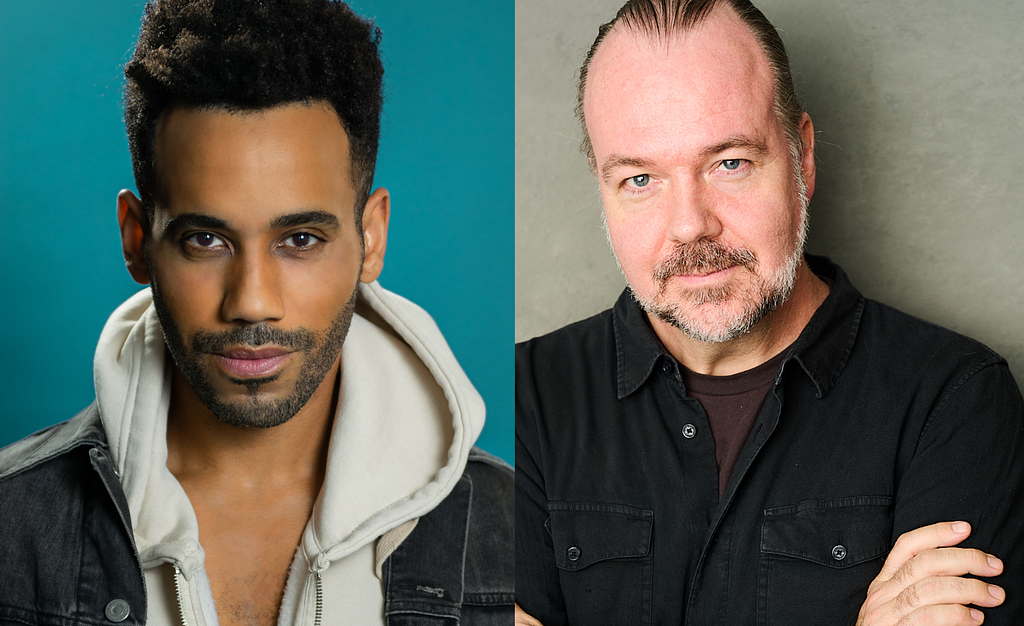
Rob Nagle and James Hayden-Rodriguez on the Hard Truths of the Acting Grind and Why Likability Kills Creativity
“If your entire life is just showbiz, your art will run out of fuel.”
I had the pleasure of talking with Rob Nagle and James Hayden-Rodriguez. Near the end of their conversation, Nagle noticed that all three people on the video call happened to be wearing green. The screens had green in them, too. When I wondered aloud what it might mean, Nagle supplied a one-word answer: “Growing.”
It was an actor’s instinct, turning an accidental visual detail into a final beat. It also captured something the two men share. Nagle and Hayden-Rodriguez have spent decades developing their craft across theaters, film sets, touring productions, and television soundstages, yet both speak about acting as an unfinished education. Their careers have demanded intense commitment. Their harder lesson has been learning when to loosen that commitment’s grip.
Nagle grew up moving among college towns as his parents changed academic jobs. Born in Eugene, Oregon, he spent important years in DeKalb, Illinois, before moving to Williamsburg, Virginia. He jokes that the combination gave him “Midwestern politeness, Southern hospitality, and just a bit of militia.” More consequentially, it exposed him to different cadences, temperaments, and regional ways of speaking. For a character actor, listening became an early form of training.
His decisive encounter with performance came at nine or ten, when an elementary school choir connection led to an audition for Giacomo Puccini’s Gianni Schicchi at Northern Illinois University. Cast as the young Gherardino, Nagle suddenly found himself among undergraduate and graduate performers who treated the stage as a place of serious work and expansive play. “I realized quickly that I had found my people,” he recalls.
At Northwestern University, he studied theater and philosophy, joining performance’s emotional demands with an academic habit of interrogation. His working method can be reduced to two words: “question everything.” After college came Chicago theater, New York pavement-pounding, Shakespeare in Washington, D.C., and San Diego, and eventually Los Angeles, where he settled in 1997. The route was lengthy, but the destination had been clear since childhood.
Hayden-Rodriguez’s path began in the Bronx. His family roots stretch to Puerto Rico on one side and Alabama on the other. He moved to Virginia with his mother at five and spent summers in New York with his father. He was the child who sang, performed, and staged shows around the house, but the turning point arrived at sixteen, when his high school took a musical to the Edinburgh Fringe Festival. A city temporarily given over to theater made the profession feel less like an extracurricular activity than a possible life. “This is what I want to do forever,” he remembers thinking.
He studied acting at Shenandoah University, worked in Washington theater, and moved to New York with Broadway ambitions. Then the machinery of auditioning began to wear him down. He stopped pursuing roles with the same intensity, traveled, and tried, as he puts it, to become “a more realized human rather than a machine that goes to auditions every day.”
The job that revived him arrived almost by accident. An agent sent him an audition for a small Off-Broadway adaptation of The Lightning Thief. Hayden-Rodriguez knew nothing about the Percy Jackson books, made a series of bold character choices, and submitted a tape. Another actor was initially hired, then left for a different production. The creative team returned to the tapes and chose Hayden-Rodriguez. The show found the books’ large, devoted audience, toured for a year, and reached Broadway. What began as an uncertain opportunity became three years of work and a reminder that theater could still surprise him.
For Nagle, one of the most instructive screen experiences was far smaller. While filming a brief scene opposite Robert Downey Jr. in The Soloist, the actors first captured the scripted version. They then performed additional takes “for nourishment,” abandoning the text and improvising until the crew laughed after each cut. The lesson was not that preparation could be discarded, but that structure and freedom could coexist. Years later, Nagle still describes the script as everything while insisting that every rehearsal or set should remain exploratory.
That balance runs through both actors’ advice. Nagle warns that self-judgment becomes sabotage. Hayden-Rodriguez has learned to “care a little less” about outcomes once an audition is finished. Nagle argues that “likability is the death of creativity,” especially when actors enter rooms trying to behave like good students. Hayden-Rodriguez carries Uta Hagen’s sharper warning: “Vanity is the death of good acting.” Both ideas reject the filtered, approval-seeking version of performance. The work requires preparation, but it also requires the nerve to arrive as a specific person.
It requires a life beyond the work, too. Hayden-Rodriguez treats acting and singing as full-body practices and maintains the physical freedom to alter how a character moves, sits, and occupies space. Nagle is even blunter: “Get a life.” Cook, travel, read, listen to music, fall in love, endure heartbreak. An actor who talks only about auditions and bookings eventually runs out of human material.
Their individual histories converge in a shared belief that acting is a collective undertaking. Nagle prefers the literal meaning of collaborator: a co-laborer. Onstage or on set, the best idea may come from an actor, a prop department, a sound technician, or someone else solving the problem from another angle. Credit matters less than the result. “No one does it alone,” he says.
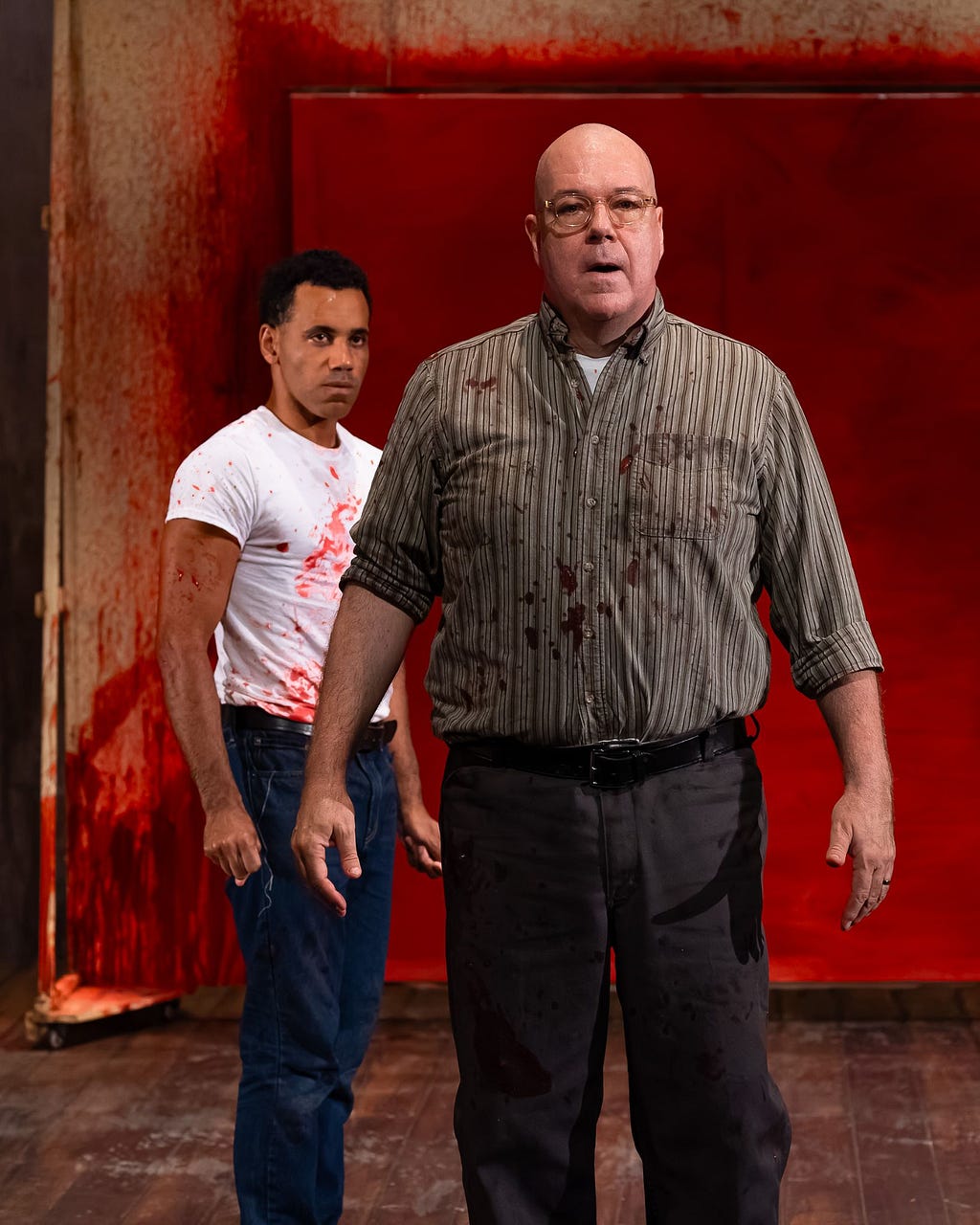
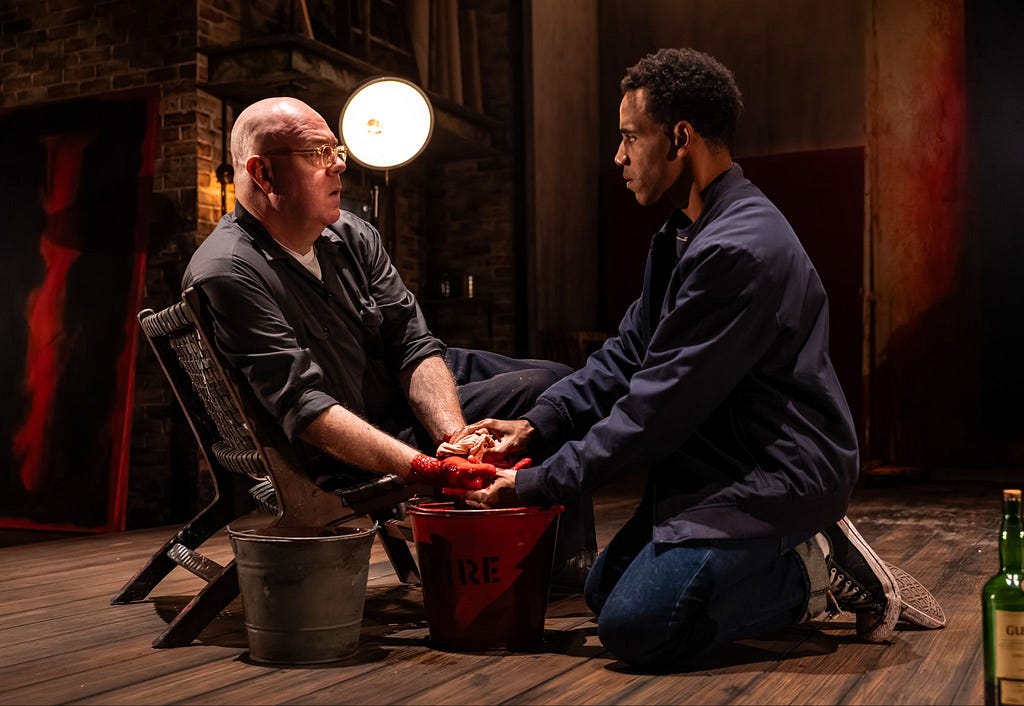
At the time of our conversation, Nagle and Hayden-Rodriguez were preparing to share the stage in John Logan’s RED at the Laguna Playhouse in Laguna Beach, California, running through June 28. The play, which received the Tony Award for Best Play, places two artists in a room together and explores creation, ambition, mentorship, conflict, and the cost of devoting oneself completely to one’s work. Those questions felt closely connected to everything the actors had discussed.
Their careers remain different in shape, but the same tension animates them: how to give oneself fully to a profession without surrendering the fuller person the profession needs. Their answer is neither detachment nor obsession. It is continued growth, sustained by play, discipline, community, and a willingness to remain unfinished.
They had joined the conversation to speak about RED. Yet when Nagle looked across the three green-filled Zoom screens and offered that final word, “Growing,” it seemed to capture both the play and the lives of the two actors preparing to perform it.
Yitzi: Rob and James, it’s an honor to meet you both. Before we dive deep and talk about your amazing work, our readers would love to learn about each of your personal origin stories. We’ll start with Rob because you’re on my right side. Rob, could you share with us a story of your childhood, how you grew up, and particularly the seeds and the genesis for all the amazing creativity that has come since then?
Rob Nagle: Yeah, I’ll keep this as short as possible. As an actor, I think the growing up part never really ends. I’m still growing up, but I was raised in a changing landscape. I was shifting college towns as my parents moved from academic jobs. I was born in Eugene, Oregon, and spent formative years in DeKalb, Illinois, before heading east to Williamsburg, Virginia. I like to say I have Midwestern politeness, Southern hospitality, and just a bit of militia. Growing up in these pockets of the country really gave me an ear for different rhythms of speech and different personalities, which is pretty good training for a character actor.
After high school, I headed back to Illinois from Virginia to attend Northwestern University, where I studied theater and philosophy. The emotional, expressive world of performance met the academic, analytical, “question everything” point of view that philosophy instills in you. That’s probably a good metaphor for how I approach my work: question everything.
After college, I was a journeyman actor. I started in the gritty Chicago theater scene, pounded the pavement in New York, and spent a few seasons doing Shakespeare in Washington, D.C., and San Diego, California, before finding a home in Los Angeles in 1997. That is my origin story. There was no other direction to go once I knew what I was doing. It was a slow track, but definitely a fast look at the destination of where I wanted to go. It started when I was about 9 or 10 years old.
James Hayden-Rodriguez: Absolutely. I was born in the Bronx, New York City. My family comes from Puerto Rico on one side and Alabama on the other. My Black family is from the South. I was born in New York but moved to Virginia with my mother when I was five. I grew up mostly there and spent summers in New York with my dad.
Artistically, I was always a singer and a performer. I was that crazy kid running around the house putting on shows. Once I got to high school, I started doing drama club. I did my first play and thought it was really cool, mostly because the people I was around were very supportive, and I loved that environment. I was lucky enough to go to the Edinburgh Fringe Festival when I was 16 with my high school to perform a musical. That honestly changed my life. The experience of being in that city was incredible. It’s not like any other fringe in the world; the whole city shuts down and is just dedicated to theater. It felt like magic. In that moment, I thought, “This is what I want to do forever.”
I went to Shenandoah University in Virginia and studied acting. Afterward, I moved to D.C., did Shakespeare, worked at Signature Theatre, and then moved to New York to pursue my Broadway dreams. Now, I have been in LA for about six years.
Yitzi: I’m sure both of you probably have amazing stories from your careers. I know this is difficult to single out, but can you share with our readers one or two stories that stand out most in your mind from your professional life?
Rob Nagle: Absolutely. I think one of the experiences that launched me into acting was when I was 9 or 10 years old. I was involved with the elementary school choir. I wish I had gone to the Edinburgh Fringe; I think we went to Madison, Wisconsin instead. Out of the blue, I was asked to audition for a production of Giacomo Puccini’s operetta Gianni Schicchi because they needed a kid to play Gherardino, the young boy who spends time playing marbles. It was being put on by the Northern Illinois University Opera Workshop.
I was cast, and the experience changed my path completely. Suddenly, I found myself surrounded by this vibrant, welcoming community of undergraduate and graduate students. To a 9- or 10-year-old, it felt like stepping into a summer camp or a circus of joy, play, and welcoming hearts. I realized quickly that I had found my people, my own La Bohème. I immediately dived into acting classes and joined the Children’s Community Theater in DeKalb. The deed was done.
As far as memorable professional moments, one of my favorite times on set was a quick scene in Joe Wright’s film The Soloist. It’s a “blink and you miss me” scene, but it was just Robert Downey Jr. and me. The process of filming it was an actor’s dream. We laid down the scene exactly as it was written for the first few takes to make sure the studio had what it needed. Then, Robert and I would do extra takes “for nourishment,” as he called it. During those takes, we essentially threw the script out the window and purely improvised back and forth, just trying to crack each other up. I knew it was special because every time they called cut, the crew — who are notoriously tough to amuse — would burst out laughing. I realized that within the structure of storytelling, whether in filmmaking or a theater rehearsal room, there is also room for beautiful play and explorative freedom. I will never forget that night and am very grateful for the opportunity to work in that way. I try to bring that energy to everything I do now.
Another huge highlight in my career was playing Oscar Wilde in David Hare’s The Judas Kiss at Boston Court Pasadena. Diving into the heartbreaking and tragic collapse of Oscar Wilde’s life took a lot of nuance, historical accuracy, and intense emotional stakes. That was an experience that felt divine, and I would even say spiritual.
James Hayden-Rodriguez: My favorite career moment is pretty easy for me because it was such a pivotal point in my life. I had moved to New York to pursue theater and try to get on Broadway. It’s such a grind, and it was really hard for me. It defeated me, so I gave up for a bit. I still had my agents, but I wasn’t auditioning much. I was just living my life, traveling, and trying to become a more realized human rather than a machine that goes to auditions every day because I wasn’t fulfilled.
Then, a show came across my agent’s desk. It was a little off-Broadway musical that was originally a kids’ show, and they were trying to make it bigger. It was The Lightning Thief: The Percy Jackson Musical. I had never heard of Percy Jackson, so I had no idea what it was. I just made some really bold choices with all these different characters they threw at me during the audition and sent the tape in. The story goes that they actually cast someone else for the role, but he dropped out to do another show. They went back through their audition tapes, found me, and I got the job.
We didn’t really expect anything from this little musical thrown together at the Lucille Lortel Theatre, but it took on a life of its own. There was a huge fandom behind Percy Jackson and the book series. Our little show took off. We hit the road, did a year of touring, and then transferred to Broadway. It was a magical three years of my life. It changed everything for me. It reignited my love for theater. It was also telling a story that felt really important for young people — mostly teenagers — who were struggling with their identity and trying to figure out who they are at a pivotal moment in life. Connecting with our fans was incredible, and the whole experience just felt like magic. I am so lucky.
Yitzi: It’s amazing. Rob and James, please tell us about exciting new projects you’re working on now. Tell us all about it. We have to support and patronize it.
Rob Nagle: I am going directly from the run of playing Mark Rothko into a remount of a new play called What Price Freedom? starting Fourth of July weekend for three weekends in Los Angeles, playing Benjamin Franklin. Apparently, I am playing historical figures with wigs and facial hair now. We already did a run of it, and we are doing three more weeks in July in honor of the sesquicentennial of the Declaration of Independence.
I am also waiting for a movie called Alien Vacation to come out. It’s a comedy about a family of aliens who land in Roswell, New Mexico, and make friends with alien enthusiasts who go on field trips during their vacation. Additionally, I have an episode of S.W.A.T. coming up, though they are still figuring out the release schedule. When it does come out, keep an eye out for me in episode three, because I play a not-very-good guy. That is what I have coming up that I know of.
James Hayden-Rodriguez: I have a feature film making its way around festivals right now called Out of the Woods, starring Frances Fisher, Bruce Davison, and Mimi Kennedy. I get to play Frances’s son-in-law. It is a really beautiful story about a woman starting her journey with dementia who reconnects with an old love from when she was 20 years old. She is trying to figure out if it is worth pursuing or staying true to her family, husband, and child. It is a heartbreaking and beautiful story. The performances were incredible, and I was happy to be a part of it.
I also have a film called Drunk with Love coming out, directed by George Bamber. I star as Stoughton Gentry, a very flamboyant cabaret star in 1930s Los Angeles. The movie is a big conversation about what it means to be queer, and whether it is more important to stay true to yourself or assimilate for survival, especially in that era. It is another heartbreaking film, but beautifully written and directed.
Yitzi: What are five things you wish someone had told you when you started out?
Rob Nagle: I think there are five things I wish someone had told me when I started — though I am glad no one did, because I wouldn’t be who I am right now if I had known them. These are things I have learned along the way that I can pass on to others.
First, your biggest enemy in your career is going to be yourself. Self-judgment is a form of sabotage. Second, it is vitally important to invest deeply in your own creative community. Third, the script is everything, and your ability to analyze text is a superpower. Fourth, learning never stops. “It is always in season for old men to learn.” I think Aeschylus said that. Every room is a classroom, and every time you do your work, you should treat it as an explorative session, emphasizing process over product. Try something new every time.
Fifth, your uniqueness is a biological fact. If you don’t bring your unique self to the table, the world doesn’t just miss out on you; it misses out on that specific piece of art forever. That draws back to Martha Graham’s advice to Agnes de Mille: if you don’t express it, it will be lost from the world forever. It is not your job to judge it or to determine how good it is. Your job is to be open and let it flow through you. Embrace your uniqueness and let your freak flag fly. If it is a gift from wherever you believe it comes from, you must let it rage and be truly yours. Otherwise, you are dimming your light.
James Hayden-Rodriguez: I can’t follow that, but I’ll try to do five. A big one for me has been learning how to care a little less. I know that sounds contradictory — you should care about the things you do. But in an audition setting, putting so much of yourself into something and constantly waiting for the result translates into energy in the room, and it isn’t always positive. Like Rob said, you want to be at the mercy of the character and the part, but just care a little less about the outcome. Move on with your life afterward. Don’t sit by your phone waiting. I’ve had casting call me seven months later to offer me a job. It can’t be everything for you; you have to have a life outside of it.
That brings me to number two: live more. It is important to get out there and learn how to be a well-rounded human being. Acting isn’t just about being 100% of who you are; it’s about having experiences that color and inform the different characters you will play.
Number three, uniqueness is huge. Bringing yourself to everything is something I love to do. I had a very specific upbringing and experience, and I try to bring that to every single character I play. As Rob mentioned, your uniqueness is important because no one else has it. It’s yours. It’s not just saying, “Be yourself”; it’s more specific. You have to learn who you are so that you can bring yourself into a room. That is ultimately what they are looking for. They aren’t looking for cookie-cutter versions of a specific idea. What else have I learned in my years? I don’t know, five is a lot.
I take care of my body. That is something I do because of this art — because of theater and film. A professor once told me that acting and singing are full-body experiences. If I don’t feel nimble and able to move, it is really hard for me to live within another character. If I feel restricted by anything, how do I create what I want? I stretch a lot and am very physical so that I have the ability to change the way a character sits, walks, or inhabits their body. If you are restricted in your own body, how do you find that physicality in another character?
Another lesson is a great Uta Hagen quote I’ve carried with me for the last 20 years: “Vanity is the death of good acting.” That is probably my favorite piece of advice. If you are aware of what you are doing, or if you are thinking about how pretty you look in the moment, you immediately take yourself out of the character and their lived circumstances.
Yitzi: Amazing. This is our final aspirational question. Rob and James, because of your amazing work and the platforms you have built, you are people of enormous influence. If you could spread an idea or inspire a movement that would bring the most amount of good to the most amount of people, what would that be? You never know how far your idea can spread.
James Hayden-Rodriguez: I can start. For me, kindness is everything. Spreading kindness and joy is very important. You never know what people are dealing with in their lives. Everyone is living different lives and going through really hard moments. Being cruel to someone because of how you are feeling could really ruin their day. On the flip side, it is really easy to make someone’s day. It is vital to spread love and positivity. I know that might sound a little woo-woo, but it is deeply helpful for people who are struggling.
Rob Nagle: My turn? Oh boy. Okay, I will throw this in: get a life. Literally, get a life. Don’t let your work consume 100% of your identity. It is easy to fall into the trap in our industry of only talking about auditions, classes, headshots, and gigs. Go out into the world and live a full, rich life. Learn to cook, travel, read, listen to live music, fall in love, and experience heartbreak. When you step onto a stage or a film set, you need a deep reservoir of human experience to draw from. If your entire life is just showbiz, your art will run out of fuel.
To piggyback on James’ point about vanity — or James piggybacking on Uta Hagen — I think another version of that is: “Likability is the death of creativity.” When young actors enter an audition room, they often filter their own personalities and try to be the “good student,” guessing exactly what the casting director wants. Stop trying to get a gold star. Make specific, bold choices based on your own text analysis and imagination. Trust your preparation and the unique perspective you bring into the room. The industry doesn’t need a polite, filtered version of you; it needs your authentic human energy.
Also, play the long game. Stop comparing yourself to others. As a friend says, “Compare and despair.” It is a marathon, not a sprint, and you are the only one running in your lane. Looking at where other people are on their timelines — their bookings, representation, or peers — is a fast way to become bitter, because you cannot control this field. You can’t control when a casting director says yes. You have to anchor your self-worth in who you are as a person and your dedication to your craft, rather than the roles on your resume.
Remember that acting, or any endeavor, is a team sport. Be incredibly decent and kind to absolutely everyone. As my mentor Garry Marshall used to say, “It’s nice to be important, but it’s more important to be nice.” Sets and theaters are collaborative engines. Everyone is working just as hard, if not harder, than the actors. Showing up on time, knowing your lines backward and forward, hitting your marks, being joyful, and being low-maintenance ensures people will want to work with you again.
Finally, I love Samuel Beckett’s line: “Fail, fail again, fail better.” What we do requires immense vulnerability, which means you have to get comfortable with the idea of falling flat on your face. Mistakes are the only way to breakthroughs. Do the work, take risks, trust your gut, and keep your outside perspective open and alive. Don’t be afraid to fail until you figure out what works.
Yitzi: Amazing. I love etymology, and when you said “collaborator,” you expressed the root, which is “co-laborer.” That is beautiful. What did you intend to stress with that? What did you mean to teach?
Rob Nagle: I think the best idea wins. Often, our egos get in the way because we want the comfort of thinking we know the answer. It is uncomfortable not to know, but the only way to arrive at the best idea is by working together and listening to each other. For example, on a set with a working record player, I might think the needle should go a certain way. But there is a sound department, a prop department, and an entire tech crew who probably have a better idea of what might work. We have to work together to find a solution. I don’t need sole credit on anything any more than they need co-credit on my work. No one does it alone. We are all one. That’s the secret of the universe: we are all one. The word “universe” essentially means one word.
Yitzi: Fantastic. Okay, how can our readers continue to follow your work? How can they watch your performances and support your work in any possible way?
James Hayden-Rodriguez: I am pretty active on social media; I post everything I have coming up there. On Instagram, I’m @James_Hayden. I also have a website, jameshaydenrodriguez.com, which paints a fuller picture of my past, current, and future projects.
Rob Nagle: I’m at RobNagle.com, or on socials at @nagdoggy. My website has basically become a scrapbook. When friends ask how to watch my episode of Grey’s Anatomy, I just send them to the site. I have a list of all my past work there, so if anyone is ever wondering what I have or haven’t done, they can check it out.
Yitzi: That’s awesome. Well, James and Rob, it has truly been a delight and an honor to meet you. I wish you both continued success, good health, and blessings. I would love to do this again next year.
James Hayden-Rodriguez: Yes, we’d love that too. Thank you so much for your time. It was a pleasure.
Rob Nagle: It’s my pleasure. The growth around you is something I’m going to take with me today. I think it’s interesting that we all wore green. We all have green in our screens.
Yitzi: That’s an interesting observation. I wonder what that’s about.
Rob Nagle: Growing.
Rob Nagle and James Hayden-Rodriguez on the Hard Truths of the Acting Grind and Why Likability… was originally published in Authority Magazine on Medium, where people are continuing the conversation by highlighting and responding to this story.