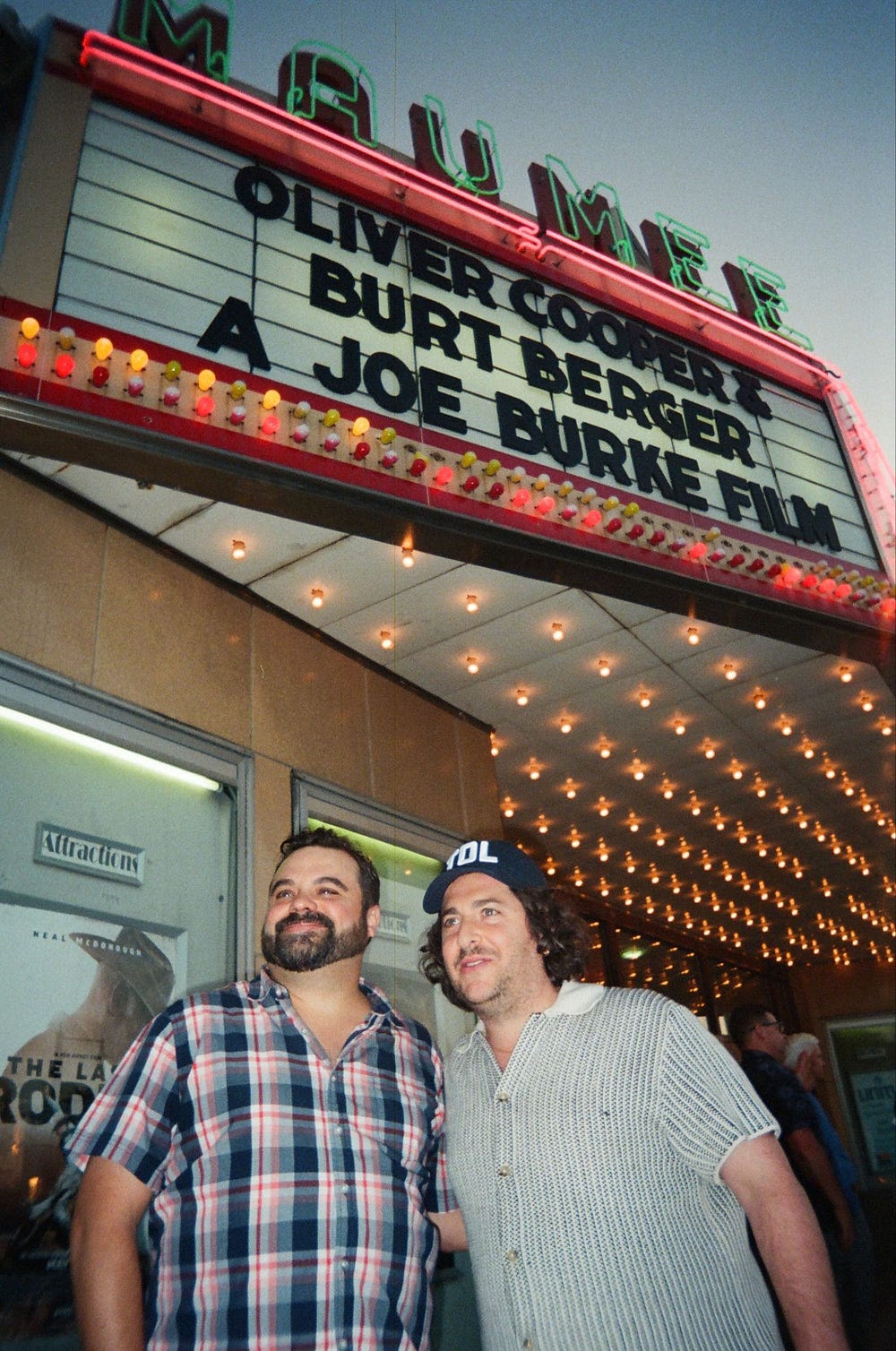
“We submitted to 28 festivals all over the world, and every single one turned us down. We went 0 for 28.”
I had the pleasure of talking with Joe Burke, an independent filmmaker, actor, editor, teacher, and self-described one-man-band whose latest feature, Burt, was made with the kind of constraints that would have terrified his younger self. The film was shot in seven days, on a $7,000 production budget, with a three-person crew. Burke now sees that not as a compromise, but as a kind of artistic freedom. “I would have never said yes to that in my 20s,” he told me. Back then, he would have believed a real movie required more money, more people, and more permission. Now, after years in and around Hollywood, he has come to believe almost the opposite: sometimes the only way to protect the heart of a story is to make it small enough that no one can take it away from you.
That instinct began long before Los Angeles. Burke grew up in Toledo, Ohio, in what he remembers as a warm Jewish community, with Shabbat celebrations, a Bar Mitzvah, a trip to Israel, and a house where creativity found him early. At about eight years old, he began making movies in the backyard with his parents’ camcorder, editing them with two VCRs, a now almost comically tactile image of childhood filmmaking. He also acted in theater through school and spent summers at a Jewish camp in Michigan. His childhood, he said, was good, though not untouched by difficulty. His parents divorced when he was 15, something he recognizes as a formative experience, even as he describes his upbringing with gratitude.
For a while, theater seemed like the obvious path. Burke went to Columbia College Chicago as a theater major, but in his second year he switched to filmmaking. He could not resist making movies. In Chicago, he was writing, producing, shooting, editing, and even doing his own makeup, a scrappy approach that would become less a youthful workaround than a lifelong method. After Columbia, he moved to Los Angeles to attend the American Film Institute for directing, graduating in 2009. Short films followed, along with representation by a major manager and agent, and by his late 20s he was directing small comedy television shows. It looked like the beginning of a conventional Hollywood ascent.
But Burke discovered that the conventional path did not fit him. He enjoyed parts of the work, but he did not love being a director-for-hire. What he wanted was to write, produce, and protect his own material. At 30, he respectfully left his agent and manager and began teaching film school, a role he has continued for the past 12 years while still making his own films. There is a revealing humility in that choice. Burke was not rejecting success so much as redefining what kind of success he could actually live inside.
Much of his story is also tied to Oliver Cooper, his longtime creative partner. Cooper is the younger brother of Burke’s childhood best friend, Jason, and Burke has known him since Oliver was a kid in Toledo. Oliver moved to Los Angeles at 19 after dropping out of college, worked open-mic comedy, and, in a story that sounds invented but is not, booked the lead role in Warner Bros.’ Project X on the first movie audition of his life. The film became a major comedy hit, and its success opened doors for Burke and Cooper to pitch shows, make shorts, raise money, and begin building a shared creative life.
Yet Burke’s clearest lessons have come not from the doors that opened, but from the ones that closed. When he looks back at his 20s, he believes he said no too often. He was trying to protect quality, but he now tells his students that early opportunities are often stepping stones. “Say yes” is not a surrender of standards, in his view. It is a way to gain experience, meet people, and build the authority to eventually make the work that matters most.
The making of Burt sharpened that philosophy. Burke and Cooper finished the film at the end of 2023 and expected 2024 to be their festival year. Instead, they submitted to 28 festivals and were rejected by every one. Burke was disheartened, but the rejections forced a more independent strategy. They emailed theaters directly, arranged revenue-share screenings, sold their own tickets, and took the film on a cross-country theatrical tour. Then festivals began accepting them, and the film went on to win awards at festivals including Phoenix, Anchorage, Florida, and Cinequest. A Los Angeles Times feature followed. The rejection had not ended the film’s life. It had pushed Burke toward a more personal model of distribution.
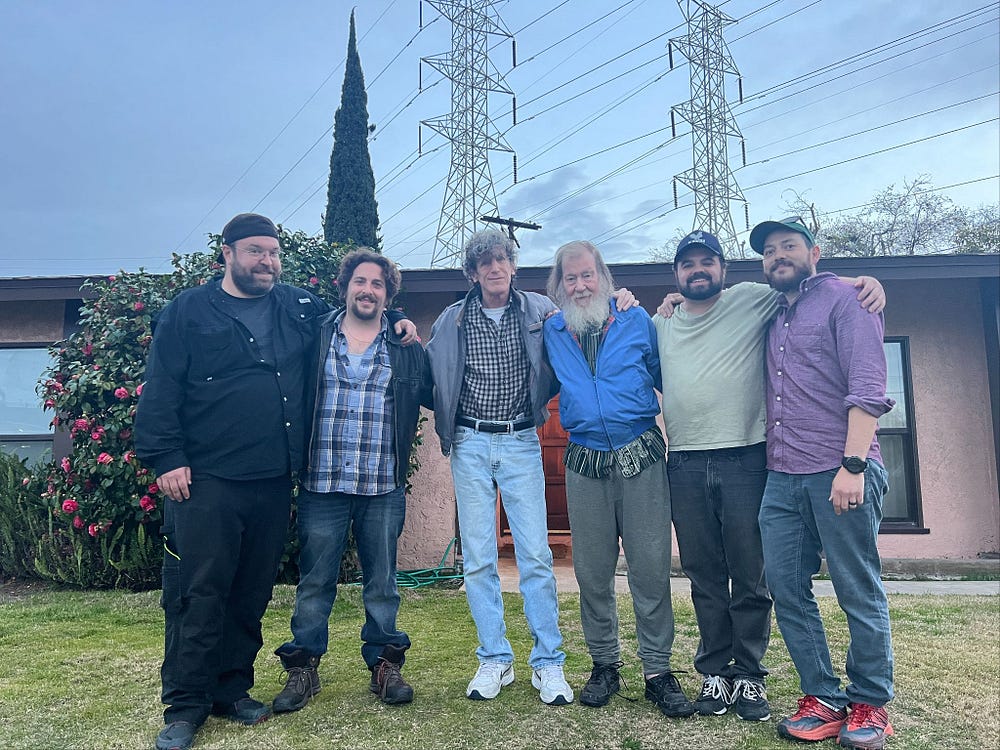
The movie itself is personal in several directions at once. Burt honors Burt Burger, a singer-songwriter with Parkinson’s disease whom Burke met years ago, and it was built around Burt, his real-life roommate Steve, and the house where they actually live. Oliver Cooper plays Burt’s son, bringing a fictional father-son story into contact with real people, real music, and real physical vulnerability. Parkinson’s is also personal for Burke because his father, Steve Burke, lives with the disease. The film, then, is not merely an exercise in micro-budget ingenuity. It is Burke’s attempt to use humor, tenderness, and narrative craft to preserve the dignity and music of someone he believes deserves to be seen.
Burke’s larger artistic belief is that people are flawed, complicated, and more alike than they often admit. He wants his films to make room for humor and heart, for redemption, forgiveness, family, and community. He is skeptical of an entertainment culture that too often privileges commercialization over story, but he is not cynical. His answer is not to complain about the system from the sidelines. It is to build a smaller, more stubbornly human alternative, one film, one screening, one audience at a time.
In our conversation, Burke returns again and again to authenticity, kindness, and the willingness to listen. He talks about morning walks without his phone, limiting social media, and making time for family and friends. He speaks like someone who has learned that independence is not only a production strategy. It is a way of protecting joy. As Burt finds its audience, Burke stands at a meaningful crossroads: still the kid with the camcorder, still the filmmaker doing too many jobs himself, but now with a clearer understanding of why that matters.
Yitzi: Joe Burke, it’s a delight to meet you. Before we dive in deep and talk about your amazing work, readers would love to learn about Joe Burke’s personal origin story. Can you share with us the story of your childhood, how you grew up, and particularly the seeds of all the creativity that has come since then?
Joe Burke: Yeah, of course. I grew up in Toledo, Ohio, where there was a great Jewish community. We were more Reform Jews, to be honest, but we celebrated some Shabbat and I had my Bar Mitzvah there. I even went to Israel for my Bar Mitzvah. It was a wonderful community with a lot of family and friends.
I started making movies when I was about eight years old in the backyard with my parents’ camcorder. That is when I found my real love and passion for telling stories, making films, and editing. To date myself, I was editing on two VCRs back in the day. You would hook up two VCRs and edit your movies that way.
I also grew up acting. In sixth and seventh grade, I got really into theater, so I did a lot of theater and filmmaking. I went to a Jewish summer camp in Michigan every summer for five years and participated in a lot of activities there. Then in high school and college, I continued doing a ton of theater and film work.
My childhood was great. I’m the oldest and have a brother and sister. My dad was an attorney — he’s retired now, but that was his career — and my mom was a nurse slash life coach. They divorced when I was 15, which undoubtedly shaped me as a person in many ways. Still, I had a great upbringing in Ohio.
Yitzi: Please tell us the next chapter. Tell us how you first broke into the entertainment industry. Tell us about your first breaks, your first entrées. I would love to hear the story.
Joe Burke: As I mentioned, after high school, I applied to a school in Chicago called Columbia College Chicago. Technically it was a theater school, and I applied to go for theater because I was seriously considering pursuing it. I was a theater major for a year and a half, but during my second year, I decided to switch to filmmaking. I simply could not resist making movies, and I didn’t love the theater program as much as I thought I would.
I started making movies constantly in Chicago. I had a camera and was producing, writing, editing, and even doing my own makeup — a total one-man-band style. Funny enough, now that I’m older and out here in LA, I’m still making movies the exact same way.
After Columbia College, I moved to Los Angeles for graduate school at the American Film Institute (AFI). It’s a highly prestigious conservatory program for filmmaking. I attended for directing, which is a two-year program, and graduated in 2009. Afterward, I continued making a bunch of quality short films that eventually landed me a major manager and a big agent in Hollywood. By my late 20s, I was beginning to direct some television, specifically some small comedy TV shows.
It was fun, but I did not love it. I realized that I’m an independent filmmaker at heart who wants to write and produce my own material; I didn’t enjoy being a director-for-hire. After a few years of doing that, I respectfully left my agent and manager when I turned 30 and started teaching film school. I’ve been a film school professor for the last 12 years, teaching students from all over the world while continuing to make my own films.
This journey ultimately leads to my new movie, Burt, which was just released last week. It is my second feature film. The first feature film that Oliver Cooper and I made together was a movie called Four Dogs years back. Oliver also grew up in Toledo, so I’ve known him since we were kids.
Yitzi: You probably have some amazing stories from your successful career, and I’m sure they are difficult to single out. Can you share with our readers two stories that stand out in your mind from your filmmaking career?
Joe Burke: In honor of Oliver, there is one story that I think your readers will find very interesting. Oliver Cooper is my creative partner; we’ve made a bunch of films together, and Burt is our second full-length movie. We have been working together for over 12 years now. He happens to be my best friend’s younger brother. My best friend was Jason Cooper, and we were best friends from the time we were two days old. I’ve known Oliver his entire life, as he is six years younger than us.
Oliver was, for lack of a better word, the black sheep of his family. He was the younger brother, always running around causing trouble, but he was an incredibly funny kid. He ended up dropping out of college after one semester when he was 19. His parents were freaking out, and everyone asked, “Oliver, what are you going to do with your life?” His brother, Jason, went to the University of Michigan Business School, so they are very different people. His sister, Nikki, is in the middle. Oliver decided, “I’m going to be a comedian. I’m going to move to Los Angeles and pursue this.”
Oliver dropped out of Arizona State and moved to LA at 19. He did open-mic stand-up comedy for about six months, working incredibly hard. Long story short, through immense effort, he found a way to audition for a movie called Project X. It was a major high school party movie from Warner Bros., produced by Todd Phillips, who directed The Hangover. They were looking for unknown actors to play the lead characters. Out of 5,000 people, Oliver ended up booking the lead role. Remarkably, it was the very first audition of his life. He went through nine callbacks, but he booked his first-ever movie audition. That completely changed his life; it became a huge hit and a hundred-million-dollar box office comedy.
That success allowed us to catapult our creative partnership and start doing a lot of work in the industry. We gained attention, started pitching TV shows, making new movies, raising money, and directing short comedies. It led us down a wonderful path together. I was riding his coattails a bit because of his massive success, but we truly wanted to collaborate and make great things. That experience really kicked everything off for us and opened up many new opportunities.
Yitzi: There’s a saying that sometimes our mistakes can be our greatest teachers. Do you have a story about a mistake you made when you were first starting, and the lesson you took away from it?
Joe Burke: The first thing that pops into my head isn’t necessarily funny, but looking back at my early career, I think I said “no” too often to too many opportunities.
When you’re young, you often think you have all the answers, or you’re a bit stubborn and don’t see things clearly. As a young filmmaker, I was deeply passionate about ensuring everything I did was high quality. Whenever an opportunity popped up during my 20s in Hollywood, I would read the script and say no if I thought it was too cheesy or not to my liking. At the time, I was just following my heart.
However, there is a vital lesson in understanding that opportunities are stepping stones to what you ultimately want to achieve. Looking back now that I’m older, I recognize that passing on those projects missed the bigger picture. It wasn’t about the specific project itself; it was about the value of saying “yes” to gain experience, meet people, and climb the ladder of success. That momentum eventually places you in a position where you have the authority and power to do exactly what you want.
I tell all my film students now to say “yes” early on. My friends who have truly succeeded in this industry were open-minded and accepted opportunities even if they weren’t dream projects, because something good always came out of them. My biggest lesson from that time is simply to be more open-minded.
I practice this now, which is why we shot our new movie, Burt, in seven days with a $7,000 production budget and a three-person crew. I would have never said yes to that in my 20s; I would have insisted that you can’t make a movie for $7,000. But I reached a point in my life where I realized we could find a way to make it work.
Yitzi: There’s a related idea that “no” represents redirection rather than rejection. Do you have a story where receiving a “no” ultimately led you to an even better opportunity?
Joe Burke: That’s a great question. I will relate this to our movie, Burt, because there is a major story from the last couple of years of making this independent film and bringing it to the world.
We finished shooting, editing, and producing the movie at the end of 2023. We expected 2024 to be our year for film festivals. We submitted to 28 festivals all over the world, and every single one turned us down. We went 0 for 28.
I was incredibly disheartened because I love this film and know it’s special. I was confused about why festivals everywhere — from Portland and Seattle to Sundance — were saying no. It was a relentless string of rejections.
However, that forced Oliver and me to rethink our strategy and find another path to get the movie seen. Consequently, 2025 became the best year of my life. We decided to launch our own theatrical tour by emailing independent theaters, arranging revenue-share screenings, and selling our own tickets. As we traveled on this cross-country tour, film festivals finally started accepting us. We ended up winning major awards at notable festivals like Phoenix, Anchorage, Florida, and Cinequest.
Next, I began pitching to news outlets and secured a massive feature in the Los Angeles Times. It featured a big front-cover picture of Oliver and me, highlighting our little $7,000 film. That exposure changed our lives. Being on the cover of the LA Times is a major milestone, and it all started because I pitched the story to a friend who works there as a film critic and reporter.
Had we not faced that wave of rejection in 2024, none of the amazing success of the following year would have occurred. We would have followed a traditional path that likely wouldn’t have been nearly as rewarding.
Yitzi: What has been the most challenging project or role you’ve taken on so far, and why?
Joe Burke: The most challenging project was a television show that Oliver and I tried to develop a few years ago. We were incredibly excited about it, but the process grew complicated once the industry took notice.
Suddenly, major agents and big producers were involved. The show ultimately never got made because it was steered down a path that diluted the original vision. I realized that I thrive when doing things independently, maintaining the core passion and complete creative control.
During that process, with big producers and agents dictating what to do — and since I was a younger writer without the authority to push back — the project fell apart. It was a highly sought-after concept before outside involvement, but it crumbled once too many cooks got in the kitchen.
That taught me never to put myself in that position again. That brings us back to Burt and why we produced it independently. We decided to make our own movie, our own way, where nobody could tell us “no” or dictate our choices. We made exactly the film we wanted to make. Humbly speaking, the movie is fantastic. I am so proud of it, and I don’t believe a film can turn out that well when too many outside voices interfere.
Yitzi: Let’s talk more about your work. Please tell us about the exciting things you are working on right now. Feel free to be as elaborate as you’d like; we want our readers to support your work in any way possible.
Joe Burke: Absolutely. The most important project to share right now is our new movie, Burt (spelled B-U-R-T). Readers can visit burtthemovie.com to watch the trailer, and the film is currently available to rent or buy on Apple TV and Amazon.
This project has consumed my life for the past several years because I handled nearly every role: co-writing, co-producing, directing, editing, makeup, craft services, scheduling, wardrobe, building the website, cutting the trailer, marketing, and PR. I am doing it all.
If readers are inspired by this journey, the best way to help is to support the movie. It honors a dear friend of ours, Burt Burger, a singer-songwriter with Parkinson’s disease whom I met years ago. He is not a professional actor, but we designed the film around him and his real-life roommate, Steve, who is also fantastic in it. We even shot the movie at their actual house.
It serves as a beautiful love letter honoring Burt and his music. Oliver Cooper plays Burt’s son, which represents the fictionalized element of the story. It is a highly entertaining, heartfelt, and funny narrative film.
Furthermore, if people rent or buy the movie between now and July 17th, we are donating a portion of the proceeds to Parkinson’s Community Los Angeles (PCLA). Burt lives with Parkinson’s both in reality and in the film, and my dad, Steve Burke, also battles the disease, so this cause is deeply personal to me. It’s a great movie for a wonderful cause.
There is an immense amount of heart in this project. I felt compelled to introduce Burt to the world because he is incredibly pure, authentic, and positive. Broad support for this film over the coming years will make it much easier for me to secure funding and opportunities for my next project. While I don’t know exactly what that next film will be yet, it will certainly be something personal, full of heart, meaningful themes, and the humor that I love.
Yitzi: In your objective opinion, tell us why our readers should make watching this a priority.
Joe Burke: We live in an entertainment landscape where the types of movies we grew up watching have largely disappeared, even though there is still wonderful television out there.
While touring the country for screenings — from Alaska to Maine, Florida, Arizona, Ohio, and New York — audience members repeatedly approached me to ask, “Why don’t they make movies like this anymore? I used to love seeing films like this back in the ‘90s.” I completely agree with them; those are the exact movies I grew up loving.
We set out to make a movie that is simply a great story. It avoids being preachy or telling you how to think. Instead, it simply shares a wonderful narrative about a real friend who is a beautiful human being.
As a fun fact, Burt Burger moved to LA in 1974 to pursue a music career. He never achieved mainstream commercial success; he didn’t record major albums and primarily played open mics, restaurants, and street gigs. Yet today, at 72 years old, he has a feature film honoring his life, legacy, and artistry.
We are also releasing The Burt Movie Soundtrack on vinyl on July 17th. It features his live recordings from the film alongside the original score composed by Tim Rutili, which we are incredibly excited about.
Watching this film supports independent, authentic cinema that I truly believe audiences will love. Supporting Burt directly empowers Oliver and me to create our next film projects.
Yitzi: What message do you hope society takes from the core themes of the film?
Joe Burke: The central message of the movie is that every character — and by extension, every person — is inherently flawed. We all have our unique challenges, fears, dreams, and desires. Nobody is perfect.
I strive to create rich, three-dimensional characters who feel completely authentic. That means showcasing both their admirable traits and their shortcomings, reflecting true human nature.
I favor infusing my work with plenty of humor and heart because comedy naturally unites communities. Sharing a laugh brings people together, while emotional depth allows us to share a meaningful, heartfelt experience.
My primary goal across all my films is to foster community and emphasize that we are far more alike than we are different, regardless of backgrounds or political beliefs. We share a massive amount of common ground. This movie honors that spirit through themes of redemption, forgiveness, and the bonds of family. At its core, it is a father-son story about family, and there is a great deal for audiences to take away from it.
Yitzi: This is our signature question. Joe, you’ve achieved significant success and learned a lot from your experiences. Looking back to your early days in the backyard, can you share five lessons you’ve learned over the years — perhaps the hard way — that someone starting out today could benefit from?
Joe Burke: Here are five key lessons.
First, you must follow your heart and tap into what feels right for you. Many people will offer opinions on what you should do with your life. Growing up, several relatives encouraged me to pursue law or medicine, but I stayed true to my desire to become a filmmaker and actor. Resisting that pressure isn’t easy, even when it comes from well-intentioned loved ones who just want you to be secure. When you declare a career in the arts, they often worry you will end up financially unstable — which isn’t always far from the truth starting out! However, staying true to yourself is paramount.
Second, prioritize kindness. It is the finest currency available and carries you incredibly far when you offer it authentically.
Third, treat others the way you want to be treated. I am a firm believer in this principle. I make an effort to respond to every email, clarify communications, and reply to messages from strangers on Instagram. Operating with mutual respect is essential to building solid relationships.
Fourth, understand that nothing is permanent. Holding onto an idea too tightly can block other positive opportunities from emerging. Recognizing that everything is temporary allows you to go with the flow, remain open-minded, and find valuable lessons when events don’t unfold exactly as predicted.
Fifth, ensure your life is full of joy and fun. Life is too short to spend every day stressed over matters beyond your control. It is vital to share fun moments with family, friends, and yourself. Maintaining passion while enjoying the process makes a life of adventure far more rewarding than one dominated by worry. It truly comes down to mindset — choosing to appreciate the present moment. As Burt Burger says, “You get one go at this life. That’s it.” Make it count.
Yitzi: On a personal level, can you share some of the self-care routines you practice to help your body, mind, and heart thrive?
Joe Burke: While I might not be the perfect model for self-care right now, my morning walks are a staple. I leave my phone at home, spend 45 minutes walking around the neighborhood to clear my head, breathe fresh air, and get moving. That has been incredibly beneficial for me.
Additionally, limiting social media consumption is vital. While it can be addictive — and I am constantly working to improve this myself — unplugging from technology is ultimately essential for health.
Most importantly, I prioritize spending quality time with family and friends every week. Whether seeing my dad, brother, sister, stepdad, friends, or connecting with my mom in Ohio, surrounding myself with people who genuinely care provides a massive boost to overall well-being.
Yitzi: This is our final, aspirational question. Joe, given your platform and impactful work, you hold significant influence. If you could champion an idea or inspire a movement to bring the maximum amount of good to people, what would it be?
Joe Burke: To give an honest answer, I wish people strived for greater authenticity. It is all too common to witness hypocrisy, judgment, or individuals saying one thing while doing another. We all fall into that trap, particularly in the political landscape where dialogue often devolves into finger-pointing and “gotcha” moments.
True authenticity involves communicating clearly, healthy articulation of your thoughts, and, crucially, actively listening to others — especially those with whom you disagree. We need to preserve space for constructive debate, discussion, and civil disagreement. Attempting to censor, silence, block, or completely ignore people simply because their perspectives are uncomfortable yields nothing productive.
My ideal movement would encourage people to truly hear each other out, despite differences in philosophy or background. Instead of operating on a rigid binary of right versus wrong, taking the time to understand someone’s underlying reasoning would vastly improve our communities.
Yitzi: Joe, how can our readers continue to follow your journey, watch Burt, and support your work moving forward?
Joe Burke: Thank you for the opportunity. The best hub to support Burt is www.burtthemovie.com, where you can view the trailer and access direct links to Apple TV and Amazon. Alternatively, you can search for Burt directly on either platform to rent or purchase it.
Personally, I share updates about my ongoing projects on Instagram @joeburkefilm. I also host a podcast dedicated to the craft of independent filmmaking on my YouTube channel, https://www.youtube.com/@JoeBurke
My primary request is for audiences to rent, buy, and share Burt. We produced and distributed this project entirely outside of the studio system to demonstrate that creators do not need Hollywood backing to make and share an excellent film. Proving our independence from that system is incredibly important to me.
Modern Hollywood often prioritizes commercialization over core storytelling, art, and genuine human emotion. While there are certainly exceptional individuals still doing great work, the mainstream industry has become overly commercialized with too many conflicting interests. I am focused on carving out an alternative path where authentic, independent cinema can truly thrive.
If you want to be a part of that journey and help demonstrate that we can deliver meaningful stories to the world completely on our own, please check out Burt and spread the word.
Yitzi: Joe, it’s been an absolute honor to meet you. Wishing you continued success and good health. I hope we can do this again next year.
Joe Burke: That would be wonderful.
After 28 Festival Rejections, Joe Burke Took His $7,000 Indie Film Burt Straight to Audiences was originally published in Authority Magazine on Medium, where people are continuing the conversation by highlighting and responding to this story.