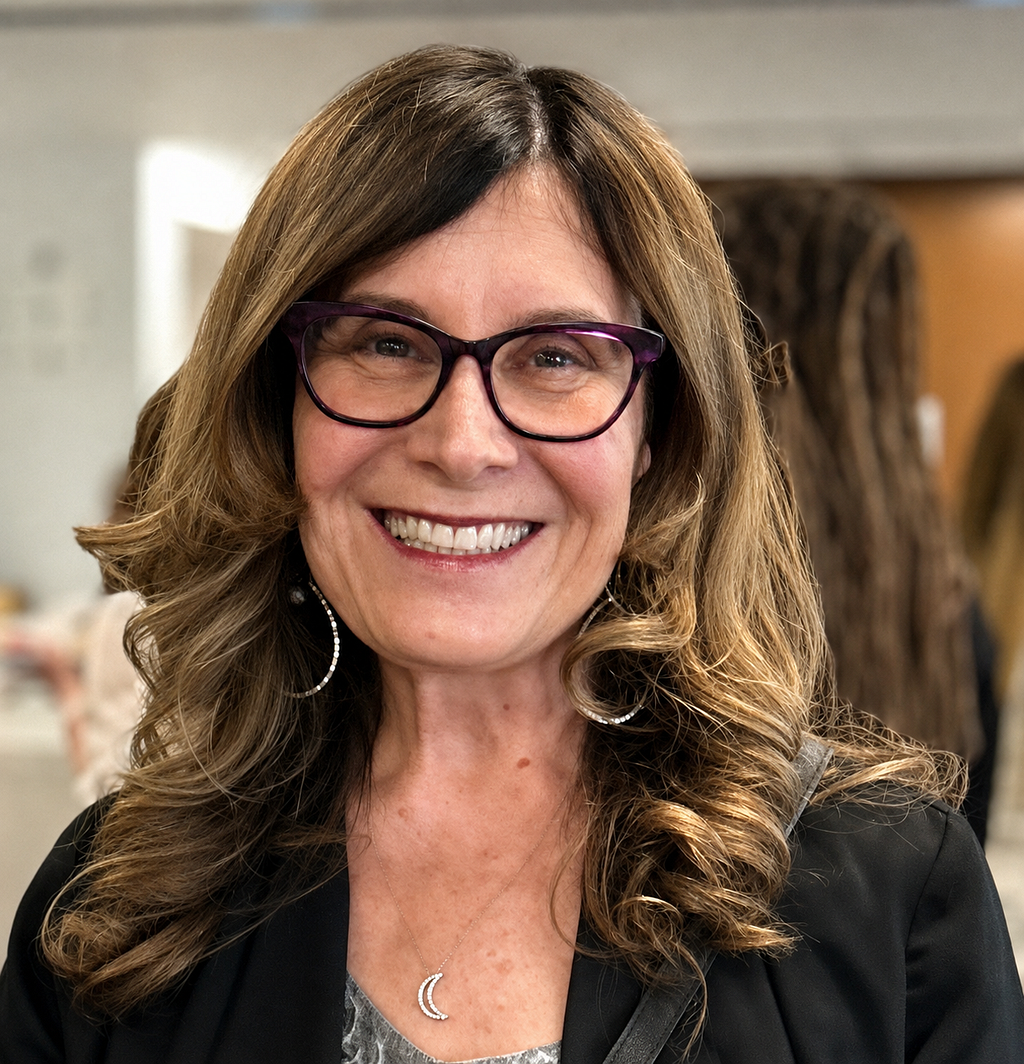
Screenwriter Pamela Gray on A Walk on the Moon Musical, Hollywood Resistance to Jewish Stories, and the Heartbreak of Her Lost Holocaust Epic
“The painful reality of Hollywood is that the minute a studio buys your material, it is simply no longer yours.”
I had the distinct pleasure of talking with Pamela Gray. Pamela still remembers the fence. On one side was the bungalow colony world of bubbes, mothers, mahjong games, swimming pools, loudspeaker announcements, visiting vendors, and fathers arriving on Friday nights after a week of work in the city. On the other side, in the summer of 1969, hippies were walking toward White Lake on their way to Woodstock. Gray was thirteen, close enough to see the counterculture passing by, not free enough to join it. “I desperately wanted to be on the other side of that fence,” she says.
Decades later, that fence became more than a memory. It became the emotional border inside A Walk on the Moon, the film Gray wrote about a Brooklyn housewife, Pearl Kantrowitz, whose family spends the summer of 1969 in a Catskills bungalow colony while the world outside seems to be splitting open. Now, with the story adapted into an Off-Broadway musical at the Laura Pels Theatre, Gray is returning to the place that made her a writer, and to the question that has followed her through much of her career: what happens when ordinary people, especially women, begin to feel the size of the life they have been told to accept?
Gray grew up in Brooklyn in a working-class Jewish family. Her father, before becoming a salesman, had been a fledgling stand-up comedian in the Borscht Belt, performing at the New Roxy Hotel in Loch Sheldrake. The family’s summers in the Catskills were not spent at the grand hotels that dominate nostalgia about the era. They were spent in bungalow colonies, modest seasonal communities where families saved all year for a few months of fresh air, shared kitchens, entertainment nights, gossip, and freedom. As a young child in Brooklyn, Pamela was not allowed to cross the street unless her mother approved it. In the Catskills, she and her brother could run around at night.
That contrast, confinement and release, runs through her work. She was writing by second grade and began writing musicals in high school at Madison High School in Brooklyn, where the annual “Sing” competitions gave her a first taste of collaboration and audience response. “It was the first time I ever heard a live audience laughing at my jokes,” she recalls. “I really like this,” she remembers thinking.
Her path to screenwriting was not direct. She studied English at SUNY Buffalo, poetry at Boston University, taught in Women’s Studies at San Francisco State, gave poetry readings, wrote plays, and worked odd jobs while trying to keep creativity at the center of her life. For years, film felt almost mythical. “I genuinely thought the people who wrote movies were gods,” she says. A sitcom-writing class helped dismantle that illusion. Eventually, she moved to Los Angeles, enrolled in film school, and began shaping the childhood material that became The Blouse Man, later retitled A Walk on the Moon.
Hollywood was not immediately persuaded. Gray remembers executives praising the script while warning that movies about Jews, women, or bell-bottoms were not commercially promising. It was an education in the difference between admiration and action. The script found its champion in Tony Goldwyn, who wanted to produce and star in it, then ultimately directed it. Dustin Hoffman came aboard as a producer. Diane Lane, Viggo Mortensen, Liev Schreiber, Tovah Feldshuh, and Anna Paquin joined the cast. Gray’s family helped supply the living memory Hollywood could not fake. Her father taught Feldshuh how to turn a teacup for the fortune-telling bubbe. He also walked onto the bungalow set and immediately knew what was missing: a matchstick holder, dirty flypaper, tape on a musician’s glasses.
Those details mattered because Gray was preserving a world that rarely saw itself on screen without distortion. “I wanted the people who lived the bungalow colony lifestyle to finally feel seen,” she says. That instinct, to protect a community from caricature while still writing real human complication, has shaped her career. She has written films about a violin teacher fighting for a school music program, a sister trying to free her wrongfully convicted brother, and a Marine’s bond with her combat dog. Her characters tend not to be superheroes. They are people whose devotion becomes almost unreasonable, then necessary.
The disappointments have been as instructive as the produced work. Gray speaks bluntly about stolen material, projects that collapsed, scripts that were loved but never made, and the particular heartbreak of a Holocaust film she researched deeply, The Seamstress, which fell apart after years of development. Her lesson is not the usual triumphal one. It is more practical and more bruised: love the making itself, because the industry will not always reward the work that deserves it.
At this stage in her career, Gray’s urgency has sharpened. She wants more authentic Jewish stories, more women’s stories, more work that gives people a reason to gather in a room and recognize one another without being flattened into symbols. In the musical version of A Walk on the Moon, she has increased the awareness of antisemitism in the 1969 setting, not as a lecture, but as part of the air the characters breathe. The past, in her telling, is never safely past.
The girl at the chain-link fence did not make it to Woodstock. Her alter ego did. Her movie did. Now her musical sends the same question back across the footlights: who gets to cross over, who stays behind, and what does it cost to want more?
Yitzi: Pamela Gray, it is such an honor to meet you. Before we dive in and talk about your amazing work and art, our readers would love to learn about Pamela Gray’s personal origin story. Can you share with us the story of your childhood, how you grew up, and particularly the seeds and genesis of all the amazing creativity that has come since then?
Pamela: And it’s an honor to be met by you. Thank you for including me in your magazine. Thank you for asking that. I was born in Flatbush. My parents were quite young, so we initially moved in with my mom’s mother. I lived with my grandmother, and when my mother first met my father, he was a fledgling stand-up comedian in the Borscht Belt. He had a comedy partner, and they performed at the New Roxy Hotel in Loch Sheldrake. When my mother brought my dad home to meet her mother, the immediate reaction was that he needed a stable job. At that point, my father got his first job as a salesman at Sears Roebuck.
After a few years at my grandmother’s house, my parents were able to get their first apartment in a brand-new part of Brooklyn literally called Futurama. It was built on swampland called Flatlands, consisting of two-story attached apartments stretching for blocks and blocks. Both of my parents had gone to the Catskills during their own childhood summers, so that became a staple of my life from the time I was a toddler.
Not only were we in Brooklyn, but we were in a part of Brooklyn that didn’t even have trees. Eventually, they planted a single sapling in front of each apartment, but for me, being out in real nature was glorious. My brother and I still talk about being traumatized by the canned vegetables my mother served, especially the canned asparagus. I honestly did not know that fruit and vegetables grew naturally anywhere else. To suddenly be in this beautiful landscape with blueberry bushes, fresh air, and mountains was something I just adored. I waited all year round for those summers.
This routine went on for years. I loved those summers in the Borscht Belt, probably until I turned 15 and started to feel like I didn’t want to spend my vacation days entirely with my parents. We stayed at bungalow colonies, and that was all I knew; I didn’t learn about the big luxury hotels until I was older. This environment was like our own recreated shtetl. One summer we would be there with relatives, another summer with friends, and the next summer, the relatives we had quarreled with wouldn’t be there.
It offered an incredible sense of freedom for me and my little brother. Back home in New York, I was highly restricted; I wasn’t even allowed to cross the street unless my mother explicitly looked and said it was safe. In the Catskills, we were just running around freely and could even stay outside at night. There was so much humor and joy wrapped up in those summers.
At the time, I didn’t have the wherewithal to understand why the dads only came up on the weekends. Friday night was always special because here come the dads. The weekends carried an entirely different feeling, featuring special entertainment reserved for the grownups. Then, the dads would head back home. During the week, the colony was run by the moms, the grandmoms, a few zaydes, and the kids. It was a whole distinct matriarchal culture during the week, and I looked forward to it all year long.
Alongside that, I loved school and was a writer from the time I was in second grade. I loved writing, and that was something I received a lot of attention for as a young girl.
I eventually started writing musicals in high school. I attended Madison High School, and Brooklyn had a rich tradition of competitive musical theater writing between classes called “Sing.” Every spring, a topic would be assigned to all three classes, and you would choose a specific rendition of that topic. We would start writing and creating in June, and by November, we put on full productions. I wrote the script and lyrics every year. It was my very first experience with creative collaboration, and it was the first time I ever heard a live audience laughing at my jokes. I remember thinking, “I really like this.” To this day, those of us who were involved in high school still share a tight bond because of that shared freedom, autonomy, and the focus on imagination — putting something on a stage that had never existed before.
When I graduated high school — which was such a cool school that we didn’t have a prom or guidance counselors because we thought we were above it — I knew I wanted to write musicals, but there was no one around to advise me to join a theater department. Instead, I went to SUNY Buffalo, majored in English, and minored in poetry writing. From there, I wound up going to graduate school at Boston University for poetry writing.
Afterward, I moved to California simply because I was cold; I had lived in the snow for far too long. I wound up teaching in the Women’s Studies program at San Francisco State, giving poetry readings, and putting up a few plays, all while trying to figure out how to do this and actually make a living. I worked various odd jobs to pay rent, but I always wanted my creativity to take priority.
Just for fun, I took a sitcom writing class in San Francisco and had a sudden realization that the people who write television are just regular human beings. Before that, I genuinely thought the people who wrote movies were gods. I loved movies — my father took us to the cinema every single weekend — and it had always seemed completely unattainable.
However, I started writing television scripts, learning the craft, and sending them off to shows, doing all the things you used to be able to do in those days. Today, you can’t just put a script in an envelope and mail it directly to a producer. I was receiving a lot of encouragement, but after five years, I realized I wasn’t going to break into Hollywood while living in Oakland, California. I had to move to Los Angeles.
I decided to go to film school because I didn’t know anyone in the industry, only to learn that the School of Film and Television did not support television writing back then; it was looked down upon as lesser than. We were strictly required to write feature screenplays, and we had to pitch a fresh idea every few months. The one concept that kept sticking with me was that people outside our circle didn’t know what bungalow colonies were. I wasn’t even thinking of screenwriting when Dirty Dancing came out, but anyone who knew I visited the Catskills would ask if that film captured my experience. I would tell them, “No, that’s what the kids whose fathers were dentists and lawyers did, not a kid whose father sold embalming fluid.”
When I described the real bungalow colonies, the matriarchal world during the week, and the husbands coming up on weekends, I realized I wanted to write the first movie ever set in a true bungalow colony. I wanted to show the world the working-class Jewish community that loved and lived this life, saving up all year for it. A bungalow could cost $250 for the entire summer, but my father still had to work incredibly hard to ensure we could afford it.
It is a vibrant slice of Jewish culture that gets lost unless you lived directly inside it. I meet a lot of former bungalow colony people now at the theater, and I always know exactly when they are in the audience because they laugh at specific nuances immediately — they recognize what it represents, like the loudspeaker announcements of all the neighborhood vendors.
When I was shaping the story, I came up with the idea of a Jewish housewife who is having mixed feelings about her place in life. She is feeling both intrigued and threatened by her teenage daughter, who is fully immersed in the counterculture summer of 1969, whereas the bungalow colonies themselves were trapped in a rigid 1950s world that refused to change. I wanted to explore how that clash would affect this woman emotionally.
At the same time, I held onto a distinct image from the summer of ’69: I was sitting at the swimming pool with the bubbes, the moms, the little kids, and the mahjong games, and I watched the hippies walking right past our chain-link fence on their way to White Lake, which was where Woodstock had been relocated. A lot of people don’t realize that Woodstock took place right in the middle of the Borscht Belt. I desperately wanted to be on the other side of that fence. In fact, there was a whole group of local kids who escaped to the festival; I didn’t make it, but my alter ego, Allison, gets to go to Woodstock in the movie.
Initially, selling this screenplay was a massive battle. Even though I won a major screenwriting contest and everyone in town wanted to meet me, I would consistently hear pushback like, “You know those Jewish movies? They don’t make any money,” or “Movies about Jews aren’t universal,” or “Movies centered on a woman don’t make money.” They even flatly stated they wouldn’t produce a movie where characters wore bell-bottoms. That was my early Hollywood education: it didn’t matter if people praised the script; that praise didn’t automatically mean it would become a movie.
After a couple of years of meetings with nothing moving forward, I received a phone call from the actor Tony Goldwyn, who had recently starred in the movie Ghost — he played the villain who killed Patrick Swayze and then got dragged out the window. He was actively looking for a project to produce and star in, and his agency, CAA, had a copy of my script. An agent there had been trying to get me to leave my boutique agency, but I was too loyal to switch. She told me she was going to see if she could help me out anyway. Tony Goldwyn went to his agent and asked for scripts he might like, and she handed him The Blouse Man, which was the original title of the film.
He took me out for coffee. He didn’t even know I had won the Goldwyn Prize. I asked him, “Oh, did your dad tell you?” and he replied, “What are you talking about?” It turned out to be a wonderful meeting.
At that point, my agents were incredibly ambitious, saying, “We’re going to attach the biggest directors, and we’re going to secure you a $150,000 option.” Instead, Tony and his manager, Neil Konigsberg, gave me $1,500 just to hold onto the script while we fought to get the movie made. At the time, the five-year development process felt interminable, but looking back, it was actually pretty fast. We initially attached a director, but when we lost them, Tony asked for permission to direct it himself.
We still had to get the project packaged. People could deeply love the script and respect the Goldwyn name, but that didn’t mean they viewed it as a surefire, money-making film. Eventually, we received word that Dustin Hoffman wanted to direct it as his directorial debut. When he discovered that Tony was already set to direct, he chose to produce it instead. His company, Punch Productions, had just finalized a deal with Village Roadshow, an Australian company, to produce six independent films. Our script was slated to be the second project, but something fell through with the first, so we became their very first co-production. From that moment forward, as we started assembling the cast, it felt like the train left the station at lightning speed.
We knew we couldn’t shoot in the Catskills because New York didn’t offer any special film tax credits at the time. However, we went on a location scout to the Catskills so Tony and our production designer could experience the authentic Borscht Belt, and I could show them around. Unbeknownst to me, the location scout selected Dr. Locher’s Bungalow Colony, which was the exact place I had stayed during the summer of ’69. I was able to stand there and point things out: “This was it, this is where we watched the moonwalk, this was this, and this was that.” There was even old graffiti left on the rafters of the casino that read “Pam and Bobby ‘69,” courtesy of my terrible summer boyfriend from that year.
The trip really gave the team an authentic feel for the space. As a matter of fact, a Hasidic community was buying out the secular bungalow colony at that point, so they were in the middle of tearing the place down while we were visiting. Ultimately, the team located a perfect double: a former Jewish boys’ camp in the Laurentian Mountains in Quebec. They took some of the existing tent cabins, remodeled them into bungalows, and completely recreated a bungalow colony. It was incredibly fabulous and eerie.
During the summer we were shooting, Brian De Palma was filming a massive blockbuster in Montreal, so he had booked up almost all the local extras. We only had about two Jewish guys available as extras in our pool, and looking at the crowd, I told Tony, “These people don’t look Jewish. They can’t be the extras for this film.” So, I called up my entire family, and they brought all their friends. I joked, “The Jews are coming! The Jews are coming!” They ended up appearing across all different scenes, which was an absolute joy for them, and we successfully made the set look like a real Jewish bungalow colony.
My father’s mother really had been a fortune teller in real life, so when Tovah Feldshuh was playing the fortune-telling bubbe, my father personally taught her how to turn the teacup and read tea leaves. It was a glorious era for my family, and that summer was remarkable. When my parents walked onto the set’s bungalow, my father immediately started assessing the set design: “Where’s the matchstick holder? They need a matchstick holder, we need this, and where’s the dirty flypaper?” In fact, during a scene featuring the colony band playing, my father walked right up to the saxophone player and noted, “You need Scotch tape right over here for your glasses,” because he knew every single real-world detail. Sure enough, that detail made it into the final film.
For me, it was pure magic watching what the actors could do and observing how much they brought to the project. It wasn’t just a matter of them reciting the lines I had written; it was the sheer depth they unearthed within themselves for the characters and the subtle nuances they added. I still think back to the first time Diane Lane, playing Pearl Kantrowitz, meets the blouse man and feels that instant attraction. Diane instinctively started playing with her wedding band, and I just thought, “Wow, I wouldn’t have known to write that.” I simply loved the experience of watching them work and seeing what they could create.
Yitzi: Unbelievable. In your retelling, so many points brought back intense flashbacks. First of all, I have lived in Brooklyn, San Francisco, and Los Angeles. I lived in Flatbush. In fact, just last night, my daughter went to South Fallsburg in the Catskills; she is there right now. She even went swimming in the bungalow colony today. I went to Camp Morris for many years in the Catskills, specifically staying in Woodridge.
Pamela: Until I was conducting research while writing the screenplay, I did not know there were roughly 400 bungalow colonies out there. It is remarkable; everywhere you looked, there was another colony.
Yitzi: I didn’t fully appreciate it until you mentioned that it is a uniquely Jewish experience. I always figured every culture had its own version of a bungalow colony.
Pamela: I later learned that my friends whose parents were Holocaust survivors went to specific survivor bungalow colonies. There were also the “red diaper baby” bungalow colonies, Black bungalow colonies, and Asian bungalow colonies. We only really knew our own small Sullivan County world.
Someone once asked me about a reference in the script to the “main house” and what that meant. I explained that it used to be all that existed before Jewish immigrants realized they could build small individual cottages to attract more business. The original main house survived as the communal kitchen — the kukulain — where the pinball machines and evening entertainment were located.
It might have been different for you. During the week, when it was just the women and children, they frequently showed World War II movies. It was always The Guns of Navarone, Stalag 17, or King Rat. I still do not understand why those were the only film reels they kept on hand. Everyone would pile in because it was something to do, but the environment was mostly centered around eating, talking, and knitting. It was just a funny world.
What I did not know at the time is that some of the grownups would try to sneak into the luxury hotels on the weekends for the better entertainment. They would climb over fences, and every once in a while they would get caught. Other times, they would get all dressed up and blend right in. At one point, I included a scene in the screenplay showing them trying to break into a show for free, but I decided it was not a good representation, as audiences might misinterpret it. In reality, there was simply no way they could afford to go see performers like Eydie Gormé. We left that out, but it was absolutely a real part of the culture.
Yitzi: I really respect that sensitivity in you, knowing it could be misinterpreted. Some writers would just say, “The heck with it, it is funny, I will do it anyway.”
Pamela: Exactly. If it is not good for the community, it stays out. The Catskills Historical Conference actually had me as their keynote speaker after the movie came out, and they put me up in the Raleigh Hotel. I was amazed that something from that era still existed.
The conference itself was held in an active bungalow colony. When I was sharing the origin story of writing the script, I mentioned that for me, the storyline was mostly make-believe because I did not know if the women in bungalow colonies actually had affairs. An older woman in the front row immediately shouted, “Believe you me, they did!” I knew there were always rumors about the dance teachers at the hotels, but I had based the story on two big “what-ifs”: What if one of these women had an affair, and what if the blouse man looked like Viggo Mortensen? What if the blouse man was not just a regular guy named Larry Leibovitz with a station wagon?
That premise led to a wonderful experience calling up my family for memories, asking about specific nostalgic details like Mellow Rolls ice cream, Chow Chow Cups, and the local knish man to ensure the setting felt authentic. Before shooting, Liev Schreiber, Diane Lane, and Tony Goldwyn all came to my parents’ apartment for bagels, cream cheese, and lox just to get the inside scoop on what that lifestyle was really like.
The shoot itself felt like being right back in a bungalow colony because we were there all summer. Interestingly, Liev Schreiber had been filming one of the Scream movies for the month of July, so the entire affair between Pearl and the blouse man was shot first. When August arrived, the husband’s scenes were filmed. Liev beautifully captured the energy of a husband processing what he missed during that first month and what happened behind his back, which powerfully fueled his performance as the irate husband.
Yitzi: Liev Schreiber and Tovah Feldshuh are a few of my favorite actors. Looking at the cast of the movie brings back so many good feelings.
Pamela: We were incredibly lucky. Liev talked a lot about channeling his grandfather, who served as a major inspiration for his performance. We had already cast Diane and Viggo. Tovah showed up for her audition having written an entire diary in the voice of the Bubbie, dressed in simple clothing, and she was cast immediately. Dustin Hoffman actually called Tony and said, “I think I found Marty Kantrowitz. I am doing the movie Sphere, and this kid, Liev Schreiber, reminds me of a younger version of myself. I think he is our guy.” Liev was starring in a great independent movie called The Daytrippers at the time, so Tony saw it in Manhattan, I saw it in Los Angeles, and we knew we had found our Marty. It was an incredible find based purely on his acting; I did not realize initially how deep his connection to Yiddishkeit was and how meaningful this project would be to him.
We knew we were not going to find a Jewish actress for Pearl, so we focused entirely on finding someone who captured her exact energy. Diane Lane was in a sweet, unreleased independent movie called My New Gun, where she played a housewife caught in an unexpected situation. It was the perfect energy, and she is a remarkable actress. At that point in her career, she had been underutilized in standard sidekick and girlfriend roles, so giving her the chance to lead a film was wonderful.
Everyone found great success after this movie. Viggo Mortensen went right into A Perfect Murder with Gwyneth Paltrow and then on to The Lord of the Rings. Diane went straight to Unfaithful, where she played another adulterous woman. Before long, Liev starred in Ray Donovan, Anna Paquin went to True Blood, and Tovah has continued to have an incredible career. It was a truly magical experience.
In truth, Miramax did not handle the release well. Harvey Weinstein bought it, claiming it was his mother’s favorite movie and promising to make it a hit, but he ultimately shifted focus to The Cider House Rules. He put us in only 200 theaters and then pulled back, claiming it did not perform well in Texas, even though it was doing incredibly well in New York, Los Angeles, and Florida. He essentially dumped the movie, though we were fortunate he released it at all, given his track record.
The film has lived on in spite of that. He didn’t run Oscar campaigns for anyone, which was another Hollywood education for me; I learned that nominations depend heavily on how much the distributor pushes for them. He would not even host screenings in Los Angeles, so voters did not have a chance to see it. I really wanted Diane and the script to be nominated, but it did not get its proper due. Still, to this day, people tell me it is their favorite movie. Our big excitement this week is that Judy Blume came to a preview of the new musical adaptation. She had previously declared on Andy Cohen’s show that A Walk on the Moon is her favorite movie of all time.
Yitzi: Judy Blume, the author?
Pamela: Yes, the famous author. She described on nationwide television that at the end of the movie, she was so overcome with emotion that she dropped to the sticky theater floor sobbing, and no one could get her up because she was so immersed in the film. She happened to be in New York this week, heard about the musical from a friend, and surprised me by coming to a preview. We had a wonderful reunion because we had worked together years ago on a project that never made it to production. She returned for opening night to meet the actors, which was incredibly special.
It serves as a beautiful reminder of how the movie continues to live on. It has been fascinating talking to audience members who have not seen the film yet and are experiencing the story backward. Some came in worried because many movie-to-musical adaptations do not stay true to the original source material, but I assure them that since I wrote the book for the musical, the core remains intact. One woman mentioned she was worried the actor playing the blouse man wouldn’t be as good-looking as Viggo Mortensen, but she was thrilled with our casting. When I told the actor, Sam Gravich, about her comment, I realized an hour later that I forgot to mention his great acting performance and only told him people thought he was hot! I had to pull him aside later to reassure him he was doing a wonderful job. It is a challenging role to play because we wanted him to be authentic to the time period without being stereotypical.
There is a line where someone asks him what is in San Francisco, and he answers, “1969.” Pearl replies, “It is 1969 here too,” which highlights the reality that the bungalow colonies were happily trapped in time. We were very lucky with the cast, and Tovah Feldshuh actually records the loudspeaker announcements for the bungalow colony in the show. Her voice announces that the pickle man or the blouse man is on the premises.
I had many more vendor announcements that were cut from the musical version. Years ago, I was on a screenwriting panel talking about the movie, and another writer came up to me afterward and told me he used to be a “girdle man” who filled his station wagon with girdles, garters, and brassieres for the bungalow colonies. We initially included a “girdle man” announcement in the musical about it being time to get attractive for the husbands, but it eventually got cut.
We had the Linen Man, the Knife Man, the Fruit Man, the Dress Man, and the Blouse Man. Liev actually ad-libbed a great line in the movie when his character finds out Pearl cheated on him, saying, “You are stripping the Blouse Man? Why didn’t you strip the Dress Man? You could have gotten a whole outfit.” It was a fantastic ad-lib.
Yitzi: That is fantastic. Please tell us about the musical and the story of how it came together.
Pamela: It happened in a very interesting way. My agent received a phone call from top Broadway producers right around the time the industry was searching for films to adapt into musicals. They had their eye on A Walk on the Moon. At the time, Waitress was one of the first small independent films to successfully make that transition, unlike massive blockbusters like Legally Blonde. The producers were hoping I would simply sign the contract and let them do whatever they wanted, but I insisted on meeting them to discuss the vision.
Since I was traveling to New York for Passover, I set up a meeting. I walked into the conference room to find a composer who had already written five songs and a book writer who had started on the script. They expected me to give them my blessing, but instead, I asked the book writer, “With all due respect, you have never written a musical. What can you bring to this project that I cannot?” He honestly replied, “Nothing.” The producer got quite angry with me, pulled me into his office, and asked if I genuinely knew how to write a musical. I told him I did — omitting the fact that my experience was from high school — and he challenged me to prove it.
He commissioned a massive document detailing every scene, character, song, sample dialogue, set design, and costume concept to plot out the entire musical from beginning to end. He offered to pay $2,000, which my lawyer successfully negotiated up to $5,000. I had various other screenwriting commitments at the time, so it took a while, but I delivered it. An associate of the producer was shocked by the depth, expecting a simple two-page summary, and assumed no one would read it.
Unbeknownst to me, the composer shared that extensive document with Broadway director Michael Greif, known for directing Rent, Next to Normal, and Grey Gardens. Michael called me, expressed his love for the movie, and shared his desire to direct the musical. When I asked if he had participated in his Brooklyn high school’s “Sing” competitions, he told me he had directed every year and won as a junior. I told him I had written for it every year and also won as a junior, establishing an immediate connection.
We went into development and secured a workshop production at New York Stage and Film at Vassar College. These workshop productions allow actors to perform with scripts in hand for a live audience, which taught us an immense amount. I spent a few years rewriting and collaborating with Michael and the composer. Because Michael is incredibly busy and was premiering Dear Evan Hansen at the time, he thoroughly stepped away to focus on other projects, leaving us in a tough limbo year without a director. Michael had suggested finding a Jewish woman to direct, and though our initial meetings didn’t pan out, my manager beautifully connected us with Cheryl Kaller’s agent at a theater conference. Cheryl was exactly the director we were looking for.
We launched our first full production in San Francisco at ACT in 2018. It performed very well with audiences, though the San Francisco Chronicle sent a rock-and-roll reviewer instead of a theater critic, resulting in reviews that didn’t quite capture the show. Nevertheless, we quickly set up another production at the George Street Playhouse in New Brunswick for 2020.
We were literally about to open the week the COVID-19 pandemic hit. I had already shipped my clothes to my mother’s apartment in New York and was getting a facial when I checked my voicemail and learned the show was canceled. In those first few hours, I thought it was just our specific problem before realizing the entire world was shutting down. After a year’s hiatus, we returned to New Brunswick with a revised cast and some new music, and it went beautifully.
Our ultimate goal was to transition to Broadway or Off-Broadway. The current iteration features a completely new score and composer, making it a distinct show from prior versions, though the core story remains the same. I have always woven an awareness of historical antisemitism into the script, but I increased its presence for this production to reflect the current world climate. As a screenwriter, I always try to avoid heavy exposition, preferring that these realities emerge naturally through casual conversation.
An easy way to achieve this was through the idealistic fifteen-year-old daughter who believes antisemitism is a thing of the past, allowing the Bubbie to remind her of the historical reality when local hotels displayed signs reading “No Hebrews, No Dogs.” While the daughter remains optimistic about the future, my research revealed that during Nixon’s first six months in office, there were over twenty antisemitic attacks on the East Coast, including firebombings of yeshivas and synagogues. I initially designed one character to act as an antisemitic barometer, keeping track of these events, but the director ultimately felt it might visually overwhelm the audience and detract from the central story.
As a result, those themes are subtly integrated rather than overt. Audience members have shared how meaningful it is to see that authentic representation of Yiddishkeit alongside these historical reminders. The historical backdrop feels incredibly timely; the younger generation’s anxiety regarding Nixon parallels modern discourse perfectly. I discovered during my research that Nixon even established a “Western White House” at his mansion in San Clemente, drawing striking historical parallels.
The young characters’ discussions about protests and taking action are incredibly resonant. The first nationwide synchronized protest against the Vietnam War occurred in October 1969, mirroring modern social movements. Bringing this history to life has been incredibly important to me and to the Catskills community. People often ask how we captured the atmosphere so accurately. Our brilliant projection designer, Tal Yarden, opens the show using authentic home movies from my own family’s summers in the Catskills, alongside footage provided by my friend Jody Price. Audiences walking into the theater are immediately greeted by real archival footage of the Catskills, which adds a deeply personal and lovely touch to the production.
Do you know about a documentary called The Rise and Fall of the Borscht Belt? You can buy it. I saw it at the Jewish Film Festival in the Bay Area around 1989, and it was the first time I ever saw bungalow colony footage featured in a documentary. It wasn’t just focused on the luxury hotels; it included real people’s home movies. What is fascinatingly strange about the film is that it is narrated by a very posh British narrator saying things like, “Every summer, the Jews would pile into their cars and go into traffic.” Seeing that footage showed me a world I had never seen captured outside of my own family.
At the time, I was not yet a working screenwriter, but that documentary was the spark that made me realize the world outside needed to know about the bungalow colonies. By the time I began seriously pursuing movie writing, I knew that was the definitive story I had to tell. I wanted the people who lived the bungalow colony lifestyle to finally feel seen. I viewed it as my gift to our community. Once I committed to that goal, I had to map out the actual narrative structure.
My initial thought centered on the Summer of Love, but then I realized the Summer of ’69 was a goldmine for a screenwriter. You have the Apollo 11 moonwalk, and then just three weeks later, you have Woodstock. That sequence provides a perfect dramatic story arc: you have a massive historical milestone here, another monumental event there, and you can beautifully explore what builds up to each moment alongside their respective aftermaths.
There was even more history that we ultimately had to cut from the musical version because the plot was becoming too crowded. For instance, the Chappaquiddick incident occurred that exact same week; the Friday of the moonwalk weekend was the Chappaquiddick disaster. Furthermore, the week before Woodstock, Sharon Tate was murdered, which completely dominated the news cycle. Earlier that same summer, Brian Jones was found dead, and the Stonewall Riots occurred right before families would have packed up to head to the Catskills. That single summer was truly a pivotal, historic turning point for a multitude of reasons.
At one point, I owned a vintage issue of Time magazine where the cover story encompassed that exact three-week window. The cover featured images of Sharon Tate, Chappaquiddick, the Apollo moonwalk, and Woodstock all at once. That is an extraordinary amount of history packed into a single three-week period.
Yitzi: There have probably been more movies made about that specific three-week period than almost any other window in modern history.
Pamela: Exactly, though still not enough in my book! It is truly unbelievable.
Yitzi: This brings us to our signature question. Pamela, you have been blessed with an incredibly successful career, and you must have gathered an immense amount of wisdom from your experiences. Looking back all the way to your early days in high school when you first began writing for live entertainment audiences, can you share five key lessons you’ve learned over the years that someone starting out today could truly benefit from?
Pamela: One of the primary lessons I have learned — especially within the film industry, which can be brutal and cause significant heartbreak — is that you must absolutely love the creative process itself. I genuinely love the act of screenwriting and playwriting, even when I do not have as much time to dedicate to the stage. Recently, I have thoroughly enjoyed learning the mechanics of a musical, discovering how to have characters sing their internal feelings rather than simply talking about them. That was a shift for me because I am naturally a very dialogue-heavy writer who loves talkative characters.
Whenever I experience professional disappointment, I have to ground myself and ask if I want to keep moving forward simply because I love the core creative process. The answer has always been a resounding yes. The first major negative experience I encountered in Hollywood involved a project of mine being explicitly stolen. People frequently claim that sort of plagiarism never happens, but it happened to me. I was devastated, full of rage, and declared that I was quitting the industry entirely.
In response, I sat down and wrote a stage play that had absolutely nothing to do with Hollywood. It got produced in Los Angeles and became a massive hit. That taught me that the ultimate antidote to industry heartbreak is simply to create independent art that isn’t owned or controlled by a corporate studio. That is the first major lesson.
The second lesson I learned is that mainstream success is not automatically tied to pure talent. There are individuals in the film industry who are wildly successful but may not be exceptionally gifted. A specific commercial market drives production choices, which can be a painful truth to accept. I know my voice; I am not going to write massive action-adventure blockbusters, so I am not going to command that specific type of revenue or have dozens of studio projects greenlit. I write dramas and dramedies, and I have had to make peace with the reality that the moment financing enters the equation, the work is no longer strictly about pure art.
Third, it is vital to take genuine pride in the milestones you are proud of while putting the inevitable setbacks into a healthier perspective. There will always be someone achieving more or receiving more industry recognition than you; that is simply the inherent nature of any career path. I try my best to stay grounded in the present, even though Hollywood is an incredibly future-driven world. I distinctly remember hosting a one-day introductory screenwriting workshop where an attendee immediately asked me how to secure an agent. I asked if they had actually written a screenplay yet, or if they even knew whether they enjoyed the physical act of writing. When they said no, I told them to start there before worrying about how to market a script that doesn’t even exist yet.
Fourth, you must stay fiercely true to your unique voice. My stories are deeply character-driven. I remember one of my early agents telling me I would land far more industry assignments if my characters weren’t so inherently nice, suggesting that if I wrote less likable people, I would get more jobs. I simply told them that I couldn’t write that way. A significant portion of the heartbreak in this career comes from pouring your soul into a fabulous script that, for one reason or another, never gets produced.
One of my greatest professional heartbreaks involves a Holocaust film I wrote that held immense personal meaning for me. It was a feature adaptation of a memoir titled The Seamstress, which follows a young Romanian woman named Sarah who survived the genocide. Her family managed to leave Bucharest in time, and she, her sisters, and her best friend made it to Budapest thinking they were finally safe. Tragically, one sister was pregnant and was shot by the Nazis on a labor camp line. The remaining three young women managed to thrive temporarily in Budapest, where Sarah operated a highly successful seamstress shop, living like typical teenagers. Eventually, they were rounded up and sent to Ravensbrück, the infamous all-women’s concentration camp.
Ravensbrück was notorious for horrific medical experiments conducted on Polish prisoners’ legs. The victims were cruelly nicknamed “rabbits” because the camp doctors would intentionally destroy their leg bones and muscles, forcing them to hop around the camp. The historical details I uncovered about Ravensbrück during my research were utterly horrifying.
In real life, Sarah survived because she began sewing custom clothing items for the guards. Word quickly spread throughout the camp about her incredible talent, which allowed her to secure extra food rations that ultimately kept her sister and best friend alive. It is an extraordinary, gorgeous memoir that captures specific historical nuances omitted from traditional textbooks.
Universal Studios optioned the book and approached me to write the adaptation. The executive initially tasked with reviewing it never actually read it, but another executive picked it up and immediately declared we had to make the film. They contacted Edgar Bronfman Sr., who had been personally handed the manuscript by the survivor’s daughter at a high-profile event. He bought the rights for the studio, and I was flown out on a private plane alongside the executive to meet him at his home. As soon as we stepped off the plane, Bronfman announced he didn’t like the protagonist’s original name, Saryn, and preferred the title The Seamstress. By the end of our meeting, the movie was officially greenlit. Agnieszka Holland was brought on to direct, which incredibly excited all of us.
Unfortunately, we hit major creative differences. She ultimately wanted to take complete creative control, rewrite the script in Polish, and have it translated back. The studio rejected her version, and that iteration fell apart. However, we rebounded and attached another brilliant director, Peter Kosminski, who deeply loved my script and began active casting. Every young actress in town wanted the role of Sarah. It was a unique casting process because Sarah was blonde and blue-eyed, meaning the role didn’t strictly require a Jewish-looking actress. I was sitting in Peter’s room at the Four Seasons discussing casting choices when he received a sudden phone call from Bronfman’s office. Edgar had abruptly decided he no longer wanted to invest $30 million into the project and slashed the budget to $7 million. Peter explained that the film couldn’t be made properly for that amount, but they refused to budge. He literally began packing his bags right in front of me to return to London. It was absolutely devastating — the project was fully alive one minute and vanished the next.
To this day, there has never been a major commercial Holocaust film centered specifically on the experiences of teenage girls navigating their first romances while trying to survive the absolute worst of humanity. That loss remains a profound heartbreak for me because the project held so much personal weight. I spent an entire year conducting rigorous research, including spending a weekend at the Holocaust Museum in Washington, D.C. I was paired with a researcher who had worked alongside Steven Spielberg on the Shoah Foundation project. She spoke Russian and coordinated an interview with a Polish translator to speak directly with a living “rabbit” survivor, allowing me to secure her direct testimony. I wanted to immerse myself entirely in the history.
When the project collapsed, I confronted a massive bookshelf overflowing with Holocaust research material and realized I couldn’t look at it every single day. I needed to store those stories in my heart rather than constantly exposing myself to that trauma. The painful reality of Hollywood is that the minute a studio buys your material, it is simply no longer yours.
While there are several movies I deeply wished had been made, or weren’t executed exactly the way I envisioned, I still count myself incredibly fortunate to have had my work produced at all. Only a very small percentage of writers in the Writers Guild ever see their screenplays fully realized on screen; you can actually make a wonderful living writing scripts that never get greenlit. When A Walk on the Moon was released, my other film, Music of the Heart starring Meryl Streep, hit theaters just months later. Having two major feature films playing concurrently was nothing short of miraculous. Years later, Conviction was released, followed by Megan Leavey. Megan Leavey marked the first time another writer rewrote my work, which initially made me quite cranky. Ironically, it has become one of my most popular films on streaming platforms, even though some of my solo works are arguably more complex and deeper. Ultimately, I am just incredibly grateful to have my creative voice out in the world.

Yitzi: This brings us to our final aspirational question. Pamela, because of your amazing work and the platform you have built, you are a person of enormous influence. If you could spread an idea or inspire a movement that would bring the greatest amount of good to the largest number of people, what would that be? You never know how far a single idea can spread.
Pamela: I feel an immense, increasing urgency right now to ensure that more authentic Jewish stories are told, particularly given the unprecedented and terrifying rise in global antisemitism. We are witnessing alarming political shifts, a rise in fascist playbooks, and overt hatred that is deeply horrifying to me. At this stage in my life, I find myself wondering if I will live to see these systemic issues resolved. That is why telling the stories of our people is so essential right now.
We need more narratives centered on women and heart-centered work that provides genuine meaning, joy, and hope, because the current landscape can feel incredibly bleak. One of the central concepts I discussed with my director, Cheryl Kaller, was the profound impact of having an audience spend two hours in a theater completely immersed within a Jewish family and community — loving these characters and forging a deep human connection without hiding the reality of their world. If I am fortunate enough to bring just one more Jewish production to the screen or the stage, that would make me incredibly happy. That is my ultimate aspiration.
Yitzi: Unbelievable. How can our readers watch your latest musical, explore your previous work, and support your creative endeavors in every possible way?
Pamela: What a wonderful question. The musical is currently running Off-Broadway at the Laura Pels Theatre until August 22nd. We have actually added an extra matinee performance to accommodate our demographic, as many of our audience members prefer afternoon shows. Tickets are available at criterianticketing.com, where you can view performance schedules, book your seats, and encourage your friends — even those who claim they don’t like musicals — to attend.
As for my feature films, they rotate across various streaming platforms; I believe A Walk on the Moon is currently available on Amazon Prime. The projects I am most proud of are A Walk on the Moon, Conviction starring Hilary Swank, Music of the Heart starring Meryl Streep, and Megan Leavey starring Kate Mara. A quick Google search will always point you in the right direction. Beyond my own work, I encourage everyone to actively support Jewish-themed projects created by Jewish artists. It is vital to keep our heritage and identity vibrant, especially during challenging times. Hope, optimism, strength, and truly great entertainment are what will carry us through.
Yitzi: Pamela, it has been such an absolute honor to meet you.
Pamela: The honor is entirely mine. I am deeply touched that you chose to interview me. I am truly farched — this has been wonderful, and I am incredibly grateful to you.
Yitzi: It is truly my pleasure. I am so excited to share this interview with our readers. One day, I would love to meet you in person.
Pamela: Likewise! Where are you currently based? Where do you live?
Yitzi: In Baltimore.
Pamela: Baltimore, wonderful! Perhaps we can connect in New York. If the show successfully makes the transition to Broadway, I would love to meet you there.
Yitzi: I will definitely be visiting New York before long.
Pamela: Well, if you have any opportunity to see the show while you are in town, please reach out directly to me and I will personally arrange a ticket for you. It would be an absolute honor.
Yitzi: That is incredibly kind of you. Thank you so much.
Pamela: Thank you so much. Have a wonderful rest of your day.
Yitzi: You too.
Pamela: All the best. Take care. Bye-bye.
Screenwriter Pamela Gray on A Walk on the Moon Musical, Hollywood Resistance to Jewish Stories, and… was originally published in Authority Magazine on Medium, where people are continuing the conversation by highlighting and responding to this story.