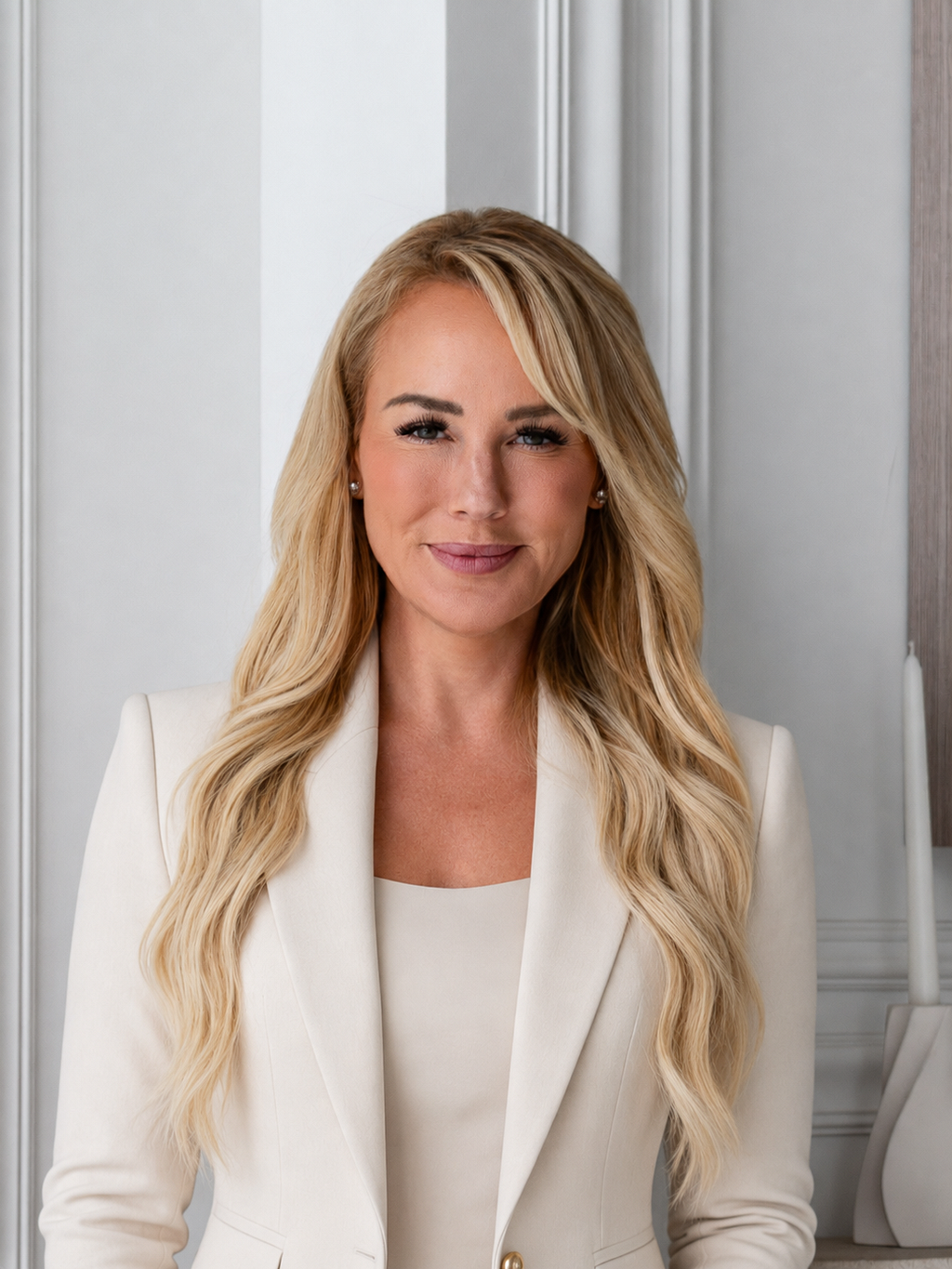
…I would implement a “Chief Heart Officer” role into every company, completely separate from standard HR. I want businesses to truly understand the lifeblood of the people working for them and discover what those employees genuinely aspire to achieve. Leaders should inspire their teams in a multitude of ways, even if that ultimately leads the employee to outgrow the company. That is actually my personal end goal. One day, I will step down as CEO to become our Chief Heart Officer so I can focus entirely on pouring into our people. Despite everything we just discussed regarding AI, human beings are the true heartbeat of any company’s future. Without them, what are we doing all of this for?…
I had the pleasure of talking with Robin Dimond. Robin’s first business did not require a pitch deck, a funding round, or a marketing funnel. It required Blow Pops, a schoolyard, and an instinct that would follow her from South Florida to New York to the agency she now leads: find what people want, understand how they connect, and build from there.
Long before Dimond became the Founder and CEO of Fifth & Cor, she was a student with dyslexia who often felt disregarded in the classroom. School was hard. People were not. “My brain always worked like an entrepreneur’s,” she says. She learned early that relationships could become a kind of bridge, helping her get results in places where traditional systems did not always make room for her. Selling candy outside school was not just a childhood hustle. It was an early sign of the operating system she would later bring to business: creativity, persistence, and a belief that commerce is ultimately human.
That belief sits at the center of Fifth & Cor. The name itself is a thesis. “Fifth” stands for the five senses. “Cor” is Latin for heart. To Dimond, the pairing matters because marketing without human feeling is just noise dressed up as strategy. “Without engaging your senses and pulling from the heart, you really cannot make a difference in life,” she says. In an industry often obsessed with dashboards, attribution, automation, and scale, Dimond has built her work around a deceptively simple reminder: “There are real people behind the data.”
Her agency works across categories, including automotive, med spas, longevity, consumer packaged goods, and other businesses that do not always seem to share the same marketing needs. Dimond’s argument is that the category changes, but the human problem does not. People still want to feel seen, understood, and moved to act. The work, at its best, begins there.
Some of the results she points to are concrete. After the pandemic, Fifth & Cor worked with a struggling restaurant and developed strategies that Dimond says helped it remain open five years later, still employing hundreds of people in Indiana. For an automotive client, the agency launched an organic Pinterest strategy with no paid advertising and generated $4 million in direct revenue in the first year. Dimond tells these stories with the enthusiasm of a marketer, but the pride is not only in the campaign mechanics. It is in what the work protected or created: jobs, momentum, possibility.
Her career has also been shaped by bets that did not work. She once believed the Oculus headset would become a major marketing channel and invested heavily in ideas around it, only to realize that the technology was too bulky for most people’s daily lives. It was expensive, but she does not frame it as a disaster. The mistake pushed the company toward phone-based connection and helped open a new division. “I am super happy we made it,” she says, because it taught her to become an early adopter rather than trying to force innovation before people are ready for it.
As Fifth & Cor grew, Dimond found that the hardest role was not marketer. It was CEO. “When you become a CEO, you are no longer doing the primary task you were good at,” she says. The person known for strategy suddenly has to manage the machinery behind the strategy. She describes the role as becoming “the accountant, the janitor,” and everything else at once. It is the part of entrepreneurship most outsiders do not see: the overnight shift from doing the work to carrying the weight of the company.
That weight has made Dimond unusually focused on the people inside her business. She leads a culture that includes walking meetings, cold plunges, sauna resets, step challenges, water challenges, and conversations about financial, spiritual, mental, physical, family, and community growth. She knows some people might consider that too personal for a workplace. Her answer is direct: the expectation is clear from the beginning. “If you leave as a better person, then I have done my job,” she says.
This is where Dimond’s leadership becomes more complicated than a standard founder story. She believes deeply in pouring into people, yet she is honest about the cost of building at full speed. She tells beginners to “give yourself a break,” then admits she has not mastered that lesson herself. She celebrates the jobs her company has created, but she also knows the pressure of making decisions that affect other people’s futures. Public success may look glamorous from the outside. Inside it are red-eye flights, two hours of sleep, and the quiet burden of responsibility.
Dimond credits mentors with helping her grow into that burden. Ron Tamayo once listened to her describe the company and all they had done in their first year when she was exhausted and told her, “I am so proud of you. Now, here is how we are going to get to the next level.” Another former CEO gave her advice that stung at first: dress for the job she wanted, not the job she had. Dimond now sees that bluntness as a gift. She would rather hear the hard truth than be protected from feedback that could make her better.
Today, Fifth & Cor is expanding beyond traditional marketing into partnership programs and project management as a service. Dimond says partnerships now drive 82% of the agency’s revenue, and she wants to teach other businesses how to build similar systems. Her larger ambition is even more revealing: she imagines a “Chief Heart Officer” role in every company, separate from HR, devoted to understanding what employees want to become.
For Dimond, that idea is not soft. It is strategic, personal, and tied to legacy. She sees business as a place where people can be challenged, supported, and prepared to outgrow the room they are in. The girl selling Blow Pops outside school understood something that still animates the CEO today: growth begins with a person in front of you, a need you can recognize, and the nerve to make the first offer.
Yitzi: Robin Dimond, it is such a delight to meet you. Before we dive deep and talk about your amazing work, our readers would love to learn about Robin Dimond’s personal origin story. Can you share with us the story of your childhood, how you grew up, and the seeds and genesis of all the amazing creativity that has come since then?
Robin Dimond: I grew up in South Florida. I was a child with dyslexia, which often left me feeling disregarded. School was very hard for me, however, my brain always worked like an entrepreneur’s. I always found a way to create a business or get the results I needed, and I discovered that I achieved this through relationships. People have always been a part of my life that I love, though entrepreneurship was the thing that stuck out to me the most.
I used to sell Blow Pops outside of my school, running a little side business. That drive for economic freedom and entrepreneurship has stayed with me from junior high to high school, and even moving to New York and trying my hand there.
Yitzi: Please tell us the next chapter. Tell us the story of how you started your agency and your company.
Robin Dimond: Sure. Fifth & Cor is an incredible name. “Fifth” stands for the five senses, and “Cor” is Latin for heart. Without engaging your senses and pulling from the heart, you really cannot make a difference in life. We wanted to bring the human side of marketing and innovation back to companies. We aim to do things based on more than just raw data, because there are real people behind the data. That is the reason we came up with the idea.
We are industry-agnostic, meaning we can work with businesses ranging from automotive to med spas, longevity, and consumer packaged goods. We bring that innovative ideology to every business we meet.
Yitzi: You probably have some amazing stories from your successful career. I am sure it is difficult to single them out, can you share two stories that stand out in your mind with our readers?
Robin Dimond: Yes. My first one was with a restaurant right after the pandemic that was struggling to stay alive. We came up with some innovative strategies, and five years later, they are still here. They are still performing well and providing hundreds of jobs for people in Indianapolis. I think that is something to be really proud of.
Another huge success story was for an automotive client of ours. We launched them on a social media platform called Pinterest. In our first year, using zero paid ads and purely connecting organically, we generated $4 million in direct revenue for them. It is simply about changing the ideology of what we are capable of doing, and I love those stories.
Yitzi: There is a saying that sometimes our mistakes can be our greatest teachers. Do you have a story about a funny mistake that you made when you were first starting in business and the lesson that you took away from it?
Robin Dimond: I do not know if they are funny, however, that is a great question. With mistakes, I think it is about pivoting quickly and investing. I genuinely thought the Oculus headset was going to be the next way to target and market to people. We invested heavily in that and the development of the ideas behind it. I learned very quickly that the bulkiness was just not practical for people’s everyday lives. It was a costly mistake, and I am super happy we made it because it led us to connect with people through their phones and create a whole new division for our company.
I always emphasize becoming an early adopter rather than an innovator. As early adopters, we can pick up on things and see where they are heading. We tried to jump on that bandwagon a little too soon, and it was a costly mistake, though I am happy we made it.
Yitzi: There is a related idea that a “no” is a redirection rather than a rejection. Do you have a story about a “no” that you received for an opportunity, which ultimately led to even better success?
Robin Dimond: There have been so many “no’s” throughout the years. The biggest “no” I got was when attempting to merge with another agency. It turned out to be the best thing that has ever happened to us. We are so much more successful now and have been able to take the business to unstoppable heights, which we would not have achieved otherwise. I am incredibly happy that they said “no” to me.
Yitzi: What has been the most challenging project or role you have taken on so far, and why?
Robin Dimond: The most challenging role is being a CEO. Let me explain why. People will say, “You are so good at marketing,” when you become a CEO, you are no longer doing the primary task you were good at. If your expertise was building houses, you no longer get to build the houses. You have to run the business behind it. You have to be the accountant, the janitor, and manage everything else behind the scenes. It is challenging because after building your entire career on a specific skill, you suddenly find yourself wearing 50 different hats. Very few people understand that this shift is a wild ride, and it happens overnight.
Yitzi: What has been the most gratifying part of becoming a public person? And what is the most challenging part?
Robin Dimond: The most gratifying part is the jobs I have been able to provide for people. It makes me emotional to think about it. Because of the opportunities I have been given, our business has grown rapidly, which has created jobs for so many people. The most challenging part of becoming a public personality is people not knowing the real you. They see the glamorous life, they do not see that you were just on a red-eye flight and are functioning on two hours of sleep. The most challenging aspect is navigating the non-glamorous realities behind the scenes..
Yitzi: You have built a very successful business. Can you share how you get clients? What are some of the lead generation secrets you have learned?
Robin Dimond: The biggest secret we have discovered — and I am happy to share it with everybody — is partnerships. We have shifted entirely from cold outreach and sales over to partnerships. These partnerships come in several different forms. They can be referral partners, SaaS platforms that recommend us, or clients who eventually transition into partners.
We have a very robust four-pillar division dedicated strictly to partnerships. Last year alone, 82% of our revenue came from referral partners in some capacity.
Yitzi: That is unbelievable. Instead of doing cold sales, you build relationships with partners, and those partners bring in leads. Am I understanding that correctly?
Robin Dimond: Yes. They find us and say to others, “Have you ever met Robin?” or “Have you worked with her agency?” The remainder of our leads actually come from our speaking events. By standing on stage, people get to hear and see us. We are the kind of group that puts everything out there. I will explicitly tell the audience, “Take a screenshot right now; here is your exact roadmap.” Because we are so transparent, people feel they can trust us and naturally come to work with us.
Yitzi: When you say “us,” do you mean that you are mostly the one doing the speaking?
Robin Dimond: I am always the one speaking, yes. However, I say “us” because I would not be able to deliver the results alone. When I am on stage, I am not executing the day-to-day work. I want everyone to know that it is a collective effort. People might only hear me speak, my team is back at home delivering the actual work. I could never do what I do without them.
Yitzi: You are saying about 20% of your business comes from speaking opportunities and the other 80% comes from partnerships. That is incredible. Can you tell us a secret about how you get speaking gigs? A lot of people would love to speak, they are hard to land. What is the secret?
Robin Dimond: The secret is saying “yes” to the early opportunities. Go back to your college or alma mater and speak. Volunteer at entrepreneurial startup events. Give back to your community. From there, different groups or organizations will start calling and asking, “Would you speak to this group?” You have to accept the small gigs first. You are not going to land a Forbes event right away. Start small, which usually involves giving back to your local community.
Yitzi: Can you share any exciting new projects or initiatives you are working on? Please feel free to be elaborate. We would love to learn how we can support what you are doing.
Robin Dimond: Yes. Our next adventure involves two key offerings that people are really loving right now. First is our partnership program. We are teaching other businesses how to create their own partnership programs to establish a new lead and sales funnel. That is incredibly exciting because it has worked so well for us over the past four years.
Second, people love how organized our project managers are. Because of that, we are launching “project management as a service.” We go into businesses, help them scale rapidly by setting up systems, and eventually replace ourselves once they are functioning smoothly. Those are the two up-and-coming projects that we are very passionate about.
Yitzi: It sounds like you are growing past strictly marketing and moving into business management and sales development.
Robin Dimond: We really are. What many people do not understand is that marketing is simply another facet of sales. People will say, “I am not good at sales,” and I remind them that they are excellent at marketing. Marketing is putting the right message out there. Salespeople are actually the best marketers. We live in a world where the two disciplines cannot be separated anymore. Your best salespeople are your best marketers, and vice versa. It is essentially the exact same function. We are just bringing that message to the forefront.
Yitzi: I had a friend who said, “I do not hire marketers. Under the marketing department, I only hire digital salespeople.”
Robin Dimond: It is so true.
Yitzi: This is our signature question, which you have likely seen before, I am going to phrase it slightly differently. Robin, you have been blessed with a lot of success and must have learned a great deal from your experiences. Looking back to the beginning, when you were selling products outside your school, can you share five things you have learned over the years that a beginner today could really benefit from?
Robin Dimond: Yes.
- Entrepreneurship is not a “clock-in, clock-out” job. Keep in mind that you must always be innovating and pushing yourself to the next level.
- Be careful who you surround yourself with, because they will be the factor that makes or breaks you.
- Whatever amount of money you have set aside to run a business, double it, because you are going to need it. Building a business is extremely costly in today’s world, and you need liquidity to scale.
- What goes around comes around. Give back to people without expecting anything in return. The rewards may not come back to you in the first year or two, five years down the road, you will realize that a massive portion of your revenue came from people you helped in the past.
- Give yourself a break. You need time to reset. I freely admit I have not mastered this one yet, it is crucial advice that I am trying to implement myself. It is a lesson I have learned; I just need to get better at practicing it.
Yitzi: Segueing off that, can you share some of the self-care routines you maintain to help your body, mind, and heart thrive?
Robin Dimond: I am a huge fan of cold plunging. I regularly do sauna sessions followed by a cold plunge. It functions as a powerful physical and mental reset. If you can sit in a freezing cold plunge for two minutes and stay focused, tackling the rest of your day becomes incredibly easy.
Second, I do walking meetings with my team. Getting outside and communicating side-by-side, rather than strictly face-to-face, changes the dynamic. It creates a robust connection because you are literally taking the same steps with them.
Third, prioritize taking care of your internal health. Whether it involves specific dietary choices or trying new wellness practices, you have to regularly reset your body internally.
We also do mental and physical challenges with our team. We run a voluntary walking challenge where whoever gets the most steps wins bonuses.
Every week, team members find themselves saying, “How did they get 94,000 steps? I have to step it up.” We also incorporate mental challenges, encouraging the team to establish themselves as thought leaders on LinkedIn by intentionally connecting and sharing valuable insights.
We run health challenges as well, such as a goal to drink a certain amount of water each week. Beyond that, we heavily emphasize family and community involvement. We talk about how to give back to the people around you. Your community can be your chosen family; you do not need to be related by blood to find that alignment for your soul.
Lastly, we prioritize spiritual connection. Regardless of your religion or beliefs — even if it just means laying out in the grass — I encourage our team to dedicate at least 15 minutes a day to get outside, exist as they are, and connect spiritually.

Yitzi: Do you tell them to do all of this during work hours?
Robin Dimond: We challenge each other both during and outside of work hours. It is integrated throughout the entire day.
Yitzi: A skeptic might argue, “That is none of my employer’s business. Why do you care what I do in my personal time?”
Robin Dimond: That is a valid question, and we do occasionally get pushback on it. When you join our team, we state up front that we want you to grow in five key areas of your life. If personal development in those areas does not matter to you, then our agency might not be the right fit, and there are plenty of other jobs out there.
We want you to improve financially and spiritually. We want your health to improve, your mind to stay sharp, and your connection with your family and community to deepen. At the end of the day, whether you work here for one month or five years, if you leave as a better person, then I have done my job.
Yitzi: That is so special. Have you found that implementing this culture has made your team stronger and the business more successful?
Robin Dimond: Absolutely. They become better people, and they also eventually leave and secure even better opportunities because they discover their true path. Working for me does not mean you have to stay here forever. I compare it to raising children: you raise them so they can grow past you. You want them to succeed independently.
It is incredibly small-minded for a business owner to expect every employee to stay forever. You are simply a chapter in their life, and your job is to make them better during the time they spend with you.
Yitzi: None of us are able to achieve success without some help along the way. Is there a particular person who made a profound impact on the way you think or on your professional life? Can you share that story?
Robin Dimond: Yes, there is one person in particular who profoundly helped me and entirely changed my life financially. Several years ago, I was sharing the story of my company with Ron, and I felt completely exhausted. He looked at me and said, “I am so proud of you. Now, here is how we are going to get to the next level.” He came alongside me and helped me think differently about finances, which elevated our business significantly.
He invested in me both personally and professionally to help us reach our financial goals and see ourselves outside of our current bubble. I am fortunate to have five advisors like him — people I can call for guidance or simply to vent — who have fundamentally changed my life and the way I do business.
Yitzi: There is a saying that the greatest university is adversity. What did hardship teach you that success could not?
Robin Dimond: My entire life has been filled with hardship. I do not feel like I have truly hit success yet because I keep moving the goalposts. Adversity forces you to think differently and constantly challenges you to improve yourself. Because of that, I am incredibly thankful for adversity.
Yitzi: Is there a part of your story that people rarely ask about, but you wish they would?
Robin Dimond: Yes. I wish they would ask, “What did it cost you?” The true, hidden cost of success.
Yitzi: What was the true cost for you?
Robin Dimond: Family, friends, and kids. Those have all been impacted. When you pour everything into your business, the resulting personal cost is far deeper than you can ever adequately explain to people.
Yitzi: Wow, I am so sorry.
Robin Dimond: It is okay. It is very lonely at the top, and people often forget to tell you that. You might see a quick Instagram or TikTok post about it, the reality is deeply isolating. As a CEO, you are making decisions that will directly affect your team’s futures, their financial stability, and their ability to buy a home. Carrying that burden is heavy, and it is hard to just turn it off at the end of the night.
Yitzi: You are very successful. What do you think you do differently than other agency heads, and where did you learn that from?
Robin Dimond: I pour into my people. My mindset revolves entirely around “What can I do for you?” rather than what others can do for me. From partners to clients to teammates, my priority is figuring out how to make their lives easier.
That attitude has organically spread throughout our team. It has even influenced our clients and how they treat their own employees. It is highly contagious, and the goodwill always comes back full circle. I truly believe that is the reason we are so successful. If you met every person on my team, you would instantly say, “I love them,” and I would agree completely.
Yitzi: That is very special. What is the best piece of feedback you have ever received, even if it stung at first?
Robin Dimond: “Dress for the job you want, rather than the job you have.” I thought it was incredibly harsh at the time, especially in a business world increasingly filled with people wearing sweatpants. However, dressing well genuinely makes you feel better and more confident. If you are responsible for handling marketing and branding for major clients, they want to make sure you visually represent success. The feedback stung initially, it was a major turning point six years ago that prompted me to start investing back into myself.
Yitzi: Fascinating. You are saying somebody explicitly told you to dress better?
Robin Dimond: Yes, my old CEO.
Yitzi: Was it a man?
Robin Dimond: Yes, and I think he was completely right. He did not say it maliciously. He explained, “If you want to be taken seriously in front of clients and move from a behind-the-scenes number two into a number one leadership role, you need to cultivate a specific professional presence.”
Yitzi: Fascinating. Speaking as a man, I think the stereotype is that giving that kind of advice might be perceived negatively.
Robin Dimond: I think that is nonsense. You should never let valuable advice be watered down just because it is difficult to hear. If someone tells me I need to be kinder or pause before speaking, I listen. Society is so worried about walking on eggshells, hard truths are what make us better.
My former CEO spoke from a gentle place. I greatly appreciate the male allies in my life. Right now, all but one of our advisors are male, and they show up for me every single day. Even if the truth comes out a bit harshly, I am profoundly grateful for it because it is the foundation of my success. I am incredibly thankful for the men I get to call my brothers.
Yitzi: That is special, and frankly, quite unusual.
Robin Dimond: People should stop worrying so much about emotional reactions. I would much rather someone tell me the truth to my face than behind my back. If honest feedback is going to help me improve, create more jobs, and elevate my clients, I want to hear it. I do not ask my personal trainer to coddle me; I ask them to yell at me in the cold plunge and challenge me to lift heavier. Growth requires putting your temporary feelings aside.
Yitzi: There is a lot of conventional wisdom in the marketing industry that is just plain wrong. Can you share a story about a time when you ignored standard advice, did things your own way, and it paid off?
Robin Dimond: We were working with a furniture company, and their mindset was, “We have done it this way for 42 years. We always run a TV commercial, and it gets us baseline results.” I suggested pivoting to an in-store activation to physically bring people into the location.
We organized an Easter egg hunt hidden throughout their massive, well-known furniture store. It ended up being their most successful campaign, cost the least amount of money, and generated incredible hype, buzz, and customer interaction. It was essentially real-life geocaching. I have always been someone who ignores standard, boring advice to do something different that shakes things up.
Yitzi: Can you share a story about a time when you had to choose between what was easy and what was right?
Robin Dimond: That happens almost daily. It is easy to just say “yes” to a client’s demands, especially in a modern world where AI can easily manipulate “before and after” marketing photos. It is tempting to take the shortcut, taking that path is incorrect. If we artificially enhance those photos, those are not the actual results consumers will get.
Remaining completely authentic in our advertising is the standard that sets us apart. Clients do not always respond well to that boundary, we refuse to compromise our integrity.
Yitzi: Speaking of AI, do you have any under-the-radar AI tools that you consider game changers?
Robin Dimond: I always joke that if you are not utilizing AI to gain an advantage, you are not trying hard enough. AI exists to help you improve. Whether you use platforms like Claude or ChatGPT, you have to remember that AI is not a passive plug-and-play solution. You still have to sit in the driver’s seat and steer the car. You cannot just turn the engine on, close your eyes, and go to sleep; you must guide the technology.
AI absolutely helps you accomplish your tasks faster. The companies utilizing it correctly are leaping far ahead of those that refuse to adapt. To answer your question about specific tools, almost every modern platform already has AI integrated into it. It has been around for years; we are just talking about it more openly now. Learning how to use it correctly is what businesses need to address immediately.
Yitzi: Do you build custom platforms or software at your agency?
Robin Dimond: No, we do not need to build custom software because other brilliant developers are already doing it. We focus on implementing existing tools faster and more efficiently than ever before. Since modern platforms can be integrated to communicate with one another seamlessly, the real skill lies in utilizing them correctly rather than building them from scratch.
Yitzi: This is our final aspirational question. Robin, because of your incredible work and the platform you have built, you are a person of enormous influence. If you could inspire a movement that would bring the most good to the most people, what would it be?
Robin Dimond: I would implement a “Chief Heart Officer” role into every company, completely separate from standard HR. I want businesses to truly understand the lifeblood of the people working for them and discover what those employees genuinely aspire to achieve. Leaders should inspire their teams in a multitude of ways, even if that ultimately leads the employee to outgrow the company.
That is actually my personal end goal. One day, I will step down as CEO to become our Chief Heart Officer so I can focus entirely on pouring into our people. Despite everything we just discussed regarding AI, human beings are the true heartbeat of any company’s future. Without them, what are we doing all of this for?
Yitzi: You sound a little bit like a preacher instead of a CEO.
Robin Dimond: I am not a preacher. I have simply been blessed beyond belief by the mentors who poured their lives into me, and I deeply understand the responsibility of passing that on.
Unfortunately, I have not had the privilege — and will never have the privilege — of becoming a mother. Because of that, my legacy will be carried in a form other than shared DNA. It will be carried through my impact on the next generation. We need to stop dismissing the incoming generation of workers; they need to be inspired, fulfilled, and supported in an entirely new capacity.
Yitzi: Robin, how can our readers continue to follow your work, engage your services, or hire you as a speaker? How can they support you in any way?
Robin Dimond: The best way is to connect with me on LinkedIn, visit fifthandcor.com, or follow us on social media. We would love to connect with your readers. We always offer “coffee or cocktails” to prospective partners; we would love to sit down with you at any time of day to discuss your business.
Yitzi: It has been an absolute honor doing this with you, Robin. I wish you continued success, good health, and many blessings. I would love to do this again next year.
Robin Dimond: I would be honored. Thank you so much for your time today; I truly appreciate it.
Yitzi: It is my pleasure.
Robin Dimond of Fifth & Cor: Why Every Company Needs a Chief Heart Officer was originally published in Authority Magazine on Medium, where people are continuing the conversation by highlighting and responding to this story.