
Tropfest Winner Benjamin Mathews on ‘Project Hourglass,’ Surviving 9/11, and the Blunt Hollywood Advice That Changed His Career
“If you want to have a career in this industry, your work needs to be exceptional.”
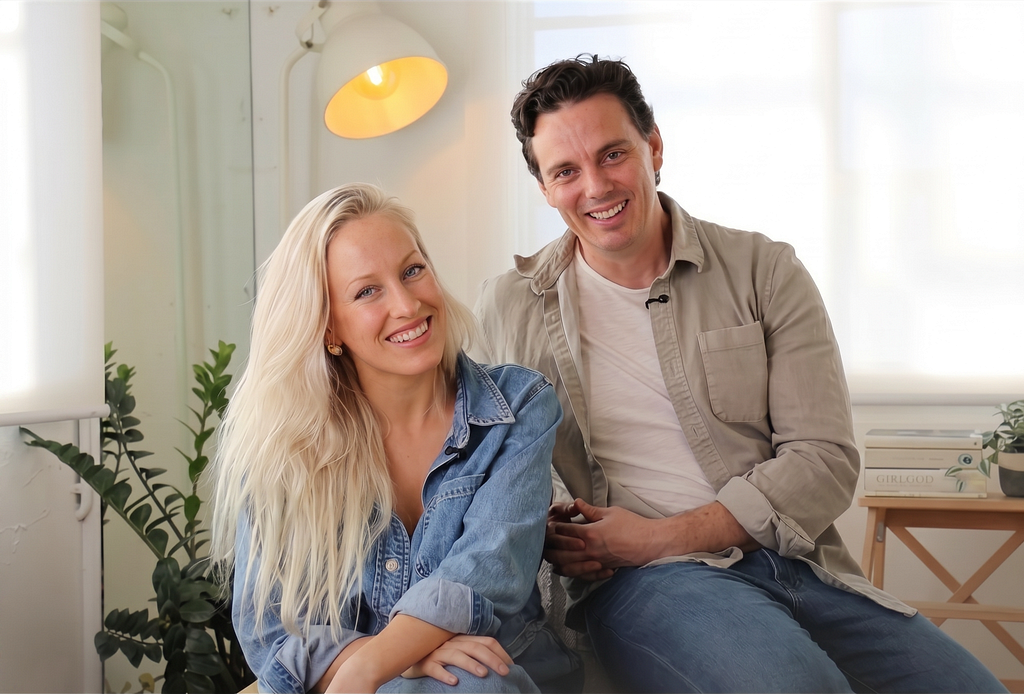
I had the pleasure of talking with Benjamin Mathews. In the unpredictable world of independent filmmaking, bringing a project to life is difficult enough. Doing it while your producing partner feeds a newborn every two hours borders on madness. Yet that is the exact environment in which the Australian short film Project Hourglass was forged. Directed by Mathews and produced by his wife, Holly-Anna, the film recently dominated the 2026 Tropfest, taking home three major honors, including the People’s Choice Award. For Mathews, who also won the inaugural Tropfest Runways Global Career Acceleration Award, the recent triumph is the culmination of a lifelong journey shaped by global wandering, profound tragedy, and a relentless search for human connection.
Long before he was pitching films to major Hollywood studios, Mathews was a kid searching for his place in the world. Born in Mexico City to an American father and an Australian mother, his early years were a blur of international relocation. The family bounced from Mexico to Hong Kong to New York before finally anchoring themselves in Sydney. Amidst the constant motion, Mathews found stability in the theater. His parents enrolled him in drama classes when he was twelve, and it immediately clicked. “At the time, I felt like I often needed help academically with other subjects,” Mathews recalls. “However, acting was something I didn’t need anybody else’s help or permission with. It was something I could just do.” By fifteen, he was winning awards against adults at local theater festivals, prompting his high school to cast him in their major productions.
That early passion ultimately led him back to the United States. He moved to New York to study full-time at the Atlantic Theater Company, a school founded by David Mamet and William H. Macy. He had barely settled into his new life when September 11 happened. His father had flown into town the night before, and they were staying at a hotel right next door to the World Trade Center. “We were very much caught up in the events of the day, and that had a profound impact on my life,” Mathews says. “It is still to this day the most surreal day of my life.” Starting drama school a week and a half later, he questioned the point of studying theater while the world felt fractured. The turning point came from his instructors. “Fortunately, I was lucky to be with teachers who really got us to see the value of story, and the stories we tell,” he explains. “They showed us that acting can be a noble profession.”
After years of acting across three continents, Mathews found himself drawn to the director’s chair. His first major undertaking was a short documentary shot in Mississippi about a former self-confessed racist raised on a cotton plantation. The subject experienced a massive paradigm shift after imagining life from the perspective of an African-American man who grew up on the same farm. “That film was very much about the question of whether a person can transcend their inherited beliefs from the past and their society, or if we are simply products of our environment,” Mathews notes.
This exploration of the human psyche propelled him to attend the prestigious Australian Film Television and Radio School, where he created a psychological thriller titled Emily. The film follows a mother attempting to reconnect with her daughter after a suicide attempt. “I really wanted to put the audience in the shoes of a family member going through something like that, feeling the sheer fear when somebody feels unreachable,” he says. The film conquered the festival circuit, played at Cannes, and remains the only Australian film ever nominated for the Student Academy Awards.
Today, operating under the banner of SquireRose Studios, Mathews is juggling a massive slate of projects. Alongside his filmmaking career, Mathews is the founder of Acting Mastery Academy. Together with his wife, Holly-Anna, he has grown it into a global career development platform for actors, helping them become the authors of their own careers by creating opportunities, getting seen by the industry and building successful, sustainable careers.
He is developing a new psychological thriller, prepping a comedy series pilot, and polishing a script about Hurricane Harvey that deals with the peril of delayed action. As he prepares to pitch to major studios this November, his philosophy remains grounded. He frequently recalls a blunt critique from a former Los Angeles manager regarding an audition tape. The manager told him his work was good, adding plainly, “It isn’t exceptional.” That defining moment taught him that surviving in the entertainment industry requires an unrelenting pursuit of excellence.
Beyond perseverance and resilience, Mathews believes the ultimate key to a meaningful career is breaking free from historical constraints. He advocates for stepping away from the limiting narratives people construct about themselves. “A lot of the time, we think we are the way we are because of the past,” he observes. “In fact, what we often don’t realize is that our expectation of the future has us be who we are in the present.” By choosing to operate from a space of pure possibility, Benjamin Mathews has built a dynamic career defined by empathy, courage, and an unwavering commitment to authentic storytelling.
Yitzi: Benjamin Mathews, it is such a delight to meet you. Before we dive in and talk about your amazing work, our readers would love to learn about your personal origin story. Can you share with us the story of your childhood, how you grew up, and the seeds and genesis for all the amazing work that has come since then?
Ben: It’s a delight to meet you. Gosh, my origin story. I was actually born in Mexico City to an American father from Kansas and an Australian mother from Sydney. They met on a plane somewhere in New Caledonia of all places, married quickly, and moved to Mexico. My dad was working for Citibank in the late 70s and early 80s, which took him there, and my brother and I both came along in Mexico City. We spent about four years traveling. We lived in Mexico, Hong Kong, and New York, and eventually, we settled in Sydney.
I fell in love with acting at an early age. My parents got me into drama classes when I was about 12. Very quickly, I realized it was something I truly enjoyed and was naturally good at. At the time, I felt like I often needed help academically with other subjects, however, acting was something I didn’t need anybody else’s help or permission with. It was something I could just do. When I was about 15 or 16, I ended up winning an award at a big theater festival against all these adults for a play that I was in. All of a sudden, my high school really sat up and took notice, and suddenly started putting me in all of the high school productions.
When I finished school, I started at university, then went and did a summer intensive in New York at the Atlantic Theater Company. It is a school founded by the playwright David Mamet and the actor William H. Macy. I just fell in love with their entire philosophy and everything that they were doing. So, when I came back to Sydney, I finished university and then moved to New York to study at Atlantic in their full-time program.
I had only been there for a month when September 11 happened. I was in New York for 9/11, and my dad had also happened to come to town on the evening of the 10th to visit me and help me look for apartments. We happened to be staying in a hotel next door to the World Trade Center. We were very much caught up in the events of the day, and that had a profound impact on my life. It is still to this day the most surreal day of my life. Starting at a drama school a week and a half later, I certainly was questioning what I was doing there. I spent a lot of time thinking about the point of this when it felt like the world was falling down around us.
Fortunately, I was lucky to be with teachers who really got us to see the value of story, and the stories we tell. They showed us that acting can be a noble profession. That was something I was very grateful for at the time because there was certainly a question about whether or not we stayed in New York or if I came home. It was a really hard first year, and I probably had post-traumatic stress. Yet, it was also one of the most formative years of my life in terms of really questioning what I wanted to do with my life. It made me look at the bigger context of things happening around me, certainly in the United States at the time. That has really informed a lot of the work I continue to do and the work I believe in.
After I was in New York for three and a half years, I returned to Australia for three years. I started to work in the theater here, getting my first television roles, and then went back to the States for two years. I went just for what I thought was going to be three months. There was an intensive being run by Atlantic in Los Angeles, where Mamet and William H. Macy were teaching. It seemed too good of an opportunity to pass up, so I went back to LA, ended up staying, and signed with a top rep in Hollywood. Then the financial crisis hit, and things got very quiet again.
I had been directing plays and had just gone to Mississippi to make my first short documentary. That film was about a former self-confessed racist who had grown up on a cotton plantation on his father’s farm. In his 40s, he had a moment with an African-American man who had also grown up on his father’s farm. For the first time in his life, he put himself in this man’s shoes. He actually thought about what life might have been like for him growing up on this farm, and all of a sudden had this huge realization about himself and his life. That film was very much about the question of whether a person can transcend their inherited beliefs from the past and their society, or if we are simply products of our environment. What was extraordinary about this man’s story was how this one moment completely shifted his worldview.
At that point, I was beginning to think about filmmaking. I used that film to apply to film school back here in Australia. I got in and went to the Australian Film Television and Radio School, which is a very prestigious film school here in Sydney that a lot of our big directors have come out of. I went for directing, stayed to do screenwriting as well, and had three of the most creatively fulfilling years of my life.
When I finished film school, I made a short film called Emily. It dealt with a mother-daughter relationship. Her daughter had made a suicide attempt, and the film begins just as the daughter is coming home from the hospital. Her mother is living in absolute terror about it happening again. That film was very much about the question of trust, and whether or not her mother could learn to begin to trust her daughter again given what had happened. Really, it was about the mother having to learn how to let go of her need to control the situation. The more she tried to control it, the more she pushed her daughter away, creating a rift between them. The moment she finally stopped and her defenses fell, there was a moment of connection that became possible. The irony with that film was that I used the genre of a psychological thriller to tell the story. I really wanted to put the audience in the shoes of a family member going through something like that, feeling the sheer fear when somebody feels unreachable. I knew that is a terror families all over the world are dealing with at this very moment.
That film ended up doing very well on the festival circuit. It won a lot of awards around the world, went to the Cannes Film Festival, and is still the only Australian film nominated for the Student Academy Awards. That got us onto the shortlist for the Academy Awards. I made some other films too, including a documentary about a man whose wife had been murdered here in Sydney. It explored his spiritual transformation as a result of this horrendous event, his ability to find meaning in what had happened, and his commitment to keep showing up every day for his three daughters. That film won some awards and won me a scholarship.
I finished film school with a lot of momentum. I won another big competition to make a TV show for MTV, and I made a web series that was picked up by a network here, leading us to make a pilot for that. I still love acting, however, filmmaking became a real vehicle for me to say a lot of the things that are important to me.
Yitzi: Can you tell us about the exciting new projects you’re working on now?
Ben: For sure. I have been working on one script for the past seven years that is a true story about what happened to a family during Hurricane Harvey in Houston, Texas, in 2017. I think it is a very powerful true story and a real punch in the heart. It is really about the peril of delay and the need for action. Metaphorically, part of the question in the film is whether this man will take action in time to save his wife, who became very ill just as the hurricane hit. Will he take action in time to save her, or will it become too late? In some respects, I think it is very much about that question when it comes to climate change: will we collectively take action, or will it become too late?
We are working on that film, and we are also working on another psychological thriller at the moment that is set at an acting school. This is something I am familiar with because I coach a lot of actors.
Alongside filmmaking, my wife and I have built a global career development platform for actors called Acting Mastery Academy. It started as a small acting studio in Sydney and has since grown into an online platform where we now work with actors from around the world. I wanted to create the platform I wish I’d had when I was starting out — one that doesn’t just teach acting, but gives actors the tools to create opportunities, get seen by the industry and ultimately build successful, sustainable careers. We do that by combining world-class craft training with mindset and career strategy. That’s become a huge part of what I love doing.
Recently, we made a film for Tropfest, the world’s largest short film festival, which is held here in Sydney. It went away for several years and just came back. We were lucky enough to be selected out of over 700 films with our short film called Project Hourglass. It ended up winning three awards: the People’s Choice Award, Best Cinematography, and I was lucky enough to win a Career Acceleration Award sponsored by the Motion Picture Association in America. As part of that, we are going to LA in November to pitch projects to the major studios over there, which is really exciting. At the same time, Holly and I sold a TV show last year. It is a comedy, completely lighthearted, and we are now in the writers’ room.
Yitzi: This is our signature question. You’ve been blessed with a lot of success. Looking back to when you first started, can you share five things you need to create a successful career in entertainment?
Ben: Five things you need to create a successful career in entertainment.
First, you definitely need perseverance. You are certainly going to come up against a lot of rejection, and perseverance is often the key. It is the people who stick it out that often find success.
Second, resilience is essential. You need the ability to be unstoppable in the face of rejection. I am not saying you can’t be disappointed, you just have to pick yourself back up and keep going.
Third, a lesson I learned when I was living in Los Angeles from a manager I was working with at the time. I sent in an audition tape for a Coen brothers film and called him up to ask what he thought. He said it was good, and I felt a “but” coming. He simply stated, “It isn’t exceptional.” He told me, “Ben, there are a lot of good actors in this town. I’d say about 70% of them are pretty good. If you want to have a career in this industry, your work needs to be exceptional.” I went and put that audition tape down again and got a callback, which I wouldn’t have had if he hadn’t held me to account. That instilled a lesson in me about the pursuit of excellence in your work. You may not always hit it, and that’s okay. You must strive to ask the question: what does exceptional work look like? That has been a real guiding force for me. I prefer to view this as a principle rather than holding yourself to a rigid standard, because standards can become a rule for comparison that makes people feel they aren’t measuring up. The idea of excellence in your work is a really important principle to strive for. So, I said perseverance, resilience, being unstoppable, and excellence in your work.
I think a fourth thing would be to back yourself. If you don’t back yourself, why should anybody else? No one can do that for you; it is something you have to do for yourself.
I know backing yourself is not an easy thing to do a lot of the time. Something that Holly and I have both come to realize over time is the importance of becoming aware of the limiting beliefs you have about yourself. You need to understand where they came from and how to let them go. Rather than trying to fix or change them, just notice them and let them go. The more you try to fight them, the more stuck with them you actually become. There is something very powerful in just knowing they are there; you suddenly have a choice in whether or not you are going to let them run the show. That was a huge shift for me in my early 30s. Doing that work on myself and becoming aware of the constraining stories I had about myself changed everything. Once I got those out of the way, it was like nothing in the world had changed, and yet everything had changed.
Yitzi: This is our final aspirational question. Ben, because of your amazing work and your enormous personal influence, if you could spread an idea or inspire a movement that would bring the most amount of good to the most amount of people, what would that be?
Ben: I think for me, it would be the need to come from possibility instead of the constraints of the past. Often, we don’t realize how constraining the stories we tell ourselves about our lives or the world can be. If we can come from a blank canvas — just a big empty space of nothing — anything becomes possible. If you are too stuck in the story you have about yourself and the past, only some things are possible. If you come from a space of possibility, we can create any future we would like.
A lot of the time, we think we are the way we are because of the past. In fact, what we often don’t realize is that our expectation of the future has us be who we are in the present. It’s like going on holiday. You could be at work, your boss could be stressed, and everyone around you is stressed in a job you don’t even enjoy. If you know you have two tickets sitting at home and you are flying to Hawaii tomorrow, your experience of today is very different. You know where you’re going and you have this incredible thing to look forward to. Conversely, you could be sitting on the most beautiful beach in Hawaii staring at an incredible sunset, feeling miserable because you know in two days you’re going to be back at work.
It is your expectation of the future that dictates how you feel in the present. So why does it look so much like the past? It looks like the past because we often don’t realize that the past isn’t always located entirely behind us; sometimes, it influences the future. Because things have gone a certain way so far, we just expect them to keep going that way. We then take action consistent with the past rather than possibility, and wonder why we end up with more of the same. For me, that was one of the biggest aha moments that shifted everything. The more I could let go of the stories of the past and just come from possibility, anything became possible. That philosophy has shaped not only the films I make, but also the work we do every day through Acting Mastery Academy, helping actors move beyond the stories that hold them back so they can create careers from a place of possibility.
Yitzi: It’s been such a delight to meet you. I wish you continued success, good health, and blessings with the baby. I hope we can do this again next year.
Ben: I really appreciate it, Yitzi. It was an absolute honor.
Tropfest Winner Benjamin Mathews on ‘Project Hourglass,’ Surviving 9/11, and the Blunt Hollywood… was originally published in Authority Magazine on Medium, where people are continuing the conversation by highlighting and responding to this story.