The technology to lift objects vertically existed long before skyscrapers. But skyscrapers only became practical when the safety systems for elevators became reliable. Once people trusted elevators, cities transformed. I believe AI is at a similar moment.
Artificial Intelligence is transforming industries at a breakneck pace, and the entrepreneurs driving this innovation are at the forefront of this revolution. From groundbreaking applications to ethical considerations, these visionaries are shaping the future of AI. What does it take to innovate in such a rapidly evolving field, and how are these entrepreneurs using AI to solve real-world problems? As a part of this series, I had the pleasure of interviewing Venkat Siva.
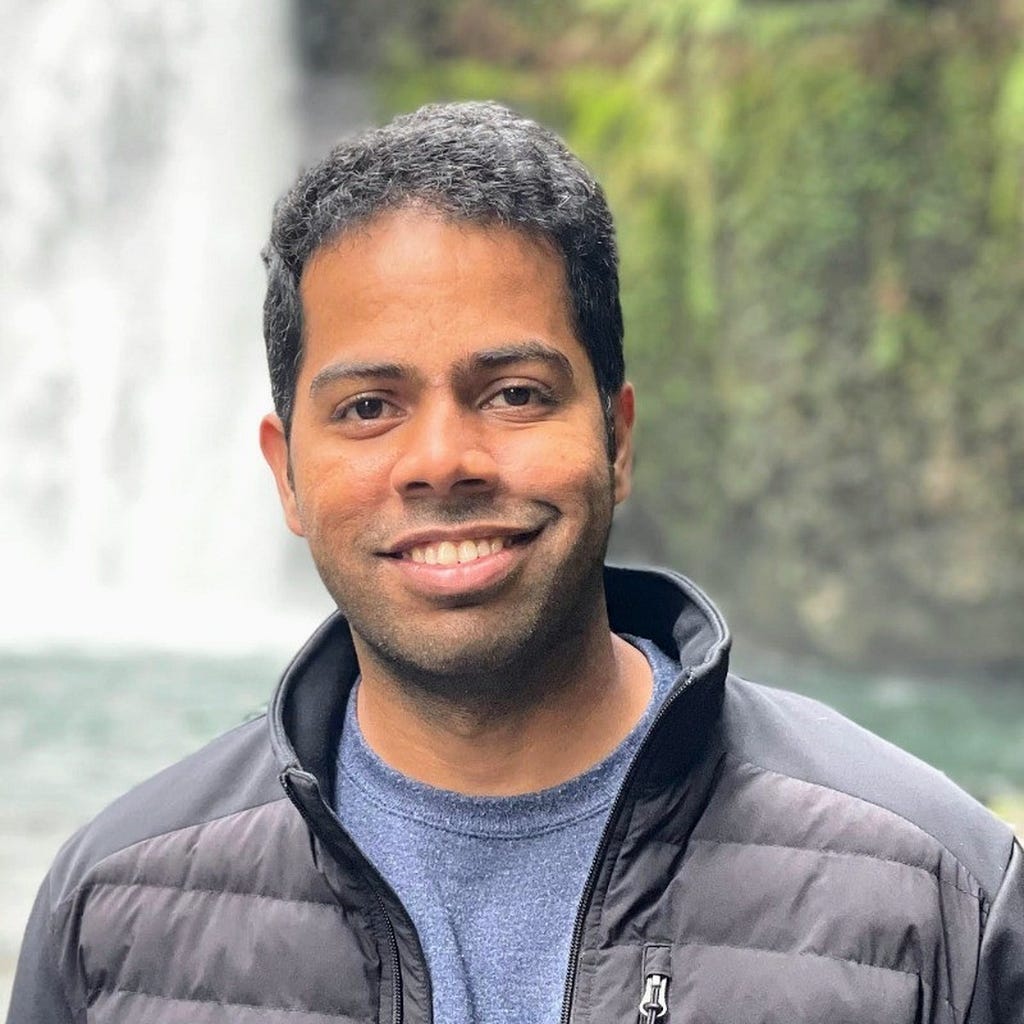
Venkat Siva is an AI infrastructure and enterprise systems leader focused on one of the defining challenges of the agentic era: how organizations safely deploy autonomous AI systems at scale. As Co-Founder and CEO/CTO of CompFly AI, Venkat is building the security, trust, and governance layer for enterprise AI agents. Previously, he served as VP of Data & AI at Rivian and the Rivian-Volkswagen Joint Venture, where he led data and AI infrastructure initiatives across complex operational environments. His work sits at the intersection of AI, enterprise infrastructure, security, and controlled autonomy.
Thank you so much for joining us in this interview series! Before we dive in, our readers would love to learn a bit more about you. Can you tell us a bit about your childhood backstory and how you grew up?
I grew up in a family that deeply valued engineering, curiosity, and hard work. My father was a civil engineer, and from an early age I was fascinated by the idea that engineering could shape the world around us. That mindset stayed with me throughout my childhood and eventually led me toward computer science and distributed systems.
I’ve always been drawn to solving difficult technical problems and building systems that operate at scale. Early in my career, I became especially interested in foundational infrastructure and the ways software could unlock entirely new experiences for people and businesses.
Another important lesson I carried with me from childhood was the value of surrounding yourself with great people. Some of the biggest leaps in my career came from collaborating with smart, mission-driven teams who challenged me to think bigger and move faster.
Even today, that same mindset drives how I approach building companies and products: stay curious, work hard, and focus on solving meaningful problems through engineering.
Can you share the most interesting story that happened to you since you began your career?
One of the most defining moments in my career was realizing how the worlds of distributed systems, data platforms, and AI were beginning to converge.
Earlier in my career, I focused heavily on building large-scale platforms and infrastructure systems. At the time, AI was still emerging from a practical enterprise perspective. But over time, I started seeing how machine learning systems were no longer just analytical tools — they were becoming operational decision-makers.
That shift fundamentally changed the way I thought about software.
At companies like Rivian, I had the opportunity to work on systems where AI was directly influencing real-world experiences. Suddenly, you weren’t just building software that displayed information. You were building systems that could reason, act, and interact with the physical world.
That realization eventually led to CompFly AI. We recognized that enterprises were rapidly moving toward autonomous systems and AI agents, but there was almost no infrastructure focused on trust, governance, and control. That became the problem we wanted to solve.
None of us are able to achieve success without some help along the way. Is there a particular person who you are grateful towards who helped get you to where you are? Can you share a story about that?
One person who had a major impact on my career was a former manager of mine who had been one of the founding engineers behind Apple Siri.
At the time, I was a very introverted engineer. I was deeply technical, but I didn’t naturally put myself forward or communicate with confidence in leadership settings. He recognized potential in me before I fully recognized it in myself.
I remember him pushing me into situations that initially made me uncomfortable — leading discussions, presenting ideas, and defending technical decisions in front of executives and cross-functional teams. At first, I saw those moments as stressful. Over time, I realized they were shaping me into a stronger leader.
That experience taught me an important lesson: great leaders don’t just manage outcomes. They help people grow into capabilities they may not yet see in themselves.
Can you please give us your favorite “Life Lesson Quote”? Can you share how that was relevant to you in your life?
One quote that has always resonated with me is: “When the going gets tough, the tough get going.”
I’ve experienced many moments throughout my life and career where the easiest path would have been to stop or scale back. One experience that really reinforced this mindset was a seven-day trek through Alaska.
The terrain was physically demanding, unpredictable, and mentally exhausting. There were moments when conditions changed rapidly and the only way forward was to stay focused and keep moving.
That experience mirrors entrepreneurship in many ways. Building companies and innovating in emerging technologies like AI often means operating in uncertainty. The ability to stay calm, adapt, and continue moving forward when things become difficult is one of the most valuable skills you can develop.
You are a successful business leader. Which three character traits do you think were most instrumental to your success? Can you please share a story or example for each?
1. Collaboration
I strongly believe the best products and ideas are built by teams, not individuals. Throughout my career, some of the most impactful breakthroughs came from cross-functional collaboration between engineering, security, product, and operations teams.
At Rivian, many of the systems we built required tight coordination across multiple disciplines. AI systems don’t operate in isolation — they impact customers, infrastructure, operations, and safety. Being able to collaborate effectively across domains became critical.
2. Work Ethic
I grew up in an environment where hard work was simply expected. That mindset stayed with me.
Building AI systems at enterprise scale is not easy. Whether it was solving low-latency infrastructure problems, scaling distributed systems, or building entirely new agentic workflows, the willingness to stay persistent through difficult technical challenges has been essential.
Startups especially require endurance. There are no shortcuts.
3. Thinking Ahead
One of the most important traits in technology leadership is the ability to think several steps ahead.
When we started CompFly AI, we recognized that AI agents would eventually move beyond chat interfaces and begin operating autonomously inside enterprise systems. Most organizations were focused on model capabilities. We became focused on what happens when those models gain authority, memory, and the ability to act.
That forward-looking mindset led us toward solving problems around trust, governance, and controlled autonomy before they became mainstream enterprise concerns.
Share the story of what inspired you to start working with AI. Was there a particular problem or opportunity that motivated you?
My journey into AI really evolved from years of working in data platforms, distributed systems, and enterprise infrastructure.
Before the modern AI wave, I was already working in environments where organizations were trying to make better decisions using large amounts of data. Over time, machine learning became more operationalized, and eventually generative AI and agentic systems accelerated that transformation dramatically.
What fascinated me most was the realization that enterprises were trying to control systems that are fundamentally non-deterministic.
Traditional software behaves predictably. AI agents do not. They reason, adapt, retrieve memory, call tools, and make decisions dynamically. That creates incredible opportunities, but also enormous risk.
At Rivian, we saw firsthand how powerful AI systems could become. That experience sparked deeper conversations between Anand and me about what enterprises would need in order to safely deploy autonomous AI systems at scale.
We realized the missing layer wasn’t intelligence. It was trust.
That insight ultimately became the foundation for CompFly AI.
Describe a moment when AI achieved something you once thought impossible. What was the breakthrough, and how did it impact your approach going forward?
One major breakthrough moment for me was seeing how autonomy began transforming the automotive industry.
Historically, driving has required constant human attention. The idea that software could perceive environments, make decisions, and safely assist humans in real time once felt almost impossible.
Working in that environment changed my perspective completely.
Another defining moment was the rise of large language models. Suddenly, we had systems capable of reasoning, understanding context, and interacting conversationally at a level that felt fundamentally different from previous generations of software.
For the first time, people could interact naturally with machines and receive highly contextual responses.
That changed how I thought about software architecture entirely. We were no longer building static applications. We were building systems capable of autonomous behavior.
It also reinforced something important: as AI becomes more capable, trust, safety, and governance become exponentially more critical.
Talk about a challenge you faced when working with AI. How did you overcome it, and what was the outcome?
One major challenge I faced while working on AI systems was solving latency at enterprise scale.
At Rivian, we worked on AI-powered in-car assistants that needed to operate in real time. These systems weren’t just answering questions, they were interacting with vehicle systems and supporting live user experiences inside moving vehicles.
That meant every interaction had to happen extremely quickly and reliably.
We had to develop creative solutions involving local models, intelligent caching strategies, optimized orchestration, and highly efficient distributed infrastructure to bring response times down.
That experience heavily influenced how we think about CompFly AI today.
At CompFly, we face a similar challenge from a security perspective. Enterprises need security and governance controls to operate at wire speed.
You cannot simply tell an AI agent “don’t do bad things” and assume that is sufficient. You need deterministic guardrails operating around systems that are inherently non-deterministic.
Designing those runtime protections while maintaining performance has been one of the most fascinating engineering challenges I’ve worked on.
Can you share an example of how your work with AI has had a meaningful impact? What was the situation, and what difference did it make?
One meaningful example came from my work at Rivian, where we helped build AI systems that supported customer service teams and vehicle technicians.
Rivian vehicles evolve continuously through over-the-air software updates, which means the functionality of the vehicle changes rapidly. That creates enormous complexity for support teams trying to stay current on every capability, workflow, and troubleshooting scenario.
We built AI-powered systems that acted almost like expert copilots for employees.
Instead of manually searching through documentation or escalating issues repeatedly, customer service representatives and technicians could instantly access contextual guidance and recommendations.
The impact was significant. Teams became more effective, customers received faster support, and the organization operated more efficiently overall.
Today at CompFly AI, we are focused on another major challenge: helping enterprises safely deploy autonomous AI agents.
As organizations begin operating hundreds or thousands of AI agents across workflows, the questions become much bigger. How do you establish trust? How do you govern delegation? How do you verify authority and behavioral boundaries?
Those are the problems we are solving now.

Based on your experience and success, can you please share “Five Things You Need To Know To Help Shape The Future of AI”?
1. Trust Will Determine Adoption
The future of AI is not limited by intelligence. It is limited by trust. Organizations need confidence that AI systems will behave safely, transparently, and within approved boundaries.
2. Open Innovation Matters
Healthy AI ecosystems require openness and collaboration. Open models and shared research accelerate innovation across industries and allow smaller organizations to participate meaningfully in technological progress.
3. Security and Governance Must Evolve
Traditional security systems were built for deterministic software and human operators. AI agents behave dynamically, which means governance models must evolve to handle delegation chains, memory, context, and behavioral authorization.
4. Agentic Accessibility Is the Next Frontier
AI intelligence is becoming broadly accessible, but truly autonomous workflows are still difficult for most organizations to deploy safely. Bridging that gap will unlock enormous economic and operational value.
5. AI Will Expand Beyond Software
The next major leap for AI will happen when intelligence becomes deeply integrated into physical systems, robotics, infrastructure, and operational environments. We are still very early in that transition.
When you think about the future of AI, what excites you the most, and how do you see your work contributing to that future?
What excites me most about AI is the potential to dramatically increase human capability and free people to focus on more meaningful work.
AI has the potential to eliminate enormous amounts of repetitive operational overhead across industries.
I often use the analogy of elevators.
The technology to lift objects vertically existed long before skyscrapers. But skyscrapers only became practical when the safety systems for elevators became reliable.
Once people trusted elevators, cities transformed.
I believe AI is at a similar moment.
The intelligence already exists. What is still missing is the trust infrastructure that allows organizations to confidently build large-scale autonomous systems.
At CompFly AI, our mission is to help create that trust layer.
We want enterprises to safely deploy AI agents with the same confidence they deploy traditional infrastructure today.
Once that happens, I believe the scale of innovation will be extraordinary.
What advice would you give to other entrepreneurs who want to innovate in AI? Can you share a story from your experience that illustrates your advice?
One of the biggest shifts AI has created is that the cost of building products has dropped dramatically.
That means the real challenge is no longer simply building something. The challenge is building the right thing.
My advice to entrepreneurs is to spend more time deeply understanding the problem than obsessing over the technology itself.
At CompFly AI, Anand and I initially explored several different ideas before converging on controlled autonomy and agentic trust.
What mattered most was not that we started with the perfect idea. What mattered was that we had the right team, the right experience, and a shared understanding of where the market was heading.
In emerging markets like AI, ideas evolve quickly. Strong teams that can adapt and think strategically will consistently outperform rigid plans.
Is there a person in the world, or in the US, with whom you would like to have a private breakfast or lunch, and why?
I think Elon Musk would be an incredibly interesting person to have a conversation with.
Regardless of people’s opinions about him, he consistently takes on problems that most people consider impossible.
He thinks at massive scale, whether it’s space exploration, autonomous systems, energy, or AI.
As an engineer and founder, I respect his willingness to tackle difficult problems directly and build ambitious systems from first principles.
I also appreciate that he tends to communicate with a very direct, no-nonsense mindset.
When you are building in emerging technology spaces, clarity and conviction matter.
How can our readers further follow your work online?
Readers can follow CompFly AI online at:
Website: https://compfly.ai
LinkedIn: https://www.linkedin.com/company/compfly-ai
We regularly share insights around agentic AI, enterprise security, governance, and the future of controlled autonomy.
Thank you for sharing these insights!
Venkat Siva Of CompFly On Pushing the Boundaries of AI was originally published in Authority Magazine on Medium, where people are continuing the conversation by highlighting and responding to this story.