
Actress Savanah Joeckel on “Lying in Wait,” Finding Strength Through Stillness, and Learning to Say No in Hollywood
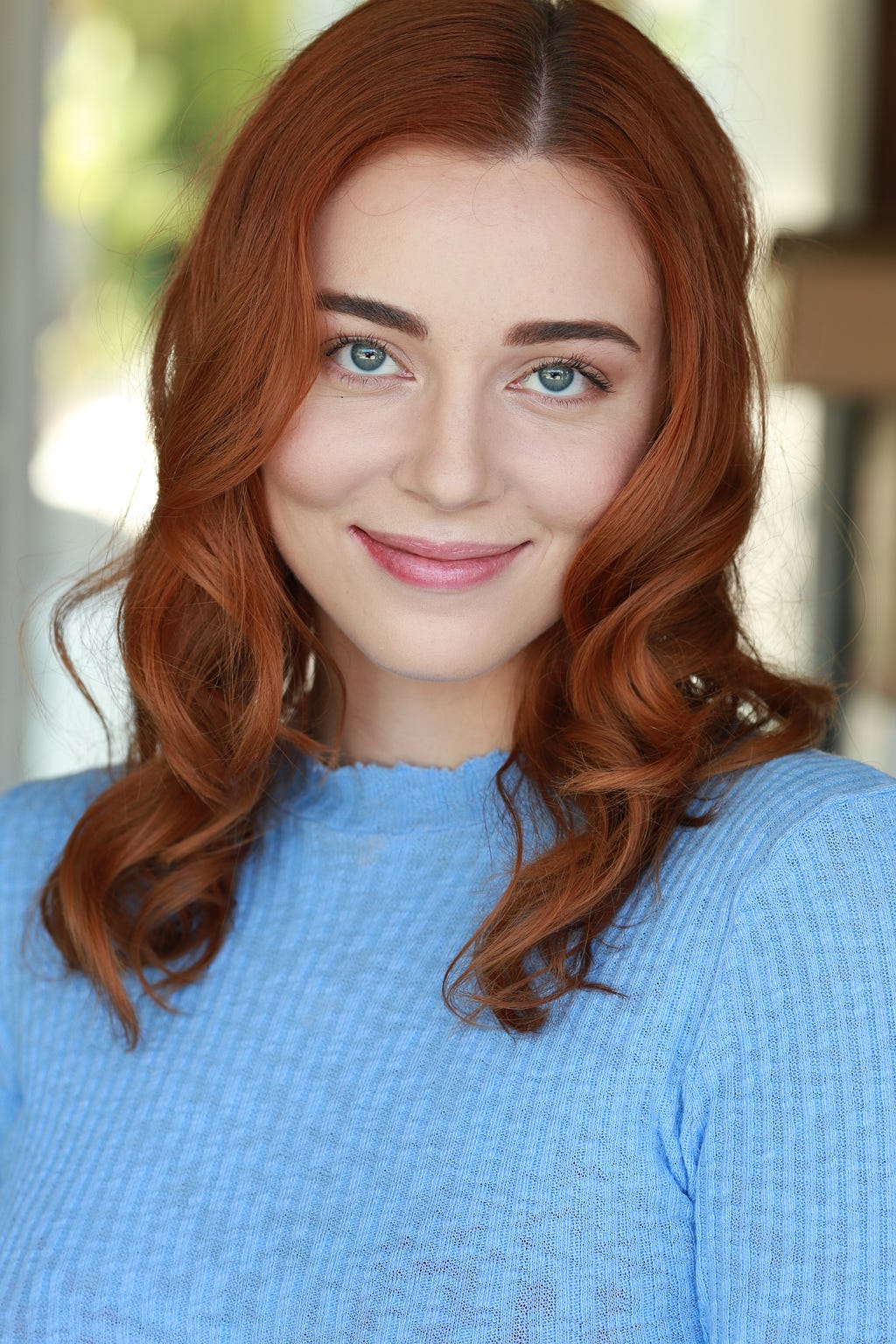
“Pretend that you’re in the ’90s every now and then — to not depend so much on social media, consumerism, and the technology world. Get out and really connect with people in person, in real life, in the moment. That’s what I’ve been trying to do.”
I had the pleasure of talking with Savanah Joeckel, an actress whose journey is as much about finding herself as it is about finding the right role. Her story doesn’t start under the bright lights of Hollywood, but in the quiet cherry orchards of Yakima, Washington. “I grew up very sheltered because it was such a small town,” she recalls. “In the summers, I would go down and pick cherries. It was a very quiet upbringing.”
That quiet life was abruptly uprooted when, at 16, her family moved to Las Vegas. The transition from pastoral Washington to the neon-drenched desert was a culture shock of the highest order. “I remember that first year was probably one of the hardest for me just because it was so different,” Savanah admits. “I feel for kids and teenagers who have to move in the middle of school, especially during their teenage years. It was a difficult year, but I also feel like I grew a lot from it.”
Initially, acting wasn’t on the radar. Drawn to human narratives, she enrolled in journalism at college. “I love stories and I love listening to people,” she says. “I’ve always enjoyed being more of the listener than a talker.” To sharpen her interview skills, she took an improv class, an experience that would pivot her entire life’s trajectory. In the spontaneous, in-the-moment exercises, she found a new calling. Her teacher saw it too, asking her, “Have you thought about acting ever?” It was a complete 180. She dove into the small but vibrant Las Vegas film scene before making the inevitable move to Los Angeles at 23.
Her break didn’t come overnight. It was a slow burn, built on a foundation of indie films and local commercials in Vegas. “It’s such a small bubble, and even in Los Angeles, you realize it’s a small bubble once you start meeting people on different sets,” she explains. Savanah embodies the grit required of an artist trying to make it, taking on roles beyond acting to learn the machinery of filmmaking from the inside out. She’s worked as a cast assistant, a set dresser, and even in editing. While working as a cast assistant on Flight Risk, she found herself on set with Mel Gibson, an experience that ultimately led to her being cast in the film. “It was interesting working with people that have been in the business for so many years and hearing their take on it and how it’s changed.”
Every set is a paradigm shift, a place of intense learning and, sometimes, raw, unfiltered emotion. She recalls a particularly powerful moment while filming A Weird Kind of Beautiful in Miami. The script, written like a play, demanded hours of rehearsal for emotionally draining scenes. During a confrontation with her on-screen fiancé, something unexpected happened. “He actually had a breakdown in real life. It was happening while we were filming,” she says, the memory still vivid. “I’ve never seen an actor just go that far, and it was so shocking that it really got to me… It kind of knocks you off your feet because it feels so real that you almost forget you’re acting.”
But she’s also clear-eyed about the less glamorous side of the industry. “I feel like a lot of filmmaking seems to be suffering,” she reflects. “It’s a big machine, and all these people have to move in a synchronized motion, which often doesn’t happen. But I’ve always believed that the hardest things in life often bring the greatest reward.”
Frustrated with a period of stagnation in LA, Savanah took control of her own narrative, co-writing a mystery thriller with her partner, director Tomas. The film follows three girls after one of them disappears from a nightclub, but it’s the psychological underpinnings that interest her most. She plays a character trying to escape a toxic past, a far cry from her own self-described “goody-two-shoes” upbringing. “This character is definitely more of a rebel,” she notes. “She would question authority and go towards the fringe of society.”
The years of experience have given her a wisdom that she wishes she had at the start. “That feeling of self-doubt is normal,” she insists, recalling a conversation with a famous actress who admitted to feeling the same way. She’s also learned the power of “no.” “As an actor, you’re told to say yes to every single thing. But looking back, I feel I should have been a little more guarded to protect myself.” Most importantly, she’s learned not to let the craft consume her. “Don’t let acting become your entire identity,” she advises. “It’s a passion of mine, but if you completely lose your identity in it, it can become kind of scary.”
To stay grounded, she turns to family, exercise, and new hobbies like crocheting and coding that offer a mental escape. When asked what kind of movement she’d like to inspire, her answer is a gentle rebellion against the modern age. “Pretend that you’re in the ’90s every now and then — to not depend so much on social media, consumerism, and the technology world,” she urges. “Get out and really connect with people in person, in real life, in the moment.” It’s a fitting philosophy for an artist who has spent her career chasing authenticity, both on screen and off.
Yitzi: Savanah, it’s a delight and an honor to meet you. Before we dive in, our readers would love to learn about your personal origin story. Can you share with us the story of your childhood and how you grew up?
Savanah: Thank you. Thank you so much. I grew up in a small town called Yakima, Washington. Most people probably haven’t heard of it. I would say I grew up very sheltered because it was such a small town. I grew up next to orchards; Washington has a lot of great agriculture, so I grew up around cherry orchards. In the summers, I would go down and pick cherries. It was a very quiet upbringing.
When I was 16, I moved to Las Vegas, so it was quite a shock. I remember that first year was probably one of the hardest for me just because it was so different. We moved basically to give my brother a new start in life because he had been struggling with some things, and my dad also got a new job. A lot of change happened with that move. I feel for kids and teenagers who have to move in the middle of school, especially during their teenage years. I remember saying goodbye to all my friends. It was a difficult year, but I also feel like I grew a lot from it.
I met a lot of new people and ended up going to college there. I started out in journalism, actually, because I love stories and I love listening to people. I’ve always enjoyed being more of the listener than a talker. From that, I ended up taking this improv class to get better at interviewing, and I ended up really loving it — just being in the moment. We would have to play these acting improv games, and my teacher asked me, “Have you thought about acting ever?” I told her no at the time, but after that, she said I should consider it. It was a complete 180 for me at that point. I entered the film world in Vegas and didn’t move to Los Angeles until I was 23 or 24. There, I just started expanding more because they say you have to go to LA or New York, and I chose LA.
Yitzi: We’d love to learn more about the next chapter. Tell us about your first breaks and your first entrees into the entertainment industry.
Savanah: To be honest, I feel like a lot of it goes back to the people that I met in Vegas. It’s such a small bubble, and even in Los Angeles, you realize it’s a small bubble once you start meeting people on different sets. In Vegas, I got cast in my first movie right out of college. It was a small-budget indie film. After that, I started getting cast for other films.
It started with a slow expansion. I feel like that’s how it is for a lot of people, where you’re just trying to do as much as you can and say yes to as much as you can. I was doing short films and local commercials for Vegas. Eventually, I moved to Los Angeles, and from there, in the last few years, I got cast in a few movies. One took me to Miami and another one to Jacksonville, Florida. It’s funny because most of the movies I’ve been cast for are not in LA; they’ve always been somewhere else.
I also do other things in film besides acting. I’ve worked as a cast assistant, a set dresser in the art department, and even in the editing field, which I really enjoy. I worked as a cast assistant on Flight Risk for Michelle Daugherty. That was such a lovely experience. I really enjoyed working on that and got to meet a lot of people who have been in the business for a long time. I feel like I learned a lot on that set. Towards the end of the movie, I ended up getting cast in it. It was just a cool opportunity that happened, and I’m really grateful for it. It was interesting working with Mel Gibson and with people that have been in the business for so many years and hearing their take on it and how it’s changed.
That was one of the more recent projects I did. Then there’s a film we did in Argentina, which was really cool because it was my first time shooting outside of the country. I really enjoyed it and learned a lot on that set. I feel like I learn a lot on every set; it’s a paradigm shift for me every time I finish a film.
Yitzi: You probably have some great stories from the different places and sets you’ve been on. Can you share one or two stories that most stand out in your mind from your career?
Savanah: Wow, that’s a very good question. What arises for me is a mixture of both good and bad.
As far as the good, there was this film I was working on in Miami called A Weird Kind of Beautiful. It was definitely a challenge because it was all in one location, and the script was written like a play. It involved hours and hours of rehearsal because the director was very specific in what he wanted and had really visualized it ahead of time. There are a lot of emotionally distressing, intense moments that can drain you.
But I remember this one moment, a scene with me and my fiancé, where I find out something horrible about him that changes my whole perspective of who he is. It was an intense scene where I confront him, and he explodes in guilt and confesses. In that scene, he actually had a breakdown in real life. It was happening while we were filming. I’ve never seen an actor just go that far, and it was so shocking that it really got to me. It resonated with me because I felt like he really went somewhere, and both of us were experiencing that on camera together. I had never seen anyone go that far before. It kind of knocks you off your feet because it feels so real that you almost forget you’re acting. That moment really stuck out to me — witnessing and experiencing that with him in the scene.
On the other hand, I feel like a lot of filmmaking seems to be suffering. I don’t know if that sounds bleak or depressing, but when you’re on a real set, it hits you how serious it can be. There’s stress because money is involved and there are a lot of working parts. It’s a big machine, and all these people have to move in a synchronized motion, which often doesn’t happen. But I’ve always believed that the hardest things in life often bring the greatest reward. That’s why a lot of movies you hear about, like Jaws, were hell to make but often end up being good movies. So maybe that’s just how it’s supposed to work.
I’ve also had experiences that were not good, where I feel like I failed a little bit. I can openly admit that. You always feel like you could have done better. Looking back, you always think, “Maybe I could have done this a little better in this regard.” So there’s a lot of that, too.
Yitzi: Please tell us about this new movie, Lying In Wait and why we have to watch it.
Savanah: This one was interesting. The director, Tomas, and I both work in film and met in LA; he’s also my partner. Everything was feeling kind of stagnant in Los Angeles at the time, so we decided to take matters into our own hands and write something together. We started conceptualizing ideas, and he came up with this mystery.
He’s a very linear thinker, and I’m a little more abstract and fragmented. I think a lot about the internalized state of the character, whereas he thinks more about the plot and how it all fits together. He came up with this idea of three girls who go to a nightclub, and one of them disappears. As the story progresses, there are twists and turns where you realize that it’s not all it seems. For my part, I thought a lot about the character I was playing and the two other girls, and how people change over time, for better or for worse. I brought in the idea that my character had come from a bad place and was trying to get out of it because she had previous problems with drugs. She’s trying to break out of this toxic world, but she ends up hurting those around her in the process.
It’s a mystery thriller, but it’s also psychological because it has a lot to do with the characters and the internal struggles they go through, which leads to some of the twists and turns.
Yitzi: How would you compare and contrast your personal character, Savanah, with the character you play in the film? How are you similar, and how are you different?
Savanah: That’s a good question. For one thing, I’ve always been, I don’t want to say a goody-two-shoes, but I was always a good kid, very obedient. This character is definitely more of a rebel. She would question authority and go towards the fringe of society, in the sense that she would question everything. The fact that she got into drugs and lived in this dark world, like the rave world — I never really got into that scene. I’m a very structured person, whereas this character is the opposite of that, very free-spirited on a day-to-day basis. So, there are a lot of differences in that sense because I’ve just never been that much of a rebel.

Yitzi: This is our signature question. Looking back to when you first started, you must have learned a lot. Can you share five things you’ve learned that you wish you knew when you first started acting?
Savanah: That’s a very good question.
- That feeling of self-doubt is normal. With acting, I always felt like a part of me could have done better. I thought that was just a personal feeling, but then I remember talking to a very successful, well-known female actor who told me she felt the same way. I was really surprised to hear that. I learned that maybe it’s just a universal feeling, and those feelings are normal.
- You don’t have to say “yes” to everything. As an actor, you’re told to say yes to every single thing. But looking back, I feel I should have been a little more guarded to protect myself. I said yes to anything and everything, but some of those things did more harm for me mentally and emotionally than good.
- Give yourself a break and live your life. The harder you try to act, the worse it gets; it’s like trying to catch an eel with your hands. I would say to just give yourself a break every now and then. Go do something outside of acting, because that’s where you get a lot of your inspiration.
- Don’t let acting become your entire identity. When you’re constantly focused on acting, you can get tunnel vision. It became my whole identity, to the point where I felt lost when I wasn’t doing it. I don’t think that’s how it should be. It’s a passion of mine, but if you completely lose your identity in it, it can become kind of scary and lead to a very unsettling place.
- Sometimes, you have to break the rules. You get told, “This is how it is, this is how it works, these are the set of rules.” But I actually feel like the people who seem to have gained the most success are the people who kind of break those rules. So, sometimes you just have to do what’s counterintuitive.
Yitzi: Can you share some of the self-care routines you do to help your body, mind, and heart thrive?
Savanah: You ask really good questions. Spending time with my family is number one for me. Anytime I feel like I’ve lost my feet on the ground, I always go home to my family. That always helps a lot. And stepping away from it all for a little bit, doing something else. This might sound silly, but I started a new hobby. I get obsessive with trying to make things work, so I started crocheting. I’m also learning coding just because it’s hard and very different than what I pursue every day. It’s a way to have a little escape.
Also, exercise. Last year, I started training for a half marathon, and that really helped lift me out of the depressed spirals I would sometimes get into. Any kind of exercise, even just going for a walk outside and connecting with the nature that you often overlook every day, is a big one for me.
Yitzi: This is what we call our “matchmaker question.” We’re very blessed that prominent leaders read this column. Is there a person in the world or in the U.S. with whom you would like to have a power lunch or collaborate? We could tag them on social media and maybe connect you.
Savanah: I’m really into reading. If I could have lunch with anyone, lately I’ve been really interested in the works of Robert Greene. Or there’s this psychologist, they call him “the people whisperer,” Dr. Gabor Maté. One of those two. I have really been liking their interviews and writing.
Yitzi: This is our final, aspirational question. Savanah, because of your great work, you’re a person of great influence. If you could inspire a movement that would bring the most amount of good to the most amount of people, what would that be?
Savanah: The world has changed a lot, especially the film industry, in the last few years because of social media. It’s a double-edged sword. I think we’ve lost a lot of the connections that we once had. I would say to pretend that you’re in the ’90s every now and then — to not depend so much on social media, consumerism, and the technology world. Get out and really connect with people in person, in real life, in the moment. That’s what I’ve been trying to do.
Yitzi: I agree with that 100%. Savanah, how can our readers watch your latest film and continue to follow and support your work?
Savanah: My latest film, Lying in Wait, is now available on Amazon, Fandango at Home and Hoopla in the US. If you love crime stories and psychological thrillers, you can rent it or buy it there. Flight Risk should be out now too, streaming on some platforms like Amazon. I also have a website where some of my short films are. The film A Weird Kind of Beautiful is currently going through film festivals, but I imagine it should get released soon as well. So, I think pretty soon some of them should be out.
Yitzi: Amazing. Savanah, it’s been so delightful to meet you. I wish you continued success, good health, and blessings, and I hope we can do this again next year.
Savanah: Thank you so much. It was really nice talking with you, and thank you for your kindness.
Yitzi: It’s truly my pleasure. I’m excited to share the article with our readers.
Actress Savanah Joeckel on “Lying in Wait,” Finding Strength Through Stillness, and Learning to Say… was originally published in Authority Magazine on Medium, where people are continuing the conversation by highlighting and responding to this story.