
Anne-Marie Keane: The Composer-Adventurer Blending Classical Roots, Modern Beats, and a Life Lived Fearlessly

…“My hope is that [my music] would touch people emotionally and personally — that it would trigger some kind of emotion. That would be my first hope. My second hope is that it would make them want to move. For me, music has always been about emotions and movement. When I hear music that really touches me, it can create and trigger an emotion, but I also love music that makes my feet start moving and makes me dance. Maybe not like a ballerina, but who doesn’t like moving around and dancing?”…
I had the pleasure of talking with Anne-Marie Keane. When we connect, she’s not in a studio or a corner office, but on a sailboat named Alpenglow, somewhere off the coast of Spain. It’s a fitting setting for a woman whose life has been a study in navigating different currents — from the disciplined world of classical music and the sharp-edged corridors of corporate America to the unpredictable open water of a round-the-world sailing expedition. She is a composer, an adventurer, a political organizer, and a mother of four, embodying a blend of pragmatic ambition and fearless artistry that feels both rare and revolutionary.
Keane grew up in the San Fernando Valley, the youngest of four children. “There’s a big gap between me and my next sibling,” she explains, “so I felt like I was raised by three mothers and two fathers.” Her childhood was steeped in the arts, a world curated by her mother. “I started taking piano lessons at age five and wrote my first piece at age five,” Keane recalls. “My life was really surrounded by the arts and music, and I loved it.” But her mother also insisted on a well-rounded education, pushing her into skiing, tennis, and sailing. The most formative part of her education, however, came from 12 years in Catholic school, including four at Louisville, an all-girls high school in Woodland Hills. “It was a great environment to be a teenager,” she says, “because the philosophy of the school was that there’s nothing a guy can do that a woman can’t. I truly grew up believing that whatever I wanted to do, I could do.”
That belief carried her east to Dartmouth College, a world away from the Hollywood culture of LA. It was there that two paths diverged. She found her sport in sailing after discovering the team didn’t make cuts and, more importantly, threw a daiquiri party after the first meeting. “This is my sport,” she remembers thinking. But she also made a hard-nosed decision about her future. Recognizing the financial precarity of a life in music, she pivoted. “At 19, I decided it was really important for me to have financial security,” she says. “My plan was that one day when I did, I would go to a real music school, get a music degree, and pursue my passion.” That day took 35 years to arrive. In the interim, she built a successful 17-year career as an executive at Staples, got married, and raised four children. The artist was patient.
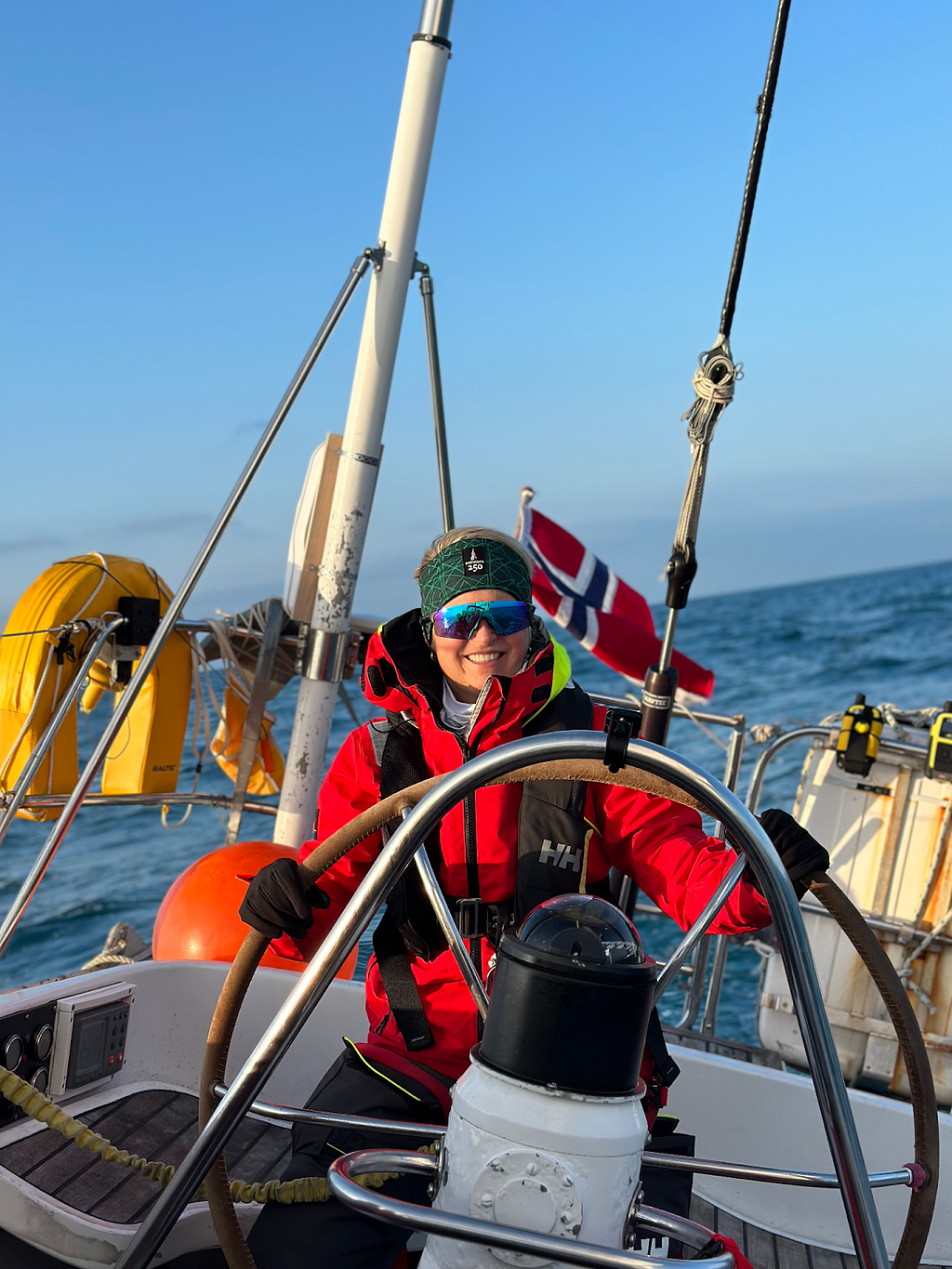
The adventurer, however, was always at the helm. After college, she pursued an Olympic sailing campaign in 1988, where she met her husband, John. They spent their early years racing together, but domestic life and raising four ski-racing kids in Vail, Colorado, put sailing on the back burner. Once their youngest went to college, they looked at each other and said, “You know what? Let’s go back to that sailing thing.” Now, they’re on a 15-month journey to circumnavigate the globe.
With her financial world in order, Keane finally made good on her teenage promise to herself, enrolling at Berklee College of Music to get a master’s in film scoring. She found the world had changed. “I wish I had known how important technology now is in creating and producing music,” she admits. But she dove in, embracing the challenge. She calls these moments “FFTs,” a term she borrowed from Brené Brown. “It’s a ‘fucking first time,’” she says with a laugh. “My belief is that you’ve got to take some risks.”
One of those risks was for a ballet called Human, where she envisioned the pianist reaching inside the instrument to pluck the strings along with the cello and viola. When they arrived for the premiere, the theater shut it down. “No, you cannot pluck the strings of our piano,” they told her. It was a classic FFT moment — an idea that was beautiful in theory but impractical in reality. “It still sounded good,” she says of the revised performance, “but it just wasn’t what I expected. So now I have learned that I need to ask first.”
Her work now sits at a fascinating intersection of tradition and modernity. For Human, she decided to merge 18th-century acoustic instruments with 20th-century electronic sounds, inspired by her son, who attends electronic music festivals around the world. He recommended that she listen to music by composer Philip Glass, one of the most influential modern classical composers of the late 20th Century. “In that moment, I realized there’s hope that the 20- and 30-somethings can connect with traditional and modern classical music,” she says. The challenge was syncing pre-recorded electronic tracks with live musicians and dancers, a technical puzzle she relished solving.
Yitzi: It’s a delight to meet you Anne Marie. Before we dive in, our readers would love to learn about your personal origin story. Can you share with us the story of your childhood, how you grew up, and the seeds for all the amazing things that have come since then?
Anne Marie: I was born in Los Angeles and grew up in the San Fernando Valley in Sherman Oaks. I’m the youngest of four children. There’s a big gap between me and my next sibling, so I felt like I was raised by three mothers and two fathers. My education was very much geared towards the arts. I started taking piano lessons at age five and wrote my first piece at age five. My mother, because I was the only one at home, took me to musical theater, concerts, ballets, and operas. My life was really surrounded by the arts and music, and I loved it.
But she also made sure I did a few other things, like learning to ski, play tennis, and sail. Voila, I’m on a sailboat. She really believed that it was important for me to have a well-rounded, broad education. One of the unique things about my education is that I went to Catholic school for 12 years, and four of those years were at an all-girls high school. It was a great environment to be a teenager because the philosophy of the school was that there’s nothing a guy can do that a woman can’t. I truly grew up believing that whatever I wanted to do, I could do.
From there, I also felt that LA, as big a place as it was, wasn’t really my place. I wanted to see something beyond the world of LA and its Hollywood culture, so I ended up going east for college. I went to a little town in Hanover, New Hampshire, and attended Dartmouth College, which ironically was a school that had only recently accepted women.
While I was there, I took my music with me and realized once I graduated, it might be hard to make a living as a musician or composer. I was going to have a lot of student loans to pay back. I didn’t have any financial security in my life; my parents weren’t going to be able to support me when I graduated. So, I took a different path and started getting the skills to go into business. At 19, I decided it was really important for me to have financial security. My plan was that one day when I did, I would go to music school. I was going to go to a real music school, get a music degree, and pursue my passion. But until I had my financial world in order, I didn’t want to teach music or be in a situation where I was writing jingles for a commercial I didn’t care about. I wanted to do the art.
It just took time. 35 years later, I went back to school at Berklee College of Music and pursued a master’s in music for film scoring. Now I’m able to — I paid off all my student loans, that was important too — focus on my music full time. I am able to keep a roof over my head, make dinner, and have food on the table.
Yitzi: Unbelievable. You’re currently talking from a sailboat. It sounds like an amazing story. Can you tell us the backstory behind that? What is your goal? Tell us about this amazing adventure.
Anne Marie: As I mentioned, I was really an artist-focused person in high school. When I got to college, I decided I wanted to become an athlete. I played tennis, but I wasn’t good enough for the tennis team. I skied, but there was no way I was getting on the Dartmouth ski team — they have Olympic athletes on their ski team. But I sailed, so I went to the sailing meeting and learned about what was expected, which was that every afternoon we would get in a car and go to the local lake. They had a fleet of boats, and we would practice. Then on weekends, we would go to Regattas, and they didn’t cut anybody from the team. So I was in. I decided, “I’m in, I’m going to do the sailing team.”
Then after the meeting, they said, “Now we have a Daiquiri party.” And I said, “This is my sport. This is what I want to do.” So I spent four years racing sailboats in college. I ended up doing an Olympic campaign in 1988 with the sailing partner I had. It was the first year they had a separate women’s class for the Olympics. In Newport, Rhode Island, where the trials were, I met the man who would become my husband. He was coaching a team I was racing against. His backstory is that he grew up sailing his whole life and raced sailboats in college. When we met, my skipper was headed to LA for law school, and my future husband, John, said, “Hey, I’ve got a boat that I sail, a Snipe. It’s a small one-design boat, and I need a crew. Are you available? I heard you’re moving to Boston.” I said, “Yeah, here’s my number. Give me a call if you need a crew.” He called. We spent our early years of dating racing in a boat and ended up going to the Snipe Worlds together, which was super exciting because it was in Japan — an amazing cultural experience.
Then we got married, and the day after he asked me to marry him, he said it would be okay if I didn’t sit in his boat anymore. He threw me out of the boat and pulled in another person because he needed somebody bigger and heavier. I said, “Well, you could have a fat crew or you could have a skinny wife. Which one do you want?” It was okay; I was ready to move on. I had other activities and interests, and he continued sailing.
Once we started having kids, sailing wasn’t a great sport to pursue. It was hard. We had four children together, and our kids loved ski racing. That was another sport I loved — skiing as a recreational skier — and my husband had also been a ski racer. So we raised them and moved to Colorado from Boston. Vail, Colorado is where we’ve been living. The kids learned how to ski there and became really great racers. Once my youngest got into college, we said, “You know what? Let’s go back to that sailing thing. Remember we used to do that together?”
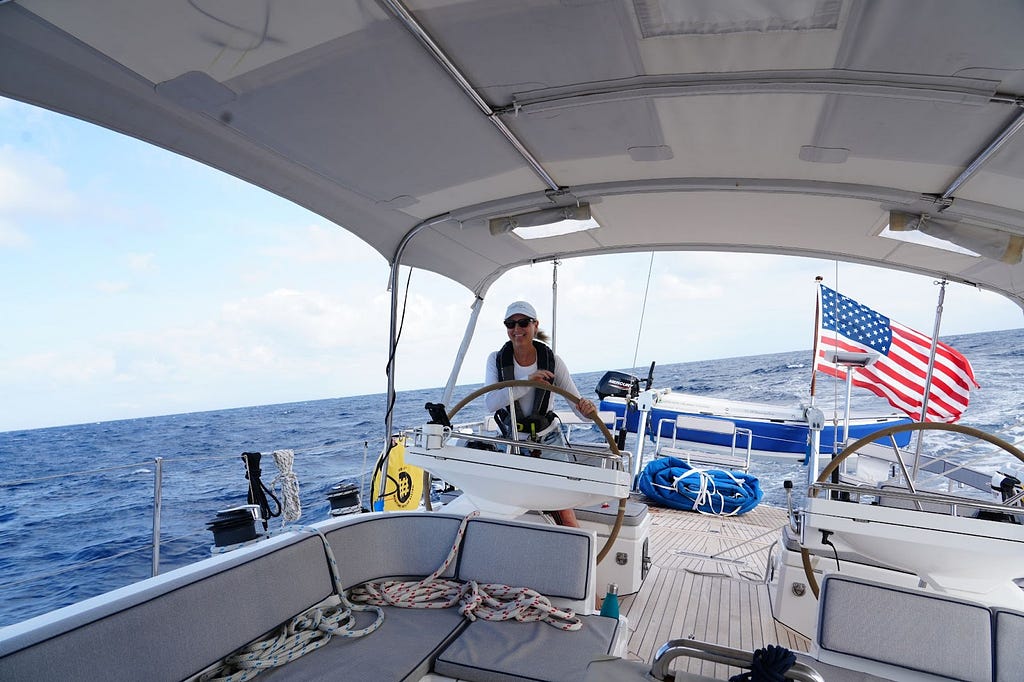
So, we started planning this about five years ago and built a boat. We picked it up last year in England and sailed it down to Barcelona, Spain. We’ve been doing training courses, working to get our certifications in piloting boats and medical emergency response. We are going to be joining a world rally with other boat owners and will be sailing around the world for 15 months, starting in Antigua in January.
Yitzi: It’s been said that sometimes our mistakes can be our greatest teachers. Do you have a story about a humorous mistake you made when you first started composing music and the lesson you learned from it?
Anne Marie: I’m a big believer in learning from mistakes and a big fan of something I call an FFT. This is not something I made up; it’s from Brené Brown, who had a podcast about FFTs. Do you know what an FFT is? It’s a “fucking first time.” My belief is that you’ve got to take some risks.
Recently, I completed a score for a ballet called Human. Charice Barton from LA was the choreographer. In one section, I thought it would be really cool to have my musicians — one on piano, one on viola, and one on cello — pluck their strings. For the viola and cello, this is called pizzicato, plucking the strings instead of using their bow. I thought, “How cool would it be to have the piano player also pluck the strings?” You know, lean over and pluck the strings so they’re all plucking. I wrote this piece and thought it was really cool. We get to the theater in New York for the premiere, and the theater says, “No, you cannot pluck the strings of our piano. We don’t allow that. It’s not good for the piano.” I’m like, “What?”
It was a little humorous because suddenly this beautiful idea I had of all these musicians plucking their strings, including the pianist, wasn’t happening. Plan B: they hit the keys instead. It still sounded good, but it just wasn’t what I expected. So now I have learned that I need to understand that not everybody will let their instrument be played in an unusual or different way, and I need to ask first.
Yitzi: You already mentioned an incredibly ambitious and challenging project you’re working on, but aside from that, what has been the most challenging role or project you’ve taken on so far and why?
Anne Marie: I would say the most recent ballet I wrote, Human., was the most challenging. The reason why is because I decided I wanted to explore bringing together acoustic instruments from the 18th century with electronic instruments from the 20th. It was inspired by my son who’s 27. When he’s not working odd hours as a software engineer, he goes to electronic music festivals. He’ll go to Sweden, Germany, or Costa Rica for a music festival. One day, because I’m always asking him what he’s listening to, he said, “Mom, I’ve discovered this really good composer. Oh my gosh, you’ve got to listen to him. His name is Philip Glass.”
Now, Philip Glass is the father of modern minimalism and someone I’ve studied quite extensively because I love minimalist music and writing it. In that moment, I realized there’s hope that the 20- and 30-somethings can connect with traditional and modern classical music. But how do we reach them? That was my inspiration for writing the ballet music as a combination of acoustic and electronic, with the hope that it would bring in a younger audience.
But the challenge was that I was pre-recording all the electronic music because I wasn’t going to have a bunch of synthesizers on stage — there’s only so much space for dancers and musicians. I had to figure out how to sync the live musicians, the dancers, and this electronic track. That became the tricky piece to finesse so that it would all be together and nobody would be off-beat. I’m happy to say I figured it out, and it worked. I put cues into the electronic track that the musicians could listen to, and the dancers were able to hear them as well, so it all came together. It was definitely ambitious for me, but I can’t wait to do the next one.
Yitzi: You have so much impressive work, Anne Marie. Please tell us about the exciting projects you’re working on now and what you hope to work on in the near future.
Anne Marie: Right now, I’m finishing up a film score. Hopefully, that film will be available through some film festivals in the next couple of months, so I’m pretty excited about that. I’m also producing an album inspired by and based on music I wrote for my first ballet, Untamed Woman. It has a couple of tracks from the ballet plus some additional ones. It’s my first album, so it’s an FFT, and I’m learning a lot along the way.
The other piece I’m starting to wrap my head around is writing music as we travel. Some people keep a written journal; I’m going to create a music journal that reflects the different countries, cultures, and people we meet. As we go to these different countries, I’m hoping to meet other musicians, see what they’re playing, learn about their musical traditions, and use that as inspiration for writing music that will tell the story of my travels around the world.
Yitzi: Please talk about ballets for a minute. I don’t think I’ve ever spoken to or met a ballet composer, so I’m excited to ask you this. My understanding, and please tell me if I’m wrong, is that in ballet, the dance is interpreting the music. The music is the main thing, and the dance interprets it. Whereas in film, the main thing is the acting, and the music just creates an ambiance around it. Am I seeing that correctly?
Anne Marie: There are similarities and differences. The biggest difference with film music is that you’re typically given a film where the picture is already created, edited, and locked. I then write music that fits that film — creating, as you said, the ambiance, but also triggering emotions and energy. I have to make it fit.
What I love about dance is that we’re still telling a story. In each of the ballets I’ve written, the choreographer had a story in mind, but they can’t choreograph until the music is written. I write the music, and then they fit their choreography to it. I’m trying to write music that reflects their story, which includes certain emotions, storytelling, and pacing — is it slow, fast, a solo, or all 10 dancers? We discuss that in advance. I write the music, usually giving them samples of the direction it’s going. If it’s the right direction, I’ll finish the piece, and then they take it and do their magic.
That second part was the surprising piece for me with my first ballet. I didn’t really think about the surprise that would come after I handed over my music — seeing what was choreographed to it. How did the choreographer interpret what I wrote? I have a vision of what the dancers might be doing, but I’m not the choreographer. So when I sat down, it was like opening a birthday present. I’d hear my music and then, visually on stage, see the creativity and artistry of the dancers and choreographer come together. I have to say, it’s a really satisfying, fun experience.
Yitzi: Are you a ballerina yourself?
Anne Marie: Good question. I am not a professional ballerina, but I did start dancing when I was around 10 years old. I studied and performed both ballet and jazz, but at a high school level, never at the level of the dancers that I get to work with.
Yitzi: But I’m sure having that experience informs your composition.
Anne Marie: Yes, I think it has enabled me to really understand what I’m writing for and to connect with the dancers. I love watching the rehearsals. I would love to take classes with them, but my toes don’t point like theirs do! But you’re right; I have an understanding of the art form. When I’m writing music, it helps that I’ve spent many years going to and watching ballets — everything from traditional Tchaikovsky to very modern, contemporary works, Balanchine, and everything in between. I love ballet.
Honestly, when I went back to music school, I went with the intent of writing music for dance, but there’s no program that offers composition for dance. You either take composition for concert music or for film music. I had to decide what dance is, and I decided it was more like a film; it’s telling stories. I’m glad I went that direction because I also get the fun of working with filmmakers.
Yitzi: You have two prominent facets to your personality: you’re an incredible adventurer who likes exploring unpredictable terrain, and you’re also an incredible creative artist. Are these two divergent parts of your personality, or do they perhaps come from the same source?
Anne Marie: I think they’re complementary and come from the same source. I have always been a bit of a risk-taker and have always had a sense of “maybe go the path that is least likely because you might discover a little treasure along the way.” I’ve learned that it makes for a more interesting and fulfilling life. I’m really glad I decided to step off that cliff from the business world back into the art world. I was there, I went into the business world — that was a risk — then I went back into the art world. That mindset also plays into this whole idea of sailing around the world. If you don’t take these risks and take the opportunity to fail, you don’t really live your life.
Yitzi: Do you ever miss the business world?
Anne Marie: No, I don’t. I’m so glad I did it because I learned many great skills and got to work with incredible people. That helped me when I did nonprofit board work, which was really beneficial. Ironically, it has also really helped me in the arts. I’m usually working with newer companies, like AVID is a new dance company, and when Emily Speed founded it, she needed to raise money. My business experience and my nonprofit fundraising experience all played into helping her beyond just writing music — helping her think about her ballet company as a business, how to get it off the ground, and the financial, marketing, and human resource aspects. So, it actually all comes together.
Films are the same way. Every film is like a little business: you have to raise money, figure out how to spend it, produce a product, and then it goes out into the world. Then you start the next film. Having that background, I think, has helped me be a resource for the creative people I work with who often don’t have that experience and need someone to talk to about it.
Yitzi: If someone listened to your music without knowing anything about you and your fascinating background, what would you hope they would feel, wonder, or think about after hearing it?
Anne Marie: My hope is that it would touch them emotionally and personally — that it would trigger some kind of emotion. That would be my first hope. My second hope is that it would make them want to move.
Yitzi: Why is moving important?
Anne Marie: For me, music has always been about emotions and movement. That’s probably the dance part of my life. When I hear music that really touches me, it can create and trigger an emotion, but I also love music that makes my feet start moving and makes me dance. Maybe not like a ballerina, but who doesn’t like moving around and dancing?
Yitzi: Tell us a bit about your nonprofit work.
Anne Marie: There have been a couple of different areas I’ve been involved in. One is an organization I founded called Vail Women Elect. The story behind it is that one of my close friends and sorority sisters from college is Senator Gillibrand. She called me when she was running for Congress in upstate New York and said, “Anne Marie, you need to support my campaign.” I said, “But I’m living in Massachusetts. Why would I give money to you in New York?” She said, “Because your Congressperson in Massachusetts can’t do anything unless I get elected from upstate New York. I’m in a Republican district, and I’m switching it to a Democratic district.”
It’s hard to say no to Kirsten, so I sent her a check. That was just the beginning. Time went on, and she started to work hard to get other women elected. She called me again and said it was important to help and support other pro-choice women running for office and suggested I start a group to bring women together for that purpose. That was the founding of Vail Women Elect in 2016. It didn’t hurt that it was when Donald Trump was elected, and a lot of women were asking, “What can I do?” This became an avenue for them to become more educated about our political process and candidates and to focus on supporting candidates who would represent them properly.
At this point, our organization has raised over $800,000 for women who have run for the U.S. Congress, U.S. Senate, and gubernatorial roles. We’re one of about 15 different groups around the country doing this. There are similar organizations in Boston, Chicago, the Bay Area, and LA. While we’re unique as a small town in the mountains, together, the numbers are huge in terms of how much we raise for these women. So that’s one that is near and dear to my heart.
The other has been sitting on boards for schools and for the Vail Valley Foundation, one of my current boards. They support the arts, athletics, and kids’ education and extracurriculars in our community. They’re a real force for making our community a better place.
Yitzi: Can I clarify, is the organization to support women across the aisle, or is it only specifically for one party?
Anne Marie: No, it’s a good question. Really the only litmus test we have is they have to be pro-choice. As you can understand, that tends to mean Democratic women or independents. I myself am an independent, but I’m a very strong advocate for women to have control over their bodies and to be able to have choice, and not have the government involved in that.
Yitzi: I’m a huge fan of Kirstin’s. I admire her work and I would love to one day interview her. It’s amazing that you have that connection.
Anne Marie: Well, when you want to interview her, just let me know and I’ll connect you. Be careful what you wish for.
Yitzi: Oh, I would love to. I’d love to do it tomorrow.I really admire her. I have family in New York, so I’ve followed her career. I think she’s one of the most authentic and sincere politicians there are.
Anne Marie: I’m so happy to hear that. I actually worked on her presidential campaign. I traveled with her as part of her advance team, and it was so fun to work on a presidential campaign and to do it with her. I love exactly what you said: when she speaks, she speaks from her heart. She’s passionate. She is giving voice to people who don’t have voices, and she works really hard. I can attest to that.
Yitzi: I hope — I don’t know, the political climate today is crazy — but I hope she tries again. We need a lot of fixing.
Anne Marie: Absolutely. If you want me to ask her about doing an interview, I’m happy to do that. It would be an easy interview because you would love talking with her and she would love talking with you.

Yitzi: This is our signature question. You’ve been blessed with success in so many fields, Anne Marie. Can you share five things you’ve learned from your experiences that would have been nice to know when you first started?
Anne Marie: If we focus on music, there are definitely some things it would have been nice to know.
- First, how important technology now is in creating and producing music. I had no idea. When I got back to music school, I realized it’s critical to understand and know technology. Fortunately, I love computers; I was in the first class at Dartmouth to have them, but I feel for people who don’t, because software makes it so much easier to produce and create music.
- Second, I wish I had known how important keyboard skills are nowadays when you’re using music samples. I wish I had practiced harder on the piano when I was younger. I’m grateful for the skills I have because it allows me to play almost every instrument through music samples.
- Third, I wish someone had told me how much fun it was going to be to create my own sounds and instruments with electronic music. It is a blast making sounds, changing them, and making them unique.
- Fourth, in my first class at Berklee, we had to write a drum beat, and I was terrified. I thought, “I don’t play drums. I don’t know how to do this.” Little did I know that it’s not that hard and it’s a lot of fun to create your own beats. In fact, one of the pieces I wrote for Human. is all percussive and uses instruments from around the world. I would have never thought that would be something I could do.
- And fifth, composing doesn’t have to be a lonely profession. I had this idea that I would be sitting by myself at a piano, coming up with ideas. But I found that when you collaborate with creative, innovative people who want to take risks as I do, it becomes a lot less lonely and a lot more fun. I’m an outgoing person, so I can’t stay locked in a room for long.
Yitzi: Can you share some of the self-care routines that you use to help your body, mind, and heart to thrive?
Anne Marie: Yes. As you can imagine, self-care is really important, especially in a life that has many dimensions. Something I started before I even had kids was a lot of yoga. That has evolved over time. I always thought I couldn’t meditate. Well, guess what, I now meditate and I find it a great way to calm my mind. But the other things I love doing are walking, hiking, biking, and skiing.
I also had to think about what to do when living on a boat, since I can’t do all those things. I have a subscription to Peloton and have had it for about six years. I love their classes, and it is very motivating for me to open up my Peloton app and say, “What are we going to do today?” Is it walking, yoga, meditation, or strength? Most recently, I’ve been trying to incorporate strength training, especially because working on a boat, you have to be strong and ready to use your muscles. Core is really important too. So every single day I am either doing a Peloton strength training, a yoga or meditation session, or walking wherever we might be. That time keeps me healthy in terms of my body, but it’s also great for my mind.
Yitzi: This is our final aspirational question. Because of your amazing work in your corporate career, in politics, in music, and in adventure, you’re a person of enormous influence. If you could spread an idea or inspire a movement that would bring the most amount of good to the most amount of people, what would that be?
Anne Marie: At this point in my life and in the world, it would be to ensure people have access to the health services they need. That’s particularly true for women and also for transgender women and men. I feel like healthcare is a basic human right. No matter who you are, you have a right to access it. I look around right now and I feel like it’s being restricted and even criminalized. If I could do one thing and make an impact, it would be to ensure everyone, no matter who they are, has access to the healthcare that they need.
Yitzi: How can our readers continue to follow your work? How could they support your work? How can they listen to your scores, watch your ballets, or see the movies you’ve scored? How can they support Vail Women Elect?
Anne Marie: Vail Women Elect is part of the Electing Women Alliance. So if they look up Electing Women Alliance, they may be able to see an organization that is close to their geography. I encourage them to reach out and join those organizations because the power of working together is tremendous.
In terms of film music, I have a film on Prime right now called #MoCrazyStrong. It’s about a woman who was a professional skier and overcame a traumatic brain injury. It’s a great story, and you can hear my music there. I have a website and an Instagram page.
And then AVID Dance is a touring company. They did 25 performances this year and next year they’ll probably do about the same in New York and Denver. Come see their ballets. The dancers are incredible. I’m not the only composer and it’s not all my work; they do a lot of different pieces with different composers and choreographers. They’re truly something to watch.
So, those are different ways. And when my album comes out, listen to my album!
Yitzi: Amazing. I could talk to you for hours and I’m sure I could learn so much from you, but I want to respect your time. I hope we can stay in touch.
Anne Marie: I love what you’re doing.
Yitzi: Thank you, Anne Marie. I really appreciate it. I wish you an amazing day and I look forward to sharing the article with our readers.
Anne Marie: And thank you for your time. It was a pleasure to talk with you. Take care.
Anne-Marie Keane: The Composer-Adventurer Blending Classical Roots, Modern Beats, and a Life Lived… was originally published in Authority Magazine on Medium, where people are continuing the conversation by highlighting and responding to this story.