
‘American Clay’ Creators Carmen Perkins, Gabrielle Carreiro, Vi City & Michelle Taylor on Reclaiming Ancestry, Elevating Hidden Heroines and Fighting the War on Truth
“What would happen if you gave your great-grandmother, or your friend’s great-grandmother, a mic and a camera, and allowed them to tell their stories with truth and peace? You’d have an amazing movie every single time.”
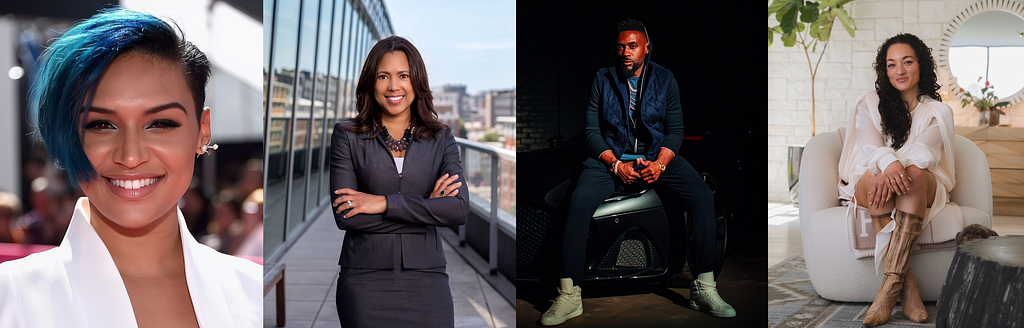
I had the pleasure of talking with Carmen Perkins, Gabrielle Carreiro, Vi City & Michelle Taylor of ‘American Clay’.
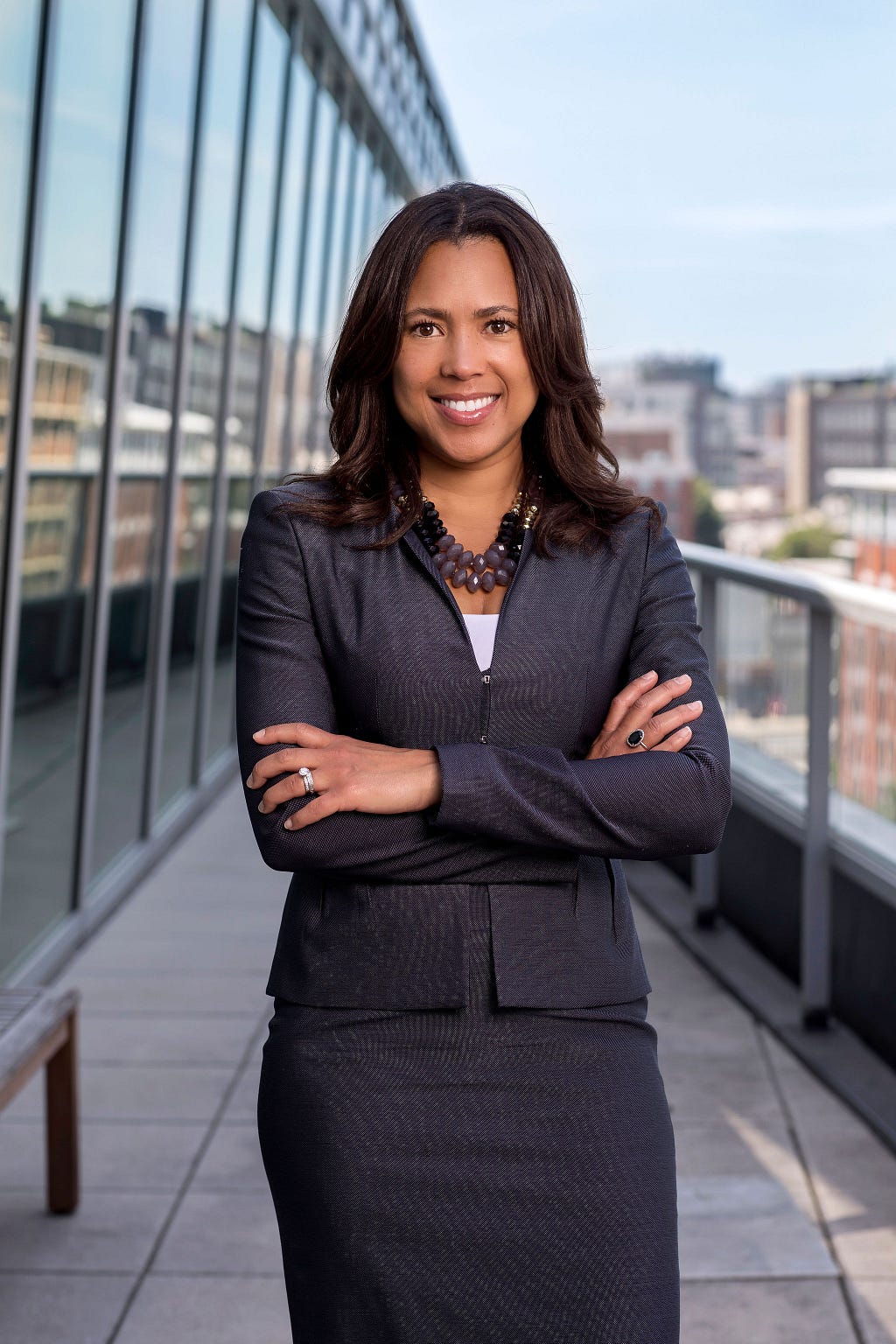
Carmen Perkins did not follow a straight line into filmmaking. Her trajectory, shaped by a foundation in economics and finance, has evolved over time to encompass a rare blend of analytical precision and creative expression. Raised in Virginia in a household that emphasized education, discipline, and public service, Perkins grew up immersed in conversations about both the mechanics of the economy and the responsibilities individuals carry within a community. That duality, numbers and people, structure and story, has informed every chapter of her professional life.
Perkins studied at the University of Virginia, where her early interest in how money moved through systems crystallized into a formal pursuit of economics. Her career began in the field, working first as an economist before transitioning into investment banking at Goldman Sachs. There, she witnessed firsthand how financial instruments could shape communities, not just markets. The experience sparked her interest in real estate, which she saw as a tangible way to affect neighborhoods and urban development. Real estate, for her, became the intersection of finance and physical impact: “You could actually see how an investment reshaped a neighborhood,” she said in a recent interview.
Yet alongside this structured, data-driven professional path ran a quieter current: a persistent creative drive. That impulse has come to the fore in her more recent work, most notably with the short film American Clay, a project that explores themes of ancestry, identity, and overlooked histories through a blend of narrative storytelling and archival research. As one of the creators behind the project, Perkins sees the film as more than a family story, it is, in her view, a corrective lens on the American narrative. “It’s a retelling of the American story from a culturally diverse perspective,” she said. “What would happen if you gave your great-grandmother, or your friend’s great-grandmother, a mic and a camera, and allowed them to tell their stories with truth and peace? You’d have an amazing movie every single time.”
American Clay began, in part, through Perkins’ engagement with archival institutions and public history initiatives. She has spoken openly about her concern over the diminishing resources for historical preservation and public access to archival materials. While the film had roots at the African American Film Festival in Martha’s Vineyard, where it gained early support from institutions like the National Archives, she notes that many of those partnerships have since been disrupted by political shifts and funding cuts. The stakes, she believes, are high, not just for filmmakers, but for the country. “There’s a war on truth right now,” she said. “My movement would be about the pursuit of truth, transparency, research, and access, for everyone, and for American history.”
Her views on history are informed not only by policy but also by lived experience. As American Clay confronts ideas of survival, family mythology, and cultural memory, Perkins remains clear-eyed about its purpose: “I want people to rethink their assumptions, about family, about history, about power, about what it takes to survive and thrive in this world and in this country.” She’s particularly focused on centering the experiences of women whose contributions have often been marginalized. “If you look back at the storybooks of our history, the perspectives of strong women, who made so much happen, are rarely centered.”
What sets Perkins apart in the crowded landscape of independent filmmaking is her ability to blend technical rigor with emotional depth. The mysticism, spiritual complexity, and familial reverence that run through American Clay reflect an intentional effort to tap into narratives that feel both personal and universal. She describes wanting to visually capture “stories of survival that defy logic, connections that changed everything,” aiming to create work that lingers beyond the screen.
Alongside longtime collaborator Michelle Taylor, Perkins co-founded Saddlebrook Media, a storytelling venture designed to amplify underrepresented voices through film, digital content, and historical research. Their hope is to build out a slate of future projects that similarly blur the lines between documentary and narrative fiction, history and myth, data and drama.
While American Clay runs just ten minutes, Perkins sees it as a conceptual anchor for broader conversations. The film weaves archival imagery with narrative interpretation, and features original music meant to extend its emotional resonance. Though she is reluctant to overstate its ambition, she is direct about its significance. “We wanted to find a way to visualize ancestry with complexity, with beauty, and with incredible music, creating something that weaves a new and more truthful version of American identity, one that surprises you at every turn.”
Asked in our interview who she’d most like to have lunch with, she cited Harvard professor Henry Louis Gates, known for his work on genealogy and African American history, an indication of the scholar-activist tradition she clearly respects. That desire for deeper inquiry, for rooted knowledge, continues to guide her work.
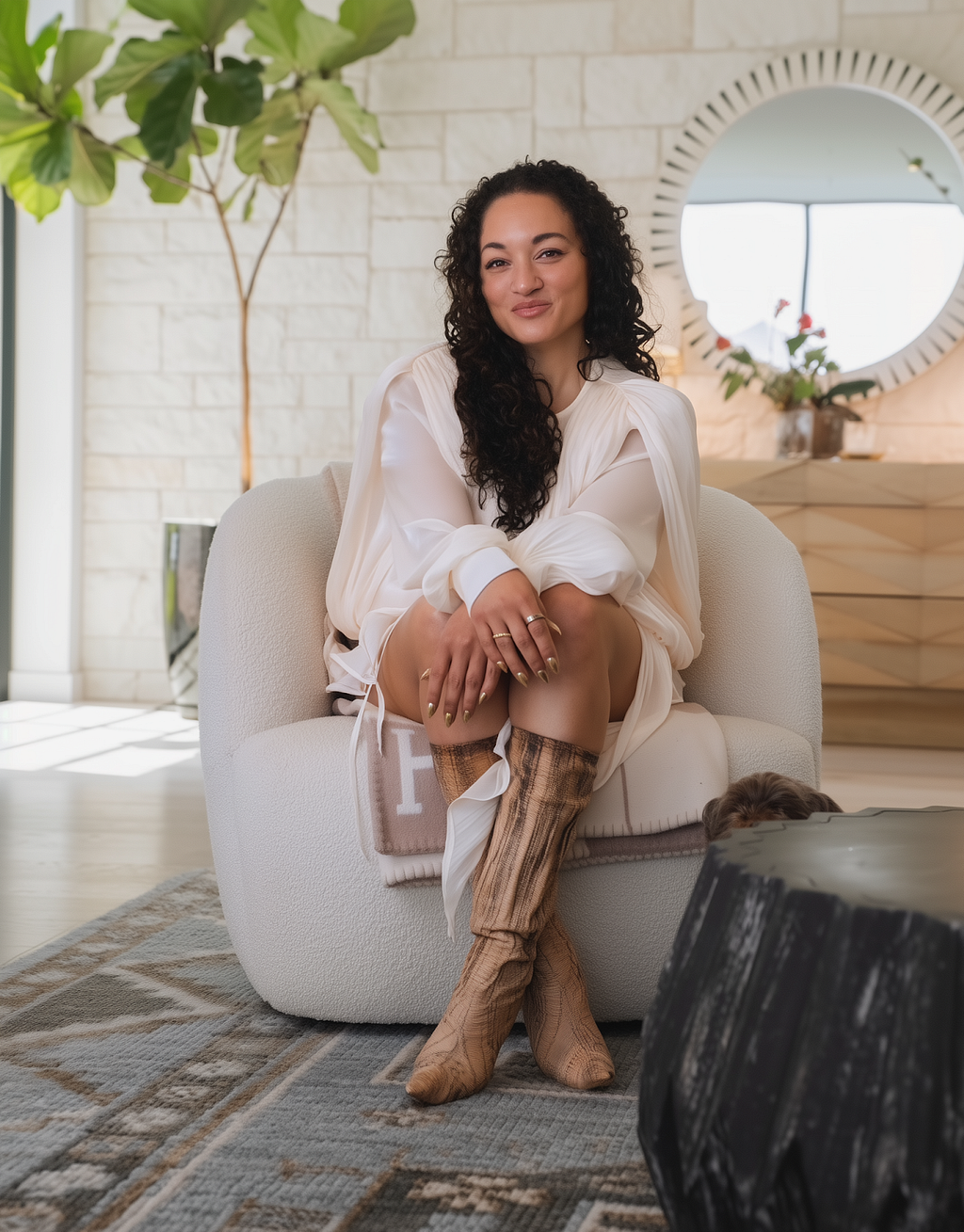
Before Gabrielle Zike Carreiro ever considered a life in music, her world was already saturated with sound. Growing up in Glendale, California, she moved between the contrasting cultural influences of a West African mother and a European father who split when she was two but remained equally present. Music played in the background, not as ambition but as daily texture, car rides layered with jazz and rock, museum visits, and late-afternoon detours through aquarium halls. It wasn’t until seventh grade, when her father enrolled her in choir without warning, that she recognized her own pull toward voice and phrasing. That quiet intervention became a turning point, though Carreiro didn’t immediately view it as the start of anything larger.
By her late teens, music had become less of a backdrop and more of a preoccupation. She was writing songs, recording demos, and studying a wide range of artists, from the angular energy of Talking Heads to the vocal nuance of Sarah Vaughan. Her approach wasn’t rooted in genre but in emotional clarity. She listened for tone and intent more than style, a habit that continues to shape her writing today.
In 2016, while studying child development at a Southern California community college, Carreiro auditioned for Chasing Destiny, a BET music competition led by Kelly Rowland and Frank Gatson Jr. She made the final cut and joined June’s Diary, a five-woman R&B group formed through the series. It was an abrupt transition from school to the stage. Within months, she was recording, rehearsing, and touring, opening for artists like En Vogue and R. Kelly. “Kelly and Frank put me through the fire,” she later said. “Suddenly I was touring, recording, and living in the middle of this R&B sisterhood.”
June’s Diary earned early attention for its vocal precision and live stamina, but the group operated less like a traditional band and more like a creative collective. Members were encouraged to pursue individual projects between group efforts. Within the group’s blend, Carreiro’s alto provided a warm counterbalance, rich and jazz-tinged, grounding the ensemble’s harmonies while also hinting at a more introspective solo voice.
That solo voice emerged more fully in Beachroom, an eight-track mixtape she released in 2021. Created in close collaboration with producers Kush Oxford and OB1, the project was shaped by long periods of demo sorting and revision. Its title refers to the coastal-themed studio where most of it was recorded, but also gestures at the quiet, reflective tone that runs through the work. Lead single “Wasted” pairs delicate guitar with plainspoken lyrics about disorientation and desire. Subsequent singles like “Exit Sign” and “Bitter” extend the palette without shifting the emotional register, songs less about performance than about mapping internal states.
Carreiro’s relationship to music has remained elastic. She identifies most closely with alternative R&B and acoustic soul, but her influences and instincts resist categorization. Her songwriting tends to follow mood rather than genre, a carryover from her childhood listening habits. “I write how I feel,” she has said, “not how a song is supposed to sound.”
That resistance to formula is mirrored in her creative process. She speaks often about hiking, sand play, candle-making, and meditation as integral to her workflow. Her studio setup is intentionally spare: just a microphone, an interface, and Pro Tools. The goal, she suggests, is to strip away noise, literal and metaphorical, and allow intuition to lead. Compassion, for her, remains a throughline. It surfaces in lyrics, in interviews, and in the broader message she wants her work to convey.
Outside of her own releases, Carreiro has contributed as a writer to other artists’ work, including Emilka’s 2025 single “Break From the Ads.” She currently ranks in the top half of Muso.AI’s songwriter index, a detail that reflects not just visibility but consistent output. Even as her own music has grown more nuanced, she has continued to collaborate, offering vocal support and lyrical contributions on projects that align with her values and style.
One such project is American Clay. The film blends narrative storytelling with archival research to explore themes of ancestry, cultural memory, and matriarchal strength. Carreiro was asked to perform the end-credit song, a role she described as both moving and creatively aligned. Though she hadn’t seen the finished film at the time of her involvement, she spoke about its themes with conviction. “If it challenges what I thought I knew about history,” she said, “or even makes me want to throw some of that away, I’d welcome that.”
Her connection to the project also echoed a broader unease she has voiced about misinformation, not just in historical narratives, but in the way modern life is shaped by disconnection from truth. When asked what kind of movement she’d want to lead, she pointed to a return to natural living: feeding people the right things physically, mentally, and emotionally. “For too long, we’ve been tricked into living behind a veil,” she said. “There’s a lot of misinformation and lying in general, in food, in media, in what we’re taught.”
Despite the breadth of her pursuits, group work, solo music, songwriting, digital strategy, Carreiro returns frequently to a central idea: harmony, in all its forms. It’s present in the way she structures a vocal line, but also in how she talks about truth, compassion, and balance. Her dream lunch guests include both Nikola Tesla and Ella Fitzgerald, a pairing that signals her comfort moving between disciplines, time periods, and energies. “I’d go with all the OGs,” she joked in our interview, listing da Vinci, Michelangelo, Socrates, and Aristotle as additional names.
Now 29, Carreiro continues to build an artistic life that’s collaborative without being diluted, expansive without being scattered. Whether through her music, her business ventures, or her contributions to film and media, she remains focused on one question: how to create work that not only reflects her internal landscape but also reaches outward, toward connection, clarity, and something resembling truth.
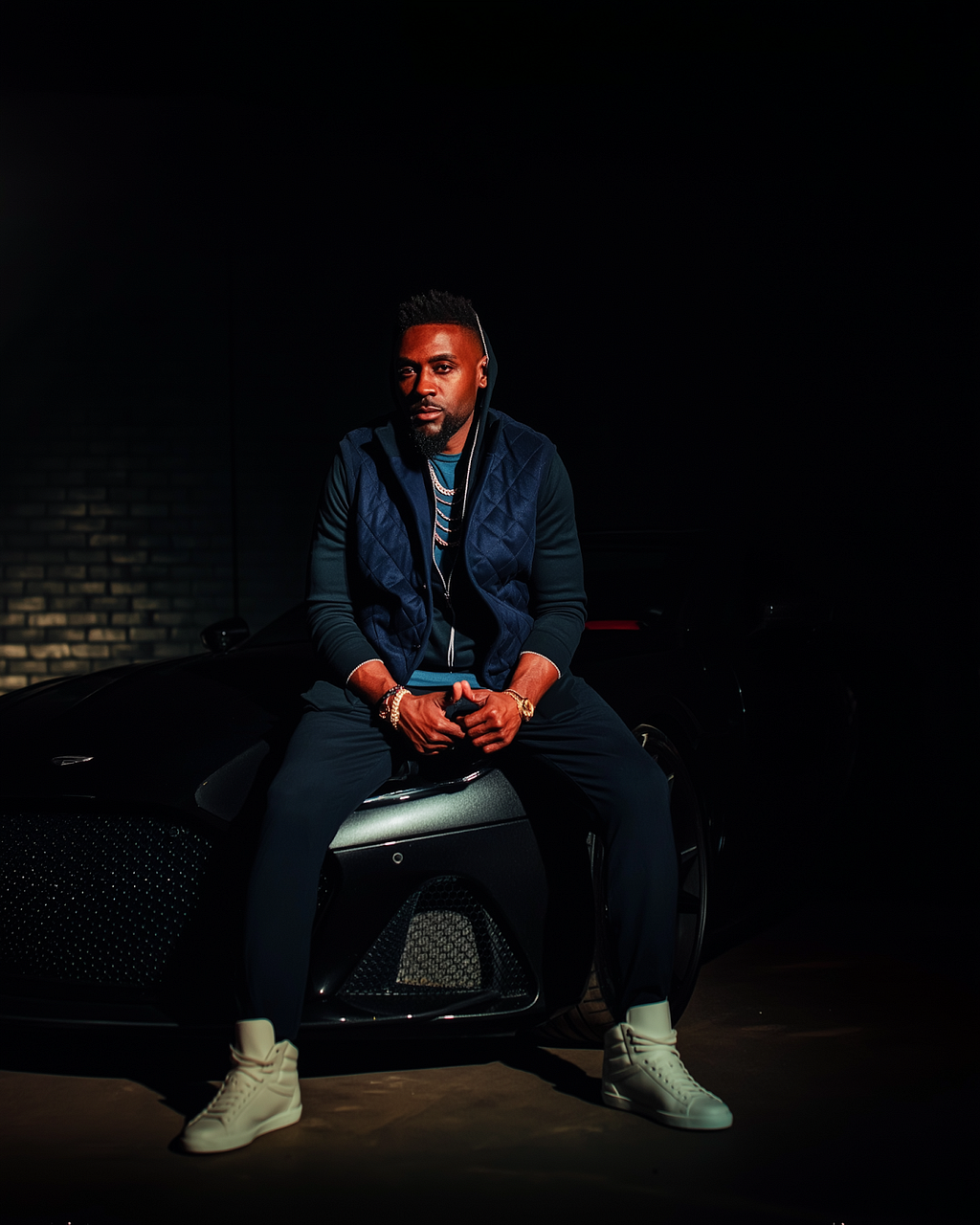
Vi City’s creative arc is shaped by dualities: melody and muscle, reverence and rebellion, independence and collaboration. Born and raised in Chicago’s Far South Side, in an area known colloquially as the Wild Hundreds, he grew up surrounded by what he calls “pressure and possibility.” The son of a neighborhood that demanded quick instincts and sharp self-awareness, Vi learned early how to process life’s complexities through sound, first as a lyricist, then as a producer, and eventually as a filmmaker. His catalog now spans music, film, and fashion, but it remains grounded in a singular drive: to turn lived experience into work that resonates.
His earliest breaks came through Mathaus Entertainment and a connection to Chilly of Lupe Fiasco’s 1st & 15th label. From there, a mixtape collaboration with DJ Skee helped widen his reach, and a songwriting session with Nelly led to the track “Country N**** Fly.” Further work with Sir Michael Rocks and Twista on the Banco album positioned Vi City as a behind-the-scenes contributor with a distinctive ear for hooks and structure. But the credits, though significant, only hinted at his broader ambitions.
Even in those early sessions, Vi was watching the industry’s mechanics, learning how influence was built and ownership maintained. That attention to infrastructure led him to launch Hundreds Entertainment, a music-and-film imprint designed not just to release his own material, but to provide a platform for emerging Chicago-based artists. Among them is multi-instrumentalist Phoînix Keyz, whose collaborations with Vi have helped shape the label’s hybrid sound, one that straddles pop, rap, and R&B without locking into any single lane.
As a producer, Vi City worked alongside Rich Skillz and the production team Da Internz, known for crafting hits for Young Money and other major-label acts. Those sessions, he’s said, sharpened his instinct for dynamics: when to lean into melody, when to let the drums do the talking. His approach draws from a mix of old-school Chicago soul and modern trap minimalism, but it’s less about genre than emotional tone. “I write about resilience,” he said in a recent interview. “About heartbreak, survival, and self-worth.”
His solo catalog reflects that ethos. In 2021, he released On GOD, a single that passed 100,000 views on YouTube within weeks. That same year, he teased S7V3N, a project that remained in development as he refined his focus. By 2023, he delivered Hotels & Heartbreaks, a ten-track debut album featuring guests Ari Stylez, Vega Heartbreak, Kes Kross, and Phoînix Keyz. In 2025, he followed with So Now What .., a meditation on emotional recovery that he referred to as his “Sistine Chapel.”
While his music output has remained steady, Vi’s ambitions have stretched further into film and storytelling. His pivot to the screen came organically. What began as a speculative script led to American Clay, a short film that fuses dramatized narrative with archival influence. Co-created with producers Carmen Perkins and Michelle Taylor, the ten-minute film centers on a matriarch navigating personal and historical upheaval. It’s both intimate and expansive, a visual tribute to the often-unsung women who anchor generational survival.
Vi’s role in the film extended beyond script and concept. He also produced the score and collaborated with longtime musical partner Gabrielle Carreiro on the end-credit track. “I called Gab and said, ‘I have the perfect song for you,’” he recalled. “She delivered.” The track closes the film with a sense of sonic continuity, an epilogue, rather than an afterthought.
The project also marked a shift in how Vi saw his own trajectory. American Clay wasn’t just a creative experiment, it was an articulation of values: truth, legacy, and the complexity of memory. “We’re spiritual beings having a human experience,” he said. “And that means starting with self-awareness, with love, with purpose.” For Vi, the film is part of a larger movement, a push toward deeper storytelling, toward honoring lives that history tends to overlook, especially those of Black women whose roles in shaping families and communities are rarely foregrounded.
Outside of the studio and screen, Vi City has extended his vision into fashion and design. His luxury jewelry line Avèc Dèon and his streetwear brand OnGod Couture Apparel serve as creative offshoots, merging aesthetics with messaging. It’s less about merch, more about identity construction, a way to reflect personal growth and artistic conviction through wearable pieces.
He’s also continued to place music in television, with previous placements on HBO’s Entourage and Fox’s Empire, two shows that built reputations for spotlighting urban soundscapes within mainstream drama. These syncs not only broadened his audience but reinforced his knack for musical storytelling that feels cinematic even without a screen.
As of 2025, Vi City remains committed to both his craft and his city. With Hundreds Entertainment as his base, he continues mentoring younger artists while developing new projects that blend narrative, sound, and visual art. His online presence, under the handle @IAmViCity, offers a curated view of his multifaceted work, equal parts inspiration, documentation, and experimentation.
For Vi, the lines between disciplines are fluid. Music informs film. Fashion draws from memory. Storytelling is both literal and symbolic. And at the center is a voice shaped by Chicago’s Wild Hundreds, but tuned to frequencies far beyond. As he put it in a recent conversation, “I’m not just trying to entertain. I’m trying to elevate.”
Michelle Taylor has built her life around the quiet power of legacy. A producer, technologist, and storyteller, Taylor moves between industries with a steadiness rooted in generational reverence and a sharp sense of direction. Her creative work, including the short film American Clay, is driven by a desire to reclaim family history, interrogate inherited truths, and center voices that have long been pushed to the margins. She is, by her own account, the product of many women’s strength. And much of her work is about making sure that strength is neither forgotten nor flattened by time.
Taylor was born in Virginia, where she spent her early years living with her grandparents. That period, she recalls, gave her access to “a lot of the magic and wonder of being part of that family.” At 13, she relocated to another part of the state, later attending high school and college in Northern Virginia before eventually leaving for New York. There, she shared an apartment with longtime collaborator Carmen Perkins and began figuring out the shape of her career.
Her path has not been confined to any single discipline. After New York, Taylor moved to Puerto Rico, where she launched a digital portal aimed at younger audiences, all while raising twins. She then spent a decade in Seattle, including six years working at Microsoft, before settling in Austin, Texas. Now a mother of three adult children, Taylor describes herself as being in a phase of reflection and creative output. Through her work with American Clay and Saddlebrook Media, the company she co-founded with Perkins, she’s focusing on stories that elevate familial experience, particularly those of Black women whose narratives are often excluded from the historical record.
American Clay is one of those stories. The short film blends narrative fiction, archival inspiration, and musical composition to tell the story of a matriarch whose life unfolds across the backdrop of an America in flux. For Taylor, the project is both personal and political. It explores her own grandmother’s spirituality, dignity, and influence, even as it opens the door to broader conversations about race, gender, and identity in American history. “My grandmother brings a beautiful spirituality to the table,” Taylor said. “I think once people see it, they’ll be inspired to dive deeper into their own family histories, to identify the beauty and the struggle, and to recognize the power in the experiences that shaped them.”
She’s careful not to over-intellectualize the impact she hopes the film will have. Instead, she describes the work in emotional terms. “I want people to walk away from the short film wanting more,” she said. “That they see a piece of themselves in it.” For Taylor, the importance of American Clay lies in its ability to render the specific into the universal, to make a single family’s experience resonate as a shared, national story.
The figure at the heart of the film, based in part on Taylor’s own grandmother, isn’t presented as a historical giant, but as something arguably more radical: a full human being. “She was beautiful, intelligent, sophisticated, and a total badass,” Taylor said. “She wasn’t afraid to be herself.” That authenticity is what Taylor and her collaborators aimed to preserve on screen.
The project’s ambition is as much about form as it is about content. American Clay is not a full-length feature, but a concise short. Taylor sees this not as a limitation, but a strength. It allows viewers to experience a powerful story in one sitting, while creating room for reflection and continuation. “There’s something in this story for everyone,” she said. “Whether it’s about family, identity, or ancestry, I want people to walk away having gained something, a sense of beauty in the history that shaped us.”
Off-screen, Taylor’s advocacy extends to the preservation of cultural memory. She has spoken out against recent attempts to defund institutions dedicated to African American history, including the National Archives and the African American History Museum. For her, these moves represent not just political shifts, but existential threats to the narratives that sustain cultural continuity. “Hearing our president say he wants to talk less about slavery and how bad it was is damning to everything we live by,” she said. Her vision for change, she explained, would be to double down on the pursuit of truth. “A truth that isn’t going to be silenced by the government or by anyone who doesn’t believe in it.”
This commitment to honest storytelling is also the foundation of Saddlebrook Media. The company exists not only to produce film and digital content, but to create a platform for stories that resist easy categorization. Taylor and Perkins are currently building out a slate of projects that span genre and format, united by a shared belief in the power of ancestral wisdom, intergenerational memory, and social consciousness.
Asked which historical figure she’d most want to have lunch with, Taylor chose former Secretary of State Madeleine Albright. “She overcame so many obstacles to get to where she was,” Taylor said. “I feel like she knew where all the bodies were buried, and it would be fascinating to get her perspective on where we are today.” It’s a telling answer, an indicator of Taylor’s interest not just in stories, but in power, systems, and how truth survives under pressure.
Still, Taylor doesn’t carry the weight of these projects alone. She sees collaboration as essential, and American Clay as the product of a creative team deeply invested in each other’s histories. Together with Vi City and Gabrielle Carreiro, she helped bring the film’s music, narrative, and visuals into alignment. The project reflects a collective effort to create something that is emotionally resonant, culturally urgent, and formally inventive.
In her life and in her work, Michelle Taylor continues to pursue a clear mission: to illuminate the lives of those whose stories are at risk of being erased. Whether through code, camera, or conversation, she remains focused on legacy, not as nostalgia, but as strategy.
Thank you so much for doing this with us Carmen, Gabrielle, Vi & Michelle! Let’s talk about American Clay. Tell us why, from your perspective, we have to watch it. Why do our readers have to watch it?
Carmen Perkins: We have to watch American Clay because I think it represents all the magic of our ancestry and the potential for magic in the ancestry of all our families. It’s a retelling of the American story from a culturally diverse perspective. It asks the question: what would happen if you gave your great-grandmother, or your friend’s great-grandmother, a mic and a camera, and allowed them to tell their stories with truth and peace? You’d have an amazing movie every single time.
When we think about all the challenges and all the miracles and magic our grandmothers experienced growing up, it’s truly incredible. The lessons they passed down, and even their very existence, are nothing short of miraculous. We wanted to find a way to visualize that with complexity, with beauty, and with incredible music, creating something that weaves a new and more truthful version of American identity, one that surprises you at every turn.
Gabrielle Carreiro: I’m waiting for the LA premiere, and I’m so excited. From what I’ve heard, there’s this beautiful depth to it, and I’m just really honored to be a part of it. When Vi called me to sing the song, I thought it was beautiful and knew I wanted to help bring the story to life. It plays during the end credits, and I can’t wait to see how everything comes together. I know he’s worked so hard on this, you all have. I’m just happy to be here.
Michelle Taylor: I really want to echo what Carmen said, this is an opportunity to tell an American story in a way that’s beautiful and heroic, but also challenging and even disturbing. It makes you think about the stories we’ve heard growing up in diverse households and about how our ancestors made it through incredibly difficult times.
My grandmother brings a beautiful spirituality to the table, and the film explores that through several different avenues. I think once people see it, they’ll be inspired to dive deeper into their own family histories, to identify the beauty and the struggle, and to recognize the power in the experiences that shaped them, whether those stories were passed down or not.
Vi City: Those were some great answers. I guess I’d say this, if you’re not a fan of creativity, heroism, triumph, greatness, beautiful cinematography, storytelling that hits different, or just dope stuff in general, then don’t watch it. I’m being real. This ain’t for you.
But if you are a fan of real triumph, of human beings rising above their circumstances, of realism blended with the fantastical, of deep cinematography, of untold stories, of truth, then this is something you should absolutely sit down and watch. It’s a magical story, and it’s based on truth. It’s just dope, man. I can’t even fully describe it, it came together in a way that moves me as a creator. I’m proud to be a part of it and proud to present it.
So if you’re into that kind of thing, check it out. If not, please don’t. Please don’t come just to spectate. But if you’re ready to be part of something real and powerful, I recommend you watch it. That’s my answer.
Yitzi: As the creators and creatives behind this project, in a perfect world, what do you hope viewers take away after watching American Clay? How do you want them to be changed by it?
Carmen Perkins: I want people to rethink their assumptions, about family, about history, about power, about what it takes to survive and thrive in this world and in this country. So many stories have been silenced or suppressed, and it’s when you crack those open that you find the real gold, the true nuggets of beauty and survival in this country. Unleashing those stories is incredibly powerful, especially for voices we don’t often hear, and especially for women.
If you look back at the storybooks of our history, the perspectives of strong women, who made so much happen, are rarely centered. I think highlighting those voices unleashes a kind of power that exists within every woman.
I also want to add something about the mysticism in our history. There are moments that, when you really think about them, feel like miracles. Stories of survival that defy logic, connections that changed everything, those sparks of something greater. Being able to bring that visually, through music and storytelling, in a way that’s memorable and helps people tap into that feeling within themselves, that’s what we’re trying to do. That’s the bridge we want to build for everyone who watches.
Gabrielle Carreiro: I haven’t seen the film yet, but from what everyone’s shared, I have to agree with Carmen. Honestly, I hope I am the person who walks away with exactly what she’s talking about. I’m really excited to see a story about family come to life. And if it challenges what I thought I knew about history, or even makes me want to throw some of that away, I’d welcome that. I’m a big fan of history, of cinematography, and stories based on truth. So I’m excited to see it and walk away with something powerful and beautiful.

Vi City: It’s a short film, just about 10 minutes, but in that time, I want people to walk away with one big thing: forget what you think you know about how stories like this should be told. This is a genre-bending piece of art.
First, I want people to see that you can tell stories about people of color that aren’t always centered around trauma or struggle. Those stories matter, no doubt, but there are also stories about triumph, about magic, about beauty.
Second, I want people to recognize that this is an independent project, and it’s incredibly well done. That alone should be respected.
Third, I hope they realize there are so many parts of American and global history that go unnoticed or untold, and that you can explore them in a way that’s entertaining and meaningful.
And finally, you get to see the story of a truly incredible woman. Everything I’ve heard, all the research I’ve done, she was a beautiful human being. You’ll see that in this story, and I want people to walk away knowing that her life, her legacy, was a triumph.
I’m honored to be part of telling that story. You know how they say, “Beside every great man is a great woman”? I’m lucky enough to be a man who’s supporting these great women and helping bring their stories to life. I want people to leave feeling inspired, connected, and proud to have witnessed something special, a celebration of family, history, and triumph.
And did I mention? This film is dope. Like, really dope. I’ll say it again, it’s so dope.
Also, I want to add something else. We always hear about the Sojourner Truths, the Harriet Tubmans, the Maya Angelous, those iconic women who made history. But we rarely hear about the many women who didn’t make it into the books but still played powerful roles in shaping their families and their communities. I’m grateful we get to tell the story of one of those women. She was strong, brilliant, and deeply impactful, and her story deserves to be told.
Michelle Taylor: I want people to walk away from the short film wanting more. We’ve done an excellent job of telling this story, and I hope audiences feel connected to it, that they see a piece of themselves in it.
There’s something in this story for everyone. Whether it’s about family, identity, or ancestry, I want people to walk away having gained something, a sense of beauty in the history that shaped us. These stories about our roots and the people who raised us don’t get told often enough.
And I want people to know my grandmother was a heroine. She was beautiful, intelligent, sophisticated, and a total badass. She wasn’t afraid to be herself. I want viewers to feel something after watching this film, to walk away with gratitude for having experienced it, and a hunger to experience more.
Yitzi: Amazing. Okay, this is our final question, our aspirational question. Because of each of your great work and the platforms you’ve built, every one of you is a person of great influence. If you could inspire a movement that would bring the most good to the most people, if you could put out an idea that would have that kind of impact, what would it be?
Carmen Perkins: I’d say a movement around the true investigation and safekeeping of our country’s history. When we started this film journey, a lot of it was about data collection and some of the incredible things that have been uncovered, whether it’s from the archives, the Smithsonian, or other places, thanks to record digitization, transparency, and getting the truth out there. I think there’s a war on truth right now, and a lot of those resources are being taken away.
We started this project at the African American Film Festival in Martha’s Vineyard about a year ago. At the time, the National Archives was one of the sponsors of the festival, and they were funding artists who were using archival material as the foundation of their films. The people I spoke with back then have now been fired. As we all know, there’s a strong political push to change or suppress the truth.
So my movement would be about the pursuit of truth, transparency, research, and access, for everyone, and for American history.
Michelle Taylor: I was just going to say that was really well said. I think my answer would be very similar. I’m distraught by what’s happening, or what’s being proposed, to silence institutions like the African American History Museum, to stop telling the stories that brought us to where we are today. Hearing our president say he wants to talk less about slavery and how bad it was is damning to everything we live by.
My movement would be right alongside Carmen’s, in pursuit of truth, and in giving a voice to that truth. A truth that isn’t going to be silenced by the government or by anyone who, for whatever reason, doesn’t believe in it or doesn’t want to have these experiences relived and appreciated. Because that truth is the fabric of our country.
Gabrielle Carreiro: Okay. On that note of truth, I think that along with history, there’s a lot of misinformation and lying in general, not just about history, but in our food industry, our media, and the things we consume. I think we’re being poisoned by the people and powers in charge.
For too long, we’ve been tricked into living behind a veil. A lot of things are just a money grab. If people were more connected to the truth, historically, but also in how to live in nature, how to be in harmony, how to feed themselves the right things, how to read the right things, I really think the world would be a better place.
If we were more in touch not only with each other but with the truth of harmony itself. I think it’s really sad to watch so many people being poisoned without even knowing it. So I’d want to start a movement toward a natural life. Feeding people the right things, physically, mentally, emotionally. Yeah, I think that’s what I’d want to do.
Vi City: I agree with all of them. I’m with it. I support all of it. And I’d even add that the movement I’d want to start is about transparency, self-awareness, self-love, and growth. Eliminating all forms of deception, not just in the world, but within ourselves.
That’s why, with our film, we wanted to connect to the spiritual aspect of it. Because this is all a spiritual movement. We’re not human beings having a spiritual experience, we’re spiritual beings having a human experience. And truth is such an important part of that.
The movement I’d want to spark is about focusing on purpose. On becoming the greatest version of yourself. Not allowing your past, your mistakes, or your experiences to prevent you from becoming that best version. And it all starts with self.
So, self-love. Self-growth. Treating everything and everyone as though they matter. Believing that we are all connected. That there’s a purpose in each of us. That we are one universal consciousness, one cosmic consciousness. That one person’s pain and struggle affects all of us in the grand scheme of things.
We need to walk through this life with that in mind, being responsible, conscious, and leading with genuine love. That’s the movement I’d like to see. A movement of love.
And I’m all in. Where’s my flashlight? I’ll get out there in the dark and dig too. Let’s go. For real. A movement of love. That’s where it should start. With self. With genuine, self-aware, kind, high-vibrational love, not just the trendy kind, but something real.
Yitzi: I love it. I want to talk to you for another few hours, but I want to respect your time. Can each of you tell us how our readers can continue to follow your work? And then, as a cherry on top, tell us who would be your dream person to have lunch with. Maybe we can tag them, maybe even connect you. Let’s start with Carmen. Tell us how we can follow your work, and who would be your dream lunch partner.
Carmen Perkins: Follow us at AmericanClayMovie.com and Saddlebrook.media. Saddlebrook Media is the vehicle Michelle and I are using to tell many more of these stories. And the person I’d love to have lunch with would be Professor Henry Louis Gates.
Gabrielle Carreiro: AmericanClay.com. And I think the person I’d like to have lunch with would probably be Tesla. I just watched a few documentaries, and he was a wizard. It would be between him and Ella Fitzgerald. Those are my two. I know they’re not around anymore, but if I could bring them back to life, I definitely would.
Michelle Taylor: Let’s see. Definitely follow us on Instagram and our website, and continue to walk with us on this journey. It’s an amazing one. The person I’d love to have lunch with, there are many, but one of my favorites is Madeleine Albright. Even though we probably can’t tag her and have lunch, I think she was extraordinary. She overcame so many obstacles to get to where she was. I feel like she knew where all the bodies were buried, and it would be fascinating to get her perspective on where we are today, and to get advice on how to survive some of the things happening in our world.
Vi City: Yeah, AmericanClayMovie.com. My tags are all @IAmViCity everywhere, you can find the music and the film under that name. AmericanClayMovie.com, AmericanClayMovie.com, AmericanClayMovie.com. All the tags.
As for lunch, that’s a really interesting question. I think two people come to mind, and they’re completely different, not even in the same stratosphere. But if there were such a thing as time travel, I’d want to sit with Christ and just vibe. Just eat with him, see what’s going on. The teachings still move people today, and it’s not even about religion, it’s about existence. Especially for those times. I’d love to pick his brain. What were you thinking in certain moments? And the second person would be Lauryn Hill. I’d love to sit down and just listen. To have one album, one body of work, that still transcends generations, that speaks to more than just creativity. I want to know what kind of headspace she was in. What kind of transcendence did she go through to create that? So yeah, those are the two I’d love to sit down with.
Gabrielle Carreiro: There are so many, it’s hard to choose, you know?
Vi City: I know, right? I mean, you’ve got President Obama. I’d love to sit down with him. And then Winston Churchill, I’d want to know what he was really on.
Carmen Perkins: It’s really hard to pick. It’s tough, man.
Gabrielle Carreiro: Leonardo da Vinci, how crazy would that be?
Vi City: That would be nuts, right? He was an inventor and an artist.
Gabrielle Carreiro: I’d go Leonardo da Vinci. I’d go Michelangelo…
Vi City: Michelangelo.
Gabrielle Carreiro: Socrates. Aristotle. I’d go with all the OGs.
Vi City: Oh my goodness, right? 2Pac. I’d want to sit down with 2Pac. And Jimmy Carter. I’d want to know what that was like. There are just so many. Can we have a group lunch? A big one with everyone?
Gabrielle Carreiro: Would it be like 57 people? Is that a possibility?
Vi City: It’s gotta be, right?
Michelle Taylor: How about we set it up as a podcast?
Vi City: There you go.
Carmen Perkins: Guys on film, like Octavia Butler. I’d love to know what her mind was like.
Vi City: Oh yeah. That would be crazy.
Gabrielle Carreiro: Maybe a house party would be better than a lunch.
Vi City: House party, yeah. I think lunch is too limiting.
Gabrielle Carreiro: Who would you invite to your house party?
Vi City: It’s gotta be an outing, a full-on get-together.
Gabrielle Carreiro: Right.
Vi City: Yeah. (All laughing)
Yitzi: It’s been such a joy to meet each of you. I wish you continued success, good health, and blessings. I hope we can do this again next year, and I wish you amazing success on the film. I’m excited to share this article with our readers.
Vi City: Thank you so much.
Gabrielle Carreiro: Thank you so much.
Carmen Perkins: We appreciate you. Wonderful to meet you.
Vi City: Appreciate your time. Salut. Cheers.
Michelle Taylor: Thank you.
‘American Clay’ Creators Carmen Perkins, Gabrielle Carreiro, Vi City & Michelle Taylor on… was originally published in Authority Magazine on Medium, where people are continuing the conversation by highlighting and responding to this story.