
Neagheen Homaifar on Breaking Into Acting After Academia, Starring in ‘Site’, and the Power of Playfulness

“I had always been very playful, but I hadn’t been in an environment where the rule was to be playful with other adults. Improv opened up that possibility. I went on to write a short film with friends while I was still working at the university. When I did the film, it was my first time acting on camera, and I think all the cells in my body changed. I realized it was something I felt deeply aligned with.”
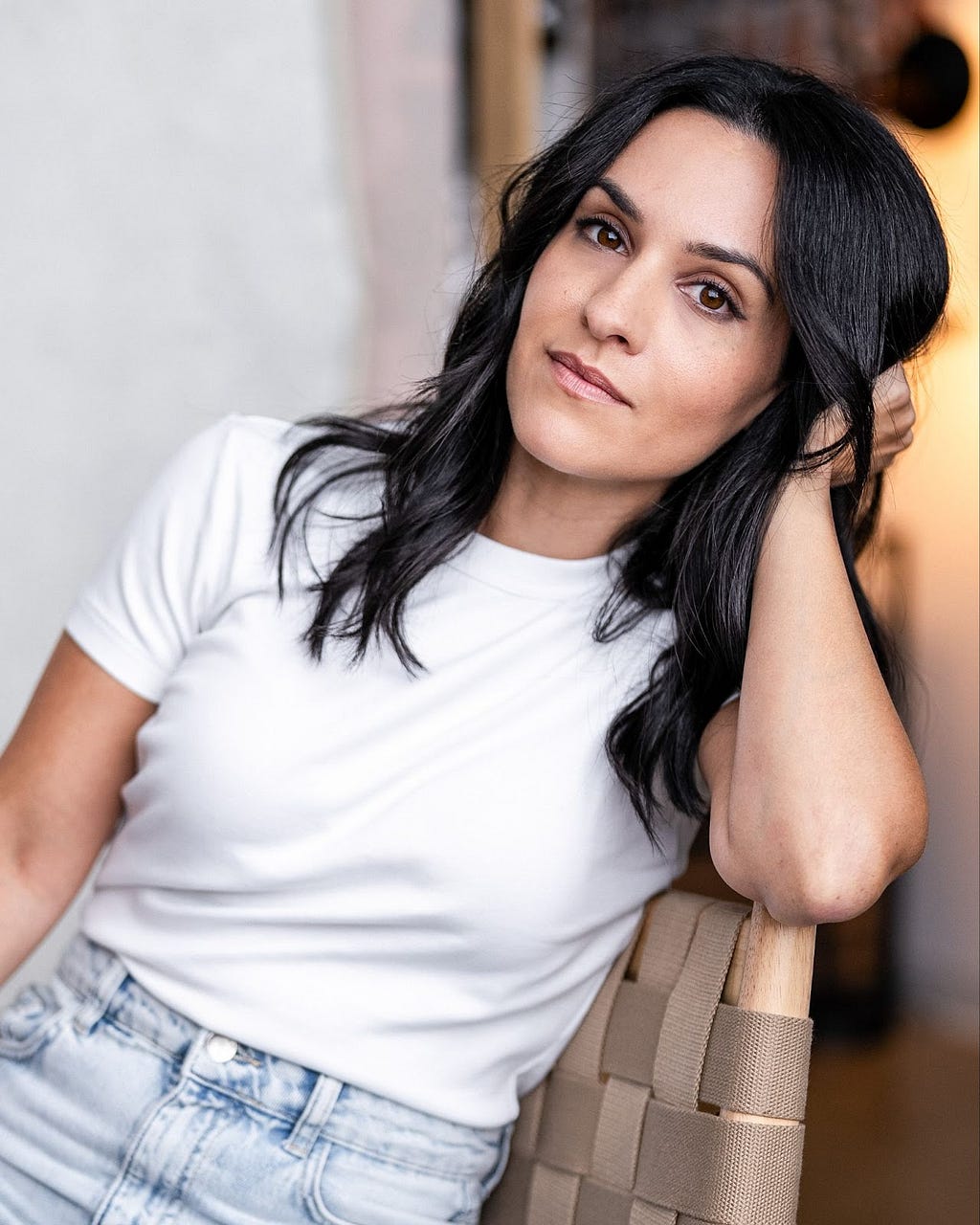
I had the pleasure of talking with Neagheen Homaifar. Neagheen’s path to the screen was anything but conventional. Born to Iranian immigrants in Tuscaloosa, Alabama and raised in Greensboro, North Carolina, Homaifar’s early years were steeped in the dual influences of a tight-knit Iranian-American community and the deeply rooted traditions of the American South. Her childhood was defined by academic rigor, familial closeness, and a strong cultural identity, a blend of influences that would later shape her multidimensional approach to storytelling.
A product of the public school system and a self-described middle child peacemaker, Homaifar recalls an early restlessness, both physical and creative. Her energy often spilled into humor and negotiation, habits she attributes to growing up as the mediator between family members. That same energy found its first structured outlet in music. She trained as a classical pianist, waking before dawn to practice, a discipline that instilled in her an understanding of performance, long before acting ever entered the picture.
Academically, Homaifar excelled. She graduated cum laude from Harvard College with a degree in Social Studies and Spanish. Afterward, she became one of the founding members of Minerva University, an ambitious startup-style academic institution with a global footprint. As Director of Admissions, she played a central role in developing a merit-based admissions model that attracted tens of thousands of applicants each year. For a time, it seemed like a linear trajectory, elite education, institutional leadership, meaningful work in higher education.
But in San Francisco, shortly before the pandemic, a side interest cracked open something larger. Homaifar began taking improv classes, spaces where playfulness wasn’t just welcomed but required. For someone trained in rigorous systems, the permission to be loose and spontaneous was revelatory. She started writing and filming with friends, culminating in a short film that marked her first experience acting on camera. “All the cells in my body changed,” she recalled of the moment.
That pivot led her to a Hollywood set, where her very first professional audition resulted in a role on the FOX medical drama The Resident. Playing a neurosurgery resident, she found herself navigating a professional set just weeks after her casting, a whirlwind introduction to an industry she had previously admired only from the periphery. The experience was a turning point. Watching hundreds of professionals execute their roles with precision and excellence reminded her that rigor wasn’t exclusive to academia or business, it lived in the arts, too.
From there, acting moved from possibility to vocation. Roles followed on Apple TV+’s Me, Peacock’s Killing It, and most recently, the sci-fi psychological thriller Site, where she plays Aravané Kader, a quantum physicist whose motivations are less than transparent. The film, released by Blue Fox Entertainment, weaves together narratives from World War II-era China, a 1970s research lab, and present-day America, testing both the boundaries of time and the moral clarity of its characters. Homaifar’s performance is layered, cerebral, and charged with unease.
She brings a similarly nuanced perspective to theater. In recent years, Homaifar has taken on complex roles in plays such as Selling Kabul, where she portrayed a woman navigating the threat of extremist violence, and English, a play by Pulitzer Prize-winner Sanaz Toossi about Iranian adults learning English. The latter resonated deeply with Homaifar’s own experience navigating bicultural identity and language. “The moment I read it,” she said, “I saw myself in the story.” Her stage work, often emotionally demanding, has required her to develop rituals to decompress, including blasting early 2000s pop music on the drive home.
Homaifar’s influences in the industry include peers and mentors like Tala Ashe, whose own success as an Iranian American actor gave her a new frame of reference for what was possible. Equally impactful was the quiet advocacy of industry professionals like casting director Gregory Van Acker, who championed her work even before they met. “He’s said my name in rooms I’ve never been in,” she noted, pointing to the power of behind-the-scenes support.
Her former career in education continues to inform her work ethic and outlook. She still sees classes, whether acting studios or improv workshops, as essential spaces for growth, accountability, and community. Lesly Kahn and Clyde Bernardy’s studios in Los Angeles became anchors, offering not just instruction, but connection. “There’s no linear promotion in this field,” she said. “So you have to create your own rhythm of development.”
Now also a mother, Homaifar speaks candidly about the challenges of parenting while pursuing an acting career. A recent run of English in Cincinnati required her family to relocate temporarily, presenting logistical hurdles that stretched beyond the stage. But she sees this stage of life not as an interruption to her craft, but as a necessary part of it. “Things change,” she said, “but it’s still possible.”
Outside of acting, Homaifar has also co-hosted the podcast Best Friends Back, Alright! with Mythical Entertainment, showing her continued interest in formats that blend intellect with humor. Whether on screen, on stage, or behind the mic, her work explores identity, connection, and the complexity of human behavior.
When asked what idea she’d most like to spread, she speaks not of grand gestures, but of attentiveness. “If we didn’t numb ourselves to the humanity of the people around us,” she said, “we could connect, even across difference.” It’s a philosophy that guides both her artistry and her life, anchoring her work in empathy rather than aspiration.
Homaifar currently lives in Washington DC. Her film Site is available on major digital platforms, and this fall she stars in English at TheaterWorks Hartford and Long Wharf Theatre in New Haven.
Yitzi: Neagheen, it’s such a delight to meet you. Before we dive in, our readers would love to learn about your personal origin story. Can you share with us the story of your childhood, how you grew up, and the seeds for all these great things that have come afterwards?
Neagheen: Oh goodness, yes. The seeds of my childhood were sown in Tuscaloosa, Alabama, where two Iranian immigrants lived. I grew up in Greensboro, North Carolina, in a really loving Iranian American community and a very loving Southern community that raised my older sister, me, and my younger brother.
My family still lives in North Carolina, so every time we go back, there are some regular stops we have to make. One is to the Cook Out, which is a fantastic place to experience gastrointestinal issues as an adult, a biscuit spot, and of course, all the food in my mother’s kitchen. We grew up very tight-knit as a family. I think my parents had a strong sense of responsibility for our future. They were immigrants to this country, and for them, education was the most important thing we could get.
At any cost, whether that meant going to school out of district or my parents driving us to a school the bus wouldn’t come to, they would do whatever it took so we could get a great education. I think about that a lot now as I raise my own son. What am I willing to do to make sure he has access to the best things in life?
I grew up in a public school system, which I credit for much of my interest in learning and excitement about being in educational spaces. I was a middle child, and I definitely experienced all the classic middle-child things. I was the mediator, the negotiator, the peacemaker. But I was also kind of the monkey of the family. I felt like I was the one cracking jokes. In fact, I think my humor came out of that peacekeeping, it was always my method of getting people to chill out a little.
I could not be kept in my seat. I was always wriggling around. I had so much to say, so much energy. At one point, my mom actually had to create a seatbelt on my dinner table chair just so I would stay seated at dinner. And now, when I look at my son and see how much he’s wiggling, I think, “Really, I’m paying for it. I’m paying for it decades later.”
Yitzi: So tell us the next chapter. What introduced you to, or how did you get started in the entertainment industry?
Neagheen: I started in the entertainment industry later in life, I would say. I had a whole career outside of entertainment before I became an actor. As a child growing up, I played the piano pretty intensely. I was waking up at 5:30 every morning to play for an hour before school. So in some ways, I guess my life as a performer started then, but I had no idea I wanted to do theater, TV, or film until I started doing improv in San Francisco.
This was right before the pandemic, and it unlocked something really important for me, this idea that I had always been very playful, but I hadn’t been in an environment where the rule was to be playful with other adults. Improv opened up that possibility. I went on to write a short film with friends while I was still working at the university, at Minerva. When I did the film, it was my first time acting on camera, and I think all the cells in my body changed. I realized it was something I felt deeply aligned with.
But honestly, I was too scared at first to say, “I want to be an actor,” because it felt so far outside anything I had been trained in or anything I had grown up thinking was worth aspiring to, or even possible, for someone like me.
It took me a couple of years to finally say, “No, I want to be an actor,” and to believe it was okay to want that, and that it was possible. It was really improv that started unlocking that desire. And comedy, being able to laugh with people, is probably the most powerful medicine. It just feels good.
Yitzi: Can you tell us a bit about your first breaks? The first opportunities? Tell us the story behind those.
Neagheen: I got really lucky because my first professional acting audition was something I booked. It was playing a neurosurgery resident on a medical drama on Fox called The Resident. It happened at a funny time because I was the director of admissions for a university, working full time at an organization I believed in and loved. I got this audition and thought, great, fun, not thinking anything of it. I wasn’t educated in the business of entertainment or acting. I had no idea what I was doing.
But I booked it. I called my agent and asked, “So what does this mean? How many months from now will I do this?” And she said, “Sister, this is in like a couple of weeks.”
I had no idea how quickly TV moves. I was thinking, what do I do? What do I tell work? Do I have to leave? What are the logistics? The shoot was in Atlanta, and I was living in Washington, D.C. at the time.
So I got myself to Atlanta, and I was on set for a few days. It was the most incredible thing for me to experience. At that point, I had only done my short film, which was basically an indie, we were bootstrapping everything, all of us were the writers, actors, directors. And here I was on a professional set, where hundreds of people were working for hours just to produce a few minutes of television.
I got to see what it looks like when people who are exceptional at their jobs take something seriously and apply such a high standard. I’m very attracted to that kind of thing. When anyone, in any field, takes what they do seriously and holds themselves to a high bar of excellence, I respect it. It could be golf, which I don’t care about, or the arts, which I do care about, whatever it is, I admire that level of dedication.
Seeing that on display over those few days was incredible. And to be behind the camera, actually doing it, was electrifying. That was a very important launching moment for me, because after that, I became more comfortable saying, “Oh shit, I do want to be an actor. I want to be part of this ecosystem. I want to be around these people who take things seriously.”

Yitzi: I’m surprised. (Laughs) It sounded like you were saying that in education, people don’t take things as seriously.
Neagheen: It’s not that. It was more a realization that it’s not only the so-called “serious” fields where people apply rigor. I think part of my hesitation in admitting I wanted to be an actor was that it felt vain. I had no real insight into what it actually meant to be an actor, all I knew was the halo around it.
It was an edifying moment for me. I realized, oh no, anyone can take their job seriously. That was the important lesson.
Yitzi: You must have had some amazing stories from the different projects you’ve been on, different places you’ve been to. I’d love to hear some stories from your professional life that really stand out in your mind.
Neagheen: I’m actually remembering something from The Resident. One of the things that stands out was, you know, I was hired to play a neurosurgery resident, I’m not a neurosurgeon, obviously. So when you’re on set, there are medical advisors and consultants there to make sure you’re not only pronouncing the terms correctly, but also that the physical actions you’re doing on screen are accurate.
In this particular scene, the patient is hemorrhaging. I’m performing brain surgery, and it’s not going well, so she needs to be resuscitated. I had to perform CPR. I had never done CPR before. There was a real person lying on the gurney, and they had this chest cavity piece over her so I could mimic CPR without hurting her, but there was still pressure. So I’m doing CPR, the medical consultant is showing me how to do it, but I think I was pressing too hard because I wanted it to look believable. The woman on the gurney was like, “A little bit lighter.” And I thought, oh no, too much! I had to remind myself that some of this is pretend.
Yitzi: We love hearing stories where somebody who’s a bit further ahead opens up a door, creates an opportunity, and that changes someone’s career trajectory. Do you have a story where you did that for somebody else, or where someone did that for you?
Neagheen: One of the biggest lessons I’ve learned over the past few years is that relationships in any industry are really the beating heart of what we do. The easiest way to feel unhappy as a professional is to treat relationships as transactional.
I’ve been really grateful for a couple of people who have been advocates for me. What I’ve come to realize is that advocacy, whether I’m doing it for someone else or someone’s doing it for me, comes with time. It comes from building a relationship, from letting someone see who you are and what you’re about.
There’s a casting director, Gregory Van Acker, who has consistently been someone whispering my name in the rooms he’s in. It’s been such a blessing to have him as part of my advocacy team. We’ve never even met in person. He’s seen my work through auditions, and because of him, I’ve worked at the Kennedy Center, been part of new plays, and am currently working on a new show in Connecticut called English. He’s saying my name in places where I’m not. That kind of support is incredibly powerful.
It’s made me more intentional about doing that for others. When someone asks me, “Do you know someone who could do this?” and a name pops into my mind, I try to lift that person up. It feels good to be a connector, not just because you’re solving a problem, but because you’re helping someone else step forward.
This industry can feel competitive, but really, it’s about fit. If we can trust that there’s something right and exciting for each of us in time, then we can feel more comfortable promoting others in our community.
The other person I think of is Tala Ashe. She’s an Iranian American actor who’s been very successful, she’s worked in TV and was part of the Broadway run of English. She’s also a fierce social justice advocate, and I really admire her.
I didn’t do a play until just a couple of years ago. When I first got into the industry, I thought it was only about TV and film. I didn’t think there was a place for me in theater. I assumed theater meant musicals or big, over-the-top performances, and I didn’t grow up with that kind of artistic expression, so I didn’t think it was for me.
That changed when I read the play English by Sanaz Toossi. It’s about five Iranians learning English, and the moment I read it, I saw myself in the story. I wanted to be part of telling it. But then I thought, “Oh no, it’s theater, I have no idea what I’m doing.”
Talking to Tala was so helpful. She had done it. She was doing it at the highest level. And when she saw the possibility in me, I was able to see it in myself. That was huge.
Representation matters in so many ways. But being able to see some version of yourself in someone else, especially someone doing what you didn’t even know was possible for you, can be life-changing. It opens your mind to think, “I can do that too. I can want that too.” And from there, it feels like anything is possible.
Yitzi: What’s been the most challenging project or role you’ve taken on so far and why?
Neagheen: I think about challenge in different ways. There’s the kind of challenge that comes from logistics. I’m a new mother, and one of the big question marks for me was, “Oh my gosh, when I become a mom, when I have a dependent, how will acting change? Will I be unable to do some things?” The thing I worked hard with my husband to prove over this last year was that things change, but it’s still possible.
What was challenging about doing my last play, English in Cincinnati, was that we had to figure out how to do it as a whole family. Those logistics are no joke. It’s negotiating with the theater for the right kind of housing and child care, figuring out who’s going to nanny my child in this new city that I have no connection to, and how I’m going to uproot my family and still feel like we’re connected. That’s very challenging. Luckily, the piece was incredible. My creative experience was really amazing.
Then there’s the emotional challenge of a role. I did a play called Selling Kabul, where I played a woman whose husband has been kidnapped by the Taliban and whose baby is at risk of being taken away. She’s secretly trying to get information from her neighbor that will save her husband. The emotional intensity of that play was very challenging because I had to perform it eight times a week and then go back to my normal life, which didn’t have that level of threat and violence.
Doing that was really significant. The challenge was figuring out, at the end of this play, which ends very harshly, after physically and emotionally attacking people on stage, how I was going to take care of my body and not bring that home. I had to develop a ritual for myself. Luckily, I could drive home since this was in D.C., and every night I would play one of Britney Spears’s old albums. The song Lucky was on repeat because it was so far away from the reality I was living eight times a week. It helped me come down from that intensity. That was really challenging.
Yitzi: So let’s talk about your current work. You have so much impressive work, and we’d love to hear the exciting new things you’re working on now and what you hope to be working on in the near future.
Neagheen: A movie, well, Site, the sci-fi thriller I was telling you about, is out this summer. It was my first experience filming a sci-fi movie. It’s a really interesting project that takes place across three timelines: 1940s China during World War II, a 1970s physics laboratory, and the present day. It’s about a man who stumbles upon an abandoned government facility and starts experiencing visions that connect him to atrocities from World War II and to this mysterious 1970s lab.
There’s a kind of period-piece element to it, which was really fun. I also got to work with some intense special effects makeup, which was a whole new experience.
Next up for me is a play called English. It’s about identity and how language shapes who we are, especially when it’s not your first language. This one is very different, no hallucinations, no burnt skin, no life-or-death stakes. Just five people in a classroom trying to connect. It’s really funny, very moving, and it will be at TheaterWorks in Hartford and Long Wharf Theatre in New Haven. I’m really excited about the project and the team I’ll be working with.
Yitzi: This is our signature aspirational question. Neagheen, you’ve been blessed with a lot of success. Looking back to when you first started, can you share five things you’ve learned now that you wish you knew then?
Neagheen:
- Your phone will constantly be out of storage space. Seriously, 30 minutes before I joined this call, I had to buy two terabytes of iCloud storage. As actors, we’re constantly filming and sending in audition tapes, and I’m so tired of being out of space.
- Class is where it’s at. I’ve always loved school and learning, but class has been such a blessing, not just for learning the craft itself, but for everything else it gives you. There’s accountability. Becoming and training to be an actor can be a very independent and sometimes isolating experience. There’s no clear promotion path like in the corporate world, so you have to hold yourself accountable or find a group that helps you stay committed to that growth. Class also gives you community. I come from a world where the people around me weren’t actors, they were lawyers, doctors, policy folks, technologists. So finding a community that understood what I was trying to do was incredibly important. There’s also this sense of possibility when you’re in class. You see people who are further along in their journey and think, “Wow, what incredible things they’re doing. What can I learn from them?” Finding your studio can be powerful. For me, Lesly Kahn and Clyde Bernardy’s studios were those places.
- Another lesson is to explore all the mediums. Don’t limit yourself. I came in thinking I just wanted to be in film and TV. I had no idea theater was even a possibility, and now it’s something I actively seek out. Improv, voice work, podcasts whatever it is, try everything so you can figure out what you really connect with.
- I’d also say that your past is not a liability. It’s an asset. I used to feel insecure about not being someone who knew she wanted to be an actor as a kid, not having studied theater in the traditional way, or done school plays. I became an actor after having had a completely different career path. But now I realize that experience gives me a strong sense of self outside of the work and enriches the roles I play. I bring authenticity and realism from those life experiences. I’m analytical by nature, and that’s helped me understand the business side of this very abstract industry. Your past can be your strength.
- And finally, keep living your life. Acting jobs don’t come on a set schedule. You might not book something weekly, monthly, or even yearly, especially with things like the pandemic and the strikes. It’s easy to feel like you have to always be ready, every single day, just in case a call comes in. But that mindset can lead you to say no to family events, or to spending time with people you love, all for the hope of a job. For me, one of the big questions was, “If I’m trying to become an actor, do I have to put off having a child or growing a family? How could I possibly do both?” And I realized, there is no schedule. The work will come. If you can be flexible and adjust, you can build a long-term career. I’m still early in mine, but I’d like to believe that my whole life is possible outside of acting, and I can still be a successful actor.
Yitzi: This is what we call our matchmaker question. Is there a person in the world or in the U.S. with whom you’d like to collaborate or have lunch?
Put me in a group chat with Mindy Kaling and Tracee Ellis Ross. I think I would explode from laughter, girl power, and the fashion of it all, but it’s a risk I’m willing to take.
Yitzi: This is our final aspirational question. Neagheen, because of your great work and the platform that you’ve built, you’re a person of enormous influence. If you could put out and spread an idea or inspire a movement that would bring the most amount of good to the most amount of people, what would that be?
Neagheen: Truly an aspirational question.
Yitzi: It’s kind of interesting, actually. You made a good point, the word aspirational etymologically means things that we aspire to, but it’s come to mean something utopian or even impossible.
Neagheen: Isn’t that interesting? What does that say about the world we live in?
As an actor, when you get a role or you’re reading through a script, all you’re trying to do is understand why this person says what they say, does what they do, reacts the way they react. If you’re doing it right, you’re giving the character the benefit of the doubt. You’re believing that their choices come from somewhere. You’re treating them like a human being.
You’re assuming there’s a reason for this behavior. You’re treating them with respect. And I think if we didn’t numb ourselves to the humanity of the people around us, we could see things from their perspective more easily. We could acknowledge others without necessarily agreeing with them. We could connect, even across differences.
So what I would hope for is that people stay alive to the presence and humanity of others. Instead of drawing inward and becoming scared or dismissive of people who are different from us, I’d hope we could remain open and curious, curious enough to understand them.
Yitzi: How can our readers continue to follow your work, how can they support you in any possible way?
Neagheen: You can follow me on social media at @Neagheen. You can also watch Site on all the major streaming platforms. And if you’re in Connecticut this fall, come see English at TheaterWorks Hartford or Long Wharf Theatre in New Haven.
Yitzi: Neagheen, it’s been so delightful to meet you. I wish you continued success, blessings, and good health. I hope we can do this again next year.
Neagheen: Thank you. I look forward to it.
Neagheen Homaifar on Breaking Into Acting After Academia, Starring in ‘Site’, and the Power of… was originally published in Authority Magazine on Medium, where people are continuing the conversation by highlighting and responding to this story.