Love deeply. It doesn’t have to be broad, but it would have to be focused. I have a lot of admiration for people who, at their own little level — it could just be a mother with her child — do what they can to make a difference every day, even at the smallest level. I really think if people did that — and I think a lot of people already do, as I am very optimistic about humanity — but if we were to do that at all levels, we would foster an entire tribe. I say tribe, but almost like all of humanity could be one big tribe, to do the right thing and be good to each other. So I’d say yes, love at a small level, and it will potentially have a big worldwide impact.
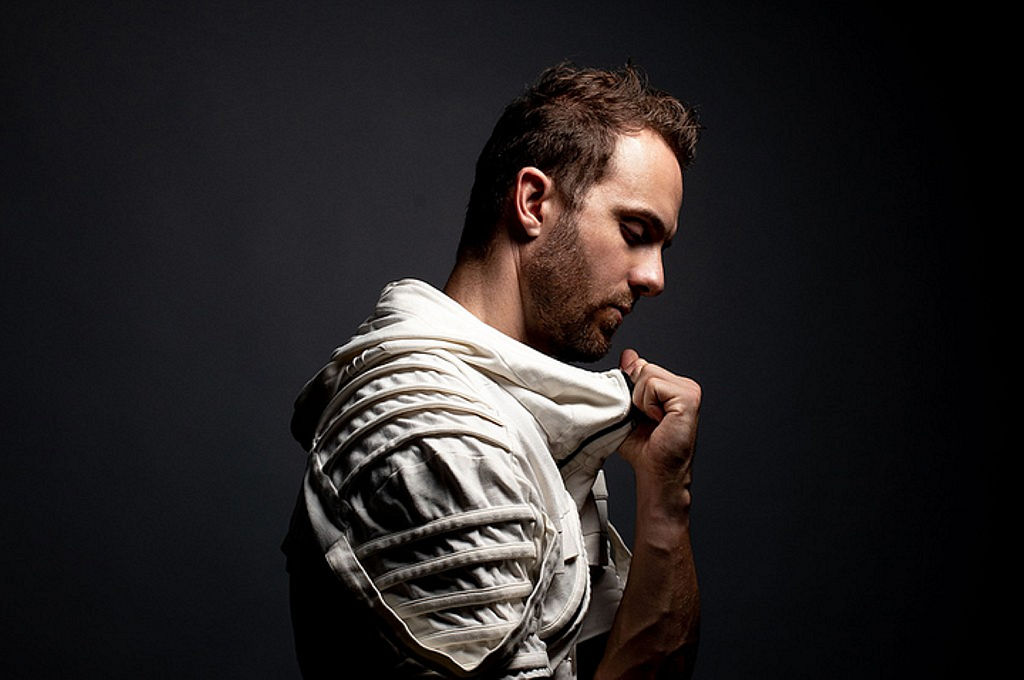
I had the pleasure of talking with Andy Favre. To understand the cinematic world of his musical project, the Alpine Universe, you have to go back to the French Alps in 1992. His hometown was hosting the Winter Olympics. For a kid surrounded by snow-capped peaks, the collision of elite sports, live concerts, and raw nature left a permanent mark. “It was a combination of seeing these great athletes in these beautiful mountain environments with concerts and live shows,” Andy recalls. “To me, it’s one of my first memories of what humanity does best.” That vision of global unity set the stage for everything he would eventually build.
His path to becoming a professional musician was far from traditional. At eight years old, he clashed with strict music teachers. “I had a very creative mind and wanted to invent my own songs, but they really just wanted me to play the sheet music,” he says. The rigid structure pushed him to quit by age nine. He resolved to teach himself, fueled purely by a need to create. His saving grace came via a troupe of traveling circus musicians. Recognizing his raw passion, they offered advice that changed his life. “They told me, ‘Keep going kid, it’s okay, you don’t need the academics; if you love it, just keep doing it.’”
That do-it-yourself spirit followed him when he eventually moved to the United States. Armed with little more than a laptop, he pivoted toward electronic music. He started scoring short films for friends, slowly realizing his passion could actually pay the rent. The real turning point arrived when Jared Leto of Thirty Seconds to Mars heard his tracks and invited him to collaborate. “It felt very validating, having a quote-unquote professional discover that I was not an amateur,” Andy explains. It gave him the final boost of confidence to fully commit to the industry.
Yet, the same fierce independence that built his career has sometimes been his greatest enemy. He readily admits that his stubbornness has caused him to stumble. “I was closed off to mentors or to learning because I had this attitude of ‘I know it all’, and it’s hurt me,” he confesses. This DIY obsession reached a boiling point last summer during a European tour. Choosing to manage himself and his band alone, the music suffered. Exhausted, he even forgot to sing a highly anticipated song. “The fans were saying, ‘But we waited for that one song,’ and I forgot to play it,” he admits. “I can embarrass myself on stage because I haven’t been prepared enough.”
When the pandemic wiped out live shows, Andy faced a different kind of breaking point. Struggling to survive, he took side jobs in graphic design. But instead of folding, he used the downtime to learn digital marketing and boost his streaming numbers. “I gave myself a year to get to the milestone I had in mind, and it took less than six months,” he says. The gamble paid off, finally allowing him to live entirely off his original music.
That music is deeply conceptual. The Alpine Universe is a sprawling science fiction mythology set in a future where Earth is ruined, and humanity is confined to a toxic megacity. Meanwhile, an advanced society lives high above the clouds. His latest album, Kordée, serves as the newest chapter. The title translates from French as a rope team of mountaineers. To Andy, it represents human connection. “It’s about how we’re all interconnected and how our future depends on what we do now and what we leave behind,” he says. The record blends heavy electronic production with sweeping orchestral arrangements.
As a producer who relies on software, Andy has complicated feelings about artificial intelligence. He respects traditional electronic production because the human mind still drives the ship. Generative AI, however, crosses a line. “You haven’t really invented the music in your head in the first place,” he argues. He worries about soulless music taking over streaming platforms, noting that many of his recommended artists are now AI-generated. While he refuses to use it for songwriting or art, he isn’t a total purist; he uses AI tools to assist with audio mixing. “The AI has almost been like an assistant to help me hear things that I wouldn’t have heard,” he admits.
To stay grounded, Andy forces himself to step away from the screens. Once a month, he goes completely off the grid, retreating to the mountains where cell service vanishes. He relies on daily workouts to maintain discipline, focusing on consistency over intensity. “The length of the streak is more important than the intensity,” he notes. Ultimately, his philosophy is simple. He urges people to keep a childlike curiosity and focus on making an impact locally. “Love deeply,” he says. “Love at a small level, and it will potentially have a big worldwide impact.”
Yitzi: Andy, it’s so nice to meet you. Before we dive in deep and talk about your amazing work, our readers would love to learn about your personal origin story. Can you share with us the story of your childhood, how you grew up, and the seeds and genesis for all the amazing work that has come since then?
Andy: Thank you for having me. If we were to begin chronologically, I am from France, a small town in the mountains in the Alps. I grew up in this small village surrounded by nature and lots of sports. One of my earliest memories was at the Olympics, as my hometown was hosting the 92 Winter Olympics. It was a combination of seeing these great athletes in these beautiful mountain environments with concerts and live shows. To me, it’s one of my first memories of what humanity does best. It was music, performance, all nations all together in nature, if that makes sense. I think it really inspired my project later on, all the way to its name, The Alpine Universe. Coming from the Alps, I think that was the genesis of me as a person, but also everything I put into my music.
Yitzi: You probably have some amazing stories from the different parts of your career. I’m sure this is difficult to single out, but can you share with our readers one or two stories that stand out in your mind from your career?
Andy: Yeah, well, I would say the first one, I’m going to go chronologically too. A first turning point was trying, at eight years old, to take music lessons with very strict teachers. I had a very creative mind and wanted to invent my own songs, but they really just wanted me to play the sheet music, to make it simple. It didn’t go well, to the point where I quit music school at nine years old and decided to teach myself. I had no professional goal in mind, just because I couldn’t live without making music. Luckily, I met a troupe of circus musicians who came to our school at one point. They told me, ‘Keep going kid, it’s okay, you don’t need the academics; if you love it, just keep doing it.’ It gave me confidence to learn many instruments on my own. That was the first story, of these great artists who were doing it for the love of creativity and not for the fame.
The second one was when I moved to the US. I loved telling visual stories and wanted to make movies. I started making the music for my projects and for my friends’ projects. Through word of mouth, I started selling my music to be used in little short films or commercials. That’s what gave me the idea that I could actually make money with the thing I love the most. It was a perspective shift.
The third one, my first time really entering the industry, was when Jared Leto of Thirty Seconds to Mars — the actor who is also a singer and musician — heard my songs and wanted me to come on their album to bring my ideas. It felt very validating, having a quote-unquote professional discover that I was not an amateur and that I too could maybe work in the industry one day. That was a milestone for me, another perspective shift, thinking, ‘Oh, I can be a professional musician.’ Then I had the confidence to just give it all, and it really helped my project.
Yitzi: There’s a saying that sometimes our mistakes can be our greatest teachers. Do you have a story about a humorous mistake that you made when you were first starting out in music and the lesson that you took away from it?
Andy: Oh, I don’t have to go back as far as when I was first starting out. I keep making mistakes. I think I am very slow at learning because I’m a bit stubborn. It’s a double-edged sword because I learned from a very young age that I could do it all on my own and didn’t need teachers, but it’s also hindered my progress over the years. I was closed off to mentors or to learning because I had this attitude of ‘I know it all’, and it’s hurt me. Let’s fast forward to last summer when I produced my own tour. We went to Europe with my musicians to play some shows, and I didn’t have anyone to manage me or the band. The music really suffered. I was making mistakes on stage, I was really tired, and I even forgot to sing one of the songs. The fans were saying, ‘But we waited for that one song,’ and I forgot to play it. I don’t know if it’s a good example, but I feel like I stretch myself too thin, and the result is that I can embarrass myself on stage because I haven’t been prepared enough.
Yitzi: There’s a related idea that ‘no’ is not rejection, but redirection. Do you have a story where you got ‘no’ to an opportunity, but that led to an unexpected blessing or success, or an even better opportunity?
Andy: Yes, I would say when the pandemic happened, we couldn’t play any shows. A lot of the films and TVs were slowing down. I was struggling to live off of my music; it was very hard. I would do anything I could, even mixing for other people, producing, or sometimes even graphic design and motion graphics that were adjacent but not related. When the pandemic hit, it was very scary, but it helped me redirect, to answer your question. I said, ‘Well, people at least still stream the music.’ It was a very small portion of my income, but I was making a little bit of money and I said, ‘Let me really put all my eggs into trying to grow my audience on streaming platforms.’ I bought some lessons online on how to advertise, marketing, social media strategies, and things like that. I decided to go really hard on that, and it paid off. I gave myself a year to get to the milestone I had in mind, and it took less than six months. It really worked out. The pandemic actually ended up launching the project, where I was able to finally just live off of the Alpine Universe project and not take on client work, which has been a blessing.
Yitzi: You have so much impressive work, Andy. Could you please share with us the exciting new things you’re working on, exciting new projects, new initiatives? We’d love to hear about it.
Andy: Thanks. Well, yes, the Alpine Universe is actually a science fiction story that I wrote. Back when I used to score movies and TV, it was always very inspiring to have a story, to have a scene to work off of. I started imagining my own story that I could score. With the more recent album, I’m trying to explore this universe and give more stories, information, and characters about what it’s about. To me, it’s about the philosophy of what humanity could become. It covers all the challenges we face with technology, climate change, and in general how to advance humanity wherever it’s going, pondering these big topics. But it’s all within a science fiction, sort of magical, futuristic landscape. My latest album is called ‘Cordée’. It’s a metaphor for climbers being roped together, like a rope team. That’s what the term ‘cordée’ means in French. It’s about how we’re all interconnected and how our future depends on what we do now and what we leave behind. I just put it out in January, and I encourage everyone to check it out, immerse themselves in the stories and the characters, and hopefully get inspired.
Yitzi: What are your thoughts about using software to create music, and what’s the line? You have Autotune, you have EDM which is electronic, and then you go all the way to AI that creates everything, the vocals and the whole melody. What’s the line? What’s acceptable, and what’s not acceptable?
Andy: It’s a great question, and I’m still toying with where that line is. When I first started producing music, I was playing instruments in rock bands. Then I moved to America for school, and I only had one guitar. I couldn’t record anymore. I had barely any equipment back home, but now I had nothing but a laptop. I dived deep into electronic music and software. Electronic music is a big inspiration for me, and coming from France, we have a legacy of electronic music. However, there was still a lot of human input. You still conceive the music in your head, and the computer or the keyboard becomes a tool, but you’re actually hearing the music in your head first.
I think where I would draw the line is now with AI. You’re not really hearing music first; you can type in something and the AI bounces back ideas. You still have to have good taste to make a good AI song, I believe, but you haven’t really invented the music in your head in the first place. It is kind of a bummer to me that we’ve come to that. It’s similar to sampling in the 80s, when people would take a record, sample little pieces of it, and do a patchwork. You would say, ‘Okay, where’s the line?’ because they didn’t invent the music in their heads. I wonder if in a few years we’ll look at AI almost like how we look at sampling now, because there have been so many creative things done with sampling, which to me became its own form of art. I’m going to be conservative and say let’s see where it goes and let the best creators do their work. I just hope that the audience knows what they are listening to and tries to support the artists behind it. Just know that with AI, someone can put out literally an album a day, and I don’t know if there’s much depth and thought that goes into it. I notice it already on Spotify. I have the Alpine Universe radio, so if you play my songs, it will usually play other related artists. I’ve discovered artists that were great thanks to this algorithm. But I’ve noticed now that a good 30%, and maybe more, of the artists related to me are AI-generated. I think that is kind of sad because someone who wants to support me, or others who are really into this kind of sound — and it applies to any niche or genre — will start being cannibalized by these AI artists. I think there should at least be a disclaimer saying, ‘Okay, this was done in five minutes with a prompt.’ That way people can decide.
I have used AI for mixing and mastering, and it’s actually helped me a lot because I do everything myself, including mixing, mastering, and graphic design. When generative AI first came out for images, I used elements that were AI-generated for album covers. Very soon, it just didn’t sit right. At first I thought it was a cool tool, but now it doesn’t sit right with me. I quickly didn’t like the idea, so I stopped. Now I spend even more time crafting the visuals with 3D software like Blender and After Effects. I do the animation from scratch. It takes longer, but it feels more right for me. I know maybe I’m shooting myself in the foot, and maybe I’m kind of old school in that sense. To go back to where we draw the line: in the music production process, I never use it as a generative tool, but I’ve used it as a mixing tool to give me a second ear and a direction. It tells me, ‘Maybe there’s too much bass,’ and then I will go and adjust it manually. The AI has almost been like an assistant to help me hear things that I wouldn’t have heard. So I guess I’m guilty of it in that sense.
Yitzi: I think a lot of it has to do with semantics. Ten years ago we would call Blender AI. It’s a form of artificial intelligence; it’s a computerized program, and it’s an algorithm. Now AI means generative AI, but it’s all just software.
Andy: Yes, that’s why I want to see where it is in 10 years. That’s a great example, like computer-assisted design that architects use. We can apply it to everything. That’s why I say when sampling first came out, people said, ‘No, it’s not music, it’s already been recorded.’ But now we see it as a true form of art. Maybe in 10 years we’ll have amazing creations made with generative AI, and we’ll look back and say, ‘Wow, the people who thought about that were artists in their own right.’
Yitzi: I think it goes back to what you said before, a profound point, that it really comes down to having good taste. If you have really good taste, then you’re not going to be happy with a soulless AI. Ultimately, the best differentiator will be good taste.
Andy: You’re right, in the end, you are right.
Yitzi: Amazing. Okay, so this is our signature question. Andy, you’ve been blessed with a lot of success, and you must have learned a lot from your experiences. Looking back all the way to the beginning when you first started in music, can you share five things that you’ve learned over the years that would have been nice to know in the beginning?
Andy: Ooh, these are good questions.
- Well, back to what I was saying earlier, I think staying curious is good, but be humble and be ready to receive guidance when it’s there. At least for me, that’s something I missed out on; I was probably a little cocky at times.
- Another thing is, if someone has achieved the success that you aspire to, it’s okay to kind of copy them. Not copy their art or their work, but copy their mindset and mimic their attitude, which I was very reluctant to do. I just wanted to do things on my own, but I wish I had learned that sooner.
- I would also say showing up and consistency is better than bursts of intensity. It’s almost like going to the gym. As long as you set foot in the gym, it doesn’t matter if you go hard or not, but at least you’re present and you do it every day. The length of the streak is more important than the intensity of the streak. I don’t know if I’m saying it right, but that would be the third thing I’m still trying to apply to this day with practicing instruments, songwriting, and general self-discipline.
- I would say sleep. If I had to pick one thing that is super important, I would say sleep, or getting quality sleep. It’s cliché, but true.
- And one last one. Remember what you knew at the beginning that you should not forget. I would say keep a childlike mindset. As we advance and learn more, we sometimes forget to go back to that curious beginner mindset. One thing to do is always remember the kid in you that was so curious, that had no idea they were making mistakes, and was just doing it for the love of it without wondering what people think or if it’s going to be commercially successful. Just doing it because it brings joy. I’m trying to channel that, I guess.
Yitzi: On a personal level, can you share some of the self-care routines that you do to help your body, mind, and heart to thrive?
Andy: All right. To me, friends and family are very important, and I’m fortunate in that sense. So I’d say foster those relationships. And spending time in nature. It’s going to sound cliché, but yes, spending time in nature and remembering our humanity, especially today with constant screens and hyper-connectivity. I try to go off the grid at least once a month for a few days — not just turning off my phone, but really being in a place where there’s no cell phone reception, usually the mountains or desert. That’s been part of my routine. On the daily, I mentioned sleep, but I also work out, do cardio, and try to eat healthy and balanced. I think everyone would say that, but just like the discipline of practicing an instrument or showing up at work, I show up with my body. At least five to six days a week I do a workout, even if I don’t feel like it. Even if I feel terrible, I just do it.
Yitzi: This is our final aspirational question. Andy, because of your amazing work and the platform that you’ve built, it’s not an exaggeration to say that you’re a person of enormous influence. If you could spread an idea or inspire a movement that would bring the most amount of good to the most amount of people, what would that be? Because you never know what your idea could spread.
Andy: Hm, good question. I would say love deeply. It doesn’t have to be broad, but it would have to be focused. I have a lot of admiration for people who, at their own little level — it could just be a mother with her child — do what they can to make a difference every day, even at the smallest level. I really think if people did that — and I think a lot of people already do, as I am very optimistic about humanity — but if we were to do that at all levels, we would foster an entire tribe. I say tribe, but almost like all of humanity could be one big tribe, to do the right thing and be good to each other. So I’d say yes, love at a small level, and it will potentially have a big worldwide impact.
Yitzi: Andy, how can our readers continue to follow your work? How could they listen to and purchase your music? How could they support your work in any possible way?
Andy: Well, thanks for asking, and thanks for making it all the way through this interview. I’d say the first level is just sharing it with your friends. Follow me on the platforms, Spotify, Instagram; it’s Alpine Universe everywhere. Then, if you really want to support, I launched an online store where I build my own merch. It’s made right here in my recording studio. I have a little workshop where I make keychains and 3D-printed album covers, and I sign lyric books and things like that. If you really want to support the project and have a personal item that comes from my shop, go to shop.alpineuniverse, and I’d gladly make a personalized item for you. That would mean a lot to me, and you would have something from the Alpine Universe sent directly to you.
Yitzi: I love that. Andy, I wish you continued success, good health, and blessings, and I hope we can do this again next year.
Andy: Thanks so much, Yitzi. Thanks for having me.
Andy Favre on Building the ‘Alpine Universe,’ Working With Jared Leto and the Future of AI in Music was originally published in Authority Magazine on Medium, where people are continuing the conversation by highlighting and responding to this story.