Debbie Millman on Building ‘Design Matters,’ Acquiring The Rumpus, and Why Personal Branding Misses the Point
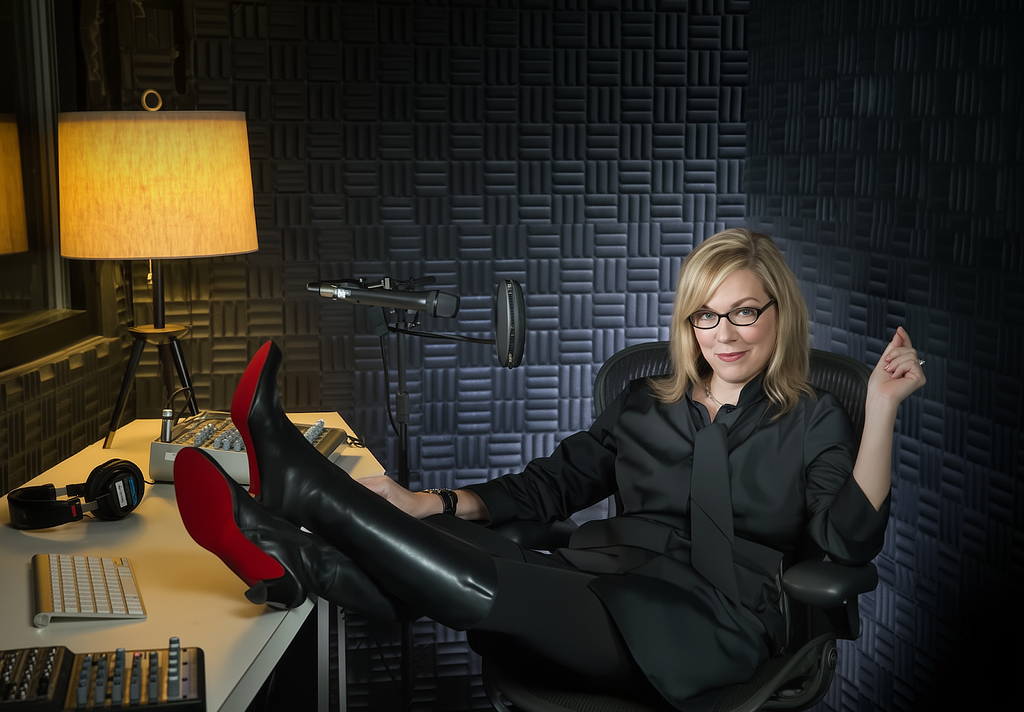
“At the time, I felt like my corporate career had taken over my creative spirit. I was successful, and it was the first time in my life I’d really experienced that kind of success… But about halfway through my time there, even though the success was intoxicating at first, by year ten I started to feel like I had lost my creative spark… That probably gives you a sense of just how desperate I was to reconnect with something creative. It was the ultimate vanity project, and I signed on — despite never having DJ’d or hosted a radio show… That’s probably one of the biggest and most unexpected gifts of my life.”
I had the pleasure of talking with Debbie Millman. Debbie is a designer, writer, educator, and interviewer whose work has traced the ways identity is formed, expressed, and contested in public life. Named one of the most creative people in business by Fast Company and among the most influential designers working today by GDUSA, she is best known as the creator and host of Design Matters, a program that began in 2005 and has become one of the longest running podcasts about design and culture. The show has been recognized by the Cooper Hewitt, multiple Webby honors, and repeated inclusion in Apple’s lists of all-time favorite podcasts, distinctions that reflect both its longevity and its unusually intimate, craftsmanlike attention to conversation.
Millman’s path to that work began in New York City, where she was born in Borough Park, Brooklyn, before a family pinwheel that took her through Queens, Staten Island, and Long Island. After her parents divorced, she finished middle and high school on Long Island, then headed upstate to the State University of New York at Albany, majoring in English and Russian literature. She has described the degree as an extended apprenticeship in reading, a foundation that would later shape her interviews and essays. In 1983 she moved to Manhattan, where she has lived for most of her adult life.
Her early professional years were defined by corporate brand building. Millman joined Sterling Brands and rose to become president of its design division, spending two decades at the firm and helping steer it through an acquisition by a global holding company. She worked on household names that populate supermarket aisles and multiplexes, projects that taught her how visual systems, packaging, and language function at mass scale. Midway through that tenure, the very success that propelled her began to feel constricting. Millman has said she worried her creative spark was at risk, and in 2004 she began to look for something that would let her make work on her own terms.
The opportunity arrived in a curious form. An early internet radio network asked if she wanted to host a show. The offer required paying for production and distribution, a detail that underlined how unproven online audio still was. She said yes. The first 100 episodes aired live on that platform, and when her father struggled to listen in real time, she uploaded the recordings to iTunes. That small act of accessibility nudged Design Matters into the emerging podcast ecosystem and helped establish it as an early fixture. Over time, the show became a venue for long, attentive conversations with designers, writers, artists, and cultural figures, and Millman’s role evolved into a kind of journalistic portraitist, more concerned with the guests’ origin stories and ideas than with her own résumé.
A public critique also altered the arc of her career. In the early 2000s, a design forum questioned her selection as a judge for a major industry competition and dismissed her corporate work in blunt terms. The episode was bruising, but when Millman joined the discussion and answered with measured restraint, the site’s founder invited her to write. That invitation led to a meeting with Steven Heller of Print magazine, further writing assignments, and ultimately to co-founding the Master’s in Branding program at the School of Visual Arts, where she continues to teach. She later became a partner and part owner in the revived Print, serving as Editorial and Creative Director, and added several books to her bibliography, including essay collections and interviews that extend the questions she asks on air.
Millman’s recent work widens that inquiry into culture at large. Together with her wife, author Roxane Gay, she acquired The Rumpus, a literary site known for early work by writers such as Cheryl Strayed, Saeed Jones, and Isaac Fitzgerald. Millman is leading a repositioning and redesign that expands the publication’s purview to include design, art, and visual culture. The project sits alongside her continued stewardship of the Branding program, which shifted during the pandemic to a hybrid model that blends online and in-person learning. She has noted that the format can level classroom dynamics, placing outspoken and quieter students at the same scale on screen and opening the program to working professionals far beyond New York.
Public service has been a through line. Millman has worked with the Joyful Heart Foundation, founded by actor Mariska Hargitay, initially helping develop the identity for the NO MORE movement that united organizations fighting sexual violence. Her pro bono work led to a seat on Joyful Heart’s board, including five years as chair. In recent years the foundation has focused on reducing the national backlog of untested rape kits and addressing image-based abuse, areas where Millman’s background in positioning and messaging intersects with her personal commitment to survivor advocacy.
Threading through these chapters is a critique of personal branding that comes from experience building brands for others. Millman argues that the language of branding can flatten human complexity into a managed persona, and she prefers to talk about character and a body of work. She has also voiced a qualified optimism about civic action, pointing to movements that have borrowed the tools of branding for social change. The refrain she returns to, in the classroom and on the page, is a simple prompt: if not now, when.
Millman lives primarily in New York City and continues to write, make art, and record conversations that examine how people become who they are. Her work, whether in a studio, a seminar room, or behind a microphone, circles the same set of questions about identity, purpose, and meaning, and invites audiences to look closely at the designs, narratives, and choices that shape our lives. Her website serves as an index to these endeavors, with links to her books, interviews, and the full archive of Design Matters.
Yitzi: Debbie Millman, it’s a delight and an honor to meet you. Before we dive in deeper, our readers would love to learn about your personal origin story — the story of your childhood, how you grew up, and the seeds for all the great things that have come since then.
Debbie: Thank you. It’s so very nice to meet you too. Let’s see. I’m a native New Yorker. I was born in Borough Park, Brooklyn. My first two years were in Borough Park, and then my parents moved to Howard Beach, Queens. We lived there until I was in the middle of third grade. Then my dad, who was a pharmacist, acquired a pharmacy on Staten Island. So the family moved there, and I lived on Staten Island until the end of fifth grade. At that point, my parents got divorced. My mom remarried, and along with his two kids, we moved to Long Island, where I spent the rest of my middle school and high school years.
After that, I moved to Albany and went to the State University of New York at Albany, where I majored in English and Russian literature — which I now joke means I have a college degree in reading. Then I moved to Manhattan, where I’ve been living since 1983. So I’ve lived in all the boroughs except the Bronx, but there’s still time.
Yitzi: Wonderful. So you probably have some amazing stories from all the different projects you’ve been involved with. Can you share with our readers one or two stories that most stand out in your mind from your professional life?
Debbie: I guess the first would be the creation of my podcast, Design Matters, which I started in 2005. The show launched that year, but the seeds of the podcast were really planted in 2004. At the time, I felt like my corporate career had taken over my creative spirit. I was successful, and it was the first time in my life I’d really experienced that kind of success. Initially, that work fueled my ambition. I was working as a brand consultant and ended up becoming the president of a branding consultancy. I stayed there for two decades and helped the firm get acquired by one of the big holding companies.
But about halfway through my time there, even though the success was intoxicating at first, by year ten I started to feel like I had lost my creative spark. I was good at corporate design and commercial art, but I wasn’t doing anything that connected to my deeper creative interests.
Then I got a cold call from a fledgling internet radio network called Voice America — not to be confused with Voice of America — asking if I’d be interested in hosting an internet radio show they would produce. At first, I thought they were offering me a job, but they were actually offering me the chance to pay them to produce the podcast and host it on their platform. That probably gives you a sense of just how desperate I was to reconnect with something creative. It was the ultimate vanity project, and I signed on — despite never having DJ’d or hosted a radio show.
But the idea of making something from nothing was too alluring. I paid them to produce it and did my first 100 episodes that way. My dad, who was a bit of a Luddite, had trouble tuning in when it aired live and didn’t know how to manage the tech. I was telling a friend about it, and she suggested I upload the files to what was then iTunes so he could listen whenever he wanted. That’s what I did, and inadvertently, it ended up becoming one of the first — and now longest-running — podcasts on their platform. That’s probably one of the biggest and most unexpected gifts of my life.
So that’s one. You said a couple, right? Here’s another.
In my effort to broaden what I was doing beyond commercial art, I started writing for a blog in 2003. The blog was actually launched in response to some online bullying directed at a few of its writers. I responded to that situation and ended up having a long conversation with the founder of the site, who then invited me to write for it.
That writing opportunity led to me meeting the editor-in-chief of Print Magazine and the editor-at-large, Steven Heller. Steven invited me to work with him to create the world’s first-ever Master’s in Branding program, which is where I’m talking to you from now.
Later, Steven recommended me to his publisher, which led to my first book deal. I started writing for Print Magazine, and now I’m one of the five partners and part-owner of the magazine.
So that was another interesting seed that was planted around that 2003–2004 time frame. My whole life changed.
Yitzi: It’s been said that sometimes our mistakes can be our greatest teachers. Do you have a story about a funny mistake you made when you first started different parts of your storied career, and the lesson you learned from it?
Debbie: I wouldn’t say it was funny necessarily, but a big moment for me came when I discovered I was being bullied and defamed on a website called Speak Up. I found it completely by accident. There was an article questioning how the AIGA — the American Institute of Graphic Arts — could have possibly chosen me as a judge for their annual design competition, which is a very prestigious competition.
They couldn’t understand how I had been selected because, at the time, they viewed my corporate work — logos for Burger King, packaging for Häagen-Dazs, Kleenex, Gillette, and Star Wars — as unworthy. They called me a “corporate clown” and a “she-devil.” I was completely mortified, ashamed, humiliated, and terrified that the CEO of my company might see it and fire me. I also worried about my friends seeing it. I felt deeply humiliated by how I was being portrayed.
As I mentioned earlier, I eventually joined the conversation on the site and tried to defend myself with grace — which was incredibly hard — but I managed to respond in a very gracious way. After that conversation ended, the founder of the site, a man named Armin Vit, reached out to me and asked if I’d like to write for them.
From that point on, everything started falling into place — my podcast took off because people read an article I had written. I met Steven Heller. I met Joyce Kaye, the then-editor of Print Magazine. I can honestly say that what felt like the worst professional experience of my life at the time — and one that made me seriously consider quitting the profession — ended up being the experience that changed the entire trajectory of my career.
I went into a deep depression for a couple of weeks. I was crushed. I’ll never forget walking home from work that night — I was working in the Empire State Building and living in Chelsea — thinking, “My career is over. How can I face anyone?”
But in hindsight, that moment became one of the most important experiences of my life.
I look back on it and think, wow. All of the tears I shed and the shame I felt — little did I know that was going to be the road that led me to where I am now.
Yitzi: You have so much impressive work. Can you tell us about the exciting new initiatives you’re working on now?
Debbie: I recently acquired The Rumpus, which is a literary site. I’m married to a five-time New York Times bestselling author, and she and I acquired it together. The team at The Rumpus actually reached out to her. In many ways, she made her name there — she first wrote for The Rumpus, then moved on to other things, but she’s always been associated with it, as have writers like Cheryl Strayed, who wrote Wild, Saeed Jones, and Isaac Fitzgerald. Some really wonderful writers. We decided to go for it. We’re completely repositioning and redesigning it, expanding it to include disciplines like design, art, and visual culture. That’s a brand new project I’m working on, and I’m super excited about it.
Yitzi: Amazing. You’ve been involved in so many fields. Journalism is a whole new one.
Debbie: Thank you. I sort of see what I do at Print as journalism in a lot of ways, and in some ways I even see the podcast in that light — I’m reporting on others.
My conversations on the podcast generally have very little to do with me. I try to keep the focus on the people I’m interviewing, and I think that’s the reason people come back to the show. It’s very much a deep dive into, as you mentioned earlier, the origin story of who I’m talking to and how they became who they are.
Yitzi: You’re well known for your expertise in branding and design. When you’re involved with all these different amazing projects, do you see design and branding as central to everything you do, as the framing for everything you do?
Debbie: That’s an interesting question and one I’ve given a great deal of thought to. If I had to pinpoint the thread that ties everything together, I’d say it’s really about an investigation into identity. All of my work on Design Matters is about revealing the deep identity of the people I’m talking with. The branding work I do is very much about positioning a brand and either revealing, reinvigorating, or refining the core identity of that brand. My writing also seeks to express either my own identity or the identity of whoever or whatever I’m writing about. So I do think that my own search for identity, purpose, and meaning has fueled all the ways in which my work has manifested.
Yitzi: That’s beautifully put. Beautifully put. What’s been the most challenging project or role you’ve taken on so far and why?
Debbie: Hmm, challenging role. I’ve had a couple of challenges, and a couple that are recent.
Certainly, teaching an intensive graduate program that relied heavily on in-classroom discourse during COVID was really challenging. But that challenge ended up transforming the program into a hybrid model. Once I got past the indignities of learning all these new platforms — which was very hard for me — I realized that teaching online had a kind of democratic aspect to it. Everyone was the exact same size on screen, so students who might take up a lot of space in the classroom, psychologically speaking, were now the same size as the introverts. That equalized things in a really interesting way.
Because of that, I grew to have a lot more respect for teaching in that format. Now the program is hybrid, with both online and on-site students, so we can include students from anywhere in the world. It’s also a lot less expensive than having to live in Manhattan. And the time differences in certain places still allow people to work, which matters because our program is geared toward working professionals. So that was one challenge.
Another has been dealing with the aftermath of COVID, because so many students — young people — have real emotional hangovers from that experience. I’ve been seeing that firsthand. A lot of that emotional dissonance shows up in the classroom, and that’s been a real challenge.
And then, from a personal perspective, I’ve been grappling with how I want to live the rest of my life. I’m going to be 64 next month, and if I’m lucky, I have another third left. But that’s something I can’t predict. So I grapple with questions like: if not now, when? When I pass, will I have regrets? If so, what could they be? How can I avoid that? What am I afraid to do that I’d still like to try?
Very existential questions, and very deeply spiritual ones too. Why am I here? What am I doing? What is my purpose? What is my value to others? How am I leaving the planet?
It’s been a really challenging period of my life in that regard.
We don’t realize until we’re older that there is a time — there is an expiration date. And because we don’t know what that is, as we get closer to those charts you see on lifespan and predictive equations about how long you might live, you have to start making some really tough decisions about what you’re willing to sacrifice in order to do things you’ve maybe been afraid to do, or things you’re insecure about doing.
Because as far as I can tell, there are no do-overs. If there are, nobody’s let us know. And in some ways, I’d love a do-over — but I can’t count on that. So, like I said, if not now, when?
Yitzi: Talking about legacy, you’ve been involved with so many important social impact causes. Tell us more about the social work you’re doing and the legacy you hope to leave with that.
Debbie: In many ways, that work is the most important work I’m doing. Having worked to create, reinvigorate, or refine some of the world’s biggest brands, when my firm was acquired and I ultimately — many years later, maybe too many years — left corporate practice, I started my own practice. It’s primarily centered around brands I believe are doing good work in the world.
The most important of those is my role at the Joyful Heart Foundation, which is a foundation Mariska Hargitay, the star of the long-running TV drama Law and Order: SVU, started 20 years ago. The show, SVU, stands for Special Victims Unit, and it centers around helping victims of sexual violence — domestic violence, child abuse, sexual assault. Mariska started the foundation to eradicate sexual violence in our lifetime.
At the time, I was doing some work with one of my corporate clients at Kleenex, who asked if I’d be interested in helping create the positioning and identity for an umbrella movement called NO MORE. It was an initiative joining together all the major foundations working to eradicate sexual violence, in an effort to raise money for all of them. It involved companies like Kleenex, Avon, Viacom, and several others. I signed on, and it was all done pro bono.
Through that work, I met the executives and Mariska at the Joyful Heart Foundation. After I finished the NO MORE project, they asked me to do similar work for them. When that was done, they invited me to join the board. Several years later, I became chair of the board and held that position for five years. I’m still on the board, not as chair, but I’m very involved in continuing the work.
Over the last five years or so, we’ve focused on eliminating the rape kit backlog, which had become an epidemic in this country. Thanks to a lot of hard work by the foundation, it’s been significantly reduced. It’s not completely eradicated, but it’s much less of a problem now. We’re currently working on image-based abuse — what used to be called revenge porn — but it’s broader than that. It’s a serious issue.
I also host their book club and their podcast, so I’m deeply involved. And because so much of this work centers around branding, positioning, and design, I feel like my corporate background, along with my own experiences as a child with sexual abuse, makes this work incredibly meaningful. In many ways, it feels like it makes my life make sense.
Yitzi: Maybe this is a silly question, but from a brand perspective, if you were the President of the United States, what would you do to improve our brand in the world?
Debbie: I’d make a clean sweep of our politicians, first and foremost. I think it was Warren Buffett who said that if we can’t have a balanced budget for the United States, then everybody should be fired. And I agree. What’s happening now is, in many ways, evidence of why I don’t believe personal branding is something to aspire to. Personal brands are the opposite of personal — they’re impersonal. Brands don’t exist on their own. They don’t grow on trees. They don’t breathe or have a heartbeat or actual DNA, even though people think there’s DNA in a brand. They are not self-directed. They are constructed and managed by humans.
Now, a human can own a brand, represent a brand, create a brand. But the moment you associate a person with a brand, it’s no longer about who they are, it’s about a constructed persona. And what I think we really need to consider when thinking about personal brands is not growing a personal brand, but growing your character, your reputation.
Our current leadership is evidence of that. There is no character. There is no good reputation. There’s no body of work that can be relied upon or pointed to as evidence of time well spent. It’s all grifting and stealing and shaming. It’s abusive and an embarrassment. We’re a global embarrassment now. So the moment you associate the leader of a country as a brand or with a brand, is the moment you surrender to the whims of that constructed persona. And in many ways, that’s a big reason we’re in the mess we’re in.
Yitzi: Profound point. It sounds like what you’re saying is that we’ve made looking good a proxy for being good.
Debbie: I think that’s right, particularly with celebrity culture. But this goes way beyond that, because I don’t even think we look good anymore. I think we look weak and foolish and infantile. What’s happening now, with the leaders of North Korea and Russia and China all getting together, is because of the void left by the absence of real, meaningful, purposeful leadership on this planet.
I think we’re headed for a very difficult, dark time. If you look at the history of our species, there’s never been a country that’s been able to sustain long-term leadership — not over millennia. And I think we’ve turned the corner into our demise. Not to be too much of a, and I can say it — no one else can — a Debbie Downer.
Yitzi: I don’t want to end on a downer note, so are there things that make you optimistic about the future?
Debbie: I think we’re seeing a groundswell of civil disobedience. If the various constituents involved can join hands and work together, rather than in splintered efforts, we have an opportunity to refute and refuse what’s happening.
We saw this with the Arab Spring, with Black Lives Matter, and with Me Too. Younger people are using the very tenets of branding that corporate America has used for hundreds of years — not as a capitalist tool, but to create better messaging and drive profound change.
That’s something I feel very excited about, for lack of a better word. I don’t know if “excited” is exactly right — maybe “cautiously optimistic” is better. And I hope that can grow in volume and impact. If we look back at history, I think we have a shot. We really do have a shot.
Yitzi: This is our final aspirational question. Debbie, because of your great work and the platform you’ve built, you’re a person of enormous influence. If you could put out and spread an idea or inspire a movement that would bring the most good to the most people, what would that be?
Debbie: I think I’m going to borrow from my own personal journey right now. We’re on such a precipice, standing at a crossroads of which path we should or even can take. I would say, if not now, when?
The time is now for all of us to rise up, join hands, and make a difference — to combat the struggle and the dissonance with hope and optimism. I do believe what Martin Luther King said, that the moral arc of the universe bends toward justice. But now, we have to be the ones to steer that arc.
Yitzi: Debbie, how can our readers continue to follow your work? How can they purchase any of your books? How do they listen to your podcast? How can they get involved with any of the amazing things you’re part of?
Debbie: Probably the best and easiest way is just to go to my website, debbiemillman.com. There, you can find lots of information about my work. There’s a link that takes you directly to listen to any of my podcasts, and so forth. You can see everything you ever wanted to know about me there.
Yitzi: Debbie, it’s such a delight to meet you. I wish you continued success and good health.
Debbie: And you too. It’s been a delight, a delightful conversation.
Yitzi: Thank you so much. I hope we can do this again next year.
Debbie: I’d love that. I’d really love that.
Debbie Millman on Building ‘Design Matters,’ Acquiring The Rumpus, and Why Personal Branding Misses… was originally published in Authority Magazine on Medium, where people are continuing the conversation by highlighting and responding to this story.