
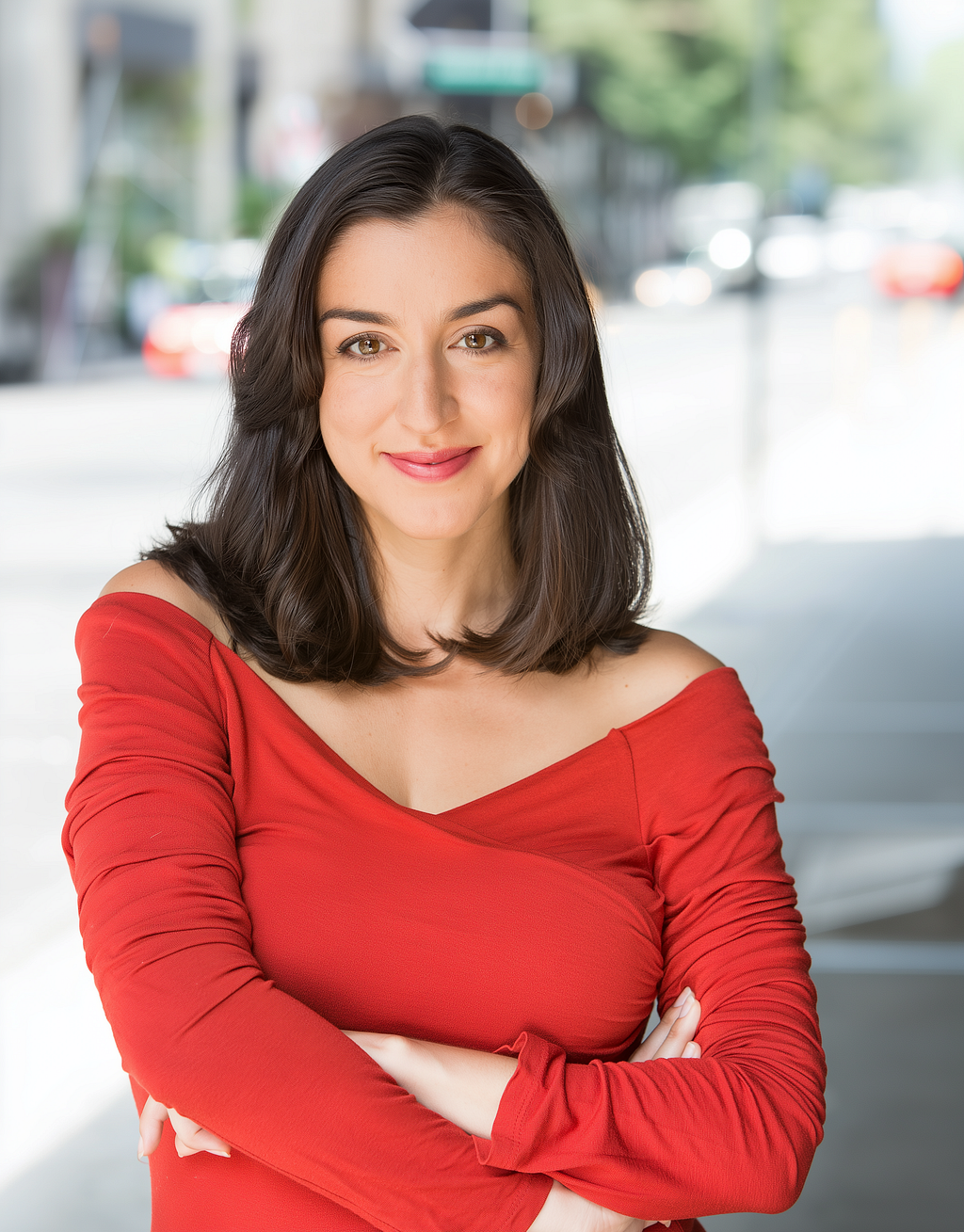
“I’m actually starting a tech company right now. During the pandemic, I made a lot of virtual theater, and I was desperately chasing that live interaction between audience and performers — the thing that makes theater feel alive… I can’t talk too much about it yet because we’re about to launch, but I found a way to make that back-and-forth interaction feel real and present… The legal side, protections, fundraising, business planning — all of it is completely new to me, and I’m terrified. Completely terrified. But I’m doing what my students do: asking questions. People want to help.”
I had the pleasure of talking with Elena Araoz. Elena is a director who moves between theater, opera, musical theater, immersive work, and large public events, with a career shaped by curiosity and a persistent search for honest performance. She grew up in Connecticut, the daughter of a Peruvian father and an American mother with Canadian roots, in a house her parents still occupy. The suburbs offered bikes, friends, and a forest that is now subdivisions. Inside the house, there were lessons. From her father came a love of language and a strict focus on clarity. He would open the Hartford Courant to the quote of the day and ask her to read it aloud and explain it. “What does this quote mean?” he would ask. She disliked the exercise, but it taught her to hear punctuation, alliteration, and vowels, and to think about why a writer picks one word over another. From her mother came an interest in people and where they come from, a habit of greeting others without judgment that has carried into her rehearsal rooms.
Family gatherings reinforced a taste for performance. At big meals in Peru someone would say, sing a song or read a poem or grab the newspaper and present something that mattered. Araoz did not perform formally as a child, but she learned to love the exchange between a speaker and an audience. At the College of the Holy Cross she initially studied biology with plans for marine science. Memorizing pathways and systems came easily. An acting class did not. “It was the thing that felt impossible,” she says, because the work asked for truth that never felt complete. She shifted to theater, then earned an MFA at the University of Texas at Austin, where she studied Shakespeare with actor Fran Dorn and began to feel constrained by how she was being directed.
A visit from the English polymath Sir Jonathan Miller changed her path. After rehearsal she asked if she could assist him. Miller replied, “If you want to be a director, why are you studying Shakespeare in Texas?” He called her “the one who always asks too many questions.” She became his assistant at the Brooklyn Academy of Music, then at Lincoln Center and in opera companies across the country. Miller, a trained physician, took interest in the brain and often linked neuroscience with stage practice. He reminded actors that characters do not know what they will say next. The performance should feel like sentences being formed in real time. Araoz’s own science background resonated. In high school she twice descended in a three-person submersible a mile off the Maine coast, studying humpbacks and collecting sediment, and she carried that sense of inquiry into her directing.
Araoz now teaches in the Program in Theater and Music Theater at Princeton University, where her students model a habit she has adopted in her newest venture. During the pandemic she created virtual theater and wrestled with the problem of presence on screens. She says she had a light bulb moment and began building a technology to restore real back-and-forth between performers and audiences. She is launching a company around the idea. “I’m terrified. Completely terrified,” she says, noting that fundraising and legal work are new ground. Her approach is to “ask the questions,” the way her students do, and to remember that people like to help if you are direct about what you need.
Her directing portfolio centers on big ideas told with a clear line. She has spent seven years with Sugar Skull, a family piece created with the company Mexico Beyond Mariachi. It tours nationally in the fall and explores Día de Muertos through the question of home. For Araoz, who is linked to multiple languages and cultures, the inquiry is ongoing. She is directing Third Person, an epistolary play by Catherine Filloux that examines student activism, corporate power, and the cost of silence through a trio of voices. The work premieres on September 20, 2025, at CultureHub in New York in a one-day run with rotating casts. She recently directed an opera with Teatro Grattacielo at La MaMa that looks at migration and the disappeared in Latin American democracies, and there is discussion of a future presentation in Athens.
Across projects Araoz thinks about scale and sustainability. She is drawn to plays with “impossible stage directions,” then balances that impulse with a wish to use fewer resources when they are not essential. That interest extends to her activism around plastic pollution. She wrote a play for young audiences that continues to be produced at schools and colleges and says local habits matter, from personal consumption to what a neighborhood throws away.
Her advice to emerging artists is practical. Be yourself and invest in your own imagination. Do not chase love. Ask for what you need, whether that is advice or funding. Remember that even successful people feel insecure, a biological signal that can protect you or hold you back. For her own balance she does Pilates, which she likes for the “minuscule” muscles and the steady discoveries, and she gardens, a practice she calls the slowest art form. A quote she once saw online sticks with her: “An artist is born thinking something is wrong here.” She tries to fill those gaps with art so that people can talk about what is missing.
Araoz is active on Instagram and keeps her website current with upcoming work. The arc that began at her family table in Connecticut now runs through classrooms, opera houses, black box theaters, and a tech lab, guided by the same questions that shaped her childhood reading aloud. What does this mean? How does it sound? What is the human truth behind the words?
Yitzi: Elena, it’s so nice to meet you. Before we dive in deep, our readers would love to learn about your personal origin story. Can you share with us a story of your childhood, how you grew up, and the seeds for all the great things that have come since then?
Elena: I’m the child of one parent who’s an immigrant from Peru, my dad, and one parent who was born in the United States to Canadian ancestors, my mom. I grew up in Connecticut. My mom grew up there, but my dad found his way to Connecticut for work when he came to this country in the late 60s or early 70s. My parents still live in the same house I’ve basically spent my entire life in. I think they moved in when I was six months old, and they’re still there. So, my roots are very much from this suburban town where I could ride my bike to a friend’s house or play in the forest behind us — which is now full of massive homes. There’s no more forest, sadly.
It was in that house where my parents taught me two things that I think led me to the theater. My dad taught me a love of language. For him, my understanding and command of English were really important. He wanted me to speak English without the accent he had because of the prejudice he experienced. I think sometimes he regrets being so strict about that, but that was the training of my childhood. He had me really think about why writers chose the words they did. There’s a newspaper in Connecticut called the Hartford Courant, and every day it had a “quote of the day.” My dad loves quotes — what gets pulled from someone famous to personify their philosophy or ethos, or something funny or poignant. He would sit with me and ask, “What does this quote mean? Read it out loud. What does it mean?” I hated it. I really hated that exercise. It always took too long, it was frustrating, and we never agreed. But it taught me to pay attention to punctuation, alliteration, assonance, vowels — the choices writers make.
My mom gave me a deep understanding of people. She’s always wondering about someone’s origin story, not just the where they came from, but the who they came from. She taught me to really respect everyone, no matter what biases you might bring. You have to erase all of that to have a conversation — or even just to say, “Hello, how are you?” She’s still incredibly open to people. She loves to chit chat and gossip — and I definitely get that from her too. So, I think those two things gave me an early love for language and for the arts.
The other thing about Latin families is that you can’t leave the table after dinner without creating some kind of performance. Especially when I visit my family in Peru, if we’re having a big meal with a lot of people around the table, someone will always say, “Sing a song,” or “Read a poem,” or “Grab the newspaper and read something that interests you,” or even “Recite a political speech you saw.” So even though I wasn’t performing in a traditional sense at a young age, I realized that I was learning a love of performance.
Then I went to college to study biology. I really thought I’d be a marine scientist. But in college, I realized biology came pretty easily to me — I could memorize it and work my way through it. Then I took an acting class, and that was the thing that felt impossible. It frustrated me — the pursuit of honesty and truth and beauty. You could never quite get it right. It was never human enough. And I realized that the pursuit of getting inside people, inside social questions, was drawing me much more. So, I became a theater major.
I graduated from the College of the Holy Cross in Worcester, Massachusetts, and then went to UT Austin in Texas for my MFA. I studied a lot of the classics — Shakespeare in particular — under the very famous actor Fran Dorn. While I was in college, I started to get frustrated with the way I was often being directed. I felt like I didn’t have enough voice as an actor, not enough say in who my character was or what my personhood brought to the role.
That’s when Sir Jonathan Miller came from England to work with our program. I felt like I learned so much from him in just one day. After one of our rehearsals, I got the courage to go up to him and said, “Hi, Jonathan. I’m learning so much from you. Could you ever imagine needing an intern or assistant?” He asked, “Why do you ask?” and I told him my name and said, “I want to be a director.” And he said, “Yes, I know who you are. You’re the one who always asks too many questions.” Which was true! He asked again why I wanted to follow him, and I told him it was because I wanted to direct. And he said, “If you want to be a director, why are you studying Shakespeare in Texas?” And I thought, “Yeah, that’s a good question.”
He took me under his wing. My first job assisting him was at the Brooklyn Academy of Music in New York. After that, we worked together at Lincoln Center and with many opera companies around the country. He really helped launch my career in opera directing.
Now I direct theater, musical theater, opera, immersive work, and large-scale events.
Yitzi: That’s an amazing origin story, and you’re an amazing storyteller. You probably have some great stories from your career. Can you share with our readers one or two that stand out most in your mind?
Elena: Gosh, that’s a good one. Let me think. I’m actually starting a tech company right now. During the pandemic, I made a lot of virtual theater, and I was desperately chasing that live interaction between audience and performers — the thing that makes theater feel alive. It’s really hard to do that on any kind of streaming platform. It always felt like television or film, and that one-way connection never made it feel real. But then I had a light bulb moment. I can’t talk too much about it yet because we’re about to launch, but I found a way to make that back-and-forth interaction feel real and present.
So, for the first time, I’m launching a company built around this technology. And I’m doing something I have absolutely no idea how to do. I’ve learned why people always say to take a business class in college — which I never did. The legal side, protections, fundraising, business planning — all of it is completely new to me, and I’m terrified. Completely terrified.
I’ve decided to do what my students do. I also teach — I’m on the faculty at Princeton University in the Program in Theater and Music Theater. One thing my students are amazing at is asking questions. So, when I’m heading into a meeting with someone — whether it’s for fundraising or legal advice — I try to push through the fear by adopting that student mindset: just ask the questions. People want to help.
I remind myself that about once a week, a stranger writes to me and says, “Hey, I want to be a playwright but don’t know where to start,” or, “I want to be an actor — what do I do?” And I always make time for those conversations. So now I’m trying to be okay doing the same, but from the other side.
And working in tech, the financial numbers are huge compared to the theater world. It takes courage to say, “I need this much,” when that number might be 20 times what I would make in a year as an artist. It’s a big leap, but I’m trying to be bold.
Another story that stands out is the one I mentioned earlier, about talking to Jonathan Miller. When I asked if I could assist him, and he replied, “Why are you studying Shakespeare in Texas if you want to be a director?” — that stuck with me. I understand now why I was there, and I’m very glad I was, but that question opened something up for me.
What really struck me about Jonathan is that he was a medical doctor. He passed away a few years ago, but he had this deep interest in the brain and how it works. He had published quite a bit on medicine, and he saw a strong connection between neuroscience and theater. He believed both disciplines are trying to look inside the human mind — asking what makes someone tick, what makes them make the choices they do, what shapes the words they choose.
He would remind actors in rehearsal that none of these characters know what they’re going to say next. Even though the lines are written, the performance should feel like the brain is doing what it always does — creating sentences in real time, ones you’ve never said or rehearsed before.
I think one of the reasons he took a liking to me is because I had that science background. In high school, I had an amazing opportunity to work in marine science. Outside of Woods Hole, I got to go down in a three-person submersible twice — a mile underwater off the coast of Maine. I was studying the feeding habits of humpback whales and collecting ocean sediment samples. It was all part of a student research initiative funded by scientists.
Those stories and that curiosity really resonated with him. And his research on the brain and the body fascinated me. I think that shared passion for figuring out how things work is what connected us. That mutual curiosity is what led him to take a chance on me as his associate.
Yitzi: You already mentioned one thing, but tell us about the other exciting new things you’re working on now and what we hope to be seeing from you in the near future.
Elena: In terms of my theater work, I’m about to launch the seventh annual tour of a show called Sugar Skull. It’s for family audiences, and I was asked to work with this Mexican dance and music company called Mexico Beyond Mariachi. They had a story and an idea — they hired a playwright, then they hired me. I absolutely love this piece and have loved working on it for the past seven years. It’s a celebration of Día de Muertos, or Day of the Dead, but really it’s about the question: Where is home, and how do you find it?
Is home where you live? Is it with your ancestors? With your family? Is it the country you were born in, or the country your parents came from? That question, especially being half Canadian and half Peruvian, with connections to multiple languages and cultures, is something I find very profound in my work.
I’ve found that so many playwrights are writing about this right now. I often get asked to have conversations around what language we live in. And if I live in a different language, does that mean I have a different home, or a different family, than the person sitting next to me?
I’m also working on Third Person with Cat Filloux, which I’m both excited and devastated by, in the best way. I’m thrilled that she’s looking at sustainable practices for our environment in her playwriting. I’ve always said I love plays with impossible stage directions — the more difficult the stage direction, the more invested I get in the design possibilities. But at the same time, I’m also thinking about how we can tell stories in very simple ways, using fewer resources when they’re not necessary. Sometimes I think really big, and other times I try to pull back and focus on the essentials of humanity. This play is told so simply, and yet it’s incredibly powerful.
I’m also workshopping a bunch of new pieces. One is an opera I did this summer at La MaMa with Teatro Grattacielo. It’s a piece about migration and about people who have disappeared — or been disappeared — in Latin American countries that call themselves democracies. There’s a possibility that it might be going to Athens this summer, so we’ll know more about that soon.
Yitzi: So impressive. This is our signature question. Elena, you’ve been blessed with a lot of success and you must have learned a lot from your experiences. Looking back to when you first started as a theater director, can you share five things that you’ve learned now that would have been really nice to have a heads-up about when you first started?
Elena: Yeah.
- Be yourself. Don’t try to be anybody else. Lean deeply into your own imagination and cultivate it — your visual aesthetic, your values around art-making — through deep reflection. Whether that’s drawing them on paper, writing them out, or getting feedback from someone else, really invest in understanding how you think. As a director, the only thing that sets you apart is your uniqueness and the way your mind works.
- Don’t spend all your time chasing boys — or anybody, of any gender. Or maybe I should say, don’t chase love. There are better things to do with your time. Love will come when it’s supposed to.
- Ask questions when you don’t know the answer. People actually love giving answers, so don’t pretend to know everything. Ask for advice. Ask for money when you need it for a project. Ask for anything you need. People want to help, and asking is often received as a compliment.
- Know that every successful person — no matter how wildly successful they seem — feels just as insecure as you do now. That insecurity is just your biological instincts kicking in, telling you to stay safe, don’t put yourself out there, a large woolly mammoth might eat you. Those instincts can help you in some situations, but they can also hold you back from having a wild imagination and a bold artistic practice.
Yitzi: Can you share some of the self-care routines that you use to help your body, mind, and heart to thrive?
Elena: I do a lot of Pilates for my body. I love the minuscule nature of it — the tiny muscles, finding those muscles. I’m always discovering something new about my body, even though I’ve been doing it for many years.
I also love to garden. That’s kind of new to me, but it’s become something really meaningful. I heard this quote once — “Gardening is the slowest art form” — and it’s really stayed with me. It teaches me patience as I try to create something beautiful.
There’s another quote I came across years ago, on a meme actually, and I’ve never been able to find it again, even though I’ve searched high and low online. It said, “An artist is born thinking something is wrong here.” I think that’s so true. That “something wrong” can be a big issue you see in the world, or it can be something missing in a larger social conversation. And I think, “I need to fill that gap with art, so people can talk about it.”
One of the ways I channel that is through activism, especially around plastic pollution. I wrote a play about it that’s been produced and is still being produced at colleges and high schools. It’s a play for young people to learn what they can do in the world.
I also try to help my community — my neighbors, my family — do better in how we think about what we consume and what we throw away. That makes me feel like I’m contributing something good by not putting something harmful into the world, like plastic.
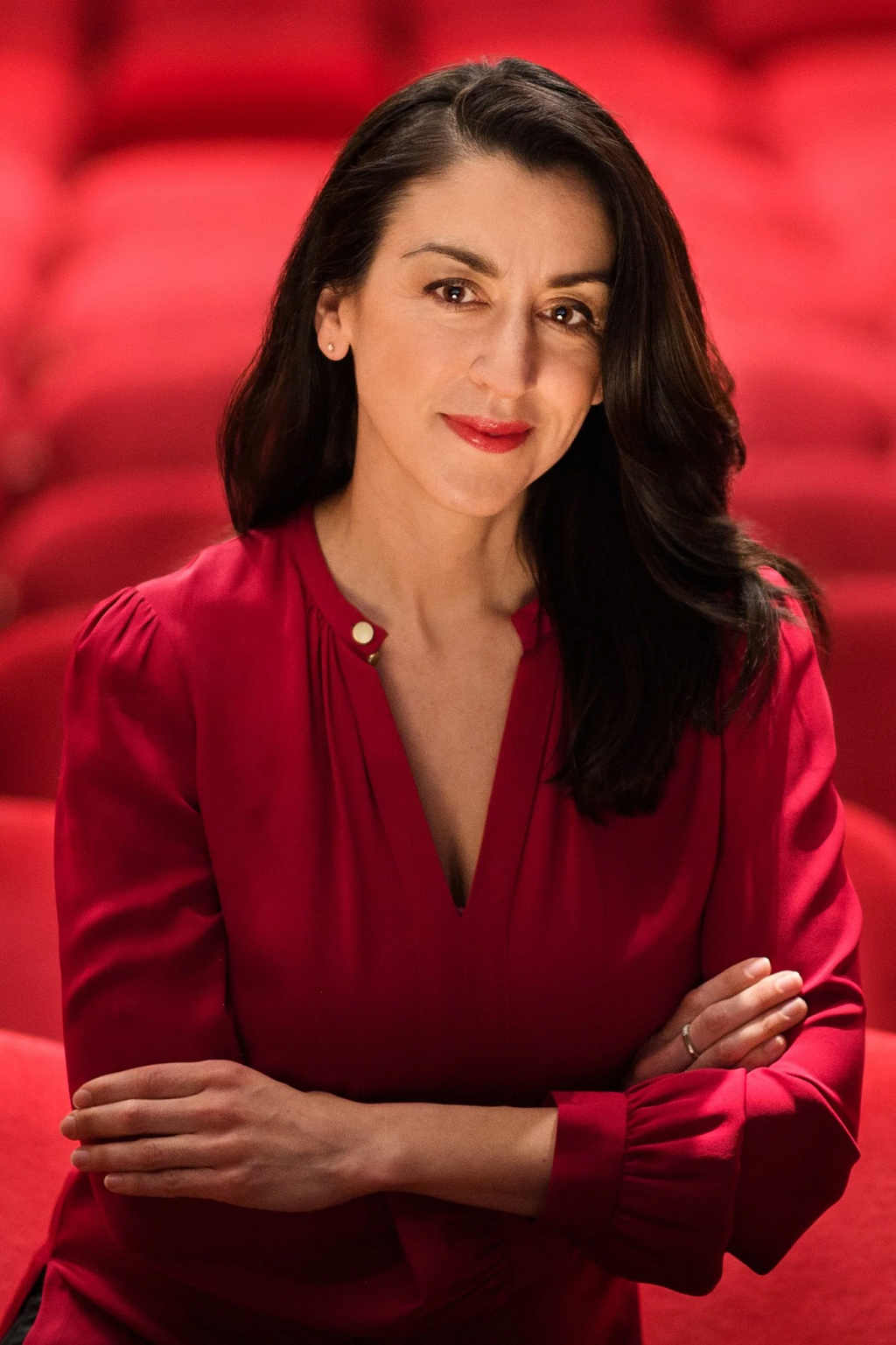
Yitzi: Elena, because of your amazing work and the platform you’ve built, you’re a person ofl enormous influence. If you could put out and spread an idea or inspire a movement that would bring the most good to the most people, what would that be?
Elena: That’s a good question. I think we need to take care of our planet. We need to think about the choices we make that are hurting future generations.
I find it really interesting that in Peru, when I visit, if you go to a grocery store, anything that comes in plastic is more expensive than things that don’t, because you’re paying for the plastic. In the United States, it’s the opposite — you pay less for food that’s all wrapped in plastic than you do at an organic store.
So I want to invite people to really think about: is our American idea of hardship really hardship? I want people to think about what we take, and how we can give more than we take. If we want to continue making art in this world, we can’t keep stealing from it.
I don’t know, I haven’t fully articulated a movement before, so I’m trying to put it into words right now. But I think we need to conserve. We need to go back to the idea that we don’t need it all, and we don’t need all of it all the time.
We should share. One thing I love in my community is this Buy Nothing group I’m part of. The idea is that everything you really need is already in the community. So why don’t we share?
I think we’re going to be forced to return to a more indigenous way of life — more local, more hyper-local — where we rely on each other instead of relying on a company to just send you something.
Yitzi: Elena, it has been such a delight to meet you. I wish you continued success. How can our readers follow your work or see one of your productions? How can they support you in any way?
Elena: You can definitely follow me on Instagram. You can also check out my website, which is usually updated with what I’m doing next.
Up next is an epistolary play by Cat Filloux, my long-time collaborator. It’s incredibly beautiful, poetic, and provocative. It explores, in a larger sense, America’s relationship to the world and what we’re leaving our children.
And then there’s Sugar Skull, the Día de Muertos show, which will be on a national tour throughout the fall. We’ll be at flagship institutions in many cities, mostly in October and November, leading up to Día de Muertos.
That’s probably it.
Yitzi: Elena, it has been so delightful to meet you. I love your energy, I love your brilliance, and I wish you only continued success.
Elena: Thank you so much. I appreciate it. This has been so fun.
Elena Araoz on Directing Across Borders, Building Theater Tech, and the Power of Asking Questions was originally published in Authority Magazine on Medium, where people are continuing the conversation by highlighting and responding to this story.