
Dr. Jane Goodall on COVID-19’s Wake-Up Call, Youth Activism and Why Hope Is Humanity’s Greatest Tool Against Climate Change
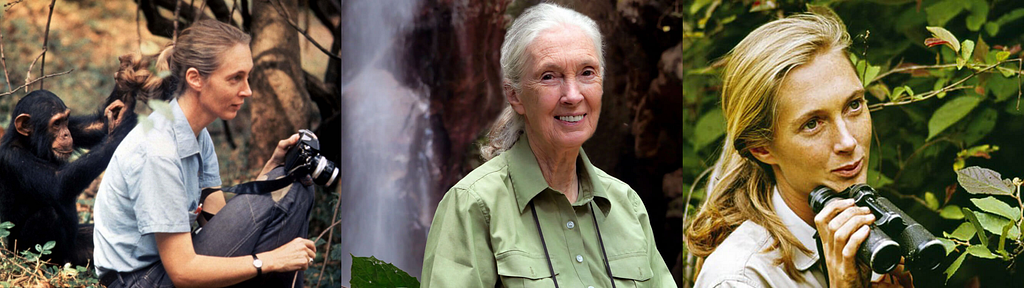
“We need to change the way we do things. Perhaps we should measure success differently — not by how much money we make, but by how happy we are and how we live in harmony with the world around us.”
At a press conference at Websummit 2020, we had the distinct pleasure to interview primatologist Dr. Jane Goodall.
Dr. Jane Morris Goodall, formerly Baroness Jane van Lawick-Goodall, is an English primatologist and anthropologist. Considered to be the world’s foremost expert on chimpanzees, Goodall is best known for her 60-year study of social and family interactions of wild chimpanzees since she first went to Gombe Stream National Park in Tanzania in 1960.
Dr. Goodall is the founder of the Jane Goodall Institute and the Roots & Shoots programme, and she has worked extensively on conservation and animal welfare issues. She has served on the board of the Nonhuman Rights Project since its founding in 1996. In April 2002, she was named a UN Messenger of Peace. Goodall is an honorary member of the World Future Council.
Thank you so much for joining us Dr. Goodall. Our readers would love to get to know you a bit better. Can you tell us a bit about what you are doing now, and how you got started?
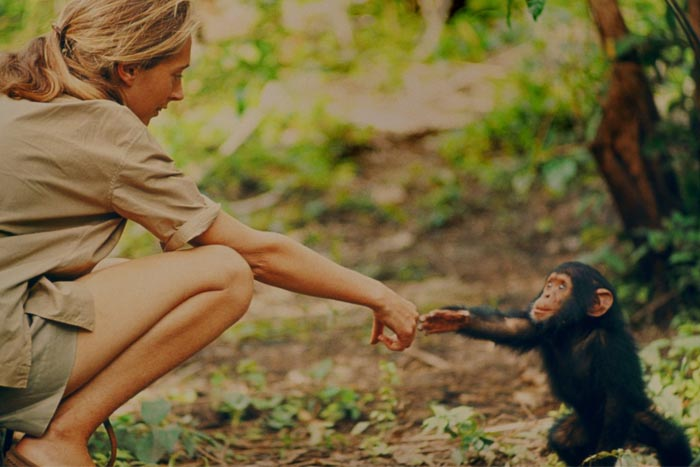
Dr. Jane Goodall: Well, I began working with chimpanzees in Tanzania, Africa, in 1960. In 1986, I left the beautiful rainforest where I’ve spent the best days of my life. When I realized that the numbers of chimpanzees were dropping and were disappearing right across the chimp range in Africa, I realized that I needed to try and help the situation. As I visited Africa, learning about the plight facing the chimps, I also realized the terrible plight of many the African people, how they were living in absolute poverty with no good health and education facilities, growing degradation of the land, lack of food.
So that was when the Jane Goodall Institute, JGI started. We began our program to work with local people to improve their lives, find other ways of living without destroying the environment. This program, which began in Tanzania, is successfully now in six other African countries. We travel around the world, raising awareness and meeting so many young people who seem to have lost hope. They believe we’ve compromised their future, and there is nothing they could do. But I said no, there is time. We have a window of time and we need to take action now.
So I began the program Roots and Shoots for young people. We now have members from kindergartens, and universities in 66 countries and growing. It’s my greatest reason for hope because these young people gave us their message. Each one of us makes an impact every single day, and we can choose the impact we make. Each group chooses three different projects to make the world better for people, for animals, for the environment. So that’s what I’m spending my days doing.
I’m nearly 87 and for the rest of my life, I will be fighting for social justice, for the inclusion of animal welfare and legislation for the rights of young people and to empower them, to make the world a better place.
Were there specific moments that made you want to become a scientist and environmental leader? Can you share that story with us?
Dr. Jane Goodall: Well, my dream of going to Africa wasn’t to become a scientist or study any particular animal. I grew up in the war. There was no TV. I read books. I became inspired by Dr. Doolittle and Tarzan. I was 10 years old when my dream of going to Africa and living with and writing books about animals was born. I had the great support of my mother who told me if I really wanted something like this, I’d have to work really hard, take advantage of every opportunity, and that if I didn’t give up, maybe I’d find a way. This is a message I’ve taken to young people around the world.
So, when I got to Africa and I happened to meet the famous paleontologist Louis Leakey, he suggested I should go and study chimpanzees. I had not been to college. A year later, he told me I had to get a Ph.D. There was no time for an undergraduate degree. Well, I got that degree. As I have said, I had the happiest days of my life out in the rainforest, building a research station. But then I left because I realized that things were going wrong. I realized that if I could do something about it, I needed to try. So that began the advocacy section of my career.
Do you have any advice to give to my seven-year-old daughter about what the future holds and what she should know about being able to make a difference?
Dr. Jane Goodall: Well, I hope that your seven-year-old daughter will join Roots and Shoots, which is now in 68 countries, and then think about what she can do. What is she passionate about? Because different people are good at doing different things to make a difference.
So if you’re passionate about litter, you collect litter and you inspire your friends to help you and you tell your parents to recycle in the proper bins.
If you’re passionate about animals, you learn about them. Perhaps you can go and volunteer in a shelter. So it depends on you.
Do what you feel passionate about. I’m sure you have supportive parents who will help you do that. Roots and Shoots is free. It doesn’t cost you anything, and you can find out about it on the internet.
What do you think that we can learn from indigenous communities about sustainable living and responding to the climate crisis?
Dr. Jane Goodall: Thanks for that question. It’s beginning to be recognized in higher circles that there’s a lot of wisdom in the indigenous communities, in different parts of the world, who’ve been living in harmony with their environment for hundreds of years. The indigenous people are being brought more often into international conferences to talk about how to protect our environment. We need to understand what we’re doing to the planet and at the same time, we need to be inspired by understanding that there are ways in which we as individuals can fight against what many people feel is inevitable.
Do you think that humanity is going to change after COVID-19?
Dr. Jane Goodall: If we carry on with business as usual, then as a species, we’re really doomed. Because here we are with these finite natural resources and the growing human population and a growing population of livestock. Already in some places, we are using up these precious natural resources faster than nature can replenish them. But we’re beginning to understand that. For many people, COVID-19 has been a wake-up call. We need to establish a different kind of relationship with the natural world and with animals because it’s our disrespect of nature that has led to climate change. It’s our disrespect of nature and animals that led to the pandemic in the first place.
As we emerge from the pandemic, we have no option, but to confront head-on the much more sinister threat to our future, which is climate change. And it’s up to all of us to do everything we can every day to fight it, to slow it down.
And what is one micro-step that everybody can take to tackle climate change?
Dr. Jane Goodall: Well, one major problem is actually getting more people to understand that this desire for eating meat means there are billions of animals in intensive factory farms or big cattle ranching operations. And to feed the animals in the factory farms, they grow grains, which means destroying an environment. Also, to get the grains to the animals, they use up masses of fossil fuel. Water access, which is very precious in some places, is made worse because of climate change and extensive drought. But a lot of water is used to change vegetables to animal protein. Finally, we know that the major greenhouse gas, the gas that traps the heat of the sun is carbon dioxide. This emission is caused by the burning of fossil fuels. But another very potent greenhouse gas is methane, which is produced during the digestion of all these animals. We produce it too, but these animals are in the billions.
The last thing I would say about it is that each one of these animals, every cow, every pig, every Turkey is an individual. Science has now proved that these individuals are sentient. They also have feelings like happiness, sadness, they know fear, they feel pain. I gave up meat because when I learned about these factory farms, I looked down at the piece of meat on my plate and I thought, “Wow, this symbolizes fear, pain, death. I don’t want that.” That was the last bit of meat I ate.
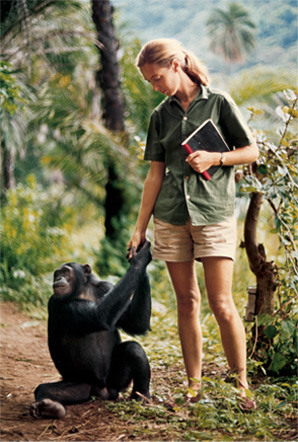
I’m now becoming vegan because we understand the horrific cruelty to the dairy cows in the dairy industry and the poultry and pig industries.
Sadly, there are still many people that don’t care about climate change. How can we encourage these people to care if they know all of the facts, but still don’t?
Dr. Jane Goodall: Well, I like to tell them stories until COVID 19 grounded me here in the UK. I’m speaking from the house where I grew up and I’ve been here since March having to develop a virtual Jane. I used to travel 300 days a year around the world, giving lectures, meeting people, attending conferences, but I’m stuck here now. Some people, big business, don’t want to listen to things about climate change. They want to carry on with business as usual.
But I’m talking about a normal person who maybe has heard the two different sides and thinks, “Oh, well, it’s happening far away, needn’t bother me to tell stories.”
But I’ve seen the ice melting where it never used to melt. I’ve seen the horrific results of the fact that the bad hurricanes are getting more frequent and the droughts are getting longer, more severe, more frequent. I’ve seen the horrible results of the forest fires. For the first time in history, there were fires in the arctic circle. I have seen animals dying because of the droughts in Africa. If you tell people these stories, and then you say to them, “Well, I’m thinking of the UK now. This is meant to be Midwinter.” There are primroses out and what’s happening is that certain insects, which used to die off in the winter because of the frosts are gradually moving from the tropical areas. So the areas that used to be cold, which are now not so cold, give the risk of new diseases. So I just tell them stories and hope they’re intelligent enough to listen and think about it but they may not admit it at the time.
What is your take on nuclear energy as a green energy source? Is it a good solution, or should we try to pay attention to other ways to develop green energy?
Dr. Jane Goodall: Well, I honestly cannot answer that. It’s not my area of expertise. I have an inherent fear of it because I don’t know if there is a really safe way of storing nuclear waste. If there could be a really safe way of storing nuclear waste and there is an assurance that the factories or whatever they are could be run safely, then I suppose it would be a good source of energy. However, I’m much more wedded to the sun, wind, tides, and that sort of energy.
But you can’t take that as gospel, it’s just that I don’t know about it enough.
You talked about how COVID is a result of how we treat nature and our relationship with animals. I would love to know your opinion about the response of the world’s governments.
Dr. Jane Goodall: Well, people think I’m a guru. I can’t tell you about the response of the different governments around the world. There is a movement where different governments are standing up and saying that they’re going to make climate change a major issue. Thank goodness, that’s being said by the new administration that will be taking over in the US and various European countries have agreed to put a much stronger emphasis on achieving the goals of emission control that they said. So I hope that more governments will join in. I really hope for that. But whether they will or not, politics is a subject I always shy away from in a way, because it is so corrupt it’s so tied up with big businesses in so many countries.
There’s a huge amount of waste in the tech industry. What is your personal relationship with tech and how should we go about engaging in a technology-driven society while ensuring we are not further harming our world?
Dr. Jane Goodall: All we can do is to do our best, isn’t it? I mean, if I wasn’t relying on technology now, I couldn’t be giving my message around the world. I think it’s an important message. It’s reaching many young people. It’s giving people hope and without hope, people give up. I mean, why would you do something which takes a lot of energy if you think it’s not actually going to do any good? There’s no point. But I’m using tech to get my message around the world. I am well aware that it also causes harm. It causes less harm than some other things and tech companies are beginning to understand this. Like at Ecosia where every time you use their search engine, they plant trees or cause trees to be planted and so the tech industry itself is working very hard on ways to do things in a greener and more environmentally friendly way.
Do you have any dreams that you still want to accomplish?
Dr. Jane Goodall: As an 87-year-old woman, not all my dreams will be accomplished while I’m alive, but I hope they might be later. I want to see our youth programs, not only Roots and Shoots, but other youth programs with similar goals, missions, and ethics. I want to see a critical mass of young people who understand that we need a certain amount of money to live, but we shouldn’t live for money. This new relationship we have with the environment and our new attempts to have a more sustainable and greener economy depend on thinking about a different kind of lifestyle and perhaps we should measure success differently. People often measure successes by how much money people or companies make. We need to step back from that and start thinking about having a life which is really happy, where you make enough money to feed yourself and your family, where you have time to go out and enjoy nature and be with your children or your animals, isn’t that success?
So we need to change and change the way we do things. Now that’s not easy. You can’t just draw a line and say, okay, we used to do it that way. Now we’re going to do it this way. People have to get jobs. People have to live. It’s going to be gradual, but if we can bring the best brains to work and sit down and think of a path where we can actually reach that utopia, then that’s obviously the way.
Sometimes, I think that the climate change issue can feel a little bit overwhelming and quite scary for the general public and the population, especially for younger people. What would you say to them in terms of strategy, planning, and more generally, optimism for the future?
Dr. Jane Goodall: So I completely agree with you. We are all living in pretty grim, dark times and it can indeed seem overwhelming. I know many young people who feel helpless and hopeless and therefore they do nothing. They fall into apathy because they say “you have compromised our future with your growing populations and your exploitation of our finite natural resources and there’s nothing we can do about it.
Well, we have indeed been harming the future of all young people, but I think that there’s a window of time where we can get together and start taking actions that will at least slow down climate change. And the point is that it is urgent and the time for us to get together is not tomorrow, but now, today and the different actions we can take should be taken urgently.
On the other hand, there are amazing projects around the world, which give us great hope. It inspires me to keep going and the planting of trees is one of those reasons for hope.
You’ve worked on the forest corridor project before. Did you notice any changes in the meta-population condition afterward?
Dr. Jane Goodall: Have I seen differences in Tanzania? Absolutely yes. When we began working with the local people, I flew over the tiny Gombe national park, which had been part of the great equatorial forest belt and I saw it stretching right across equatorial Africa. That was in 1960 and I think it was similar in 1970. But by 1990, when I flew over in a small plane, the tiny Gombe national park was totally surrounded by bare hills. It was just the only patch of forest left.
That was when I realized if we can’t help these people find better ways of living than destroying the environment, then we can’t even try to save the chimps. So we began our corridor program. We started the idea of creating these forest corridors you’ve been talking about and they are happening in Tanzania too.
So Uganda picked up from these early attempts at making corridors and developed them and it’s fantastic that they’re working now with the Ecosia. So yes, there is a big change when people understand and know ways of living without destroying the environment. Once they realize that they need the environment for their future, not just for wildlife.
What is your perspective on the major private sectors’ indifference to destroying the environment for profits and how can we fight this?
Dr. Jane Goodall: Okay. That could take an hour to answer, but I’ll answer it very briefly. Unfortunately, for too long, the private sector, big corporations have been focused on the bottom line and there’s been this absurd notion that you can have unlimited economic development on a planet with finite natural resources and a growing human population and a growing population of their livestock. Clearly, this doesn’t make sense and I really hope that this pandemic we’re living through is like a wake-up call. We need a different relationship with the natural world.
So how do we fight this private sector indifference? I hope the private sector’s indifferences are being chipped away because of consumer pressure. If you feel the company is creating its products in an environmentally or socially unsustainable way or unethical way, then don’t buy the products and that is changing the way big businesses are working slowly one by one. Sometimes the CEO gets a change apart. Sometimes he’s influenced by his kids. Sometimes it’s simply seeing the writing on the wall, but things are changing and we need to hang onto that because that’s what gives us the courage and the impetus to go on fighting to make things better still before it’s too late.
What do you think about electric vehicles and their role in helping to protect the environment?
Dr. Jane Goodall: Electric vehicles are definitely better than burning lots of fuel. But you have to go back to the source, how they’re made, the amount of fossil fuel that’s used to make them, how good the batteries are. The batteries are getting better all the time and so definitely an electric car is better than a gas-consuming car.
Forests in Asia are destroyed to produce Palm oil. Would it ever be possible to stop Palm oil production? Besides the food industry, it is also used as gasoline and fuel ingredients.
Dr. Jane Goodall: Well, my take on that is, can we stop it? We must stop it. We must stop the destruction of forests to have more oil Palm plantations. There’s an awful lot of corruption involved, and we need to be sure that Palm oil is sourced from sustainable plantations. That is very difficult, almost impossible because different components of a supply chain come from different places, different companies. So, it’s difficult.
Consumer pressure is also important. And for those people fighting for labeling on products, I hope that they win that battle because consumers can’t choose the right products if they are not labeled. So we have to stop it somehow. Otherwise, we lose the biodiversity and lose orangutans, the gifts from the amazingly biodiversity-rich rainforest of Asia.
People really want to know what gives you hope for the future?
Dr. Jane Goodall: Well, my reasons for hope are, first of all, the young people. We have a program called Roots and Shoots for Youth, which is in 66 countries around the world. When I meet these young people from kindergarten through university and those who’ve been through the program at school, they give me hope because they are dynamic. They are actually thinking up and working on how to conduct projects that will make the world a better place, rolling up their sleeves, getting out there, and taking action.
Also, nature is amazingly resilient. Places we’ve destroyed are resilient. Nature can come back, given a chance. Fly over Gombe today, there are no bare hills again. The forest can come back and animals on the brink of extinction can be given another chance. Finally, more scientists are coming to realize we really are up against it; climate change, changing weather patterns, and loss of biodiversity.
Also, amazing innovative ideas are coming up from the tech industry, but also from ordinary people and how they live their lives. So, those are the reasons that give me hope.
Well, thank you so much for your time today, Dr. Goodall. It’s been a very inspiring press conference for lots of people. We really appreciate you joining us today. Thank you so much.
Dr. Jane Goodall: Thank you very much. And please everybody, remember, every day you live, you make an impact on the planet. You have a choice as to what sort of impact you make.
Dr. Jane Goodall on COVID-19’s Wake-Up Call, Youth Activism and Why Hope Is Humanity’s Greatest… was originally published in Authority Magazine Europe on Medium, where people are continuing the conversation by highlighting and responding to this story.