
…Don’t lie — or don’t pretend, I should say. Surround yourself with people who really understand who you are. Being a musician is weird, and nobody really talks about this, but it’s a shared art form. We’re often five or ten artists sharing one piece of art at the same time. That means you have to be a good human, because you need to get along with people, and they need to get along with you. So be a good human. Art is not a competition. And keep your heart open to all possibilities…
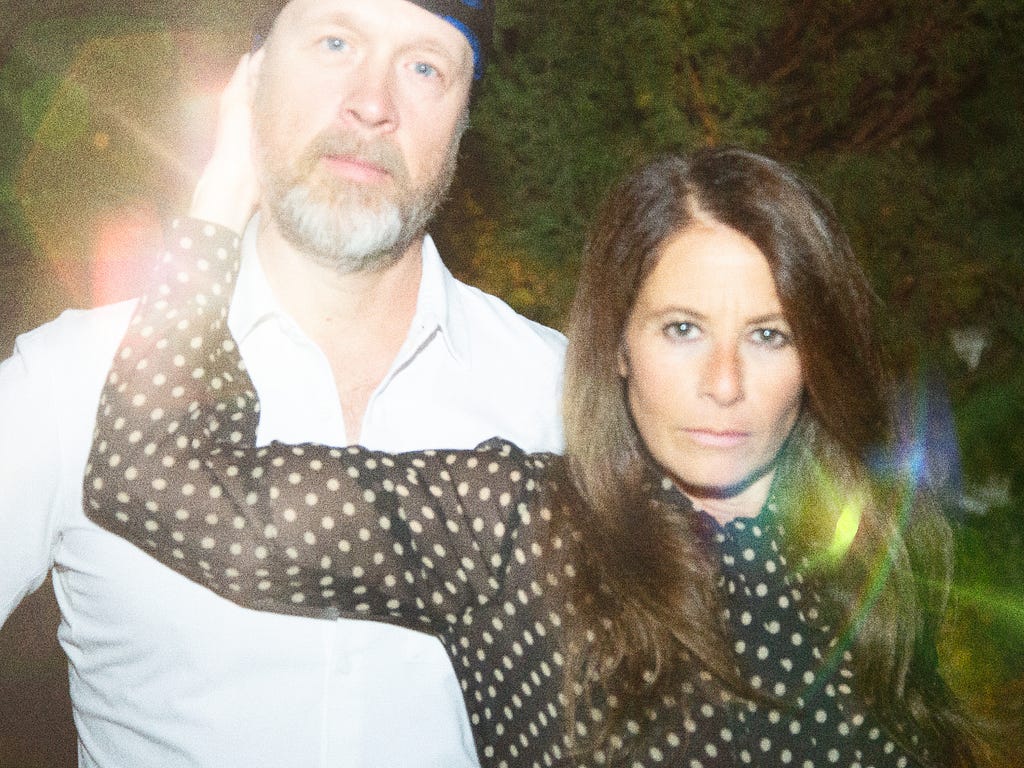
I had the pleasure of talking with Alyssa and Doug Graham, known professionally as The Grahams. There’s a worn-in comfort to the way Alyssa and Doug Graham finish each other’s sentences, a shorthand developed not just over years on the road, but over a lifetime. They’ve known each other since she was seven and he was ten, a couple of kids from the same town in New Jersey, just outside New York City, brought together by a Little League team. That shared history is the bedrock of their music, a foundation built on family record collections and campfire singalongs.
“We lived right outside New York City, and my parents spent a lot of time collecting vinyl and playing records at home — everything from Phantom of the Opera to Bob Dylan, Carole King, Carly Simon,” Alyssa recalls. “I’d regularly be in the house with my family, putting on a record, everyone in the living room, conversing and listening to music.” For Doug, music was more of a teenage rebellion, an import from his older siblings. “My sister was a big Deadhead,” he says. “There was a lot of music coming from my brother and sister. Unlike Alyssa’s household, my parents didn’t really listen to music.”
Those separate streams of influence eventually converged. They started playing guitar together, formed a high school band called The Electric Company, and laid the groundwork for a partnership that would define both their lives and their art.
The life of a touring musician is a study in contrasts, a whirlwind of exhilarating highs and soul-crushing lows. The Grahams have seen it all. One of their most cherished memories is opening for their heroes, The Band. “We performed with them for three nights in Rochester and got to know them a little, hang out on their tour bus, and stay at the same hotels,” Alyssa says. “As an artist, getting to play with your heroes is something you never forget.” Then there’s the flip side. “There are so many of those little moments throughout our career — and also times when we’ve been completely mistreated, where we’re just like, why?” Doug admits. “We’ve turned to each other so many times and said, ‘Why are we here?’”
Their move to Nashville brought another one of those surreal moments. Their producer, fresh off a Grammy win with Emmylou Harris, casually invited them to dinner. “He said, ‘Actually, my friend is having dinner. Why don’t you come over? Emmylou Harris is making dinner with her mom tonight,’” Doug remembers. But the glamour was fleeting. “We thought, ‘Oh my God, this is what Nashville’s like — every day we’re going to meet someone new.’ And of course, that was the only thing like that that ever happened.”
Perhaps their most significant lesson came from what they describe as a major career mistake. They had a chance to work with a red-hot Nashville producer with Grammy wins and number-one records to his name. They turned him down. “We didn’t feel the connection,” Doug explains. “We needed it to be a heart-and-soul connection, and he was kind of all business.” Alyssa laughs, “We’d be bigger than Beyoncé… Our career would have been different.”
That decision was part of a larger, more profound realization about their time in Music City. “We spent a lot of time pretending to fit into a world we didn’t belong in,” Alyssa confesses. They were Northerners, shaped by New York and New Jersey, trying to fit into the Nashville mold after a family tragedy left them feeling adrift. Doug clarifies that the experience wasn’t a total loss. “We were lost as people… We grabbed the first thing that gave us meaning, which was traditional American music,” he says. “That process made us incredibly better musicians. So it couldn’t possibly be a waste of time.”
This journey of self-discovery is at the heart of their latest album, The Bridge. The project was born from a rejection, when their team put a previously written record on hold and pushed them to collaborate with Nashville songwriters. After getting over the initial sting, they embraced the challenge. The writers pushed them to be vulnerable, to tell the stories they thought no one wanted to hear. The result is an album that bridges their past and present, named for the George Washington Bridge that connected their suburban Jersey childhood to their adult lives in Manhattan.
When asked to blend all their work into a single message, Doug speaks of their early albums as an attempt to create a “great American tale.” But Alyssa cuts straight to the bone with a philosophy that feels earned through decades of experience. “Get naked,” she says. “That’s the message. Strip away everything you know, everything you’re afraid of, every lie you tell yourself, every truth you’re scared to say, and just be totally vulnerable. Be the human that you are.”
After 38 years together, that vulnerability extends to their relationship. Their secret isn’t a lack of conflict, but an embrace of it. “You have to get used to the fights you have, because the first fights are still the fights you’ll have decades later,” Doug advises. Alyssa agrees, “We fight all the time… but we’re not afraid of a good fight.” It’s that raw, unfiltered honesty, in their love and in their music, that continues to connect them — to their past, to their art, and to each other.
Yitzi: It’s so delightful to meet you. Before we dive in, our readers would love to learn about your personal origin stories. Can you share with us a story, each of you, from your childhood — how you grew up and the seeds for all the amazing things that have come since then? Maybe I’ll start with Mrs. Graham.
Alyssa Graham: Nobody calls me Mrs. Graham. That takes me off guard. (Laughs) Doug and I grew up together in the same town. We’ve known each other since we were little kids. I was seven, he was ten, and he was on my brother’s Little League team. That’s how we first met. Obviously, we have a lot of shared origin stories from childhood, but for me, the thing that formed me into the person I am today, musically, has a lot to do with my parents and my family. We lived right outside New York City, and my parents spent a lot of time collecting vinyl and playing records at home — everything from Phantom of the Opera to A Chorus Line to Bob Dylan, Carole King, Carly Simon, and that kind of stuff. I’d regularly be in the house with my family, putting on a record, everyone in the living room, conversing and listening to music. I started playing piano, and my parents would take me into the city a lot to see Broadway musicals. Those were my formative years as a musician. Then when I met Doug, after we grew up a little, we both started playing guitar. We did a lot of camping and hiking and played guitars around the campfires, bringing in some of those folk songs I’d learned from my parents. Those were definitely the formative years for me as a musician.
Doug Graham: For me, my father worked as a salesman for IBM, which stood for “I’ve Been Moved” when I was a kid. We moved around a lot until we settled down in New Jersey.
Alyssa Graham: Where he met me.
Doug Graham: I have an older brother and an older sister. My sister was a big Deadhead — she’s seven years older than me — so there was a lot of music coming from my brother and sister. Unlike Alyssa’s household, my parents didn’t really listen to music. It was very limited compared to Alyssa’s musical upbringing. But because my brother and sister rebelled against my parents in our New Jersey suburb, it made it easy for me to discover music, and I learned guitar pretty early on.
Alyssa Graham: He taught me.
Doug Graham: I didn’t exactly teach Alyssa guitar, but we hung out in the same circles and learned a lot from each other during those early high school and college years. We played in bands together.
Alyssa Graham: Our first band together was when I was in high school, called The Electric Company.
Yitzi: You probably have some amazing stories from your career. I’m sure there are a lot, and it’s hard to narrow down, but Alyssa, can you share one or two stories that stand out in your mind from your amazing career?
Alyssa Graham: We’ve had a long career, everything from our high school bands to our college band, which lasted six years, always playing original music, to the Alyssa Graham projects, and then The Grahams, which we’ve been doing for the last fifteen years. I think one of the most memorable things for any musician is when you get to play with some of your heroes. There was a moment when we were supporting acts for a lot of the artists we grew up admiring. For me, the greatest of those was when we got to play with The Band — Rick Danko, Levon Helm, Garth Hudson. Growing up, The Band and Bob Dylan’s band were such a big part of our musical upbringing. We performed with them for three nights in Rochester and got to know them a little, hang out on their tour bus, and stay at the same hotels. As an artist, getting to play with your heroes is something you never forget. That’s one that really stands out.
Doug Graham: The life of a hardworking, hard-traveling musician comes with these little perks, like Alyssa mentioned. You get glimpses into worlds you’d only ever heard about. There are so many of those little moments throughout our career — and also times when we’ve been completely mistreated, where we’re just like, why?
Alyssa Graham: Like we’re the dregs of the earth. The lowly musicians.
Doug Graham: We’ve turned to each other so many times and said, “Why are we here?” But that wasn’t the question. When we first moved to Nashville, it was really interesting because we started making our record with Malcolm Burn, who produced our first album as The Grahams. He had recently won a Grammy for Red Dirt Girl with Emmylou Harris. So when we got to Nashville, we thought, “Alright, we’ll go to the studio, maybe get some tacos up the street.” And he said, “Actually, my friend is having dinner. Why don’t you come over? Emmylou Harris is making dinner with her mom tonight.” We were like —
Alyssa Graham: Another perk.
Doug Graham: Yeah. We had dinner with her. She made us dinner, her mom was still alive and lovely, and we met her daughter. It was just one of those wonderful evenings where we thought, “Oh my God, this is what Nashville’s like — every day we’re going to meet someone new.” And of course, that was the only thing like that that ever happened.
Alyssa Graham: The only thing. I’d say the biggest perk of the job is that we’re lovers, and now we’re parents. We grew up together, and we get to go on stage or into the studio together and have this incredible connection that exists outside of being lovers, parents, or childhood friends. It’s just this sacred connection we share. When we’re in the studio or on stage, it’s like being in a different world, and we get to experience that together. A lot of people don’t get that, whether it’s with a lover, a friend, or a family member. It’s something really special in our lives.
Yitzi: Amazing. It’s been said that sometimes our mistakes can be our greatest teachers. Do you have a story about a funny mistake you made when you were first starting in the music industry, and the lesson you learned from it?
Doug Graham: That’s a great question because it constantly happens. We were going to make a record with this guy who was blowing up in Nashville. He said, “I’m so psyched to make the record with you guys. It’s going to be great.”
Alyssa Graham: This is our greatest mistake, besides having a child during our career.
Doug Graham: He was just blowing up. He already had a few number-one records.
Alyssa Graham: They were Grammy winners.
Doug Graham: And we were like, “Cool, cool, cool.” We didn’t make the record with this other guy because we didn’t feel the connection. We needed it to be a heart-and-soul connection, and he was kind of all business, but really good at what he did. We probably would have had the best time of our lives if we had made the record with him.
Alyssa Graham: We’d be bigger than Beyoncé.
Doug Graham: Our career would have been different. But we made a great record instead with somebody else, and we still love that record.
Alyssa Graham: That’s definitely a career mistake, not an emotional mistake.
Doug Graham: Right.
Alyssa Graham: But Doug, we’ve had amazing mistakes on stage that make the night even more fun for us as musicians, and I think for the audience too.
Doug Graham: He’s asking about mistakes we learned lessons from, right? Because we’ve had plenty of things go wrong on stage that were our fault. For example, there are a couple of songs we play on acoustic guitars with capos on them. Do you know what that is? It’s a little key changer you put on the fretboard of the guitar that changes the key of the song. Alyssa sometimes, depending on her voice, will move the keys of a song around, and if we start and one of our guitars is in the wrong key, it doesn’t sound very good. You have to come up with tricks when that happens. One of my tricks, which I think she’s referring to, happened in London. I stopped the song and said, “Excuse me, sorry, we’re having a small technical issue.” Then I went to the back, jiggled a couple of wires, came back, and said, “Okay, I think we’re all set now.”
Alyssa Graham: To Doug’s point about career mistakes or lessons learned, I think that incident with the producer we probably should have worked with was one of them. But more broadly, now that Doug and I are in a different place in life — we’re older, more experienced, and have a child — we’ve realized that we spent a lot of time pretending to fit into a world we didn’t belong in. We grew up in New York and New Jersey, and that defines you in a lot of ways. When we moved down to Nashville, we were trying to escape who we were. Doug’s mom had passed away, and we were looking for something new to connect to. We tried hard to fit into the Nashville music scene. We spent about ten years creating great music but forgetting who we were and pretending to be people we weren’t. We wanted to experience it, to dive deep into that world, and we made some great records, but as you get older and have a child, you gain perspective. In retrospect, we should have been truer to who we were — New Yorkers and Northerners with roots in that kind of music. I think we wasted a lot of time trying to be people we weren’t musically.
Doug Graham: If I can just add to that —
Alyssa Graham: Is there anything to add to that?
Doug Graham: One thing you left out, and maybe you misspoke, is that it wasn’t a waste of time so much as it was a less fruitful endeavor. We really embodied it and were true to who we were in that moment, but we were lost as people. We’d just lost my mom, who was important to both of us, and we were running away. We grabbed the first thing that gave us meaning, which was traditional American music. We really dug into it, and that process made us incredibly better musicians. So it couldn’t possibly be a waste of time. That’s all.
Yitzi: Your love is so apparent. You’ve been together 38 years, and you seem to have an amazing relationship. Can you share some secrets? How do you stay in love with your partner for so long?
Doug Graham: With this one, it’s pretty easy, as you can tell. She’s magnetic. It’s obvious. I will say that in the beginning of our relationship, maybe ten years in, when our friends were only one or two years into theirs, people would ask us this question. We’d say, “What’s wrong with you? Just be in love. Just dedicate yourself to it.”
Alyssa Graham: Just compromise. Have good sex.
Doug Graham: All the clichés. But as time went on, we realized we were unique and that our love is impossible to compare to anything else. I’d say you have to get used to the fights you have, because the first fights are still the fights you’ll have decades later. And if one of you is always trying to win the fight, you’re not doing it right. You have to fight, but you also have to lose a few times. Those are little gems right there.
Alyssa Graham: I also think we’re both very communicative people — Doug maybe more than me — but bottling things up is never a good idea. We wear our hearts on our sleeves. We’re artists, so that’s common. And we fight it out. We fight all the time. Now it’s more like bickering, but for 30 years, we’ve fought.
Doug Graham: We’re both good at getting our words out. If you have trouble getting your words from your brain to your mouth, fighting is hard. I get that. But we’re both good at it. We can both be in the middle of something and say, “Oh wait, I have a new emotion coming up. Hold on.”
Alyssa Graham: But we’re not afraid of a good fight.
Doug Graham: Yeah, that’s for sure.
Alyssa Graham: Even though I’m always right.
Doug Graham: Yeah, right.
Yitzi: There’s a saying, “No is redirection, not rejection.” Can you share a time when a rejection led to an unexpected win, success, or discovery?
Alyssa Graham: That’s a hard one. It’s a really tough question for me because “no” is not something I take well. As an artist, you get rejected all the time, and obviously the saying is that when one door closes, another opens. I can’t think of one specific example — maybe you can — but in general, as an artist, you need thick skin. You have to believe in what you’re doing. I do believe things happen for a reason. When you get the answer you’re not looking for, it can open new opportunities and refocus your art. Maybe here’s an example. We had written a record recently — not the one we’re talking about now — and our managers and team said, “No, let’s put this record on hold. We think you should get together with some Nashville songwriters. You’ve never worked outside of your usual circle. Let’s get you with some Nashville writers and make something really Nashville-based. You’ve been living there for years, you have a studio.” So they kind of said no to the record we’d written, and we were pissed. We thought, “We just wrote this beautiful record. We want to record this.” It took us a long time to accept their no and understand that what they were doing was creating a new experience for us — one that would stretch us as artists and open new pathways for writing about things we’d never explored before. After we were done being insulted, we went down to Nashville and did it their way. We worked with incredible writers and musicians, and we made a beautiful record that we’re so proud of. It changed who we are as writers and artists, and it all came from a no.
Yitzi: You guys are amazing storytellers with such impressive work. Can you share with our readers the exciting new projects and initiatives you’re working on — any new albums or songs?
Alyssa Graham: The album that just came out in October is called The Bridge. This is the one I was just talking about, where we got together with a few co-writers and really dug deep into our childhood and our past. As I said, we had spent a lot of time focusing on things that weren’t truly us, and now we wanted to focus on who we really are. We got into the deep stuff — love, family, pain, triumph, failure.
Doug Graham: Things that, when we’re by ourselves, we don’t necessarily want to write about. It’s not as fun. We’d rather imagine things than write straight from the heart. But the team from Nashville that we worked with —
Alyssa Graham: Kate York, Carly Tasker —
Doug Graham: Jackson —
Alyssa Graham: Dex Green, and Pat McLaughlin.
Doug Graham: They brought it out of us. They made us tell stories we thought nobody wanted to hear.
Alyssa Graham: We said, “Nobody wants to hear that sad stuff.”
Doug Graham: And they said, “Actually, that’s what everyone wants to hear.” It taught us to play with our emotions without being overly transparent.
Alyssa Graham: The record, The Bridge, really tells a story that takes a long journey from the first song to the eleventh. The bridge refers to the George Washington Bridge. As kids who grew up in Jersey, about twenty minutes from the bridge, with a childhood in the suburbs and adulthood in Manhattan, that bridge was a big part of our lives. It connected two different worlds we shared. It felt natural to dedicate the record to it. And metaphorically, the bridge can represent all kinds of connections, but we’re specifically talking about that one.
Doug Graham: To answer your question, Alyssa mentioned earlier that we had already written a record before working with the Nashville crew. Just Alyssa on piano, me on guitar, simple songs. This summer, we went to Saignon, in the south of France, rented a 12th-century chapel, brought our recording gear, our band, and our friends, and recorded the most loving, soulful, true-to-heart record. That’s not the one we’re promoting right now, but it’ll hopefully come out next year. It was recorded in France, and I’m sure you’ll be able to hear the love, the birds, even smell the lavender. So right now we have The Bridge, made with our Nashville collaborators, and coming up, we have a record in progress that was recorded in France.
Yitzi: Amazing, unbelievable. If you were to take all of your songs, lyrics, melodies, and album covers, put them in a blender, mix them all up, what would be the overall message that comes out of that mixture?
Doug Graham: That’s a great question. For our first few records, we were really focused on creating a grand art piece, like a great American tale. Even if we didn’t get all the fame and fortune, we wanted something that told a true story of what America was to us. Our first three records definitely blend together that way.
Alyssa Graham: Yeah, they’re the story of America.
Doug Graham: The last couple of records have been more about being true to ourselves as artists and using our creative energy and life experience to craft something authentic.
Alyssa Graham: I’d say if you blended all our stuff together, the message would be: get naked. That’s the message. Strip away everything you know, everything you’re afraid of, everything you’re vulnerable about, every lie you tell yourself, every truth you’re scared to say, and just be totally vulnerable. Be the human that you are. That’s the message.
Doug Graham: Okay, so let’s get naked. That’s the message. Get naked.
Alyssa Graham: Do with that what you may. Obviously, metaphorically. But yeah, after all the records we’ve made in so many ways, with all the different adventures, people, and co-writers — strip it all away and just be your pure self. I like “get naked” better, but you can headline it however you want.
Doug Graham: Alyssa Graham gets naked.
Alyssa Graham: Not anymore. Maybe twenty years ago. No.
Yitzi: This is our signature question. You’ve been blessed with a lot of success and learned a lot along the way. Looking back to when you were young and first starting, can you share five things you’ve learned over the years that would have been nice to know when you started in the music industry?
Alyssa Graham: Okay. Age doesn’t matter. Have kids earlier.
Doug Graham: Always use your metronome. It’s better to have great timing than anything else.
Alyssa Graham: Don’t lie — or don’t pretend, I should say. Surround yourself with people who really understand who you are. Being a musician is weird, and nobody really talks about this, but it’s a shared art form. We’re often five or ten artists sharing one piece of art at the same time. That means you have to be a good human, because you need to get along with people, and they need to get along with you. So be a good human. Art is not a competition. And keep your heart open to all possibilities. Five. Bam.
Yitzi: You guys are awesome. You’re so vital and vibrant. Can you share with our readers the self-care routines that help your body, mind, and heart thrive?
Alyssa Graham: Heart-wise, we’re just lucky. I’m knocking on something. We have wonderful families.
Doug Graham: We live in Boulder, Colorado, so we hike every day. There are trails right outside our door. We’re outside all the time, and we’re physical every day. We spend at least an hour doing something. We even did Pilates today on a reformer with an instructor.
Alyssa Graham: I’m a runner. I just ran a half marathon. We run, we go on date nights.
Doug Graham: Yep, one date night a week for sure, guaranteed. That’s huge.
Alyssa Graham: We hike together every day, so that’s kind of a date too.
Doug Graham: Yeah, and that’s it.
Alyssa Graham: And eat a lot of fish.
Doug Graham: Eat healthy. Because if you’re a band musician on the road, it’s hard to eat healthy.
Alyssa Graham: Yeah, those gas station lunches are just not good.
Doug Graham: Yeah, it’s tough out there.
Yitzi: Alyssa and Doug, because of your amazing work and the platform you’ve built, you are people of enormous influence. If you could put out an idea or inspire a movement that would bring the most good to the most people, what would that be?
Alyssa Graham: Oh, that’s so easy. Let women rule the world. Doug, do you think we’d be in the situation we’re in right now if women were ruling the world? No.
Doug Graham: What else is there? That’s a good one. Definitely a good one. It’s hard to ask us that question because we already spend a lot of our energy supporting the arts. We’re really into writers, painters, and musicians.
Alyssa Graham: We started an arts foundation, The DAG Foundation. To answer your question and to talk about that, people often think of the arts as a supplement.
Doug Graham: Expendable.
Alyssa Graham: Yeah, as something extra. But the thing is, without art, there’s no joy. And without joy, there’s no love or peace.
Doug Graham: Creative energy also fuels the creativity it takes to understand big ideas — equations, mathematics, everything.
Alyssa Graham: And it opens your mind to see other philosophies and opinions.
Doug Graham: Regardless of our rambling explanation, supporting artists is something we put a lot of energy into. A creative society is more tolerant, more understanding.
Alyssa Graham: And let women rule the world.
Doug Graham: And that.
Yitzi: How can our readers continue to follow your work? How can they purchase your music and your new album? How can they support you?
Alyssa Graham: Everyone should support independent artists and live music, whether it’s us or someone else. That’s important to say. Our new album, The Bridge, came out on October 10th. The vinyl just dropped, so if you can, go buy the vinyl and play it like the old days on a record player.
Doug Graham: We’re on all the ISPs —
Alyssa Graham: The internet, we’re on that internet thing.
Doug Graham: All the internet service providers.
Alyssa Graham: DSPs. We’re on Spotify, Apple, and all the other platforms. You can find us at thegramsmusic.net, and our Instagram is @thegramsmusic.
Doug Graham: We’ve got lots of stuff on YouTube and more videos coming up.
Alyssa Graham: Yeah, but just go listen to The Bridge.
Doug Graham: Lots of fun videos. We’ve spent a lot of time creating them over the years, so there’s plenty to watch.
Yitzi: You guys are amazing. It’s been so delightful to meet you. I wish you continued success, and I hope we can do this again next year.
Alyssa Graham: You too. Thank you.
Doug Graham: Yes, thank you very much. I appreciate it, bro.
Alyssa and Doug Graham Reflect on 38 Years of Love, Music, and Getting Vulnerable With Their Art was originally published in Authority Magazine on Medium, where people are continuing the conversation by highlighting and responding to this story.