Dr. Sonya Reddy on Reinventing Her Life, the Hidden Power of the Airway, and Why Your Mouth Is the Front Door to Your Health
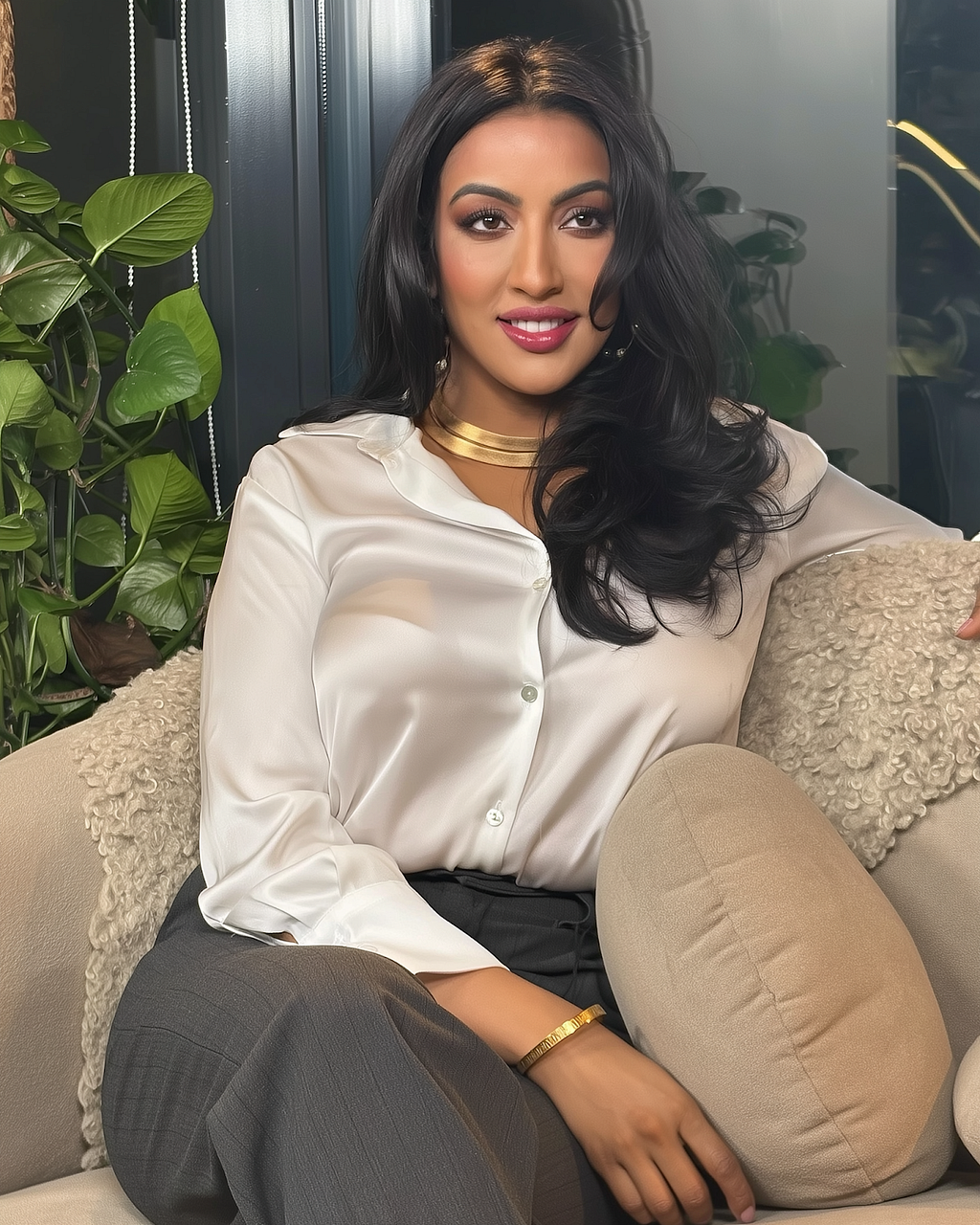
…There is this common line people say, “You are a dentist, you are not a doctor.” I always remind them that your mouth is connected to your body. It is a part of your health that deserves attention. It is not only about teeth. It involves tongue development, the shape of your palate, and how you breathe. Nasal breathing supports your parasympathetic system and makes it easier for your body to shift out of constant fight or flight. It helps you relax and wind down after a busy day. If you do not breathe properly, you stay in the sympathetic system. That leads to poor sleep, and sleep affects everything, from your nervous system to circulation, cognitive function, and even sexual health. I felt this story needed to be told, especially because of what happened with my daughter. She was close to being diagnosed with ADHD and put on medication until we discovered she was sleep apneic and not getting proper air. That lack of good sleep made it hard for her to focus in school. Once we fixed the root cause, her attention issues improved. She is now a successful basketball player with excellent grades. This showed me how important it is for functional medicine to look at root causes. Many people have sleep apnea without knowing it, even though the signs are often clear…
I had the pleasure of talking with Dr. Sonya Reddy. She has lived several distinct lives to get where she is now: a globetrotting child of a physician, a Wall Street mergers and acquisitions consultant, a trailblazing dentist, and now a functional health advocate who believes that the secret to a better life may be hiding inside your mouth. Her career has been a series of decisive pivots, sparked by the realization that she had “climbed a ladder that was leaning on the wrong wall.”
Born in India and raised across Algeria and the UK, Reddy grew up watching her father care for patients in different cultures and health systems. Constantly being the new kid forced her to read people quickly and connect deeply. “I’m all about talking deeply and diving in, not staying on the surface,” she says. That instinct to understand people beneath the surface would later become central to how she practices medicine.
Like many ambitious young professionals, she was pulled to New York City. She landed at Morgan Stanley, working in mergers and acquisitions in Manhattan, and checked off her childhood dream. But the high-stakes, high-burnout world of finance came with a cost. Surrounded by people who were “successful” and miserable, she began to question whether she was climbing the right ladder.
Drawn back to her family’s world of healing, she made a radical shift. While working nine-to-five in finance, she spent her nights studying at Starbucks, took the exams, and bet everything on a single application to NYU’s dental school. She got in. Dentistry gave her the chance to build something of her own: a practice, a team, and a philosophy centered on whole-person care rather than volume.
After an early associate role in a high-volume California office, she bought a small, struggling practice in Dallas against the advice of her CPA and lawyers. The transition was rough, and she lost a large portion of the existing patient base almost immediately. Within two years, she had grown the practice roughly 60 percent above where she started. Along the way, she realized that being a dentist was never just about teeth; it was about identity, confidence, and long-term health.
That insight deepened when she began connecting the dots between worn-down teeth, snoring, chronic fatigue, and sleep apnea in her patients and in her own family. A sleep-deprived, recently divorced lawyer whose breathing stopped fifteen times an hour at night, a father who snored and “did everything right” but still struggled, and a daughter nearly labeled with ADHD until sleep apnea was identified and treated each pushed her toward the same conclusion: the airway and the mouth are not cosmetic details, they are central to how the brain, body, and life function.
The professional evolution came with a personal reckoning. Reddy is candid about taking only four days of maternity leave, wearing sleep deprivation like a badge of honor, and believing her practice would collapse if she stepped away. Her father’s sudden cardiovascular collapse forced her to stop. She took ten days off, expecting chaos. Instead, her staff stepped into leadership, her patients waited, and her children were fine. “We always think we don’t have time to take care of ourselves,” she reflects. “When we do, we show up better.”
Today, Dr. Reddy works across dentistry, sleep and airway health, functional medicine, and emotional intelligence. She is on a mission to spark a “healthy revolution” where people understand their own bodies, track their own data, access real food instead of addictive, inflammatory options, and see their mouth as a front door to their overall health. It brings her back to the child who moved countries, learned to read people quickly, and wanted, more than anything, to help them feel like themselves again, starting with their smile.
Yitzi: It’s so delightful to meet you. Before we dive in deep, our readers would love to learn about Dr. Sonya Reddy’s personal origin story. Can you share a story from your childhood, how you grew up, and the seeds for everything that has come since then?
Dr. Sonya Reddy: Just to give you a briefing, I wasn’t born in this country. I was born in India, but I lived in Algeria because my dad is a physician, so we traveled a lot. I went to school in Algiers while he worked in the hospital there. We lived there for about five years, then moved to the UK.
Because of the way I was raised, I had to make friends quickly and really get to know people. I think you have to love people, otherwise they can feel it. I have this joy in meeting new people, so I was never scared of it. I thought it was normal for families to move until I spoke to people in college who said that was a lot of moves and asked how I felt about it. It never made me feel worse or better.
Living in multiple countries made me want to know people more deeply. I’m all about talking deeply and diving in, not staying on the surface.
Yitzi: Can you tell us the story behind when you moved to the United States?
Dr. Sonya Reddy: I came to New York when I was young. We were in and out of the city, and I really enjoyed being there. I wanted to be independent one day and have a job in Manhattan. That was my childhood dream. We lived outside New York for a while and then in New Jersey for a few more years.
As soon as I finished college, I took a job in Manhattan so I could live and work there. It was a dream come true. I started at Morgan Stanley in a boot camp program, and later they gave me a job. I became a mergers and acquisitions consultant. It was a tremendous experience.
Yitzi: You worked in the finance industry. Tell us how you decided to pursue cosmetic dentistry.
Dr. Sonya Reddy: After about four or five years in mergers and acquisitions, I realized something important. I come from a family of doctors. My brother pursued prosthodontics, which is a specialty in dentistry that requires three more years of study. I grew up seeing people come to our home and my dad helping them heal.
In finance, the stress was intense. People talked about burnout all the time. It was exciting, but the burnout was real. The wellness space started to interest me, especially the idea that you can change a life through the mouth and through a smile. I met so many people who avoided smiling, even though they had such good hearts. A smile can light up a room, but they felt they couldn’t. That made me want to move toward healthcare and wellness.
I also liked the idea of having my own business and a team I could help shape. While working nine to five, I studied at night at Starbucks. I remember one night around midnight, looking around and feeling like everyone was chasing a dream. I had chased the dream of being in New York and climbing the ladder, and I reached it, but it didn’t feel right. It felt like I had climbed a ladder that was leaning on the wrong wall.
I knew it was time to make a change. I studied, took the tests, and applied only to NYU. I decided to take my chance, and I got in.
Yitzi: So you became a dentist. Where did you eventually open your practice?
Dr. Sonya Reddy: Right after I graduated, I moved to California for about two years and worked as an associate at a very busy practice. The dream was to be a big doctor changing lives, but seeing 20 or 30 patients a day didn’t feel right.
After about two and a half years, I found a practice in Dallas. We moved there, and I knew I wanted to own a practice where I could choose my materials, set the tone, and create a philosophy that excited me.
I took over the practice even though my CPA and lawyers told me not to do it because the numbers didn’t add up. They said it wasn’t a good purchase. I believed in it and went ahead anyway. It was a hard path. In hindsight, I should have listened, but if you have the grit, you can still make it work. You don’t have to make it hard, but sometimes life happens that way.
It had been a Korean practice, and many long-time patients were hesitant about a new, younger female owner. I had to push through that. When I opened the practice in Dallas, we lost about 30 to 40 percent of our patients right away. Within two years, we were about 60 percent higher than where we started. It was a real turnaround.

Yitzi: You said something profound that I would love for you, as a professional, to expand on, how a smile can light up a room. When you think about it, we all know it is true, but a smile is really just showing your teeth. It is a funny thing. Why is it so powerful?
Dr. Sonya Reddy: I feel when you smile fully, because I have seen so many people who could not do that, it shows confidence, radiance, and positivity. It brightens the whole room. We are all stressed, and when someone walks in, before they even think something about you, you are already making judgments like this person does not like me.
If I think you do not like me, the way I show up is completely different than if I think you care. A smile changes your life. You get better opportunities, better jobs, whatever you want flows more easily. I really feel that if you ask anyone for something with a smile, they will be more willing to help you than if you ask without one.
Feeling comfortable with your smile and the way you look is so important in achieving what you want and in having a pleasant experience with another person. If you ask someone with a smile, they will go as far as they can to make something happen for you.
I love that people are intrinsically wired to do good things, but because of everything they are going through, they are not always able to show up for you. Even if they do not show up, take it easy and move on.
I see beautiful people all the time and think, if I could fix one thing about their smile, maybe do a little Invisalign, they could show up the way they want and reach their full potential. You do not always have to change anything. Madonna has a huge diastema between her teeth, and that is her signature. I do not think she will ever change it, and that is fine. As long as you feel good about yourself, it should not be about a traditional or conventional idea of looks. Those ideas change all the time.
Yitzi: You became an expert in sleep and sleep apnea, and I did not know this until I learned it from you, that dentists are often experts in sleep apnea. Tell us how you got involved in that and share the story behind it.
Dr. Sonya Reddy: I was treating a lawyer who was about forty two at the time. He was completely stressed, recently divorced, and wanted his teeth to look better because he felt run down. He was tired and not sleeping well because of work stress. He came in hoping that improving his smile might lift his energy.
This was during Covid, and he was grinding a lot. We noticed he had ground down about fifty percent of his tooth structure, and his teeth were tiny. When that happens, your facial width changes and it can age you. By shrinking the proportions of his face, he looked more saggy, and he looked upset all the time.
When we did the facial analytics, we realized we were going to improve his vertical dimension, but we also wanted to understand the root cause behind his grinding. He said it was stress, and of course we all have stress, so we asked him questions about how he slept, whether he ground his teeth, his energy level, and whether he had brain fog.
I had just learned about this because of my own experience with my dad. He was snoring and grinding, and I knew if I could help my dad, I could help others. My dad was also putting on weight, eating healthy, and still not understanding why he felt off.
Once we reviewed the lawyer’s sleep history, we ordered a test. He could not believe it. He was stopping his breathing at least fifteen times an hour. Each event lasted roughly ten seconds, which adds up to a significant amount of lost oxygen every night.
We were able to address it and get him a guard. While we fixed his smile, we also addressed that issue. He ended up with more energy, he looked better, he smiled more, and he was dating someone by the end of it. When he walked in six months later, my assistant could not believe it was him. He was smiling, and we had thought he hated everyone because he always came in with a grumpy face.
That is how I realized the connection. Many of my friends also wonder how sleep apnea relates to dentistry at all. It is not just about teeth. We see the inside of the mouth, and by looking at that, we can often tell if someone is having trouble sleeping or breathing. That affects everything. All our cells need oxygen, and if you are functioning at sixty percent, it affects how you show up in life.
Yitzi: You probably have some amazing stories from different parts of your career, maybe even different careers. This might be hard to narrow down, but can you share with our readers one or two stories that stand out in your mind from your professional life?
Dr. Sonya Reddy: Two come to mind. One is about a patient, and the other is about how burnout affected me and how I showed up.
When I had my practice, I had my kids, a six-month-old and a two-and-a-half-year-old. Life was busy. I was staying up at night and showing up for my patients, doing surgery, and I knew I needed to take time off, but I kept telling everyone I could not take time off because without me nothing would function.
My dad, who I mentioned when we talked about sleep apnea and how it affects multiple systems in the body like the cardiovascular system, had always been a huge health advocate. He exercised and no one would have expected him to have a cardiovascular issue. One day in the middle of his treatments he just fell to the ground and was taken to the hospital. I was sitting next to his hospital bed thinking I had no time for this. I felt terrible about what happened to him and I was tending to him, but I kept wondering how I was going to take time off.
I called in and told my staff to move everything out. I had friends and family I could ask for help with the kids and I had a nanny, so I asked all of them to work together because my dad really needed me. I did not know what I was going to do. I thought I would come back and my kids would be upset or my patients would be angry.
At the end of it, after I took care of my dad and spent a lot of time with him, ten days had passed. That was a long stretch for me. I had only taken four days for maternity leave, so ten days felt huge.
When I came back, my kids were happy and nothing had changed with them. My staff was happy. They were taking on leadership roles because I was not around and they had to step up, and they did really well. My patients were patient. They said they would wait for Dr. Reddy. Everyone postponed. Over the next three weeks we worked a lot to catch up, but I realized we always think we have no time to take care of ourselves. When we do it, we show up better.
I felt good being there for my dad. Everyone was fine. In my head I had created this fast paced life where I thought everything would fall apart if I stepped away. I would tell anyone working that hard, including you, that if you think you do not have time to take time off, take it anyway. Step back from the pressure and the career and do something for yourself so you can come back in a stronger way.
Yitzi: Amazing. Did I hear you correctly that you took off four days for maternity leave?
Dr. Sonya Reddy: I did. There is another story behind that. I bought my practice when my daughter was a toddler. She had just reached the point where she was comfortable with the nanny, so I was focused on work. We had moved to Dallas and I was looking into buying this practice. I bought it thinking I would have another child later, maybe in two years.
Having a practice is like having a child. I did not know P&L, management, medical billing. Other than dentistry, I did not know much, and the rest of it makes up most of running a practice. They do not teach that in dental school.
A month after I bought the practice, I found out I was pregnant. The first year was difficult. I kept thinking I had no time. I was working out, doing whatever I could, doing my surgeries. A friend helped me through the maternity period for a couple of weeks before, but I took the weekend off and she overlapped with me, getting ready for my leave.
As soon as I left, she would call and tell me patients did not want procedures with her. They wanted to wait for me. Four days later, I said I was ready to return. I went back, did all the pumping and the motherly duties between appointments.
I would not recommend that to anybody. I did not have the right mentorship or mindset to take it easy. It felt like proving I could function that way made me seem superhuman. I do not see it that way anymore. I would say, “Oh I slept three hours,” and I wore it like a badge, as if it meant I was capable of handling motherhood and work at that pace. It is not a good idea.
Yitzi: You mentioned something fascinating, that most of the training in dental school is about the clinical side of dentistry, not about running a practice, the P and L, management, and everything that comes with it. If you had the power to influence what they teach in dental school, what else would you want included?
Dr. Sonya Reddy: I would focus on EQ. They do not talk about it in any capacity. They are always centered on the topic, the subject, how to do a class two, how to do a root canal, but not on what it takes to be a leader in your own practice or the kind of mental resilience it requires.
Dentists have significantly higher rates of burnout and mental health struggles than many other professions. They teach you to push toward success, and success is not only monetary. Success shows up in relationships. I think Mark Hyman talked about a seventy five year study that found your quality of relationships matters most. If you are only pushing for money, what kind of leader are you in your office? What are you standing up for? How are you supporting your team?
It is not only the P and L. I never even looked at one in dental school. There was one class in the final year about practice management, which we all skipped because it did not carry much weight and we still had requirements to finish on the clinical side. We knew it was just going to be one test with multiple choice questions and figured we could wing it.
Dental schools do not shape you into a holistic professional. They give you the skill, but once you come out it is up to you to decide what type of courses you want to take. There are plenty of leadership courses, practice management courses, and courses about how to work with people.
When I graduated in 2008, most dentists I met had no skills for interacting with people. There were a lot of egos to work around. If I was dealing with an oral surgeon or someone else, I could not tell him this makes no sense, I am not doing it that way. Even in school we were seen as women who should not have an opinion.
I have tiptoed around that so much. I even had a professor in my first year tell me, when I did not make a crown prep properly, that I was lucky I was pretty and could marry someone and never do dentistry. It was offensive. In The Great Gatsby they talk about being a beautiful fool as the best thing for a woman instead of being smart, intelligent, or having a perspective. That is the part of the professional world they do not teach, the EQ piece.

Yitzi: You said something powerful earlier, that your success in life comes from your relationships. Let us talk about that. First, when it comes to EQ and relationships, why is EQ so important?
Dr. Sonya Reddy: I can talk about personal relationships, dating, or any relationship. Every connection needs to be nurtured. They say if you want to go fast, go alone, and if you want to have more fulfillment, go with a team. It is not about the end goal, it is about the journey.
EQ shows up because in my culture, I am Indian, and there is more importance placed on academic success. We did not talk about emotions. It is not necessarily a bad thing. It can make you successful because you keep pushing without asking questions. It does not make you weak, it can make you strong, but everyone has their own upbringing.
In personal relationships that shows up because two people come with different fears. If you read the book Attached, it talks about being anxiously attached, avoidant, or fearful avoidant. People have subconscious fears of abandonment or not being accepted.
It is up to us to figure out how we are showing up. They say if you get triggered, it is your trauma, not theirs. It works the same way with employees. If employees do not show up to work, you have to figure out what motivates them. No two people are the same. You cannot always give them a bonus and expect better performance. You cannot rely only on words of affirmation. Different things matter to different people at different times. Someone may be going through a financial challenge and expect you to help in some way. It all comes back to EQ if you want strong interpersonal relationships.
Yitzi: What has been the most challenging project or role you have taken on so far, and why?
Dr. Sonya Reddy: I think raising two kids by myself. I did not sign up to be a single mom, but it ended up that way. I was in New York, living fast, going to dental school. I did not think I could keep a plant alive. Now I have two beautiful kids and everyone who meets them says they had a good upbringing and a strong role model.
If you had asked me in my twenties, I would have said there is no way that would be me. If you showed me a glimpse of who I am now, I would have said there is no chance because I did not know I could do it. We do things for our children that we would never do for ourselves. I have a deep passion for kids and I believe they should get what they need in their upbringing to become their best selves.
Yitzi: We spoke earlier, and you said something profound yesterday, that one of the greatest skills a mother needs is learning how to budget her energy. Can you talk about what that means and how to do it?
Dr. Sonya Reddy: Our willpower declines throughout the day. You have only so much of it, and by the evening kids are persistent in asking for what they want. They know how to push your boundaries. You love them, so you give in.
I had to reread the book Boundaries and figure out that just because you love them does not mean you can give them everything. As a single mom working full-time, I carried a lot of guilt. I wanted to give my kids the best, but saying no felt like I did not love them during those younger years.
I later realized that was wrong. Indulging your child in everything is the worst thing you can do. I grew up with parents who gave us the bare minimum. My brother turned out great and so did I. There is something proven and tested about discipline. If you love your children, make sure you keep them grounded. It does not matter how much money or how many luxuries you can offer; they have not earned it yet.
We would go to a toy store and I would tell them to pick one thing. They would keep asking for more. When they were younger, I would indulge them because I was exhausted, and saying no meant arguing. It was easier to say yes, purchase it, and leave. Over time I had to put in the effort and keep saying no.
As a parent, your priorities shift constantly. At work you become a doctor, then an owner, then a leader. When you come home you are this nurturing mom. As a single mom, if you are dating, you dress up again. It feels like I am playing dress up all day. That is what I meant by budgeting energy.
If I wanted to do podcasts or TV work, I would get invited a lot, but I also had patients booked back to back. It was always about figuring out what truly takes priority.
One thing we can give in this life is our full attention. Whatever you are doing, give it with your full heart and full focus. If you cannot do that, the project will not turn out well. This applies to work and to your kids.
Many parents think it is about quality over quantity. My kids loved it when I was working, doing podcasts, or writing a book. They were proud of me. They never wanted me to stay home and sulk. They love that I do different things, but I stay present with them. We talk about basketball. My daughter just won a game yesterday and we talked about it, passing the ball back and forth, playing. Those memories you create become significant.
Yitzi: You mentioned your book, please tell us more about it.
Dr. Sonya Reddy: The book is about connecting the dots between sleep apnea and overall health. I have talked to so many people and, as a medical professional, I struggled with how often those dots are missed.
There is this common line people say, “You are a dentist, you are not a doctor.” I always remind them that your mouth is connected to your body. It is a part of your health that deserves attention. It is not only about teeth. It involves tongue development, the shape of your palate, and how you breathe.
Nasal breathing supports your parasympathetic system and makes it easier for your body to shift out of constant fight or flight. It helps you relax and wind down after a busy day. If you do not breathe properly, you stay in the sympathetic system. That leads to poor sleep, and sleep affects everything, from your nervous system to circulation, cognitive function, and even sexual health.
I felt this story needed to be told, especially because of what happened with my daughter. She was close to being diagnosed with ADHD and put on medication until we discovered she was sleep apneic and not getting proper air. That lack of good sleep made it hard for her to focus in school. Once we fixed the root cause, her attention issues improved. She is now a successful basketball player with excellent grades.
This showed me how important it is for functional medicine to look at root causes. Many people have sleep apnea without knowing it, even though the signs are often clear.
The book is essentially saying, if you snore, do not ignore it. In my family, we used to joke about my dad snoring on the sofa and waking up the whole neighborhood. It should not be a joke. Your health matters. I believe in holistic care instead of putting a band aid on symptoms. If you have a headache, people say take a Tylenol, but why are you having constant headaches and low energy? It is not just age or brain fog. Something else is driving it.
Yitzi: Just to clarify, if someone snores, does that mean they have sleep apnea?
Dr. Sonya Reddy: Sleep apnea means you stop breathing for at least ten seconds at a time. Snoring does not automatically mean you have it, but if you snore, I suggest getting tested. Snoring is not a diagnosis, but it is a sign worth checking.
I have an Oura Ring that tracks sleep stages, like REM, but it does not check for sleep apnea.
If you consult a dentist or a sleep apnea physician, they can give you a test you can do at home. If you have apneic events between five and fifteen per hour, that is considered mild. Fifteen to thirty is moderate, and thirty or more is severe. I even treated a patient who had forty events. People simply need to know their numbers, and this affects athletes too. Once you are diagnosed, we can talk about different treatment options.
Yitzi: You mentioned functional medicine. How is functional medicine different from traditional, regular, or Western medicine?
Dr. Sonya Reddy: In a typical Western medicine visit, you might go in with recurring headaches, and if nothing shows up on the basic tests, you are often told you are “fine,” that you are just getting older, or to drink more coffee.
Functional medicine steps back and treats your whole body as an integrated system. A headache can come from many sources. Your gut health may be off, you may have a leaky gut, or you may not have the right stomach acid to digest food. You might have eaten something very spicy the night before. The symptom shows up in one area, but the problem may be somewhere else. Functional medicine looks for that root cause.
If you have acne, they look at your diet and other lifestyle choices. There is a strong gut to body connection. In the book I talk about gut and breath. If you are constantly in a fight or flight state, you develop gastric tension. Anxiety starts in the stomach. When you are relaxed, your stomach acids regulate, you digest better, and you think more clearly.
Yitzi: It is often said that our mistakes can be our greatest teachers. Do you have a story about a funny mistake you made when you were first starting in your career, either in dentistry or business, and what you learned from it?
Dr. Sonya Reddy: When I first started, one situation stands out. My office manager had been working in dentistry for about twenty five years. I was brand new. She would tell me to be careful with certain patients and avoid certain procedures with them. She knew their entire family and how they reacted to things.
I had a bit of a hero complex. I thought, I can take care of these patients.
One time I went ahead and did a procedure she warned me about. The procedure itself went fine, but the family’s reaction afterward was difficult. They wanted something quick and simple. I gave them a detailed treatment plan. She had already known they were not going to follow through with long term care. They were there for temporary relief.
I learned the hard way, and in a humbling way because she looked at me and said, “I told you not to do it.” You think you are the doctor and you can fix anything, but it is not just about the clinical work. You have to be in sync with the patient. Does the patient understand you? Are you the right doctor for them? I did not grasp that at the beginning. I thought skill alone was enough. Sometimes the right move is to refer a patient to someone who fits their needs and energy better.
Yitzi: This is our central question, the centerpiece of our interview. You’ve been blessed with a lot of success now, Dr. Sonya, and you must have learned a lot from your experiences. Looking back to when you first started dentistry, can you share five things you’ve learned over the years that would have been helpful to know at the start?
Dr. Sonya Reddy:
1. Sequentialize your life instead of trying to have everything at once.
If I could go back, I would be much more intentional about the order of my life decisions. As women, our peak reproductive years often overlap with the years we are trying to build a career or a business. I bought a practice and had a baby within six months of each other. That is a lot to stack at once.
There is no perfect plan, but you can at least be conscious. What do the next five to ten years look like? What happens if life throws in an unplanned pregnancy, a move, or a family health crisis? Talk through those scenarios with your partner and your mentors. You may still choose the same path, but you will not be blindsided by the complexity.
2. Work at the lowest level first.
Before owning a business, I wish I had worked in a dental office in any role, whether assistant, front desk, or office manager, before or during dental school. I went straight into dentistry without ever experiencing the day-to-day reality of running a practice.
Whatever profession you are considering, do not just shadow. Do the work. See how it feels to handle the repetitive tasks, the difficult patients, the paperwork. Do not choose a career because the highlight reel looks glamorous. Choose it because you can tolerate and ideally enjoy the “boring” parts you will do for years.
3. Learn financials early.
One hundred percent of any business or career has a financial spine. You need to know how to read a P&L, understand cash flow, ask smart questions about taxes, and at least grasp the basics of investing.
I had to learn that later, while already running a practice and raising kids. Whether you are a dentist, a lawyer, or a creative, money is the oxygen of your career. If you hand all of it to someone else and never learn the language, you give up leverage. Even if you eventually hire advisors, you want to be the kind of person who can look at a statement and know if something feels off.
4. Stay close to support systems.
I underestimated how much easier life becomes when you have a support system close by, especially when you have children. I built a practice, had two kids, and did a lot of it without family nearby. Looking back, I would have prioritized being closer to my parents or extended family sooner.
You do not just need help with childcare. You need a place where you can show up exhausted, cry, eat a meal, and reset. That emotional safety net makes you more resilient as a leader, a clinician, and a parent.
5. Invest in EQ and mentorship with the same seriousness as clinical skill.
Dental school taught me how to do a crown prep, not how to lead a team, manage conflict, or navigate my own burnout. No one prepared us for the egos, the gender dynamics, or the emotional load of patient care. Yet EQ and mentorship end up determining how far you go.
I wish I had sought out mentors earlier, people who were not just technically excellent but also emotionally grounded and honest about their mistakes. Your ability to communicate, set boundaries, read a room, and repair relationships will shape your career just as much as your clinical ability. Technical skills open the door. EQ and good mentorship keep you from burning out once you walk through it.
Yitzi: Please share some of the self-care routines that you use to help your body, mind and heart to thrive.
Dr. Sonya Reddy: It differs from year to year, but at the moment I wake up and try to see sunlight within 30 minutes. I love coffee, but I do not drink it in the first hour. I take my supplements, L-glutamine for gut health, a couple of things like omega three and B12.
Then I go to the gym within one hour of waking up. I do yoga, stretching, or lifting, then I spend ten to fifteen minutes in the sauna because it reduces inflammation. I follow it with three minutes of cryo. I have to work through that, or if I am traveling, I just turn the dial to the coldest setting for the last two minutes. I like it when I get a real cold shot. It helps regulate the nervous system.
Then I go about the day.
In the evening I go for a walk or a sprint. If I am at home, I love meeting a friend and going for a walk. It does not even feel like a walk or jog because you are doing it with a friend, and I get my daily connection beyond work and kids. It is that adult connection.
Yitzi: Let us talk about smiles. People can get cosmetic dentistry, but for those who are not ready for that, can you share a few things everyone can do to have beautiful smiles?
Dr. Sonya Reddy: I would start with finding out if you are swallowing correctly. Begin with nasal breathing, whatever it takes. Some people use mouth tape, but I do not recommend that for everyone unless you get an ENT consult. You can also try closing your mouth for three minutes. If you can do that and breathe well, then mouth tape might help.
Nasal breathing supports your parasympathetic system and makes it easier for your body to shift out of constant fight or flight. It humidifies and slows down your oxygen intake. When people look at you, you do not appear frantic and your face looks more balanced. A closed mouth also looks more polished.
This helps build structure even if you are a teenager. Strawberries and pineapples help brighten your smile naturally. Many fruits support both skin and oral health because we have so much mucosa.
People talk about oil pulling. We do not have strong research, but I believe in it. Coconut oil can help clean out toxins and give you a whiter smile.
The other thing I would say is smile more. The best advice I gave my daughter was that even if you think a person does not like you, show up as you would with your favorite person. Your brain signals that energy, and even if the other person was unsure about you, they start to warm up. It happens quickly. Smile more and think positive thoughts.

Yitzi: This is our final aspirational question. Because of the platform you’ve built and your work, you’re a person of influence. If you could put out and spread an idea or inspire a movement that would bring the most good to the most people, what would that be?
Dr. Sonya Reddy: I am all about finding out our stats in our blood and learning how to be healthier by knowing ourselves. It could be perimenopause you are going through. Start by getting your blood tests. I would make it easy for everyone to get their stats immediately.
It could be through an Oura Ring, like I have, or Whoop, where you track your stats. Keep moving and make it easy for people to track those stats. And based on that, I would make healthy food, like gluten free options, available everywhere.
Even for our kids, it feels like a battle every time I take them to the grocery store because they lean toward the tastiest food. I would make healthy food really tasty and help kids build those habits. America has done the opposite. It has made unhealthy food addictive, and we are seeing more health problems and inflammation because of it.
I would remove unhealthy food and make access to healthcare easy and readily available. For example, there is a red dye in a lot of chips and snacks that is banned almost everywhere else except America, yet it is still available for kids. It is known to cause attention deficit disorders and other inflammation, but it is not banned here.
So that is what I would do. Remove unhealthy food and make access to testing and real healthcare easy, so people can know their numbers, understand their bodies, and act early instead of waiting for a crisis.
Yitzi: Dr. Sonya, how can our readers continue to follow your work? How can they learn more about what you do? How can they support you in any possible way?
Dr. Sonya Reddy: They can follow me on Instagram at @DrSonyaReddy and visit my website DrSonyaReddy.com. You can also join my newsletter. I share the latest in biohacking, nutrition, health, and mindset. Have a growth mindset. Carol Dweck talks about this in her book. Meet people and grow. Things are always changing. The way you can support me is by helping bring a healthy revolution to everyone in America, so we can be people who change lives instead of following the crowd.
Yitzi: Thank you so much for your time, Dr. Sonya. We wish you continued success and good health and blessings, and I hope we can do another interview again next year.
Dr. Sonya Reddy: Sounds good. It has been a pleasure and my honor to be on this.
Dr. Sonya Reddy on Reinventing Her Life, the Hidden Power of the Airway, and Why Your Mouth Is the… was originally published in Authority Magazine on Medium, where people are continuing the conversation by highlighting and responding to this story.