Paul Castro Jr. Talks Divine Blood, Voiceover Breakouts, and Why His Biggest Insecurity Became His Superpower
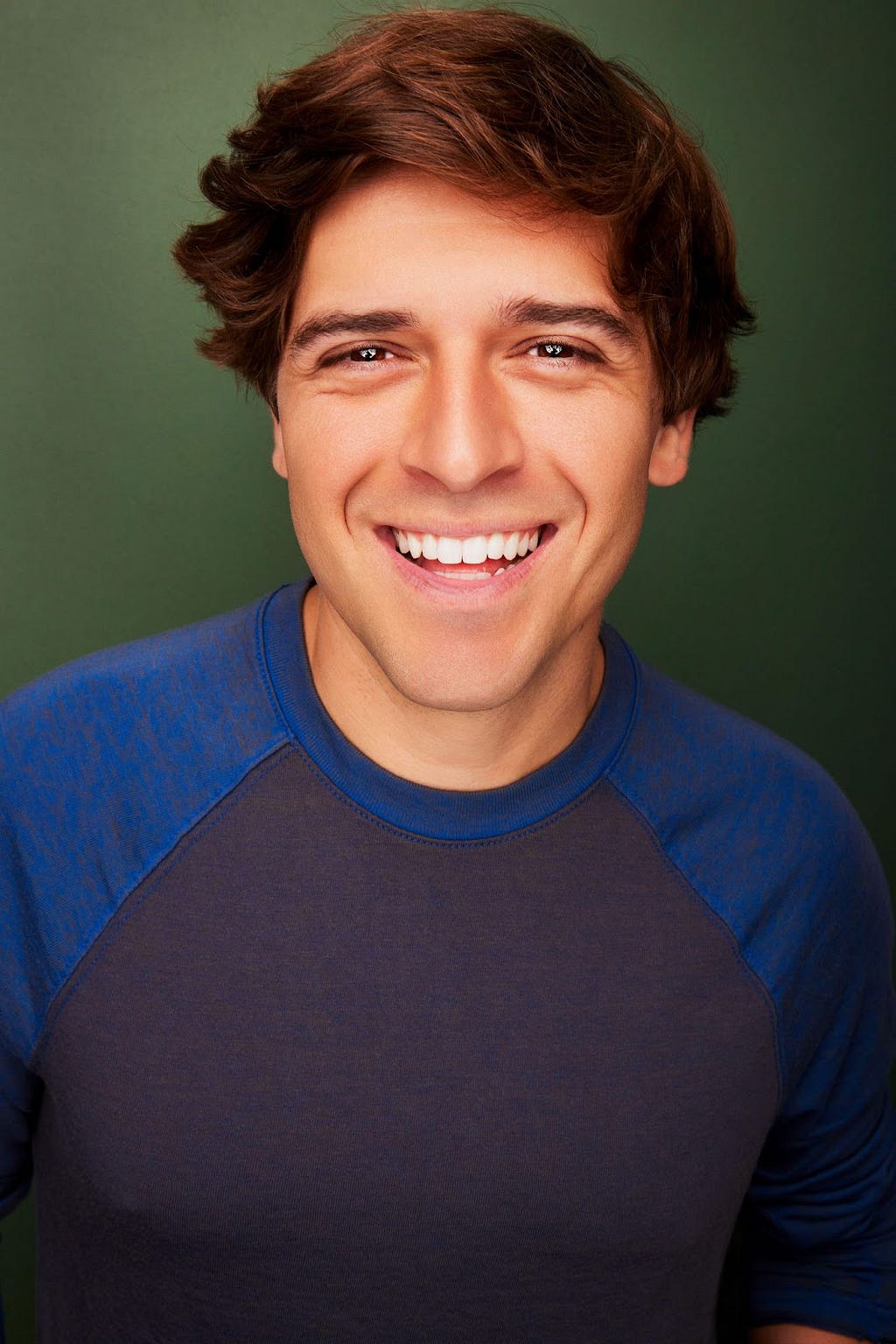
“It wasn’t until I got into college that I discovered what theater was and the fact that you could pursue acting as a career, but also storytelling… My first taste of performing was when my mom, who knew I was miserable doing the biology stuff, saw an ad in the newspaper for a regional theater that was putting on a performance of Miss Saigon. She said, ‘I don’t know why, but I just think you should try out for this.’ … I auditioned for it and didn’t get the part, but there was something really exciting about this idea of performing and everything that came with it. I auditioned for my school play… I got a small part. I switched my major to theater and eventually transferred to NYU, where I studied the Meisner technique.”
I had the pleasure of talking with Paul Castro Jr. The journey from the Jersey Shore to a sound booth in Los Angeles is a long one, paved with hardcore bands, pole vaulting, and a failed attempt at a pre-med degree. For Paul Castro Jr., the path to becoming a prolific voice actor and filmmaker wasn’t just unexpected; it was a route he never even knew existed. “I never even thought that you could become an actor,” Castro admits, reflecting on a childhood in Brooklyn and New Jersey. “I come from very humble means.” He was a self-described “big gamer, a big nerd,” a kid who loved movies and skateboarding, and who, along with his siblings, lived in a world of imagination. But a career in storytelling felt as distant as the Hollywood sign.
His early life was a collection of seemingly disconnected pursuits. He played football, ran track and field, and even fronted a hardcore band, “screaming metal music.” College was supposed to bring clarity, but it only brought confusion. He started on a biology track, hoping to go to med school, but found himself miserable. “I hated it,” he says bluntly. “It was just not for me.” He bounced from criminal justice to political science before landing in communications, a department that finally led him to the theater.
The push came from an unlikely place: his mom. Seeing his misery, she pointed out a newspaper ad for a regional theater production of Miss Saigon. “She said, ‘I don’t know why, but I just think you should try out for this,’” he recalls. He didn’t get the part, but the spark was lit. Soon after, he auditioned for a school play, landed a small role, and promptly switched his major to theater, eventually transferring to NYU to study the prestigious Meisner technique. The foundation was set.
Like countless actors before him, Castro started grinding it out in New York, landing small bits on shows like Law and Order and Blue Bloods and performing in an off-Broadway revival. All the while, a different kind of performance was calling to him. “I was in love and fascinated with voiceover,” he says. That fascination led to him becoming the voice of Nick Sports and landing roles in beloved children’s shows like Dora the Explorer and Clifford the Big Red Dog. He and his wife even began their filmmaking journey, writing and producing a movie called Aeris, based on their cat.
But the New York hustle was wearing thin. He was doing just enough to get by, “illegally subletting my apartment while living at my father-in-law’s place.” He knew he had to make a bigger move, a real leap of faith. The moment of decision was a high-stakes gamble. “I had no money,” Castro explains. He secured a $10,000 loan from the Hebrew Free Loan Society, bought a used car, and on January 1st, 2020, packed up his wife and four cats to drive across the country to Los Angeles. A few months later, the world shut down. “I was terrified that I had made a terrible choice and that everything I had worked so hard for was now going to be thrown away,” he remembers. “It wound up being the smartest decision I could have ever made in my life.”
The risk paid off. The pandemic shifted the voiceover industry to a remote-first model, and Castro was perfectly positioned. His big break came when he was cast as the lead in the Square Enix video game Neo: The World Ends with You. The doors flew open, leading to roles in major franchises like Twisted Wonderland and The Summer Hikaru Died. The nerd from Jersey had found his superpower. “Sometimes your biggest insecurity is your biggest strength,” he says. “My obsession with these things as a child has nurtured into the biggest success of my life.”
Today, Castro’s career is a testament to his persistence. He and his wife recently co-directed and produced their feature film, Divine Blood, starring Lena Headey of Game of Thrones fame — another massive risk. They had a script about a menstrual artist experiencing menopause that many executives dismissed, but they believed in the story. “We just had to find our tribe of people who resonated with the story,” he says. When Lena Headey read the script, she was in.
Looking back, Castro sees his journey as a lesson in balancing patience with persistence. It’s about finding your community, investing in yourself, and fueling your creativity by simply living life. “I wish I knew then that being a geek and getting bullied would be something that would pay off in the later years of my life,” he reflects. From a kid who didn’t know acting was a job to a multi-talented creator telling stories on his own terms, Paul Castro Jr. proves that sometimes the biggest risks are the only moves worth making.
Yitzi: Paul, it’s so delightful to meet you. Before we dive in, our readers would love to learn about your personal origin story, your childhood, and the seeds for all the amazing things that have come since then.
Paul: Thank you so much for sitting and chatting with me. I’m excited. It’s funny because I never expected to be doing what I was doing when I was a kid. I never even thought that you could become an actor. I come from very humble means. I grew up in Brooklyn with my family, and eventually we moved to New Jersey, the Jersey Shore. As a kid, I had a brother and a sister, and we would always be imaginative. We loved movies and video games. I grew up being a big gamer, a big nerd, a lover of movies and television. I just never thought as I was getting older that it would be something I could have a career in. I was a skateboarder and was into sports. I did pole vaulting, track and field, I played football, and everything else you can imagine.
It wasn’t until I got into college that I discovered what theater was and the fact that you could pursue acting as a career, but also storytelling. I got to learn all of the different fields and professions you could pursue. I had my own radio station in college. I joined a comedy troupe and dove headfirst into performance, not ever really having a background. But I think loving movies, loving television, and being a big fan of video games always lent itself to me being creative and fun to be around. I think I was a class clown, as many performers tend to be sometimes. I just loved comedy and comedy movies. Some of my idols are John Leguizamo, Jim Carrey, and Robin Williams. I just loved all of their films.
When I was in college, I was studying pre-med. I was on a biology track, and I hated it. It was just not for me. Thankfully, that pushed me toward pursuing the various other degrees that I did. I was doing criminal justice for a minute, Poli-Sci, and then I found myself in the communications department, which shortly led to a theater major.
My first taste of performing was when my mom, who knew I was miserable doing the biology stuff, saw an ad in the newspaper for a regional theater that was putting on a performance of Miss Saigon. She said, “I don’t know why, but I just think you should try out for this.” I had never really sung musical theater before. I played in a hardcore band, screaming metal music, but I’d never done a musical. I auditioned for it and didn’t get the part, but there was something really exciting about this idea of performing and everything that came with it. I auditioned for my school play at the time, which was a spin-off of Romeo and Juliet called After Juliet, and I got a small part. I switched my major to theater and eventually transferred to NYU, where I studied the Meisner technique. That’s the start of my career.
I started doing some small bits on TV like Law and Order and Blue Bloods, and a show called Limitless. I had a couple of guest spots on things like The Rookie and God Friended Me, and I even did an off-Broadway revival of a play called Love and Human Remains. All the while, I was in love and fascinated with voiceover, and I became the voice of Nick Sports, which is crazy. Anytime you’d hear, “Coming up next is Rocket Power,” that would be me. I also wound up being one of the voices of Clifford the Big Red Dog for PBS. I did the voice in Dora the Explorer and Clifford the Big Red Dog. I started producing movies and made a movie called Aeris that my now-wife and I wrote. It’s about a cat we had, and that was the start of our filmmaking career, in a way. Eventually, I produced the movie Madonna and the Breakfast Club.
Then I decided I wanted to take video games, anime, animation, and voiceover more seriously, so I moved to L.A. I got my first big break in video games, starring as the lead in a game called Neo: The World Ends with You by Square Enix, who’s famous for Final Fantasy, Kingdom Hearts, and Dragon Quest. That opened up so many doors for me. Today, I’ve been doing voiceover since then and have gotten to work on so many cool projects like Twisted Wonderland and The Summer Hikaru Died. I even just made a film that I co-directed and produced with my wife called Divine Blood. She wrote it, and it has Lena Headey and Robin Tunney in it. We’ve just been storytelling in any way we can since New York. It’s been a crazy and wonderful journey that I’m thrilled every moment to be on.
Yitzi: You’re an amazing storyteller. Talking about stories, you probably have some amazing ones from your very successful career. Can you share with our readers one or two stories that most stand out in your mind from your professional life?
Paul: Wow. The ones that stand out. I think one of the biggest ones for me was related to how hard it is to pursue a career in film or TV, or to be a performer, filmmaker, or artist in any way, shape, or form. I was at a point where I was living in New York and doing things to get by, but not really enough. I was illegally subletting my apartment while living at my father-in-law’s place, just doing any and everything I could to try and make it. I realized that voiceover was the gift that kept on giving, and I knew I had to dive in fully. I still love doing on-camera work, theater, and all those things, but it was just such a difficult time with all the streamers and the lack of risk-taking outside of the known franchises.
I had no money. I got a loan from a place in the city called the Hebrew Free Loan Society, which gives loans to New Yorkers. I got a $10,000 loan to buy a car, and I packed up my four cats and my wife. We sold everything we had to get a couple of dollars to take the risk of moving to L.A. and leaving everything I had — all the relationships I built. I bought a used car and drove across the country on January 1st, 2020. I lived in L.A. for a few months, and then a global pandemic hit. I was terrified that I had made a terrible choice and that everything I had worked so hard for was now going to be thrown away. It wound up being the smartest decision I could have ever made in my life. I think the lesson is that even when the worst seems to be happening and it feels like the biggest risk, it could be the very thing you need to change your life. That’s what voiceover and moving to L.A. was for me. It changed my life in so many ways, and I couldn’t be more grateful for the opportunities I’ve had, but also that I was risky and ballsy enough to take that risk back then. There was a quote that said you can’t just step your toes into the diving pool of the entertainment industry; you have to just dive in. I feel like that’s so true. So that’s a personal story in terms of my life.
But for something fun and interesting, making this movie with Lena from Game of Thrones without ever having directed a movie of this size was another risk. I feel like I’m talking a lot about risks. But directing someone who has done this and is such an exceptional actor… she had faith in us as first-time feature filmmakers. To see an actor like her read your words and bring a character to life that my wife wrote (and I helped her work on) that we were trying to make for over five years… it’s just so hard and difficult to even get a feature film funded in today’s world. But at the end of the day, if you have a good story, artists will flock to you for it. I feel like that is a currency that people undervalue. We had this script that was weird and quirky, but meaningful. My wife wrote a movie about a menstrual artist who starts experiencing menopause. We had so many people tell her that nobody wants to see a movie about “potty time.” I just knew that all of the polarizing views it was creating was one of our superpowers. We just had to find our tribe of people who resonated with the story, the good writing, and the characters. When Lena read the script, she instantly wanted to do it. That allowed us to make this movie, and I’m excited for people to see what that will all be about because it was not easy to get that off the ground.
Yitzi: You’ve been blessed with a lot of success now, and you must have learned a lot from your experiences. Looking back to when you first started your entertainment career, can you share five things you’ve learned over the years that you wish you had known when you first started?
Paul:
- First, I think there is a balance between patience and persistence that I wish I would have known about. Everybody talks about being patient, and it took me so long to get things really rolling. My impatience was definitely detrimental at times, but that impatience really could have been converted into persistence. I think one of my biggest strengths as an artist has been being really passionate and wanting to do this more than anything in the world. Because it’s so difficult to do anything in this industry now, if you don’t have an undying passion to do it, it’s going to be a real challenge. I wish I had known to manage that impatience by converting it more healthily into persistence.
- Second, you need a community of people. You need a tribe. A rising tide raises all ships. Advice I got later in life was to find like-minded people who have the same values, connect with those people, and foster those relationships. You can make a theater company or a film company with them. You can produce movies, you can be the sound op on your friend’s feature film, and the rising tide will eventually come back when you want to do your own things and need help. The more you can be valuable to others is something we undervalue.
- Third, invest in yourself. I was always so worried about spending any money that I had to reinvest in my business. I always tried to get the cheaper alternatives to things, and I think that bit me in the butt sometimes. It’s about really investing in your career and having a healthy relationship between saving and sustaining, but also understanding what’s more important: that money you can invest in your career, or the countless nights going out and partying. No one is going to invest in you more than yourself.
- Fourth, reading and just living and experiencing life. I think we get so caught up in the rat race of being impatient, like I was saying. We need to fuel our artistic vessel. What better way than by going out and seeing live theater, people-watching, listening to live music, being with different people, experiencing different cultures, and traveling? That is what makes us more unique and watchable and makes people want to hear our stories — the more we can consume and bring back to the world.
- And lastly, sometimes your biggest insecurity is your biggest strength. For me, being a nerd, a gamer, and being obsessed with video games… in the world of voiceover, there’s that fine line between being only a fan and not being in it for the right reasons. But my obsession with these things as a child has nurtured into the biggest success of my life, in a way. I have a lot to thank and credit to my love of video games and anime that I watched because it informed me so much as a performer. It made me thirsty to seek out projects and want to be a part of the cycle that is creating prolific performances in a medium where we don’t often get to see them. One of my biggest goals in life is to create the highest caliber of performance in video games, anime, and animation — things we often look toward films for. I would love to see the respect and attention given to the way that video games can tell stories. I wish I knew then that being a geek and getting bullied would be something that would pay off in the later years of my life.
Yitzi: For other actors or voice actors who are concerned about AI and maybe being used instead of humans, what would you say to encourage them?
Paul: Ultimately, the biggest factor when it comes to AI is I don’t think it will ever be able to bring out the human experience. AI learns from things that already exist in the world, but every day a unique person is born who sees the world through a different lens, and AI can never really replicate those intricacies — not yet, at the very least. It’s important to fight against AI being a substitute for those things and to be involved in the various ways we can protect ourselves as performers and our autonomy, whether that’s through laws, unions, or other means, so that it doesn’t get taken without our consent and compensation.
But on the other side of that, AI is here, and it’s growing rapidly. I think there’s definitely going to be a world where AI exists alongside performers. It has already existed in the entertainment industry in various ways. But we should think of it as a tool and not a replacement, and absolutely not as something that should replace performance. We fall in love with other human storytellers. It goes back as far as fables and campfire stories. If we get selfish, work off impulse, and say, “Just give it to me now, I want it faster and cheaper,” and we go down this road of AI performances, we’ll quickly see the repercussions. It’s not going to work; that human emotion is just not there. So, fall in love with storytelling, tell the stories from your life that have never been told before, and people will come and support you. The arts are here, and people should support people.
Yitzi: How can our readers continue to follow your work? How can they watch any of your films, see your shows, or play any of your games? How can they support your work in any possible way?
Paul: Right now, we’ve got Twisted Wonderland, Disney’s new anime series, that’s out on Disney+ and Hulu. I’m super proud of it. I voice Riddle Rosehearts, who is the main focus of the villains. It’s a story inspired by the Disney villains, and his character is inspired by the Queen of Hearts. It’s streaming every Wednesday right now, and you can catch it. The first two episodes are out as of this recording. I’m super proud of that performance. If you’re a fan of Disney, a fan of anime, or if you want to try something really cool — a fun isekai, for anime fans — it’s super cool. We also have The Summer Hikaru Died, which just dropped on Netflix, the English dub, and you can watch all 12 episodes of that.
Other than that, just go to my website, paulcastrojr.com. My social media is all @PaulCastroJr, so stay tuned for all my projects. Divine Blood should be coming out at some point in 2026. Hopefully, we’ll have more news about what’s going to be going on with that feature film.
Yitzi: Paul, it’s been so amazing meeting you. I wish you continued success and good health, and I hope we can do this again next year.
Paul: Thank you so much. I appreciate it.
Paul Castro Jr Talks Divine Blood, Voiceover Breakouts, and Why His Biggest Insecurity Became His S was originally published in Authority Magazine on Medium, where people are continuing the conversation by highlighting and responding to this story.