Effie Spence on ‘Actorholics Anonymous,’ Feminine Filmmaking and Preserving Greek Wisdom Through ‘Motherlands’
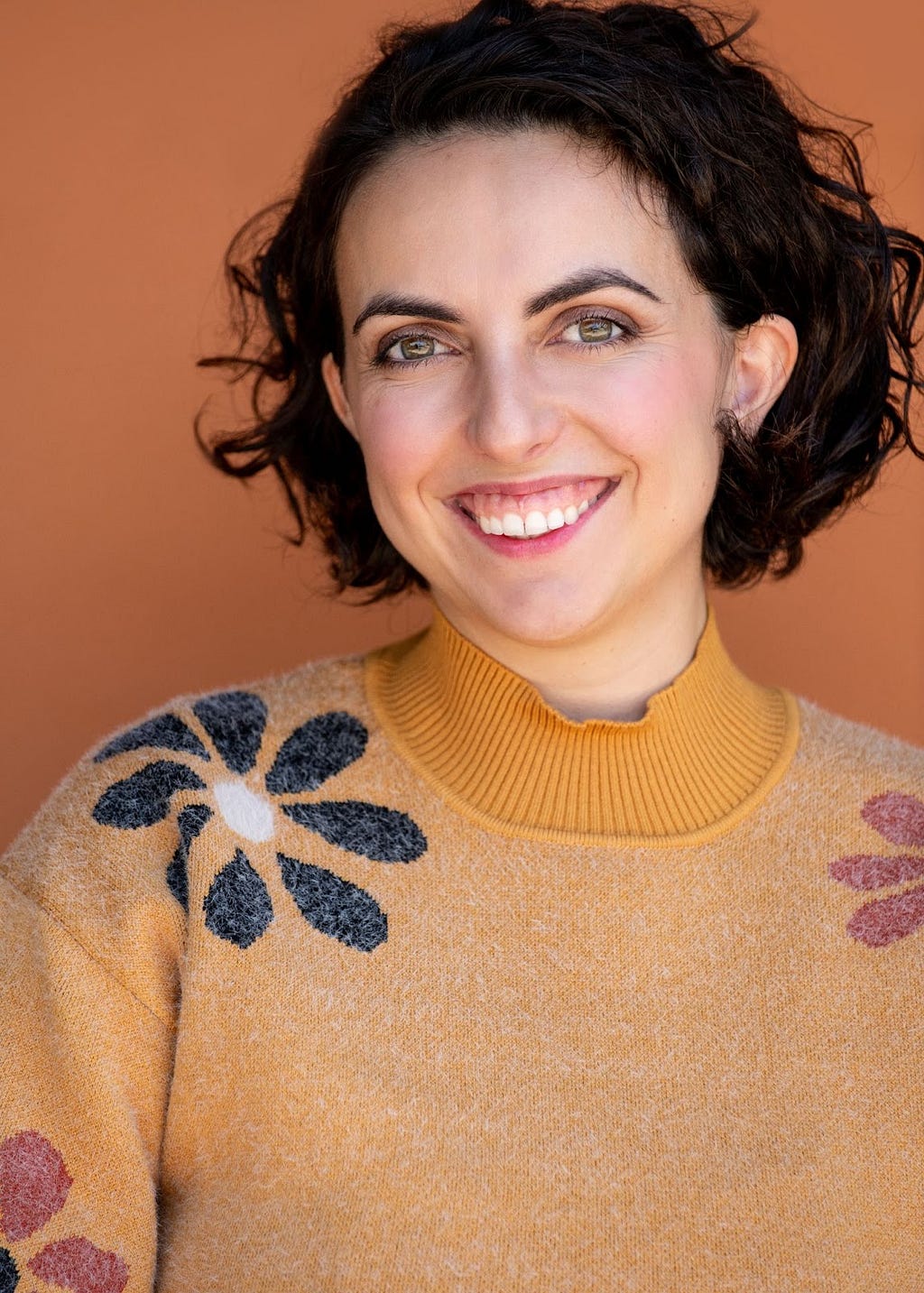
“I realized it wasn’t just about Greek wisdom — it was about Greek women’s wisdom… When women gather, things happen. Especially mothers. We reach a point where we say, ‘No more. We have to do something.’ Motherlands became this odyssey… The audience gets to watch me come into my own by going back to my mother’s country and talking with the women in my village — learning how they’ve processed their own traumas. And it all unfolds through this really soft, intimate lens.”
I had the pleasure of talking with Effie Spence. Effie, a multidisciplinary artist and filmmaker, has emerged as a singular voice in contemporary independent arts, weaving her personal narratives and cultural heritage into works that span theater, film, literature, and performance. With projects simultaneously in production, publication, and festival circuits, Spence’s momentum reflects a career at a pivotal moment — marked by personal vision, grassroots methodology, and an insistence on creative autonomy.
Born and raised in a small New Hampshire town to Greek immigrant parents, Spence grew up in a family that balanced tradition with adaptability. Her father owned a pizza shop; her mother cared for the home while taking on occasional work as a hairdresser. From an early age, Spence displayed a proclivity for performance, making her stage debut in a preschool play and quickly becoming immersed in local theater, music, and dance. Despite early artistic inclinations, her decision to pursue biology in college was shaped by a sense of duty to her parents’ sacrifices. A conversation with her father during her first year, however, prompted a reorientation. Encouraged to follow her joy, she shifted toward film and performance.
After college, Spence relocated to Australia, where she pursued dance and acting before moving to Los Angeles. The COVID-19 pandemic became a turning point. Isolated from the traditional performance world, she revisited her training and discovered her role as a filmmaker. This period led to the creation of her production house, Pixie Logic, which operates under a self-developed framework emphasizing intuitive creation, non-linear narratives, and dream-informed storytelling — a methodology she describes as a “feminine lens.” Influences from directors such as Yorgos Lanthimos, Maya Deren, and Sofia Coppola can be seen throughout her work, although her approach remains rooted in personal experience and cultural memory.
In summer 2025, Spence’s wide-ranging portfolio includes the one-woman show “Actorholics Anonymous,” presented as part of the Hollywood Fringe Festival. The performance, described as a satirical look at the emotional terrain of actors, originated as a television pilot and has since been reimagined for the stage. Concurrently, she appears in another Fringe Festival production, “The Eddies and the Pypers,” expanding her presence on Los Angeles stages.
Her film work also continues to gain visibility. “Le Petit Saint,” a recent short film, is currently on the festival circuit, noted for its poetic cinematography and introspective tone. Meanwhile, her documentary series, “Motherlands,” is set to premiere this summer. The series documents Spence’s return to her ancestral Greek village, where she interviews elder women to capture and preserve traditional knowledge. Initially conceived as a book about intergenerational wisdom, the project evolved into a multi-episode exploration of feminine heritage, memory, and identity. It was financed through grassroots efforts and private investment, and produced with the help of collaborators in Greece and the U.S.
Spence has also published two poetry collections. Her latest, “A Bloody Mess,” is available on Amazon and offers a raw, intimate examination of rage, resilience, and womanhood. An earlier volume, “Basic B*tch Book of Like Poems,” is being re-released in a new edition. These literary works echo the themes in her films: emotional vulnerability, cultural lineage, and the negotiation of personal identity in public expression.
This fall, Spence will appear in Antoine Fuqua’s upcoming biographical film “Michael,” portraying Liza Minnelli. The high-profile role signals a step into more visible industry circles while still aligning with her interest in complex, performative identities.
Spence’s approach to filmmaking was deeply shaped by early projects like “Lily White,” a symbolic, collaborative short film shot during the pandemic. The production, which required physical endurance and spiritual commitment from its small crew, helped clarify her belief in process-oriented filmmaking. Another formative experience came from documenting her grandfather in Greece — initially planned as a retrospective on his life but ultimately transformed into a meditation on mortality and presence as his health rapidly declined. Spence credits the experience with reinforcing the documentary impulse in her work: to witness rather than control.
Off-screen and offstage, Spence advocates for sustainable creative practices, both physical and emotional. She emphasizes movement and nutrition as forms of self-care and regularly engages in dance and ritualistic routines to reset after intensive creative periods. Her self-described “mini-prayers” at bedtime, her insistence on eating local food, and her commitment to building supportive networks reflect an artist attuned not only to aesthetics, but to longevity in an often unsparing industry.
Spence also sees joy as a compass. Many of her creative breakthroughs, including key introductions that led to the production of “Motherlands,” emerged from moments of leisure rather than hustle. She often urges younger artists to prioritize fun — not as escapism, but as a generative force.
While rooted in deeply personal experiences, Spence’s work consistently gestures outward — to collective memory, communal healing, and cultural continuity. Through a combination of intimate storytelling and experimental form, she has created a body of work that speaks to both artistic lineage and reinvention. As she prepares for the next stage of her career, Spence’s trajectory suggests a continued negotiation between individual authorship and broader social and cultural narratives.
Yitzi: Effie, it’s a delight and an honor to meet you. Before we dive in, our readers would love to learn about your personal origin story. Can you share with us the story of your childhood and how you grew up?
Effie: Of course. How long do we have? No, I’m just kidding. So, my origin story is that I’m a first-generation Greek. I grew up in New Hampshire in a very small town. My father owned a pizza restaurant throughout his life, and my mom was a stay-at-home mom who also did hair occasionally. Good for her, because she had three daughters and we all had lots of hair requirements.
My origin story as an artist began really young. I was one of those kids who, the second I stepped onto a stage, I knew that was the life I wanted. I was in a play in preschool where we cut out little paper flowers to put around our heads, and I’ll never forget the feeling of walking onto the stage — which was just the carpet in the classroom — thinking, “Oh my God, I’m going to be the best purple flower anyone has ever seen.” That thrill hooked me at age four.
As childhood went on, I always took dance classes, sang in the choir, and found local theater. It was the one consistent thing. I took piano lessons and flute lessons too, and I was very lucky to have supportive parents. But theater, acting, and film were always the things I stayed consistent with.
Fast forward to high school and thinking about a career. As a first-generation kid, I thought, “If my parents are putting me through college, I have to do something that’s valid.” So I decided to study biology, follow in my big sister’s footsteps, work really hard, and have a solid backup plan in case acting didn’t work out.
During my first semester of college, my father — who’s a man of few words, but when he speaks, you listen — sat me down at Christmas and asked, “What are you doing after college?” I told him, “I had this crazy idea of getting a master’s in marine biology and then going into acting.” He goes, “Okay. So then you’re gonna be an actress in Los Angeles?” I said, “Yep.” And he said, “Okay. What the F*ck does biology have to do with acting?” I just lost it. I started bawling. That moment was his blessing for me to do what makes me happy.
That’s kind of become my heroine’s journey as an artist. I really want to encourage other people to do what makes them happy.
After college, I moved to Australia, pursued dance and acting full-time, and then moved to Los Angeles. During the pandemic — which was sort of my filmmaker origin story — I realized that I never actually went to acting school in college. I went to film school. I’m a filmmaker. I love movies.
So that’s the long story short of receiving my father’s blessing, the support from both my parents throughout my childhood to be this creative kid, and now the support from my husband — who I met in Australia — who’s always been my number one cheerleader. He tells me to keep going, because this is a difficult industry, and you have to just keep going.
Yitzi: Amazing story, and Effie, you’re an amazing storyteller. You probably have some incredible stories from different parts of your career. Can you share one or two that really stand out in your mind from your professional life?
Effie: I think one of the stories that really stands out was the first time I stepped into the role of a filmmaker. During the pandemic, I was doing weekly meetings with my best friend and co-collaborator. We met as work friends first, and she’s become like a soul sister. We were co-directing this piece called Lily White, and it was very experimental. The whole filmmaking process felt like a pilgrimage.
It was a really intense set — just five of us. Me, the co-director, my co-star, the camera operator, and the creative executive producer. The film itself was full of symbolism. We wanted it to embody an innate femininity, so we pulled imagery from the Virgin Mary, the mythology behind lilies, and other symbols that carried deep meaning. Even the hike to get to the waterfall could have been its own movie. It was incredibly difficult, and we were so unprepared.
That hike became a spiritual journey in itself, just to get the shot. It taught me what it means to be a filmmaker — committing fully to the process. Eventually, out of respect for our team’s health and safety, my co-director and I made the decision to stop. We couldn’t get that big, emblematic shot by the waterfall. People were exhausted. We let everyone go home safely, and it ended up being just me and my co-director on foot. We left our gear behind and brought only one GoPro to get the shot.
That experience was the beginning of me truly understanding what it takes to be a filmmaker — how to balance the well-being of your crew while still getting what you need. And realizing that if others can’t do it, that’s okay. I still need to.
Another story that stands out is the very first project I did by myself. It was just my grandfather, me, a lavalier mic, and my iPhone. I wanted to capture his story. He was 99 at the time and had always been the epitome of health. But by the time I got to Greece, he was in a very different mental state. He no longer wanted to be here.
That changed everything. I had planned for the film to be a reflection on his life, but it became a reflection on what he was experiencing as he approached the end of his life. It was an extreme kind of filmmaking boot camp. You have to let go of expectations, step back, and be present with what’s actually happening.
The first night I arrived in the village, storm clouds rolled in. It started lightning and thundering. That night, for the first time in his life, he fell. Looking back, I think he was having a panic attack. That fall marked the moment when his age finally caught up with him. He realized just how old he was.
It felt like a doomsday moment. I remember thinking, “Oh my gosh, I’ve come all this way to Greece, and I’m too late. He’s not going to be able to do this with me. He’s not speaking, he’s shaking.” I was beside myself. I cried, and my husband really pulled me through that night. He said, “You’re going to sleep. Your grandfather is okay. Tomorrow you’re going to wake up, set up your camera, put a mic on him, and you’re going to get your interviews.”
And that’s what we did. That experience was so formative. I remember thinking, “Alright, hats off to you, film gods. Do your thing. I’m just here to hold the camera.”
Yitzi: Amazing. Another amazing story. It’s clear you see the cinematic elements in real life, in real time. So Effie, you have so much impressive work. Please tell our readers about the exciting things you’re working on now.
Effie: Thank you very much. I’m really excited to share. Two pieces I’ve been working on for several years are finally ready for the world, and that feels incredible.
One is a show called Actorholics Anonymous: The Agonies and Artistry of an Aging Ingénue. It’s a one-woman show based on a TV series I’ve written called Actorholics Anonymous, which is a satire and parody of what it’s like to be an actor — it looks a lot like being an addict. The solo show is kind of the appetizer, and it’s currently running at the Hollywood Fringe Festival. I have one more performance left, and after that, we plan to take it to other theaters.
It’s been getting great reviews, which, even though I worked really hard, still surprises me — maybe that’s the actor in me going, “Oh my God, people like it!” My producer and I are planning to keep developing it, bring in the other characters from the TV series, and let it live on stage for a while. Theater is where I started, so it feels really good to be back in that medium.
The other piece I’ve been working on started years ago and actually began as a coffee table book concept. While I was making my first documentary about my grandfather, I thought it would be beautiful to create a book about Greek wisdom. It’s an idea that’s become more popular over the last few years. I’ve always loved hands, so I imagined photographing something like an elderly woman kneading dough or sewing, paired with her portrait and story.
The idea just kept growing. For a while, it was called Sea of Gold, inspired by the Greek phrase, “A drop of wisdom is greater than a sea of gold.” Then, last year, during a really tough period in my life, the idea wouldn’t let go — it just kept expanding.
Very magically, I started taking dance classes again, and through that, I met a woman who introduced me to my now-producer, Anna Angle. It was a random meeting, and I was in a place of desperation. I told her, “I have this idea. I want to interview elderly people in Greece and preserve their wisdom, because that way of life is disappearing.”
Two months after meeting Anna, we were in Greece doing pre-production and getting ready to shoot. We found an investor and ran a self-funding campaign through Seed&Spark. My agents in Greece helped me refine the concept. They asked, “Okay, wisdom, but what kind?” And that’s when the name Motherlands came to me.
I realized it wasn’t just about Greek wisdom — it was about Greek women’s wisdom. Historically, women’s knowledge has often been erased, whether it’s about medicine, healing with herbs, or passing down stories and warnings. When women gather, things happen. Especially mothers. We reach a point where we say, “No more. We have to do something.”
Motherlands became this odyssey, another project of mine with a cinematic spirit. The audience gets to watch me come into my own by going back to my mother’s country and talking with the women in my village — learning how they’ve processed their own traumas. And it all unfolds through this really soft, intimate lens. We’re just having coffee. There’s no big production set.
The concept for the series is that each season, a new host returns to her mother’s country and connects with the women who came before her. She preserves her culture and gains deeper insight into her own identity through those conversations.
Yitzi: That’s a brilliant idea. I can’t wait to watch it. Amazing. Okay, so you’ve been doing this for a while, and you must have learned a lot from your experiences. Can you share five things you’ve learned that you wish you knew when you first started filmmaking?
Effie: Oh my gosh. Wow, that’s hard, but that’s a great question.
- I think the first thing I’d tell my younger self is that it doesn’t matter if you know how to do it or not — just do it. That’s something I’ve really come to understand. It’s never going to be perfect, so just accept that and do it anyway.
- The second thing I’d say is, you don’t need to save everyone. You need to save yourself. That was a big pattern in my life. I gave so much time and energy trying to inspire others, hoping they’d grow or change, and meanwhile, I wasn’t helping myself. I was falling behind. So the lesson is: focus more on you.
- Third, keep finding the people who align with you. Find your cheerleaders, the ones truly in your corner. Meeting my producer, Anna Angle, was such a clear example. Within two months, we were in Greece. That’s what happens when you’re aligned with the right people. It’s so much more powerful than spending three years trying to force something with the wrong ones.
- Fourth, I’d say: have more fun. I can’t tell you how often success has come through the path of just following joy. Taking a dance class, going to an event for fun — that’s how I met the woman who introduced me to my producer. Yes, there’s a place for hustle and grind, but so much magic has come from choosing fun first. And actually, a perfect example of that — when I got back from Greece, I wanted to go to the movies just to reward myself. I went to see Maria, and Angelina Jolie happened to be there. I got to meet her and tell her about Motherlands. She loved it. It was wild. So yeah, you never know where joy might take you.
- And then the fifth thing… This is a big one. My father passed away when I was 20, right before I moved to Australia and began my career, right before I graduated college. That loss created a really deep fear in me around working hard because he was such a hard worker. Somewhere in my psyche, I linked hard work with danger. So for many years, I would start to work hard, then pull back out of fear. The fifth lesson I’d give to my younger self would be: don’t be afraid to work hard, and get the therapy you need to move through that fear. It took a lot of years from me, and I wish I had faced it sooner.

Yitzi: Amazing. Can you share some of the self-care routines that you do to help your body, mind, and heart to thrive?
Effie: I love this question. I’ve actually been getting it more often lately, which is such a nice sign of the times — that artists are finally being encouraged to heal. It’s such a difficult industry, not just physically but mentally. So I really appreciate this question. Thank you, Yitzi.
Dance is a big one for me. It’s always a place where I can laugh it out, cry it out, move it out. It’s a deeply spiritual practice, and I honestly believe all humans are dancers. It’s part of every culture, and I think everyone needs to dance.
I try to eat really well. My husband and I, especially during the pandemic, got very specific about where we buy our food. We actually ended up saving money by going directly to farmers, cutting out the middleman and grocery store prices. I really encourage myself and others to buy local food. It feels different, and for me, cooking has become another way to relax. I find cooking for myself to be a very calming practice.
Having a bedtime and nighttime ritual is also important. What I do is take a moment to bring all my energy back to myself while I’m washing my face and doing my routine. My energy can be all over the place, so I take five minutes and say, “Okay, bring my energy back. The day is done.” I have this little mantra I say: “Everything that happened, happened. Everything that was, was. And everything that will be, will become.” It’s my own little prayer.
Something I need to do more of — and I’m actually planning to reach out to someone — is acupuncture. I’ve been burning the candle at both ends and have been getting sick on and off, which is a sign for me to slow down and give myself a little more care.
Yitzi: All right, this is our aspirational question. Effie, because of your amazing work and the platform you’ve built, you’re a person of enormous influence. If you could put out an idea, spread an idea, or inspire a movement that would bring the most good to the most people, what would that be?
Effie: Thank you. I think I have to take a note from my dad’s book on this one. When he sat me down after I was miserable studying biology, he told me that people should do what makes them happy. As long as your happiness doesn’t cause harm to others, just do more of what brings you joy. That can start with something really small, like budgeting for fine coffee. If you love coffee and want to spend more on it, don’t go through a shame cycle — just budget for it and get your $25 bag of coffee. It’s about enjoying simple pleasures. So yes, do what makes you happy.
Yitzi: That’s great. This is our last question. We call it our matchmaker question. Sometimes it works. We’re very blessed that prominent leaders in entertainment read this column, and this is your chance — maybe we can connect you. Is there a person in the world or in the US you’d love to have coffee or a power lunch with? We could tag them on social media and maybe make it happen.
Effie: Oh, cute. I’d love that. I love this question. There are a couple of women I’d love to connect with, especially in relation to Motherlands, the documentary. One is Angelina Jolie — we already met, so that connection has been started. But the other woman who keeps coming into my field of vision is Pamela Anderson. I think what she’s doing is incredible. The documentary I’m working on really honors the crone and crone wisdom, so sitting down with Pamela Anderson would be amazing, just to continue the conversation about what it means to be a woman in this era of her life.
Yitzi: Effie, it’s been so amazing meeting you. How can our readers continue to follow your work? How can they watch your films, your upcoming films? How can they support you in any possible way?
Effie: Thank you very much. Follow me on Instagram @effiespence. There’s a link there to the documentary, and on my website, effiespence.com, you can see some of my work as well. We’re going to be hosting our own mini-festival in Los Angeles to highlight our work, along with my collaborator’s work, in an amphitheater space. That’s probably going to be in August. We’re just finalizing some details. To follow along, follow the journey. You can also buy my book on Amazon. It’s called A Bloody Mess — a book of poetry. And I have another one, my first collection, called Basic B*tch Book of Like Poems. A second edition of that is coming out soon with all new poems and a new cover.
Yitzi: Wonderful. You’re like a fountain of creativity. This is so special. Keep it up. Amazing.
Effie: I kept it in for too long, so now it’s all just vomiting out. Thank you very much.
Yitzi: It’s a real delight, Effie. I wish you continued success, good health, and blessings. I can’t wait to see all the great things you’re putting out. I hope we can do this again next year.
Effie: Absolutely. That would be my absolute pleasure. Stay safe. I hope you get back soon.
Effie Spence on ‘Actorholics Anonymous,’ Feminine Filmmaking and Preserving Greek Wisdom Through… was originally published in Authority Magazine on Medium, where people are continuing the conversation by highlighting and responding to this story.