“After Peter wrote the book, but before the movie became a big hit, The American Sportsman came to Peter and said, ‘Okay, big fella, you’ve written this book — how would you like to go cage diving with great white sharks?’… The shark came up, took a bite of the horse meat, and the rope connecting Peter’s cage to the boat got caught in its teeth… I grabbed the line and yanked it out of its mouth. That calmed everything down… the guys had to tell him I had saved his life.”
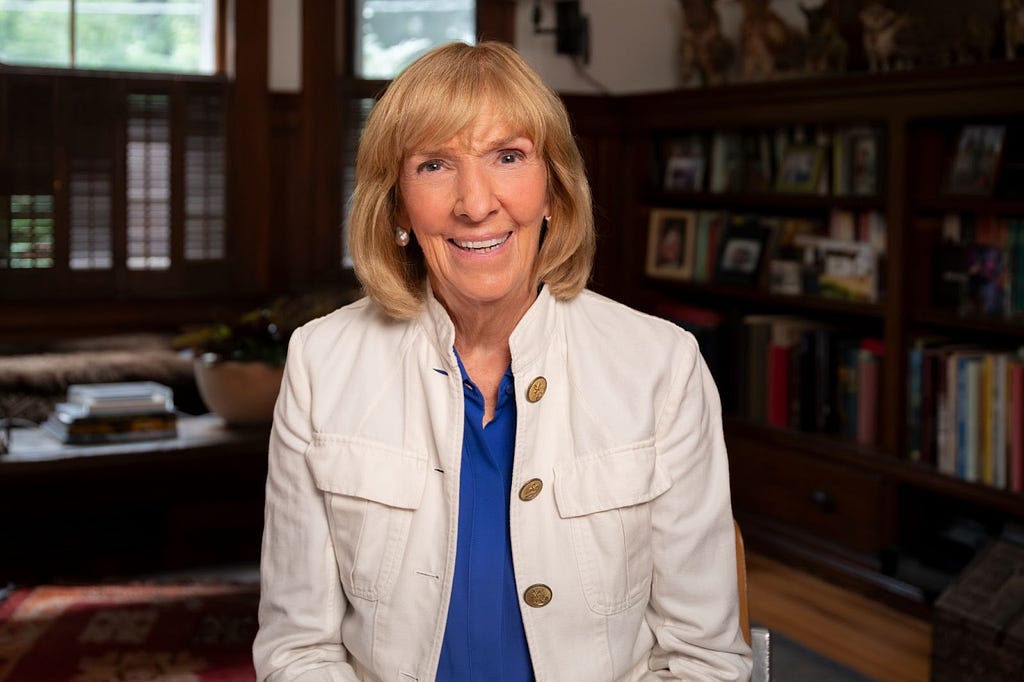
I had the pleasure of talking with Wendy Benchley. Wendy has spent decades at the intersection of environmental activism and public service, emerging as one of the most visible and consistent voices in marine conservation. Widely known for her work on shark protection and ocean policy, Benchley’s advocacy has extended from the local halls of New Jersey government to the international stage, shaped in part by her unique proximity to one of the most culturally influential marine stories of the 20th century — Jaws.
Born Winifred Wesson in Montclair, New Jersey, she was the daughter of surgeon Harrison Wesson and Dorcas Wesson. Her upbringing combined suburban life with summers spent in Stonington, Connecticut, where she first encountered the ocean environments that would later dominate her professional focus. A graduate of Montclair High School in 1959, Benchley went on to study philosophy and psychology at Skidmore College. During her time there, she participated in civil rights demonstrations, including a Woolworth lunch-counter protest in Saratoga Springs, an early experience with civil disobedience that shaped her belief in the power of public action.
Her life took a pivotal turn in 1963 when she met Peter Benchley, a young writer who would go on to author Jaws, the blockbuster novel that inspired Steven Spielberg’s 1975 film. The couple married the following year and settled in Princeton, New Jersey. During the writing of Jaws, Wendy was closely involved in the research process, helping Peter gather information about shark behavior and ocean ecosystems. The success of the book and subsequent film not only brought the couple financial freedom but also opened the door to a new world beneath the surface — literally. Their travels introduced them to the realities of shark finning, overfishing, and coral reef destruction, all of which galvanized Wendy’s commitment to marine conservation.
One early episode proved especially formative. In 1974, while filming a segment off Australia’s Neptune Islands, a great white shark became entangled in the rope supporting Peter’s diving cage. Wendy, observing from the upper deck, intervened quickly, freeing the rope and likely preventing serious injury — or worse. The experience underscored both the physical risks of marine exploration and the importance of understanding shark behavior beyond media portrayals.
Benchley began formal conservation work in the 1980s, joining the board of the Environmental Defense Fund, where she served from 1986 to 2006. During her tenure, she was instrumental in advancing federal fisheries reform and coastal protections. Her focus gradually broadened to include public service at the municipal level. In the early 1990s, she co-founded the New Jersey Environmental Federation and was later elected as a Mercer County Freeholder. She went on to serve three terms on the Princeton Borough Council, where she championed zoning reform, affordable housing initiatives, and environmental sustainability ordinances.
Following Peter Benchley’s death in 2006, Wendy deepened her focus on marine policy and advocacy. She assumed leadership roles in several conservation organizations, including Shark Savers, which later merged with WildAid. In her role on WildAid’s board, she has supported campaigns aimed at reducing demand for shark fin products, most notably in China, where a high-profile media campaign featuring celebrities such as Yao Ming and Jackie Chan contributed to an 85% drop in shark fin soup consumption.
Benchley has also served on the boards of Blue Frontier and Beneath the Waves and has remained a longtime advisory trustee to both the Environmental Defense Fund and Ocean Champions, the latter being the only political action committee dedicated exclusively to ocean issues. Her public outreach often emphasizes the links between ocean health, economic resilience, and food security.
In 2008, she co-founded the Peter Benchley Ocean Awards with journalist and ocean advocate David Helvarg. Dubbed “the Academy Awards for the Ocean,” the event has honored over 80 individuals across disciplines — scientists, politicians, journalists, and grassroots activists — for their contributions to marine protection. Past honorees have included oceanographer Dr. Sylvia Earle and former President of Kiribati Anote Tong. The awards are scheduled to return in 2025 after a hiatus, in partnership with the National Aquarium in Baltimore and the Aquarium Conservation Partnership.
Benchley’s work has been widely recognized within the environmental and diving communities. She received the International SeaKeepers Lifetime Achievement Award in 2014, was inducted into the Women Divers Hall of Fame in 2015, and was named Diver of the Year for Environmentalism by Beneath the Sea in 2016. In 2019, she was honored with the Rob Stewart Lifetime Achievement Award.
Despite her public profile, Benchley often emphasizes the collective nature of her work. She credits the achievements of the environmental movement to the collaboration of countless individuals and organizations. Though she maintains a personal website and public presence, she frequently encourages others to engage with grassroots organizations or policy-driven nonprofits such as WildAid and the Environmental Defense Fund.
Now based in Washington, D.C., Benchley remains active in lobbying efforts, particularly in support of shark fin trade bans and the reauthorization of the Magnuson-Stevens Act. She remarried in 2011 and continues to dive regularly, sometimes assisting scientists in shark tagging and other marine research.
Wendy Benchley’s career is marked not only by longevity but by the integration of personal experience with public action. Whether confronting a great white shark off the coast of South Australia or debating coastal zoning laws in New Jersey, she has persistently connected the dots between individual choices, political structures, and the global marine environment.
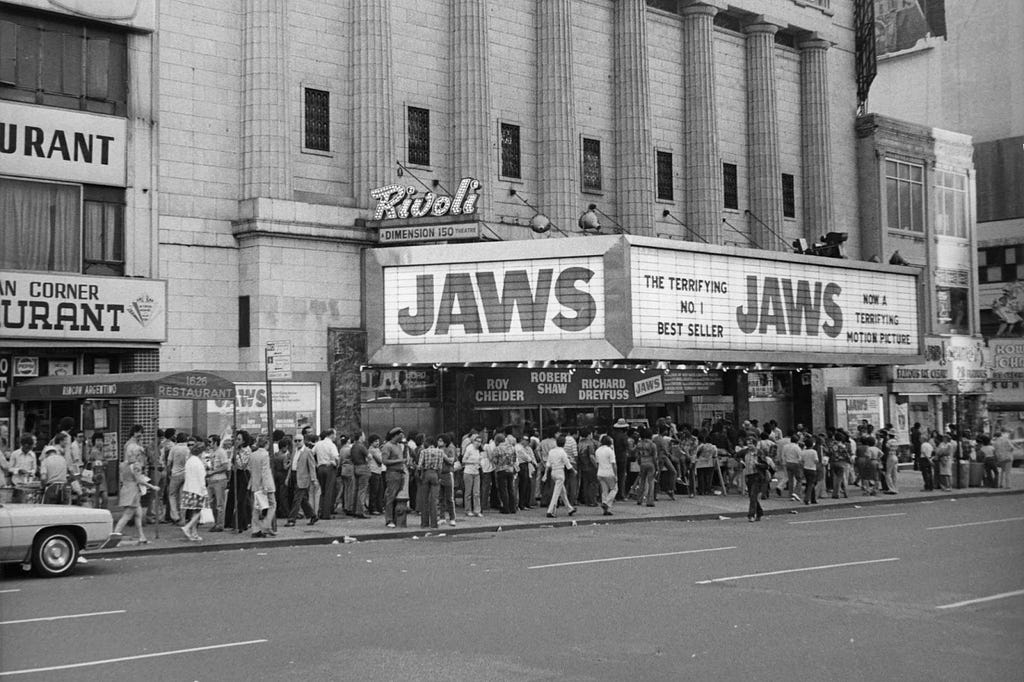
JAWS @ 50: THE DEFINITIVE STORY premieres on July 10 on National Geographic, and the next day July 11 on Disney+ and Hulu.
Yitzi: Good morning Wendy, how are you? It’s an honor to meet you. Before we dive in deeper, our readers would love to learn about Wendy Benchley’s origin story. Can you share a bit about your childhood, how you grew up, and what planted the seeds that eventually led to your amazing career?
Wendy: Oh, nobody ever asks that. Well, okay. Gosh. I grew up in New Jersey. I’m a Jersey girl, but I summered in Stonington, Connecticut, and went to Montclair High School. I loved it in the 50s. Then I met Peter Benchley in Nantucket. I was actually a hostess at the Jared Coffin House. I was a pack-a-day smoker then — hate to admit it. Peter was sitting at the bar, and I was helping someone get a drink. I saw he had a Lucky Strike, and I said, “Could I just have a drag of your cigarette?” I didn’t know him. I don’t know how I ever did that, but he said, “Sure,” gave me a cigarette, I took a drag, gave it back to him. Then he came up and asked me for a date, and we got married a year later. So that’s how I connected to Peter.
Yitzi: It’s such an amazing story. So is that what led you to become a world-famous marine activist?
Wendy: Right. When we were living in Princeton for all those years, I was in politics in New Jersey. I was a Princeton Borough Councilwoman for 10 years and also a county freeholder. I was deeply involved in fighting an incinerator they wanted to build in Trenton, New Jersey. My environmental passions started early, when the kids were young. I realized I had more power to effect change if I got elected to office, so that’s what I did. It was fascinating. Then when Jaws hit, I was already primed. I had been on the board of the Environmental Defense Fund, so I was ready to really focus on ocean conservation issues. And Peter, too — when that big, beautiful ocean opened up to us after Jaws became such a hit, we were very fortunate.
Yitzi: You probably have some incredible stories from your storied career. Can you share one or two that stand out most in your mind from your public and professional life?
Wendy: Oh, gosh. Well, I’m very proud of the fact that we fought that incinerator and it wasn’t built. I’m also proud of what we did in Princeton — we created a downtown square that brought people into town, and we added apartment buildings and affordable housing. On a local level, that felt very important and deeply satisfying.
And then, when it comes to ocean issues, I feel very privileged that Jaws gave me a platform to talk about sharks and help the world understand how important they are to the ocean ecosystem. I’ve worked with WildAid, which I think is one of the most effective groups fighting shark finning. They managed to reduce demand for shark fin soup in China by 85% with a really sophisticated campaign featuring Jackie Chan, Yao Ming, and Maggie Q. That work has been incredibly satisfying, along with what I’ve done with the Environmental Defense Fund.
I’ve had some pretty wild ocean adventures too, if you want to hear about those.
Yitzi: I would love to hear the ocean adventures. Please, go as long as you want.
Wendy: All right, I’ll tell you this one quickly. After Peter wrote the book, but before the movie became a big hit, The American Sportsman came to Peter and said, “Okay, big fella, you’ve written this book — how would you like to go cage diving with great white sharks?” Of course, we said yes. That was an offer we couldn’t refuse. This was around 1973 or 1974, before people had really done that sort of thing.
So we went to South Australia. Back then, women weren’t exactly welcome on boats, so I was stuck on the upper deck. Peter got into the cage, which was attached to the back of the boat, and there was a big hunk of horse meat hanging over the side to attract the shark. All the cameramen were below deck.
The shark came up, took a bite of the horse meat, and the rope connecting Peter’s cage to the boat got caught in its teeth. It didn’t break the rope, but Peter’s cage was now stuck. The shark thrashed around, furious, and yanked the cage under the boat. It popped back up again, but Peter was topsy-turvy down there.
I screamed at the cameramen, “Get the rope out of the shark’s mouth!” But they were completely absorbed in filming. I don’t blame them — they probably thought that was what was supposed to happen. But I knew it wasn’t.
So I came down from the upper deck, elbowed my way through the guys, and when the shark came up again, I grabbed the line and yanked it out of its mouth. That calmed everything down. The shark was happy, and Peter stayed in the water for another half hour. When he came back up, he asked, “What was going on in the beginning?” And the guys had to tell him I had saved his life. So that was very nice.
That was definitely one of the more dramatic shark moments. But we had other wonderful, much calmer experiences with sharks on later shoots. In fact, I found them so magnificent and important that when Peter asked me what I wanted to do for our 40th wedding anniversary, I said, “I’d like to go out to Guadalupe Island off the coast of Mexico and cage dive with the great whites.”
It was — well, as the younger people say — awesome. It really was a lovely experience. We had big females swimming by the cage. They just cruise; they don’t wiggle much. I could put my hand out as one came close and stroke it from head to tail. It felt very smooth, like leather, but going the other way, it was rough like sandpaper because of the denticles in their skin.
As the young people say, it was absolutely awesome — especially for me. For Peter, too, though he had done it many times before. But I was happy to finally check that one off my bucket list.

Yitzi: This is our final aspirational question. Wendy, because of the platform you’ve built and your incredible work and achievements, you’re a person of enormous influence. If you could start a movement that would bring the most good to the most people, what would it be?
Wendy: First of all, Yitzi, I want to say that it’s not just me. I work with hundreds, even thousands of people, and that’s why we created the Peter Benchley Ocean Awards — to recognize and thank people from so many different disciplines for the astonishing work they do, month in and month out, around the world for the ocean. And we are making progress.
What would I do to get the most people involved and working on it? Gosh, that’s such a hard question. Some of the groups I work with are truly magnificent.
One angle I think people often overlook is how important it is who you vote for. People want to get involved in ocean or environmental issues, and they tend to focus on hands-on work, which is great. Join a local environmental group — whether it’s focused on land or ocean — and work with them. But also, whenever you can, donate. Support the people on the ground doing the work. It takes money to make real, sustained change.
I really believe we need to get more political in how we think and vote if we want to make meaningful progress. I’m absolutely thrilled that the UN is addressing plastics and the high seas, and that nonprofits around the world are making a real impact, both here in the States and internationally.
I know that’s a broad answer, but I think we need to encourage all the different groups out there to keep going. And they are working together. I’ve heard people say there isn’t enough cooperation, and maybe that’s true in some areas, but honestly, I’ve seen people around the world banding together and making real progress.
Yitzi: How can our readers continue to follow your work? How can they support your work in any possible way?
Wendy: Oh, how nice. I have a Facebook page that I’m working on updating and getting more current. I also have a website, and there’s a Peter Benchley Ocean Award page as well. They can support me and the Peter Benchley Ocean Awards, but honestly, I would prefer they find another group they can get deeply involved with. I don’t really do grassroots work directly, except through WildAid, Environmental Defense, or Blue Frontier. I collaborate with those organizations, and I think that’s what everyone should do.
Yitzi: Wendy, it’s been a delight, really a delight to meet you. I wish you continued success, blessings, and good health. And I hope we can do this again next year.
Wendy: Thank you, Yitzi. I really enjoyed it. It was great to see your smiling face.
Wendy Benchley on Life After ‘Jaws,’ Shark Conservation, and Building an Ocean Legacy was originally published in Authority Magazine on Medium, where people are continuing the conversation by highlighting and responding to this story.