
Filmmaker Niika Daria Briskin on ‘What About Sal?,’ Storytelling as Activism and Getting Her Film on Netflix Without a Studio
It was really powerful when we had the cinema screenings. Everyone was crying. There was so much sadness because we managed to strike that chord that reaches the most human parts of people. I really want to see more filmmakers create this kind of human work — work that challenges people, moves them, helps them see a part of themselves in the characters. That allows them to heal that part of themselves. I genuinely believe the more healed we are, the more we’re able to connect with each other. Part of the disconnection we’re experiencing now comes from what we’re watching on some of the streaming platforms. I really encourage filmmakers to keep making meaningful stories that impact their community and serve the greater good.
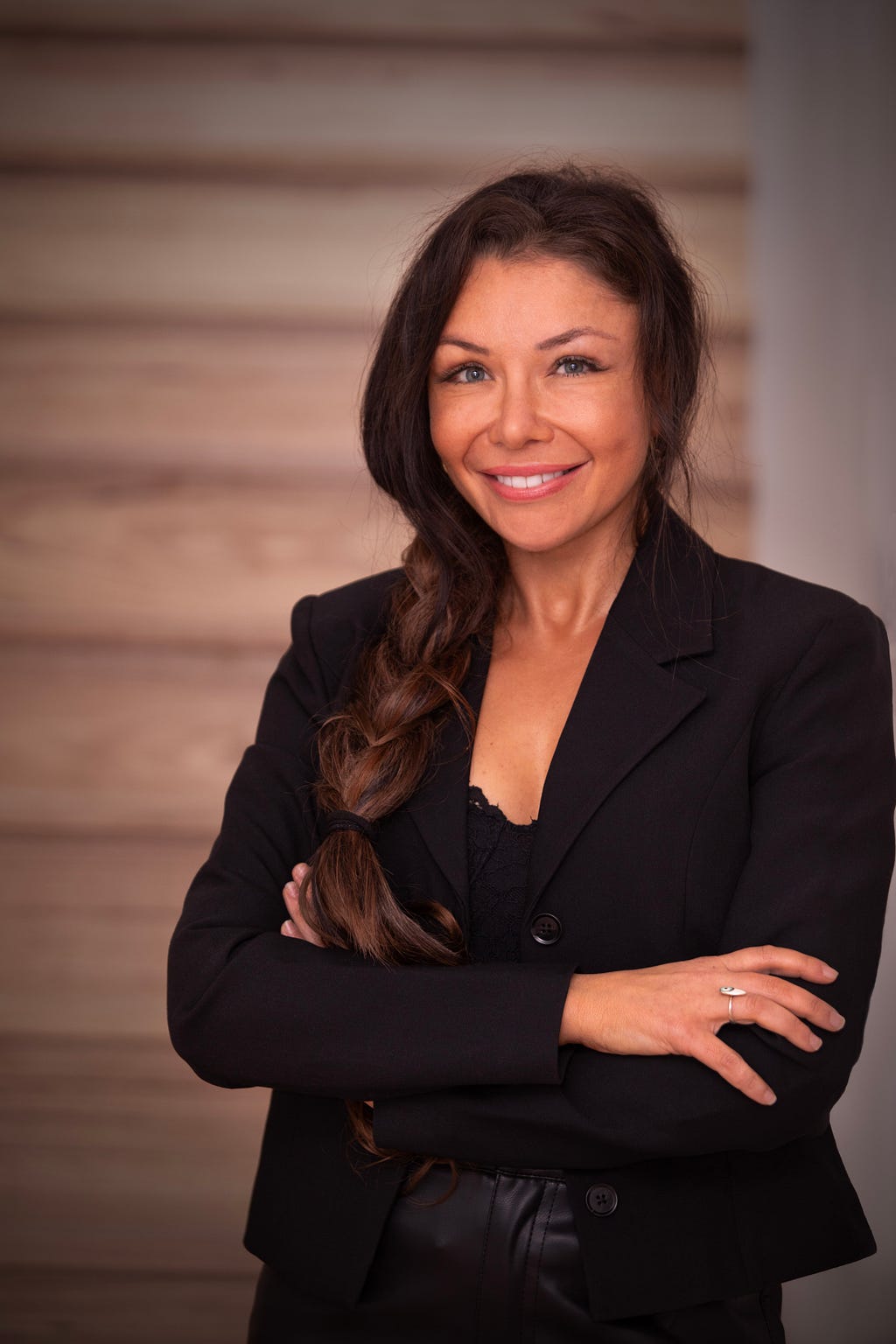
I had the pleasure of talking with Niika Daria Briskin. Niika is an Australian investigative journalist, filmmaker, and executive producer whose career has spanned the intersecting worlds of entertainment, advocacy, and media. Her work often centers on social justice themes and underrepresented voices. This is most recently exemplified in What About Sal?, a feature film she executive produced that debuted on Netflix. The film, directed by John Jarratt, follows a young man with Down syndrome as he searches for his estranged father following the terminal diagnosis of his mother. The story explores themes of disability, family, homelessness, and guardianship. It marks a notable milestone as one of the first Australian films led by an actor with Down syndrome to appear on a major international streaming platform.
Briskin’s journey into filmmaking was neither conventional nor predestined. Born to Russian immigrants who arrived in Australia with limited financial resources, she describes her upbringing as one defined by poverty and cultural dissonance. Her early experiences as an outsider in a predominantly English-speaking, middle-class society laid the foundation for a career focused on observing and narrating stories from the margins. “I grew up on the hustle side of things,” she has said, reflecting on the stark differences between her own reality and that of her peers.
Initially drawn to acting, Briskin secured lead roles on Australian television, including appearances in Neighbours and Eugenie Sandler P.I. Yet it was behind the camera where she found her creative footing. Mentored early in her career by a television cameraman, she developed a strong interest in the technical and narrative aspects of filmmaking. This transition marked the beginning of her evolution from on-screen performer to visual storyteller and producer.
In addition to her work in television and film, Briskin has held positions across major Australian media outlets, including Nova Radio and ABC. She played a prominent role in Australia’s National Youth Suicide Campaign, a multi-network initiative that brought discussions of mental health into mainstream public discourse. Her advocacy work has extended to the stage as well, including appearances at events like the L’Oréal Fashion Show, where she spoke on mental health awareness in an industry often criticized for its superficiality.
Briskin’s approach to storytelling is rooted in what she describes as an “impact-driven” ethos, using narrative as a means to confront social issues and stimulate dialogue. This perspective was a key motivator behind her involvement with the Shaun Miller Foundation, where she served as CEO. The organization supports children with congenital heart disease and gave her an opportunity to merge her filmmaking skills with philanthropic work. Under her leadership, the foundation launched awareness initiatives and produced films designed to educate the public and raise funds for pediatric cardiac care.
It was through her work with the foundation that Briskin met Alan Finney, a veteran figure in Australian cinema known for his work on films such as Mad Max, Muriel’s Wedding, and The Castle. Finney invited Briskin to take on a leadership role in film acquisitions. This further cemented her shift from journalism and performance to producing. Their shared belief in the power of cinema to spark social change laid the groundwork for a collaboration that would lead to What About Sal?, developed alongside actor-director John Jarratt.
Briskin played a critical role in securing the film’s Netflix distribution, navigating the industry’s complex landscape without the backing of a major studio. She has cited persistence, vision, and self-belief as the driving forces behind that achievement. Her focus, she explains, is on creating work that resonates deeply rather than conforming to commercial formulas.
Throughout her career, Briskin has been candid about the structural barriers facing women in film, particularly those balancing creative work with motherhood. She was pregnant during the filming of What About Sal? and has spoken publicly about the absence of institutional support for women in leadership roles on set. “I’ve never waited for permission to lead,” she remarked in an interview, describing the necessity of creating space for both her personal and professional identities.
Her work is underscored by a belief in the transformative power of vulnerability, both on screen and in life. Briskin’s creative philosophy embraces the idea that storytelling can be a vehicle for emotional healing and human connection. In conversations about her influences and aspirations, she often returns to the concept of intuition as a professional compass. Her decisions, she says, are rarely the result of calculated career moves and more often a response to inner conviction.
Briskin is also vocal about the need for increased global collaboration in film production, particularly for Australian filmmakers working with limited budgets. While Australia has produced high-profile acting talent, she notes that its independent film industry often struggles to compete with international financing structures. Her long-term goal, she has said, is to expand opportunities for socially conscious cinema by building cross-continental partnerships, especially with American production companies.
Despite her growing visibility, Briskin maintains that her primary aim is not fame but resonance. Whether through film, television, or nonprofit work, her focus remains on stories that illuminate overlooked realities and promote empathy. For her, the ultimate success lies not in accolades but in connection — the kind that happens quietly between a story and the person watching it.
She continues to live and work in Australia, raising a family while developing future film projects. She encourages filmmakers and collaborators to connect with her directly via social media, particularly those interested in creating emotionally driven, socially relevant stories.
Yitzi: Niika, it’s a delight and an honor to meet you. Before we dive in deep, our readers would love to learn about Niika Daria’s personal origin story. Can you share with us the story of your childhood and how you grew up?
Niika: It’s nice to meet you as well, Yitzi. I like that question. To be honest, I grew up as an outsider looking in. My parents immigrated here with no money. They were very poor and came from Russia. I grew up on the hustle side of things. I grew up watching struggle. That’s all I knew.
I had a clear mirror image because I was surrounded by people who didn’t have that same struggle. I was definitely a minority growing up. I knew what I didn’t have, and I knew I was different. I didn’t quite understand the difference at the time, but as I got older, I realized it was poverty. It was the language barrier. It was this constant interplay between two worlds — one of people who had generations of wealth and stability here, and then my own world where I didn’t have that support or the language.
So I think I grew up on the outside looking in, which really explains why I’ve always felt called to be a storyteller. There are so many stories to tell when you’re always observing from the outside. That’s just the truth of it.
Yitzi: Beautiful. So we’d love to hear about the next chapter. Can you please tell us the story of how you first entered filmmaking?
Niika: Yes, actually it was through acting, which I think a lot of filmmakers might say. That was the most freeing experience I had as a young adult because I was able to let go of the struggle and the identity that had been attached to me as someone coming from a poor Russian immigrant background.
I was able to step into these beautiful roles, and I did very well. I ended up landing lead roles on television. As a young person, people even asked for my autograph. Looking back, I realize it was because I could fully take on an identity that gave me a sense of freedom.
That was probably my first real introduction to storytelling. And when I was working a main role, one of the cameramen became a mentor. He let me be his little assistant and started teaching me everything about the camera and lens work. I loved it. I used to arrive hours early just to learn what was happening behind the scenes.
Honestly, being behind the camera was even more freeing than being in front of it. I was able to build these multi-layered characters in a way I couldn’t when someone handed me a script. There was more control, more depth. Being behind the camera became this beautiful, creative storytelling experience, and I think I’ve always been drawn to that — drawn to the power of telling stories and creating impact.
Yitzi: You probably have some amazing stories from all the different projects you’ve worked on, different sets you’ve been on. Can you share with our readers one or two stories that most stand out in your mind from your professional life?
Niika: I would say the stories that stand out for me are probably the ones where my intuition led me to incredible opportunities. I was actually thinking about that today. For me, it’s unbelievably competitive to be in the film industry, especially as a filmmaker in Australia, where we have fewer opportunities because we can’t compete with the budgets overseas. And as a woman, there’s a lot of goal setting without knowing exactly how you’re going to get there.
I wasn’t born into a film family. I didn’t have any connections. Everything I’ve done and created has been completely self-built. A lot of it was intuitive guidance.
I remember two years ago, I said, “I’m going to get a film on Netflix.” I’d been doing all these documentaries and other types of projects that, to me, were hugely impactful, but the impact wasn’t reaching people because there wasn’t a major platform behind them. I realized that to truly have my stories told, I needed a big platform. So two years ago, I told my husband, “I’m going to get my film on Netflix. I’m sick of playing small. I’m just going to go big.” I had no idea how I was going to do it.
It’s such a crazy story. In Australia, we have someone named Alan Finney. You can Google him — he’s known as the godfather of films here. He’s behind some of the biggest films ever distributed. One of them is Romper Stomper.
He approached me because he knew I was doing socially conscious work — work that made a difference and helped people. At the time, he was the chairman of the Shaun Miller Foundation, which raises money for kids with congenital heart disease. We were talking about his projects, and I could see the limitations in the stories he was trying to tell, and why he was struggling to raise money for them, even though they were meant to support a philanthropic cause.
He said, “Niika, I think you have a knack for this. Why don’t you come and be the CEO of the foundation, and you can also help me out a little bit with film?” I thought that was a great stepping stone — an opportunity to work closely with someone like him.
I thrived as CEO, and I did that for nearly two years. During that time, he asked me to be head of acquisitions, so together we started reviewing scripts and films that could give back to kids who were unwell. That was my dream — doing something meaningful with someone like Alan, who’s such a respected storyteller in Australia.
That all came from following my intuition. I knew I wanted to get there, and that experience led me to where I am today. Being CEO of a nonprofit didn’t seem directly related to film, but it ended up being very connected. That role dramatically and quickly changed the course of my career. I learned a lot of insider knowledge and saw things that helped me make very strategic decisions, which is sometimes all you need.
So I’d say the biggest gift I have, and the most phenomenal experience I’ve had, is how intuition — anyone’s intuition — can lead us exactly where we need to be. And I have a hundred stories like that. That’s just one.

Yitzi: We’d love to hear more. We’re happy to hear other stories if you want to share.
Niika: Well, yeah. When we were working on our own films, I remember saying to Alan that what was missing from a lot of the stories I was seeing on television was the lens through which those stories were being told. I was frustrated. We’re being exposed to stories that are meant to move us and challenge our thinking, but the storyteller on TV is always the same. It’s usually an older white man or an attractive blonde woman. It doesn’t challenge the vision. Sometimes we need a new lens — a challenging lens.
And Alan said, “Well, go write the script.” And I was like, “But I’m not a scriptwriter. I want to find the diamond.”
Anyway, we were at this event, Alan and I, and that’s where I met John Jarratt. Have you ever seen Wolf Creek, Yitzi?
He’s huge. He’s the Wolf Creek guy. He’s done a bunch of TV series and three feature films. It was wildly successful in the UK, and if you Google it, tons of stuff will come up. There are even books about it — it’s a whole franchise now.
John had written this beautiful script about a young man with Down syndrome, and how he navigates grief, loss, and hope. At the time, John was struggling to get the film onto a major platform. There was still a lot of work to be done, and he was really in the thick of it.
When I saw the script and the lens it was written through — the eyes of this beautiful man with Down syndrome — I thought, “That’s your story, Niika. That’s your story.”
And that was it. In a very short amount of time, I did what I do. I’ve built strong relationships over the years, and we got the story to where it needed to be. And it all came from just a few internal nudges — that inner compass. You know that little light? Just follow that little light. Intuition.
In the film industry, nothing is given to you, Yitzi. Everything is really hard. And if you’re a woman… Why are there so few women in Australia over 30 — probably the same in America — doing serious film work while also raising children and having families? At some point, many of us say, “I’m going to be a mother, and I can’t do both.”
So the challenge is real. But if you follow your guidance and your intuition, I truly believe the right opportunities show up, allowing you to be everything that’s important to you.

Yitzi: It’s been said that sometimes our mistakes can be our greatest teachers. Do you have a story about a humorous or funny mistake that you made when you were first starting and the lesson that you learned from it?
Niika: Mistakes… I mean, there have been many. I think some of my biggest mistakes were building relationships with the wrong people and giving them power, hoping they would then give me opportunities. I wasted a few years doing that — with people who made a lot of promises but couldn’t deliver what I needed.
There was one experience in particular where I was working with someone who made all these big promises, but I noticed they kept me behind the scenes for a long time. I was involved in a lot of what was happening with the films, but they never acknowledged me publicly. They were hiding me.
I remember this moment so clearly — when I finally came out in front of a group and said, “I’m Niika, and I’m actually behind this.” That moment was amazing. I was embraced, and I still have those relationships today. In fact, through those relationships, I was able to bring on an investor.
So my biggest mistake at that time was spending almost two years behind the curtain, waiting for someone else to say, “You can come out now.” That was a huge lesson. I don’t do that anymore. I hold my own power and move forward. And if I make a mistake, I’m accountable for it — but at least it’s mine, not the result of someone else’s choices.
I think as women, those are the kinds of mistakes we often make. But as soon as we stop doing that, we begin carving out these incredible paths for ourselves — because we’re finally taking the power back.
Yitzi: So, Niika, you have so much impressive work. Can you please share with our readers the exciting projects you’re working on now? Tell us how we can watch them, how we can support them. Tell us all about it.
Niika: Currently What About Sal? is streaming on Netflix. It’s a beautiful film. It explores sadness, grief, and loss, but through the lens of someone who doesn’t always have the words to express how he feels. The language is different, which allows the viewer to use their own emotional language to navigate those feelings.
That’s really what makes it so powerful — because the film is a bit like music. You don’t need to understand every word. Just watching someone go through these big, emotional experiences without using traditional language connects you in a different way.
So many of us feel disconnected because we don’t always understand the rules society gives us — why we’re supposed to act a certain way or do certain things. Everyone is using their own experience to navigate life, and that often creates distance between us. But love is universal. That’s the only thing that’s truly shared by all of us.
I don’t know if you’ve ever met someone with Down syndrome, but they often radiate so much love, gentleness, and kindness that you’re deeply moved — and you don’t even always know why. It’s the silence of love that moves you.
That’s what I hope this film does. I hope it takes people on a journey of love, told through a different kind of language, and helps them see that even their own painful experiences can lead to hope.
That’s the kind of work I want to continue creating — films that always carve out a path of hope and challenge the way people see the world. Because unless we’re challenged, we stay in our comfort zones. When a film affects you — makes you cry, feel sad, or grieve — through someone else’s story, that’s incredibly powerful.
I’m really proud of this film. It’s the first film led by a man with Down syndrome to ever stream on a mainstream platform like Netflix in Australia. We were the first to do it. There have been some smaller films out there, but What About Sal? was the first that Netflix saw as strong and powerful enough to stream.
Hopefully it will go global. That’s usually how it works with Netflix — they’ll stream it locally first, and if it performs well, it can expand globally. So we’ll see.

Yitzi: You mentioned this a little bit, but what is the message you hope viewers take away when they watch the film?
Niika: Hope. Hope is one of the biggest things I hope they take away, because I think everything that’s happening in the world right now is creating a sense of instability. A lot of people don’t know what’s safe or where their safe place is. That’s a really big thing. We have to learn to navigate current experiences, even political ones, without a sense of safety.
When we watch our character, Sal, go through his experience — his dying mother and everything else — he’s got no safety. The one person who’s meant to protect him and keep him safe, especially someone with Down syndrome, is leaving his life. I hope that seeing him fumble and try to find safety, maybe from within himself, allows others to feel that no matter what’s happening in the world, we can always find that sense of safety within ourselves. Our internal compass is our safety, and also love and the ability to connect.
That’s something this character does beautifully. He shows us how some of the fleeting characters in his life — he didn’t realize how profound they were going to be — but when he was a little bit lost, they carried him. I think that’s also really important. Going back to some of the connections we’ve made throughout our life and not being afraid of that, because we’re all small parts of something bigger.
Yitzi: I usually ask this question to musicians, but I think in your case it’s appropriate. If you could take all of your work, all of your projects, your scripts, your visuals — put it all together in a blender and mix it up — what would be the energy and the message of that mixture?
Niika: Mm, well, it would actually be… have you ever listened to binaural meditation? It’s like — do you know what theta sounds are? I think there’s theta, beta… they’re the brainwave patterns we have while we sleep, right? So all of that would probably be the sound you can’t hear, but that still exists and can move you deeply.
If the sound is a high enough vibration, then you can also be in a high vibration. But if the sound isn’t quite the right frequency — like if the storytelling isn’t quite right — or like when you’re sleeping but can’t quite reach that deep sleep, then the impact is still great, but you can’t explain it in words. It’s something you feel deeply.
Yitzi: It’s so deep. It sounds like what you’re saying is that your work is speaking to a higher level, a higher frequency, that people who are more sensitive can pick up. And your goal is to elevate humanity, or to move humanity.
Niika: 100%. Absolutely. And I’m trying to do it through a lens that doesn’t make people defensive — through vulnerability. Because through vulnerability, we make our greatest changes, right?
That’s why I love this character, Sal. I love him because he’s purely vulnerable. And it’s in vulnerability that we learn our greatest lessons. I’ve experienced a lot of that in my own life, and this film — it’s not based on me, of course — but it has a lot of my DNA. It’s beautiful to see that, and it does affect people in the way you just described, through a sense of higher self.
But you have to be careful, because if you talk to people about the higher self, they can quickly back off. So you have to give them examples they can feel — like love, and things like that.

Yitzi: I’m Jewish, and in Jewish tradition, the sages throughout history have always used storytelling to teach ethical messages. There’s a great parable that illustrates this idea. It goes like this: there was once a king who had a son who needed medicine, but he refused to take it. He hated the way it tasted. So the king had an idea. He hired an amazing storyteller — someone dramatic and comedic. The prince, who was sick, was so captivated that he opened his mouth in awe of the performance. And while his mouth was open, the father quickly gave him the medicine. The point of the story is that we’re often defensive, we don’t want the medicine. But if you have a good story, you can sneak in the message — the medicine.
Niika: Definitely. It was really powerful when we had the cinema screenings. Everyone was crying. There was so much sadness because we managed to strike that chord that reaches the most human parts of people. I really want to see more filmmakers create this kind of human work — work that challenges people, moves them, helps them see a part of themselves in the characters. That allows them to heal that part of themselves. I genuinely believe the more healed we are, the more we’re able to connect with each other. Part of the disconnection we’re experiencing now comes from what we’re watching on some of the streaming platforms. I really encourage filmmakers to keep making meaningful stories that impact their community and serve the greater good.
Yitzi: You’re the expert, I’m just an outsider, but I think the real trick is figuring out how to do that in a way that makes money because ultimately…
Niika: Yes, you’re completely right. I think the last stats showed that only 6% of films from Australia were making it onto streaming platforms because we can’t compete with the huge budgets from other countries. It’s a tiny minority. So even getting the film onto Netflix was impactful. But about that financial comment — if the story is good, people will watch it. That’s the truth. Even without all the extra elements of love and connection, if the story is strong, you can hide the message, the medicine, inside that. But yes, you need a strong story.
Yitzi: What’s interesting is that I’ve noticed it feels like Australians totally dominate Hollywood. It’s like all the biggest stars are Australian. It’s interesting.
Niika: As actors, yes. But what about filmmakers? We really need our American friends, American investors, and the big American co-production companies to step in and support us. The way things are going, it’s very hard — even for producers like me — to keep making these beautiful films. Getting it on Netflix was a huge win, but we need the support of America now more than ever, to be honest.
Yitzi: This is our signature question. Niika, you’ve been blessed with a lot of success and you’re doing amazing work. Looking back to when you first started, can you share five things you’ve learned that you wish you knew back then? Five things that would have been so helpful when you first started filmmaking?
Niika: Oh, five is a lot. All right, let’s go with five.
- I mentioned this before, but the biggest one is giving my power away. I’ll just speak for myself — I’m a lot more powerful than I knew. I wish I had known that when I was younger. Giving my power away was my biggest mistake.
- I also wish I had been more attuned to the type of people I listened to. That would be the second thing.
- The third is, it’s very true that who you create work with matters. Too often, on principle — because I have a committed personality — I would commit even though the team wasn’t committed. That was one of my biggest mistakes as a young, determined person. Don’t waste your time. I wish I could go back and say, “This isn’t working. The team’s not committed. Go find another team.”
- Fourth, I’ve learned that what I want — and what we want — is actually readily available. You just need to put yourself out there. I wish I had appreciated the power of showing up independently, not hiding behind someone. Just showing up to events and saying, “This is me. This is what I want to do,” and not being afraid of what people might say. That alone is powerful, because you never know who’s going to relate to that. I wish I had known how easy that can actually be. We think it’s impossible to reach our goals, but usually we’re just not putting ourselves out there.
- And finally, because I speak as a woman, I think these insights are pretty unique to the female lens. We often give our power away or think things are too hard. We believe we need a man beside us to achieve our goals because men often dominate. But if you’re clear in your vision, nobody will question you. That’s one of the biggest things I’ve learned. I didn’t have that clarity when I was younger. Once your vision is clear, you don’t need anybody beside you. And anyone can have a clear vision — a seven-year-old can. They just need the tools. Nobody taught me that. I learned it with age. If I could talk to my younger self — or to a young person now — I’d give them a piece of paper and say, “Let’s make your vision very clear.” Because once it’s clear, no one can take that from you. And you can sell it. To me, that’s key.
Yitzi: You’re a busy filmmaker. Can you share with our readers the self-care routines you use to help your body, mind, and heart thrive?
Niika: Oh my gosh. I’m guilty of having the worst self-care. To be honest, I’m a work addict. I mean, I’m talking to you right now at 1:00 in the morning, and I have a one-and-a-half-year-old lying in my bed who co-sleeps with me. Plus, I have other kids. So I’ll try to answer this as honestly as I can because I think I’ve sacrificed self-care in order to succeed.
But I’m very lucky to live where I do. I live four minutes away from the hot springs — natural water that comes from the earth. When I’m feeling utterly drained, I really believe in the power of water. Sitting in the hot springs is amazing for me. The water is high in magnesium and iodine.
I also live near the ocean, and I believe in going barefoot, connecting myself to the earth. If I’m feeling lost in my thoughts or overwhelmed with decisions — whether it’s contracts, negotiations, budgeting, or dealing with Netflix — I believe in stripping it all back and reconnecting with the universe. I mean literally, feet to the soil. It’s simple, it doesn’t cost anything, and it really grounds me, even as someone who’s admittedly terrible at self-care.
Yitzi: This is our aspirational question. Niika, because of your great work and the platform you’ve built, you’re a person of enormous influence. If you could put out an idea or inspire a movement that would bring the most good to the most people, what would it be?
Niika: You already know what that would be, Yitzi. It would be the gift of storytelling. I have so many stories I’d love to tell. For me, storytelling is the most powerful way to share who I am, what I see, and what I’ve experienced. It’s all about connection. That’s what storytelling does. That’s what I was born to do, and I’ve always been guided toward that kind of work. It’s my calling, and I believe it would create the greatest good.
Yitzi: This is what we call our matchmaker question. We’re very blessed that prominent leaders in entertainment and business read this column, and maybe we could connect you. Is there a person in the world, in Australia, or in the United States with whom you would like to have a power lunch, collaborate, or share a coffee? Because we could tag them on social media and maybe make the connection.
Niika: I love that. I would actually love to connect with — this might get me some hate — but Elon Musk. I’ve watched his career for a long time. Maybe everybody says that to you, I don’t know. I just think Elon Musk would be fascinating to have lunch with.
But honestly, there are so many quiet, amazing leaders doing incredible work. I can’t think of one off the top of my head right now. It would probably be the head of a production company that creates beautiful films.
And to be honest, I’d have to say Matt Damon, because to this day, Good Will Hunting continues to be my favorite film. He put out a film that mirrored so many people’s experiences with self-worth and abuse. That’s someone a lot of film producers would love to sit down with. I don’t think he’s going to get back to you — it’s a long shot. I wouldn’t like your chances.
Yitzi: You should know, even if they don’t, it’s out there. It’ll be out there permanently in internet ink, and somehow, it’ll filter down into the ether.
Niika: I believe what’s meant to be yours will always be yours. Nobody can take it. There’s no point in being desperate for things because if something is truly meant for you, it doesn’t matter if someone else is richer, better looking, more successful — it will remain yours. We’re all just energetic beings, and things have this beautiful way of finding where they need to go. So I believe that too.
Yitzi: You’re actually directly quoting a statement from the Jewish sages. The Hebrew phrase is Ein adam noga’eh b’melo neima mah she’muchan l’chavero, which means that you can’t touch even a nanometer of what is designated for someone else. The point is, even the tiniest bit of what’s meant for you or your friend can’t be taken away.
Niika: That’s very powerful. I love that. It’s true. It’s probably the most empowering notion a person can understand, because it gives you this deep sense of ownership over what you intuitively know is yours. I love that.
Yitzi: Niika, it’s been truly a joy to meet you and to learn from you. I wish you continued success, blessings, and good health. How can our readers continue to follow your work? How can they watch your latest film or projects? How can they support you in any possible way?
Niika: I love that. Well, firstly, if there are filmmakers reading this and they resonate with this interview, please message me on Instagram. I would actually love that. I’d love to connect with like-minded filmmakers or any big co-production companies working on these kinds of stories — or true stories — that want to reach out. It would probably be via my Instagram (@niikadee), absolutely.
Yitzi: Thank you, Niika. Thank you.
Niika: It’s been so nice to meet you. I hope we can stay in touch.
Filmmaker Niika Daria Briskin on ‘What About Sal,’ Storytelling as Activism and Getting Her Film on was originally published in Authority Magazine on Medium, where people are continuing the conversation by highlighting and responding to this story.