Actor Mark Feuerstein on ‘Guns and Moses,’ Finding Faith Onscreen and Why “Kindness Is the New Religion”
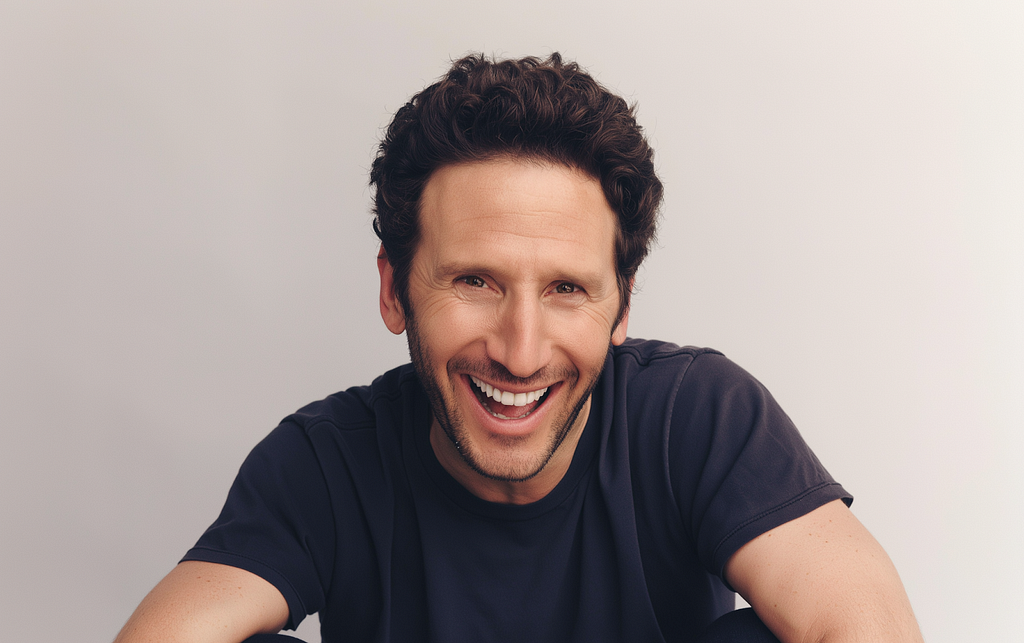
“This character, Rabbi Mo, finds himself in a quandary. What I deeply appreciate about the character and the movie… is that no one else is going along with Rabbi Mo’s theories. He’s alone in this. […] The survivor tells the neo-Nazi about his family, all of whom were exterminated in Auschwitz. […] Then we share a brownie together. It’s because he ate the brownie, because he was willing to break bread with someone who was different from him, that I just can’t believe he committed this horrible crime. […] And I think that’s the message of this movie… listen to that little voice — the moral voice that tells you something’s wrong.”
I had the distinct pleasure of talking with Mark Feuerstein. Mark is an American actor known for his diverse roles across both television and film, often blending drama with elements of comedy. Born in New York City, he was raised in a Jewish family with his father, Harvey Feuerstein, a lawyer, and his mother, Audrey, a teacher. Mark’s early life in Manhattan shaped his work ethic and his sense of community. He attended The Dalton School, excelling in both academics and athletics, serving as the captain of both the football and wrestling teams. Feuerstein went on to Princeton University, where he graduated in 1993. Although he initially considered a career in law, following in the footsteps of his father, his involvement in theater during college led him down a different path.
While at Princeton, Feuerstein discovered a passion for acting after auditioning for a student theater production. Despite a shaky start — he was initially rejected for a role — he found himself cast in another play, Orphans, a move that would mark the beginning of his acting career. Encouraged by this experience, he went on to pursue a Fulbright scholarship to study acting at the London Academy of Music and Dramatic Art. He further honed his craft at L’École Philippe Gaulier in Paris, where he was exposed to a wide range of theatrical traditions, from Jacobean tragedies to clowning. His formal training helped shape him into the versatile actor that would come to be known in Hollywood.
Feuerstein’s acting career began with a role on the daytime soap opera Loving in the early 1990s, but it was his television appearances throughout the late 1990s and 2000s that truly made his name. Notable roles included appearances in Caroline in the City, The West Wing (where he portrayed Clifford Calley), and Prison Break. His breakthrough came in 2009 with the USA Network series Royal Pains, where he played Dr. Hank Lawson. The show, which ran for eight seasons, showcased Feuerstein’s ability to balance both comedy and drama, making him a household name.
Beyond Royal Pains, Feuerstein continued to build his television portfolio with roles in Wet Hot American Summer: Ten Years Later and 9JKL, the latter of which he co-created and starred in alongside his wife, Dana Klein. The sitcom, which aired in 2017, focused on his character’s complicated family dynamics, mirroring some of the more personal aspects of Feuerstein’s life. His versatility and comedic timing shone through once again, earning him praise for his ability to take on a wide array of characters in different settings.
Feuerstein’s film career has been just as diverse. He appeared in the 1998 romantic comedy Practical Magic, alongside Sandra Bullock and Nicole Kidman, and later starred in What Women Want (2000), In Her Shoes (2005), and Defiance (2008). These roles often involved him playing charming, empathetic characters, a theme that has persisted throughout his career. In 2020, he lent his voice to the animated series The Baby-Sitters Club, a role for which he received a nomination for a Children’s and Family Emmy Award for Outstanding Lead Performance.
Outside of acting, Feuerstein is deeply involved in various charitable causes. He has supported organizations such as Children’s Hospital Los Angeles, Heifer International, and the Pancreatic Cancer Action Network, reflecting his commitment to giving back to the community. He resides in Los Angeles with his wife, Dana Klein, and their three children. The couple shares a strong partnership, both professionally and personally, with Klein having co-created 9JKL, in which Feuerstein played the lead role.
Feuerstein’s personal life and upbringing have also informed his career choices and roles. Growing up in a Jewish household, he has often spoken about the influence of his faith and family in shaping his worldview. His father, in particular, has played an important role in shaping his sense of morality and ethics. In our conversation, Feuerstein shared a story from his youth, recounting how he defended the integrity of his father’s legal profession during a school event when a guest speaker made derogatory comments about lawyers. This early sense of loyalty and respect for his father would later manifest in the characters he played on screen, particularly in his portrayal of family-oriented, morally driven roles.
A standout moment in Feuerstein’s career came while working on In Her Shoes (2005), where he played Simon Stein. He described how director Curtis Hanson, recognizing Feuerstein’s initial nervousness in a pivotal scene, took him aside to offer critical advice. Instead of instructing him on how to play the character, Hanson told Feuerstein to trust himself and find his own way into the role. The experience left a lasting impact on Feuerstein, and when he later reconnected with Hanson under difficult circumstances, he was able to thank him for the transformative guidance. It was a moment that symbolized the intersection of artistry and personal growth, one of the defining themes of his career.
In recent years, Feuerstein has taken on a role that is particularly close to his heart in the film Guns and Moses, where he portrays Rabbi Mo, a character whose moral convictions and love for his community reflect his own values. The film deals with themes of faith, forgiveness, and standing up for what is right, even in the face of adversity. For Feuerstein, playing Rabbi Mo was a chance to combine his Jewish upbringing with a character who embodies the ideals of kindness and courage in challenging times.
Looking back at his career, Feuerstein reflects on the lessons he’s learned over the years, from the importance of maintaining humility and protecting personal relationships to the necessity of trusting oneself as an actor. He also emphasizes the importance of kindness and gratitude in everyday life, a message he carries with him both on and off the screen. Whether portraying a beloved doctor, a family man, or a rabbi, Feuerstein continues to leave a lasting impression with his performances, marked by his unique blend of humor, warmth, and sincerity.
Yitzi: Mark, it’s a delight and an honor to meet you. Before we dive in, our readers would love to hear about your personal origin story. Can you share with us the story of your childhood and how you grew up?
Mark: Of course. My pleasure. It’s so nice to be talking to you, Yitzi, especially with you being in Israel now, which brings us even closer to all that is holy about being Jewish. I grew up in New York City, in a wonderful environment. My father grew up on the Lower East Side of Manhattan as the son of an immigrant and a woman originally from New York, Ray and Emil Feuerstein. They lived above a shoe store, with five brothers and one sister. My Aunt Rina had her own room, and the parents worked incredibly hard, building one shoe store into two, then three, and finally four. My father and two of his brothers went to Harvard Law School and became successful lawyers in Manhattan. I grew up on the Upper East Side, went to PS 158, then Dalton, and throughout my high school years, I was a jock.
I thought I’d become a lawyer like my dad because I looked up to him so much. In fact, when Morton Downey Jr. came to our high school to speak and said that all politicians are crooks and the word “lawyer” should be spelled L-I-A-R, I stood up, raised my hand, and said, “Mr. Downey, my father is a lawyer and one of the most honorable men you could ever hope to meet. Would you please reconsider your definition of the word lawyer?” He left giving the entire school the finger. I wasn’t concerned about confronting him, but anyway, when I got to college, I was doing all the extracurricular activities to build my resume and get into a good law school.
One day, on my way to football practice, I saw a sign for auditions at the student theater. I walked in, auditioned for the play. The character cursed a bit, and since he was a modern Mozart made famous by John Malkovich, I decided to do my best Andrew Dice Clay impression. The play was called Burn This, and I said to the little director from Connecticut, “Burn this!” She was not impressed. I didn’t get the part, but the assistant director put me in the next play, Orphans, and that changed my life. I fell in love with it. It was about brothers, it had a father figure, and I have a brother and a father I truly revere. The laughter, the ability to make the crowd both laugh and cry, to tell a great story — it was like psychological crack, and I was hooked.
I ended up doing 15 plays at Princeton, got a Fulbright, and went to London to study everything from Jacobean tragedy, Shakespeare, and Restoration comedy to Chekhov and clowning with a brilliant French clown teacher. After that, I came to New York and got started.
Yitzi: Amazing. You’re an incredible storyteller. You probably have some amazing stories from your professional life. Can you share with our readers one or two stories that stand out the most from your career as an actor?
Mark: Sure, of course. One of my favorite roles was in a movie called In Her Shoes, directed by Curtis Hanson, who also directed L.A. Confidential. He got very sick and is no longer with us, but what a brilliant director. I remember being nervous on my first day. We were filming in Philadelphia, and I had this scene where I’m waiting for Toni Collette outside her hotel room. I’m nervous, doing a lot of shtick, like pretending to reach for the doorbell, pulling my hand away, and then finally pressing it. I get startled by the sound, just a lot going on.
After a few takes, we break for lunch, and I hear from an A.D., “Mr. Hanson would like to see you at lunch.” I’m thinking, “Okay, I’m getting fired. It’s all over.” I go into a room at the Rittenhouse Hotel, where we were filming, and he sits me down and says, “Mark, you do a lot in life. Some people might see it as confidence, some might see it as masking insecurity.” So, right away, he cuts to the core of who I am. I just want to be buried in a hole.
He continues, “The guy you’re playing, Simon Stein, isn’t as ‘extra’ as the kids say. He says what he thinks, does what he says. Simple Simon.” I say, “Okay, right, but at the door, I’m nervous, and I’m just having fun with it, like, ‘ugh!’” And he says, “I’m not going to tell you what to do because I know you’re going to find it. But just trust that you’re going to find and become Simon Stein.” I think, “Okay, thank you. I’m not getting fired.”
I proceeded to trust myself, and scene after scene, my confidence grew. I got to act with Toni Collette, who was amazing. We had this great fight scene, and then on the last day, in front of Shirley MacLaine, Cameron Diaz, Toni Collette, and Curtis Hanson, he came over to me. I was in a van, about to be pulled away, and he says, “Get out. Mark, I just want you to know, congratulations, you really became Simon Stein.”
It hit me in the kishkes. It was so moving. Then they announced, “That’s a wrap on Mark Feuerstein,” and I thought, this may be one of the best moments of my life. The crew of 100 and all these great movie stars applauded me.
That was a great moment. A little epilogue to that story: Curtis Hanson had an operation that went poorly, and he had a deficit in his brain. He was walking Runyon Canyon in L.A. with a trainer, and I was hiking alone. This was a year or two later. I had heard he was sick and had visited him once, but now I ran into him, and I saw that he was doing involuntary things, like blowing his cheeks out like a blowfish. It was very sad that he couldn’t control his face at that moment.
I stopped him and told him the whole story I just told you. He really took it in, even though it was unclear if he could understand everything. Then, a little tear fell down his cheek. I said, “Curtis, you are the best director I will ever work with. I’m so grateful for the gift you gave me of having faith in me to find the character.” He nodded, and that was the last time I ever saw him. But I’m so blessed and grateful I got to tell him that story.
Yitzi: That’s an amazing story. So let’s move to the centerpiece of our discussion. You’re in Guns and Moses, I love your character. You’re so charismatic, you could be an amazing rabbi. Really. Tell us, why do you think our readers should watch this film?
Mark: Well, the reason this film will appeal to all races and creeds, all walks of life, is because the message is universal. It’s captured in one line, which happens to be from the great Rabbi Hillel, who I recently learned about — specifically his views on machloket, or disagreement, and the Hillel-Shammai divide, which I thought was fascinating. But this isn’t about that. This is about Rabbi Hillel’s line that I quote: “In a place where there is no man, be the man.” And we could add in parentheses, “or woman.”
This character, Rabbi Mo, finds himself in a quandary. What I deeply appreciate about the character and the movie, which was written by Sal and Nina Litvak, is that no one else is going along with Rabbi Mo’s theories. He’s alone in this. There’s one key moment in the movie — without giving too much away — that happens pretty early and is really important.
There’s a neo-Nazi terrorizing our congregation, brilliantly played by Jackson Dunn, who I just adore. He’s in his car, blasting neo-Nazi music. He’s part of a group that denies the Holocaust. I’m talking to him, and instead of telling my congregation to go inside and hide, I go right up to his window. He tells me, “You Jews, that didn’t really happen.” And I say, “Okay, if you’re such a big man, get out of the car and let me introduce you to someone.”
That gets him out of the car, and I introduce him to a Holocaust survivor, played brilliantly by Christopher Lloyd — who’s a legend from Back to the Future and Taxi — and I got to work with that legend. The survivor tells the neo-Nazi about his family, all of whom were exterminated in Auschwitz, his family from Khmelnytskyi. You can see this neo-Nazi’s eyes shift, his face changes. He’s starting to understand something he never understood before. He’s never talked to a Jew, never heard a real oral history directly from a survivor.
Then we share a brownie together. It’s because he ate the brownie, because he was willing to break bread with someone who was different from him, that I just can’t believe he committed this horrible crime of killing one of the biggest patrons of our synagogue community.
Again, in a place where there is no man, be the man. Rabbi Mo has the courage of his convictions and faith in humanity, where it’s warranted.
And I think that’s the message of this movie, especially in a time when we’re all siloed in our echo chambers, divided on issues like Israel and American politics. We have to go deep inside ourselves and listen to that little voice — the moral voice that tells you something’s wrong, that tells you, don’t do this. My father taught me to listen to that voice. No one else can hear it or tell you, “Oh, I know what’s going on inside you. You shouldn’t do this thing. You shouldn’t steal that pack of gum at the airport.” You know what I mean? Whatever it is, it’s in you. And that’s the message of the movie.
Yitzi: How would you compare and contrast your personal character, Mark, with the character you play, Rabbi Mo? How are you similar and how are you different?
Mark: Ah, that’s a great question, Yitzi. I think I’m similar in that I share a pride in being Jewish, a love for community, and I hope I share the same moral character that Rabbi Mo has. Rabbi Mo loves his family more than anything else in the world, and I feel the same way about my family.
Where are we different? Well, Rabbi Mo sets a very high bar for morality, and I can only hope to achieve such heights of conviction and character. I’m sure I fall short of Rabbi Mo in following the great lessons of Rabbi Hillel, the Torah, and the Talmud, but every day I try. I try to be a better person than I was the day before. And, you know, I hope we’re all just doing our best.
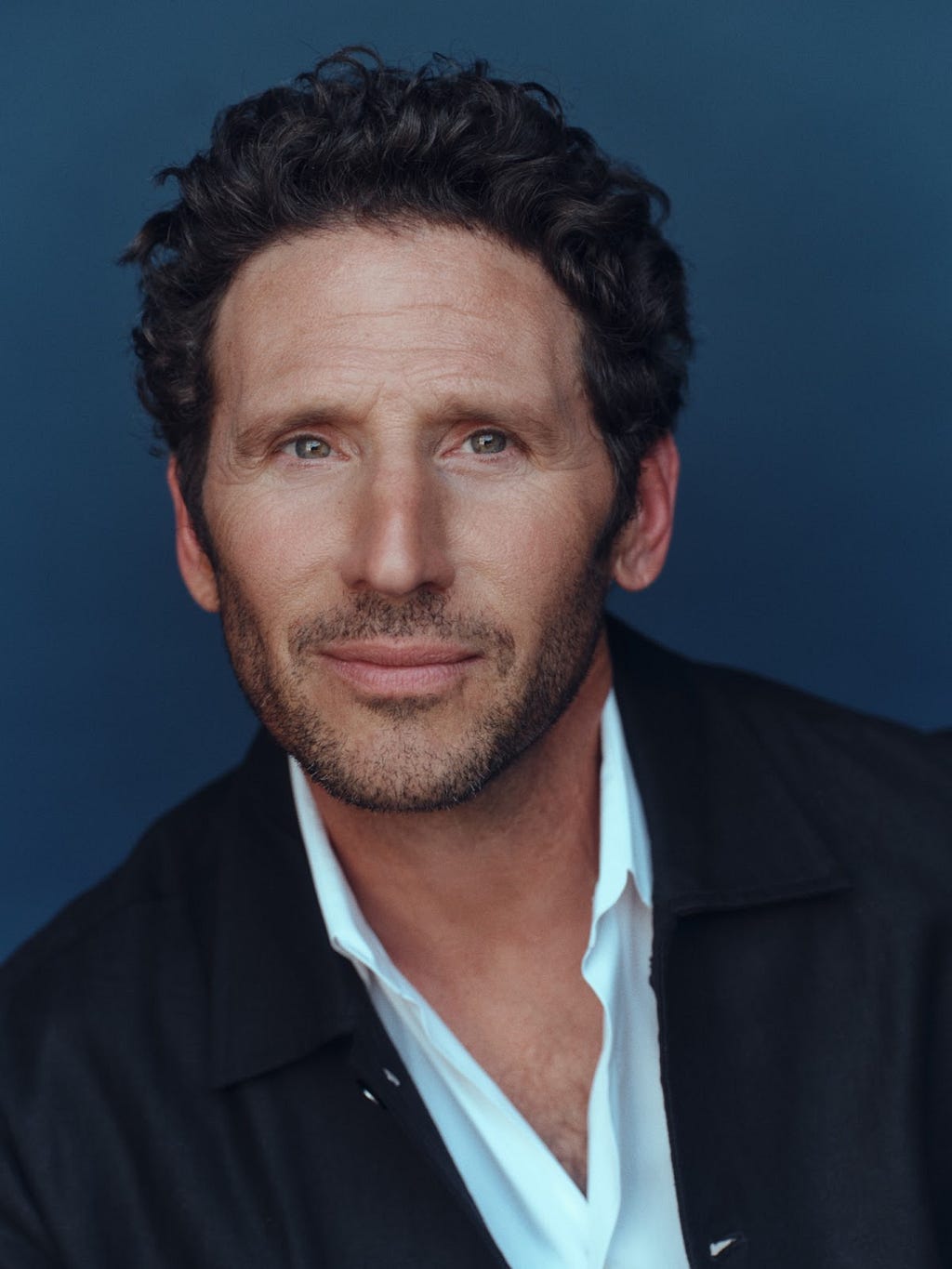
Yitzi: It’s our signature question. You’ve been blessed with a lot of success now, Mark. Looking back when you first started, can you share five things you’ve learned that you wish you knew when you first started?
Mark: Okay, that’s a tough one to come up with on the spot, Yitzi, but I like it. It’s a great challenge, and I’m going to give it a try.
Five things I wish someone had told me?
- First, no one is in the Mark Feuerstein business more than Mark Feuerstein. No one’s going to do it for you. Someone told me that pretty early in my career, and I’ve stuck to it. There were moments, like when I wasn’t going to be allowed to do The West Wing, and I had to call Les Moonves, then the head of CBS, to get out of a deal — kind of like Vito Corleone getting Johnny Fontane out of his deal with the bandleader. I heard that story too. Stan Woltz says it to Tom Hagen… Anyway.
- Another thing: Nancy Meyers told me not to do TV when I was doing What Women Want. She said, “Don’t do TV,” which is a lofty position to take because no actor can avoid TV over time — except maybe Leonardo DiCaprio and Daniel Day-Lewis. But I wish someone had told me to hold out for something that captures the full range of what I can do, instead of doing that third sitcom.
- I also wish someone had told me not to eat too much at lunch when you’re acting, because the afternoon will become very challenging.
- Do your best to protect your family and friends. Once you become a public person, you need to guard their privacy as best you can. I remember once, early in my career, I did an interview where I mentioned I was “Mr. Extra-Curricular” in high school, and my father said, “Oh, you’re Mr. Extra-Curricular? He thinks he’s Mr. Extra-Curricular.” I’m lucky I had parents who kept me humble.
- Finally, I would say, don’t get too big for your britches. There’s a great episode of the show The Studio with Seth Rogen. In it, he’s dating a brain surgeon and attends an event with brain surgeons. He tries to convince them of the importance of what he does in Hollywood while they save lives. The show highlights the ridiculousness of Hollywood against the obvious superiority of these medical geniuses. Then, as he’s trying to impress them, a note comes in, “Hey, we can’t get the diarrhea to spray on the guy’s face,” and they all just stare at him. It really puts things in perspective. This is one I’m always working on: Try to remember how much more important your family and your life are than your acting career. The quest to get the best part, the best representation — it’s an addiction. This Hollywood game can really consume you. But you have to remind yourself, you’re not that important. My father used to say, “We are this big,” and hold his hands apart to remind us how small we are in the context of the universe. So, I guess I repeated some, but you get the gist.
Yitzi: This is our final aspirational question. Mark, because of the great work you’ve done and the platform you’ve built, you’re a person of enormous influence. If you could spread an idea or inspire a movement that would bring the most good to the most people, what would that be?
Mark: Well, the Dalai Lama once said, “My religion is kindness.” Where my mindfulness practice intersects with my Judaism is in the form of gratitude. It’s beautiful that, even though I don’t know all the prayers by any stretch, in our tradition, we bless food, bread, wine, Shabbat, and even just in the morning. We say, “Modeh Ani,” thanking God that we’re alive. Just waking up today is a gift.
The combination of gratitude and kindness is endless. There can never be enough of either. So, if we all focused more on that — being a little more grateful, a little more kind today — slowing down, letting the person in front of you on the highway, smiling at the cashier, and giving that little extra kindness — it would make a huge difference.
Yitzi: How can our readers watch the film? How can they support you in any possible way?
Mark: It comes out July 18th, and I know Sal is encouraging everyone to go to their local theater and ask, “Are you going to have Guns and Moses?” and to make sure they get it. It’s really a grassroots campaign. Sal has worked so hard to get the word out. If anyone can help or organize, I feel like in the Jewish community and other communities, we’ve been really supported by the Christian evangelical community during this time. If people are inspired to gather a group in their faith community or schools to see Guns and Moses, they should definitely do it.
Yitzi: Thank you Mark for this really amazing conversation.
Actor Mark Feuerstein on ‘Guns and Moses,’ Finding Faith Onscreen and Why “Kindness Is the New… was originally published in Authority Magazine on Medium, where people are continuing the conversation by highlighting and responding to this story.