Fire Captain Rick Brandelli Of Fireman’s Brew, on PTSD, Hero Myths and the Real Cost of Saving Lives
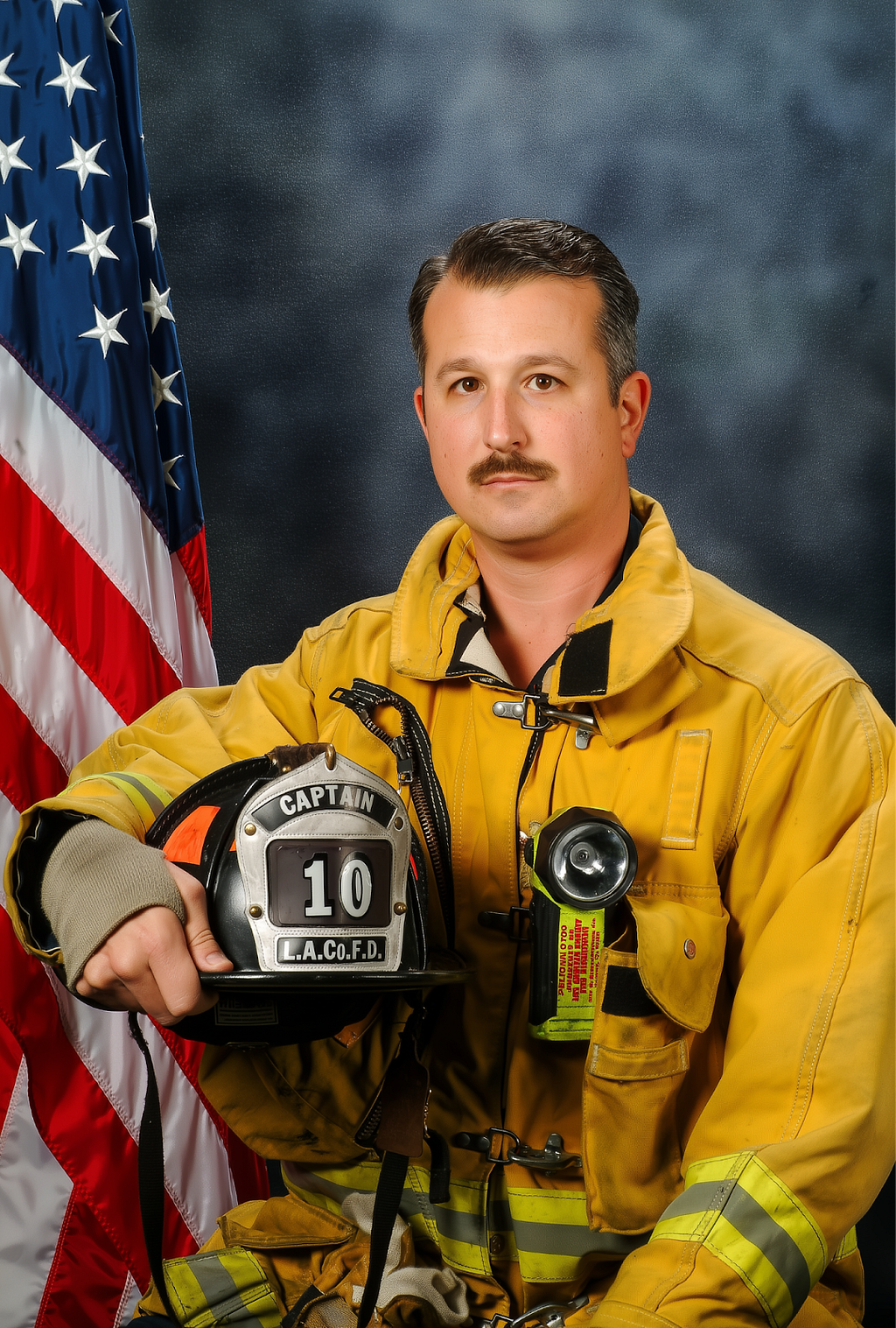
“We’re perceived as Supermen… Firefighters come in, save the day, fix the problem, and off we go into the sunset. But we carry that baggage. That family might have had that trauma once, but we have ten a day… Just know that we got it, and it’s not going to go away.”
I had the pleasure of talking with Rick Brandelli, a man who spent three decades walking into situations most people spend a lifetime praying to avoid. To the outside observer, a fire captain is an archetype — the mustache, the gear, the hero riding off into the sunset after saving the day. But sit down with Brandelli for an hour, and the gloss of the “Superman” myth quickly fades, replaced by a much more compelling, gritty reality of what it actually costs to keep a city safe.
Brandelli is fire service royalty, though he didn’t plan it that way. While his father was a fire captain and his brother seemed to want the job “right out of the womb,” Rick was drifting toward construction management in college. It took a nudge from his dad to try out a volunteer company to change his trajectory.
“The minute I did it, I loved it,” Brandelli says, recalling his twenty-year-old self. “I loved it because you’re outdoors and you’re seeing things that were new and interesting. Now when I look back, I wish I hadn’t seen some of the things I saw.”
That duality — the thrill of the job versus the haunting nature of the memories — defines Brandelli’s career. He turned twenty-one in the training tower and spent the next thirty years on the line. His time in West Hollywood reads like a script from a gritty cable drama. He describes having “carte blanche access” to the city, crashing Elton John’s Oscar party in uniform, and standing backstage at rock concerts. He even filmed a pilot for a TV show based on his life, though a lack of legal representation killed the project before it could become the next Rescue Me.
But for every moment of backstage glamour, there were a hundred moments of visceral reality. Brandelli speaks of “righteous saves” — the ones where you cheat death and win. He recalls reviving an asthmatic woman who was clinically dead upon his arrival, and the rush of seeing a drowned eight-year-old boy walking around after a team effort save.
“It’s a good feeling when you bring someone back to life,” Brandelli says. “They are dead. If you weren’t there and didn’t do anything, they would have had a funeral.”
However, the job leaves a residue that no amount of scrubbing can remove. Brandelli is candid about the sensory details that stick with a firefighter, specifically the smell of a bad trauma scene. “The smell of iron just doesn’t leave you,” he explains. “That’s what blood smells like, kind of an irony, metallic smell.”
Early in his career, he learned the hard way that you cannot bring the job home. After sharing stories with his wife, she confessed she had been having nightmares about the incidents he described. “That was a light that came on,” he admits. “I realized I couldn’t bring this home to my family because she was suffering. I didn’t see it as suffering. To me, it was just part of the job. You get numb as a firefighter.”
That numbness is a survival mechanism, but it has an expiration date. Brandelli notes that you can’t just “press erase like on a computer.” The memories stack up. For years, the culture dictated that you dealt with the horror through dark humor at the station. But everything changed when a fellow fire captain — a man Brandelli describes as a “solid cat” who had everything going for him — took his own life on the way to work.
“That was a light bulb that went on,” Brandelli says. “Why him? Of all people, why him?”
The tragedy forced Brandelli to confront the silent epidemic of PTSD in the fire service. He realized that the “macho” culture was preventing men and women from seeking help, viewing it as a weakness rather than an injury. This realization became the catalyst for his post-retirement mission: Fireman’s Brew. While it is a coffee and beverage company, Brandelli views it primarily as a vehicle for awareness and a way to generate funds for the Fire Family Foundation.
“We’re perceived as Supermen,” Brandelli says. “Firefighters come in, save the day, fix the problem, and off we go into the sunset, and everything is all good. But we carry that baggage. That family might have had that trauma once, but we have ten a day.”
Now retired at 61, Brandelli is looking at the years ahead with a focus on legacy. He isn’t interested in the hero worship. He wants civilians to understand that when a firefighter acts a little strange or is overly cautious about safety, it’s because they have seen the worst-case scenario play out too many times.
“Just know that we got it, and it’s not going to go away,” he says of the trauma. “Let them talk freely and give them grace and understand.”
It is a simple request from a man who has given a lifetime to the public. He doesn’t want a parade; he just wants to ensure the next generation of firefighters doesn’t have to carry the weight alone.
Yitzi: Captain Rick, it’s delightful to meet you. Before we dive in deep and hear about Fireman’s Brew, our readers would love to learn about your personal origin story. Can you share with us the story of your childhood, how you grew up, and the seeds and the foundation for all the amazing things that have come since then?
Rick: Wow. You are going deep in this one. All right. I grew up in a fire family. My dad was a fire captain, and my brother ended up being a fire captain. He knew he wanted to be a firefighter right out of the womb. But me? No. I had no idea what I wanted to do until I got out of high school. I was going for construction management in college. Then my dad said, “Why don’t you check out the volunteer fire company near the house and see if you like it?” I thought, “Why not? Keep my options open.” The minute I did it, I loved it. I loved it because you’re outdoors and you’re seeing things that were new and interesting. Now when I look back, I wish I hadn’t seen some of the things I saw. But that’s what got me into the fire service. I was twenty years old. I switched majors in college and never finished that program because I got hired. I got lucky. I got hired, and I turned twenty one in the training tower. That started my life in the fire service.
I love it. I really do. But I learned early on that you can’t take it home with you. All these stories were exciting, new, and different. My wife at the time would ask, “What did you see? What did you do?” Then one day, she confided in me that for the last two weeks she had been having nightmares about an incident I told her. I believe I know which one it was. It had to do with a kid. That was a light that came on, and I realized I couldn’t bring this home to my family because she was suffering. I didn’t see it as suffering. To me, it was just part of the job. Now, older and a little more mature and wiser, I can see how that could really disturb people when you’re not used to it. I got used to it. You get numb as a firefighter.
But that stuff builds up, those memories one after another. You get thirty years of this, and you can’t press erase like on a computer. It doesn’t go away. It’s always there. We just tried to forget about the bad stuff and everything we’d seen. That was the way it was. You talked about it with friends and joked at the station. That’s why we have that sick sense of humor. But when my friend, a fellow fire captain, and this guy was the most solid cat you could imagine, smart, great personality, funny, everybody loved him, good looking, he had everything going for him, ended up killing himself on the way to work. That was a light bulb that went on. Why him? Of all people, why him? What happened?
That’s when I did my own research. My friend shook us so much that we realized how much PTSD is a real thing. It affects at least a third of us. Not many people seek help. Very few seek help because it’s kind of a macho thing. They feel it’s weak. The stigma of seeking help is seen as weakness. But it’s changing slowly. We want to bring awareness to it. And that’s what Fireman’s Brew is for, to help bring awareness to this issue. You can’t deal with it unless you know you have it and can talk about it.
Here’s a little tidbit. I got a call from a couple of friends after I started coming out with this brand and supporting firefighters and explaining that PTSD is real. They thanked me. They thanked me for bringing light to it because it’s just not talked about. It’s not talked about because we’re perceived as Supermen. Firefighters come in, save the day, fix the problem, and off we go into the sunset, and everything is all good. But we carry that baggage. That family might have had that trauma once, but we have ten a day. We have to deal with it. You try to forget it, but you don’t. This stuff builds up over time. It is a real issue. Times are changing a bit, so hopefully my small part will help bring some awareness to this. And hopefully, with this brand, I can continue it in perpetuity.
Yitzi: You probably have some incredible stories from your experience as a captain. Can you share one or two stories you could make a TV show out of?
Rick: My life in West Hollywood alone would make one. The things I saw. I had carte blanche access to everything. It was pretty cool. I attended Elton John’s Oscar party, uninvited. I was on duty. Why not? Sheriffs said, “Come on in.” We stood in the background, looked around, talked to some people. It was neat having that access. And backstage access when bands you like are playing, just checking it out. Carte blanche. That was neat.
I don’t need to go into all of that here, but I actually did make a pilot for a TV show. Believe it or not. It was my own fault. I didn’t get a contract with the friend who was writing for me. When we started getting interest from the studios, she came out with a lawyer saying, “No, that’s half mine.” It was my story. I’m sorry. And that was that. It’s a shame. It was before Chicago Fire and the others. It was right after Rescue Me finished and before the other fire shows started. I was getting real interest, but naive me didn’t get a lawyer involved. Lawyers, love them or hate them, were an absolute necessity, and I didn’t know to get one involved. It bit me.
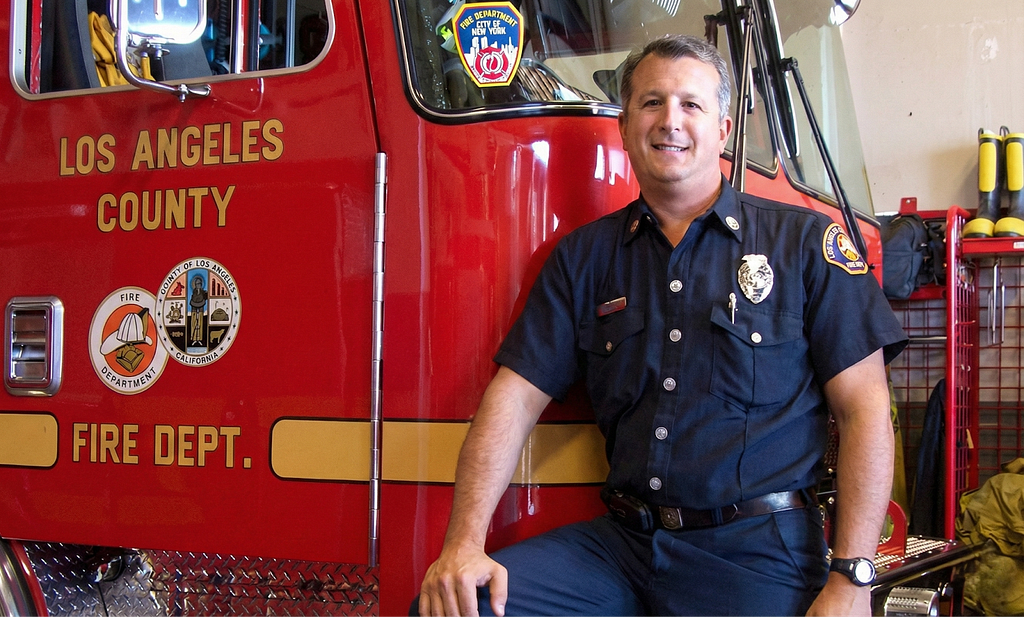
Yitzi: Do you have a cool story about how you rushed into a fire to save somebody, save a child or a young person?
Rick: Oh boy. Those are fun. Saving people is fun. I remember my first save, my first righteous save. All me. If I wasn’t working, there would have been someone else, but I was the paramedic working that day as Patient Man. Patient Man is the one that touches the patients and asks the patients questions. He’s the doctor on scene. That was me. It was an asthmatic we had been on several times before, and it was pretty severe. When we got there, she was basically dead. Her heart was beating, but she wasn’t breathing. Her esophagus and everything inside were so clamped down and tight. I intubated her, the tube in the throat goes in the lungs so you can use the bag valve mask and breathe for them. I was able to do that. It was so constricted, but I got it in there.
When we started trying to use the bag, usually you get good compliance, fill the lungs with air, no problem. This one was hard. You had to really try and squeeze. You couldn’t squeeze it, but every little squeeze got a little bit more, a little bit more, a little bit more. By the time we were wheeling her out on the gurney, she was trying to pull that tube out of her. That was my first righteous save.
Or it was my ex-wife’s uncle. That might have been the first, about the same time. My ex-wife’s uncle lived with her grandparents, and he was a heroin addict. I responded on him. He was in the driveway, dead. No breathing, nothing other than a pulse. We revived him in the back of the ambulance with Narcan. Narcan neutralizes the effects of opiates and only lasts for a little while. You shoot him with that and they always wake up. They always say, “I was sleeping.” I say, “No, Bobby, you were dead. You were dead and we brought you back to life.”
A lot of those calls happened when heroin was rampant way back in the 80s. I saved a lot of people with Narcan. It’s an amazing drug. As far as going in, a drowning, a near drowning, I got a commendation for that one. That was a kid who drowned. That was a team effort. I can’t take full credit for that one. But to see that kid alive and walking around, that’s such a great feeling. He was about eight years old.
At Universal Studios when I was there, we had three full arrests that we brought back to life. They actually came back to the station and thanked us. That doesn’t happen often. It really doesn’t. Full arrests are tough. Universal Studios trains all their employees how to use the automatic defibrillators because they have them there. And there’s always security on site quick, and we’re right there too. I give credit to Universal for those saves. Three people. And one of those guys I’m still in contact with today. Real nice guy. It’s a good feeling when you bring someone back to life. They’re dead. They are dead. If you weren’t there and didn’t do anything, they would have had a funeral. Giving them more time with their family is a great feeling.
Yitzi: You mentioned why you started Fireman’s Brew. Do you have a story since you started the company?
Rick: The thing is, we started March 5. That is not that long ago, about six months. Other than my old friends I haven’t talked to in years, decades really, calling me to thank me for what I’m doing, that lets me know I’m on the right track. That is a great feeling. Now that I’m retired, on a fixed income, I can’t be donating all my money to the charities. This avenue, if we get this thing profitable, should hopefully give back in perpetuity beyond me. That’s my goal. I’m 61. How many more years I have left on this earth, I don’t know. I have more years behind me than in front of me. I’d like to get this to a position where it’ll continually give back.
And we do give back. Our main charity right now is Fire Family Foundation (FireFamilyFoundation.org). They’re great folks and they handle all the legwork of giving. Their board is a bunch of fire guys too. It helps out because they know what’s going on. It’s hard to talk to somebody, even a psychiatrist, who’s never been a firefighter. They have the book knowledge, but they can’t imagine what we do and see. When you’re in the back of an ambulance and there’s blood everywhere, the smell of iron just doesn’t leave you. That’s what blood smells like, kind of an irony, metallic smell. Nasty traumas. I don’t like getting blood running down my clothes and filling up my shoes. It’s no fun. You got me thinking about these nasty things again.
Yitzi: This is our signature question. You’re trying to help raise awareness about PTSD. Can you share a few things you want more people to know about firemen and PTSD, if you could?
Rick: I would say that if they’ve been on the job a while, just assume they have it and give them a little bit of grace. When they act a little weird, just talk to them. Talk. And if you can’t relate to it, he’s got a bunch of fire buddies. All my friends, it is what it is. You basically marry your surroundings. All my growing up, it’s all firemen. That’s all my friends are: firemen, cops, and a little bit in construction, but mostly it’s firemen. Just know that we got it, and it’s not going to go away. It is part of our memory. Let them talk freely and give them grace and understand. There are bad things in our memory that we can’t get rid of, just like anybody. I’m sure you have things in your past that you can’t forget. It is what it is. One thing is just give them some grace. Understand that they probably have it. And thank them if you can. It feels good. It always feels good to be thanked, especially when you do some good in life.
And when the fireman in your family is a little overcautious safety-wise, if you’re on a boat, he’s going to make sure you have life jackets and a fire extinguisher. That’s just one example. We’ve seen so many things that have gone bad where people said, “That could never happen to me.” Well, it does happen, and we’ve seen it. We know what happens. So we firefighters can be overly cautious because we know what the results can be if we’re not ready. You’ll find that pretty common with firefighters. We are also a breed that helps out a lot. That’s why we put our applications in. Us and cops are the same. We’re part of the same breed. We do different jobs, but we just want to help, and that’s the best way we can. That’s what we do. That’s part of our DNA.
Yitzi: Amazing. This is our final aspirational question. Rick, because of your amazing work, you’re a person of great influence. If you could inspire a movement that would bring the most amount of good to the most amount of people, what would that be?
Rick: Movement? I would say a religious rejuvenation. I think people are getting away from God and family. I think that’s where our society is having its issues. A great example is working in Compton. That’s part of LA County. It can be a rough area. You go on a call at one or two in the morning, and you see these little tiny kids, two, three, four, five, six years old, out running around apartments in the street at two in the morning. And the parents are inside not acknowledging the kids, drinking, smoking, whatever they’re doing.
If you have a woman with three kids from different fathers, you take that same woman and the same kids, but you put them in a home with the father of the children, one father, and they’re married, they’re not going to have those issues. They really aren’t. They’re going to be striving for their kids: better schools, a house, stability, love, all that stuff. So, the breakdown of the family. And it starts with religion. I really think, I mean, it’s not the end-all, be-all, I don’t know. But that’s what I’ve seen over the years of my career. And that has nothing to do with the fire service; it has to do with people.
Yitzi: Captain Rick, you’re so inspirational. How can our readers learn more about Fireman’s Brew? How can they purchase it? How can they support your work in any possible way?
Rick: Thank you. They can go to FiremansBrew.com. It has a story about me. I didn’t put it together, but that’s where they can start. Go to FiremansBrew.com. You can buy there. We prefer you buy from there because we make more money straight from our website. We are on Amazon and TikTok Shop, but Amazon takes a lot as far as the profits go, at least half. It’s better if they buy from the website to help out firefighters. But you can buy it anywhere: Amazon, TikTok Shop, or our website. Hopefully in the stores soon. That’s where we’re aiming, to get into the stores.
Yitzi: Rick, you’re so inspirational. I wish you continued success and good health and blessings. I hope we can do this again next year.
Rick: That would be nice. I appreciate this.
Fire Captain Rick Brandelli Of Fireman’s Brew, on PTSD, Hero Myths and the Real Cost of Saving… was originally published in Authority Magazine on Medium, where people are continuing the conversation by highlighting and responding to this story.