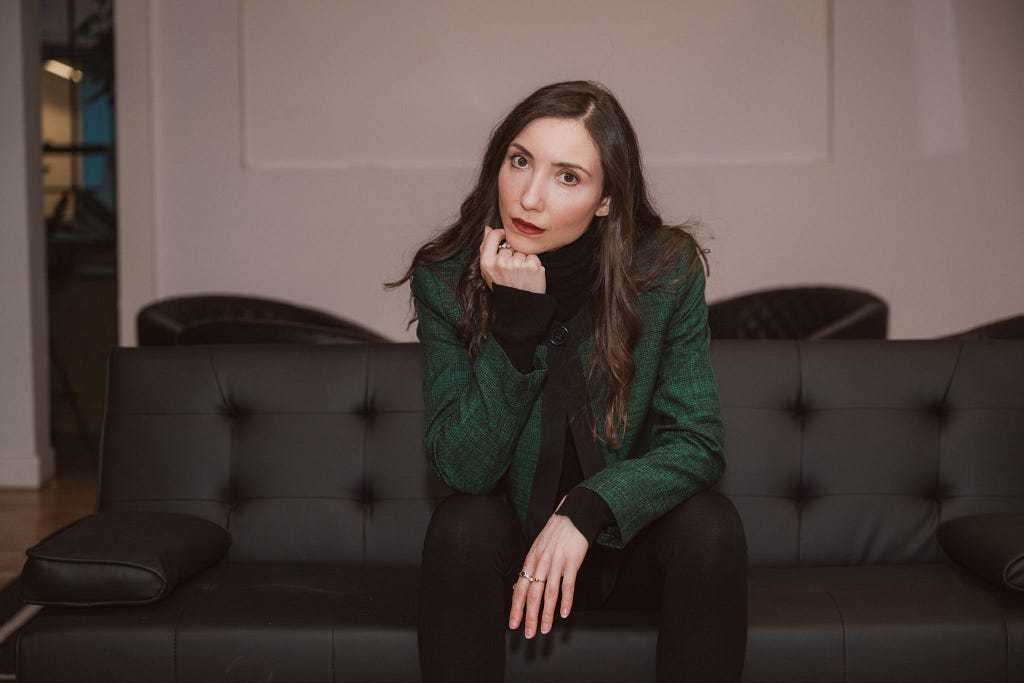
Florence Ordesh on ‘Hokum,’ Breaking Out Beyond Ireland and Why Actors Need to Create Their Own Work
…Actors are usually drawn to becoming actors because they love storytelling. Given that, a lot of actors also enjoy screenwriting and short story writing. When you’re young, maybe embrace that more. I did it myself and I’m so happy I did. I took a course on screenwriting and developed that skill over the years so that I can now write my own screenplay. It’s another avenue for actors who want to make projects instead of waiting around for someone to cast them, especially when roles might not even be available. Learn how to screenwrite, write your own scripts, and potentially learn filmmaking. You have a camera on your phone now that is incredible. When you’re young, you have all this energy and maybe don’t have to think too much about adult responsibilities like mortgages and kids. You have time and energy to invest into learning and playing around with making movies. Take advantage of that time to learn as much as you can about screenwriting and everything else to develop as an actor…
I had the pleasure of talking with Florence Ordesh. Born in London and raised in the sweeping, quiet landscapes of rural Ireland, Ordesh is an actor who built her career far away from the flashing lights of Hollywood. Her father is Persian and her mother is Irish, giving her a unique background that would later complicate her journey in the audition room. She grew up in County Meath, a place she lovingly describes as “literally in the middle of nowhere.” When she was just eight years old, her mother sent her and her brother to a local community theater to help them build confidence and improve their pronunciation. Her brother despised the classes and quit after a single year. Ordesh, however, found an entirely unexpected calling.
Despite being a shy child, the stage offered her a strange sense of freedom and an escape from her own head. “I had no problem getting up on stage even though I was such a shy child,” she recalls. “For some reason, I just had no problem when I was doing a performance. I felt like, ‘It’s not me anyway, I’m playing someone else,’ so it didn’t seem to bother me.” That early realization planted a seed that never stopped growing. By the time she finished high school, she knew exactly what she wanted to do. Since Ireland lacked dedicated screen acting programs at the time, she packed her bags at eighteen and headed across the globe to the Vancouver Academy of Dramatic Arts to train full-time behind the camera.
But graduating with a degree in acting doesn’t simply hand you a career, a harsh reality Ordesh learned quickly after moving back home. “It’s such a strange industry,” she admits today. “There’s nothing that can possibly prepare you.” In her early twenties, she landed an ensemble lead on an episode of a show for the Irish channel TG4. The young actor naturally assumed she had finally made it. “I thought, ‘Okay, great. I got my break. This is it.’” Instead, she faced a brutal, humbling year of total silence. When she finally texted her agent two months after her episode aired to ask about auditions, the response she got back was devastating: “Sorry, who is this?” That forced a wake-up call and a change in representation, but she still faced unique hurdles. Because she didn’t have a traditionally Irish look, casting directors passed over her for local roles, sending her out for Latino, Pakistani, and Spanish characters instead.
Ordesh realized she had to fight through the noise to get noticed. “You kind of have to just fight through it,” she says. “You have to get recognized amongst casting directors, prove yourself, build up a showreel, and it all takes time.” Her fierce persistence eventually paid off. She began booking parts in shows like Dublin Murders and the massive Apple TV production Foundation. Her career continued to snowball from there. On the Canadian series Departure, she found herself acting opposite Archie Panjabi on her very first day on set. It was the final scene of the show, and the pressure was incredibly high. Panjabi noticed the moment and leaned in, telling her, “When we’re running the scene, if you forget your line at all, don’t worry. You can just take it back to the beginning. It doesn’t matter. “ Ordesh says that simple, human gesture put her entirely at ease.
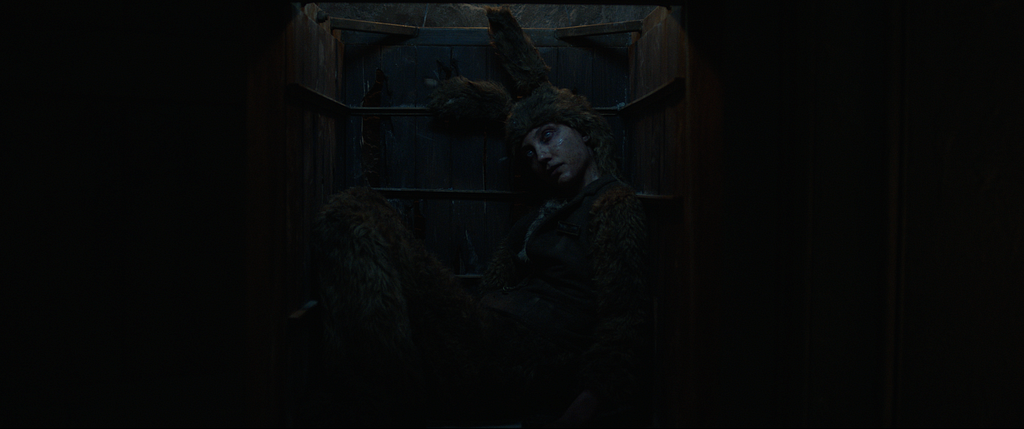
Now, she is stepping into the dark world of supernatural horror. Ordesh stars opposite Adam Scott in the film Hokum, a movie centered on a chilling legend involving a haunted remote Irish inn. Ordesh plays Fiona, a character she relates to quite well. “I would say I’m similar in that we’re both quite curious and observant,” she notes, though she admits that her on-screen counterpart is “probably slightly more daring than me.” It is a major step forward in a career that has required immense patience and thick skin.
But Ordesh isn’t just waiting for the phone to ring anymore. Taking her own advice to young actors, she has expanded her creative footprint far beyond auditioning. She’s earned an MBA and is currently developing a script she wrote over several years titled The Dark Side of June. She plans to produce and star in the thriller, playing an elementary school teacher caught up in the drug underworld. Looking back at her long journey from County Meath to the big screen, she encourages aspiring actors to take their careers into their own hands. “Learn how to screenwrite, write your own scripts, and potentially learn filmmaking,” she urges. “You have a camera on your phone now that is incredible.” For Ordesh, creating her own path has been the real secret to surviving the industry.
Yitzi: Florence, it’s so nice to meet you. Before we dive in deep and talk about your work, I really just would love to learn about your personal origin story. Can you share the story of your childhood and how you grew up and the seeds for all the amazing work that has come since then?
Florence: Sure. I was actually born in London, England. That’s where my parents met. When I was about one, they decided to move to Ireland to be closer to my mum’s family. My dad is actually Persian. I’m half Persian, half Irish. I grew up in Ireland, in the countryside. Literally in the middle of nowhere, County Meath. I stayed there until I was about 18. When I was eight or nine, my mum wanted to send my brother and I to drama classes, like a local community theatre, for grammar, pronunciation, confidence, and that kind of stuff. I think she just thought it would be good for us to do. My brother hated it; he just did the year and didn’t want to go back. But I loved it. I really took to it. I loved doing poetry and monologues, and I had no problem getting up on stage even though I was such a shy child. For some reason, I just had no problem when I was doing a performance. I felt like, “It’s not me anyway, I’m playing someone else,” so it didn’t seem to bother me. I think that’s also what helped me connect with it. I did it for years, right into secondary school. Ever since I started drama, I decided, “I just want to be an actor.” I think my parents thought I’d grow out of it, because everybody says crazy things when they’re a kid. But I literally never thought I wanted to be anything else. When I finished secondary school, or high school as you’d say here, I went to North America. I attended the Vancouver Academy of Dramatic Arts and trained full-time for screen acting. In Ireland at the time, there were no screen acting programs or courses; there was only theatre. I wanted to train behind the camera, so North America seemed like a good place. After I graduated, I got an agent and have been building up an acting career from scratch since then.
Yitzi: Can you tell us a story about some of your first breaks, your first entrees into the entertainment industry?
Florence: Sure. It’s such a strange industry. There’s nothing that can possibly prepare you. You can have all these coaches — I’ve had so many acting coaches growing up who had been actors their whole lives. But there are so many different levels to being an actor. No one person can really train or prepare you for what it is unless you do it yourself and stick with it for a long time. I guess my very first role was when I was 20 or 21, in a TV show for an Irish channel. It was called TG4, or in Irish you’d say TG Ceathair, because four is ceathair in Irish. Usually, it’s an Irish language channel, but the show I did was a mixture of Irish and English. All the characters were speaking English, but then a narrator would appear out of the dark and say something in Irish as an illustration, and there would be subtitles. I’m not fluent in Irish, so I wouldn’t be doing any Irish shows anyway. That was my first role, and it was an ensemble lead in a show where every episode is a new story, so every episode has a new cast. It was a 30 to 40-minute story. When I booked that in my early 20s, I thought, “Okay, great. I got my break. This is it.” I didn’t know better; I just thought, “I’m an ensemble lead in an episode of a show, so this must be my break.” I did it, it aired, and everything was great. But because it was my first year back in Ireland after training at the Vancouver Academy, casting directors didn’t really know who I was. That was my first audition in Ireland. It was an incredible start, but then I went a full year without getting another audition. After thinking I’d just got my big break, I didn’t get a single audition again for a year. I remember texting my agent two months after my episode aired asking, “Are there any auditions? I just feel like maybe I should be getting more.” I think she wrote back something like, “Sorry, who is this?” I realized, “Oh, maybe I need a new agent.” But there are just so many different layers to it. It’s not just an agent that’s the issue, it’s not just the city; there is no one thing. It’s not whether my hair was a different color, it’s just everything. Maybe the roles just didn’t exist at the moment. Maybe another character worked better in that position. I came to learn that after getting through that patch and finding another agent. I went through a stage in Ireland where I found I was only going out for foreign roles, roles for characters that weren’t traditionally Irish. I was going out for anything and everything: Latino, Pakistani, Spanish — all these roles requiring accents. You wouldn’t really place me from an ethnicity perspective, but I was pretty certain they would hire someone authentically Pakistani or Spanish. At one point, I asked my agent, “How come I’m not going out for any of the Irish roles?” he said, “Because you don’t look Irish. I have actors on my roster who look Irish that will go out for the Irish roles. You don’t look Irish, so you’ll go out for everything else.” I thought, “Maybe I need a new agent again.” The next agent I found was great. She sent me out for everything, and the auditions started getting more and more frequent. You kind of have to just fight through it. You have to get recognized amongst casting directors, prove yourself, build up a showreel, and it all takes time. Naive actors, like I was, just think after booking one episode, “You’re done now. You’re just going to be a working actor forever.” But it really does take time. Then I started booking a little more consistently in bigger shows. I booked a show called Krypton, but I had to pull out last minute because the shoot dates moved and overlapped with my best friend’s wedding. Of course, I picked my best friend’s wedding. I also booked a show called Cold Courage. These were smaller roles, but that’s what you do in your first several years. Then I started booking a couple of episodes in different shows. I booked a show called Dublin Murders, where I appeared across a few episodes. And I booked Foundation, which was a massive American production for Apple TV. It’s like a snowball: you push it up the hill, and if you’re consistent, decent, making the right choices, and with agents that work well with you, that snowball will get bigger and bigger. Eventually, it did, and I got Departure, a show in Canada, across several episodes. And the latest one is Hokum, which is about to come out.
Yitzi: Speaking of stories, you probably have some amazing stories from the different projects you’ve been on and places you’ve been to. It might be hard to single out, but can you share with our readers one or two stories that stand out in your mind from your career so far?
Florence: I remember when I worked on Departure, my very first scene on set was with an actress named Archie Panjabi. Departure is basically her show; she’s the number one. I really like her as an actor. I watched her in The Good Wife, and both my parents love her. There are always a little bit of nerves when you’re working with an actor you really admire. The first scene I had on the show was just her and I sitting there having a conversation, which was actually our final scene in the show. So, it was my first day on set, and we were shooting my final scene. I was a little bit nervous, but I don’t think I was showing it. I sat down across from her while they were adjusting the final lights, and after we introduced ourselves, she just said to me, “When we’re running the scene, if you forget your line at all, don’t worry. You can just take it back to the beginning. It doesn’t matter. That’s what I do when I forget my lines.” It was such a nice thing to hear. I didn’t think I looked nervous enough to give her a reason to believe I might forget my line, but it put me at ease so much. That stuck with me. If I ever see an actor who’s nervous, I want them to know that everyone gets nervous, and it’s not the end of the world if you forget your line. You just take a breath, take it to the beginning. It’s all digital, they’ll keep rolling, and they’ll cut it out. It was a lovely introduction to that set.
Yitzi: What’s been the most challenging project or role you’ve taken on so far, and why?
Florence: I don’t know if there really is anything that stands out as the most challenging role. I would almost say a project that I’m currently developing is the most challenging. It’s a script that I wrote over the course of a number of years. I am now working with a production company to produce it, and we’re looking to shoot at the end of this year or maybe early next year. Because I’m approaching it from a different perspective, of course it’s a challenge. Developing a film involves all these moving parts, like finding the right cast and the right people to work. That would be the most challenging.
Yitzi: Let’s talk about your work. You have so much impressive work. Please tell us about the exciting new things you’re working on now. Tell us what we should be looking forward to in the future.
Florence: I guess I just said it. My film is called The Dark Side of June, and I will be playing June. It’s about an elementary school teacher who unexpectedly gets caught up in the drug underworld due to an accident her boyfriend was in. We’re looking to film that at the end of this year or early next year. I’m super excited about it.
Yitzi: How would you compare and contrast your personal character, Florence, with Fiona, the character you play in Hokum? How are you similar and how are you different?
Florence: I would say I’m similar in that we’re both quite curious and observant. Fiona would be similar in that way. In terms of being different, I would say Fiona is probably slightly more daring than me. I’d say that would be it.
Yitzi: This is our signature question. Florence, you’ve been blessed with a lot of success now and you must have learned a lot from your experiences. Looking back all the way to the beginning when you first started, can you share five things that you’ve learned over the years that would have been nice to know when you first started?
Florence: Don’t worry too much, because things generally work out in the end. I think I overthought and worried a little bit too much over the little things. As a younger person, I was worried about even going on vacation in case I got an audition. None of it mattered in the end, really. So I would probably tell myself, “Don’t fixate too much on your career. Go out and enjoy yourself, enjoy your life.”
It’s interesting nowadays for an actor because all acting auditions are self-tapes. Actors can have so many things going on at the same time. Ten, fifteen, or twenty years ago, you had to always be available, and you needed a job on the side that would give you time out whenever you needed to drive to an audition. But now you just do a self-tape, and you have three days to get it in, so you can do it in the evening. I would tell young actors to find other things they want to do to earn money as a career. I would almost tell them to treat acting like a side hustle and build a career in something else you enjoy doing. You can always do your self-tapes in the evenings and weekends and use your vacation days to be on set. In this day and age, that setup is available for young actors, which is amazing. When the generation above me was young, they had no other choice but to get a job as a waiter or waitress — some type of service industry job where you can swap shifts when you need to. That is not the case now. I don’t know if actors are told that in college, that you can go and study something else and have two careers. You can have your acting career and any other career you want. You’re not stuck just being a waitress. That’s really important for young actors.
Another thing, and it depends on the person, but this is something I really loved: actors are usually drawn to becoming actors because they love storytelling. Given that, a lot of actors also enjoy screenwriting and short story writing. When you’re young, maybe embrace that more. I did it myself and I’m so happy I did. I took a course on screenwriting and developed that skill over the years so that I can now write my own screenplay. It’s another avenue for actors who want to make projects instead of waiting around for someone to cast them, especially when roles might not even be available. Learn how to screenwrite, write your own scripts, and potentially learn filmmaking. You have a camera on your phone now that is incredible. When you’re young, you have all this energy and maybe don’t have to think too much about adult responsibilities like mortgages and kids. You have time and energy to invest into learning and playing around with making movies. Take advantage of that time to learn as much as you can about screenwriting and everything else to develop as an actor.
Yitzi: Florence, because of your great work and the platform you’ve built, it’s not an exaggeration to say that you’re a person of great influence. If you could spread an idea or inspire a movement that would bring the most amount of good to the most amount of people, what would that be? You never know what your idea can inspire.
Florence: The most amount of good… I would probably write a film. I feel like films connect with people on different levels, and depending on how skilled a screenwriter is, they can touch people’s hearts and have them think about issues in different ways. It’s so powerful. That’s probably the avenue I would take.
Yitzi: Florence, how can our readers continue to follow your work, watch your latest projects, and support your work in any possible way?
Florence: Right now, I will be putting any updates on my social media account, Instagram, @florence_ordesh. And the film Hokum is out in theatres only on May 1st.
Yitzi: Florence, it’s so nice to meet you. I wish you continued success, good health, and blessings, and I hope we can do this again.
Florence: Thank you so much.
Florence Ordesh on ‘Hokum,’ Breaking Out Beyond Ireland and Why Actors Need to Create Their Own… was originally published in Authority Magazine on Medium, where people are continuing the conversation by highlighting and responding to this story.